Do Grow Lights Work for Indoor Plants? A Guide
Do grow lights work for indoor plants? Learn what they can replace, how PPFD and daily light affect results, and how to set a safe, useful schedule.
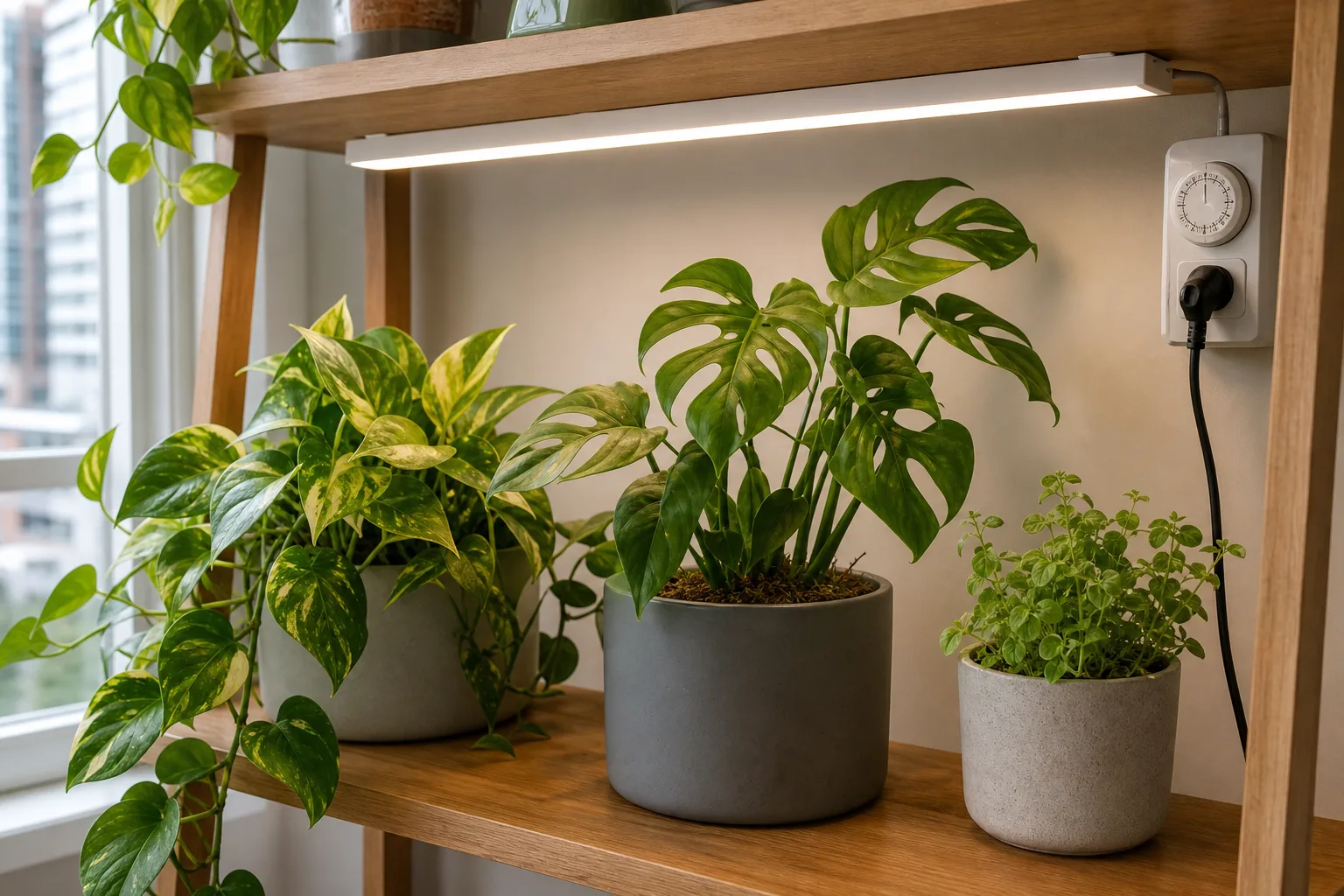
Yes—grow lights work when they deliver enough plant-usable light to the leaves for enough hours, across enough of the canopy. A properly chosen fixture can supplement weak window light or serve as the only light source for an indoor plant, but the words “grow light,” “full spectrum,” and a high wattage number do not prove that it will work in your room.
The useful test is whether the plant produces healthy new growth under a consistent schedule. To predict that result, consider three things together: light intensity at the leaves, daily exposure, and coverage. Spectrum and photoperiod matter too, but no purple glow or long timer setting can compensate for a weak beam that misses half the plant.
The direct answer: yes, when enough usable light reaches the leaves
Plants convert light energy into chemical energy through photosynthesis. A grow light supplies photons that can support that process when daylight is too weak, too brief, blocked by a building, or unavailable in the plant’s location. University extensions describe supplemental lighting as a useful way to address a common indoor growth limit, while the Royal Horticultural Society notes that suitable lighting can support houseplants and indoor crops through the darker parts of the year. (Iowa State University Extension; RHS)
A lamp can do more than keep a plant alive. When intensity, duration, and placement suit the species, it can support compact foliage, sustained leaf production, seedlings, herbs, and some flowering plants. Savvy Gardening’s seed-starting writer Niki Jabbour describes how seedlings on a distant north-facing window became stretched before she switched to a timed shelf setup; the practical point is that successful germination does not mean a window provides enough light for sturdy growth afterward. (Savvy Gardening)
A grow light does not automatically equal sunlight, however. Sunlight changes in intensity and spectrum across the day and season, and plants outdoors also experience temperature, airflow, and other conditions that an indoor lamp does not recreate. A sufficiently strong, well-distributed fixture can be a plant’s sole light source, but the setup must match the plant’s needs; an inexpensive decorative bulb may be effective as a supplement for a tolerant foliage plant yet inadequate for sun-hungry herbs, succulents, seedlings, or plants expected to flower.
What “working” means for a plant
“Working” is not one outcome. A plant may stay alive under a modest light while growing slowly, or it may maintain leaves but stop flowering. Another light may support quick growth but cause bleaching or heat stress because it is too close. Decide what you want before judging the setup: maintenance, compact foliage, new leaves, edible harvest, flowers, or seedlings ready for transplanting.
A plant needs light, but not light alone
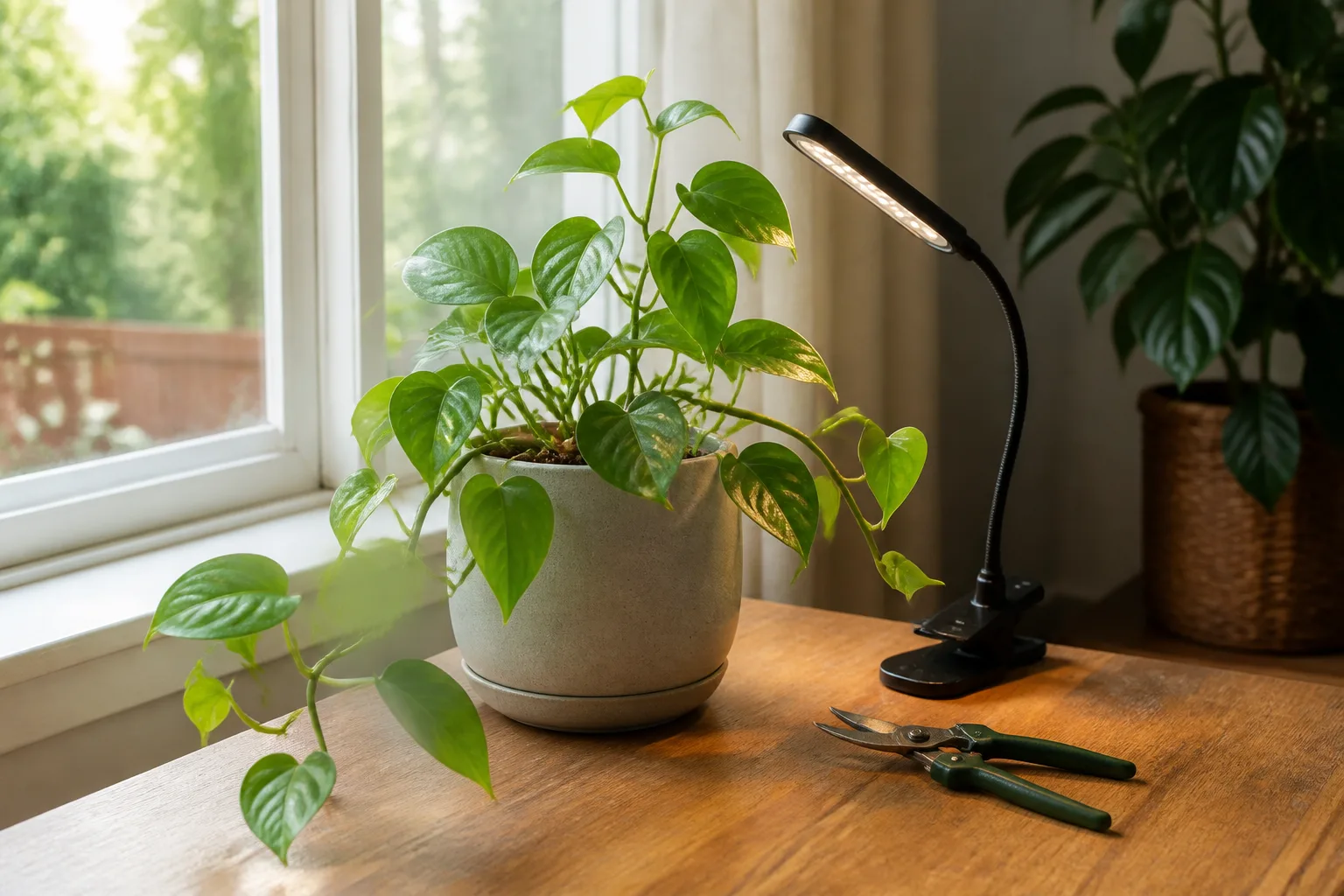
Think of a grow light as correcting one input in a larger system. Watering, drainage, temperature, humidity, nutrition, root condition, and pests still affect growth. If a plant has soggy, damaged roots, for example, adding stronger light may increase stress rather than rescue it; likewise, a pest problem will not disappear because the leaves are brighter.
Light shortage often shows up first in new growth: stems lengthen with larger gaps between leaves, the plant leans toward a window, new leaves are smaller, or a flowering plant forms fewer buds. These clues are useful but not exclusive. Yellow leaves can also reflect overwatering, nutrient issues, cold, or normal aging, so check the whole plant and its recent care before changing the lamp.
Excess light can also cause trouble. Leaves may bleach, develop dry patches, curl, or feel unusually warm at the canopy. Some species naturally change color in bright conditions, so compare the affected area with the plant’s normal appearance and consider whether a new fixture, move, or longer schedule preceded the change.
PPFD and DLI explain what a lamp delivers
The easiest way to be misled by a light listing is to treat human brightness or wattage as a plant measurement. Watts describe electrical power used, while lumens and lux are weighted to human vision. A room may look bright to you even when the leaves receive a modest amount of photosynthetically useful light; UF/IFAS cautions that our eyes adapt quickly and are poor instruments for comparing light levels around houseplants. (UF/IFAS Gardening Solutions)
PAR, or Photosynthetically Active Radiation, refers to the range of light conventionally measured for photosynthesis, commonly 400 to 700 nanometers. PPFD measures the number of those photons arriving at a surface each second, in micromoles per square meter per second (µmol/m²/s). In practice, PPFD at leaf height is more informative than a product’s wattage headline because it describes what reaches the canopy at a particular distance.
DLI, the Daily Light Integral, is the total photosynthetic light received over a day, expressed in moles per square meter per day (mol/m²/day). It brings intensity and time together: a plant receiving a moderate PPFD for many hours can accumulate more daily light than one briefly exposed to the same intensity. Iowa State Extension explains how to use DLI when planning supplemental light, and Oklahoma State Extension emphasizes that the appropriate daily amount varies by crop and production goal. (Iowa State University Extension; Oklahoma State University Extension)
A simple daily-light calculation
For a steady fixture, an approximate calculation is DLI = PPFD × light hours × 0.0036. If a manufacturer’s chart reports 150 µmol/m²/s at the distance you will use, and you run the lamp for 12 hours, the lamp contributes about 150 × 12 × 0.0036 = 6.5 mol/m²/day. That example is a way to compare schedules, not a universal target for every houseplant.
Real setups complicate the math. A PPFD map may show a central peak while leaves at the edges receive much less, and a sunlit window contributes additional light that varies from one day to another. Treat manufacturer data as an estimate for the listed fixture, height, and footprint; look for a map at more than one distance and check whether it reports the middle or the full growing area. Oklahoma State’s production-oriented light ranges are useful context, but its DLI categories should not be used as rigid thresholds for every home plant. (Oklahoma State University Extension)
How to tell if a grow light is helping
Look at the growth a plant makes after you establish a stable lighting routine, not just the old leaves it carried into the setup. A light cannot reverse a bleached or stretched stem that already formed, and older damaged foliage may stay damaged even after conditions improve. New leaves and stem spacing give you a more useful read on what has changed.
| What you see on new growth | What it may suggest | First adjustment to consider |
|---|---|---|
| Long gaps between leaves, leaning, small leaves | Too little light at the canopy, uneven coverage, or another stress | Check distance and edge coverage; then adjust one setting |
| Tighter, upright growth and stable leaf color | Light may be adequate for the plant’s current goal | Keep the schedule consistent and continue observing |
| Bleached patches, curled leaves, or excessive warmth | Too much intensity, abrupt acclimation, or heat | Raise or dim the fixture and reassess gradually |
| Healthy foliage but few flowers | Photoperiod, maturity, season, or species-specific needs may matter | Check the plant’s bloom cues before increasing power |
A low-guesswork before-and-after check
Take a photo of the plant from the same angle before you change its light. Note the fixture model, the distance from the light to the tallest leaves, the daily on/off times, how much window light it receives, and which plants share the beam. These simple notes prevent you from confusing a seasonal window change with the effect of the lamp.
Run the setup consistently for several weeks, then compare the newest leaves and internode spacing. Many foliage plants show a useful direction of change within three to six weeks, although slow-growing plants may need longer and a light that merely maintains the plant may not produce fast visible growth. The right expectation depends on species and season, so avoid treating one unchanged week—or one damaged old leaf—as a verdict.
If growth is still stretched, check the fixture’s instructions or PPFD map before adding hours. Move a dimmable light slightly closer, improve the layout, or lengthen the day moderately, but change only one variable at a time. If a leaf starts bleaching or feels hot, back off rather than assuming that “more light” is always better.
Spectrum matters, but the label is not a result
Plants use light across a range of wavelengths for photosynthesis and developmental signals. Blue and red bands play important roles; the RHS describes blue light as supporting growth and red as contributing to growth and flowering. Oklahoma State Extension also describes how growers select different LED spectra for different crops and stages, while noting that lighting decisions involve both light quality and quantity. (RHS; Oklahoma State University Extension)
“Full spectrum” is a useful shopping description, but it is not a regulated guarantee that a fixture is strong, evenly distributed, or ideal for every plant. A white LED can look natural and make leaf color easier to inspect. A red-and-blue “blurple” light can also grow plants, especially in an enclosed rack where color appearance is unimportant, but the color of the diodes alone does not tell you whether the canopy receives enough photons.
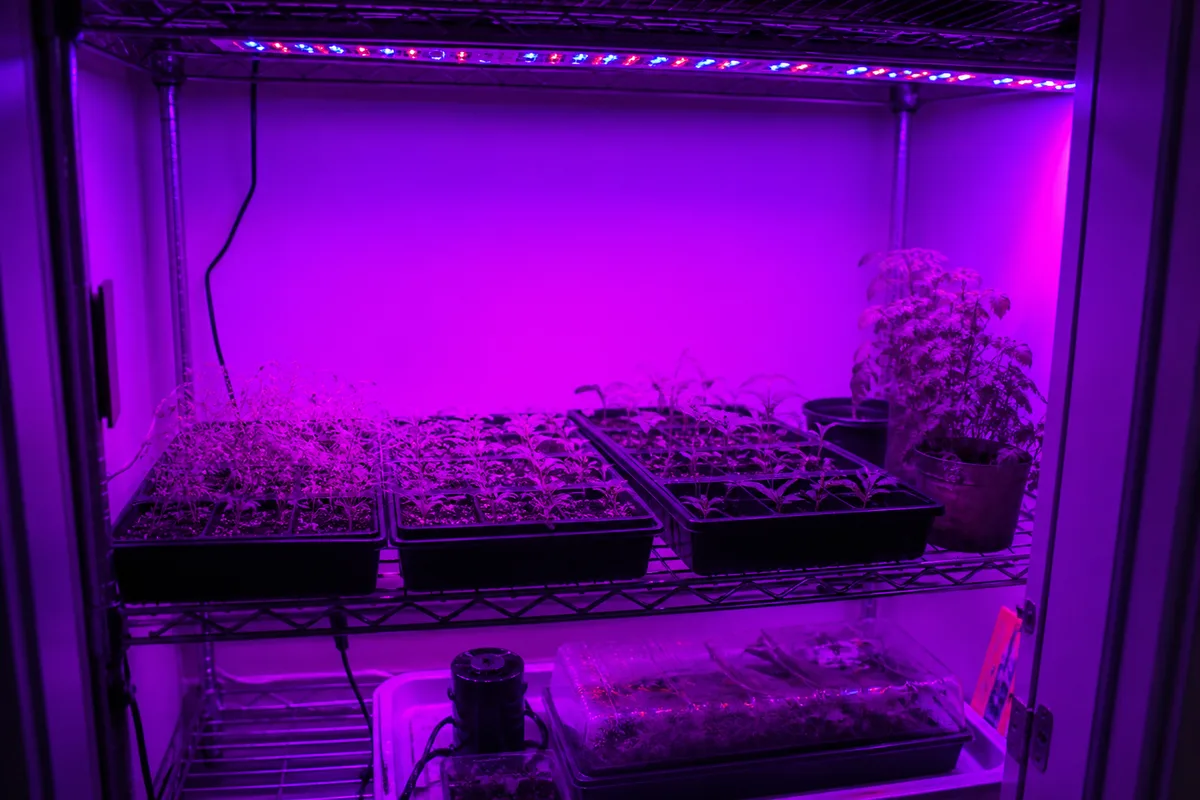
Joe Gardener’s discussion with horticulturist Leslie F. Halleck stresses that growers should consider the plant’s lighting needs and use meaningful output measurements instead of relying on wattage or a broad-spectrum label alone. That is a sound way to judge consumer lights: prioritize PPFD at the real hanging height, evenness across the plant area, and controllable timing. (Joe Gardener)
Is a regular LED bulb enough?
Sometimes. A common white LED bulb may provide useful supplemental light for a low- or medium-light houseplant if it is bright enough at close range and aimed at the leaves, but ordinary room bulbs are designed to illuminate people and spaces rather than a plant canopy. A bulb across a room or high above a shelf can look bright without delivering much useful light to the plant.
For a single tolerant foliage plant, start with an adjustable lamp and a consistent timer, then judge the newest growth. For seed trays, herbs you plan to harvest, succulents that should stay compact, or a broad shelf, choose a fixture with a footprint suited to the full area and, ideally, a PPFD map. A single spotlight can leave the center plant thriving while the plants at either end stretch.
Match the light to the plant and the room
The goal changes what “enough” means. Low-light-tolerant foliage plants may need only a modest supplement to maintain compact growth in a dim room. Seedlings, herbs, succulents, and many flowering or fruiting plants generally require more light for vigorous growth or blooms. Oklahoma State’s DLI ranges are framed for horticultural production rather than household rules; they reinforce that plants differ, not that every home needs to chase a single number. (Oklahoma State University Extension)
For one plant, an adjustable bulb or small gooseneck fixture can be convenient. A row of plants is usually easier to illuminate with a bar that runs across the shelf, while a tray may need a panel or multiple bars to spread light across its full area. A larger fixture is not automatically better if it creates an intense hotspot or forces you to place it where people stare into the diodes.
Room conditions matter too. A white full-spectrum light is often more pleasant in a living room because it lets you see leaves and flowers in natural-looking colors; an enclosed utility shelf may tolerate red-blue light if its output and coverage are appropriate. If a plant receives strong window light part of the day, count that as part of its exposure instead of automatically adding a full sole-source schedule.
Daily hours, darkness, and flowering cues
A timer helps keep the light period regular. There is no universal number of hours for every plant and fixture, because intensity, window exposure, species, and the purpose of the setup all change how much daily light the plant receives. Use the fixture’s guidance and plant-specific advice as starting points; then adjust by observing new growth rather than copying a schedule from an unrelated crop.
A modest foliage setup may use roughly 10 to 14 hours of supplemental light when some daylight is also available, while a dim or sole-source setup may need a longer daily period. Seedling recommendations are often longer than houseplant-maintenance schedules; Savvy Gardening describes a 16-hour timer for early seed starts in a northern winter, a specific situation that should not be assumed to apply to every tropical foliage plant. (Savvy Gardening)
Plants also respond to day length. Some species use the length of uninterrupted darkness as a flowering cue, so extending the “day” with a light after sunset can alter blooming even if the lamp does not look especially bright to you. The RHS and Oklahoma State Extension describe photoperiod as part of plant development and flowering; the safe general practice for ordinary houseplants is a consistent light period with a dark interval, not continuous light around the clock. (RHS; Oklahoma State University Extension)
Position the fixture for even, safe coverage
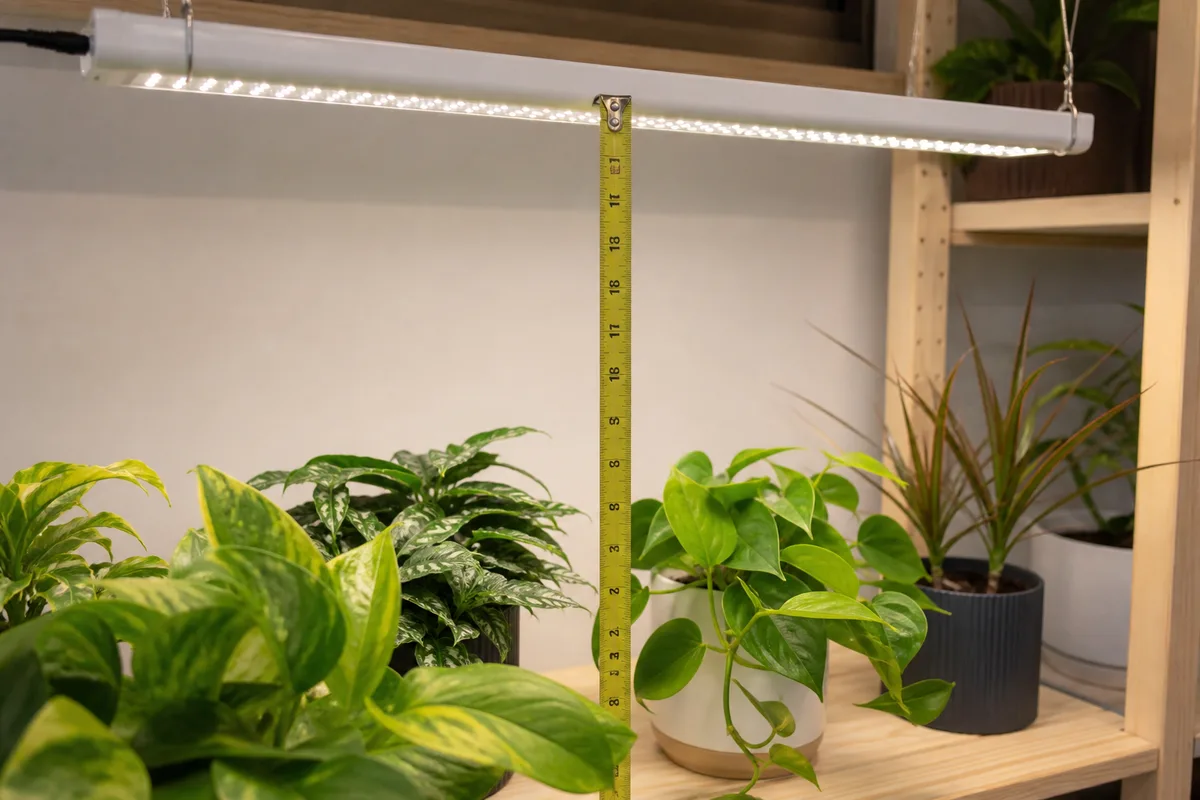
Start with the fixture maker’s height and coverage guidance. Distance is tied to a specific light: a low-output bar and a high-output panel cannot share one dependable “inches from leaves” rule. If the manufacturer publishes PPFD at several heights, choose the map closest to your canopy and consider the weaker readings at the edges, not just the brightest point in the center.
Aim the light from above when possible so it reaches the top growth evenly. A side lamp can be useful as a supplement for a tall plant, but light from one direction may encourage leaning or leave the opposite side shaded. On a shelf, keep neighboring plants from blocking one another and raise the fixture as the tallest leaves grow toward it.
Acclimate plants and watch for heat or stress
A plant moved from a dim corner to a strong lamp can react badly to a sudden jump in exposure. Begin at the maker’s recommended distance or use a dimmer, then increase the intensity in small steps over several days. Watch foliage and temperature; LEDs usually direct less radiant heat toward leaves than incandescent or HID fixtures, but the fixture and enclosed space can still warm up. Oklahoma State lists low heat emission among LED advantages while also noting that high ambient temperatures can reduce fixture efficiency and lifespan. (Oklahoma State University Extension)
Keep water, mist, and damp potting surfaces away from plugs and connections unless the fixture is specifically rated for that environment. Secure lamps and cords so they cannot fall into plants or be pulled down during watering, follow the maker’s clearance and ventilation instructions, and use a timer compatible with the fixture’s electrical load. Turn equipment off before repositioning or cleaning it, and never cover a lamp to reduce glare or warmth.
Why a grow light can disappoint
The most common failure is buying by label instead of by job. “Full spectrum,” “plant light,” and high wattage can describe very different outputs and coverage. A decorative bulb may be adequate for one pothos but weak for a seedling tray; a powerful fixture may be wasteful or stressful when used close to shade-grown foliage.
The second failure is placing the light too far away or lighting only the center of a group. Light intensity declines as distance increases, and the beam shape means the edges can receive less than the center. A grow-light map is most helpful when it shows measurement height and an area, not a single maximum number without context.
The third is trying to compensate for every problem with longer hours. Longer days can add useful daily light when intensity is moderate, but they do not fix a beam that barely reaches the leaves, a plant shaded by another pot, or roots sitting in waterlogged soil. Very long or continuous exposure can also disrupt normal dark periods and flowering cues, so use the timer to add a measured day rather than running the lamp all night.
Finally, a working fixture can appear ineffective if the plant is slow-growing, dormant, newly stressed, or recovering from root damage. Give a stable setup enough time to produce new growth, and resist changing light, watering, fertilizer, and location all at once. If several things change together, you cannot tell which one helped or caused the setback.
A practical starter setup you can evaluate
Choose one plant or a small group with similar light needs, and define the goal: maintain foliage, encourage tighter new growth, or raise seedlings. Pick a fixture whose shape matches the growing area, set it at the manufacturer’s recommended distance, and note how much window light the plants also get. Prefer a product that publishes a PPFD map or clear distance guidance over one that offers only a wattage headline.
Put the light on a timer and keep a dark period overnight. Record the height, schedule, and date; take a clear baseline photo, then avoid moving the plant or changing several care routines during the first observation period. If the plant stretches, first look at PPFD, distance, and whether the light actually covers its leaves; if it bleaches or warms, raise or dim the fixture and let the plant adjust.
If you want to estimate running cost, use the fixture’s actual watt draw rather than a marketing-equivalent wattage. For example, a 20-watt light running 12 hours a day for 30 days uses about 7.2 kilowatt-hours (20 × 12 × 30 ÷ 1,000); multiply that by your electricity rate to estimate the monthly energy charge. This is not a plant-performance measure, but it can help you choose between two fixtures with similar coverage and output.
Conclusion
Grow lights do work, but their success depends on what reaches the leaves—not on a product label or how bright a room feels. A fixture can supplement a window or provide a plant’s only light when its intensity, daily schedule, spectrum, and coverage suit the species and the goal.
Choose by growing area and plant needs, use published PPFD data when available, give plants a dependable dark period, and judge the setup by healthy new growth over time. If that growth remains stretched, adjust one factor at a time; if a plant stays stressed, check watering, roots, temperature, and pests before buying a stronger lamp.