How to Create a Butterfly Garden That Supports Life
Learn how to create a butterfly garden that supports adults and caterpillars, with a practical plant plan, bloom calendar, layout tips, and low-spray care.
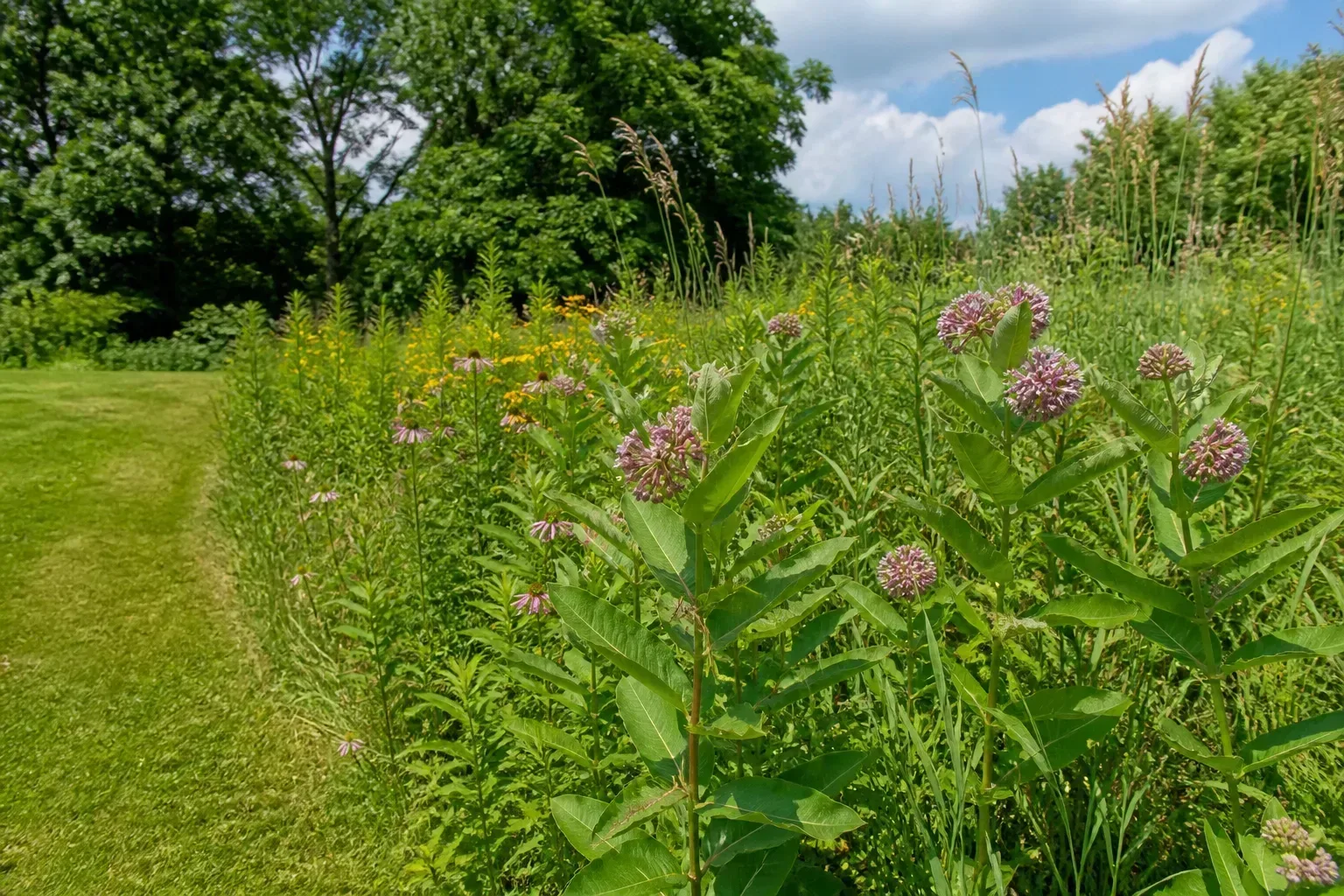
A butterfly garden is a planted habitat, not just a bed of colorful nectar flowers. To support more than passing visits, combine nectar for adults with the specific leaves their caterpillars can eat, then add suitable sun, shelter, water, and pesticide-conscious care. The right plant list depends on where you live: a species that feeds one butterfly in one region may do little for the butterflies in another.
Start with the butterflies you hope to support and the conditions you actually have. A sunny strip beside a fence, a few large containers, or a mixed border can all work if the plants fit the site and provide resources through more than one part of the growing season.
Start With the Butterflies You Can Support
Choose plants by local butterfly species rather than by the name on a nursery label. A plant marketed as a butterfly favorite may attract adult visitors but still fail to feed the caterpillars of the species in your area. The North American Butterfly Association offers regionally arranged plant lists, and local extension offices or native-plant societies can help narrow those choices to your county or ecoregion (NABA’s regional butterfly-garden plant lists).
It helps to learn the distinction between two jobs. Nectar plants feed adult butterflies, while host plants provide leaves or other plant tissue for caterpillars; some plants do both, but many do not. The University of Minnesota Extension explains that caterpillars have limited host ranges, so a generic “pollinator blend” is not a substitute for a host plant matched to a local butterfly (University of Minnesota Extension).
Pick a manageable goal for the first year. You might support several common local species, create a monarch waystation-style planting where milkweed is appropriate, or simply make a sunny, pesticide-free container garden that offers nectar. A small number of well-matched plants is more useful than a long list of species that need different soils, moisture levels, and climates.
Map the Site Before Buying Plants
Spend a few days observing the proposed area before you shop. Note which parts receive direct sun in the morning and afternoon, where rainwater collects, which spots dry quickly, and whether a wall, hedge, or fence blocks prevailing wind. These details determine whether a plant will establish, flower, and remain accessible to butterflies.
Many common nectar plants do best in full sun, but a butterfly garden does not have to be an exposed, all-day-sun bed. A sunny pocket with nearby partial shade, tall stems, shrubs, or a fence can offer both warm feeding areas and cooler shelter. The University of Florida IFAS Extension recommends varying plant height and growth form because that creates different feeding levels and microclimates; it also notes that some woodland butterflies use shadier spaces (UF/IFAS Gardening Solutions).
Track Sun, Wind, Soil, and Moisture
Use a simple sketch rather than relying on a hardiness zone alone. A zone describes winter cold tolerance, not whether a particular bed is sandy, clay-heavy, waterlogged, dry, shaded by a tree, or blasted by wind. Check drainage after a heavy rain and compare the light in the actual planting area with the needs listed for each plant.
If your site is windy, put low nectar plants near a windbreak and taller plants behind them, without casting the whole bed into shade. If soil stays wet, choose species adapted to moist ground instead of trying to fix the site with constant drainage amendments. A plant that is stressed or barely flowering will provide fewer dependable resources than one matched to its conditions.
Design for the Whole Life Cycle
An adult butterfly visiting a flower is visible and gratifying, but successful habitat also includes egg-laying and caterpillar food. A butterfly can be attracted to a garden that cannot raise its young; adding the right host plants is what can turn a feeding stop into a place where part of the life cycle happens. Do not expect every butterfly species to reproduce there, because adults are selective about where they lay eggs.
Choose Nectar Plants for Adult Butterflies
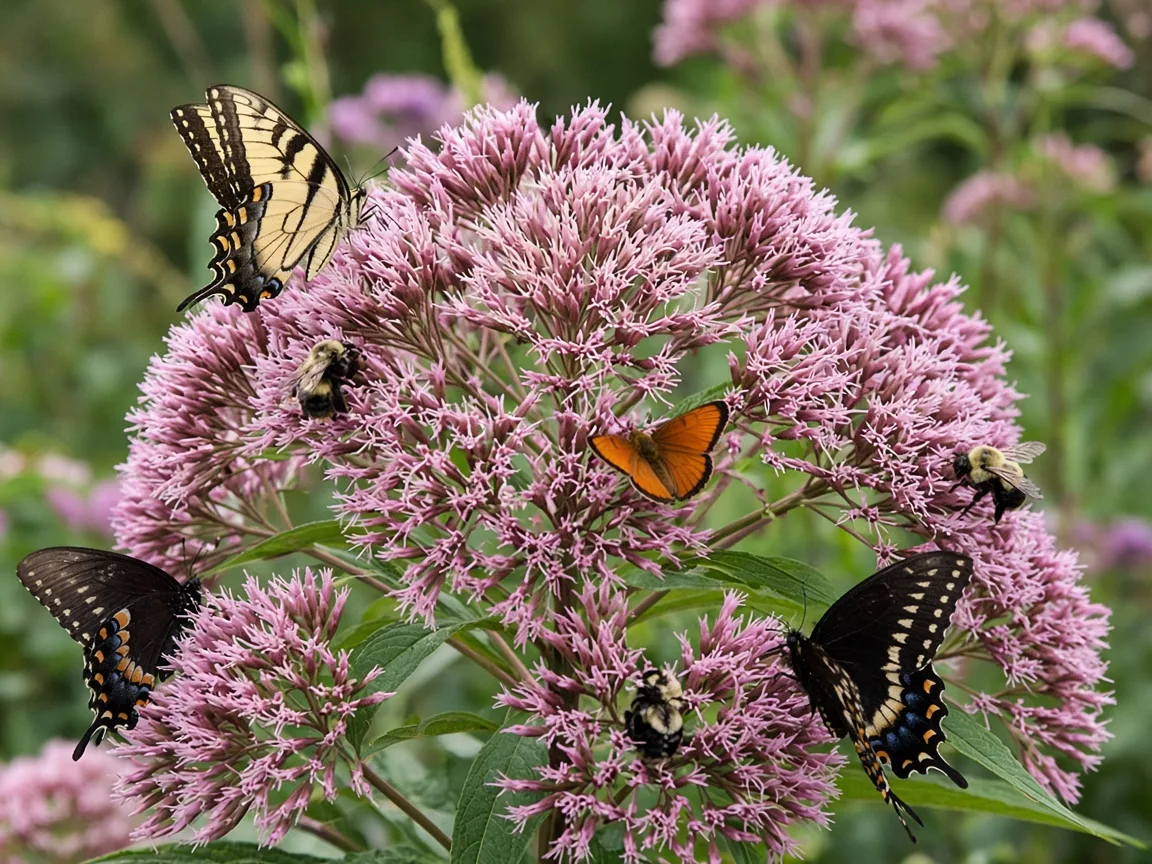
Favor flowers that give butterflies a stable place to land and reach nectar. Flat or clustered blooms, such as asters and many daisy-shaped flowers, provide a landing surface; short tubular clusters can serve species that can reach into them. Flower color, shape, scent, bloom time, and local butterfly behavior all influence visits, so variety is more reliable than betting the garden on one flower color.
In North American gardens, regionally suitable examples may include asters, coneflowers, bee balm, blazing star, goldenrod, native verbena, and native milkweeds. Annuals such as zinnias or cosmos can fill seasonal gaps where they grow well, while shrubs and trees can contribute early flowers, shelter, or host foliage. The University of Wisconsin–Madison Extension lists both annual and perennial nectar options and emphasizes choosing plants that fit local soil, moisture, and light (Wisconsin Horticulture Extension).

Add Host Plants for Caterpillars
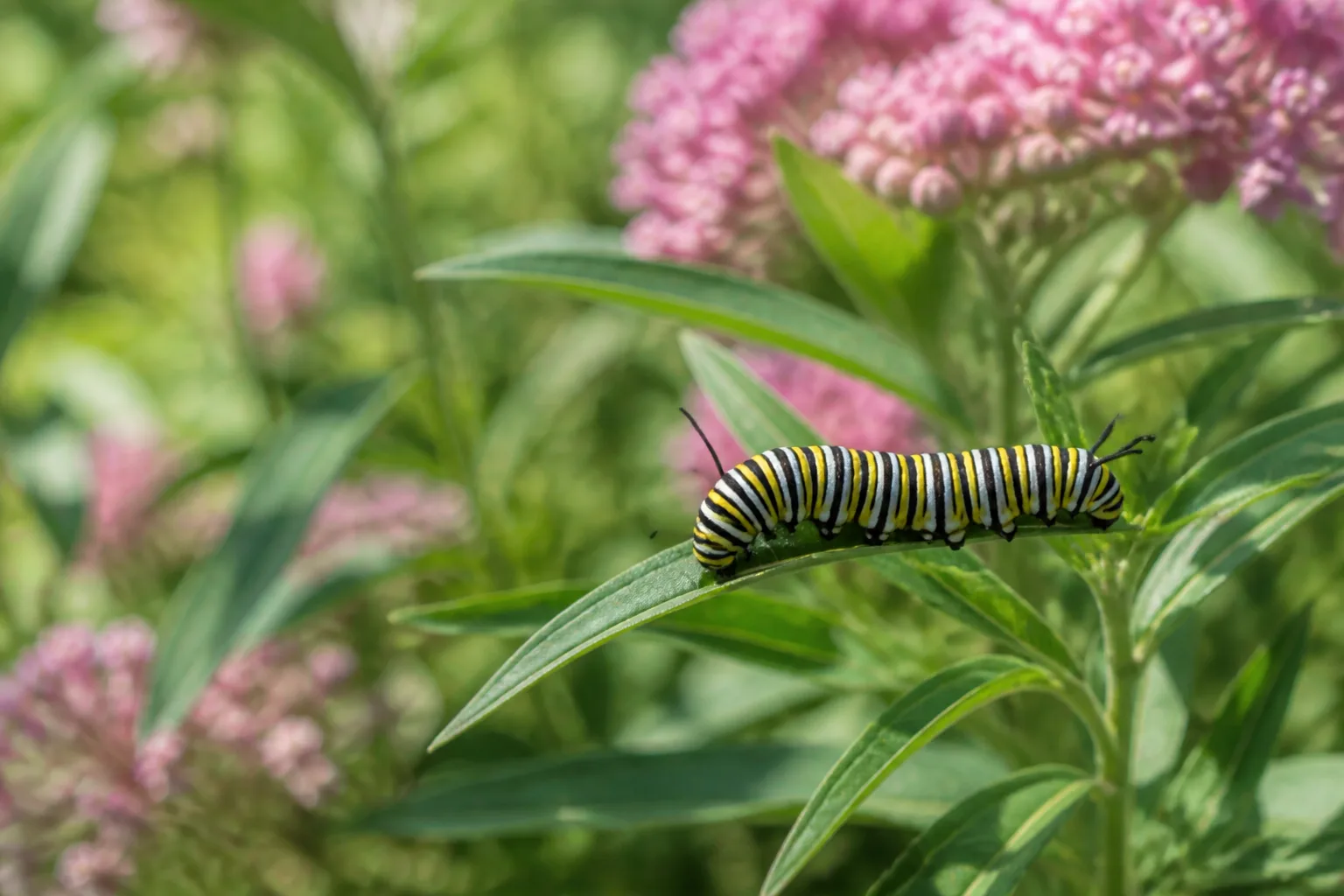
Host plants are species-specific, so buy or sow them only after checking a regional list. In many parts of North America, monarch caterpillars feed on milkweeds; black swallowtail caterpillars use members of the carrot family, including parsley, dill, and fennel; and some swallowtails use woody hosts such as native cherry, willow, or tulip tree. Those are examples, not a universal planting recipe—the correct plant depends on the butterfly species and local range.
Plan for the leaves to be eaten. Caterpillars may chew holes, strip a small herb, or leave a host plant looking ragged, and that damage is part of the habitat’s function. If you rely on parsley for cooking, plant an extra clump so you are not forced to choose between the harvest and the caterpillars. A few host plants grouped together also make it easier to notice eggs and larvae without searching every bed.
Build a Bloom Calendar, Not a Single Flower Show
A bed that peaks for two weeks and then goes quiet has a short window of value. Instead, combine early-, middle-, and late-season bloomers so nectar is available over a longer span. Exact dates shift with latitude, elevation, weather, and cultivar, so treat a calendar as a planning tool and confirm bloom times with regional plant information rather than copying dates from another climate.
| Seasonal role | Planting goal | Examples to check for your region |
|---|---|---|
| Early season | Provide nectar soon after local butterflies become active | Native spring perennials, flowering shrubs, or suitable herbs |
| Midseason | Carry the main warm-weather period | Bee balm, coneflower, milkweed, zinnias, or other locally adapted blooms |
| Late season | Keep nectar available as summer flowers fade | Native asters, goldenrods, or other regionally recommended fall bloomers |
Draw a three-column chart for your garden and write down the likely bloom period for every candidate plant. If one column is nearly empty, add a suitable species for that period instead of buying a second plant that blooms at the same time as everything else. A mix of annuals and perennials can be practical: perennials build the framework, while annuals let you adjust color and fill gaps as you learn what performs.
Layer the Bed and Plant in Drifts
Arrange plants so that taller stems do not shade out low-growing flowers. Put large shrubs or tall perennials toward the back of a border or on the north side where possible, then use medium-height clumps in the center and low flowers at the edge. In a circular island bed, place taller plants near the center and shorter plants around the perimeter.
Plant several individuals of the same nectar species in a group when space allows. Masses are easier to see from a distance and reduce the number of scattered stops a butterfly must make between flowers. Fine Gardening’s practical butterfly-garden guidance likewise recommends grouping nectar plants and mixing heights, shapes, and colors; use the principle while still leaving enough space for each plant’s mature width (Fine Gardening).
Keep the planting legible rather than turning it into a random patchwork. Repeat a few plants at intervals, leave a narrow route for watering and weeding, and use a shrub, tall grass, or fence as a windbreak where needed. That structure is useful for maintenance as well as for butterflies: you can reach a host plant to inspect caterpillars without trampling nectar flowers.
Match Plants to Region and Growing Conditions
Native plants are often strong choices because local butterflies and their host plants have developed together, and regionally native species are adapted to local climate patterns. “Native” still needs a geographic qualifier: a plant native to one part of the continent may be nonnative or unsuitable somewhere else. Check the plant’s range and the needs of the butterfly you want to support, not only the common name or a general pollinator label.
Use a Flexible North American Plant Palette
Use the following as a set of functions, not a shopping list. Choose one or two locally appropriate plants for each role—early nectar, summer nectar, late nectar, and caterpillar host—then expand after you see what grows well. NABA’s regional lists are a useful starting point because their plant selections and ratings are organized around regional butterfly gardening rather than a single nationwide mix (NABA plant guidance).
For a sunny, average-moisture site, a local garden might combine native asters or goldenrods for later nectar with coneflowers, bee balm, or blazing star in the warm season. Where monarchs occur and milkweed is appropriate, select a milkweed species native to the area and suited to the bed’s moisture. A wet site, dry slope, coastal yard, and high-desert garden need different choices even if all are in the same broad region.
Treat nonnative flowers as optional additions, not replacements for locally appropriate host plants. Some nonnative nectar plants are useful in managed gardens, but others can escape cultivation or become invasive in particular regions; check local invasive-plant guidance before planting. For example, Illinois Extension advises against butterfly bush in natural areas where it can become invasive, despite its flowers attracting adult butterflies (Illinois Extension).
Add Water, Warmth, and Shelter
Butterflies need protected places to rest and warm themselves as well as food. A sunny, flat stone near flowers can provide a basking surface, and dense vegetation, a hedge, or a fence can break wind and offer resting cover. Do not assume that a decorative butterfly house is essential; the more dependable foundation is the right planting, sheltered structure, and a garden with a low pesticide burden.
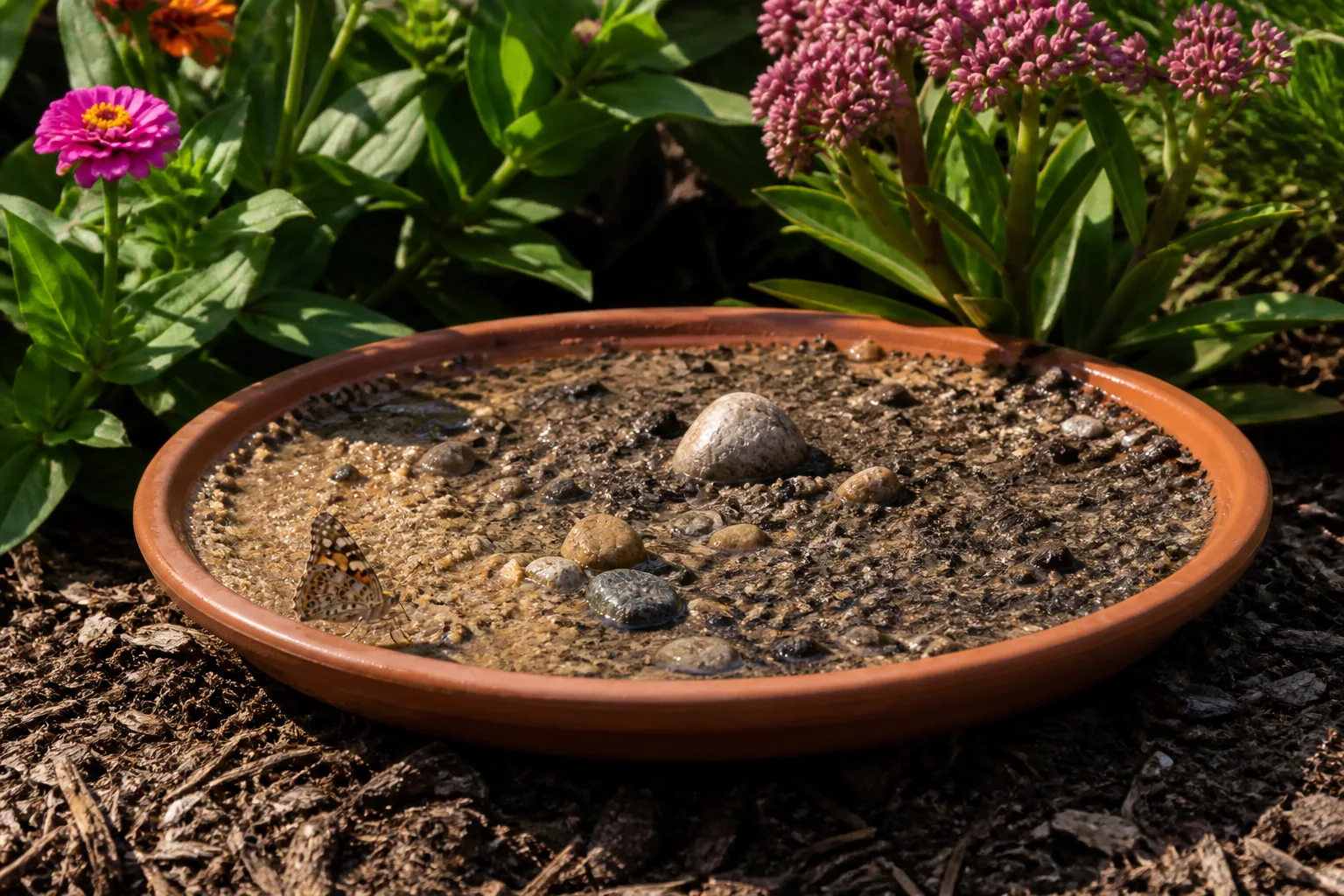
Water should be shallow and have a safe landing surface. Some butterflies gather at damp soil to take up water and dissolved minerals, a behavior called puddling. A deep birdbath is not a substitute for a small damp patch or shallow tray with stones or sand.
Make a Safe Puddling Station
Set a shallow saucer in a warm spot close to the flowers, add clean sand or soil and a few flat pebbles, then moisten the material so it stays damp without leaving a deep pool. Keep one surface above the waterline for insects to stand on. Refresh the water as it evaporates, and empty and clean the dish periodically so it does not become stagnant or attract mosquitoes.
Plant and Establish the Garden
Prepare the planting area by removing competing weeds, loosening compacted soil only as needed, and placing plants according to their mature size. Planting too close creates a dense, hard-to-maintain bed; spacing too far apart leaves bare soil where weeds take hold. Follow nursery or regional extension guidance for each species, since one planting depth or spacing rule will not fit every perennial and shrub.
Water new plants deeply enough to wet the root zone, then keep the soil evenly moist during establishment without leaving roots waterlogged. A light organic mulch can conserve moisture and suppress weeds, but keep it away from the crowns and stems of plants that are prone to rot. Once perennials are established, reduce supplemental water only as their species and local rainfall allow.
Resist heavy fertilizing unless a soil test or plant guidance shows a need. Excess nitrogen can encourage leafy growth at the expense of flowers in some plants, while amendments that do not match the soil may create more problems than they solve. Keep notes on planting dates, bloom periods, and which plants survived; a second-season adjustment based on observation is more useful than replacing everything after one imperfect month.
Protect Caterpillars With Butterfly-Safe Pest Control
The simplest butterfly-safe strategy is to avoid routine insecticide use in the habitat. A spray can harm insects on contact or leave residues on leaves and flowers; caterpillars may also be exposed while feeding or laying eggs on treated host plants. “Organic” or “natural” does not mean harmless to butterflies. University of Minnesota Extension describes contact and residue exposure pathways for pollinators and notes the risk when butterflies use treated host plants (UMN Extension on pollinator pesticide risks).
Identify a problem before acting. A few aphids or chewed leaves may not justify treatment, especially in a habitat garden where predators and other insects share the space. If a plant is at risk, first try hand removal, a targeted water spray, or pruning of the affected part when that will not destroy eggs or caterpillars. Avoid broad sprays on flowering plants and do not use caterpillar-targeting Bacillus thuringiensis products in a bed where you want butterfly larvae; follow product labels and local rules if a treatment is unavoidable.
Some caterpillars will consume more foliage than you expected. Plant extra host plants, move a potted herb only when larvae are not on it, or accept that a small crop may be the cost of supporting the life cycle. Before removing a larva you do not recognize, check a regional identification resource; many caterpillars are harmless to people and are not garden pests.
Maintain the Garden Through the Seasons
During the growing season, water new plants, pull weeds before they set seed, and note when flowers open and fade. Deadhead some spent flowers if you want to extend bloom, but leave selected seed heads and hollow stems over winter where they do not create a safety or disease issue. A garden does not have to look perfectly clipped to function well; tidy it in sections rather than cutting every plant down at once.
At season’s end, leave host plants standing until local overwintering needs and garden conditions are clear. Some butterflies overwinter as eggs, caterpillars, chrysalises, or adults depending on species, and other beneficial insects use plant stems and leaf litter. If appearance or fire safety requires cleanup, do it gradually and retain a sheltered patch where practical instead of removing all cover in one pass.
Troubleshoot Common Disappointments
Flowers but no butterflies: Check whether the flowers are blooming during local butterfly activity, whether the site is windy or shaded, and whether you planted species used by nearby butterflies. Let new perennials establish, and observe at different times of day before concluding that the plants are not working. Butterfly numbers also fluctuate with weather, migration, and conditions beyond your yard, so no planting can guarantee visits.
Adults visit but no caterpillars: Confirm that host plants for those particular butterflies are present and mature enough, then look carefully at leaf undersides and young stems. Egg laying may be brief or hard to notice, and adults may feed in a garden without choosing it as a nursery. Avoid treating all leaf damage as a disease or pest signal.
Only one kind of butterfly appears: Your location, season, and nearby habitat shape which species can reach the garden. Expand habitat resources rather than adding random flowers: consider another locally appropriate host plant, a missing bloom period, or a sheltered sunny patch. A garden can be useful even when its visitors are not numerous or diverse every week.
Plants struggle or fail to flower: Recheck site conditions before adding fertilizer. Too little sun, saturated soil, drought, crowding, or a mismatch between plant and climate are common causes; replace the plant with one suited to that exact spot. A butterfly garden succeeds through fit and continuity, not through the sheer number of varieties.
Create a Small-Space Butterfly Garden
A balcony or compact yard can offer nectar and a few host leaves, though it will support fewer species than a larger connected habitat. Choose several large containers rather than many tiny pots: larger volumes dry more slowly and give roots more room. Use a locally suitable nectar plant that flowers over a useful period, add a host plant only if it fits the available light and the needs of a local butterfly, and keep saucers from holding deep standing water.
Place pots where they receive suitable sun and some wind protection. A small grouping of the same flower is easier for butterflies to locate than isolated pots scattered across a shaded balcony. Make sure container weight, drainage, and watering needs are appropriate for the structure and climate, and avoid pesticide-treated nursery plants if the seller cannot tell you whether they were treated.
Conclusion
To create a butterfly garden, first match the planting to local butterfly species and the light, soil, moisture, and wind conditions in your space. Combine nectar plants for adults with the right host plants for caterpillars, spread blooms across the growing season, and arrange the bed in accessible groups with shelter and a shallow source of water.
Then establish it patiently and keep routine pesticides out of the planting. Expect some eaten leaves, uneven bloom years, and quiet stretches; those do not automatically mean the garden has failed. A thoughtful, locally adapted patch can provide useful habitat even when it is small, and your observations will show which plants to add or adjust next season.



