How to Grow and Care for Spicebush in a Home Garden
Learn how to grow spicebush with clear advice on site, soil moisture, watering, pollination, pruning, berries, seed propagation, and disease warning signs.
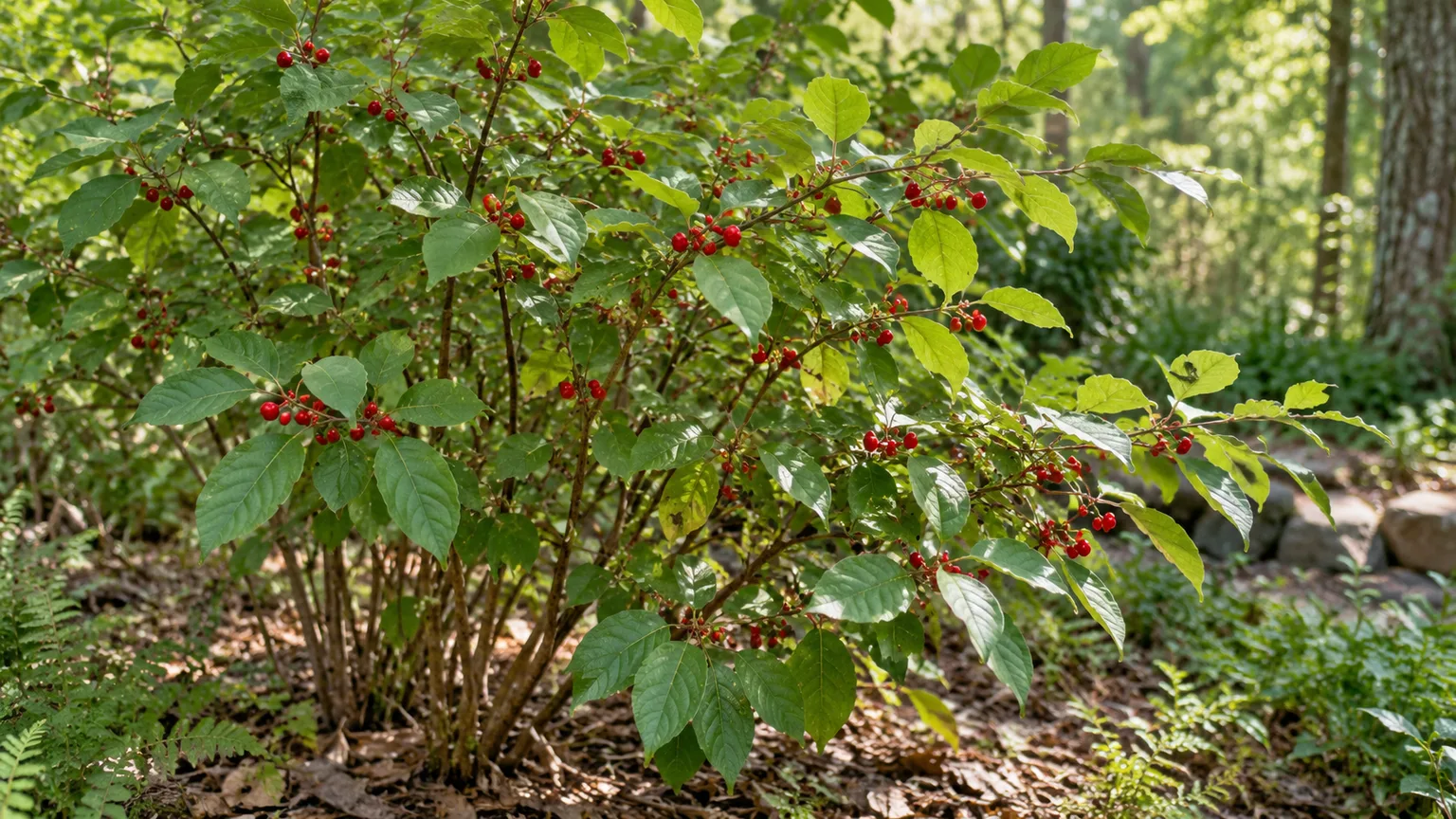
Spicebush (Lindera benzoin) earns its space by changing character through the year: tiny yellow-green flowers open on bare stems in early spring, aromatic leaves fill in for summer, and female shrubs can carry red fruit as the foliage turns yellow in fall. The shrub is native to eastern and central North America, where it grows in moist woods, stream margins, and other sheltered places; it is a good fit for a woodland edge or a naturally damp, partly shaded garden, not a plant to squeeze into a hot, dry border.
The most important decisions happen before you dig: give it room for a broad, multi-stemmed form, choose a site that will not bake dry in summer, and decide whether berries matter to you. Spicebush is low-maintenance once established, but “low-maintenance” does not mean “plant anywhere and forget it.”
Spicebush at a Glance: The Right Plant for the Right Site
Plan on a deciduous shrub commonly reaching about 6 to 12 feet tall, with a similar or greater spread; some references list plants to 15 feet. Shade produces a looser, more open shape, while adequate light and moisture encourage denser branching. Growth is not reliably a foot or two every year: extension and botanical references describe it as slow to moderate, and the first seasons are spent establishing roots rather than building an instant screen. (NC State Extension; Fine Gardening)
The usual landscape range is USDA Zones 4 through 9, but hardiness is only one part of suitability. The species is naturally native to eastern North America and southern Canada; a shrub may survive outside that range without providing the same ecological relationships. If your goal is a native habitat planting, choose plants sourced for your local region and confirm that spicebush is native where you garden. (Fine Gardening; NC State Extension)
Spicebush is also dioecious, a botanical term meaning each plant makes either male or female flowers. Both sexes bloom, but only a pollinated female can carry the bright red, single-seeded fruits; knowing this now prevents the common disappointment of planting one attractive shrub and expecting berries from it.
Choose a Site With Shade and Summer Moisture
Think “woodland edge,” not deep forest and not a baking parking strip. Dappled light, morning sun with afternoon shade, or the open shade beneath high deciduous trees usually gives spicebush a useful balance: enough light for flowering and a reasonably full habit, with less heat stress and slower soil drying than an exposed west-facing bed.
Light: Part Shade Is a Reliable Starting Point
Spicebush tolerates a range from partial shade to full sun, but that range depends on water. A site with several hours of sun can produce a denser shrub if the root zone stays evenly moist; in a hot-summer region or reflected heat near pavement, afternoon shade is safer. In deep shade, expect a more open, arching plant and fewer flowers, not a compact shrub that will conceal a fence.
Use the season to assess light rather than judging only by a winter visit. Deciduous trees admit far more sun before leaf-out than they do in midsummer, so a location that looks bright in March may become shaded by June. Conversely, a summer shade site may still be bright enough in early spring for spicebush flowers to be visible before the canopy closes.
Soil: Moisture Matters More Than a Perfect pH
Choose soil that stays cool and moist but drains between rains. Spicebush naturally occurs in moist woods and streamside settings and can tolerate occasional wetness; it is not a substitute for a plant that can sit permanently in anaerobic, stagnant water. A simple site test helps: after a soaking rain, water should not remain pooled around the root crown for days, but the soil a few inches down should not turn bone-dry every afternoon.
The shrub is adaptable to different garden soils, including many clay soils, as long as the site does not alternate between prolonged saturation and severe drought. Don’t amend only the planting hole into a rich, loose “pot” surrounded by hard clay; that can trap water at the interface or encourage roots to remain in the amended pocket. Improve a broad bed if needed, preserve leaf litter where practical, and let a soil test guide any pH correction rather than adding lime or sulfur by habit. (NC State Extension; University of Kentucky Nursery Crop Extension)

Plant Spicebush for Its Mature Footprint
Plant nursery-grown spicebush in fall or early spring, when cool weather reduces transplant stress and the soil is workable. Fall planting gives roots time to settle before summer heat; spring is useful in colder areas or where winter soils stay saturated. Avoid planting into frozen ground or during a heat wave, and water the root ball thoroughly before it dries out in its container.
Set the shrub at the same depth it grew in its nursery pot, with the root flare at or just above the surrounding grade. Loosen circling roots gently, widen the planting hole to at least twice the root ball’s width, and backfill with the soil you removed. Water slowly to settle soil around the roots. Don’t bury the base in a volcano of mulch or add concentrated fertilizer to the hole.
Measure from the center of the plant, not from the edge of the pot. Allow roughly 8 to 12 feet to the next large shrub when you want individual, airy specimens; use the wider end of that range for a mixed screen or a location where maintenance access matters. In a naturalized thicket, closer spacing can knit plants together, but it is a deliberate choice that trades separate shrub forms for a fuller mass. Check the nursery’s stated size and leave more room where local growing conditions favor a large shrub.
Spicebush can be started in a large container, but it is not a natural long-term patio shrub. Its mature size and fibrous root system make a small pot a short-term compromise: the root ball dries quickly, restricts growth, and becomes harder to move as it fills. If a container is necessary, choose a very large, frost-tolerant pot with drainage, protect the roots from winter extremes, and be prepared to water more often and eventually plant it in the ground.
Water, Mulch, and Feed With Restraint
Give a newly planted shrub a deep drink at planting, then keep the root zone evenly moist through its first growing season. Check the soil with a finger or trowel several inches down; if it is dry there, water slowly until the root ball and surrounding soil are moist. A fixed calendar can mislead: sandy soil in wind dries faster than clay under shade, and rainfall should count toward the plant’s needs.
After establishment, a spicebush in the right woodland or rain-garden site may need little supplemental irrigation. Still, established does not mean drought-proof. During a prolonged dry spell, especially on the sunny side of its tolerance, water deeply before leaves curl, crisp at the edges, or drop prematurely; a small daily sprinkle wets only the surface and encourages shallow roots.
Spread 2 to 3 inches of leaf mold, shredded leaves, or bark mulch over the root zone, keeping the material a few inches away from stems. Mulch buffers soil temperature and slows evaporation, while decaying leaves gradually contribute organic matter. Top it up when it thins rather than piling a thick blanket against the crown.
Skip a twice-yearly fertilizer routine unless a soil test or clear deficiency gives you a reason to feed. Spicebush is adapted to forest soils, and extra nitrogen can push soft, leafy growth without solving the actual problem if the shrub is struggling from drought, shade, root damage, or poor drainage. Start with site and water checks; if a soil test shows a deficiency, use the recommended nutrient and rate rather than a generic “shrub food” dose.
Plan for Flowers, Pollination, and Berries
The small, yellow-green flowers appear in clusters along the stems before the leaves emerge, often in early spring. Male shrubs usually have more prominent flowers, while female flowers are followed by glossy scarlet drupes if pollination succeeds. The fruit ripens in late summer or fall, though leafy branches can hide it until the shrub begins to color and shed leaves. (NC State Extension; The Morton Arboretum)
When berries are a goal, buy at least one confirmed female and one confirmed male from a nursery that can identify the sex. Seed-grown plants cannot be sexed from their leaves, so buying several random seedlings does not guarantee a fruiting female or a pollinating male. If the nursery cannot confirm sex, ask whether the plants are flowering, whether a pollinator is already nearby, and what its return or replacement policy is before purchasing.
Put the male and female in the same garden area, with a clear path for pollinating insects and overlapping spring bloom. There is no need to crowd them against each other; spacing them within a shared planting bed is more useful than treating them as a pair of container plants. Even with both sexes present, fruit varies with plant maturity, bloom timing, weather, and pollinator activity, so a single poor fruit year is not proof that the shrub is unhealthy.
If you want flowers and habitat more than berries, a single shrub still has value. If you want a fall display or a harvest, think about sex at purchase rather than trying to solve the puzzle after a seedling has spent years growing. This is the one care decision that watering and fertilizer cannot fix.
Leave Room for Wildlife—and for Caterpillars
Spicebush is a larval host plant for the spicebush swallowtail butterfly, and its fruit feeds birds. The caterpillars may fold or roll a leaf edge into a small shelter, then feed from the same plant; those tidy “leaf tacos” are a sign that the shrub is doing its ecological job, not a reason to spray. A few chewed leaves rarely threaten an established shrub, and broad-spectrum insecticides can harm the very insects a native planting is meant to support. (NC State Extension; Fine Gardening)
Wildlife value depends on more than the label “native.” A regionally appropriate plant, flowering and fruiting in the right season, can offer food and shelter as part of a layered garden. Pair spicebush with other native understory plants suited to the same moisture and shade rather than creating a single-species row that has no flowers at other times of year.
Young plants may be browsed by deer or rabbits even when an older shrub is left alone. If the tips disappear repeatedly, use a temporary trunk guard or a cage that is tall and wide enough to keep animals from reaching over it, and remove the protection once the shrub is no longer vulnerable. Do not interpret a few browsed tips as a disease problem.
Prune After Bloom to Keep the Natural Shape
Spicebush needs little routine pruning. Remove dead, broken, or rubbing branches as you notice them, and shape it only when a stem is genuinely out of place. Because the spring flowers form on older wood, pruning in winter or before bloom can remove that year’s display; the safer window for size or form work is shortly after flowers fade. (The Morton Arboretum; Purdue Extension)
For a multi-stem shrub that has become congested, thin a few of the oldest stems at ground level instead of shearing every branch into a ball. Work gradually—removing no more than about one-third of the oldest stems in a year—so the shrub retains structure while new shoots take over. If you cut a whole plant hard to the ground, expect to sacrifice flowers and fruit during recovery and confirm that such a reset is appropriate for your size goal before making the cut.
Use clean, sharp bypass pruners for small stems and a lopper for larger ones. Cut just outside the branch collar where the stem meets a larger branch; don’t leave a long stub or cut flush into the trunk. If the plant is already the right size, the best pruning plan is often to do nothing.
Grow Spicebush From Seed
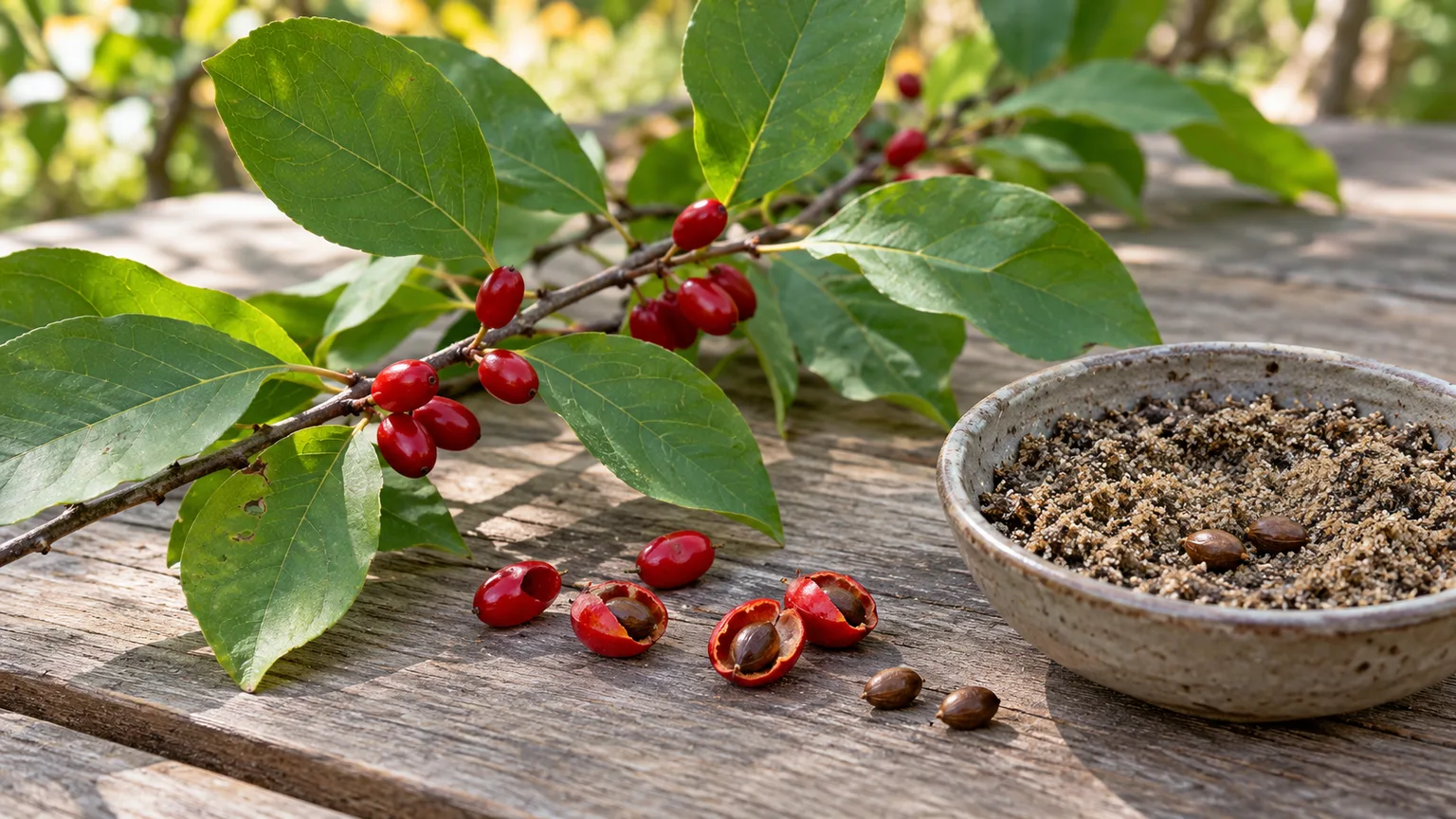
Seed is often more dependable for home propagation than rooting a cutting, but it asks for patience and fresh handling. Each red fruit contains one seed. A fruiting female may give you more seed than you can use, but do not collect from the wild without permission, and leave plenty of fruit for birds and natural regeneration.
Collect Fresh Red Drupes and Clean the Seed
Harvest fully red fruit in late summer or fall. Remove the fleshy outer pulp promptly and rinse the seed; do not let it dry out in a paper envelope while you prepare a sowing plan. Spicebush seed can lose viability after drying, which is why the practical workflow is to clean it and begin stratification soon after collection rather than treat it like ordinary dry-stored garden seed. (Ask Extension; University of Kentucky Nursery Crop Extension)
Cold-Stratify Without Letting Seed Dry
The simplest controlled method is cold-moist stratification: mix cleaned seed with barely damp peat, sand, or another clean medium, place it in a labeled sealed bag or container, and refrigerate it for about four months. The medium should feel damp but should not release water when squeezed. Check it periodically for mold, drying, or a seed that has begun to sprout, and handle any sprouted seed gently.
Published recommendations can look different because older seed manuals describe a warm period followed by a cold period. A University of Kentucky propagation study found that warm pretreatment was unnecessary and reduced germination compared with cold stratification alone; a Cooperative Extension answer also recommends roughly four months of cold-moist treatment. For a home grower, cold-only is the simpler evidence-backed starting point, while fresh outdoor sowing in fall lets natural winter conditions provide the cold phase. (University of Kentucky Nursery Crop Extension; Ask Extension)
Sow, Raise, and Transplant Seedlings
After chilling, sow seeds about ¼ inch deep in a well-drained seed-starting or garden mix, then keep the medium warm and consistently moist—not waterlogged. A pot lets you protect seedlings from rodents and find them later; an outdoor seed bed can work if it is labeled and protected from digging animals. Germination may be uneven, so keep the pot or bed through the season rather than discarding it after a few weeks.
Once seedlings have several true leaves and a manageable root system, move each one to its own pot or a prepared nursery bed. Keep young roots moist and provide bright shade while they recover; gradually acclimate them to outdoor conditions before transplanting. Choose the final site while plants are small, because spicebush develops a fibrous root system that makes established shrubs difficult to move. (University of Kentucky Nursery Crop Extension; Ask Extension)
A seedling’s sex is unknown until it flowers, so seed propagation is a poor shortcut when a berry crop is your main goal. It is a good choice if you are building a naturalized planting, are happy to wait for an unknown mix of male and female plants, or want to raise more than one shrub and select later.
Try Cuttings When You Need a Clone
A cutting can preserve the sex and characteristics of a known female or male, which matters if you already have a fruiting shrub and want another plant like it. The tradeoff is that spicebush can be difficult to root, so take several cuttings and treat success as uncertain. The Royal Horticultural Society lists greenwood cuttings in early summer as a propagation option, while University of Kentucky guidance notes that propagation is mostly by seed and cuttings can be challenging. (RHS; University of Kentucky Nursery Crop Extension)
In early summer, choose healthy, non-flowering new growth that is beginning to firm but is not yet woody. Cut a 4- to 6-inch section just below a node with clean snips, remove leaves from the lower half, and place the base in a sterile, airy medium such as a perlite-based propagation mix. A small amount of rooting hormone may help, but it does not guarantee roots.
Keep the medium lightly moist and the cutting in bright shade with high humidity, using a clear cover that does not press against the leaves. Vent it regularly to limit mold, and avoid tugging on the stem to test for roots; look for new growth and resistance to a very gentle pull. Pot it up only after roots have formed, then harden it off before moving it outdoors. If taking cuttings from a garden plant is not practical, seed is usually the more forgiving route.
Follow a Seasonal Spicebush Care Calendar
Late winter to early spring: Look for swelling flower buds on bare branches. Avoid pruning before bloom unless there is a broken or hazardous stem; winter appearance is normal for a deciduous shrub, not evidence of decline.
After flowering: Prune only if the shrub needs shaping or renewal. This short window lets you enjoy bloom and leaves time for new growth to develop before winter. In warmer climates the flowers may finish earlier; follow the plant’s bloom, not a fixed date.
Late spring and summer: Watch moisture closely during establishment and heat waves. Look for swallowtail caterpillar leaf shelters before assuming folded leaves are a pest, and protect a young shrub from browsing if necessary.
Late summer through fall: Female plants with a nearby pollinator may ripen red fruit as leaves turn yellow. Collect a modest amount of fruit for seed only after it is fully red, then clean and chill the seed promptly; leave most fruit for birds.
Winter: Let the shrub rest. Keep mulch away from stems, remove only dead or damaged wood, and do not fertilize dormant plants in an attempt to force spring growth.
Troubleshoot Wilt, Leaf Drop, and Slow Growth
Some symptoms have a simple seasonal explanation. Yellow leaves in autumn followed by leaf drop are normal; a few chewed leaves, especially folded ones containing a caterpillar, are also expected in a wildlife garden. Slow growth in a shaded site may reflect the plant’s naturally measured pace, while sparse branching often points to very deep shade or insufficient light.
If foliage droops during hot, dry weather, check soil moisture before reaching for fertilizer or pesticide. Water deeply if the root zone is dry, and note whether the shrub recovers overnight. Repeated wilting in wet soil suggests a different problem—root stress or poor drainage—and adding more water can make it worse. Check for mechanical damage, recent transplant stress, and reflected heat as well as drought.
Laurel wilt deserves attention because spicebush belongs to the laurel family and infections have been documented on the species. The disease is associated with the redbay ambrosia beetle and a fungus that blocks water movement; infected hosts can wilt rapidly, and dark staining in sapwood is a more specific clue than wilt alone. Still, brown leaves are not a diagnosis: drought, root damage, heat, and winter injury can look similar. (USDA Forest Service; North Carolina Forest Service)
If a spicebush wilts suddenly and does not recover after the soil is properly moist—especially in a region where laurel wilt has been reported—photograph the plant and contact your local Extension office or forest-health agency for guidance. There is no dependable home cure. Do not transport suspect branches, firewood, or chips away from the property; if the disease is confirmed, follow current local instructions for disposal rather than improvising a removal plan. Those precautions matter because moving infested host material can spread the beetle and pathogen. (North Carolina Forest Service; USDA Forest Service)
Conclusion
Spicebush is easiest to care for when its site resembles the place it evolved to grow: partly shaded, moist but not persistently waterlogged, and large enough for a broad shrub. Plant it with a realistic mature footprint, water it through establishment and dry spells, mulch with restraint, and skip automatic fertilizer unless a soil test points to a need.
If red berries are part of the plan, confirm that you have both a female and a male plant; if propagation is the goal, keep seed fresh and use cold-moist stratification or sow it outdoors in fall. Prune just after spring bloom, let the caterpillars use their host plant, and treat sudden, persistent wilt as a reason to seek a local diagnosis—not as a reason to spray or immediately haul branches away.



