How to Get Rid of Spiders in Your Basement
Get rid of spiders in your basement with five steps: remove webs and egg sacs, clear hiding places, reduce dampness and prey, seal gaps, and monitor safely.
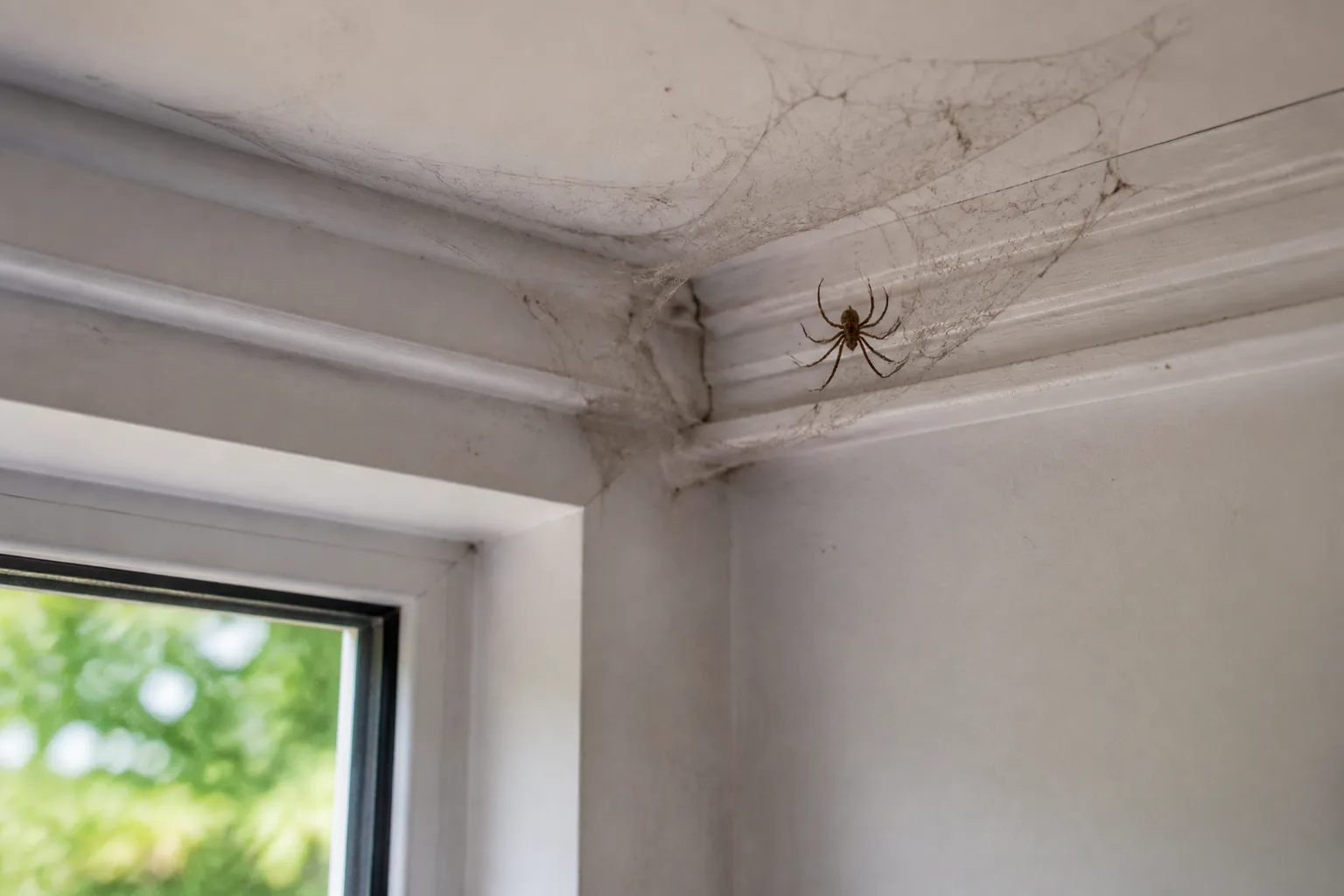
To get rid of spiders in a basement, start by removing the webs and egg sacs you can reach safely, then reduce the clutter, dampness, insect prey, and entry gaps that let spiders settle there. Spraying the room before addressing those conditions usually gives short-lived results: new spiders can walk in, and pesticides do not remove the webs or hiding places already in the room.
The practical order is simple: clean first, fix what is drawing or admitting spiders, and watch whether activity returns. Most spiders found indoors are not a medical emergency, but don’t reach blindly into boxes or corners; if you suspect a medically important species or cannot safely reach a nest, step away and get local expert help.
Why spiders settle in basements
A basement often offers several things spiders use: quiet corners, sheltered storage, routes from outdoors, and insects to eat. Some spiders are also more common around moist areas; the common house spider, for example, is often found in damp basements and crawl spaces. That does not mean every spider needs a wet room. A dry basement can still support spiders if it has prey, undisturbed corners, and openings to the outside.
Think of the basement as a small habitat rather than a single problem to spray. A window well that attracts flying insects, cardboard stored against a wall, and a gap around a pipe can each contribute in a different way. Fixing just one may help, but repeated webs after cleanup usually mean another condition remains.
Spiders are predators, so their presence can also signal that other small arthropods are available. If you keep seeing spiders near a floor drain, utility sink, or damp storage, check for the insects they may be hunting and the moisture that supports them. Colorado State University Extension notes that spiders are often found in basements where they seek moisture, while UC IPM emphasizes reducing both hiding places and insect prey as part of control.
Check what you are seeing before you treat
A single spider crossing the floor is different from webs repeatedly appearing in several corners. Before buying a spray, take a minute to note where you see activity, whether the web looks newly maintained or dusty, and whether an egg sac or likely prey insects are present. This quick check helps you match the treatment to the source instead of applying a product across the whole basement.
Web, egg sac, or live spider?
A web is a sign that a spider has been there, but it does not prove the spider is still present. Some spiders abandon a web and build another nearby; dust can collect on old webbing. A fresh, clean web in the same spot after you have vacuumed it suggests the area is still useful to a spider, especially if insects are getting caught there.
An egg sac is a separate issue. It may be attached to a web, tucked into a crack, or hidden behind stored items, and its appearance alone cannot reliably identify the species or tell you whether it is occupied. Don’t squeeze or open it to find out. Penn State Extension describes the common house spider as a frequent resident of damp basements and notes that females can produce multiple egg sacs; a visible sac deserves contained disposal, not a quick swipe that scatters it.
If you find only a spider or one isolated web, remove it and watch that location. If webs return in the same corner, inspect nearby openings, stored boxes, and insect activity. Several webs across a large basement may still reflect multiple ordinary spiders rather than a structural infestation, but repeated activity is a reason to inspect methodically.
When not to handle one yourself
Do not try to identify a spider by crushing it, cornering it, or picking it up. Most household spiders avoid people, but an animal pressed against skin or trapped in clothing may bite defensively. A phone photo taken from a safe distance, along with your state or county, is a better starting point for identification.
Black widows and brown recluses are medically important in parts of the United States, but ranges differ and look-alikes are common. UC IPM notes that some species considered dangerous in one region do not naturally occur in another. If the spider resembles a widow or recluse, if many spiderlings are emerging, or if the sac is high, concealed, or near a place you must reach, keep people and pets away and contact a local extension office or pest professional.
Five steps to get rid of basement spiders
Work from the visible problem toward its cause. You can do the first cleanup in one visit, but sealing a gap or drying a basement may take longer; the point is to handle these in an order that makes each later step more effective.
Step 1: Remove webs, spiders, and egg sacs safely
Put on closed shoes and gloves, turn on the lights, and use a flashlight to scan ceiling-wall joints, window frames, joists, shelving, under stairs, and the backs of stored items. Keep your hands out of dark gaps. A vacuum with a hose and crevice attachment usually gives you more distance and control than a broom, especially for webs and reachable egg sacs.
For one spider you can identify as harmless and reach without moving heavy objects, you can trap it under a cup or jar and slide a stiff card underneath. If you are unsure what it is, choose a vacuum hose or leave it alone for professional identification rather than trying to pick it up. For a sac or web, hold the vacuum nozzle against the surface long enough to collect the silk and contents without jabbing or crushing them.
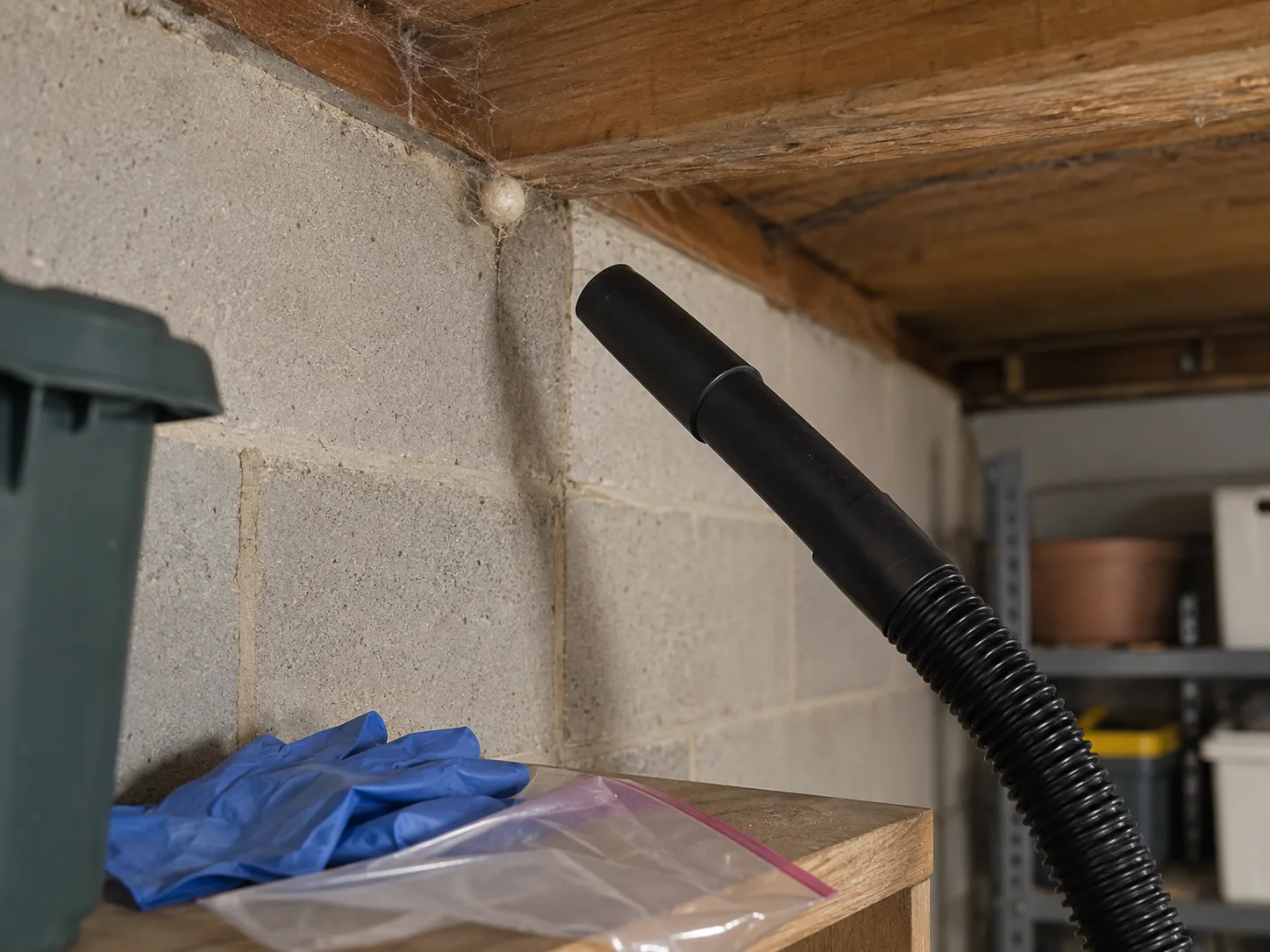
Dispose of what you remove outdoors. If your vacuum uses a disposable bag, seal or replace it according to the manufacturer’s instructions; with a bagless model, take the canister outside before emptying it into a sealed trash bag. Do not empty it into an indoor bin or compost. Vacuuming can also remove insects and shed material caught in webs, so it is more useful than simply knocking the web down.
If you cannot reach the sac without climbing, leaning over equipment, or reaching into an unseen space, stop and ask for help. A small ladder, a crowded basement, and a hidden spider are a bad combination. You do not need to risk a fall or a bite to clear one corner.
Step 2: Clear hiding places and change storage
Work in small sections so you can inspect the material as you move it. Break down empty cardboard, discard what you no longer need, and replace long-term cardboard storage with sturdy containers that have tight-fitting lids. Put bins on shelving rather than directly on the floor, and leave a little room around the wall so you can see and vacuum behind them.
Before moving a box or folded fabric, look at its underside and handle it with gloves. Spiders prefer undisturbed shelter, so a dense pile of old boxes can be more important than whether the room has been swept recently. Avoid transferring a webbed or damp item to a new corner without checking it; that only relocates the hiding place.
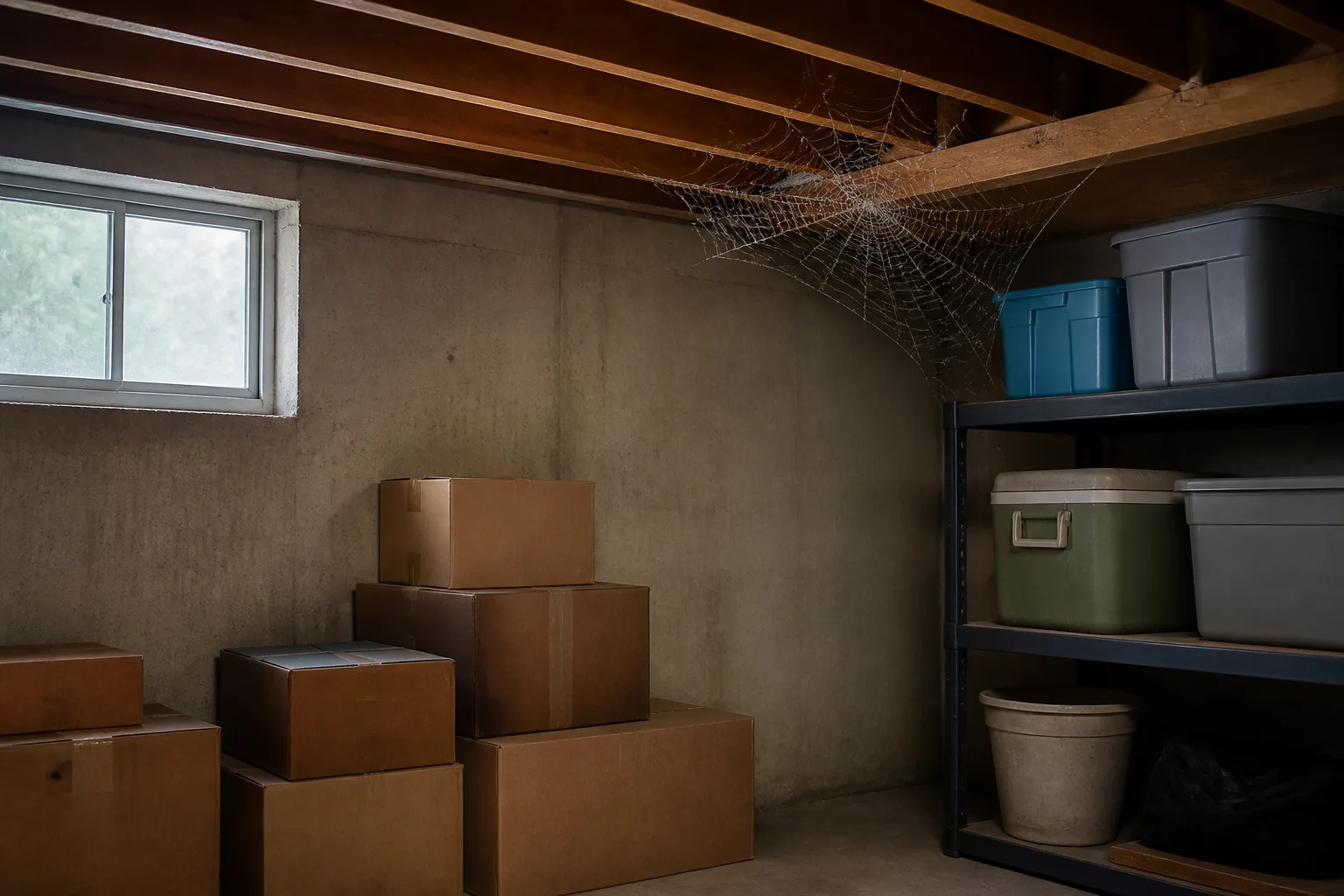
A clear perimeter helps in two ways: it removes sheltered spots and makes it easier to notice a fresh web or a new entry point. You do not need to make the basement bare. Keep the items you use, but store them so you can reach the floor, baseboards, and wall corners for inspection. UC IPM recommends keeping stored boxes off the floor and away from walls where possible, and sealing boxes to make them less useful as spider harborage.
Step 3: Dry damp areas and reduce insect prey
Look for a leak beneath a sink or water heater, condensation on cold pipes, damp window wells, seepage after rain, and standing water near a floor drain. Repair the source where you can; a dehumidifier can help manage room moisture, but it is not a spider repellent and cannot fix a leaking pipe or a wet foundation. If the area smells musty or stays damp, track the humidity with a small hygrometer and investigate the pattern rather than guessing. If you use a dehumidifier, record the room’s relative-humidity reading before you start and compare it after a week instead of judging by feel alone. Keep the unit level and leave the air-intake clearance its manual specifies; check the reservoir or drain hose so a full tank or blocked line does not stop it. Place a separate hygrometer away from the unit and obvious wet surfaces to make readings easier to compare.
If readings remain high, look again for seepage, condensation, or drainage problems rather than assuming the machine itself is the only issue.
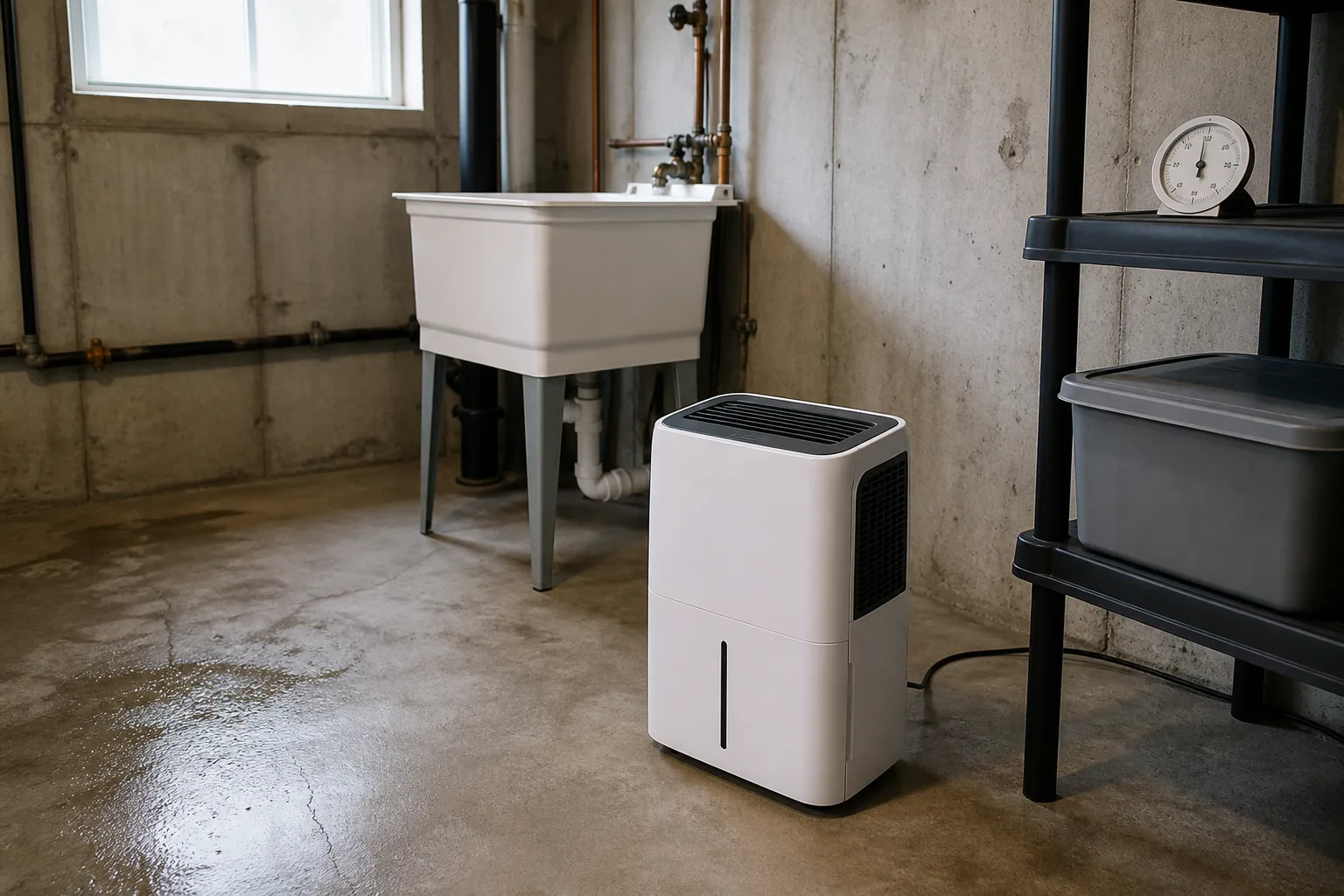
Reducing dampness is useful because some spiders and many insects associated with basements prefer moist shelter. It will not remove a spider that is already in a dry corner, and it will not solve a gap under a door. Colorado State University Extension recommends sanitation and habitat changes alongside any pesticide; it also says pesticide alone will not be effective if favorable habitat remains.
Look for prey rather than spraying every insect you see. Small flies near a drain, moths near a window, or other recurring insects may be the reason a web is productive. Identify and address that pest’s source, keep food waste sealed, and clean the drain or storage area when appropriate. A sticky card can help show where crawling insects are active, but it is a monitoring tool, not a substitute for fixing the source.
Step 4: Seal entry routes and reduce outdoor attractants
Inspect the basement from inside and outside with a flashlight. Check the fit of exterior doors and basement windows, torn screens, window wells, vents, gaps around utility lines, and cracks near the foundation. Add or repair a door sweep, weatherstripping, or screen; use a suitable sealant for small stationary cracks and gaps around pipes.
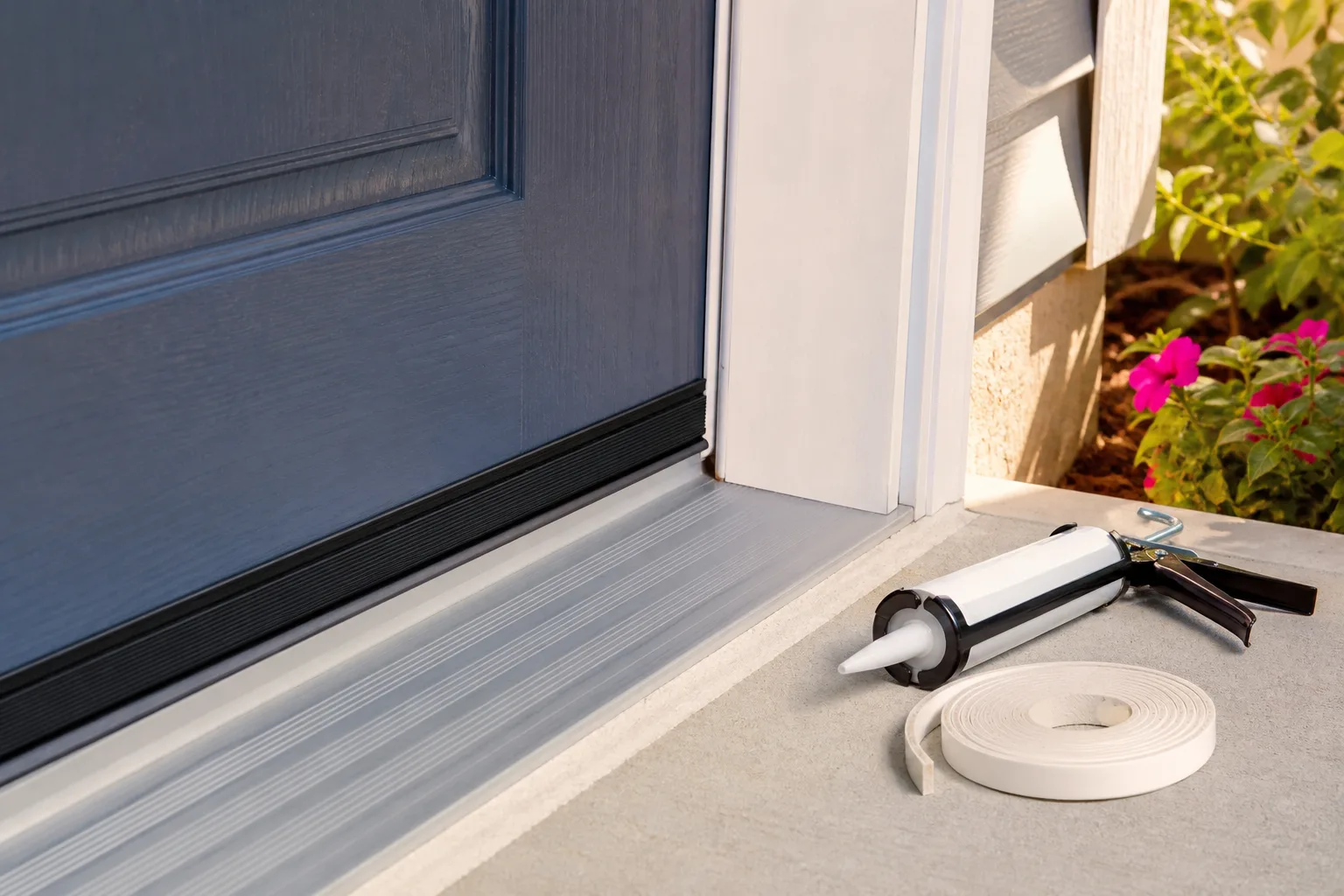
Do not seal a required vent, drain, weep opening, furnace air intake, or other building opening just because it looks like a route. If you cannot tell whether an opening has a safety or drainage purpose, ask a qualified building or HVAC professional. A moving foundation crack, active seepage, or loose window well needs a repair matched to that problem rather than a bead of caulk over the symptom.
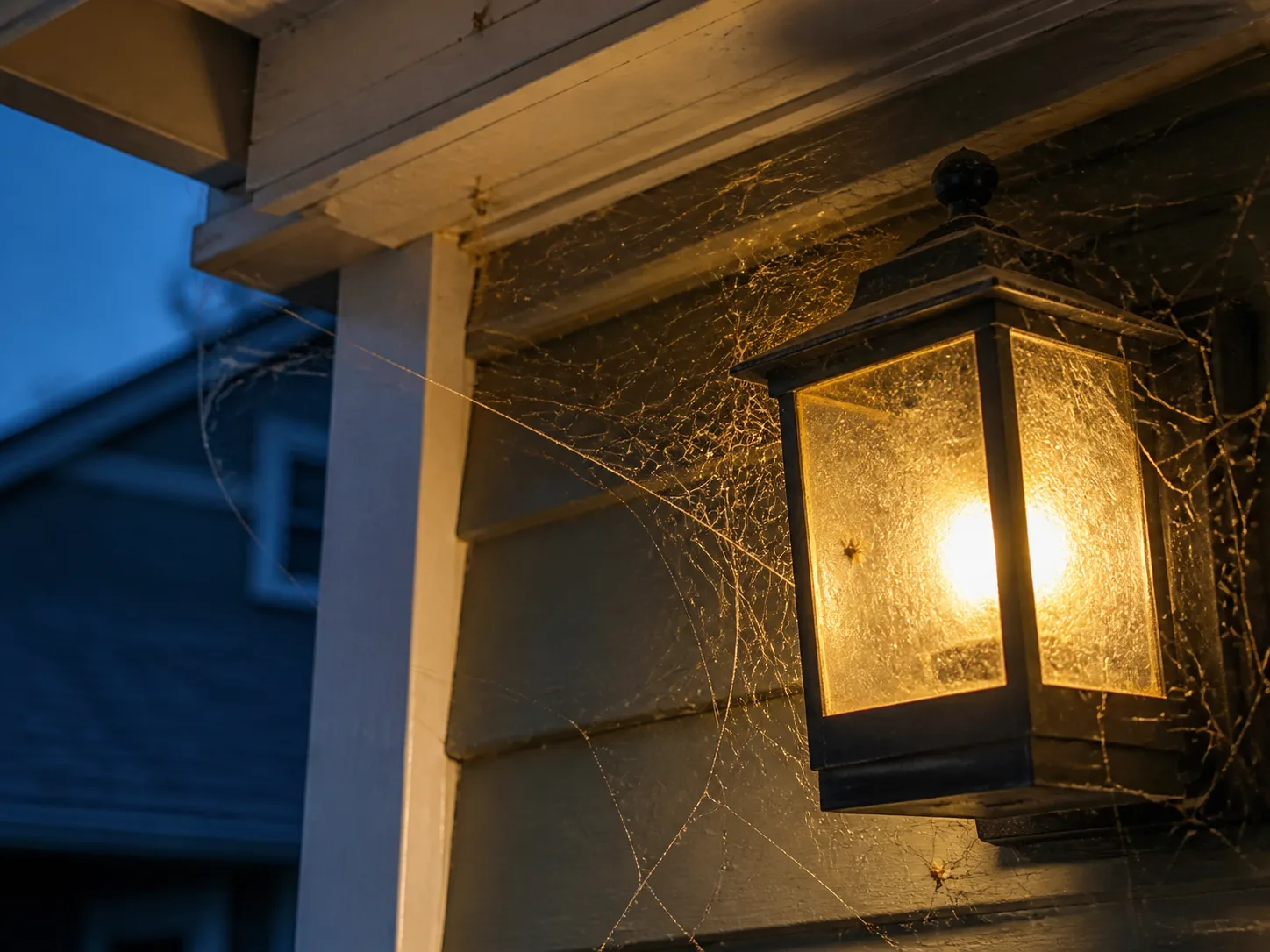
Outside, move firewood, leaf piles, boards, and dense stored materials away from the foundation where practical. Trim branches and shrubs that touch the house, and keep basement window wells clear without blocking drainage or ventilation. Outdoor lights can gather flying insects that spiders hunt; turn off unnecessary fixtures or use a warmer, lower-attraction bulb near doors and windows, while keeping needed paths safely lit. UC IPM and Oregon State University’s National Pesticide Information Center both recommend exclusion and reducing insect-attracting lighting as part of prevention.
Step 5: Monitor activity before considering pesticide
After cleanup, make a short map of where the webs or spiders were. Check those points once a week for a few weeks, especially windows, corners behind shelves, floor-wall joints, and utility penetrations. A new web at the same window after rain suggests a route or a nearby prey source; a fresh web in a different corner may point to undisturbed storage instead.
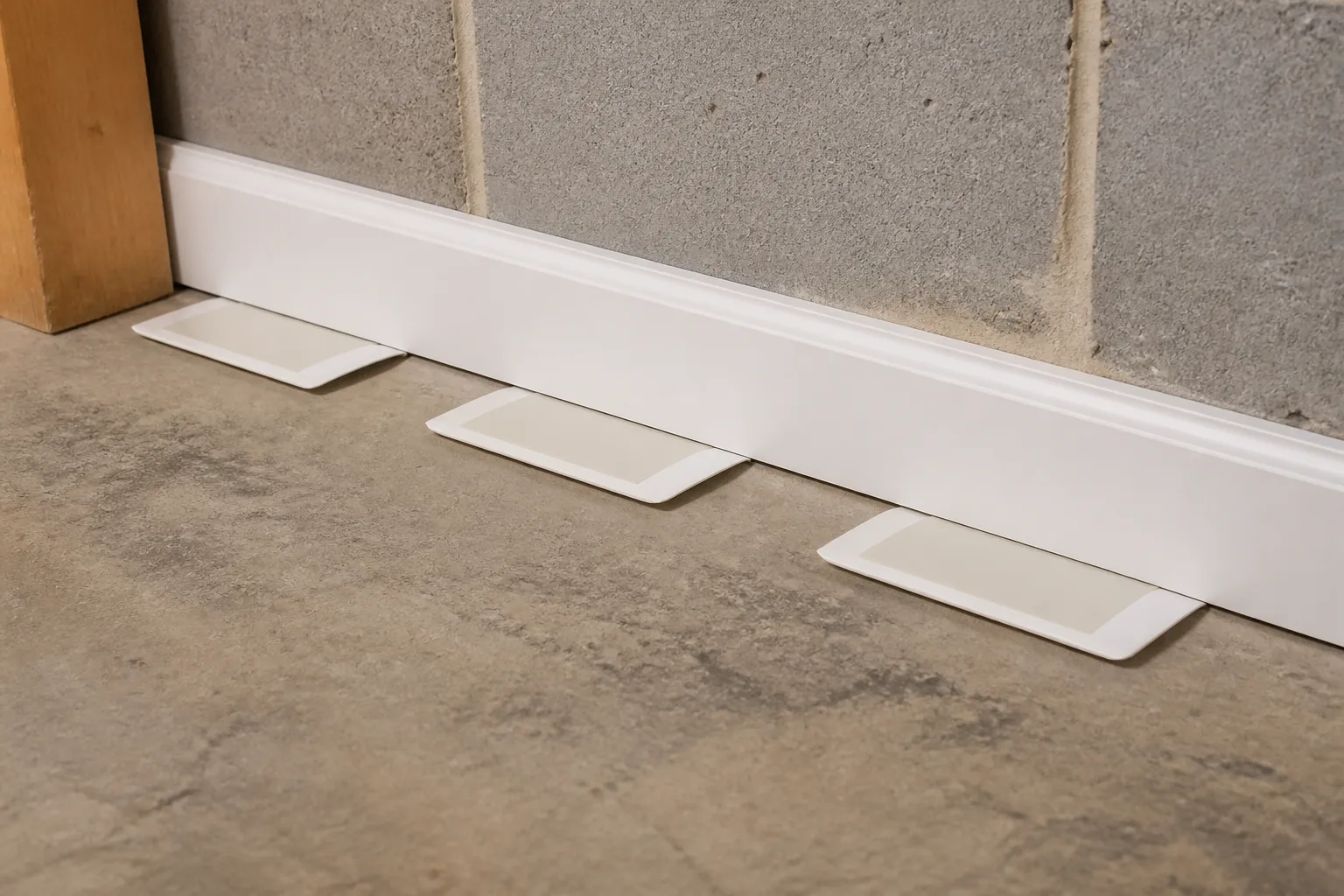
If you use sticky traps to monitor movement, place them along baseboards or near likely travel routes, not in the middle of an open floor. Keep them out of reach of children and pets, and check them regularly. A trapped spider can help show where activity is concentrated, but a trap does not seal the access point or eliminate a population on its own.
Only consider a pesticide if cleanup, storage changes, and repairs have not reduced repeated activity or a qualified professional recommends it. Choose a product whose label specifically allows the intended indoor location and target pest; follow its directions for placement, ventilation, protective equipment, re-entry, and pet or child restrictions. Never mix products, apply outdoor-only chemicals indoors, or spray an entire room because a label mentions spiders. UC IPM cautions that insecticides do not provide long-term spider control, and the National Pesticide Information Center stresses reading the complete pesticide label before purchase or use.
Which spider treatments are worth using?
Vacuuming, exclusion, and habitat changes do the dependable work. They remove spiders and egg sacs that are present, reduce hiding places, and make entry more difficult. Sticky monitors can help you determine where activity continues, while a dehumidifier can address dampness that contributes to a broader pest problem.
A residual insecticide may have a limited role when spiders remain a recurring concern, but it should be targeted to label-approved cracks or hiding sites and used only as directed. It is not a replacement for removing webs, fixing a screen, clearing cardboard, or dealing with insects that are feeding the spiders. Total-release foggers are especially poor first choices for spiders: Colorado State Extension says they likely have little effect on them.
Treat claims about scent repellents, ultrasonic devices, or a dust sprinkled around the room cautiously. Even when a product or household mixture has a strong smell, it does not close a gap or remove an egg sac. Food-grade on a dust label is not permission to inhale or spread it without precautions; before using any pesticide product, read its label and confirm that it is appropriate for the surface, occupants, pets, and location.
Spiders are useful predators in gardens, where they eat insects that can damage plants. Savvy Gardening and Planet Natural both describe the role garden spiders play in catching insect prey; that is a good reason to clear webs from indoor traffic areas without trying to make the yard completely spider-free. Keep the intervention focused on the basement and the openings beside it.
When to call a pest professional
Call a licensed pest professional if you repeatedly find spiders or egg sacs after you have cleaned and sealed obvious gaps, if a suspected widow or recluse is present, or if activity is concentrated in a wall void, crawl space, or area you cannot inspect safely. A good inspection should look for entry points, moisture, prey insects, and shelter before recommending a routine spray. Ask what problem the proposed treatment addresses, which products will be used, and what preparation and re-entry steps the label requires.
Get building help rather than pest treatment for a persistent leak, recurring seepage, a damaged window well, or a foundation crack that is widening. Those conditions can keep attracting insects even if a pest company removes the visible spiders. A plumber, waterproofing specialist, or qualified contractor may be the right next call.
If someone may have been bitten, do not assume that every red or swollen mark came from a spider. Seek medical or poison-control advice for severe symptoms or a suspected medically important spider, and use a photo or specimen only if you can collect it safely. The National Pesticide Information Center also directs people to a local extension office for help identifying spiders around the home.
A simple maintenance plan
A predictable routine is more effective than waiting until webs cover several corners. Keep the cleanup focused on the locations that produce activity, and use what you observe to decide whether the next change should be storage, a repair, or insect control.
Weekly: inspect and vacuum
Once a week during the first few weeks, check the same corners and entry points and vacuum any new webbing. Look behind, not just in front of, shelves and boxes; keep a note of where activity returns and whether you also see flies or other small insects. If a corner remains clear, you can move to a less frequent check rather than vacuuming the entire basement every day.
Each season: inspect the perimeter
At a seasonal reset, check weatherstripping, door sweeps, screens, window wells, and the seal around utility penetrations. Clear leaves and stored materials beside the foundation, move firewood away from doors and walls, and confirm that gutters and drainage are not directing water toward the basement. In regions where spiders commonly move indoors as outdoor conditions change, finish these checks before that local seasonal shift rather than relying on a one-date-fits-all calendar.
Read the pattern if webs return
A returning web is useful information, not proof that your first cleanup failed. If the same window or pipe opening is active each week, inspect that route and the outdoor side of it; if several webs appear around damp storage, look for moisture and prey before treating the webs as separate problems. A roaming spider without a web may be a hunter passing through, so focus on entry routes and protected storage as well as web removal.
Keep a short note of the date, location, and what else you found. If you call an extension office or pest professional, a clear phone photo and a repeated-location pattern are more helpful than a guess based on color. If the activity spreads, sacs appear repeatedly, or you cannot inspect the source without moving heavy objects, leave that area alone and ask for help.
If webs return despite a clean, dry, organized basement, use the pattern as evidence. Repeated activity at one opening calls for exclusion; activity around damp corners calls for a moisture or prey inspection; spiders in several inaccessible areas call for professional identification. That gives you a practical next step without escalating automatically to more spray.
Conclusion
The best way to get rid of spiders in a basement is to remove the spiders and egg sacs you can reach safely, then make the room less useful to the next one. Clear cardboard and clutter, fix dampness and the insects associated with it, seal appropriate gaps, and check the same locations for a few weeks.
A dehumidifier or pesticide can play a supporting role, but neither replaces the underlying inspection. If you see a suspected medically important spider or cannot reach an egg sac without risk, step back and get local help; otherwise, a careful cleanup and a few targeted repairs are a sensible first response.