How to Get Rid of Powderpost Beetles Safely
Powderpost beetle holes may be old. Find fresh activity, protect valuable wood, and compare removal, professional heat, borates, and fumigation.
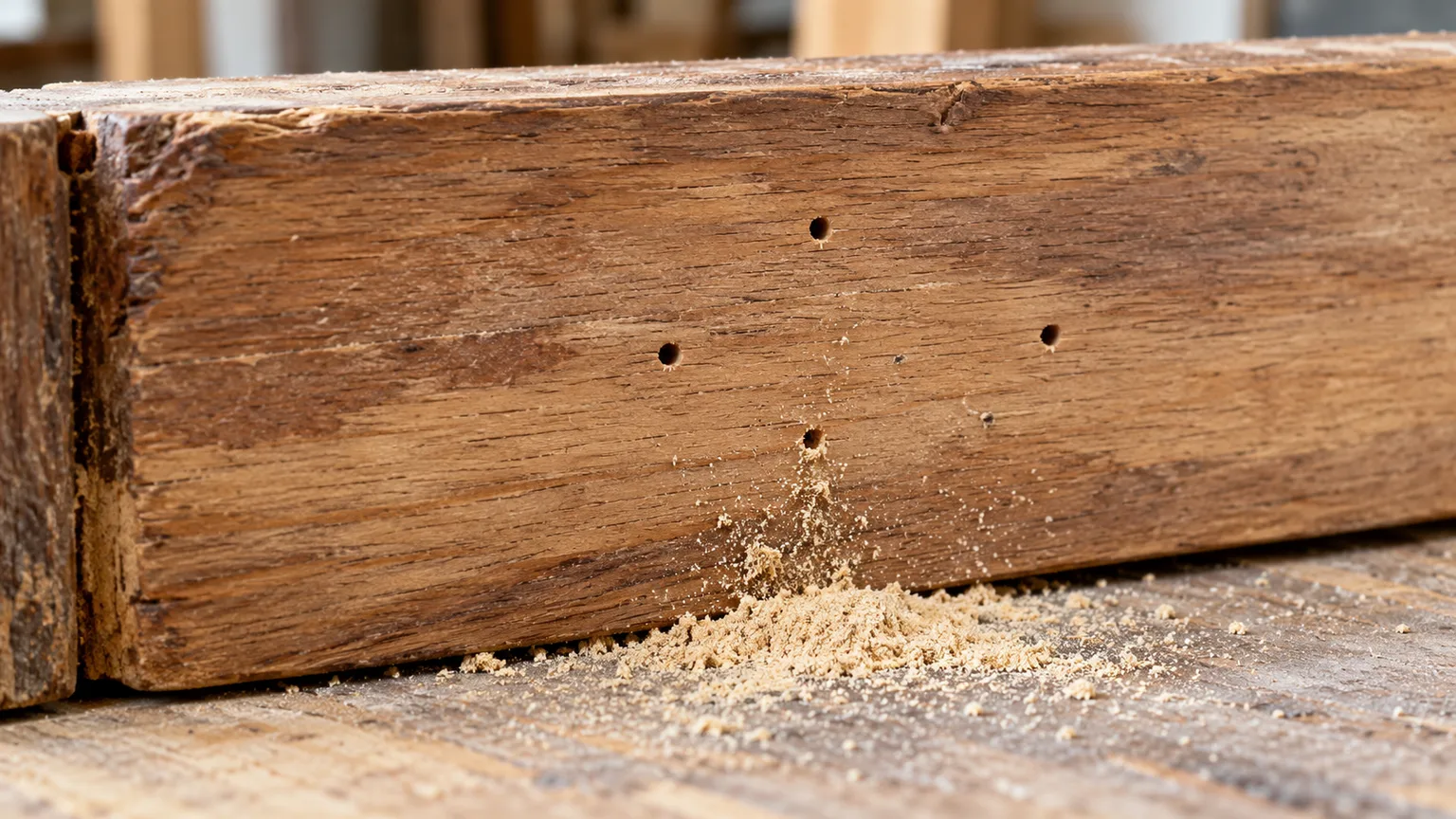
Do not treat every round hole as an active infestation. Powderpost beetle larvae can stay hidden inside wood for months or longer, and old exit holes may remain long after beetles have left. First preserve the evidence, check whether new frass or holes appear, and identify whether the wood is a small movable object, replaceable trim, or part of the structure. Then choose a treatment that can reach the beetles without damaging the wood or putting people at risk.
For a single infested item, removal or a properly controlled professional heat or cold chamber may be enough. For accessible bare framing, a labeled borate treatment may be an option. Widespread activity in hidden structural areas needs an inspection and a treatment plan from a licensed pest professional; whole-building fumigation is a costly last resort, not the automatic answer.
What to do in the first 24 hours
Clear away loose powder with a vacuum or damp disposable cloth, then take close, well-lit photos of the holes and the wood around them. Put the dust and any beetle you find in a sealed bag or jar if you want an extension office or pest professional to identify them. Avoid sanding, painting, drilling, spraying, or discarding the wood until you know whether it is valuable, structural, or actively infested; those actions can erase useful evidence or make a repair harder.
If the suspect item is furniture or a wooden object, move it away from other unfinished wood if you can do so without damage. This limits contact while you inspect it; it does not kill insects already inside. Do not carry firewood through the house or stack it beside a woodpile that has not been checked. If the holes are in a beam, joist, stair stringer, floor, or other load-bearing component, keep the area clear of unnecessary loads and arrange a qualified inspection before attempting a repair.
The larvae generally damage wood slowly, so a few holes without sagging, softness, or other structural symptoms do not usually call for a same-day pesticide application. University of Maryland Extension says homeowners can take weeks or months to evaluate options. That time is useful: it lets you distinguish ongoing activity from old damage and avoid paying for an unnecessary treatment.
How to tell if the infestation is active
Fresh, pale frass emerging from a hole is stronger evidence than a hole by itself. Clean the dust away, photograph the area, and check it again after a few weeks; newly deposited dust or a new exit hole supports active beetle emergence. Finding live adults indoors can also help, especially if you can connect them to the affected wood rather than to firewood or an open door. A few beetles at a windowsill do not, by themselves, prove that the building’s framing is infested.
Beetle life cycles vary with species, wood, and conditions. A quiet month is not proof that all larvae are gone, particularly when damage is old or hidden behind finishes. If the item is an antique, high-value furnishing, or part of the building, use a non-invasive check and ask an experienced inspector to interpret the pattern rather than scraping away finish to hunt for larvae.
Run a clean monitoring test
After cleaning, mark the edge of a small suspect area with removable tape or make a dated photo so you can compare the same holes later. Place a sheet of plain paper beneath a piece of furniture to catch any new powder, and keep the item in the same position. Check after two to four weeks and again during the next likely emergence season. New dust means the activity deserves attention; unchanged old holes do not prove the wood is pest-free, but they are not a reason to fumigate a house on their own.
For a small, low-value piece of rough lumber, Iowa State University Extension describes plugging a limited area of exit holes and watching for new holes over six to 12 months. That test is less suitable for a finished antique or an important structural member, where fillers or paint can alter the surface or conceal evidence. Monitoring is a way to gather information, not a treatment, and it should not delay an assessment when the wood is soft, cracked, sagging, or visibly losing section.
Powderpost beetles or another wood pest?
“Powderpost beetle” is a broad common name for several wood-boring beetles, and people often use it for other insects that leave holes in wood. A photo can narrow the possibilities, but accurate identification matters because different beetles prefer different wood and moisture conditions, and some insects emerging from stored firewood cannot reinfest house framing. If treatment is being considered, ask for identification based on the beetle, frass, wood species, hole pattern, and location—not just a quote based on a handful of holes.
True powderpost beetles are most associated with hardwood sapwood and bamboo. Deathwatch beetles are more often linked to older, damper softwood; false powderpost beetles can leave coarser, tightly packed frass. The common label matters less to a homeowner than the practical question: is the evidence fresh, what is the insect, and is the affected wood vulnerable or load-bearing?
Read holes and frass as clues, not a diagnosis
Powderpost beetle exit holes are usually small, round, and fairly uniform on one piece of wood. Their frass is notably fine, like flour or talc. Drywood termite waste is more like small, hard, ridged pellets; coarse fibrous debris may point to carpenter ants or other wood pests. None of these clues is conclusive in isolation, and exit holes can differ by beetle group, wood, and age.
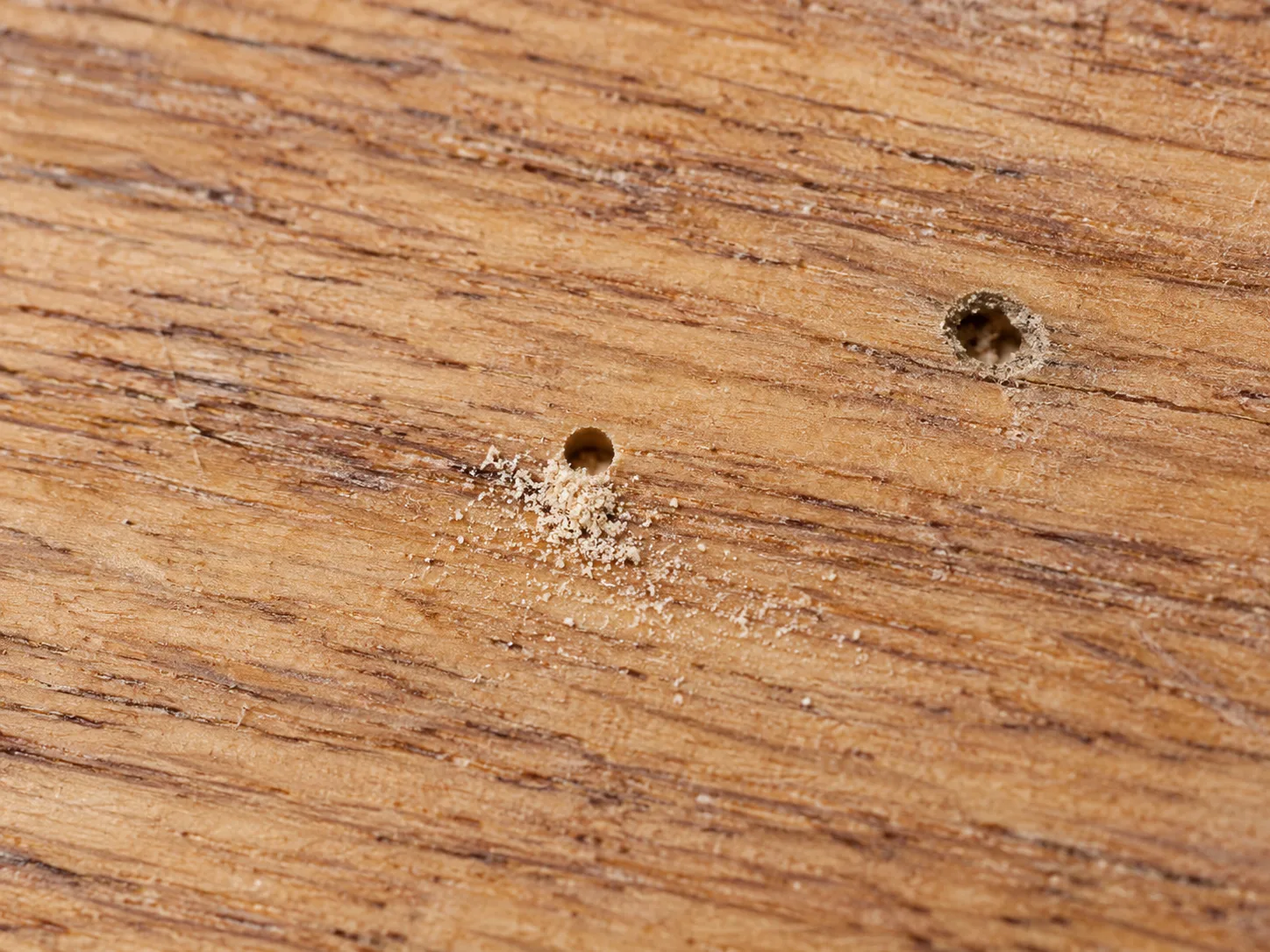
Fine, fresh dust below a hole is useful evidence to monitor; a hole alone cannot tell you whether larvae remain in the wood.
The UC Statewide IPM Program’s wood-boring beetle guide explains how frass texture and emergence-hole patterns help distinguish powderpost, deathwatch, and false powderpost beetles. Do not rub unidentified dust between bare fingers or push tools deep into a structural member. Collect a small sample carefully if needed and leave deeper inspection to a pest or building professional.
Locate the source before treating
Start with the wood where fresh frass appears, then inspect nearby unfinished or porous wood: the underside and joints of furniture, floor edges, trim, exposed joists, bamboo items, stored lumber, and firewood. Check both the room and the path by which the object entered the home. Infested wood may arrive as a secondhand cabinet, antique, newly installed flooring, recycled barn board, or a log carried indoors for a fireplace; the insect may have emerged from that one object rather than spread through the house.
Map each location with a photo, date, and note about whether the wood is finished, damp, or structural. Look for leaks, condensation, ground contact, and damp crawlspaces, but do not assume that drying alone will solve every powderpost beetle problem. Some beetles can develop in relatively dry wood. Moisture correction is especially relevant when the pest is a moisture-dependent group such as deathwatch beetles or when dampness is causing wood decay.
Keep new and suspect materials apart while you investigate. If several separate areas produce fresh frass, if adults are appearing in multiple rooms, or if the holes sit in concealed framing, bring in a pest professional to determine whether the source is one incoming object or a broader infestation. Treating every piece of wood in a home without locating the source can add cost and expose people to pesticide without solving the cause.
Choose a treatment that matches the wood
The right choice depends on four things: whether activity is current, whether the wood can be removed, whether a finish blocks treatment, and how valuable or structurally important the item is. Use this as a starting point, not as a substitute for inspection:
| Situation | Practical next step | Main limitation |
|---|---|---|
| One damaged, replaceable board or small object | Remove and replace or discard it responsibly | First confirm that it is not structural or valuable |
| Valuable movable furniture or art | Ask about a professional heat, freezing, or fumigation chamber | Temperature or gas must reach all of the object; finishes and adhesives can be damaged |
| Accessible unfinished framing | Have a qualified applicator assess a labeled borate treatment | Coatings block penetration; dry wood may limit diffusion |
| Confirmed activity in inaccessible or widespread framing | Obtain a licensed inspection and compare repair with specialist treatment | Whole-structure fumigation is disruptive, expensive, and does not prevent reinfestation |
| Old holes without fresh activity | Monitor and repair the surface when appropriate | Monitoring does not prove that hidden larvae are absent |
Remove and replace localized infested wood
When infestation is confined to a replaceable piece, taking that wood out is often the clearest way to remove the source. This can make sense for trim, a short floorboard, scrap lumber, or an inexpensive item with extensive damage. Before cutting or pulling wood from a building, confirm that it is not bearing a load, hiding wiring or plumbing, or connected to a larger damaged area. A contractor or structural professional should assess any member whose role is unclear.
Contain removed wood so beetles cannot disperse during transport, and take it directly to an appropriate disposal site. Follow local rules for wood waste rather than moving it to another property, storing it in a shed, or adding it to a firewood pile. If you are replacing a board or furnishing, inspect the surrounding wood and the material being installed; replacement will not help if the new piece is introduced with the same pest.
Treat small movable objects in a controlled chamber
Heat and cold can kill insects inside wood when the entire object—including its core—reaches an effective exposure. That is why a temperature reading at the chamber air or freezer surface is not enough for thick lumber. The University of Kentucky and Iowa State University Extension describe treatment ranges that vary with wood thickness and equipment, so a universal “put it in the freezer for three days” rule can create false confidence.
For a small, plain, low-value item, ask a local extension office or pest professional whether a controlled treatment is appropriate. For furniture, instruments, framed art, veneers, glued joints, waxed or painted pieces, or heirlooms, use a service with a suitable heat or cold chamber and tell them what materials and finishes the object contains. Heat can dry, warp, crack, or loosen adhesives; freezing and thawing can also affect finishes and composite materials. A household oven is a poor substitute for a calibrated chamber because it can overheat wood, create fire risk, and fail to heat the interior evenly.
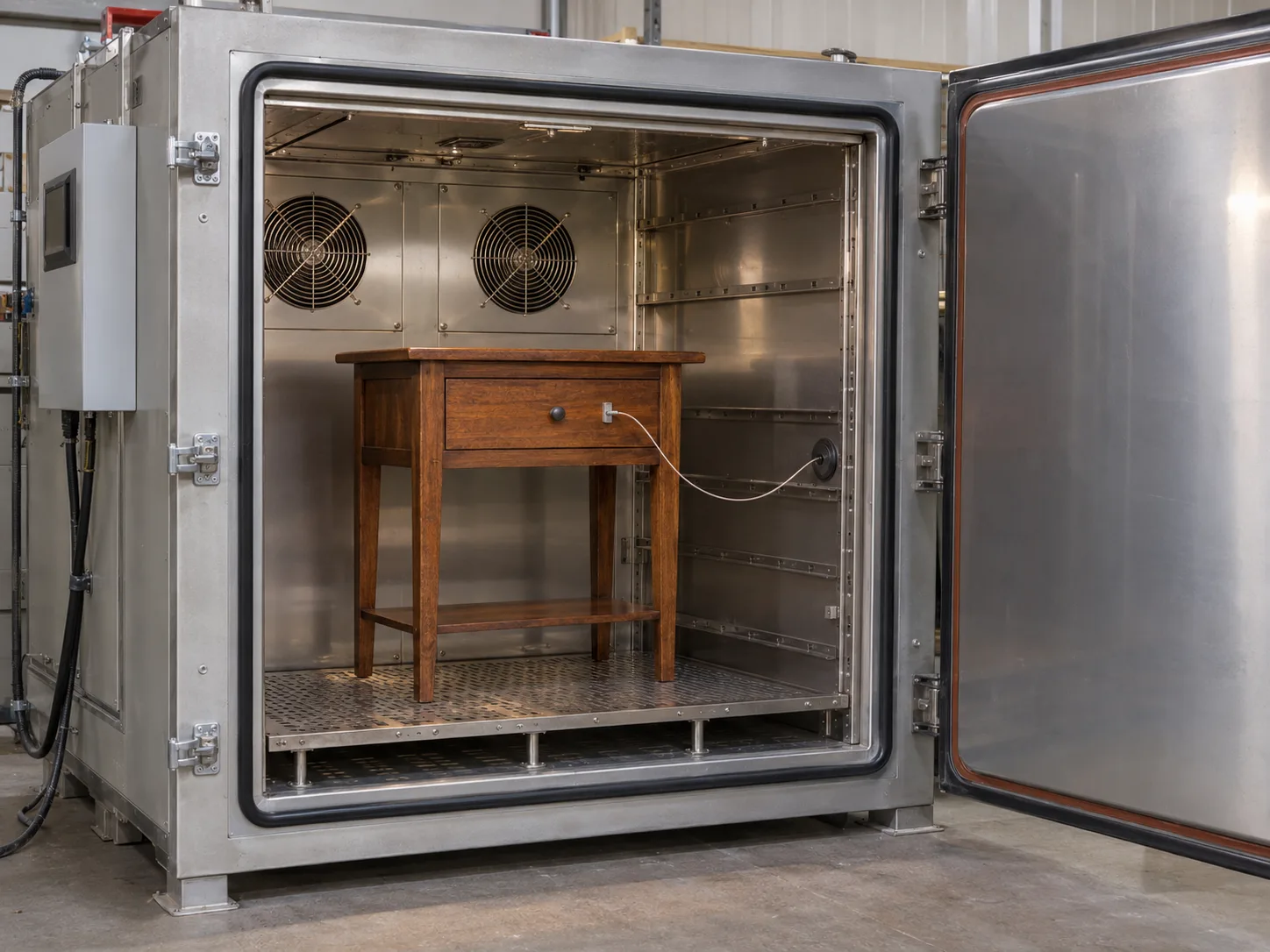
For valuable furniture, ask a treatment provider how it measures temperature inside the wood and protects the finish; do not improvise with a home oven.
Use borate only on compatible unfinished wood
Borate wood treatments can be useful on accessible, bare wood because the active material must get through the surface to reach feeding larvae or protect wood from newly hatched larvae. Paint, varnish, polyurethane, wax, and other water-repellent finishes can block that movement. Stripping an antique or finished floor just to apply a borate is disruptive, may damage the object, and is not automatically worthwhile.
Extension guidance describes borates as an option for suitable bare structural wood, but treatment performance depends on penetration and the exact product label. Very dry wood may limit how far a water-based treatment moves into the material; a surface application should not be described as reaching every gallery. Ask a licensed pest professional whether the species, wood, moisture level, location, and label use make a borate treatment a reasonable choice. Do not mix a homemade borax solution or spray a product where the label does not permit it.
If a professional recommends treatment, ask which wood surfaces will be treated, whether finishes need removal, how occupants and pets should be kept away, and what the treatment is expected to do. A borate application is not the same as removing wood that is already structurally weakened, and no surface treatment restores lost strength.
Reserve fumigation for confirmed, inaccessible activity
Fumigation may be considered when an active infestation is confirmed in a valuable movable object or in inaccessible building areas that cannot be removed or treated by an appropriate surface method. Furniture can sometimes be treated in a sealed professional vault or chamber. Whole-building fumigation involves extensive preparation, temporary evacuation, and specialist equipment; it should follow a clear diagnosis and comparison with less disruptive options.
Fumigation kills pests present during treatment but does not leave lasting protection against eggs laid later or beetles brought in on new wood. It also does not repair galleries or restore the load-bearing capacity of a beam. Ask the provider what evidence supports fumigation, which species and life stages the proposed process controls, what preparation is required, when the building can be reoccupied, and what follow-up monitoring is included. The University of Kentucky Entomology guide notes that confirmation of beetle type and activity is crucial before choosing among removal, treatment, or fumigation.
Protect structural wood and safety
Powderpost beetles usually cause damage over repeated generations, not overnight. Iowa State University Extension notes that severe wood failure generally takes many generations reinfesting the same material. Still, the outside of a joist or beam can look intact while galleries run behind the surface, so counting visible holes cannot tell you how much strength remains.
If a floor feels soft or bouncy, a joist is split or sagging, a beam has a crushed edge, or holes are concentrated on a structural member, ask a qualified building professional to assess its condition. A structural engineer can evaluate load capacity; a pest professional can identify the insect and determine whether it is active. These are related but different questions, and one inspection may not answer both. Do not probe deeply, remove wood, or cover damage with filler before the assessment.
Keep children and pets away from dust during cleanup, avoid creating airborne clouds by dry brushing or sanding, and wash after handling suspect material. If pesticides are used, follow the product label exactly, including which surfaces may be treated and the required protective equipment, ventilation, and reentry interval. The EPA’s pesticide safety guidance says to use nonchemical controls where practical and never use a product on an unlisted pest or site.
When to hire a pest professional
Get an inspection when fresh frass appears in multiple places, the source is behind a wall or floor, the item is valuable, the wood may carry a load, or you cannot distinguish beetle activity from termites or another pest. A useful provider should identify the likely insect, show where activity is current, separate old holes from new evidence, explain what the treatment can and cannot reach, and provide a written scope. In many U.S. states, pesticide application requires licensing; check the relevant state or local regulator for the credential required in your area.
Ask for the proposal to specify the affected wood, preparation, treatment product or chamber method, access requirements, occupant and pet precautions, expected results, monitoring period, and whether structural repairs are excluded. For a treatment recommendation, ask why simpler removal, moisture correction, or monitoring is not sufficient. Compare at least two qualified bids for expensive structural work or fumigation, and be cautious of anyone who diagnoses a whole-house infestation from old holes alone or promises that a spray will restore damaged wood.
For an heirloom or museum-quality object, also ask a furniture conservator or collection specialist before treatment. Pest eradication and conservation are separate goals: a method can kill insects yet still damage an original finish, veneer, glue joint, or historical surface. A provider who understands both the pest and the object can help you choose a treatment with a defensible balance of risk.
Prevent another generation from getting started
Prevention focuses on incoming wood, unfinished surfaces, and the conditions that help certain beetles persist. Inspect lumber, bamboo, pallets, antique furniture, and secondhand pieces before bringing them into rooms with exposed wood. Ask sellers about storage and kiln drying when buying lumber, but remember that kiln drying kills insects already present only when the wood receives adequate treatment; it does not make the wood immune to a later infestation.
Paint, varnish, or seal suitable bare wood after any active problem has been evaluated. A continuous finish closes many cracks and pores adults use for egg laying, but it does not reach larvae already tunneling inside. Do not seal fresh evidence before you have photographed and assessed it. Store firewood outdoors, off the ground, and away from the house; bring inside only the amount needed for immediate use. The University of Maryland Extension recommends inspecting incoming wood and drying firewood away from the home.
Remove or properly dispose of dead branches and scrap lumber around storage areas, and keep stacked wood from touching siding or untreated timbers. Do not use outdoor lumber or firewood as a long-term indoor supply. The UF/IFAS Extension article on avoiding powderpost beetles in secondhand furniture also emphasizes checking used wood items before they enter the home.
Control moisture where it matters
Repair roof, plumbing, and foundation leaks; improve drainage; and address persistently damp crawlspaces. A moisture meter can help a professional distinguish a dampness issue from a dry-wood infestation. The University of Kentucky’s entomology guidance explains that lower wood moisture can make conditions unsuitable for some anobiid beetles, while moisture control also reduces decay risk.
Do not assume a dehumidifier will kill all powderpost beetles. True powderpost species can infest dry hardwood, while dampness is a stronger clue for some other beetles grouped under the same broad label. Fix moisture for the building’s health, then base pest treatment on an identification and the activity evidence.
Inspect lumber, furniture, and firewood
Before installation, examine recycled beams, rough-cut lumber, new hardwood flooring, bamboo, and wood furniture for round holes and fresh dust. Pay attention to the underside, end grain, joints, and areas hidden by drawers or upholstery. If suspicious dust reappears after cleaning, keep that object separate and request an inspection before it is moved into a room full of exposed wood.
For firewood, keep the stack away from the house and do not store a winter’s supply indoors. Beetles that emerge from a log may be nuisance insects that cannot establish in dry structural lumber, but bringing infested logs inside can create confusion and put wood-boring insects indoors. Store only a day’s supply near the fireplace and burn it promptly.
Conclusion
To get rid of powderpost beetles, first establish whether the dust or holes are new and identify the affected wood. A single removable object often calls for isolation and removal, replacement, or a controlled professional chamber; accessible bare framing may be a candidate for a labeled borate treatment; confirmed activity in hidden, widespread wood calls for a qualified inspection before any fumigation decision.
Old holes alone are not a diagnosis, and sprays, vinegar, sealing, or a quick freezer cycle cannot be assumed to reach larvae inside wood. Photograph and monitor suspect areas, correct leaks and storage problems, protect valuable finishes, and have structural members assessed before repair. Matching the response to the evidence and the wood is the most reliable way to stop ongoing damage without creating a second problem.



