How Often to Water New Grass Seed in Fall
How often should you water new grass seed? Use soil-touch checks, fall weather cues, and a week-by-week schedule for overseeding vs bare-lawn seeding.

Fall is one of the best windows to sow cool-season grass, but it is also the season when watering mistakes show up fast. A sunny afternoon can bake a thin seedbed dry in hours, while a cool, rainy week can leave the same area soggy enough to rot seed or wash it downhill. The useful rule is not a single number on a timer. Keep the top half-inch of soil evenly moist from planting through establishment, then gradually shift to deeper, less frequent irrigation once the seedlings are rooted and mowed.
That sounds simple until you are standing over a patch that is half green and half bare, or an overseeded lawn where existing grass drinks first and the new seed dries on top. The sections below break the job into phases, compare overseeding with bare-soil seeding, and show how fall weather should change what you do today—not what a generic chart said last week.
The quick answer: keep the seed zone moist, not flooded
For most fall seedings, plan on light irrigation two to three times per day while you wait for germination, then continue frequent watering until slow species in the blend have had a fair chance to emerge. NC State Extension’s new-lawn guide recommends keeping the top 0.5 inch of soil moist with light watering two to three times daily for about 15 to 20 days, then transitioning after the turf has been mowed several times.
Those numbers are a starting frame, not a religion. Sandy soil on a south-facing slope may need more cycles. Clay soil in shade after a rainy night may need none until the surface dries. Your job is to protect the seed zone from drying out without turning the lawn into a swamp.
What “moist” actually feels like in the top half-inch
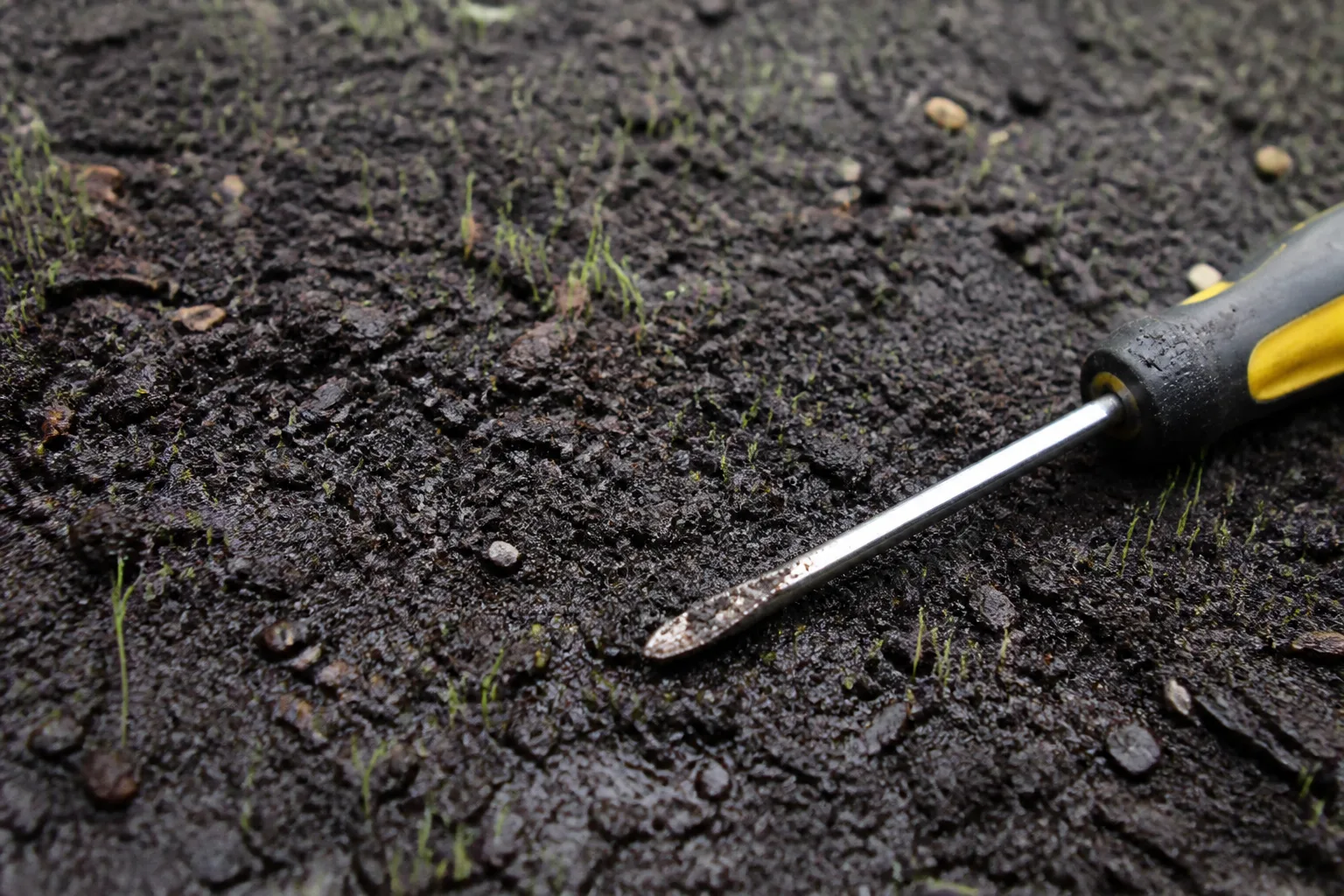
Press a finger into the soil at a seeded spot, a bare spot, and a shady edge. Moist means the surface is damp and slightly cool, with no dusty crust and no visible shine of standing water. If your fingertip comes away clean and dry, you are behind. If water pools when you press, you are ahead—and you should shorten the next cycle or skip it.
A screwdriver or soil probe pushed gently into the top inch should meet slight resistance without squeaking through dust. That tactile check beats guessing sprinkler minutes, because nozzle flow, pressure, wind, and overlap all change how fast water actually reaches the seed.
Why fall watering is different from summer lawn watering
Established summer lawns are watered for depth: you want roots to chase water lower in the profile. New fall seed is watered for contact: the embryo and first root live in a shallow, fragile zone that dries out long before deeper soil does. Cool fall nights slow evaporation, which can reduce how often you need to run water—but they also slow germination for some species, which means the vulnerable window lasts longer.
Fall rain helps, but it is uneven. A passing shower may wet leaves and mulch while leaving the seedbed dry underneath. Treat rain as a reason to check soil, not as proof you can skip monitoring for a week.
Before you sow: pre-moisten the seedbed
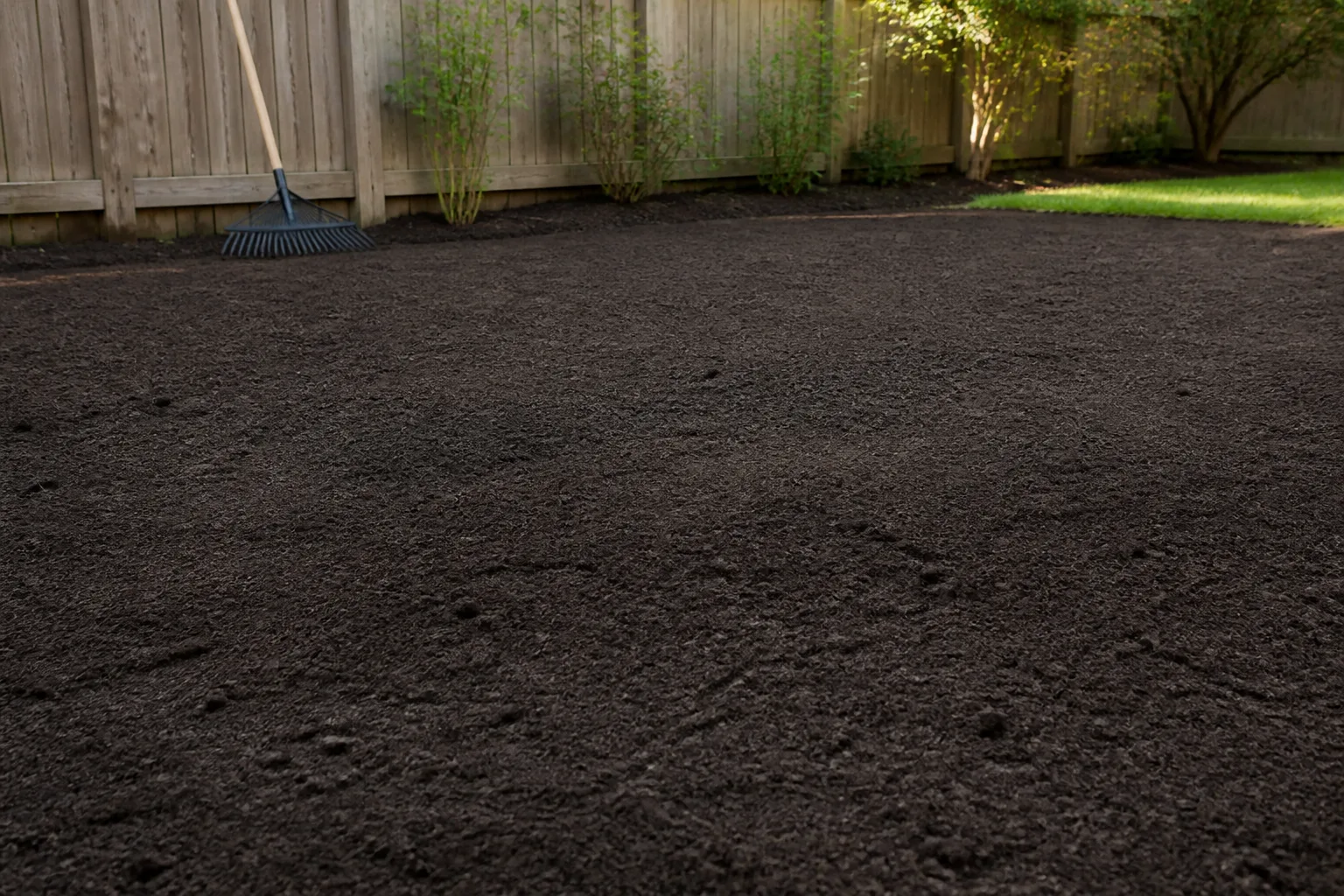
Whether you are overseeding or starting bare ground, soil preparation should include moisture. On a new lawn, gently wet the prepared surface before you spread seed so the top few inches are evenly damp. The goal is a receptive seedbed, not mud you cannot rake or walk on.
How deep to wet soil before planting
Work moisture into roughly the top 2 to 3 inches before sowing on bare soil. That pre-moistening helps seed make contact with damp mineral particles immediately, which matters because germination begins when the seed absorbs water. On overseeding projects, you are usually working through existing turf; focus on wetting the thatch/soil interface where seed will lodge after raking or aeration.
When pre-watering can backfire
Stop pre-watering if the surface turns slick, shiny, or spongy. Seeding into mud compacts on drying, crusts on the surface, and can bury seed too deeply when you roll or rake. Penn State Extension’s lawn-establishment guidance emphasizes firming and smoothing a seedbed that is moist but workable—not saturated.
If you used irrigation to settle graded soil, wait until the surface is dry enough to rake lightly without smearing clay. A one-day delay beats sealing seed under a crust.
Overseeding vs starting a bare lawn: two different water budgets
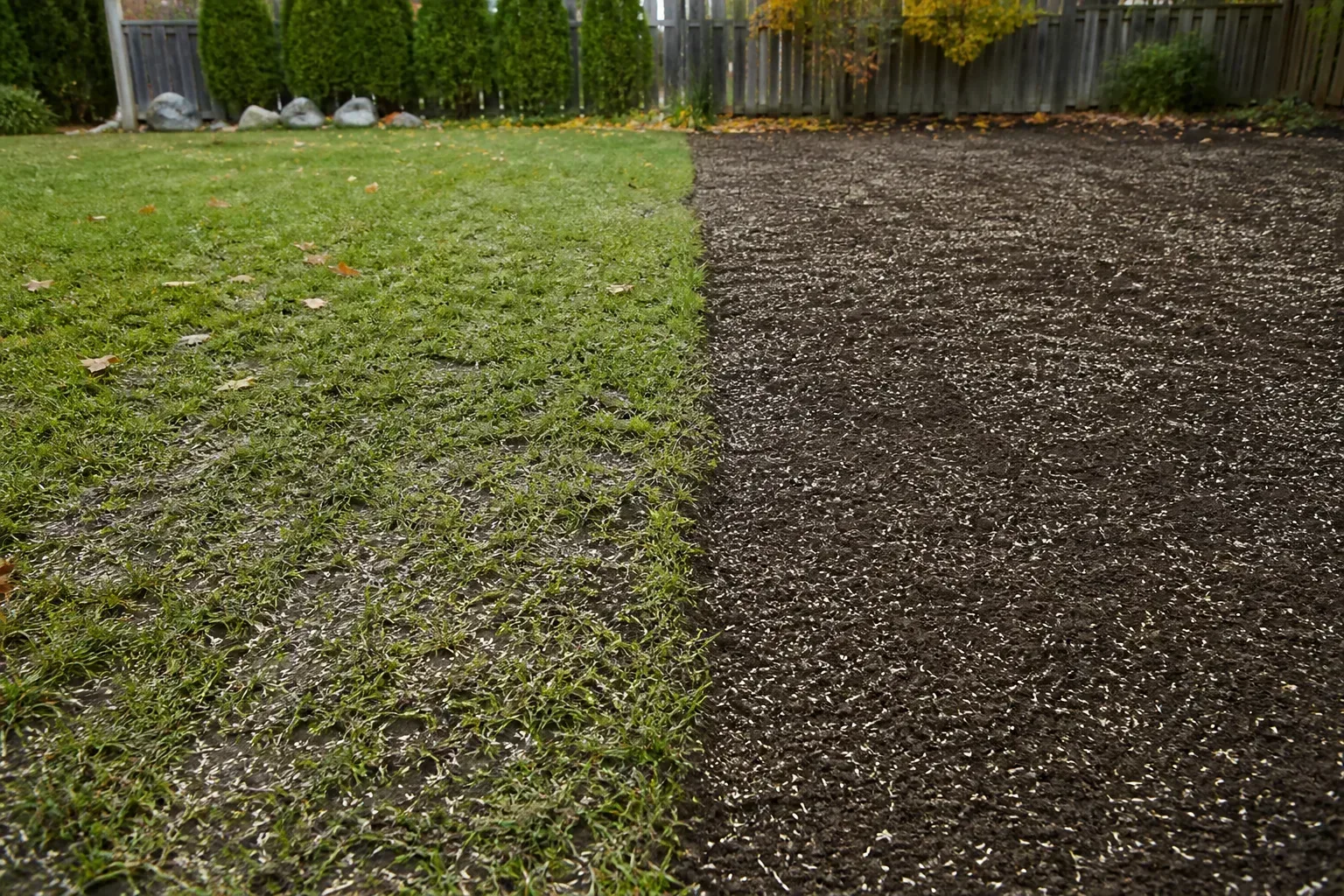
The phrase “how often to water new grass seed” hides an important split. Seed on bare, prepared soil is fully exposed to sun and wind. Seed dropped onto an existing lawn is partially shaded by living blades, but it also competes for water at the surface and may not reach soil as evenly.
Watering when seed goes on top of existing grass
Overseeding—casting seed onto established turf to thicken thin areas—usually needs less total water per week than a brand-new lawn because some moisture is retained in the existing mat and less bare soil is exposed. You still need short, frequent cycles to keep the seed zone from drying, especially where seed sits on thatch instead of soil.
Mow a little shorter than usual, remove heavy clippings, and scratch the surface so seed reaches mineral soil. Then water two to three times daily in sunny, dry weather, checking that the top half-inch stays damp. Back off on cool, cloudy days. If you are only patching small thin spots, a hand-held fan nozzle on a low setting may be more precise than a full-yard sprinkler.
Watering a new lawn from bare soil or full renovation
Bare-soil establishment and full renovation expose nearly all seed to drying air. Expect the higher end of the moisture budget: more cycles on hot afternoons, more attention on edges and south-facing strips, and mulch on slopes. Penn State Extension notes that newly established turf often needs regular, sometimes daily irrigation while roots are shallow; the soil should stay moist at all times but not excessively wet.
Renovation—killing or thinning old turf and reseeding—sits between the two extremes. Dead debris can hold moisture like a thin mulch, but it can also repel water if it mats. Water lightly until you see even dampness across the seedbed, not rivers running between rows.
Phase 1 — Germination window (days 1 through sprouting)
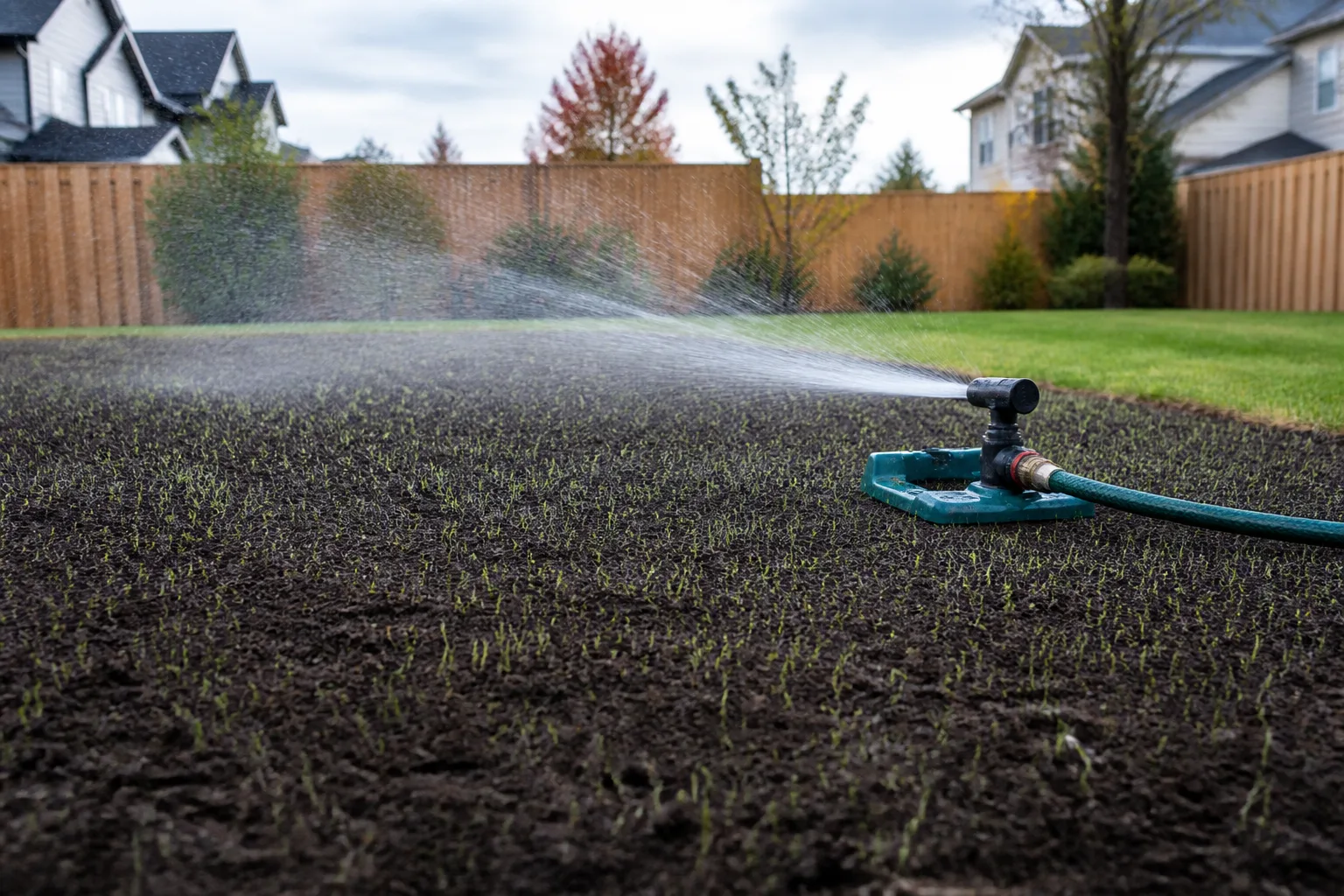
This is the phase people mean when they ask whether to water grass seed twice a day. For most fall cool-season sowings, yes—often two to three times per day in dry weather, until a meaningful percentage of seedlings is up.
How often to run the sprinkler or hose
Use this fall schedule as a default, then adjust with your finger test:
- Dry, sunny, breezy days: 2–3 light cycles, spaced so the surface never fully dries between them.
- Cool, overcast, humid days: 1–2 cycles, or possibly none if the seedbed stays damp all day.
- Light rain (under ~¼ inch): check soil; you may only need one supplemental cycle.
- Soaking rain: pause automatic timers; resume only when the top half-inch begins to dry.
Penn State Extension describes this as light, frequent irrigation that keeps soil moist without excessive wetness, with reductions during rainy, cool, or overcast periods—especially when mulch is in place.
Best time of day to water in fall
Morning is the most forgiving window. Soil warms slightly as the day begins, evaporation is lower than midday, and the seedbed has hours to absorb water before night. In fall, avoid soaking the lawn late in the evening if cool nights follow; constantly wet leaf tissue and seed collars invite disease when temperatures drop.
If the only time you can water is late afternoon, use short cycles that moisten the seed zone without leaving the lawn dripping after sunset.
How long each watering cycle should last
Measure once, then stop obsessing over minutes. Set your sprinkler on a representative patch, run it for 10 minutes, and check penetration. You are aiming to wet the top half-inch, not flood the profile. On clay, five minutes may be enough. On slope plus sand, you may need cycle-soak: run water for a few minutes, wait 30 minutes, run again so runoff does not carry seed away.
For small areas, a fan spray moved continuously for 30–90 seconds per square yard is often plenty. The moment you see runoff to the sidewalk, stop—even if the timer says you have time left.
Phase 2 — Seedling survival (after first green, before mowing)
The first green fuzz is not permission to cut watering in half. Seedlings still have shallow roots and little stored energy. A single sunny afternoon can kill a week of progress.
Why you cannot cut back the moment you see sprouts
Fast-germinating species in a blend—perennial ryegrass, for example—may appear in 5 to 10 days under favorable conditions, while slower partners are still underground. If you reduce water when only the early species emerge, you starve the rest. NC State Extension warns specifically that Kentucky bluegrass may take longer to germinate than other cool-season grasses in a mix; continue watering until bluegrass seedlings emerge, not merely until something turns green.
Kentucky bluegrass blends need extra patience
UC IPM’s turf germination chart lists Kentucky bluegrass at roughly 14 to 30 days, tall fescue at 7 to 12 days, and perennial ryegrass at 5 to 10 days under suitable conditions. If your bag is a sun-shade mix, assume the clock runs at the slowest species until you see a reasonably even stand.
During this phase, keep the top inch consistently moist. You may drop from three cycles to two on mild days, but do not switch to deep weekly soaking yet—the roots are not there to use it.
Phase 3 — Taper to deeper, less frequent irrigation
The shift away from constant light watering is gradual. Jumping too early produces shallow roots; waiting too long keeps the lawn disease-prone and wastes water.
When to switch from light daily misting to weekly deep water
Use mowing readiness as your main milestone, not a calendar date. NC State Extension suggests that after the third mowing, you can water to a depth of 6 to 8 inches about once a week or when needed. Before that point, Penn State Extension still classifies the stand as establishment-phase turf with delicate, shallow roots.
A practical taper looks like this:
- Even stand, no bare crust: reduce from three light cycles to two, then one daily light watering on cool fall weeks.
- First mow at raised height: begin stretching intervals; each session should wet a little deeper.
- Third mow completed: move toward established-lawn habits—less frequent, longer runs, with occasional probing to confirm depth.
Signs the roots are ready for normal lawn watering
Walk on the turf lightly. If blades spring back upright where you stepped, the stand is gaining strength. If footprints remain crushed, delay heavier irrigation and foot traffic. A gentle tug on a seedling cluster should meet resistance from roots, not pull up like a carpet thread.
Once roots deepen, the goal changes from keeping the surface damp to encouraging roots to follow water lower. That is the long-term drought tolerance you want heading into winter and the following summer.
Fall weather adjustments that change your schedule
A September heat spike, an October rainy spell, and a November frost each demand a different response. The schedule is a decision tree, not a printed chart taped to the garage wall.
Cool, humid stretches and rainy weeks
Turn off automatic timers when the seedbed stays continuously damp to the touch. Overwatering in cool weather is a common way to rot seed and invite fungal patches. If moss or algae appears on the soil surface, cut frequency and improve air movement by removing excess mulch.
Windy, sunny, or unseasonably warm fall days
Treat these like mini-summer days. Wind pulls moisture from exposed seed faster than calm weather, and thin overseeding areas dry from the edges inward. Add a midday check on south-facing strips and curb lines.
First frosts and shorter daylight
Light frost on established blades is different from repeated freezing of a saturated seedbed. As nights cool, prioritize morning watering so grass enters evening drier. Do not assume fall frost eliminates the need to water; dry cold can still desiccate shallow roots.
Tools and technique: hose, sprinkler, and slope fixes
Oscillating sprinklers vs hand watering small patches
Oscillating or rotary sprinklers work for medium lawns if you overlap passes and confirm coverage with catch cans or simple tuna cans. For overseeding strips along walks or isolated patches, a hose with a fan nozzle gives better control and less waste.
Whichever tool you use, relocate sprinklers to eliminate dry corners. New seed fails first at the places your pattern misses.
Mulch, straw, and hydromulch: less water, more consistency
Straw or hydromulch reduces evaporation and holds seed in place on slopes. Penn State Extension notes that proper mulch helps retain soil moisture and moderate temperature—but too much can smother seedlings or harbor disease. A light, even layer means you may water less often while still needing to verify the soil beneath is damp.
Pull back mulch in a test spot when in doubt. If the soil under straw is dry, the mulch is only hiding the problem.
Slopes, curbs, and runoff-prone edges
On hills, always water across the slope in short cycles. Seed and soil migrate to the bottom when a single long soak runs downhill. Curbs and compacted edges dry first; hand-water them if your sprinkler pattern skips them.
If you are also dealing with saturated soil after storms, see our guide on what not to do to grass after heavy rain before you add more irrigation on top of an already wet lawn.
Common watering mistakes (and what to do instead)
Underwatering: dry crusts and dead embryos
Dry seed stops the germination process. A dusty crust also blocks emerging shoots. If the surface cracks or turns pale gray, shorten the interval between cycles rather than lengthening each session. Deep, infrequent watering belongs to established turf, not to a seedbed waiting to sprout.
If nothing emerges and the soil keeps drying, read why grass seed isn’t germinating before you blame the bag.
Overwatering: puddles, seed wash, and fungal rot
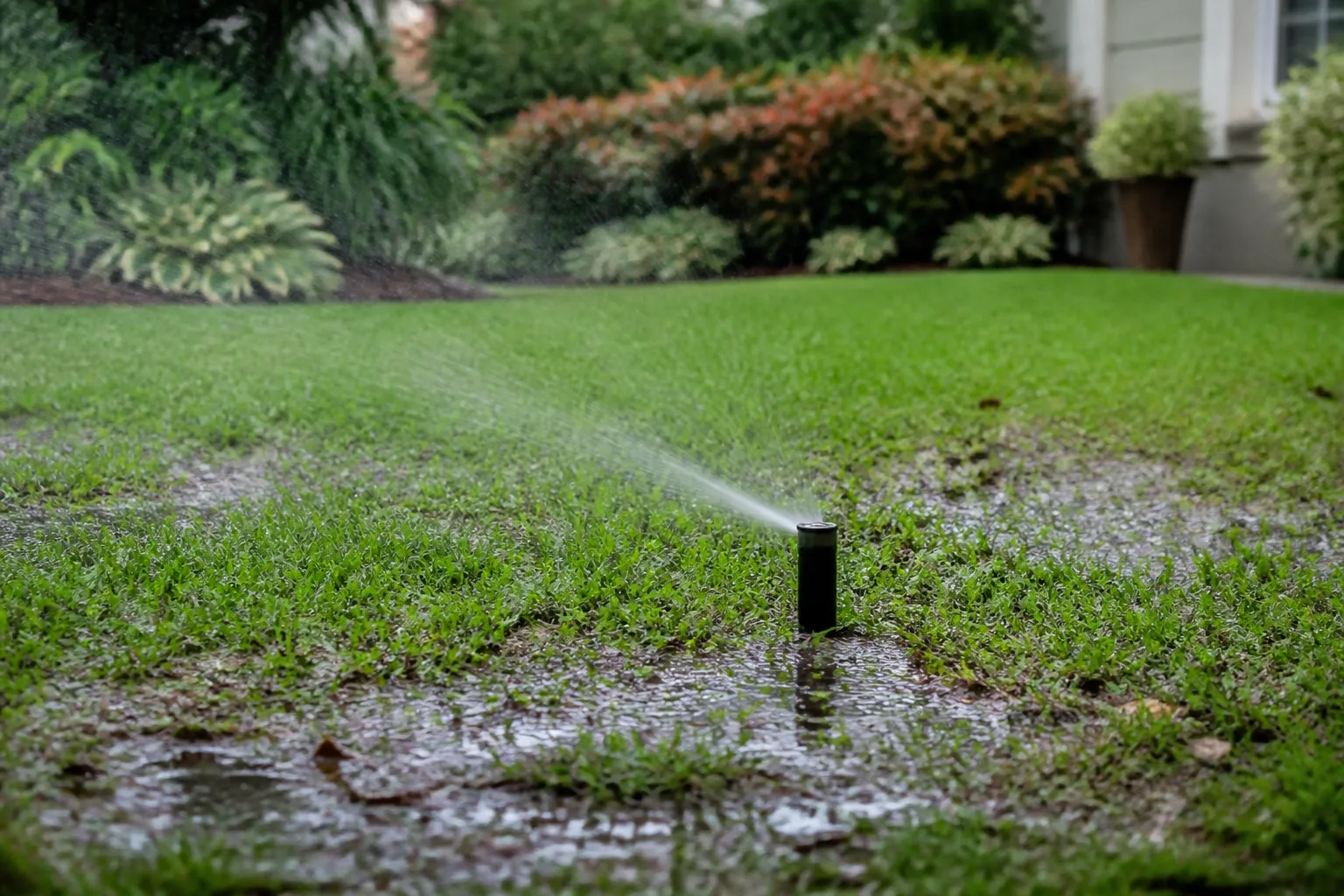
Yes, you can overwater fresh grass seed. Constant saturation drives out oxygen, encourages rot, and can float seed into low spots. After heavy rain, pause irrigation until the top half-inch dries slightly. If puddles form during your own watering, split the cycle or improve grade before reseeding washed areas.
Watering on a rigid timer instead of checking soil
Timers are convenience tools, not soil sensors. Rain, clouds, mulch, and temperature all change demand. Set reminders to check the seedbed twice daily during germination, and adjust the timer weekly. A lawn that needs three cycles on Monday may need one on Thursday.
For timing expectations while you keep moisture steady, our how long grass seed takes to grow guide pairs well with this watering schedule.
Conclusion
Water new grass seed in fall as often as needed to keep the top half-inch evenly moist—typically two to three light cycles per day in dry weather from planting through emergence—then taper only after you have an even stand and the turf has survived several mows. Overseeded lawns usually need less total water than bare-soil seedings, but both fail the same way when the surface dries or drowns.
Check soil with your finger, adjust for rain and wind, and keep watering through the slowest species in your blend. Once the roots deepen, shift to deeper, less frequent irrigation that trains the lawn for the seasons ahead. Get the moisture phase right this fall and the rest of establishment—mowing, feeding, and traffic—gets much easier.