How Much Does a Yard of Topsoil Weigh? Size & Cost
Learn how much a yard of topsoil weighs in dry, moist, and wet conditions, calculate project volume, compare delivery costs, and check your truck’s payload.
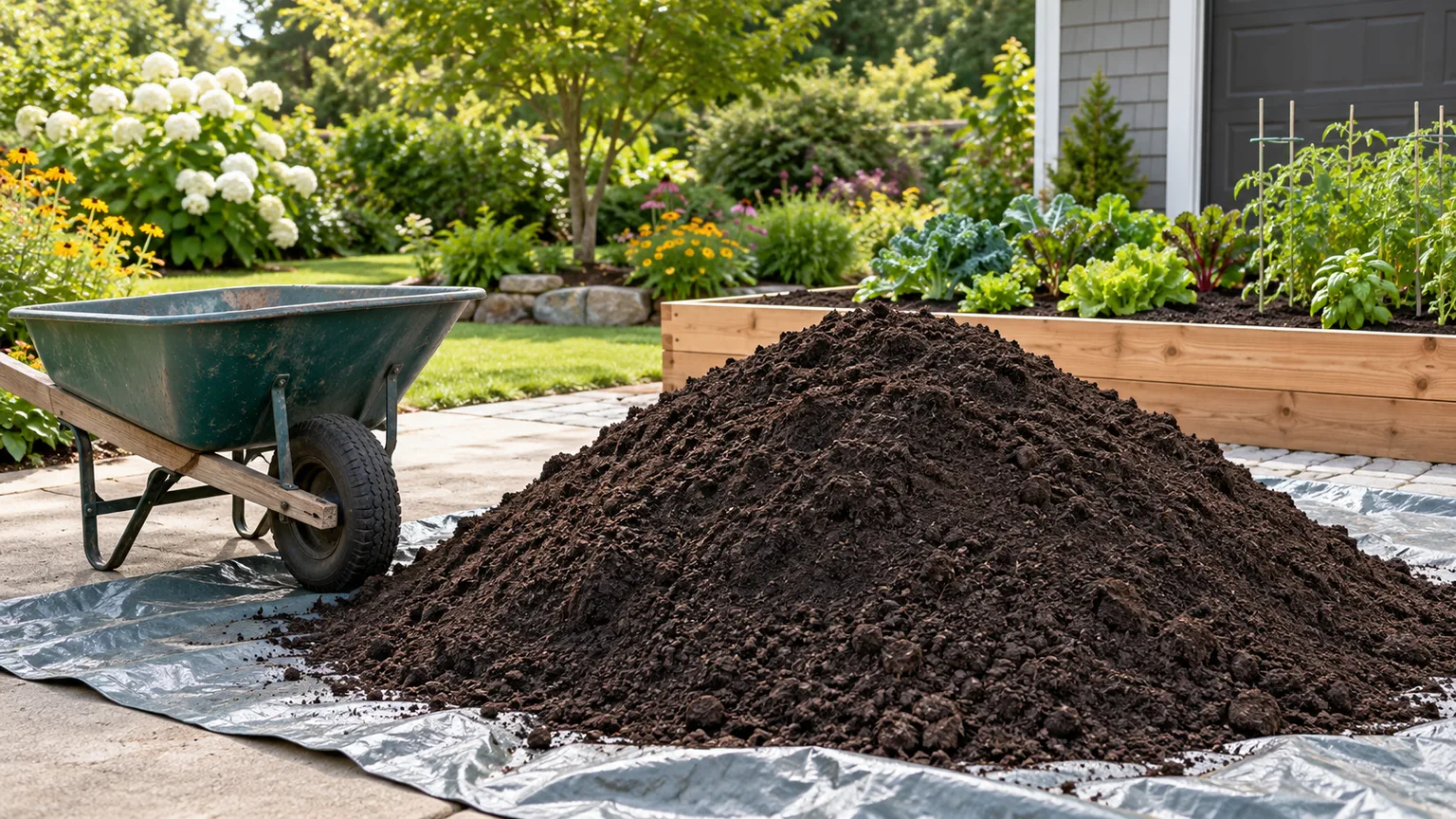
The quick answer: plan for 1,500 to 3,000 pounds
A cubic yard of topsoil can weigh roughly 1,500 to 3,000 pounds, with moisture and the particular soil blend causing most of the variation. For a first estimate, treat about 2,000 pounds as a dry-soil planning figure and expect a damp delivered load to be heavier; after prolonged rain, soil can approach the upper end of the range. A published supplier guide gives these as planning ranges, not a standard guaranteed weight for every yard of soil. Topsoil.com’s weight guide is useful for estimating, but your supplier’s product and current stockpile conditions matter more than a generic average.
That distinction matters if you are ordering by volume but transporting by vehicle capacity or comparing a price by the ton. The volume of a yard is fixed; the weight is not. A supplier can quote a cubic yard, but unless they weigh your specific material or provide a documented bulk-density estimate, the load weight remains approximate.
For planning, calculate how many cubic yards the project needs, multiply that amount by a conservative pounds-per-yard estimate, and then verify it with the seller before you haul or place the soil on a structure. If a safe load limit or deck capacity depends on the number, do not use the midpoint of a broad range as though it were a certified measurement.
What one cubic yard measures
A cubic yard contains 27 cubic feet: picture a cube that is 3 feet long, 3 feet wide, and 3 feet high. A delivered pile will not look like a perfect cube because it spreads and slumps, but the unit represents that volume before you account for how the material settles when spread or watered.
Topsoil is commonly sold by the cubic yard for larger landscape jobs and by volume or bag weight for smaller projects. Those descriptions are not interchangeable: a bag labeled 0.75 cubic feet is telling you volume, while “40 pounds” tells you a nominal weight. Moisture can make two equal-volume piles differ substantially in pounds, and one equal-weight bag can occupy more or less space depending on its product and moisture.
For measurements in feet, multiply length by width by depth to get cubic feet, then divide by 27. For depth in inches, first convert inches to feet or use the shortcut later in this guide. If the bed has an irregular shape, divide it into rectangles or other simple shapes, calculate each one, then add the volumes; measuring a curved bed as one oversized rectangle will overstate the order.
Why topsoil weight changes
A “yard of topsoil” describes volume, not a precise recipe. A supplier’s topsoil may be screened mineral soil, a sandy or clay-rich local soil, or a blend with compost or other organic matter. Screening may remove large sticks and stones, but it does not tell you the product’s exact moisture, particle-size distribution, organic-matter percentage, or density.
Soil scientists use bulk density to describe mass in a unit of soil volume; for a delivered load, the water in that volume is part of what the scale measures. Rutgers NJAES explains that soil density changes with compaction, texture, moisture, and the load applied, and that compacted soil has less pore space for air and water. Rutgers’ yard compaction guide is a helpful reminder that “dense” is a physical condition, not a quality grade.
Moisture is the biggest variable
Water adds real weight, and loose topsoil can absorb a great deal of it in the spaces between particles. A stockpile that looked relatively light in a dry spell may weigh more after steady rain, even when the loader still measures out the same nominal cubic yard. This is why a seller may give only an estimate, or quote a different tonnage from one delivery day to another.
“Wet” is also imprecise. Damp soil that crumbles when squeezed is not the same as saturated material that is sticky, slumping, or holding free water. A simple squeeze test can help you describe what you see, but it cannot convert that handful into an exact truck scale weight. Ask whether the estimate assumes dry, average, or rain-wet material, and whether they can provide a load ticket or a typical tonnage range for that mix.
Texture and organic matter change density
Sand, silt, clay, and organic matter affect how particles pack and how soil holds water. Fine Gardening describes healthy garden soil as a mix of mineral particles, organic matter, living organisms, water, and air, with pore spaces that support movement of air and water. Fine Gardening’s soil-health overview and GrowVeg’s guide to soil texture and amendments both explain why a soil’s behavior cannot be judged by one visible feature.
It is tempting to assume that “clay is always heavier than sand,” but a product’s moisture and compaction can matter just as much as its texture. A loose compost-rich blend may be lighter per yard than a compacted mineral soil, while a wet sandy mix may still be heavy. Ask the supplier what the product contains rather than trying to infer its weight from its name or color.
Use a planning range, then ask the supplier
The useful takeaway is not that every yard has a single correct weight. For rough manual planning, a broad 1,500–3,000-pound-per-cubic-yard range covers dry through very wet products described by suppliers; within that range, roughly 2,000 pounds is a common dry estimate and around 2,400 pounds is a practical moist-load assumption. Treat those numbers as estimates for budgeting and load screening, not a guarantee or product specification.
Use a lower estimate only when the seller has told you the soil is dry or can give you a density for that exact product. Use the upper end to screen a situation where overloading would have consequences, then ask for the seller’s weight estimate or have the load weighed. For more than one yard, multiply the bracket: two yards could be around 3,000–6,000 pounds, and three could be 4,500–9,000 pounds. That arithmetic does not account for the weight of the vehicle’s occupants, tools, or any other cargo.
If a supplier sells by the ton, ask how their conversion treats moisture and whether the price is based on a certified scale. If they sell by the cubic yard, ask whether their stated volume is loose in the truck, measured in the loader, or estimated from the pile. Those differences will not change the project’s geometric calculation, but they can explain why the same nominal order varies in delivered volume or scale weight.
Calculate project volume and estimated weight
For a rectangular area measured in feet, use:
Cubic yards = (length in feet × width in feet × depth in feet) ÷ 27
Then estimate pounds:
Estimated pounds = cubic yards × the supplier’s estimated pounds per cubic yard
If depth is measured in inches, the shortcut is square feet × depth in inches ÷ 324 = cubic yards. There are 324 square feet of one-inch-deep coverage in a cubic yard because 27 cubic feet multiplied by 12 inches per foot equals 324 square feet-inches.
Worked example: a 20-by-10-foot bed
Suppose you want to add 4 inches to a 20-by-10-foot bed. The area is 200 square feet, so the volume is 200 × 4 ÷ 324, or about 2.47 cubic yards. At a planning weight of 2,000 pounds per yard, that is roughly 4,940 pounds; at 2,400 pounds per yard, it is about 5,930 pounds. The useful answer is a range, not the more precise-looking figure from multiplying an assumed average.
Before ordering, check whether the measured depth is the additional soil you need or the total finished depth. If the bed already has 3 inches of suitable soil and needs a total of 6 inches, you need to add 3 inches, not 6. For a sloped or uneven site, use a few measurements across the area and calculate with an average depth, or split the area into sections with different depths.
Do not automatically add a large waste factor. For a level lawn topdressing or a project with a strict finished grade, extra soil may leave you with a surplus or raise the surface too high. For a loose raised-bed fill that will settle, ask the supplier or installer whether a small allowance is appropriate, and base it on the material and intended finished level.
How much ground a yard covers
One yard spreads farther when the layer is thin and covers less area when you need more depth. These figures assume an even rectangular layer, with no allowance for uneven ground, compaction, or settling:
| Finished depth | Approximate area from 1 cubic yard |
|---|---|
| 1 inch | 324 sq. ft. |
| 2 inches | 162 sq. ft. |
| 3 inches | 108 sq. ft. |
| 4 inches | 81 sq. ft. |
| 6 inches | 54 sq. ft. |
| 12 inches | 27 sq. ft. |
For example, a 1-inch topdressing over a 1,000-square-foot lawn requires about 1,000 ÷ 324, or 3.1 cubic yards before any adjustment for surface variation. That is a volume estimate, not a recommendation to spread an inch of soil over every lawn; the right topdressing depth depends on turf condition and whether grass blades remain exposed.
Penn State Extension recommends assessing topsoil, compaction, drainage, and grade as part of lawn establishment rather than ordering by area alone. Penn State Extension’s lawn-establishment guidance also emphasizes soil testing before adding amendments. The surface layer you need depends on the project: a thin topdressing, a new lawn’s prepared root zone, and a raised bed are different jobs.
Choose soil by the job, not by the heaviest load
Weight does not measure fertility or suitability. A wet, dense load can be harder to spread and more prone to clumping without offering the root conditions you want. Conversely, a lighter soil may have a high share of organic matter, but that alone does not prove it has the right structure or nutrient balance for your plants.
Start with the existing site. Is the native soil shallow, poorly drained, compacted, or simply low in organic matter? Does the project require a small topdressing, a new planting bed, or a deep fill? A soil test can guide pH and nutrient decisions, while texture and drainage observations help you determine whether you need topsoil, compost, or a blend.
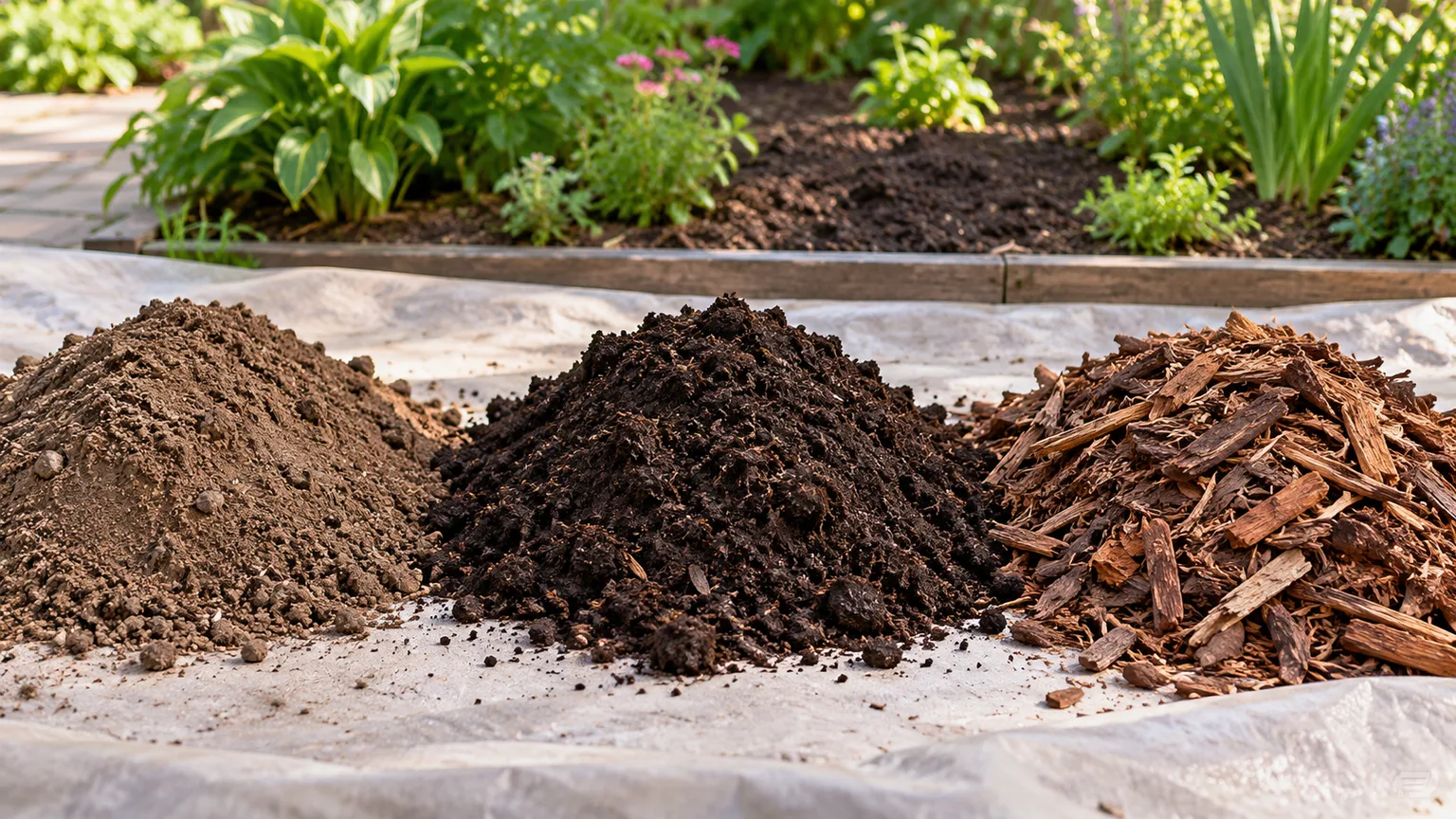
Compare topsoil, compost, garden mix, and fill
| Material | Typical role | What to verify |
|---|---|---|
| Topsoil | Adds a mineral-soil layer to a lawn or garden bed | Source soil, screening, texture, debris, and whether it is sold as-is or blended |
| Compost | Adds decomposed organic matter; often used as an amendment | Maturity, feedstocks, salts, and whether it is intended to be used alone or mixed |
| Garden or raised-bed mix | A supplier’s blended product for planting beds | Exact ingredients, drainage behavior, and whether it is appropriate for a deep fill |
| Fill dirt | Builds up grade or fills a low area, usually below the planting layer | Whether the product is clean, how it drains, and what top layer you will add |
| Potting mix | A lighter, formulated medium for containers | Container suitability; it is not interchangeable with dense field topsoil |
Product names are not a reliable recipe. One supplier’s “garden soil” may be topsoil blended with compost; another seller may use the same phrase for a different mix. Ask for the ingredient or blend description, whether the material is screened, and a sample before placing a large order. If the seller cannot explain what is in the product, get a second quote.
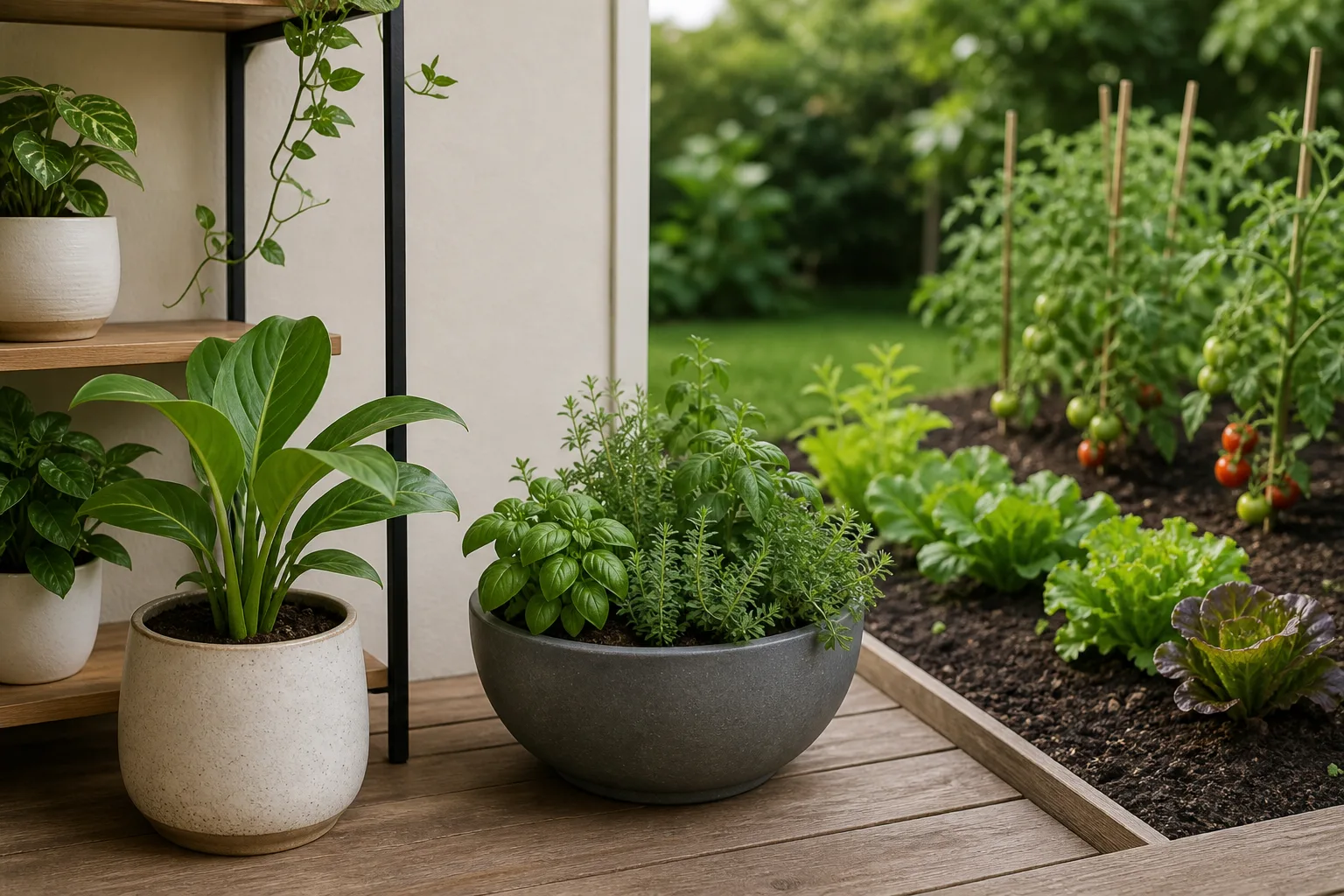
Topsoil is intended for ground-level beds and lawn projects, not automatically for pots or rooftop containers. A container needs a medium designed to maintain air and drainage in a confined space. The image below shows the difference in growing contexts: a soil bed and container plants do not use identical products.
Check quality before buying
If possible, visit the supplier and inspect the material before ordering several yards. A handful should be easy to crumble when moist, without persistent sour or sewage-like odor, excessive sticks, construction debris, or an obvious layer of trash. Screened material is generally more uniform and easier to rake, but “screened” does not automatically mean weed-free, fertile, or appropriate for the intended plants.
Ask where the soil came from and whether it is a single-source product or a blended stockpile. Ask what screen size was used, what organic matter or compost has been added, and whether the supplier can share a soil test or product specification. Dark color can be associated with organic matter, but mineral color varies; it is not a substitute for a test. Fine Gardening notes that laboratory tests can establish properties such as pH and nutrient levels, while field observation helps reveal structure and water movement.
For a food garden, a large new planting area, or soil from a site with an uncertain past, consider sending a sample to a reputable laboratory and ask which tests fit the use. A routine fertility test does not necessarily check every contaminant. Follow the lab’s sampling instructions and ask your local extension office what to request for the site’s history rather than guessing from appearance.
Compare the delivered cost fairly
Bulk soil prices are local. The product, delivery distance, minimum order, truck access, unloading location, season, and local market can change the total, so an old national price table is a poor way to budget. A useful comparison is not just “price per yard”; it is delivered price for the same product and measured volume.
Ask each supplier to quote the same specifications:
- Product name and blend
- Screened or unscreened condition
- Cubic yards delivered, and how the seller measures them
- Material charge, delivery fee, minimum order, and taxes
- Whether dumping at the curb, driveway, or bed is included
- Whether the seller has an estimated load weight or scale ticket
Then calculate total delivered charge ÷ cubic yards to compare the effective price per delivered yard. A low material price can become less attractive after a long-distance fee or a small-load surcharge. If a supplier quotes by the ton and another by the yard, ask for an estimate of the cubic-yard equivalent for that material rather than using a generic weight conversion.
Bagged soil may cost more per cubic foot but can be easier when you need only a few bags, lack a safe dump spot, or cannot move a bulk pile quickly. Bulk delivery often reduces packaging and handling for larger projects, but it creates a pile you need to protect and spread. Include your labor, wheelbarrow distance, tarp, and any rented equipment in the comparison; the cheapest soil is not always the cheapest completed job.
Can your pickup carry a yard?
Do not assume a “half-ton” badge means the truck can take a yard of soil. Payload varies by specific configuration, accessories, passengers, fuel, and cargo. Find the vehicle’s actual payload information on the manufacturer’s door-jamb label or owner’s manual, subtract the weight of people and everything else in the vehicle, and compare the remainder with the supplier’s upper-end load estimate.
A yard can reach or exceed common pickup payload limits, especially when soil is wet. The material also sits high and shifts; an overload can affect braking, steering, tires, suspension, and axle loading. If the supplier cannot tell you the weight and your remaining payload is close to the estimate, choose delivery or a properly rated trailer instead of trying to make the numbers fit.
Delivery does not eliminate every logistics issue. Tell the supplier about narrow gates, low wires, steep drives, soft lawns, overhead branches, and the distance from the dump spot to the bed. Ask if their truck can reach the intended location and where they recommend placing the pile. A heavy truck can rut wet turf or compact a bed before you get any soil spread.
Convert bag volume without guessing
Use the cubic-foot number printed on the bag, not its pound rating. One cubic yard is 27 cubic feet, so the estimate is:
27 ÷ cubic feet per bag = bags per cubic yard
A 0.75-cubic-foot bag would take about 36 bags to equal one cubic yard; a 1-cubic-foot bag would take 27. The actual number of whole bags you buy must be rounded up, and the bag’s stated volume may describe a loose fill rather than the settled volume after opening. Compare both bag price and volume, then remember that a 40-pound bag’s contents may weigh more when wet.
Plan the dump spot and protect the soil
Choose the pile location before the truck arrives. Put down a tarp if you need to keep soil out of pavement cracks or avoid staining a driveway, but do not create a slip hazard or block a drain. A pile is easiest to spread when it is close to the project, yet placing a heavy delivery on saturated lawn can leave ruts and compact the soil you are trying to improve.
If you need to move the load by hand, divide the job into manageable wheelbarrow trips and plan where you will stage the soil. A yard is 27 cubic feet; if your wheelbarrow holds 3 cubic feet level, that is at least nine full-volume trips, and heaped loads may spill or be difficult to control. The exact number depends on the wheelbarrow’s actual capacity and how much you can safely lift.
Spread the soil when it is workable rather than sticky and waterlogged. Avoid driving a wheelbarrow over the same wet bed repeatedly, and do not pulverize the soil while grading. Rutgers NJAES cautions that wet soil is more susceptible to compaction under heavy loads; if rain has left the delivery route soft, postpone delivery or select a firm access point.
Treat elevated planters as a structural load
A ground-level raised bed transfers its weight to the ground. A rooftop planter, balcony container, deck bed, or elevated structure is different: the soil, retained water, container, plants, pavers, and people all contribute to the load, and the weight can be concentrated over a small area. Do not assume that an empty-looking bed is light simply because its soil is loose.
For a quick screening calculation, a 4-by-8-foot bed filled 12 inches deep holds 32 cubic feet, or about 1.19 cubic yards. Multiplying that volume by a 1,500–3,000-pound estimate gives roughly 1,780–3,560 pounds of soil before the bed, water, or other loads are included. This is not a structural rating: saturated soil can approach the higher end, and the supporting surface may have limits that are not obvious.
Before placing soil on a deck, balcony, roof, or another elevated platform, ask the building owner or a qualified structural professional to confirm the allowable load and how it should be distributed. Do not use a generic “pounds per yard” average as permission to install a heavy planter. If the structure cannot support a conventional soil bed, ask the professional about a designed lightweight system rather than improvising with amendments.
Conclusion
For a quick answer, use 1,500–3,000 pounds as a broad planning range for one cubic yard of topsoil, not as a promise about the next delivery. Moisture, mix, and compaction make the weight variable; the supplier is the best source for an estimate of the product they will load that day.
Measure the bed, calculate cubic yards, and multiply by the seller’s estimate to plan the load. Before you order, verify the product blend, full delivered price, dump access, and—if you are hauling or placing it above ground—the actual load limit that applies to your vehicle or structure.



