How to Grow and Care for Heather
Learn how to grow and care for heather with practical guidance on Calluna vs. Erica, acidic soil, watering, pruning, containers, pests, and winter limits.
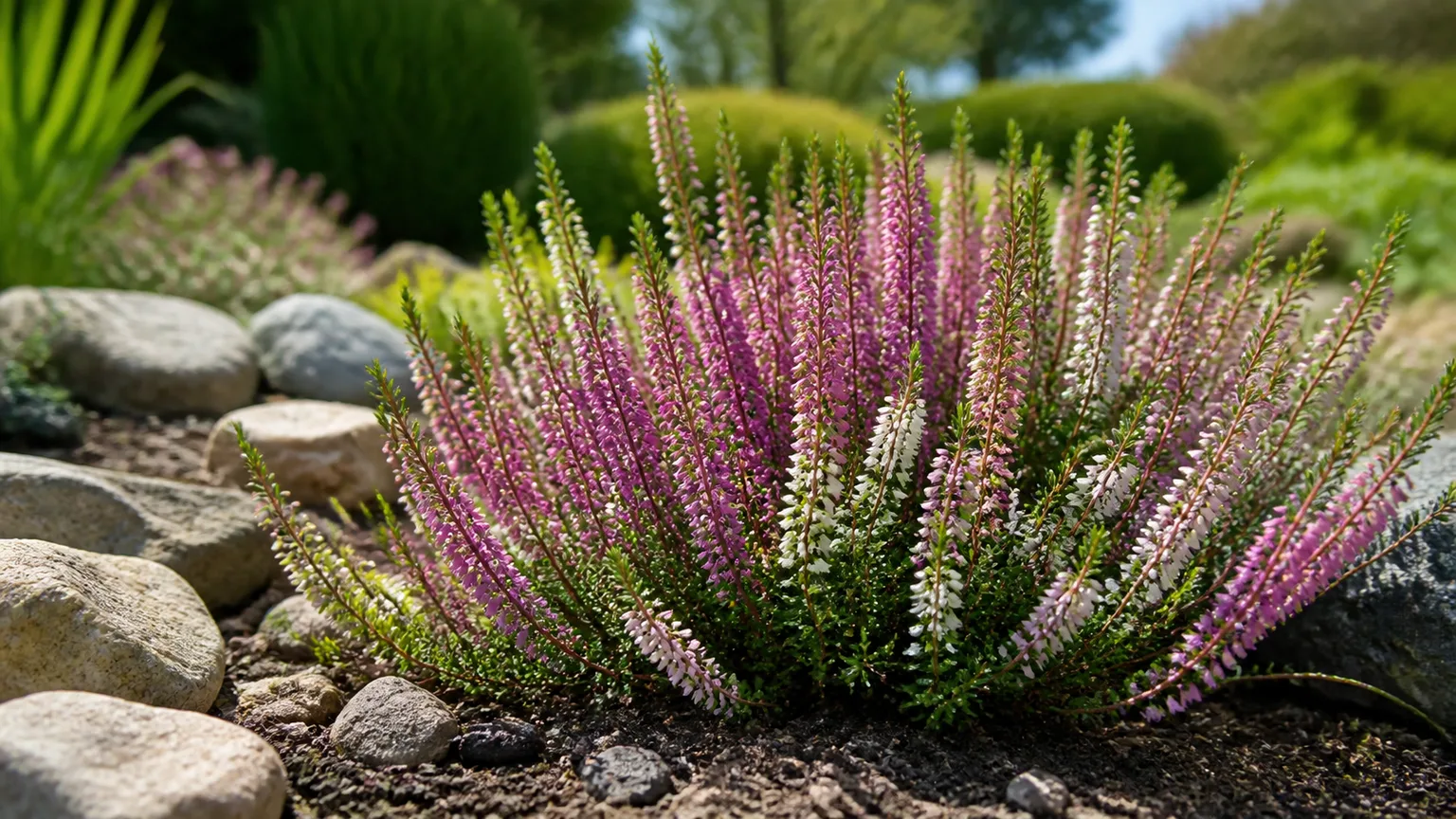
Heather is easiest to grow when you treat it as a cool-climate, acid-loving shrub rather than a generic flowering annual. The plant most people mean by “heather” is common heather, Scotch heather, or ling (Calluna vulgaris): a low evergreen with tiny scale-like leaves and summer-to-fall flower spikes.
Give it bright light, acidic soil that drains quickly, and steady moisture while it establishes. The combination sounds contradictory, but it is the key: heather should not dry to dust, yet its roots must never sit in saturated soil. Get that balance right and it can provide a long season of flowers, winter foliage color, and useful structure in a border, rock garden, slope, or container.
Is Heather Right for Your Garden?
Heather is a good fit for a sunny garden with cool summers, acidic soil, and a free-draining root zone. It works especially well as a low ground cover, mass planting, rock-garden accent, bank stabilizer, or border plant. More upright cultivars can reach about 2 feet tall, while spreading selections stay only a few inches high; check the label before planning the planting.
The NC State Extension Plant Toolbox describes Calluna vulgaris as intolerant of heat and humidity and recommends it for hardiness zones 4 through 6. The Missouri Botanical Garden profile likewise cautions that hot, humid summers and heavy clay can be difficult. A hardiness-zone number is useful for winter survival, but it does not promise that a plant will enjoy a hot, muggy summer.
Use this quick site test before buying:
- Light: Can the planting area receive at least six hours of direct sun? A little afternoon shade can help in a hot climate, but deep shade usually means weaker flowering and open growth.
- Drainage: Does rain move through the soil, or does water linger in a puddle? Heather is far more forgiving of lean soil than of a soggy root zone.
- Soil reaction: Is the soil acidic, or are you working with limey, alkaline ground? Test first rather than adding an acidifier by guesswork.
- Climate: Are summers cool enough for the plant to recover between hot days? If not, grow a small container trial or use heather only in the coolest, best-drained part of the yard.
If the site fails the drainage or heat test, changing the planting location is usually more effective than trying to rescue the plant with extra fertilizer or constant watering. In a marginal garden, one raised, acidic bed is a better experiment than a large mass planting.
Know Which Heather You Bought
“Heather” can refer to several members of the heath family, Ericaceae. Calluna vulgaris is the classic summer heather, or ling, with scale-like leaves and flowers that typically appear from mid-summer into fall. Erica species are often called heaths or winter heathers; many have needle-like leaves and bloom in winter or spring instead.
The distinction changes both the planting plan and the pruning date. The RHS plant profile for Calluna vulgaris describes a low evergreen shrub with urn-shaped flowers from mid-summer to autumn and recommends acidic soil in full sun. A label that says only “heather” is not enough when you need a specific bloom season: look for the botanical name and the mature height and spread.
Do not assume every heather cultivar wants identical conditions. The species, parentage, flower form, foliage color, and local selection all affect performance. If your garden is warm, exposed, or borderline for winter hardiness, choose a named cultivar from a local nursery and follow its tag over a generic zone range.
Give Heather the Right Site: Sun, Soil, and Drainage
The ideal heather bed is open, bright, acidic, humus-containing, and sharply drained. Both NC State Extension and Missouri Botanical Garden describe Calluna vulgaris growing in moist, well-drained sandy or rocky soil; the botanical garden also notes that full sun improves flowering, while some afternoon shade can help in hot summer climates.
Aim for a soil pH below 6, but let a soil test tell you how far below and whether an amendment is needed. A light layer of finished leaf mold or peat-free ericaceous compost can add organic matter. Avoid turning the bed into rich, water-holding garden soil: heather is adapted to lean conditions, and heavy feeding can produce weak, leggy shoots.
Heavy clay needs a structural solution. If water collects after rain, raise the bed, create a gentle mound, improve the grade, or move the plant to a raised container. Mixing a small amount of sand into a broad clay bed rarely creates reliable drainage and can make the soil harder to work. The goal is an open root zone that stays evenly moist for a reasonable time, then drains.
Heather has shallow roots, so protect the planting area from constant digging and cultivation. Keep competing lawn grass and aggressive perennial weeds out before planting. A sheltered site is also useful: the Missouri Botanical Garden advises avoiding strong winds, which can dry shallow roots and increase winter damage.
Plant Heather Step by Step
For Calluna vulgaris, spring is the safest general planting window because the roots have a full growing season to settle before winter. The Plantura growing guide recommends spring planting, acidic soil, and a well-drained structure; Nature & Garden’s heather guide also places spring at the center of its planting advice for common heather.
Wait until the soil is workable rather than simply following a calendar date. Do not plant into a cold, saturated bed or during a heat wave when you cannot monitor moisture. Then use this sequence:
- Water the nursery plant. Hydrate the root ball before it leaves the pot so it does not crumble as you handle it.
- Clear the planting area. Remove sod, perennial weeds, and roots that would compete with the shallow heather root system.
- Prepare the soil. Work in a modest amount of acidic, peat-free organic matter if needed, and correct the grade or build a mound where drainage is slow.
- Dig a broad hole. Make it no deeper than the root ball and several inches wider. Heather should sit at the same depth it occupied in its pot.
- Loosen circling roots gently. Do not tear apart a small root ball; open only the outer roots that are clearly circling.
- Backfill and settle. Firm the soil lightly around the roots so no large air pockets remain, then water slowly at the base.
- Add an open mulch. A thin layer of leaf mold or fine pine bark can help hold moisture, but keep mulch away from the crown and do not bury the low stems.
Group plants according to their mature spread, not the size of the nursery pot. A close mass fills faster, while wider spacing costs less initially but leaves more room for weeds and erosion. Planting in a staggered pattern makes the gaps more even as the shrubs expand.
Watering and Mulching Heather
Water new heather regularly through its first growing season, and continue checking it closely during the following summer. Plantura recommends consistent watering during the first 18 months, while established plants can tolerate short dry spells. That does not make Calluna a desert plant: prolonged drought, reflected heat, and container conditions can still cause browning and flower loss.
Use the soil as your schedule. Push a finger several inches into the root zone or inspect the soil below the mulch; if it is drying through the root ball, water slowly and deeply. If it is cool and wet, wait. The best cycle is a thorough drink followed by partial drying, not a daily sprinkle that keeps the crown and surface permanently damp.
Newly planted heather benefits from water at the base, especially during a hot or windy spell. Overhead irrigation is less useful for a low woody plant and can leave foliage wet for long periods. Once the shrub is established in the ground, rainfall may provide most of its moisture except during extended dry weather.
Mulch should support drainage, not fight it. Use a thin layer of acidic leaf mold, pine bark, or another open organic mulch and leave an air gap around the crown. Avoid thick, fine, constantly wet mulch pressed against the stems; it can trap moisture where the plant is most vulnerable.
Fertilizer: Use a Light Hand
In suitable soil, heather usually needs little fertilizer. The Missouri Botanical Garden describes it as a plant for somewhat lean soil, and Plantura recommends annual feeding mainly for container-grown heather. Excess nitrogen is more likely to create soft, elongated growth than to solve a site problem.
If a soil test shows a nutritional need, feed in early spring with a product labeled for acid-loving plants and follow its rate. Do not apply lime, wood ash, or a general high-nitrogen lawn fertilizer around heather. If leaves are pale, confirm soil pH and drainage before reaching for iron or additional feed; a root-zone problem can look like a nutrient problem.
Container plants have less access to nutrients and may need a light spring application of an ericaceous fertilizer. Never compensate for a too-large dose by watering more often. The better long-term fix for lanky, weak growth is usually more light, less nitrogen, and correct pruning.
Pruning Heather for Dense Growth
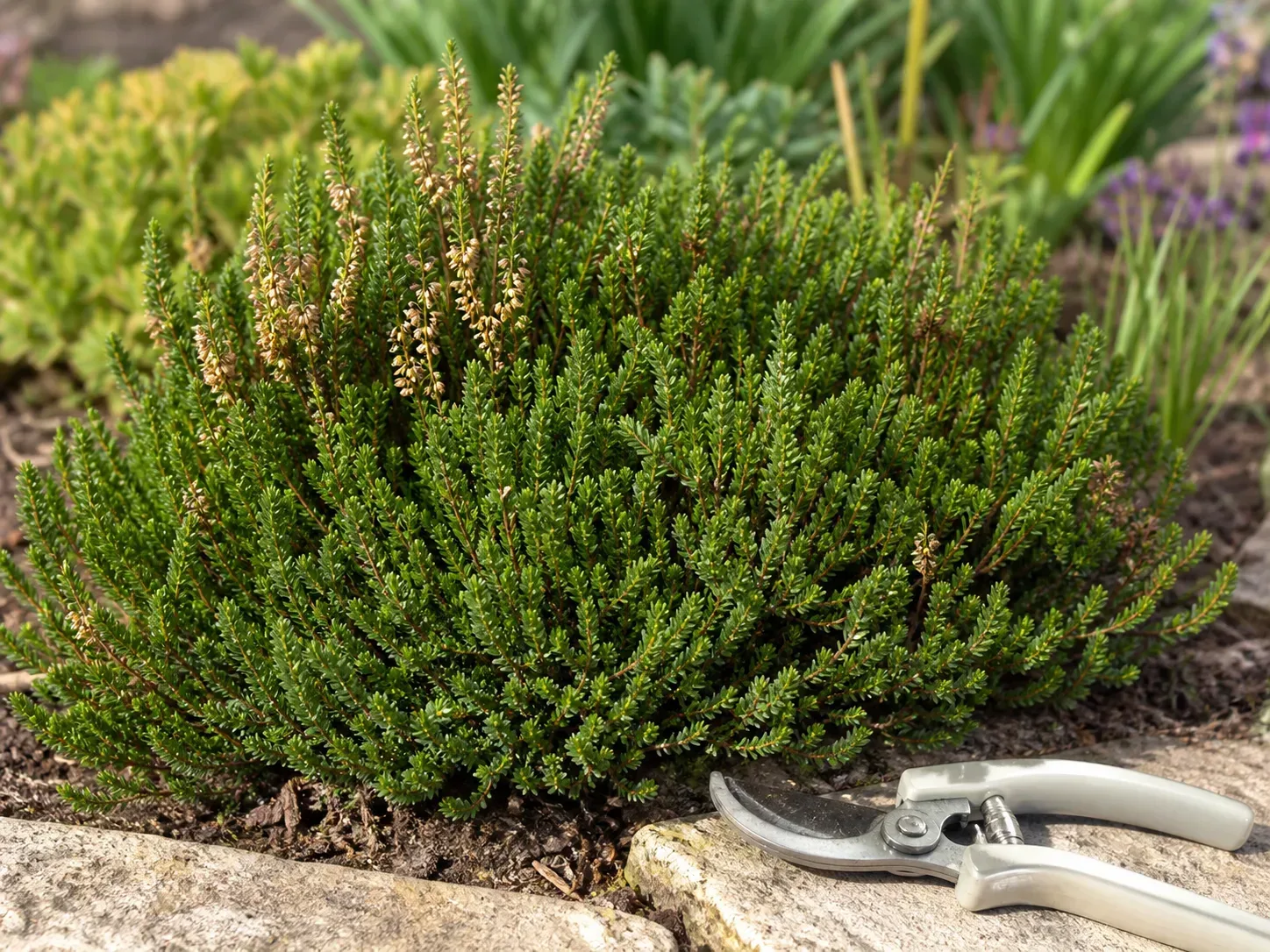
Prune summer-flowering Calluna vulgaris in early spring, before the new season’s growth begins. The RHS recommends shearing off old flowering stems after flowering, and the Missouri Botanical Garden recommends spring pruning before new growth appears. In practice, the safest timing is the dormant-to-early-growth window: the old flower stems are visible, but fresh shoots have not extended far.
Trim the faded flowering growth back into the leafy part of the plant, removing roughly the upper third to one-half of the previous season’s shoots depending on how open the plant has become. Keep some green foliage below every cut. A light, even shear over a large bed is faster than cutting every stem individually, but a hand pruner gives more control around mixed plantings.
Do not cut a badly leggy shrub down into a bare, brown interior and expect it to refill. Heather is much more reliable when you keep cuts within living, leafy growth and prune every year. If the center is completely woody and leafless, take cuttings or layer a healthy outer shoot while you replace the old plant.
For winter- or spring-flowering Erica, prune just after flowering instead of using the Calluna schedule. Pruning at the wrong time can remove the next season’s flower buds. Do not confuse post-bloom trimming with deadheading: old flowers can remain for winter interest, but annual shaping keeps the plant compact and prevents a loose, woody form.
Growing Heather in Containers
Heather grows well in a pot when the container provides the same conditions as a good outdoor bed: sun, acidic compost, and rapid drainage. Choose a container with an unobstructed drainage hole and a width that leaves the root ball room to expand. Heather has shallow roots, so a broad pot is often more useful than an exceptionally deep one.
Use a peat-free ericaceous compost, or combine an acidic container mix with an open drainage component such as perlite or expanded clay. Plant at the original depth, and do not put a saucer under the pot where it leaves the root ball standing in water. The pot should drain completely after watering.
Containers dry faster than beds, particularly on a sunny balcony or beside a warm wall. Check the compost more often in summer, but still wait until the upper layer has begun to dry before watering again. A completely dry root ball may repel water; in that case, water slowly in stages so moisture reaches the center instead of running down the gap between soil and pot.
Container heather is also more exposed to winter cold. Move the pot to a sheltered position, group it with other containers, or insulate the pot when severe cold is forecast. Do not bring it into a hot, dim room and expect a cool-climate shrub to thrive; a bright, unheated porch or protected outdoor location is usually a better winter environment.
Propagating Heather
You can propagate heather by seed, softwood cuttings, division, or layering. The RHS lists all four methods for Calluna vulgaris, but they serve different goals. Seed is useful for experimentation and breeding, while vegetative methods are better when you want a new plant to retain the habit and flower color of a named cultivar.
Layering at Home
Layering is the most forgiving home method because the new plant remains attached to the parent while it forms roots. In autumn, choose a flexible low shoot, bend a section down to the soil, and pin or weigh it so a leaf-bearing node rests against acidic, well-drained compost or garden soil. Keep the tip exposed and the contact point evenly moist, never waterlogged.
Check for roots the following spring or by the next autumn. Once the layered section resists a gentle lift, cut it from the parent plant and transplant it during mild weather. This method is slow, but it avoids the sudden drying that can defeat small cuttings.
Cuttings Versus Seed
Take softwood or semi-ripe cuttings in summer from healthy, non-flowering shoots. Use clean pruners, remove the lower leaves, and insert the cuttings into a sterile, free-draining medium. Keep them in bright indirect light with high humidity and even moisture; fresh air matters because a sealed, wet environment encourages rot.
When a cutting has rooted and begins new growth, acclimate it gradually before planting outdoors. Use a cutting when preserving a specific cultivar matters. Seedlings can vary from the parent, so sow seed when you are comfortable with variation and a longer wait for mature size and flowering.
Winter Protection and Heat Limits
In-ground Calluna vulgaris is hardy in many cool regions, and the Missouri Botanical Garden lists the species for zones 4 through 6. Cultivars differ, however, and a plant in a windy, exposed site can suffer more than the same plant in a sheltered bed. Water the root zone before the ground freezes if autumn has been dry, then protect newly planted or container-grown plants with an open mulch or pot insulation.
Do not cover the foliage tightly with plastic. The aim is to buffer the roots and reduce drying wind, not to create a sealed, humid tent. Container roots are especially vulnerable because the pot is surrounded by cold air; wrap the container, raise it off a freezing surface, and keep it out of standing water.
Heat and humidity are a separate limitation. NC State Extension advises against planting Calluna south of zone 6, and the Missouri Botanical Garden makes a similar caution about hot, humid regions. In warm climates, give the plant morning sun and afternoon protection only if the site still has bright light and excellent drainage, and avoid placing it against heat-reflective masonry. If summers are consistently hot and humid, choose a different shrub rather than trying to keep heather alive through constant irrigation.
Pests, Diseases, and Troubleshooting
Heather problems are usually easier to solve when you inspect the whole plant and the soil together. NC State lists spider mites and scale among possible pests, while the UC Statewide IPM Program’s heather guidance documents chlorosis from high pH, powdery mildew, and root or crown rots among heathers. Some UC IPM disease entries focus on Erica species, so use them as a diagnostic framework rather than assuming every disease affects every Calluna cultivar.
Start by asking three questions: Is the soil wet or dry? Is the newest growth affected, or only older foliage? Are the stems flexible and alive, or brittle and dead? That sequence prevents two common mistakes—watering a rotting plant and fertilizing a plant that simply needs more light or a better-drained site.
Brown or Dying Foliage
First separate normal seasonal color from decline. Many Calluna cultivars turn bronze, purple, orange, or reddish in fall and winter; the Missouri Botanical Garden description notes this foliage color change. If the plant remains firm, produces new growth at the right season, and the soil drains normally, color alone is not a crisis.
Brown, brittle tips after a hot dry spell point toward drought, wind, or root-ball desiccation. Water the root zone thoroughly, then improve the mulch and reduce reflected heat. If stems are pliable and green inside, remove only dead tips and wait for recovery rather than cutting the whole plant back.
Sudden widespread browning, wilt, or collapse while the soil is wet is more concerning for root or crown rot. UC IPM links these diseases with excess moisture, poor drainage, and warm conditions. Pull back mulch, inspect the root zone, and correct the drainage problem; if the roots are dark, soft, or foul-smelling, discard the failed plant and do not replant another heather in the same waterlogged pocket until the site is fixed.
Yellow Leaves, Mildew, or Distorted Shoots
Yellow or nearly white new foliage can result from iron becoming unavailable in soil with a high pH. Test the soil before adding iron, and correct the root-zone reaction only with a product and rate appropriate for the soil test. If the bed is also wet, solve drainage first; stressed roots cannot use nutrients well.
Powdery mildew may appear as a dusty coating or as distorted, stunted shoots. UC IPM notes that heather mildew is favored by moderate temperatures, partial shade, and dry foliage conditions that support infection. Improve air movement, avoid crowding, water at the soil, and remove badly affected material. If you use a fungicide, choose one labeled for the plant and disease in your area and follow the product label; do not improvise a concentration.
Fine stippling, webbing, or a dull cast on foliage suggests spider mites, especially during hot, dry weather. Small hard bumps along stems suggest scale. Isolate a container plant if practical, rinse pests from foliage, and monitor new growth. For a persistent infestation, use only a locally labeled insecticidal soap or horticultural oil according to its label, and avoid treating during heat that can injure foliage.
How to Get Heather to Flower Well
The most reliable bloom formula is full sun, acidic well-drained soil, consistent moisture during establishment, and annual pruning at the correct time. Most Calluna vulgaris cultivars flower from mid-summer into autumn, while Erica heaths extend the season in the opposite direction. If a healthy plant is not flowering, check the site before adding feed.
Too little light is a common cause of weak bloom and leggy stems. So is excessive nitrogen, which can push leafy growth at the expense of a compact flowering habit. Water stress during bud formation can also reduce flowering, particularly in pots or on exposed slopes.
You do not need to deadhead every flower spike. Trim the old flowering growth during the plant’s proper pruning window, keeping cuts above living leafy growth. If you want a longer heather display, combine summer-flowering Calluna with winter or spring Erica rather than forcing one plant to bloom outside its natural season.
Choose Cultivars for Color and Wildlife
Choose a cultivar by mature shape first, then flower color and foliage. Low, spreading forms suit rock gardens and ground cover; upright or mounding forms work better as a border rhythm or background. The Plantura overview describes selections such as ‘Firefly,’ ‘Kinlochruel,’ ‘Silver Knight,’ ‘Carmen,’ and ‘Darkness’ with different heights, flower colors, and foliage effects.
Foliage can be a major part of the display. Some cultivars shift from green to bronze, copper, orange, or purple as temperatures fall, while others stay silver or green. Read the plant label for the mature height, spread, bloom months, and whether the flowers are single, double, or bud-blooming.
If pollinators matter, favor accessible single flowers and plant several shrubs together so bees can forage efficiently. Plantura notes that bees, bumblebees, and butterflies use Calluna flowers, while double-flowered and bud-blooming forms may offer less accessible nectar. Keep flowering heather away from a main doorway if someone in the household has a serious sting allergy.
Check Heather’s Invasive Status Where You Live
Calluna vulgaris is native across parts of Europe and western Asia, but it is not automatically harmless everywhere it is sold. The Invasive Plant Atlas of the United States records the species’ introduced status and warns that its distribution map is incomplete. The IUCN Global Invasive Species Database documents invasive impacts in introduced ranges including parts of Australia, Canada, New Zealand, and the United States.
That does not mean every garden planting is invasive, or that local status is the same across a country. It does mean you should check your state, province, territory, or municipality before planting near heathland, open woodland, or other natural areas. If local guidance flags Calluna, choose a recommended native or non-invasive ground cover instead, and never dump garden trimmings or plants into the wild.
Conclusion: Keep Heather Cool, Acidic, and Well Drained
Heather succeeds when the site does most of the work. Start with the right plant—usually Calluna vulgaris for summer-to-fall flowers—then give it full sun, acidic soil, dependable drainage, and enough moisture to establish without leaving the roots wet.
Prune summer heather in early spring while keeping cuts in leafy growth, feed lightly, and use a wide, well-drained container if you are growing it on a patio. When foliage browns or yellows, check soil moisture, pH, light, and live stems before reaching for fertilizer or pesticides. If your summers are hot and humid or your ground stays wet, the honest care advice is to choose another plant or reserve heather for the coolest, best-drained part of the garden.