How to Grow and Care for Gloriosa Lily
Grow Gloriosa lily from a viable tuber with clear advice on planting depth, trellis support, watering, dormancy, propagation, and poisonous plant safety.
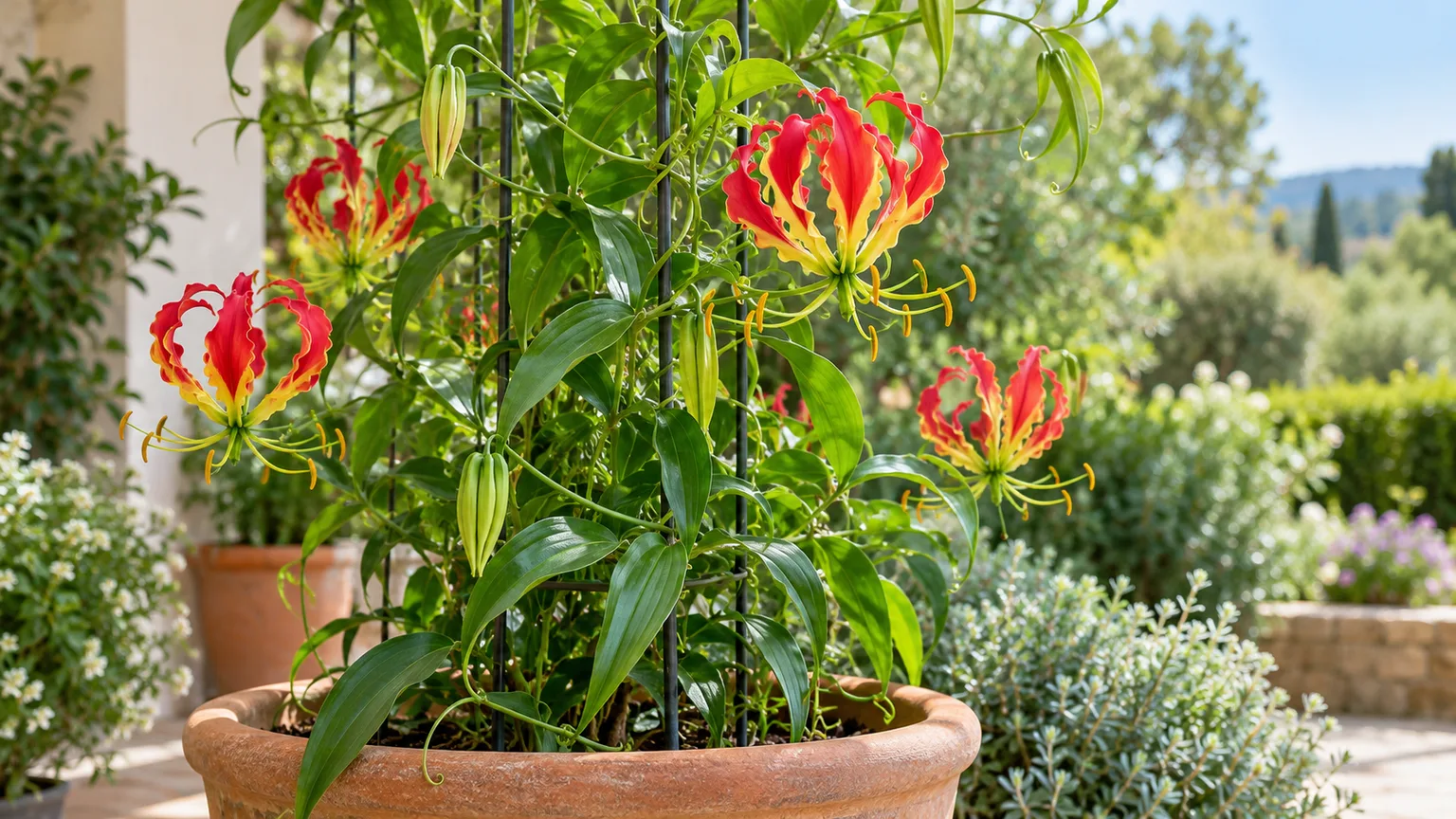
Gloriosa lily is a heat-loving climber that grows from a fleshy tuber, sends out leaf-tip tendrils, and blooms in summer or fall. Start with a tuber whose growing point is intact, plant it horizontally in warm, freely draining soil, and put its trellis in place before the vine emerges. If your winters freeze or local invasive-plant guidance discourages it, a container makes it easier to control and overwinter.
One detail changes how you should handle every part of the job: Gloriosa superba contains colchicine and is poisonous if eaten. North Carolina State Extension also lists possible contact dermatitis, so use gloves for planting, pruning, lifting, or dividing, and keep tubers and cuttings away from children and animals.
Quick care at a glance
| Need | Practical target |
|---|---|
| Planting time | After frost risk has passed and soil is warm; start indoors earlier only if you can give the pot warmth and bright light. |
| Tuber position | Lay it horizontally, usually about 2 to 4 inches deep; angle an identifiable growing tip slightly upward. |
| Light | Full sun in mild weather; give afternoon shade where hot sun bleaches or scorches foliage. |
| Soil | Rich, loose, and well drained; keep it evenly moist while leafy, never waterlogged. |
| Support | Install a narrow, stable trellis or wires before planting; the leaf tips—not the stems—grip the support. |
| Winter | Let foliage die back naturally, then keep the dormant tuber frost-free and on the dry side. |
| Safety | All parts are toxic if ingested; tubers are especially hazardous. Wear gloves and store out of reach. |
That short plan is more dependable than treating the plant as a standard summer bulb. The tuber’s condition, the length of your warm season, and the way you protect it from frost matter more than frequent feeding or elaborate pruning.
What Gloriosa lily is—and how it climbs
The common name is misleading: Gloriosa lily is not a true Lilium. It belongs to the colchicum family, Colchicaceae, and is a deciduous perennial climber with a tuberous rhizome. Its red, orange, yellow, or bicolored flowers have six narrow tepals that curl backward as the bloom opens, giving the flower its flame-like outline. North Carolina State Extension and Wisconsin Horticulture at the University of Wisconsin–Madison Extension describe the plant’s identity, growth habit, and flower structure.
The vine does not wind its whole stem around a post. Instead, the tip of each soft, lance-shaped leaf narrows into a tendril that curls around a thin support. This distinction matters when choosing a trellis: a grid or wire small enough for tendrils to grasp works better than a thick, smooth pole, and the tender stems should not be twisted around it by hand.
Gloriosa is often sold as a “bulb,” but the planting piece is a fragile, elongated tuberous rhizome. It may be forked or bent, and its growing point sits at one end. Treat it gently; a broken tuber can rot, and damage to its only live growing point can leave it unable to sprout.
Decide where it will grow
Give this plant a long, warm growing season and protection from freezing weather. North Carolina State Extension lists USDA hardiness zones 8a through 12b, but a zone rating is not a guarantee that a tuber will survive every winter: drainage, cold snaps, exposure, and how established the plant is all matter. If winter temperatures regularly reach freezing, plan to lift the tuber or move the entire pot to a frost-free place rather than gambling on a mild spell.
In a mild climate, a sheltered bed can work if the soil drains quickly and you can keep the vine from wandering into neighboring plants. In a colder climate, a container lets you provide spring warmth, move the plant out of intense afternoon sun, and bring the dormant tuber inside without digging around its brittle roots. A pot is also a practical choice if you are still learning how the plant behaves in your garden.
In-ground or in a container?
Choose a bed only where the winter climate and local plant guidance make it a reasonable choice. Gloriosa has escaped cultivation in some warm regions, and the current UF/IFAS Assessment classifies it as high invasion risk and not recommended in Florida. A 2021 UF/IFAS Extension blog offered a more localized north-versus-south Florida view; the newer statewide assessment is the better guide for current Florida planting decisions. Elsewhere, check your state or regional invasive-plant authority before putting it in the ground.
A container reduces the chance that tubers spread underground, but it does not make the plant nontoxic or automatically prevent seed dispersal. Use a pot with drainage holes and enough room for the tuber to lie without bending; a broad pot around 12 inches across is a useful starting point for one tuber. If seed capsules form and you do not want seedlings, remove them before they open, wearing gloves and disposing of them where children, pets, and wildlife cannot reach them.
Start with a sound tuber
Buy a firm tuber with no mushy, wet, or deeply shriveled areas. Most important, look for an intact bud or growing tip. Gloriosa tubers with a broken or missing tip can be “blind,” meaning the stored piece may never send up a shoot; a large tuber is not a bargain if its only growing point has been snapped off.
A practical Laidback Gardener account highlights this easily missed buying check: inspect the end of the tuber rather than judging it only by size. Ask a reputable seller how the tubers were stored and what to do if a purchased one has no viable bud. Avoid squeezing or bending the tuber to test it, since its growing point and branches are easy to damage.
Find the growing point before planting
The bud may be subtle, so turn the tuber gently and look for a small, firm point or a trace of emerging growth at one end. If the shape is forked, do not cut it apart just to make it fit a pot; first identify where the living end is, then position the whole piece without forcing the branches into a tight curve. Wear gloves even for this inspection, and wash any tool or surface that has touched cut or damaged tissue.
If a tuber arrives with a broken end, a soft patch, or no clearly viable bud, contact the seller before planting. A tuber can take time to wake once conditions are cool, so do not discard a firm piece just because it has not sprouted after a few days. But repeated watering, digging it up, or moving it between cold and warm spots will not repair a lost growing point and can increase the risk of rot.
Plant shallowly and set up support first
Plant after frost danger has passed and the soil has warmed, or start the tuber in a pot indoors if you can keep it warm and bright. Set the tuber on its side, usually about 2 to 4 inches below the surface, and angle a visible growing tip a little upward. Wisconsin Horticulture notes that planting deeper can make the vine shorter and more upright; use a deeper position only if a compact form is useful, not as a default when you want it to climb.
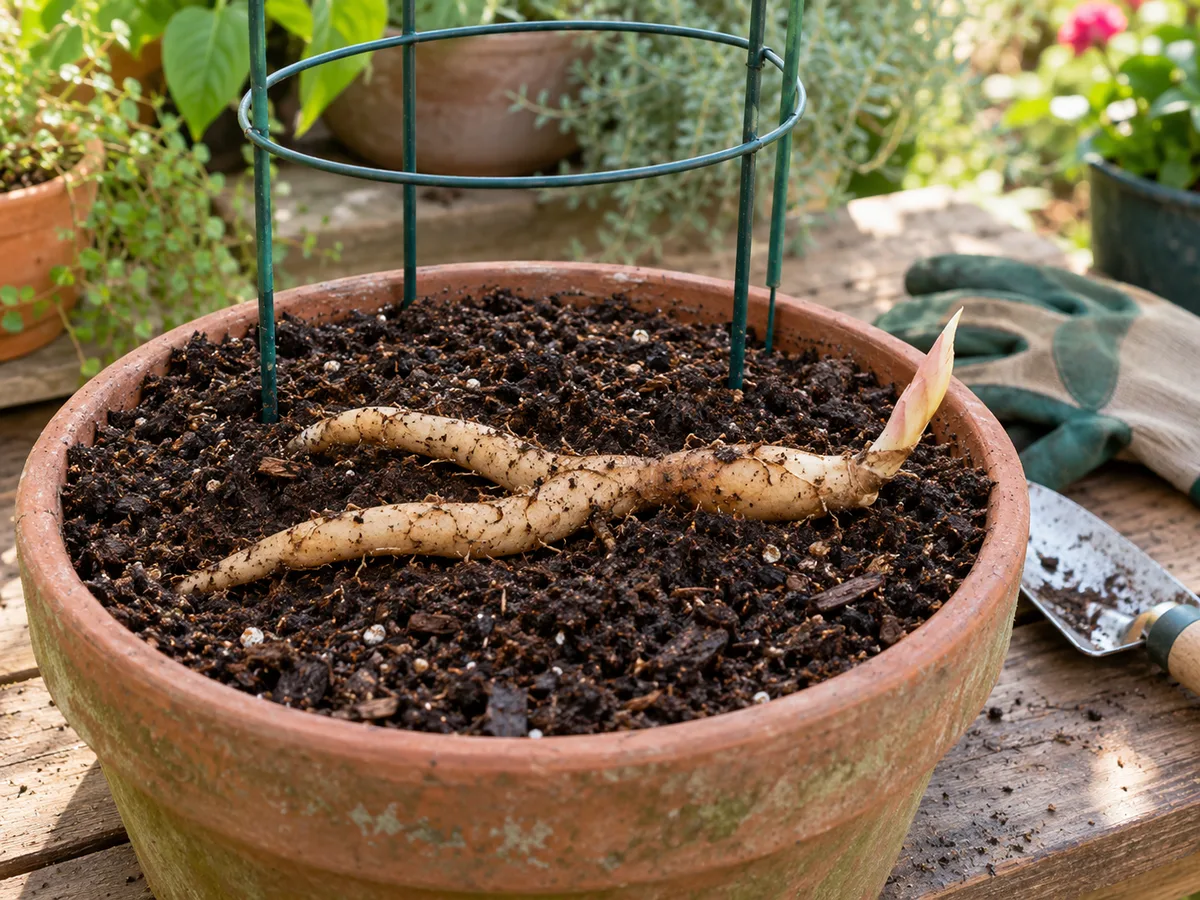
Choose a pot with open drainage holes and a loose, fertile mix that does not stay saturated. One tuber can occupy a wide pot on its own; if you plant more than one, leave room for each rhizome and the vine it will produce rather than crowding them edge to edge. Set the trellis or other support in place before covering the tuber so you will not spear or disturb it later.
Water once after planting to settle the mix around the tuber. Then be patient: the top growth may not appear immediately, especially if the soil and nights are cool, and new growth often emerges late in spring or early summer. Keep the pot warm, do not leave it sitting in a saucer of water, and resist excavating the tuber to check whether it has sprouted.
Care for the vine through the growing season
Aim for bright light, warmth, and steady moisture while the vine is actively growing. In a mild summer, a sunny site helps flowering; in a hot inland or subtropical setting, morning sun with protection from the fiercest afternoon heat can preserve foliage and reduce leaf bleaching. If a sunny patio turns the pot mix hot and dry by midday, move the container where it gets bright light without the most punishing late-day exposure.
Use a loose, fertile growing medium that drains after watering rather than compact garden soil that stays cold and wet. Gloriosa tolerates different soil textures in its native range, but a container still needs both organic matter for moisture retention and enough air space for roots. Drainage is the nonnegotiable part: a rich mix is not an improvement if it holds water around the tuber for days.
Match water and feeding to the growth stage
While leaves and stems are growing, check the mix with a finger rather than watering by a rigid calendar. Water thoroughly when the surface begins to dry, then let excess drain away; hot weather and a full root system may mean a container needs attention more often than a bed. The goal is even moisture, not continuously wet compost and not repeated wilting between waterings.
Feed conservatively while the plant is leafy. Wisconsin Horticulture recommends dilute fertilizer about monthly during growth; that is a sensible starting rhythm in an ordinary potting mix. More fertilizer does not guarantee more flowers, and excess nitrogen can favor leafy growth over blooms, so avoid stacking a slow-release feed with frequent high-strength liquid applications unless a soil or product label gives you a reason.
Temperature affects timing as much as the watering schedule. The plant grows from a warm-season tuber and can stall in cold soil; it also tends to look stressed when hot, dry weather continues around the roots and foliage. If growth is slow early in the season, first check warmth, light, and tuber condition instead of trying to force it with heavy feeding.
Train leaf-tip tendrils without breaking stems
The tendrils do most of the climbing once they touch a suitable support, but young growth may need a gentle nudge toward it. A narrow wire trellis, mesh, or taut horizontal wires give the tips something to wrap around. Gardening Know How’s practical climbing-lily guidance likewise stresses a stable support installed before the vine is tall.
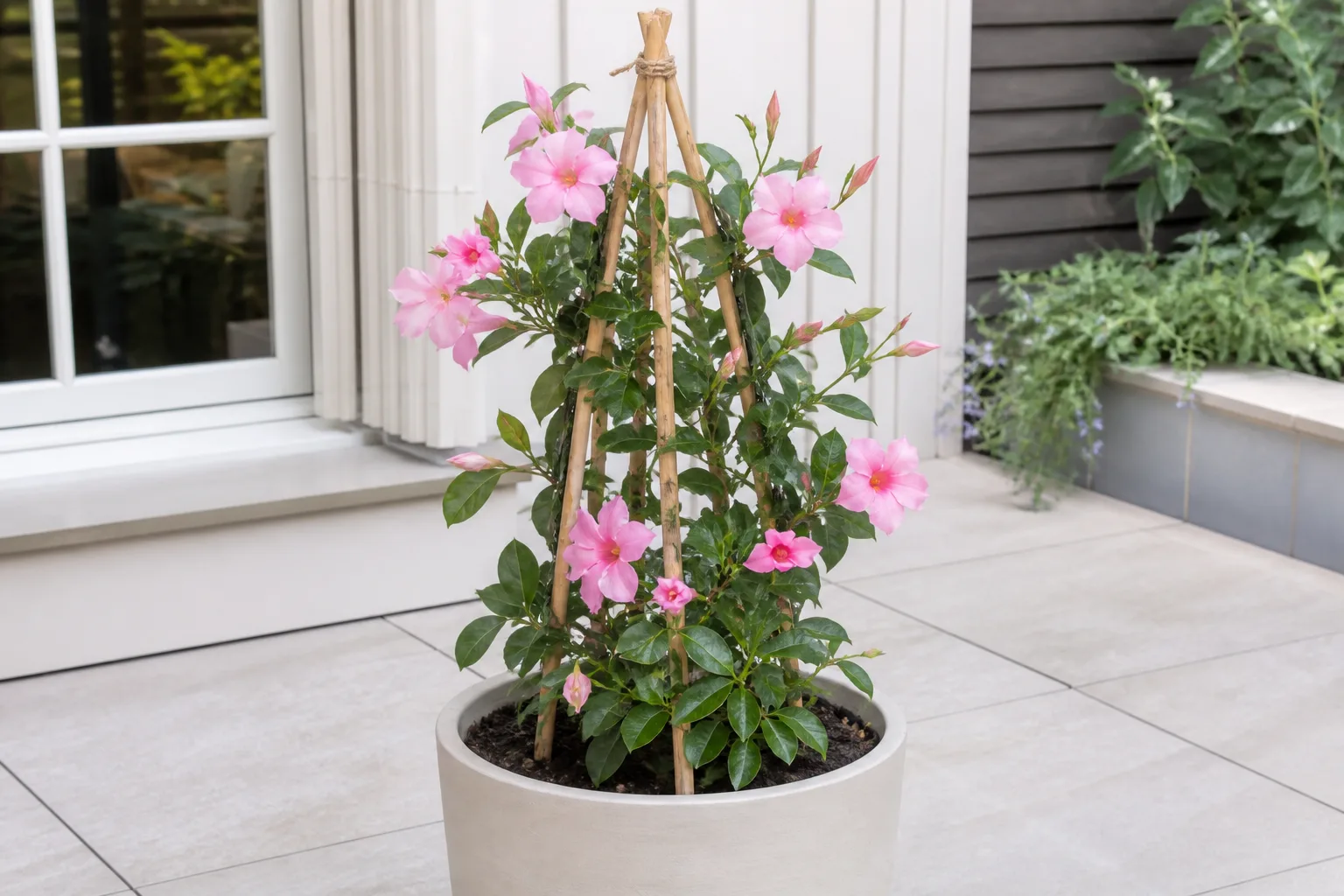
Give the frame a firm anchor before growth begins; a top-heavy vine can catch wind and pull over a lightweight stake. If a new tip is heading away from the trellis, reposition the pot or bring the support within reach rather than bending the stem sharply. Loose, soft ties can hold a stem near its support temporarily, but leave room for it to thicken and never tie around a leaf tendril as if it were a rigid branch.
Once a tendril has coiled, do not tug it free to “neaten” the vine. The stems are brittle enough that repeated handling can stop or damage growth, and every new tie adds a point where a stem may kink. Deadhead spent flowers only if you want a tidier plant or fewer seed capsules; there is no need to cut healthy green stems to make the plant bloom again.
Encourage reliable flowering
A mature, healthy tuber planted early enough for a warm season has the best chance of flowering. A young, small, damaged, or blind tuber may make little growth or no flowers in its first season; it needs time to build reserves before it can support a large vine and blooms. If the plant is newly purchased, wait for the next warm growth cycle before concluding that it is a poor cultivar.
If leaves are lush but flowers are scarce, check light and fertilizer before adding more feed. Too much shade can reduce flowering, while repeated heavy fertilizer can push foliage at the expense of buds. In a very hot climate, however, moving a pot to full afternoon sun may worsen stress rather than solve the problem; try a bright morning position with later shade and keep the tuber evenly moist.
Planting date also matters. A tuber planted after the weather has already turned hot may produce a shorter season, while a cold, wet start can delay emergence or encourage decay. Give the plant warmth first, then consistent light and moisture; do not use extra fertilizer to compensate for a short season or a damaged growing point.
Troubleshoot weak growth and common problems
If no shoot appears, check the simplest causes in order: was the tuber’s growing tip intact, is the soil warm, and is the mix damp rather than soggy? A firm tuber in cool conditions may simply be slow. A soft, sour-smelling tuber in persistently wet soil is more likely rotting; stop watering, improve drainage if the piece is still salvageable, and do not repeatedly disturb a sound tuber to look for growth.
Pale or scorched leaves during hot weather often point to excessive afternoon sun or a pot that is heating and drying too quickly. Move the container to brighter morning light with afternoon protection and check moisture more frequently. If leaves are yellowing as stems naturally die back at the end of the season, that can be normal dormancy; early-season yellowing alongside wet soil is a different problem and may indicate root or tuber stress.
Look beneath leaves for aphids, and isolate a plant with unexplained mottling, spotting, or distorted new growth. North Carolina State Extension lists aphids, anthracnose, cucumber mosaic virus, and rot from overwatering among possible problems. Remove badly diseased material with gloves, clean tools between cuts, and discard a plant suspected of carrying a virus rather than propagating it; a pesticide is not a cure for viral infection.
Protect people, pets, and nearby plants
Gloriosa lily contains colchicine and other toxic alkaloids. North Carolina State Extension classifies it as high-severity poisonous and says every part can be toxic if eaten, with the tuber presenting particular concern; it also lists contact dermatitis as possible. The UF/IFAS Extension overview says the plant is not dangerous to touch, so the references differ on skin contact. Wear gloves for hands-on tasks and avoid sap or tissue contact rather than assuming all contact is harmless.
This is not a plant to grow where a toddler, a pet that chews plants, or livestock can reach it. Do not plant the tuber near edible roots or label-less food crops where someone might mistake it for something edible. Wear gloves and long sleeves when planting, pruning, lifting, or dividing; avoid touching your eyes or mouth, wash hands afterward, and keep stored tubers clearly labeled and in a secure, child- and pet-inaccessible place; if you use a container, allow airflow so dormant tubers do not sit in trapped moisture.
If anyone may have chewed or swallowed any part, do not wait to see whether symptoms develop or try a home remedy. In the United States, contact Poison Control at 1-800-222-1222 for human exposure; for a pet or livestock animal, call a veterinarian or animal poison service promptly. If the person has severe symptoms, call emergency services. Keep the plant label or a photograph available so professionals can confirm what was involved.
Let the tuber rest safely over winter
When days shorten or temperatures fall, Gloriosa lily naturally sheds its leaves and stems and enters dormancy. Let green foliage remain until it yellows or dies back, because the tuber is still storing energy; cutting it off early can weaken next season’s growth. After the top has fully died, cut it back with clean tools and reduce or stop watering.
In a cold-winter area, leaving the tuber in its container is often the gentlest option. Move the pot to a cool, frost-free spot, let the mix dry, and do not keep watering a dormant plant as though it were still leafy. Check occasionally for a tuber that is becoming extremely shriveled or for signs of rot, but keep the medium on the dry side rather than dampening it on a schedule.
You can also lift the tuber after dieback and before hard frost, but do so carefully: its branches are brittle and easy to break. Extension sources differ on whether to keep lifted tubers in dry storage or pack them in a slightly moist medium, and wet storage can cause rot. Follow local extension or supplier guidance for your conditions; whichever method you use, label it, keep it frost-free, and inspect it periodically without letting it sit in soggy material.
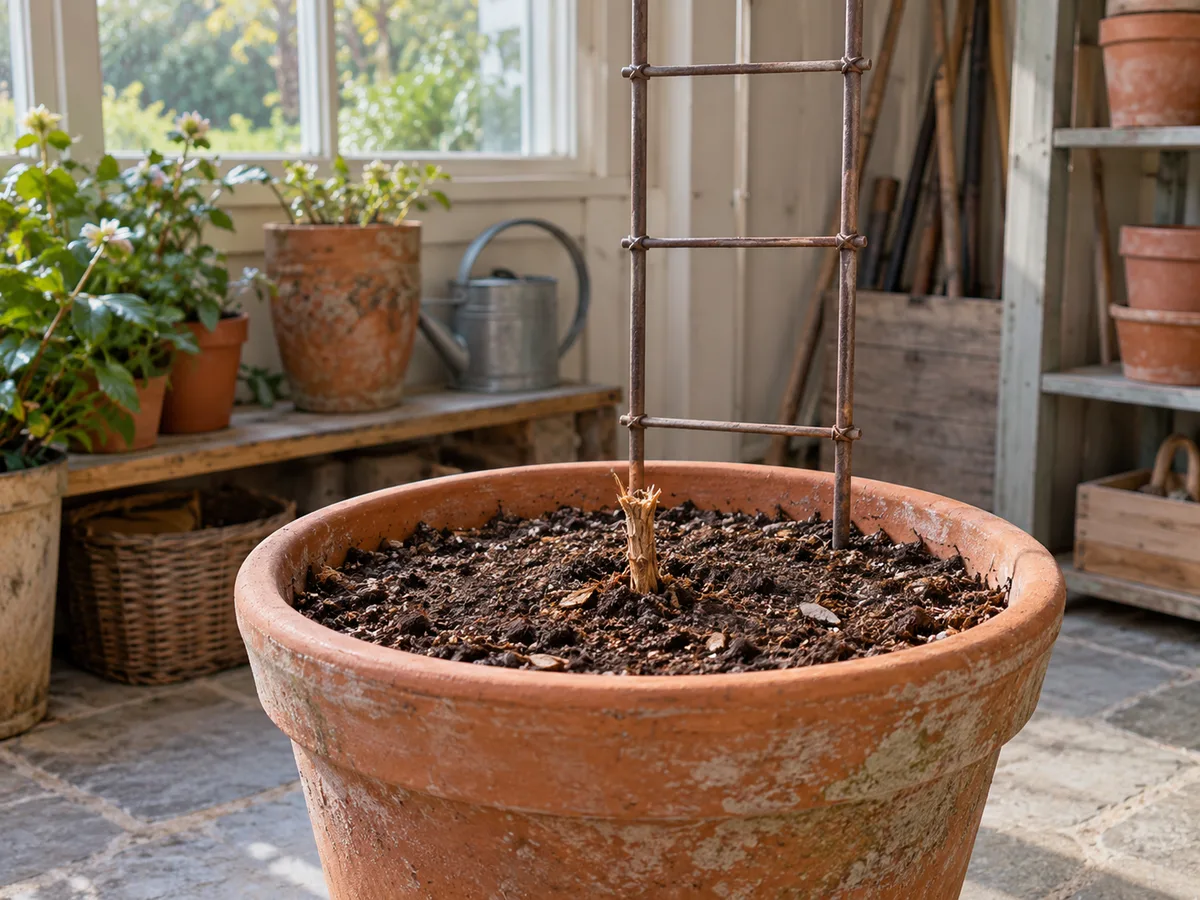
Do not assume that a potted Gloriosa lily should stay warm and actively growing through winter. A bright indoor window is useful during active growth, but a dormant tuber needs a rest; resume watering and light when new shoots appear in spring. If the pot was outdoors, bring it in before frost, not after leaves or the container have frozen.
Propagate by division or seed
Division is the practical way to make more plants that retain a named cultivar’s flower traits. Wait until dormancy, then lift the tuber only if you need to separate a clearly joined offset or refresh an overcrowded pot. Wear gloves, use a clean sharp tool, and make the fewest cuts possible; a division needs a viable growing point, and each wound is another place where rot can start.
Do not split the tuber every year to multiply it. Wisconsin Horticulture advises dividing no more often than about every three years, and a crowded clump can also be left alone if it is still growing and flowering well. If you cannot identify a bud on each division, keep the piece intact rather than cutting it into blind sections.
Seed is slower and less predictable. Germination can be erratic, and University of Wisconsin–Madison Extension reports that new plants may take three to four years to flower. Seedlings from a named cultivar may not reproduce the parent’s exact flower color or form, so choose seed only if you are willing to wait and accept variation rather than expecting a quick duplicate.
Choose a cultivar for its flower color
The familiar form has red or orange tepals with yellow near the base, but named cultivars vary. ‘Rothschildiana’ has strongly recurved red tepals with yellow edging; ‘Citrina’ has yellow flowers marked with maroon; ‘Lutea’ is yellow; and ‘Grandiflora’ is known for larger golden blooms. NC State Extension also lists greenish and mixed-color selections, though availability depends on specialist growers.
Check the botanical name and cultivar on the label because sellers may use “flame lily,” “glory lily,” or the old name Gloriosa rothschildiana for the same commonly sold plant. The label helps you know what flower color to expect, but it does not change the care plan or the plant’s toxicity. Buy from a supplier that can answer questions about tuber viability and storage rather than choosing solely by the photograph on the packet.
Conclusion
Grow Gloriosa lily as a warm-season climber: choose a viable tuber, set it horizontally in loose, draining soil, and install a stable trellis before it sprouts. Keep the growing vine evenly moist and bright, then let the foliage die back and protect the dormant tuber from frost. Where local assessments discourage planting or anyone may handle or eat the tuber, choose a different plant; this striking flower’s colchicine toxicity and regional spread risk deserve the same attention as its care.