How to Grow and Care for Red Dragon Japanese Maple
Learn how to grow a Red Dragon Japanese maple with the right light, soil, watering, pruning, container care, and protection from scorch and late frost.
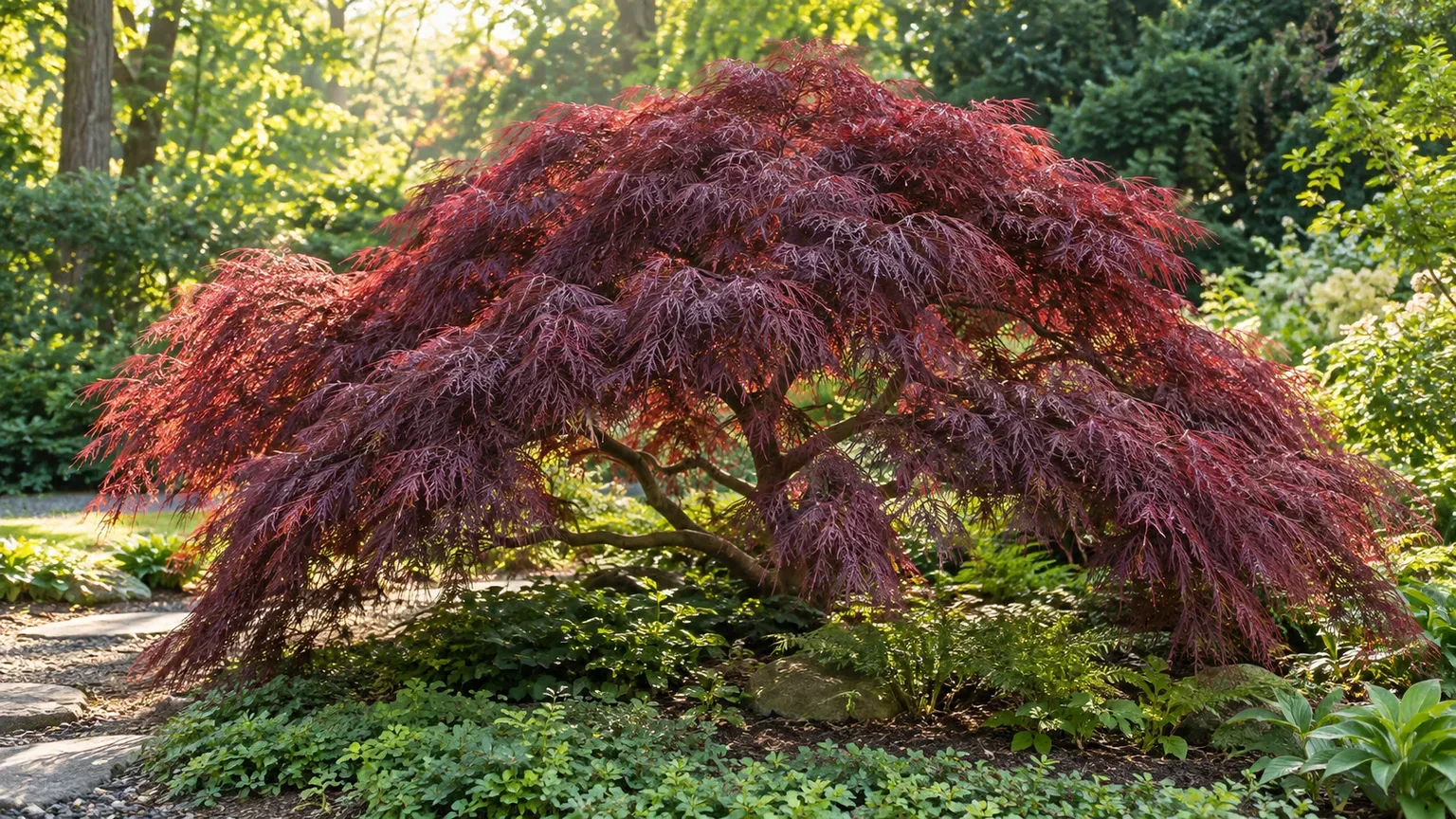
Red Dragon Japanese maple is a slow-growing, weeping laceleaf tree valued for finely divided leaves and deep red color; NC State Extension describes its new spring foliage as bright scarlet. Foliage color can shift as leaves mature and autumn approaches, so use the tree’s growth and leaf condition—not a promise of one exact shade—to judge whether it is healthy.
The best care plan changes with your climate and whether the tree grows in the ground or in a pot. Use the sections below to choose a site, water from what the soil is doing, and make small corrections before leaf damage becomes a recurring problem.
Know the cultivar’s form, color, and eventual footprint
Sold as Acer palmatum ‘Red Dragon’, this named selection is grouped with red dissectum or laceleaf Japanese maples because of its deeply cut leaves and naturally cascading outline. NC State Extension describes ‘Red Dragon’ as having fernlike bright scarlet spring leaves; dissected Japanese maples are broad, low-spreading plants rather than upright shade trees. Leave room for branches to drape and for the canopy to be seen from more than one side.
Do not treat one nursery’s height estimate as a universal mature size. The Missouri Botanical Garden gives a broad range of 6 to 12 feet tall and 9 to 15 feet wide for dissected Japanese maples as a group, not a guarantee for Red Dragon. Individual cultivars, rootstocks, pruning history, and growing conditions all affect the final shape, so ask a nursery for the expected height and spread of the specific plant and how it is likely to develop in your region.
Red foliage is not a promise that every leaf will stay the same shade from spring through fall. New growth, summer heat, light exposure, and autumn weather all influence color; a little greener or darker foliage is not by itself evidence of poor health. Red Dragon is grown outdoors as a deciduous tree, not as a permanent indoor houseplant, though a container can make it easier to site on a patio.
Choose a planting site that protects the leaves
Start with the hottest part of the day, not the number of hours of sunlight printed on a plant label. In a cool-summer garden, a Red Dragon may tolerate more direct sun; in a hot-summer climate or a paved courtyard, the same exposure can dry the fine leaves faster than the shallow root zone can replace water. A sheltered spot with morning sun and bright afternoon shade is a dependable starting point.
Avoid a windy corner, a narrow heat-reflecting space between walls, and a location where water runs off a roof onto the tree. Wind can desiccate leaves even when the soil is damp, while reflected heat raises leaf temperature and increases water demand. NC State Extension and the Missouri Botanical Garden both note that Japanese maples can scorch from excess sun, drought, or wind; the RHS Japanese maple guide also recommends shelter and partial shade for foliage protection.
Balance red color with scorch risk
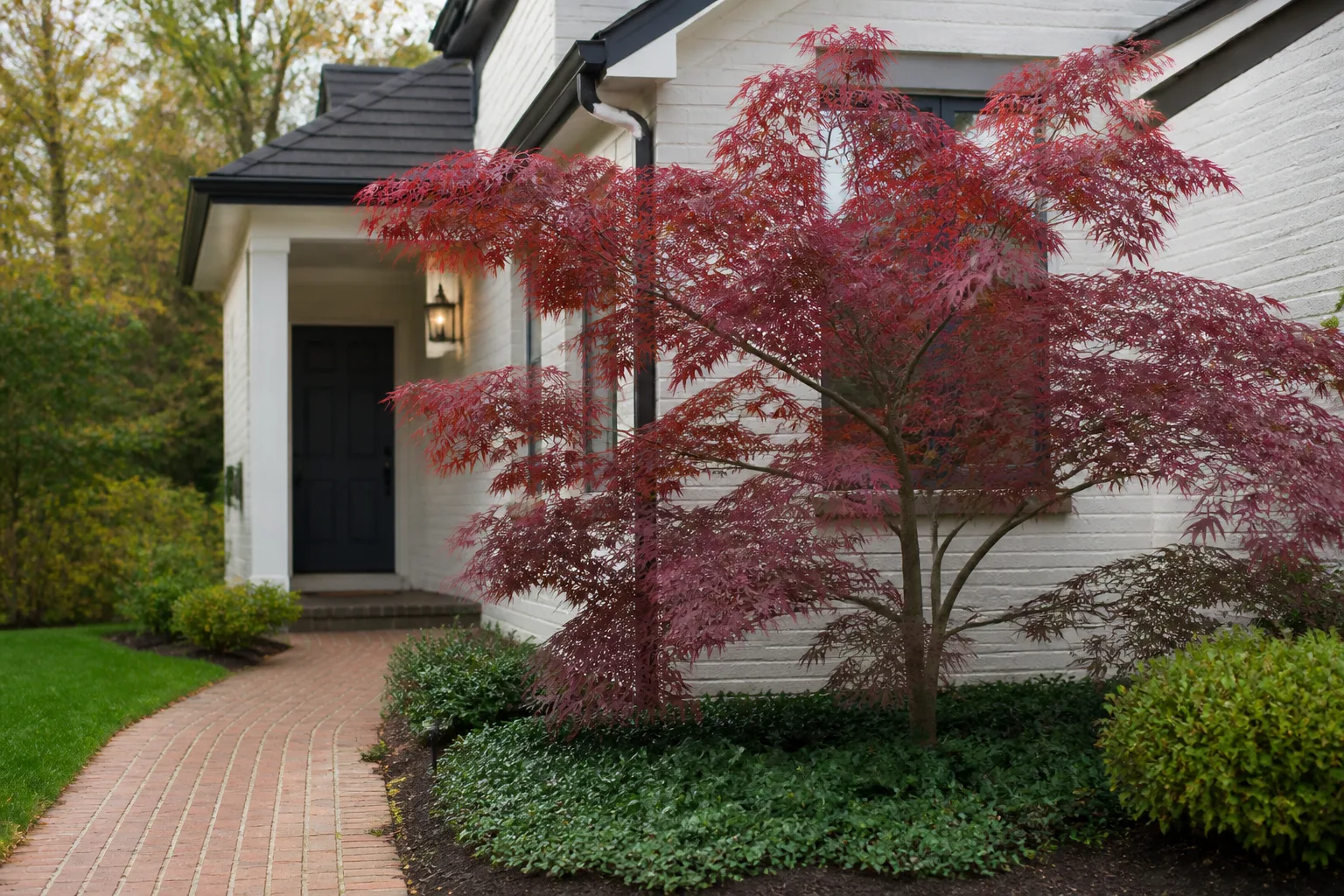
Red and purple cultivars need enough light to develop their strongest foliage color, but “more sun” is not a reliable color fix. If a tree has scorched edges, browned tips, or crispy leaves on the side that faces afternoon sun, shifting a container-grown tree to filtered light or adding a temporary shade screen is more useful than feeding it. For an established in-ground maple in deep shade, do not suddenly expose it to afternoon sun; keep it sheltered and make any site change gradually.
Watch the same leaves over several weeks. New growth that emerges normally after a hot spell suggests that the tree is coping, even if older leaves remain marked; fresh leaves that repeatedly brown on the exposed edge indicate the location may be too harsh. For a container-grown or recently planted tree, increase light gradually if the current spot is very dark; an established in-ground maple is better left undisturbed unless its health requires moving.
Build a cool, moist, free-draining root zone
Japanese maples prefer a soil that holds useful moisture but lets excess water drain away. A loamy or sandy-loam soil with organic matter can do both; heavy compacted clay that stays saturated and a shallow, fast-drying gravel bed create opposite problems. The Missouri Botanical Garden’s profile of dissected Japanese maples describes the preference for moist, organically rich, well-drained soil and advises avoiding hot, dry sites.
Do a simple drainage check before planting: after a soaking rain, see whether water remains around the proposed root zone the next day. If the area stays soggy, choose a raised bed or another location rather than filling the planting hole with a pocket of potting mix; a sharply different soil pocket can collect water instead of fixing drainage. If the ground dries quickly, a wide organic mulch ring can reduce evaporation and keep surface roots cooler.
Slightly acidic soil is suitable, but do not add sulfur, iron, or an “acid-loving” product just because the leaves are red. Soil pH should be changed only after a test shows a reason; yellow leaves can have causes other than pH, and an unnecessary amendment can create a new imbalance. Keep compost as a modest surface improvement or mix it through a broad planting area, not as a rich layer beneath the rootball.
Plant carefully and keep the root flare visible
Plant in a cool period when the soil is workable and the tree can establish without facing immediate summer heat. In many mild-winter areas, autumn works well; in colder or wet-winter locations, follow local nursery or Extension timing and avoid planting into frozen, saturated, or very hot soil. A container-grown maple can be planted at other times if needed, but it will need closer moisture checks while roots are settling.
Dig a hole two to three times wider than the rootball and no deeper than the rootball’s height. Find the trunk flare—the point where the trunk broadens into the upper roots—and position it at or slightly above the surrounding soil. Backfill with the site soil, water slowly to settle it, then spread mulch in a broad ring while keeping it several inches away from the trunk.
If the rootball has circling roots at its outer edge, gently tease those outward; do not tear apart the whole root mass or cut major roots just to make the tree fit a small hole. For a grafted plant, keep the graft union above soil and remove shoots that arise from below it, since those shoots belong to the rootstock and will not carry the named cultivar’s foliage. The RHS guide also emphasizes planting Japanese maples shallowly, with no more than about an inch of soil over the main roots.
Water by checking the root zone
For a newly planted tree, keep the rootball and adjacent soil consistently moist while roots grow into surrounding ground. Check the soil rather than relying on a weekly gallon count: insert a finger or narrow trowel a few inches into the root zone, compare the rootball with the soil around it, and water slowly when that zone is beginning to dry. A new rootball can dry even when nearby lawn looks green, especially on a slope or in wind.
After establishment, water during prolonged dry weather instead of keeping the soil constantly wet. Apply water over the root zone, not against the trunk, and let rainfall count; a short sprinkler run may wet the surface without reaching the deeper roots. Adjust the check frequency during heat waves, after transplanting, and where roots compete with turf or large trees.
The Gardener’s Path guide to weeping Japanese maples gives a practical check for established trees: let the top inch or two begin to dry before watering again. Use that as a starting point, not a universal threshold, because texture, mulch, rainfall, wind, and temperature change how quickly the root zone dries. If soil remains wet, pause irrigation and investigate drainage instead of adding more water to wilted leaves.
Grow it in a container only if you can protect the roots
Red Dragon can make a striking patio specimen, but a pot turns watering and winter care into regular jobs. A container warms and dries faster than garden soil, and its roots are more exposed to summer heat and winter cold; a well-sited in-ground tree is usually less demanding once established. Choose a pot only if you can check it during hot weather and move or insulate it when conditions require.

Choose a pot for controlled moisture, not appearance
Use a sturdy container with multiple unobstructed drainage holes and enough volume for the existing rootball plus a modest margin for growth. Jumping a small tree into an enormous pot can leave unused mix wet for too long; choosing a pot barely wider than the rootball can cause it to dry out repeatedly. Step up gradually, and keep the tree’s expected canopy in mind so the pot does not become unstable under its weight.
Use a free-draining, moisture-retentive container mix rather than dense garden soil. Do not put a gravel layer at the bottom: it does not make water pass through the potting mix faster and can leave a wet zone above it. Set the pot on feet so the holes can drain, empty any standing water from a saucer, and keep the pot out of the hottest reflected afternoon sun.
Check the mix at least once a day during hot or windy spells, especially if the pot is small or exposed. Water thoroughly until excess runs from the drainage holes, then let the surface start to dry before watering again; do not use a rigid daily schedule in cool, cloudy weather. The RHS recommends moist, not sodden, compost for container Japanese maples and more frequent checks in hot conditions.
Repot when roots crowd the pot, drainage slows, or the mix has broken down—not simply because another year has passed. The RHS describes repotting every couple of years as common and notes that long-term container trees may need root pruning every two to three years. Root pruning is a skilled task; if you are not confident, ask a specialist nursery or arborist rather than cutting a large portion of the root system on a stressed tree.
Fertilize sparingly, if at all
A healthy in-ground Red Dragon in reasonable soil usually does not need routine heavy feeding. Do not fertilize at planting, and do not try to correct brown leaves or weak growth with a high-nitrogen lawn product; the cause may be heat, poor drainage, root damage, or low light, none of which fertilizer repairs. First check the site, moisture, root flare, and whether the tree has actually produced new growth.
If a soil test or consistent symptoms show a nutrient need, use a fertilizer labeled for trees and follow its label rate and timing. Container trees can use a modest, general-purpose granular feed in spring if they have been in the same mix for more than a year, as the RHS growing guidance recommends. Avoid late-season nitrogen that encourages tender growth before cold weather, and stop feeding when the tree is stressed until the underlying issue is understood.
Prune to maintain the cascading form
Most Red Dragon Japanese maples need little pruning. The aim is to preserve the layered, draping canopy, not to turn it into a ball, lift every low branch, or hold it at an arbitrary height; repeated shearing usually produces an unnatural outline and can expose fine interior branches to sun.
Time cuts and make them at branch junctions
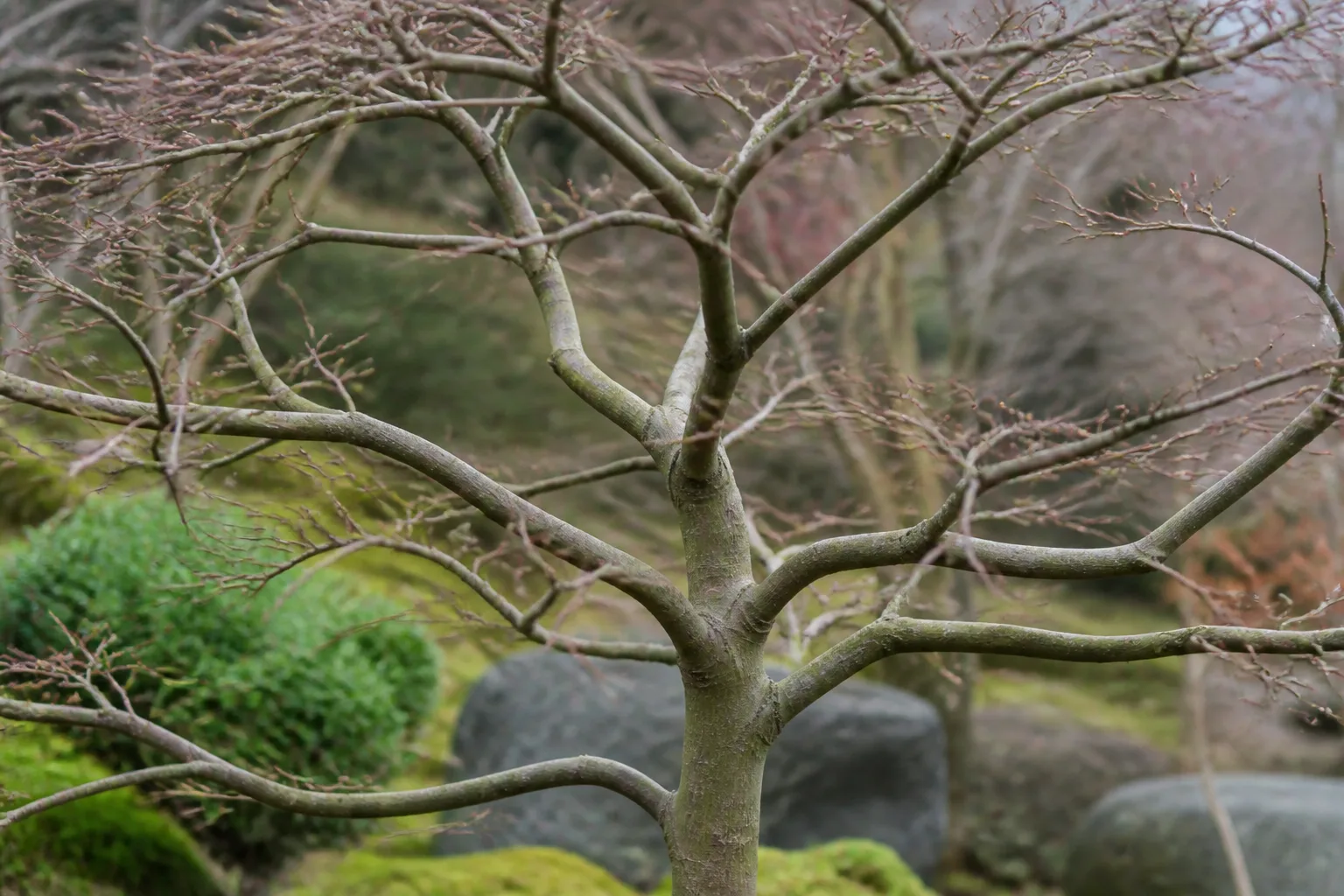
For structural pruning, work during dormancy after leaves have fallen and before buds swell and sap begins rising. Guidance differs on exact seasonal windows: the RHS favors July through January to reduce sap bleeding, while Fine Gardening’s pruning guide discusses both winter and summer work and cautions against pruning in hot weather. Local climate, active sap flow, and the size of the cut matter more than a single calendar date.
Remove dead or broken wood first, then address branches that rub, cross through the canopy, or grow below the graft. Follow each candidate branch to its attachment and cut just outside the branch collar or back to a suitably placed side branch; do not leave a long stub or make a flush cut against the trunk. Use sharp bypass pruners for small branches and a pruning saw for larger ones.
Keep cuts small, especially on a young tree. Fine Gardening advises against removing more than one-fifth of the crown at once and against removing a side branch more than half the diameter of its parent; treat these as conservative limits, not a target to reach. If the tree needs substantial restructuring or has large dead limbs, have a qualified arborist assess it rather than trying to remake the canopy in one session.
Prepare for heat, wind, frost, and winter
Hot, dry wind and abrupt afternoon exposure are common reasons for leaf scorch. During an exceptional heat wave, water the root zone if it is drying, protect a young or potted tree from afternoon sun, and avoid fertilizing or pruning it to “help” it recover. Damaged leaves will not turn green again, so judge recovery by the next flush of growth and by whether damage stops spreading.
New foliage can be injured by a late spring frost even when the established tree is winter-hardy. If a frost is forecast after buds have opened, cover a small tree with breathable frost cloth before temperatures fall and remove it after the cold event; avoid plastic touching the leaves. Do not wrap a healthy in-ground adult tree for an entire winter unless local conditions or a nursery specifically call for protection.
Container roots need more protection than roots insulated by garden soil. Move a potted tree to a sheltered, unheated location or group pots together against a protected wall, insulate the container, and keep the mix slightly moist while the tree is dormant. Do not bring it into a warm living room: Red Dragon is a deciduous outdoor tree that needs seasonal dormancy.
Troubleshoot scorched, wilted, or dropping leaves
Brown edges are a symptom, not a diagnosis. First ask when the damage appeared, which side of the tree is affected, whether the soil is dry or wet several inches down, and whether a hot spell, wind event, or late frost occurred. This sequence prevents a common mistake: adding more water to a tree whose roots are already sitting in poorly drained soil.
Separate leaf scorch from wet-root stress
| What you see | More likely explanation | First check |
|---|---|---|
| Crisp brown margins after hot sun or dry wind, strongest on the exposed side | Heat, wind, or moisture stress | Check root-zone moisture and afternoon exposure |
| Soft wilt while soil stays wet or smells sour | Poor drainage or root injury | Pause irrigation and inspect drainage; do not fertilize |
| New leaves suddenly blackened after a cold night | Late-frost injury | Wait for new growth before removing damaged tips |
| Yellowing between leaf veins on otherwise mature leaves | Possible nutrient or high-pH issue | Test soil before applying iron or changing pH |
| One branch or one side declines over time | Root, stem, or vascular problem may be involved | Inspect bark and root flare; request local Extension diagnosis |
Leaf scorch often affects tips and margins first, especially on exposed foliage; the Royal Horticultural Society’s leaf-scorch advice emphasizes wind and excessive sun as common pressures on Japanese maples. A tree with dry soil needs a slow, thorough soak and a better moisture-retaining mulch ring, while one with persistently wet soil needs irrigation stopped until the drainage issue is addressed. Do not expect already-browned leaves to recover.
Some leaf spots appear after cool, wet periods and may be fungal, while aphids, scale, or chewing insects leave different evidence. Remove fallen diseased leaves, keep irrigation directed at the soil, and take clear photos of both leaf surfaces and affected branches if symptoms recur. Progressive branch dieback, spreading lesions, or whole-tree wilt deserves an Extension office or qualified arborist’s assessment; broad fungicide use or destroying the tree without a diagnosis can be unnecessary and ineffective.
Monitor pests and diseases without treating blindly
Inspect the undersides of leaves, tender shoot tips, and branch junctions when you see distortion, sticky residue, stippling, or sudden leaf loss. Aphids cluster on young growth and may leave honeydew; scale insects look like fixed bumps on stems or leaves; leaf-chewing insects leave holes or missing tissue rather than uniformly crisp margins. Japanese maples can also develop root rot, leaf spots, and verticillium wilt, but the same visible symptom can arise from weather or water stress.
Start with identification. A strong stream of water can dislodge some aphids on a small tree, while hand removal may be enough for a few visible insects; avoid spraying open flowers or beneficial insects. If you consider a pesticide, use only a product labeled for the pest and the plant, follow the label exactly, and check with local Extension when the diagnosis is uncertain. Do not apply a fungicide simply because a leaf has brown spots.
Propagate Red Dragon without losing its cultivar name
Seeds from a named cultivar do not reliably grow into the same cultivar. The offspring may have different foliage color, leaf shape, or growth habit, so sowing a samara is an experiment rather than a dependable way to reproduce Red Dragon. The RHS notes that named Japanese maple cultivars do not breed true from seed.
Commercial nurseries preserve named selections mainly by grafting a Red Dragon scion onto suitable rootstock. Grafting takes practice and clean technique; a home gardener who wants an exact match will usually have better results buying a healthy, correctly labeled grafted tree from a specialist nursery. Layering or softwood cuttings can be attempted by experienced propagators, but rooting success varies and a small rooted cutting needs careful protection as it establishes.
If a shoot emerges below the graft union, remove it while small because it belongs to the rootstock, not Red Dragon. Do not cut above the graft simply to remove a vigorous shoot that originates from the named canopy; trace the shoot to its point of attachment first.
Follow a simple seasonal care rhythm
Early spring: Check winter dieback after buds show life, inspect the mulch and keep it away from the trunk, and watch the forecast for late frost once new leaves open. Feed only if a soil or growth problem gives a clear reason.
Late spring and summer: Check soil more often during dry, windy, or hot weather. Container trees may need daily inspection during heat, but water only when the mix is beginning to dry; look for scorch on the sun- and wind-facing side.
Autumn and dormancy: Let the tree color and drop its leaves naturally. Clear diseased leaf debris, plan any small structural cuts for the appropriate local window, and protect container roots before prolonged freezing weather.
Conclusion
Give Red Dragon Japanese maple a bright but sheltered position, soil that drains while holding moisture, and room for its cascading canopy to develop. Water according to what the root zone is doing, treat a container as a higher-maintenance choice, and prune only when you can identify the branch or structural problem you need to solve.
If leaves brown, wilt, or drop, check exposure and soil moisture before applying fertilizer or sprays. A few careful observations—where the damage is, when it began, and whether the soil is wet or dry—will usually point to a safer next step than a fixed calendar or blanket treatment.



