How to Grow and Care for Hellebore
Hellebore care depends on species and climate. Find the best site, planting depth, watering routine, pruning timing, and realistic bloom expectations.

Hellebores are long-lived perennials known for flowers that can open in late winter or early spring, when many garden beds are still quiet. They are often described as easy shade plants, but that shorthand hides an important point: Helleborus is a genus, not one uniform plant. A stemless Lenten-rose hybrid, a Christmas rose, and a tall stem-forming species can need different pruning, exposure, and seasonal care.
For most garden hellebores, start with a site that gives some shade, especially in hot afternoons, and soil that holds moisture while draining freely. Plant the crown at the same level it grew in its nursery pot, water consistently while it establishes, and avoid disturbing the clump unless there is a clear reason. Then adjust the details to the species and your local climate. Those choices matter more than a rigid calendar or a heavy feeding routine.
Hellebore care at a glance
- Light: Partial or dappled shade is a reliable starting point; some species tolerate or prefer more sun in cool climates.
- Soil: Humus-rich, evenly moist soil that drains well; avoid waterlogged beds.
- Water: Water new plants during dry spells. Once established, check the soil during drought rather than assuming the plant is drought-proof.
- Planting: Set the crown at nursery-pot level and leave room for mature foliage and air movement.
- Pruning: Remove tired leaves only when appropriate for the species; do not cut back every hellebore by the same rule.
- Propagation: Seedlings may vary, while division can disturb a mature plant and delay its recovery.
- Caution: Treat the plant as potentially toxic if chewed, wear gloves for cleanup, and keep prunings away from children and pets.
If you know only one thing before pruning or transplanting, identify the plant as closely as possible. Many garden centers use common names loosely, and labels may say “Lenten rose” for plants with hybrid ancestry. A botanical name or a clear description of the stems and leaves can prevent a well-intended cut from removing flowers.
Identify the hellebore before you follow a care calendar
The name hellebore covers many species and hybrids in the buttercup family, Ranunculaceae. They share some broad preferences, particularly for cool roots and good drainage, but they do not all have the same bloom season, leaf habit, or stem structure. Hellebore flowers also are not true roses; “rose” in common names refers to their shape or season.
The Royal Horticultural Society’s Helleborus growing guide describes the range of species and growing conditions, while the Missouri Botanical Garden’s Ballard’s Group profile is useful for understanding popular garden hybrids. Use the plant tag if you have it. If it is missing, note whether leaves arise in a low clump or on upright stems, whether the foliage is evergreen in your climate, and when the plant flowers. These clues help, though they may not identify a complex hybrid precisely.
Lenten-rose hybrids
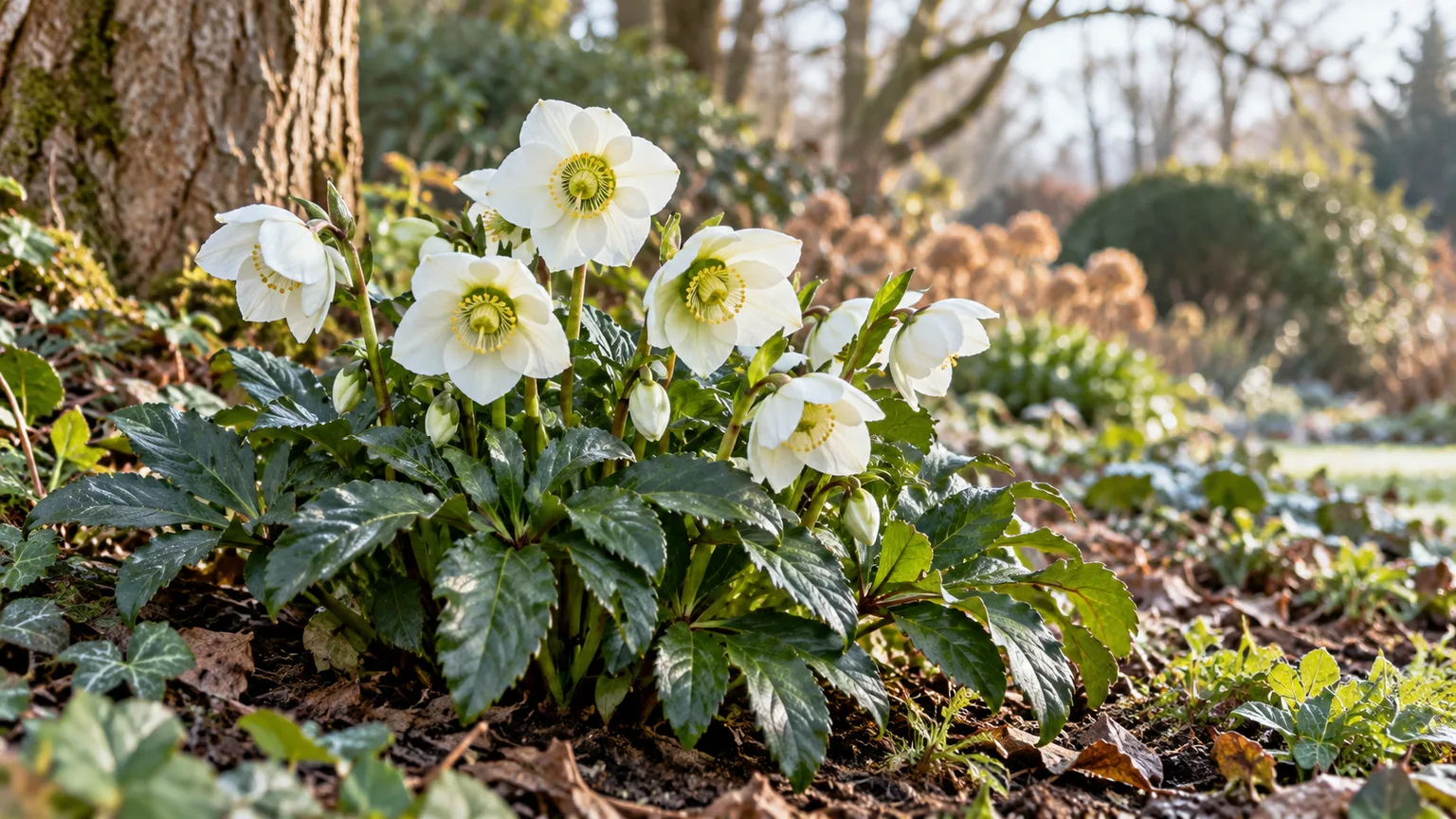
Many of the colorful hellebores in garden centers are hybrid plants commonly called Lenten rose, often labeled Helleborus × hybridus or simply Helleborus hybridus. Their flowers come in a wide range of colors and forms, and the clumps generally carry divided leaves close to the ground. They are a good choice for a woodland edge or part-shaded perennial bed.
The name is not perfectly consistent in trade. Some labels use “orientalis” or “Lenten rose” broadly for hybrid garden plants. For a plant with a named cultivar, follow the nursery’s care notes and retain the label. For additional Lenten-rose-specific planting and pruning detail, see our Lenten rose hellebore guide.
Christmas rose and other species
Christmas rose, Helleborus niger, is a distinct species, not just another name for every hellebore. It is associated with winter flowering in mild conditions, but the calendar date is not guaranteed; in colder regions, flowering may occur later. This plant can also be more sensitive to a cold, wet position than the more adaptable hybrid garden hellebores. Our Christmas rose growing guide covers its species-specific care.
Other species widen the range further. Helleborus foetidus has upright leafy stems and green flowers, while H. argutifolius can form a taller, architectural clump and often tolerates brighter conditions if roots stay cool. H. thibetanus is deciduous and should not be treated as an evergreen groundcover. Do not assume the same hardiness range, ideal light, or pruning time applies to all of them.
Stem-forming and stemless hellebores
This distinction is especially useful when deciding what to cut. Stemless hellebores, including many Lenten-rose hybrids, send up leaves and flower stalks separately from the crown. Old leaves can sometimes be removed as new flower stems appear. Stem-forming species carry foliage and flowers along upright stems; cutting those stems back before flowering can remove the display.
If you are unsure, watch where the buds emerge. New flower stems coming from the crown between older leaves suggest a stemless type. Buds carried at the end of leafy upright stems point to a stem-forming plant. When the structure is unclear, wait until flowering finishes and consult a species profile before making a substantial cut.
Choose a site that stays cool in summer
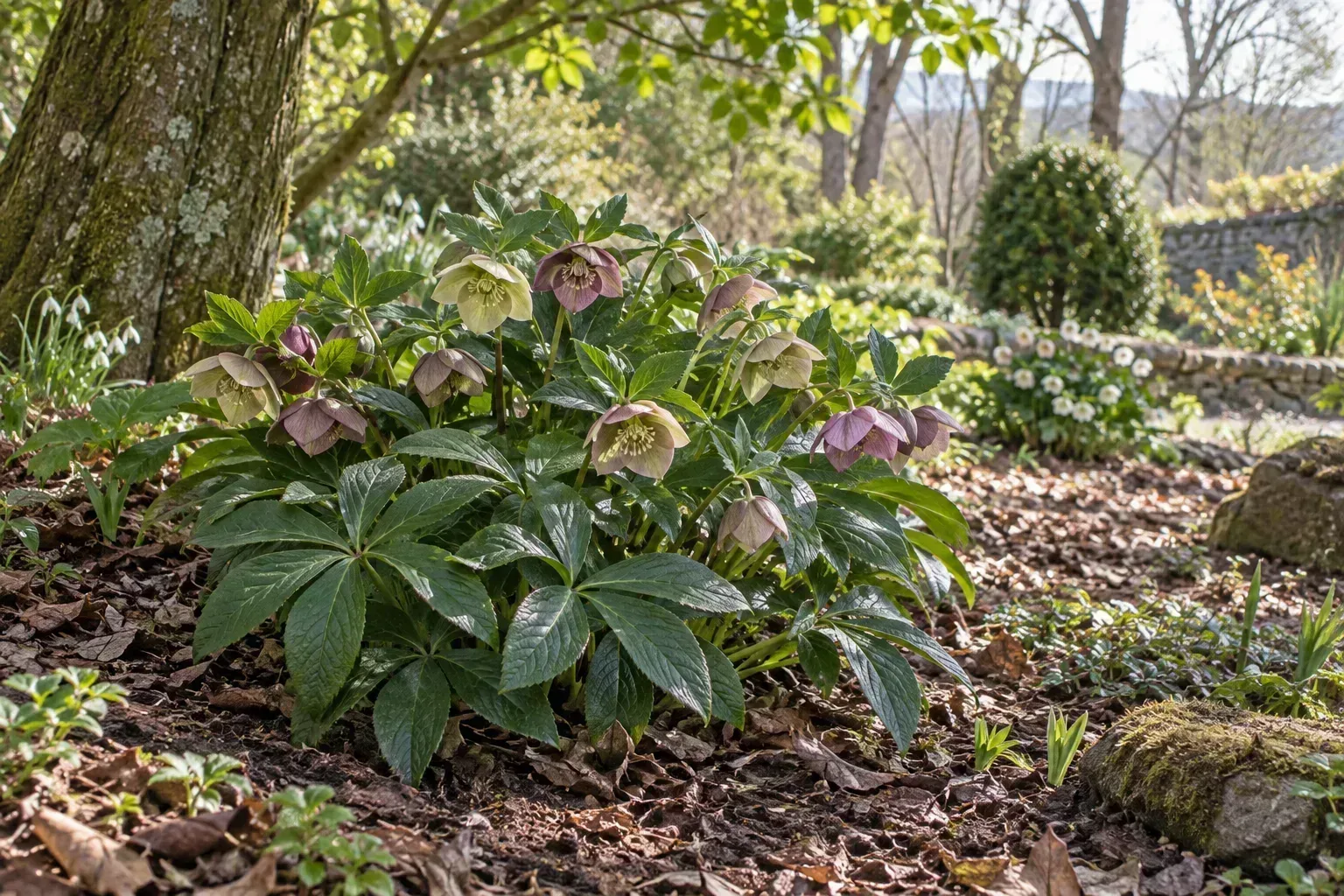
A hellebore can tolerate more sun than it prefers, or more shade than is ideal, depending on its species and local climate. The most dependable site for many garden hybrids is beneath a deciduous tree or near a shrub border where the bed receives light in winter and spring but dappled shade in summer. That seasonal shift lets flowers show while protecting foliage and roots from the hottest weather.
Look beyond the amount of sun. A site next to a hot west-facing wall, paving, or gravel can be much warmer than a shaded woodland bed. At the other extreme, a low hollow that collects water through winter can keep the crown wet for too long. Hellebores do best where they have air around the leaves and soil that drains after rain.
Tree roots are another trade-off. A deciduous canopy provides useful summer shade, but its roots can compete for moisture. Before planting, dig a small test hole and observe how quickly water moves through the soil. If tree roots fill the planting area or the bed dries rapidly in summer, plan to irrigate during establishment and check moisture during dry spells.
Match light to species and climate
Partial shade is a good default for many hellebores, not a universal law. In a cool-summer or maritime climate, some types can flower well with several hours of direct light, especially morning sun. In a hot-summer climate, afternoon shade and a cool root zone are more important. The RHS guide notes that species differ: some tolerate brighter sites, while others need more shelter from sun, wind, or winter wet.
Use the leaves as feedback. A plant that receives too little light may make foliage but flower sparsely, although age and soil conditions can also be involved. Leaves that scorch, fade, or wilt repeatedly in hot weather suggest excessive exposure or drying roots. Move a newly purchased plant only after checking the soil and watering; a wilted plant is not automatically sunburned, and extra water will not correct soil that is already saturated.
Deciduous shade is convenient but not required. A north- or east-facing bed can work where drainage is good and summer temperatures are moderate. In a very shady location, choose a species suited to deeper shade and accept that flowering may be less abundant. Avoid planting by a dense evergreen hedge without checking both light and root competition.
Prepare soil that drains without drying out
Hellebores prefer fertile soil with organic matter and steady moisture, but they do not want to sit in stagnant water. A crumbly loam enriched with leaf mold or mature compost is often suitable. Heavy clay can work if water drains through it; if a test hole remains full long after rain, improve the bed structure or choose a raised position rather than putting the crown in a wet pocket. The nursery horticulture advice in White Flower Farm’s growing guide likewise emphasizes evenly moist, well-drained soil and partial shade.
Do not add lime or other pH amendments simply because a general guide says hellebores like neutral or alkaline soil. Soil pH preferences vary by species and local conditions, and unneeded amendments can create problems for other plants in the bed. If pH is a concern, use a soil test first and follow its recommendation. A few inches of compost used as a surface mulch is a safer routine than repeatedly changing the entire soil chemistry.
Organic matter should improve structure, not bury the crown. Keep mulch loose and pull it away from the point where stems emerge. A deep, wet layer over the crown can encourage rot, especially during a mild, rainy winter. Replenish a thin mulch layer as it breaks down rather than building a mound around the plant each year.
Plant at the right depth and give the clump room
Plant nursery hellebores in fall or spring when the soil is workable and neither frozen nor waterlogged. In many regions, fall planting gives roots time to settle before flowering, but spring is also reasonable where winter conditions are severe or the plant is already in active growth. Follow local nursery guidance for a species that is less cold-hardy or more sensitive to wet.
Dig a hole slightly wider than the rootball, loosen circling roots gently, and set the plant so the crown sits at the same level it did in its pot. Planting too deeply can weaken growth and expose the crown to persistently wet soil. Backfill with the native soil improved with modest compost if needed, firm gently, water to settle the soil, and mulch lightly.
Space plants for their mature width rather than the size of the pot. Crowded foliage stays damp longer and is harder to inspect for leaf disease. Small cultivars may fit closer together than large stem-forming species, so check the expected spread on the plant label. If the bed is near a path, place nodding flowers where you can see them without trampling the clump; gently turning a flower toward the path is possible on some plants, but do not bend or stake stems unnaturally.
Water by soil condition, not by a fixed schedule
Newly planted hellebores need more attention than established plants. During the first growing season, water deeply when the upper soil begins to dry, then let excess water drain. The goal is to encourage roots to spread beyond the original potting mix, not to keep the surface constantly wet.
After establishment, hellebores can handle short dry spells better than some shade perennials, but drought tolerance is not the same as a preference for dry soil. During an extended summer drought, check below the mulch. If the soil is dry several inches down and the plant is not dormant from heat, water slowly at the base. A thorough soak is more useful than frequent light sprinkling, which may wet only the surface.
Reduce watering in cool, rainy weather and pay attention to drainage in winter. Yellowing leaves do not always mean thirst; roots in waterlogged soil can also be damaged and unable to take up water. Before adding more, feel the soil and consider recent rain, container drainage, and the plant’s seasonal growth. Water early in the day when practical and avoid routinely wetting foliage, which can help limit leaf-spot conditions.
Feed lightly and protect the crown with mulch
A hellebore in reasonably fertile soil rarely needs an intensive fertilizer program. Work a modest amount of mature compost into the planting area before planting, then topdress around the clump annually if soil structure or fertility needs support. Keep compost away from the crown itself. A balanced slow-release fertilizer may be appropriate where a soil test indicates low fertility, but follow its label and avoid using extra nitrogen to force lush leaf growth.
Too much nitrogen can produce soft foliage at the expense of flowers and may make a plant less resilient. If the plant is growing poorly, check first for shade that is too deep, waterlogging, a crowded crown, or a plant that is simply young. Fertilizer cannot fix a root system under stress. A thin mulch of leaf mold or compost also moderates soil temperature and conserves moisture through summer; it is often more helpful than feeding frequently.
Prune according to the plant’s growth habit
Do not cut every hellebore to the ground on one calendar date. For many stemless garden hybrids, gardeners remove old, damaged, or spotted foliage in late winter or as new flower stems emerge. That can make flowers easier to see and reduce infected debris around the crown. Use clean, sharp pruners and avoid cutting the emerging buds.
That advice does not automatically apply to stem-forming species. Some carry flowers on leafy stems, so cutting those stems in autumn or before bloom can remove the flowers. For an upright species, wait until its bloom has finished and then remove only the spent stem or damaged foliage that the plant’s profile recommends. The RHS hellebore growing guide discusses species-specific habits; it is a better pruning reference than a single rule for the whole genus.
Frost can also make hellebores look worse than they are. Drooping stems on a cold morning may recover as temperatures rise. Wait until the plant has thawed and assess it later in the day before pruning. Remove fully collapsed or diseased foliage, but do not mistake temporary frost response for permanent damage.
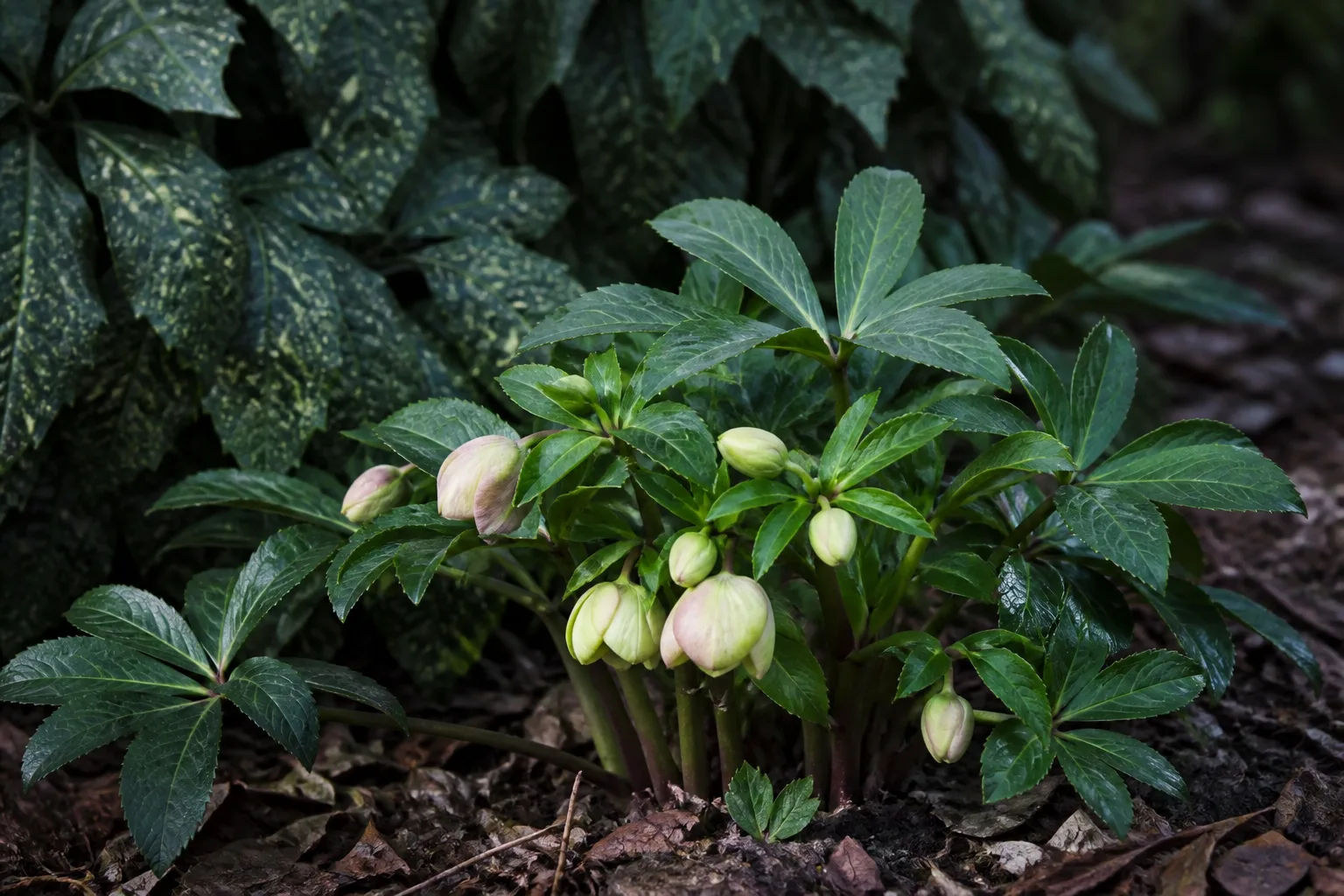
You may leave a healthy flower stem to form seed if you want seedlings or a naturalized patch. If you do not want volunteers, remove seed pods after flowering. Seed-grown plants may not resemble the parent, especially among hybrids, and keeping every seed head can divert energy toward seed production. Either choice is reasonable; it depends on whether you want a tidy clump, more plants, or less garden work.
Propagate only when seed or division fits your goal
Hellebores can be propagated from seed or by division, but neither is a fast way to produce an exact copy of every named cultivar. Decide first what matters: a plant identical to the parent, a larger group of varied seedlings, or simply a mature clump that needs more room.
Choose between division and seed
Division is the more direct way to reproduce a selected plant, but hellebores can resent root disturbance and may take time to re-establish. Divide only a healthy, established clump when it is crowded or you have a clear need for more plants. Choose a cool, moist period suited to the species and region, lift the rootball with as much root as practical, and separate divisions only where each has viable roots and growth points. Replant promptly at the same depth and keep evenly moist while it recovers. Some species, especially stem-forming types, are better left undivided; check a species-specific reference first.
Fresh seed is useful when you are willing to wait and accept variation. Hellebore seeds do not always store well, and germination can be irregular. Sow fresh seed when ripe in a labeled pot or nursery bed, keep it moist but not soggy, and allow natural seasonal temperature changes. Germination may not happen immediately, and seedlings can take several years to reach flowering size. Do not expect a seedling from a named hybrid to match its parent’s color or form.
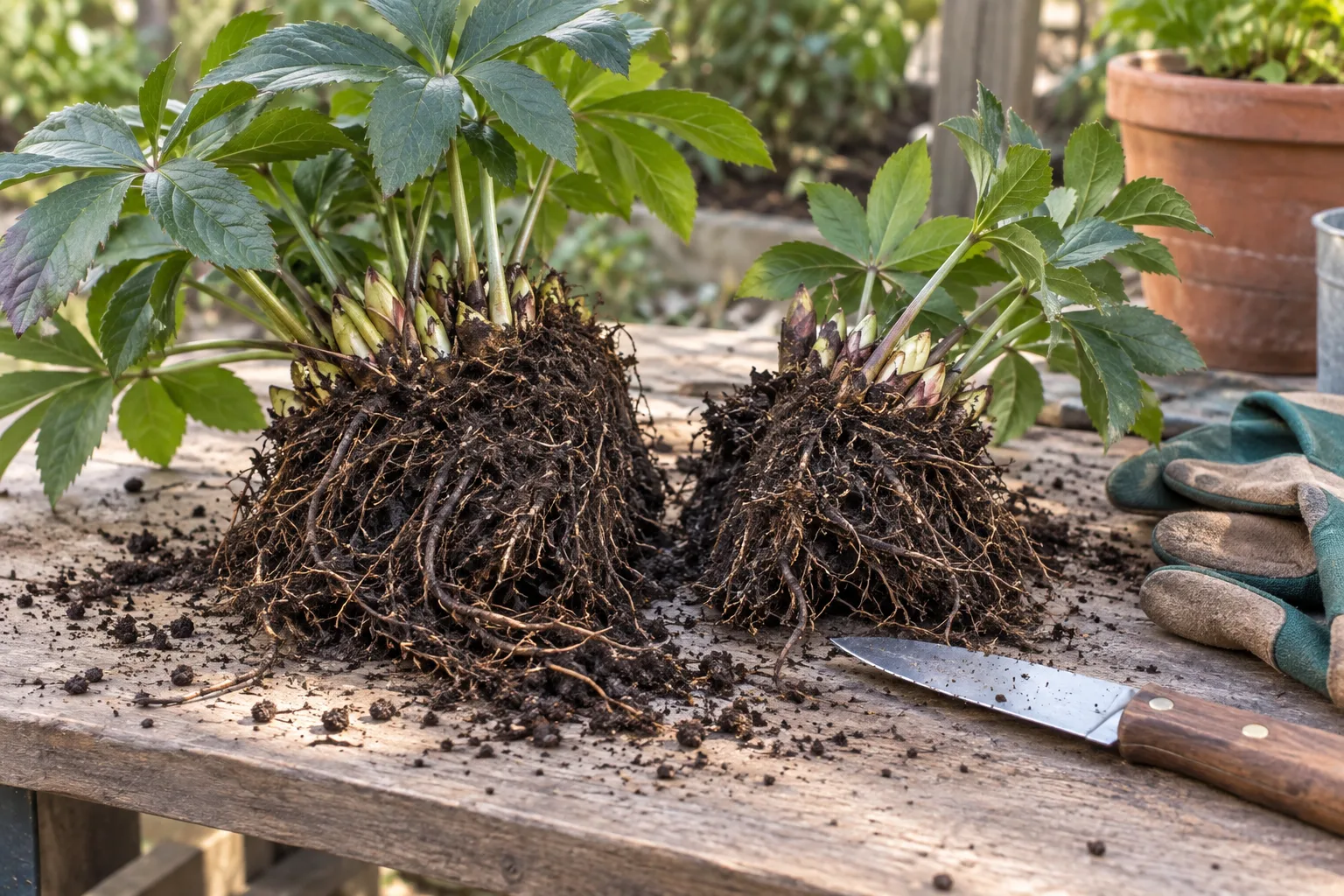
Horticulture magazine describes division as a practical propagation option, while White Flower Farm cautions that established plants may resent disturbance. That difference reflects how timing and species matter. A cautious approach is to avoid routine division just to keep a calendar; leave a thriving clump in place unless it is overcrowded, unhealthy, or you genuinely want more plants. If you need a guaranteed cultivar, purchasing another labeled plant is often more predictable than raising seed. For a practical overview of seed variability and seasonal division, see Horticulture magazine’s hellebore propagation guidance.
Grow hellebores in containers with extra care
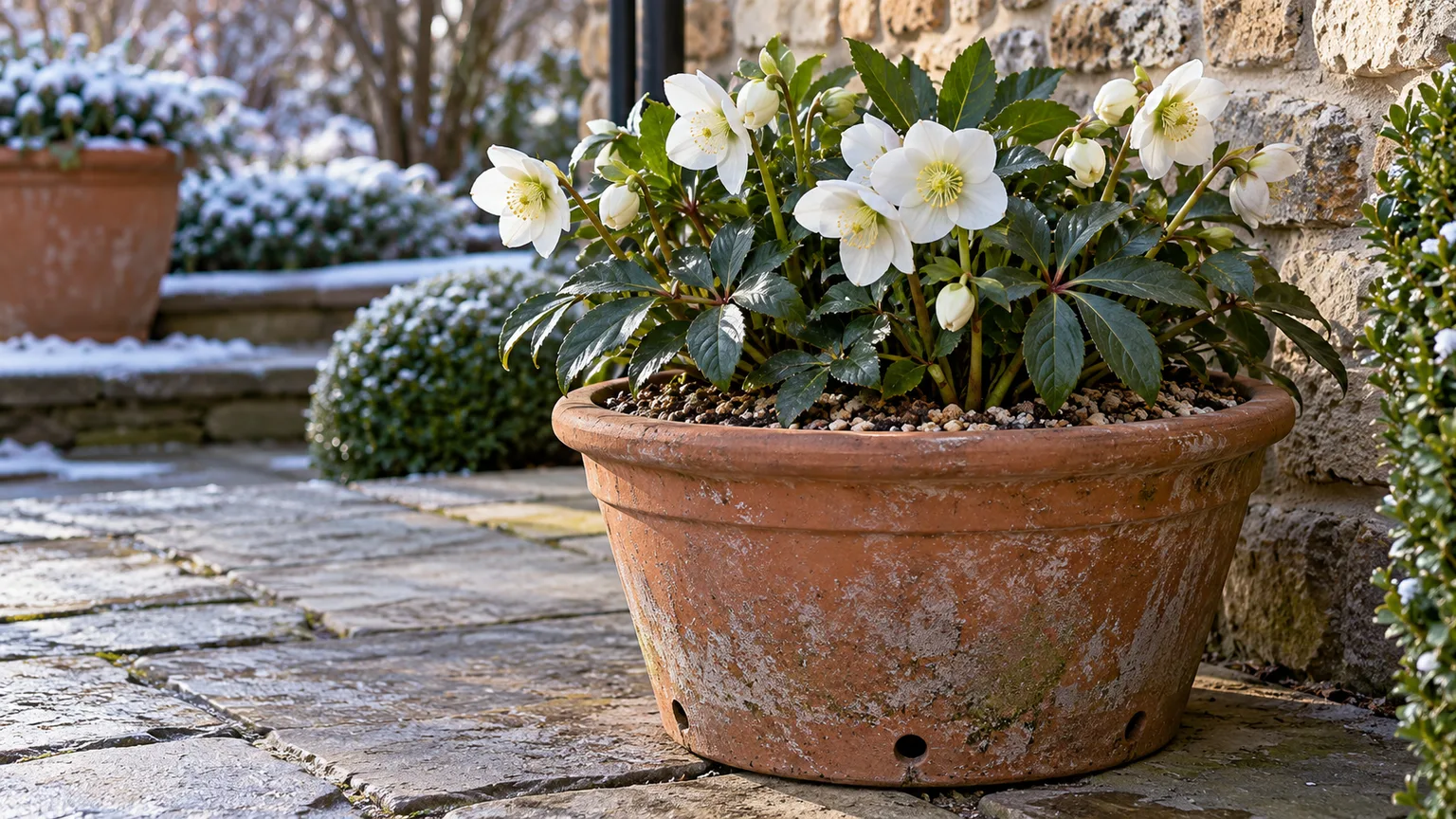
Hellebores can grow in a pot, but container care is more demanding than planting in the ground. Choose a stable pot with several open drainage holes, sized to the rootball with room for growth. Use a free-draining, high-quality potting mix amended according to the plant’s needs; ordinary garden soil can compact in a container and hold too much water.
Place the pot where the foliage gets suitable light and the roots are protected from summer heat. A container on hot paving can become much warmer than the surrounding garden, so use a shaded stand or move it to a cooler position during heat waves. Check moisture more often than you would for an in-ground plant, but never let the pot sit in a saucer of water. Water until excess drains, then empty the saucer.
Winter brings a different risk: container roots are less insulated from freezing and thawing than roots in the ground. In colder regions, move the pot to a sheltered outdoor spot, group it with other containers, or protect it according to local nursery advice. Do not assume an indoor room is an ideal long-term home; hellebores are outdoor perennials that generally need seasonal conditions and light suited to their species. If you bought a flowering holiday plant, treat it as a temporary indoor display and transition it outdoors when local conditions are suitable.
Spot pests and disease before treating
A few damaged leaves do not automatically call for pesticide. Inspect both sides of the foliage, the crown, and nearby leaves; note whether marks are isolated, spreading, or associated with distorted new growth. Aphids may cluster on tender stems, while slugs and snails can chew foliage. Hand removal, rinsing, or improving sanitation may be sufficient for small problems. Identify the pest before choosing a control, and follow product labels and local guidance if a treatment is warranted.
Hellebore leaf spot can cause brown or black lesions and may spread in cool, damp conditions. Remove affected leaves and fallen debris, improve air circulation, water at soil level, and avoid moving infected material into a home compost pile. The RHS hellebore leaf spot guidance recommends hygiene and removal of infected material; it also emphasizes that disease control starts with reducing sources of infection. Do not diagnose every dark patch as leaf spot; frost damage, scorch, and other issues can look similar.
Hellebore black death is a serious virus-associated disease linked with Helleborus net necrosis virus. Dark streaking, distorted growth, and stunting can be warning signs, but symptoms should be confirmed because look-alikes exist. The RHS says there is no cure for a confirmed infected plant and advises removing affected plants to limit spread. See its black death guidance, isolate a suspicious plant from handling or propagation, and seek local diagnostic guidance before discarding a valuable specimen.
Avoid applying fungicide or insecticide as a precaution. A misdiagnosed problem can waste money, harm beneficial insects, and fail to address the cause. Correct drainage, leaf cleanup, and species-appropriate site conditions are better first steps for many hellebore problems.
Troubleshoot a hellebore that will not flower
A hellebore with abundant leaves but few flowers is not necessarily hungry. Check these causes in order:
- The plant is young or recently moved. A newly planted or divided hellebore may need time to establish before flowering well.
- The site is too dark or too hot. Deep shade can limit flowering, while hot sun can stress the plant and reduce its vigor.
- The crown is planted too deeply. The crown should generally be at the soil surface or nursery-pot level, not buried under soil or thick mulch.
- The soil is either dry or waterlogged. Check moisture at root depth and correct the actual problem.
- Old foliage was removed too early. On some stem-forming types, pruning the whole stem before bloom removes flower buds.
- The plant is receiving excess nitrogen. Lush foliage can come at the expense of flowers when feeding is excessive.
Make one change at a time. If the plant is healthy otherwise, give it a full season after correcting site or water issues rather than repeatedly transplanting it. Hellebores are long-lived but not always fast to settle after disturbance.
Handle hellebores carefully around pets and people
Treat hellebores as potentially toxic if chewed. The ASPCA Poison Control hellebore listing identifies Helleborus niger as toxic to dogs, cats, and horses and lists possible gastrointestinal and other signs. That entry is species-specific; it is not a detailed safety assessment of every cultivated hybrid. Because plant labels can be imprecise and pets may chew any part, keep the plants and clippings out of reach.
Wear gloves when cutting foliage or dividing a plant, and wash your hands afterward. Keep prunings away from curious children and animals, and avoid rubbing your eyes while handling the plant. If a person or pet may have eaten hellebore, do not wait for symptoms or try a home remedy. Contact a veterinarian, animal poison service, or local poison center promptly and provide the plant name or a clear photo if available. For human exposure in the United States, Poison Control explains how to get help.
Conclusion: build care around the plant you have
Hellebores thrive when their roots stay cool, their soil drains well, and their seasonal care matches the species. Start with partial shade and moist, humus-rich soil, plant the crown at the right depth, and water new plants during dry spells. Then identify whether you have a stemless hybrid, Christmas rose, or a stem-forming species before pruning or dividing it.
A healthy clump often needs little intervention. Add a thin organic mulch when useful, remove damaged foliage selectively, and check a suspicious disease before treating it. Be patient with seedlings and recently moved plants, and keep hellebores and their clippings away from pets that might chew them. With the label, site, and growth habit in mind, you can enjoy winter or spring flowers without applying one-size-fits-all care to the whole genus.