How to Grow Astilbe: Planting, Watering and Care
Learn how to grow astilbe in moist shade, choose cultivars by bloom time, water without guesswork, divide clumps, and diagnose brown foliage.
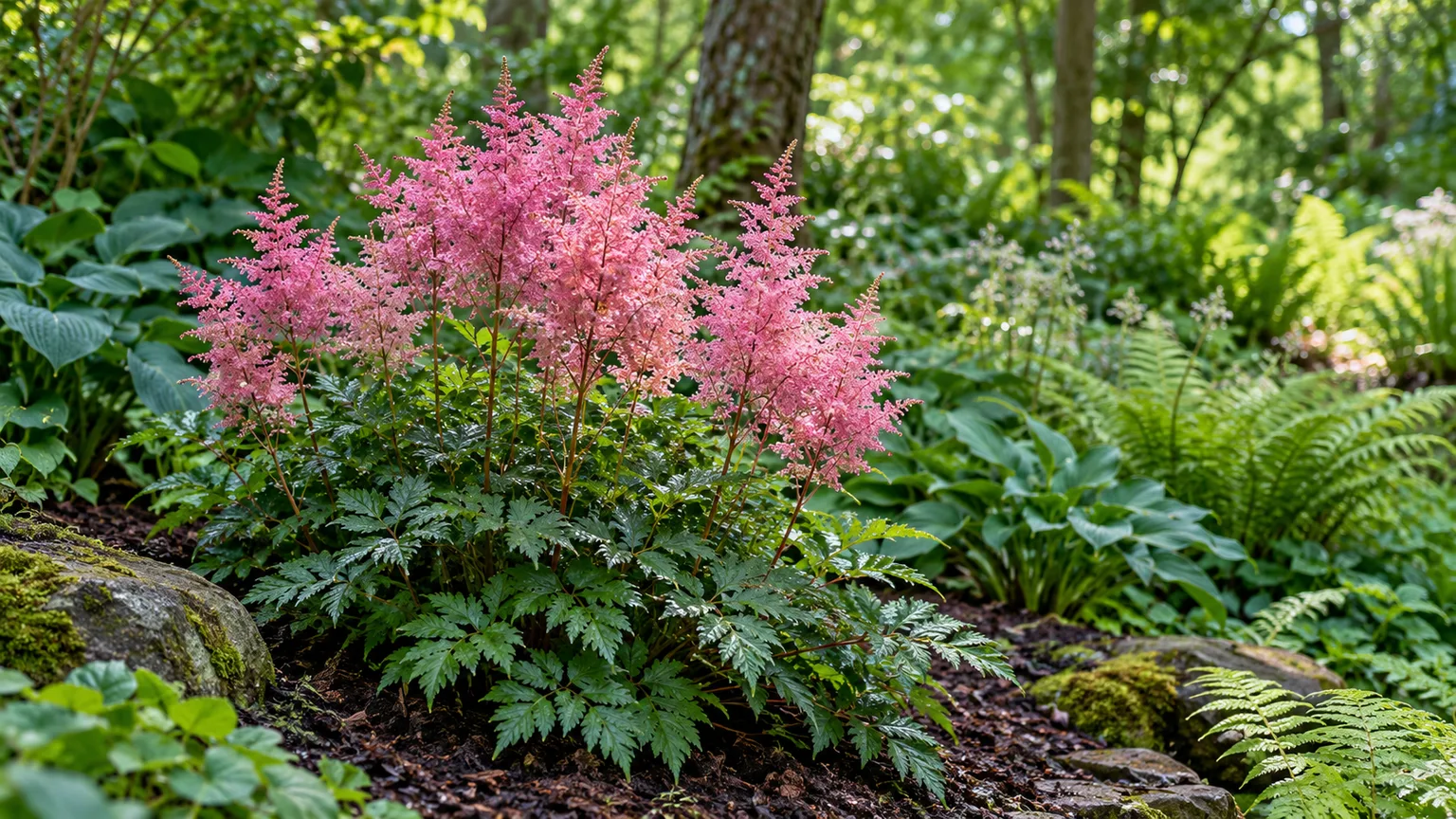
Astilbe is a clump-forming perennial for gardeners who can offer steady summer moisture and at least some protection from hot afternoon sun. Its fern-like leaves fill a shady bed before the upright or arching plumes open, and a single planting can return for years; the plant is low-maintenance only after the site suits it.
The useful rule is simple: keep the root zone evenly moist, not swampy, choose a cultivar for its mature size and bloom period, and respond to heat before the leaves crisp. If a bed routinely dries out in July, changing the watering plan or choosing another perennial is more effective than trying to fix the plant with extra fertilizer.
What astilbe needs at a glance
Most garden astilbes do best in partial shade, humus-rich soil, and consistent moisture with drainage. They are herbaceous perennials with rhizomes, so the leafy clump dies back in winter and renews from the crown and roots in spring. A mature plant may be a compact border accent or a tall plume-bearing mound; the tag for the cultivar you buy matters more than a genus-wide height estimate.
For a quick site check, look at the bed on a hot afternoon, then feel the soil an inch below the surface. If that layer is dry by midsummer and no irrigation can reach it, the spot is a poor match even if it is shaded. If water stands around the crown for days after rain, improve the bed or choose a better-drained position rather than assuming astilbe wants boggy, oxygen-poor soil.
The Royal Horticultural Society’s astilbe growing guide describes the balance well: rich soil that stays damp, with shade during the hottest part of the day. NC State Extension’s profile of Astilbe × arendsii likewise lists organically rich, well-drained soil and notes that full sun demands constant moisture.
Choose a type for your site and bloom window
Astilbe is a genus, not one uniform plant. Common garden choices include A. × arendsii hybrids, A. japonica hybrids, A. chinensis forms, and compact A. simplicifolia cultivars; each group differs in height, foliage, and timing. The RHS notes that A. japonica hybrids tend to flower earlier, while A. chinensis types often extend color later into summer. A staggered mix can lengthen the display, but it cannot make one cultivar bloom continuously from spring to fall.
Buy by mature width and bloom window, not the pot’s current size or a flower photograph. A narrow bed may need a dwarf cultivar that stays within its intended footprint; a large woodland border can use taller hybrids behind ferns or hostas. If the plant label gives only a broad height range, use the cultivar name to check a reliable profile before you place it.
Named selections also differ in texture and color. NC State lists ‘Fanal’ for deep red flowers, ‘Bridal Veil’ for white plumes, and ‘Rheinland’ for rosy pink; the RHS profiles of astilbe groups show how much size and season can vary. The editorial overview from Gardener’s Path is useful for comparing named selections, but confirm hardiness and mature spread with the plant’s own nursery label or a regional source.
For combinations that share astilbe’s shade and moisture needs, see this guide to astilbe companion plants.
Site selection: balance shade with reliable moisture
A good astilbe site is not defined by “shade” alone. Tree roots, roof overhangs, and dense evergreen canopies can make a shady bed surprisingly dry, while heavy clay may stay wet long after rain. Before planting, compare the soil in the intended spot with a nearby location that gets more light; the cooler, moisture-retentive site is often the better choice, provided it drains between storms.
Light: morning sun is easier than hot afternoon sun
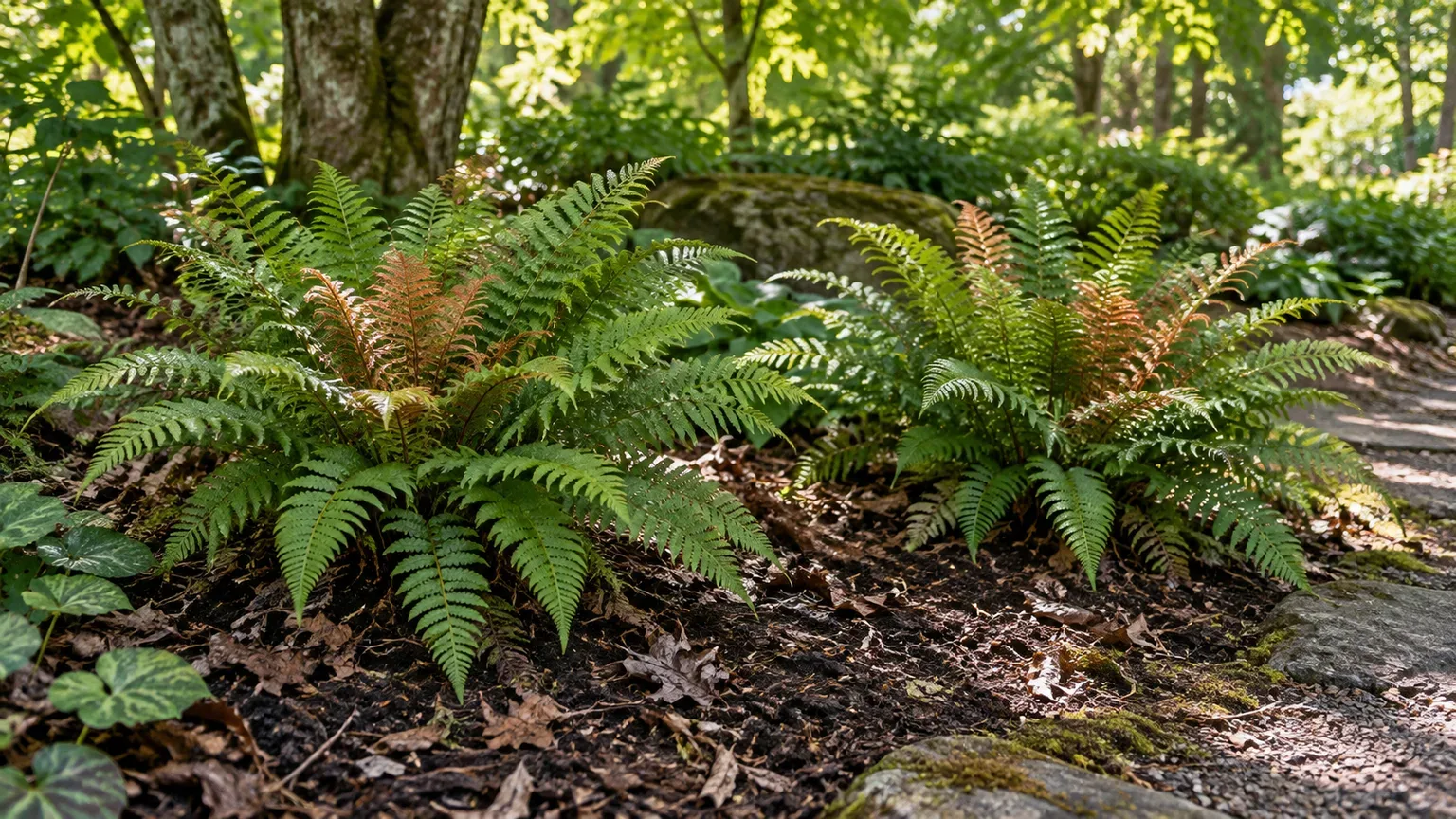
Partial shade is the dependable starting point, especially in regions with hot summers. Astilbe can grow in deeper shade, but flowering may be lighter when it receives very little usable light. In a cool climate with moist soil, some cultivars can take more sun; in a hot inland or southern garden, several hours of direct afternoon sun can scorch leaves and dry the shallow root zone quickly.
Use the plant’s midday appearance as a clue. If a candidate bed gets bright morning light and shade from the hottest hours onward, it is usually easier to manage than a sunny western border. A full-sun position is possible only when the soil remains reliably moist and the cultivar tolerates that exposure; it is not a shortcut to more flowers if the plant is also heat-stressed.
A dense tree canopy creates a second trade-off: roots from mature trees may take up water before astilbe can. Planting beneath a tree can work, but avoid digging through major roots and be prepared to irrigate the understory independently. The RHS genus guide describes light shade as the preferred setting and warns that leaves can scorch in hot sun.
Soil: moisture-retentive but not stagnant
Astilbe likes soil with organic matter that holds water between deep soakings. Loam is convenient, but you do not need a perfect loam soil: improve sandy ground with compost to slow drying, and work organic matter into clay to support structure. Do not add sand to a small planting hole in heavy clay; that can leave a sharply different pocket rather than correcting drainage across the bed.
Aim for soil that feels cool and slightly damp below the surface, with enough air spaces for roots. Astilbe tolerates moist conditions, but “moist” is not the same as a permanently flooded crown. If water remains standing after ordinary rain, use a raised bed or another site; adding fertilizer will not repair a root zone that stays oxygen-poor.
Apply a thin layer of compost or well-rotted leaf mold over the bed, then mulch to slow evaporation. Keep mulch a small distance from the crown so emerging shoots are not buried and wet organic matter does not sit against the stems. Soil pH is not a reason to make an untested amendment: RHS profiles include astilbes growing across more than one pH category, so do not add lime or sulfur solely because a generic care card lists a target number.
Planting: set the crown at the right depth
Plant astilbe in a cool part of the growing season so roots can settle before summer heat or a hard freeze. Spring, once the ground is workable, is a reliable option; early fall also works when there is enough time for establishment before winter. The RHS recommends spring or autumn planting and generous watering through the first summer. If you must plant a flowering container-grown astilbe in summer, give it temporary afternoon shade and check the root ball often because it can dry faster than the surrounding bed.
Loosen the soil over a broad area, not just at the bottom of the planting hole, and mix in a modest amount of finished compost if the bed is poor. Water the nursery pot before planting, slide the root ball out, and loosen only roots that are tightly circling. Set the plant so the crown—the point where shoots meet roots—sits at soil level; burying it deeply can delay emergence, while leaving the root ball high can expose roots to drying.
When to plant and how far apart
Use the label’s mature width to decide spacing. Many medium astilbes are set roughly 18 to 24 inches apart, while compact cultivars need less room and tall selections may spread wider; plant them close enough to read as a group but leave space for air and eventual division. The NC State profile gives hybrid astilbe a typical spread of about 18 to 24 inches, but individual selections vary.
Set container-grown plants at the same depth they grew in the pot, firm the soil gently, and water slowly until the full root ball is wet. Bare-root crowns should be planted promptly after purchase; keep roots cool and moist while you prepare the bed, and follow the supplier’s planting directions if they specify crown orientation or depth. Finish with a 2-inch mulch layer, leaving the center of the clump uncovered.
After planting, check the root ball and surrounding soil separately for the first few weeks. A dry peat-based nursery plug can repel water or stay dry even when the nearby garden soil feels moist. If water runs off the top, apply it slowly in two passes and confirm that it has reached the root ball before leaving the bed.
Watering: keep roots evenly moist
Astilbe needs regular moisture during active growth, especially while a new planting is establishing and during warm, rainless weather. Instead of watering by the calendar alone, push a finger or small trowel about an inch into the soil beside the crown. If it is dry there, soak the root zone deeply; if it is still cool and damp, wait and check again rather than saturating the bed.
New plants need closer attention than established clumps. The RHS suggests watering newly planted astilbes generously two or three times a week through their first growing season, then checking whether the top inch of soil has begun to dry before giving an established plant a long soak. Treat that frequency as a starting point, not a universal schedule: rainfall, heat, wind, soil texture, and canopy roots change how quickly the bed loses water.
Water near the soil rather than repeatedly wetting the foliage at night. A soaker hose or drip line can make it easier to give a slow, thorough drink, and Gardening Know How’s astilbe guide also favors deep root-zone watering over quick surface splashes. A light sprinkle may make the leaves look better for an hour without wetting the roots that need it.
Watch the plant during a hot spell. Brown tips and crisp margins often point to heat or drought stress, but do not assume every wilted astilbe needs more water. If the soil is already wet, investigate drainage, root injury, or a damaged crown before adding water; repeated saturation can worsen the actual problem.
Fertilizing: use compost before a fertilizer formula
Astilbe does not automatically need a high-phosphorus fertilizer to flower. If the bed is healthy and rich in organic matter, a light spring top-dressing of compost is often enough; the RHS says astilbes in the rich, moist soil they prefer generally do not need extra feeding. That is a useful correction to generic “feed every spring” advice, which can add nutrients the plant cannot use and may contribute to weak, soft growth.
If growth is consistently poor across the bed, first check light, moisture, crowding, and root condition. A soil test is more useful than guessing that low phosphorus is the cause of few flowers. Where a test or regional recommendation does call for fertilizer, use a product labeled for garden perennials and follow its rate and timing rather than copying a formula from another plant’s care sheet.
Keep granular fertilizer away from crowns and foliage, and water it in according to the product directions. Do not fertilize a drought-stressed plant as a rescue treatment; correct moisture and heat stress first. Also avoid routine midseason feeding if the plant is already making strong leaves and plumes.
Containers: choose compact cultivars and monitor moisture
Astilbe can grow in a pot, but containers are a higher-attention version of the plant, not an easier one. A dwarf cultivar is more manageable than a tall, wide clump, and a container with generous drainage holes helps excess water leave after a soak. Choose a pot large enough for the plant’s mature width and root mass; undersized pots heat up and dry out quickly in summer.
Use a moisture-retentive, free-draining container mix, set the crown at the surface, and place the pot where it gets bright shade or gentle morning light. Do not let the pot stand in a saucer of water for days; damp soil is the goal, not a permanently submerged root ball. Petal Republic’s practical guide to growing astilbe also notes that pots dry more quickly than garden soil, a key reason container astilbe needs frequent checks.
Check a container daily during hot or windy weather, and water when the upper layer begins to dry rather than waiting for the entire pot to pull away from its sides. In winter, keep the container from cycling between saturated soil and deep freeze; a pot is more exposed to cold than garden soil. If you cannot water regularly in summer or provide a suitably shaded place, plant the astilbe in the ground or choose a more drought-tolerant container perennial.
Bloom and plumes: plan succession and cut flowers
Astilbe varieties do not all flower at the same time. Early A. japonica hybrids, midseason A. × arendsii, and later A. chinensis types can extend the color window when planted together, but local temperatures and the cultivar label affect the exact calendar. The RHS group guide explains these differences; use those group patterns to plan, then record the actual bloom dates in your own garden.
Flower shades include white, pink, red, and purple, with some cultivars carrying bronze-toned new foliage or contrasting stems. If choosing in person, look at mature clumps if possible: a pale plume in a small nursery pot can appear different when repeated in a mass planting. Plant several of one cultivar for a clear block of color, then mix early and late selections if you want a longer sequence rather than a single peak.
Astilbe flowers also work as cut or dried material. Cut stems when the plumes are well colored and before they become fully brown, using clean shears and leaving enough foliage for the plant to continue growing. If you cut most of the flowers, the plant still needs its leaves through the rest of the season to store energy for next year.
Deadheading and fall cutback
You can snip faded plumes if you prefer a tidy bed, but deadheading does not make astilbe send up a second flush of flowers. Leaving the dried seed heads in place adds texture after bloom, and the RHS notes they can provide winter interest. They may also self-seed in favorable conditions, though seedlings are not guaranteed to match the parent cultivar.
If you want fewer seedlings, remove the seed heads once they look untidy; this is an appearance choice rather than a flowering requirement. Avoid cutting all the foliage while it is still green and functional. Let leaves yellow and die back naturally, then cut stems to the ground in late winter or early spring before the new shoots are tall enough to get clipped.
Where winter stems provide habitat or structure, leave them standing until spring cleanup. Mark the clump or cut just above the crown so you do not slice into emerging buds. A clean, timely cutback is enough; astilbe does not need shaping or routine shearing.
Divide astilbe: when and how
Astilbe spreads gradually by rhizomes, forming a wider clump rather than running aggressively through the garden. Divide when the center becomes crowded or bare, flowering weakens despite good conditions, or the clump has outgrown its allotted space—not simply because a calendar says the plant is due. A rough interval of three to five years is common; the RHS uses about four years as a guide.
Early spring, as shoots begin to emerge, is the safest general window because the plant is not carrying a full canopy through summer heat. Early fall can work in a mild region when the divisions have time to root before hard freezes, but avoid dividing during a heat wave or when the soil is bone dry. Water the clump a day ahead if the ground is difficult to dig, then lift it with a spade while keeping as much of the root mass intact as practical.
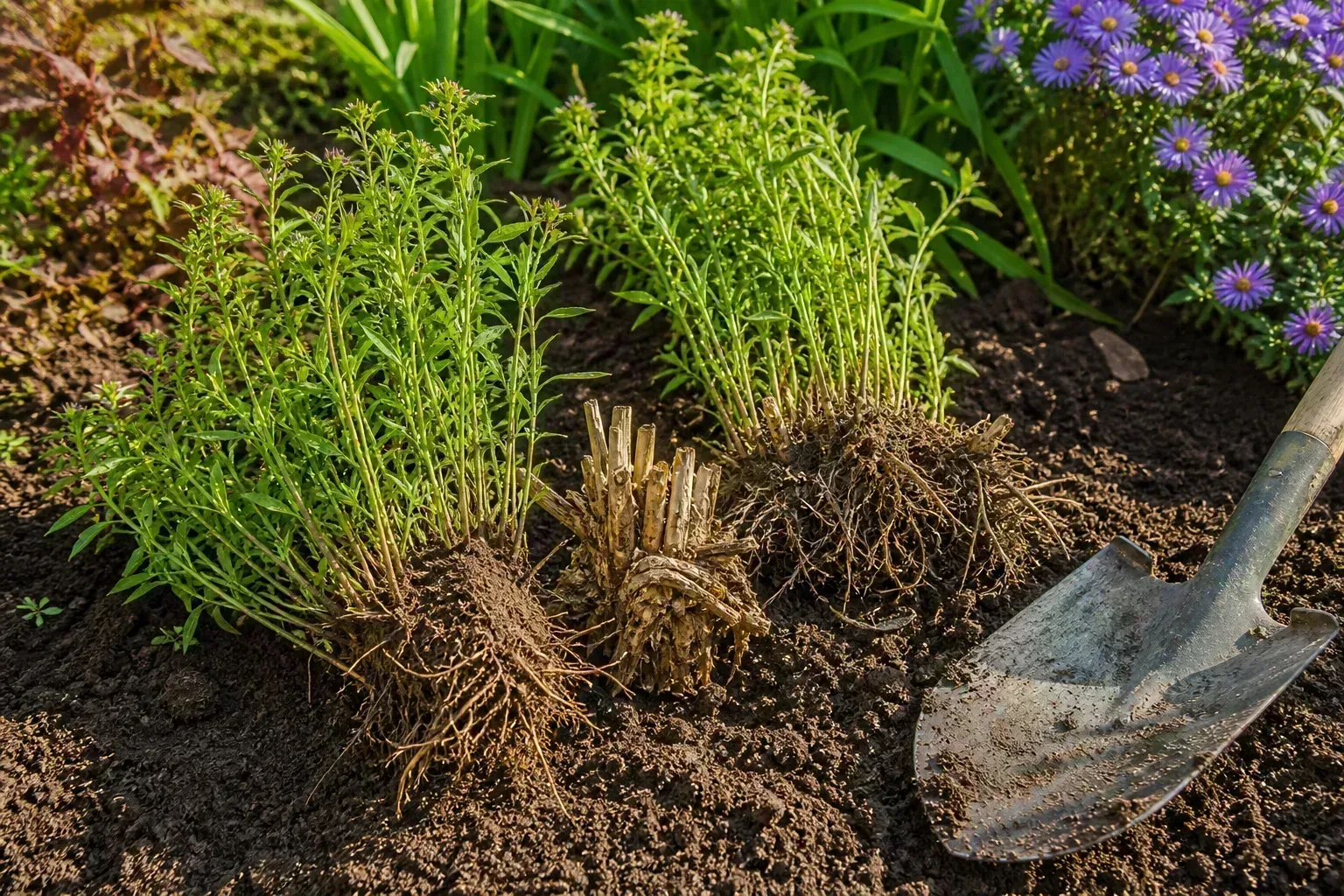
Shake or rinse away enough soil to see the crown and its buds. Use a sharp spade or knife to cut the clump into sections, keeping healthy roots and at least a few viable shoots or eyes on each piece; discard dead, mushy, or hollow center tissue. The goal is not the greatest number of divisions but several pieces that can reestablish without being reduced to tiny rootless fragments.
Replant the divisions promptly at their original depth, spaced according to the cultivar’s mature width. Water each one thoroughly, then maintain even moisture while new roots establish. If divisions wilt after planting, first check whether the root ball is dry or whether the crown has been buried too deeply; do not keep flooding a wet planting hole.
Growing astilbe from seed
Seed is a reasonable experiment if you want a larger number of plants and do not need exact copies of a named cultivar. Astilbes can self-seed, and the RHS notes that offspring may differ from the parent; it also estimates that seedlings can take about three years to reach flowering size. For a border that needs dependable color quickly, buy a named plant or divide an established clump instead.
If you collect seed heads, wait until they are dry and brown, then sow fresh seed in a clean, fine-textured starting medium and keep it evenly moist. Germination can be uneven, and seedlings are small enough to lose in a crowded tray, so label the container and protect it from drying or heavy rain. Transplant only when seedlings are sturdy enough to handle, and expect variation in flower color, height, and bloom time.
Do not judge a young seedling by its first season’s size. Seed-grown plants need time to build a crown and roots before a full flower display, and a weak first-year bloom does not necessarily mean the care is wrong. If the seedling is in a spot that dries out or gets hot afternoon sun, correct the location early rather than waiting for it to mature under stress.
Troubleshoot scorch, sparse flowers, and pests
Astilbe problems often begin with a mismatch between the site and the plant’s moisture demand. Compare the symptoms with soil condition and light exposure before changing fertilizer, spraying, or dividing. Take one corrective step, then watch new growth; old scorched leaves will not become green again even when the plant recovers.
Brown edges, wilting, or yellow leaves
Crispy brown margins during hot, dry weather commonly point to water stress or sun scorch, particularly when the bed dries between rain. Feel the soil an inch down and check whether afternoon sunlight lands directly on the leaves. If soil is dry, soak deeply and mulch; if it is damp, add shade or inspect the roots rather than watering again.
Wilting can be a more urgent clue when the soil is wet. A plant that droops while the ground remains saturated may have root or crown trouble, compacted soil, or damage from digging; adding water may reduce oxygen further. Clear away mulch from the crown, check that runoff can escape, and remove any soft, decaying tissue with a clean tool if the plant must be lifted.
Yellowing near fall is different from progressive yellowing during active growth. Natural seasonal dieback should follow the plant’s normal cycle, while yellowing leaves in midsummer combined with weak stems, poor bloom, or a wet crown deserve a closer check. Compare new leaves with the plant’s expected spring growth before treating a single older leaf as a crisis.
Sparse bloom, flopping, or crowding
If the foliage looks healthy but flowers are scarce, check the site’s light history before feeding. Deep shade can keep the plant alive while reducing bloom, but hot sun combined with dry soil can also stress the plant; the answer is not simply “move it into more sun.” Aim for the balance the cultivar tolerates: dappled light or gentler morning sun, with moisture available through summer.
A clump that makes plenty of leaves but few plumes may be crowded or planted too deep. Look for a congested crown, a dead center, or shoots competing in a tight mass; divide in a cool season and replant at crown level. Do not split a recently planted, small astilbe just because it has not filled the bed yet.
Flopping may reflect a tall cultivar in a site with too little light, overly rich feeding, or a combination of wet soil and weak stems. Check the mature height and site before staking; if the cultivar is simply too tall for the spot, support is a temporary fix and moving or dividing it is more durable. Avoid nitrogen-heavy feeding as a quick way to force new growth.
Chewed leaves, spots, or powdery growth
Astilbe is generally not heavily troubled by pests, but leaf edges with neat semicircular notches can signal adult vine weevils. The RHS identifies vine weevil as an occasional issue; inspect the plant and nearby pots rather than assuming every damaged edge is drought. If the plant also wilts despite moist soil, investigate root damage or grubs and ask a local extension service for region-specific options before applying a control.
Small irregular holes may also come from slugs or other chewing insects, especially in a damp, shaded border. Look under leaves and mulch at dusk to identify what is actually feeding; remove debris that keeps the crown constantly wet and crowded, and protect new shoots if browsing is severe. A blanket pesticide application is rarely a good first response when the pest has not been identified.
Powdery mildew or leaf spotting is more likely to become noticeable in crowded, humid plantings or where foliage stays wet for long periods. Thin neighboring growth, water near the soil in the morning, and remove badly affected leaves rather than cutting back an entire healthy clump. If lesions spread rapidly or stems collapse, photograph the symptoms and consult a local plant diagnostic service because several diseases can look alike.
Conclusion
Astilbe is a reliable shade perennial when the site keeps its roots moist without leaving the crown waterlogged. Choose a cultivar for mature size and flowering season, plant the crown at soil level, and use a soil check—not a fixed schedule—to decide when to water.
Once established, most clumps need little beyond compost where the soil is poor, seasonal cleanup, and division when crowding or weak bloom gives you a reason. If the foliage browns, blooms fade, or roots struggle, diagnose the light and moisture first; correcting the site is more lasting than adding fertilizer or repeatedly cutting the plant back.



