How to Grow and Care for Donkey’s Tail
Grow donkey’s tail indoors or outdoors with the right light, gritty soil, seasonal watering, safe handling, repotting, step-by-step propagation, and pruning.
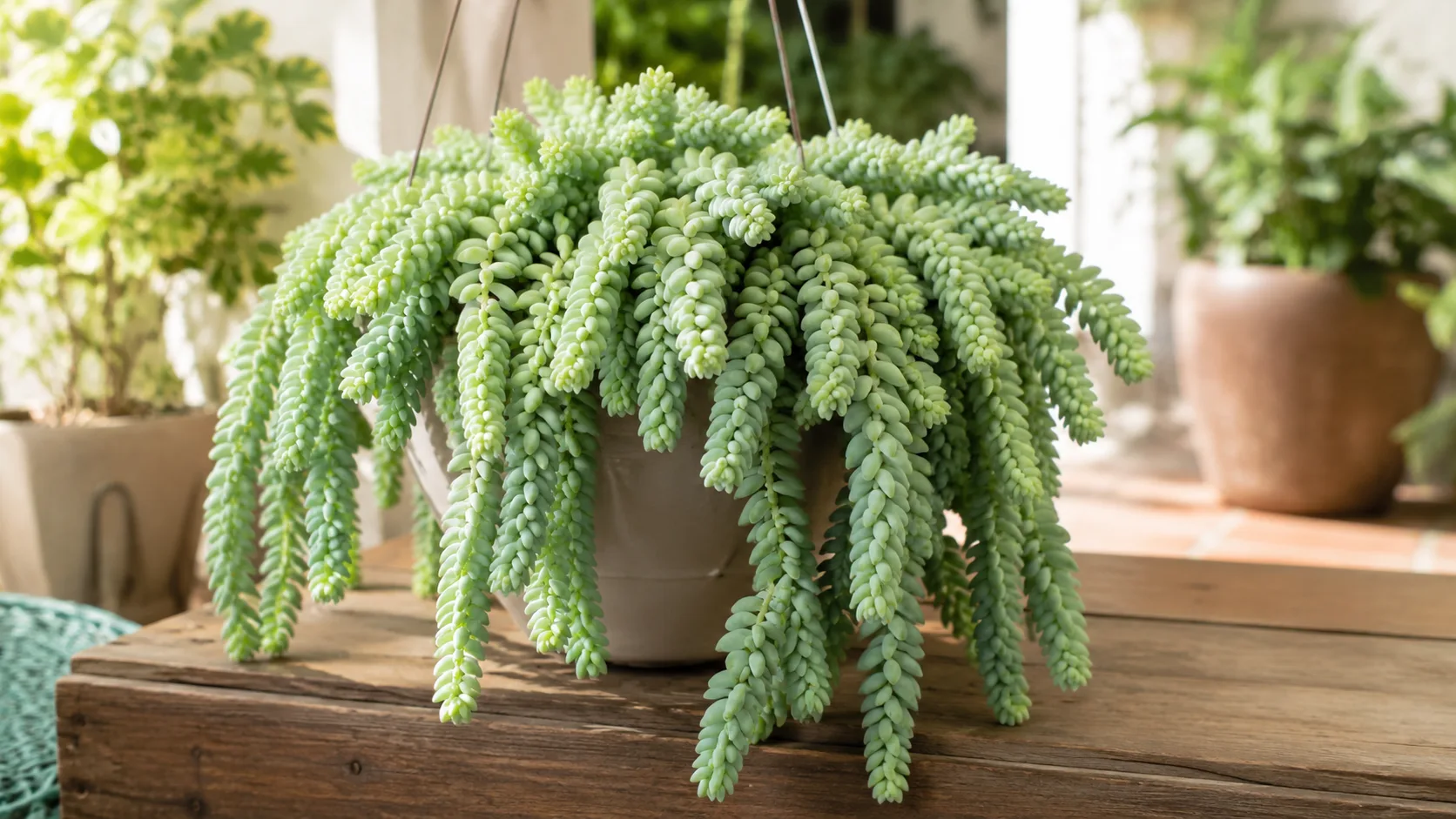
Donkey’s tail (Sedum morganianum) is a trailing succulent with dense rows of fleshy blue-green leaves. Its stems can eventually extend several feet, but they are brittle: a small bump may scatter leaves. The easiest way to grow a full plant is to give it strong light, a quickly draining root zone, and a permanent display spot where the stems can hang without being brushed.
The main care mistake is watering by the calendar. Donkey’s tail stores water in its leaves, so the right interval changes with the season, pot, soil, and light. Check whether the root zone has dried, then water thoroughly; let the plant tell you when conditions have changed.
Identify the Donkey’s-Tail Form You Have
“Donkey’s tail,” “burro’s tail,” and “lamb’s tail” are common names used for Sedum morganianum. The familiar form has plump, pointed leaves that overlap closely along pendant stems. Plants sold as S. morganianum ‘Burrito’ or “baby burro’s tail” tend to have shorter stems and rounder leaves, though references differ on whether ‘Burrito’ is a cultivar, hybrid, or distinct form.
That naming variation matters less than the plant’s structure: both forms need bright light, dry-down between waterings, and careful handling. When buying, look at the actual leaves and habit rather than assuming a label guarantees a particular botanical form. NC State Extension’s Plant Toolbox includes ‘Burrito’ among the listed cultivars, while the University of Wisconsin–Madison Division of Extension notes that its exact status is unsettled; Succulents and Sunshine describes the rounded-leaf form and compares it with the pointed species form.
The plant’s published origin also varies by reference. The Wisconsin Extension profile gives southern Mexico and Honduras, while NC State lists Mexico and the Dominican Republic. This difference does not change household care, but it is a good reason to avoid overconfident claims about a single precise native range.
Choose a Stable Display Before Stems Lengthen
Place the pot where cascading stems have open air beneath them and people, pets, doors, and curtains will not brush against them. A bright shelf or a securely installed hanging basket works well. Mature stems can become heavy as their leaves store water, so check that both the pot and hanger can support the plant after it grows.
A basket is attractive but not required. A broad pot on a stable pedestal lets stems trail over the rim and is easier to bring down for watering or inspection. If you use a decorative cachepot without drainage, keep the plant in a removable nursery pot and empty all collected water after each soak; never leave the root ball standing in a full outer pot.
This is also a plant where repeated repositioning has a cost. Decide on a light-rich location and move the whole plant only when a seasonal temperature change or a genuine light problem makes it necessary. Support the underside of the stems when lifting, and resist smoothing or arranging the leaves with your fingers.
Give Bright Light and Acclimate Slowly
Indoors, choose the brightest practical window or a spot that receives several hours of gentle direct sun. An east-facing window often supplies morning sun; a bright south- or west-facing window may also work if the plant is set back from fierce afternoon heat. Rotate the pot occasionally if growth leans toward the glass, but do not handle the stems to do it.
Outdoors, bright shade or morning sun is a safer starting point than abruptly placing an indoor plant in full midday sun. Increase exposure over a week or two, beginning with a short period of gentle outdoor light. Wisconsin Extension notes that insufficient light stretches the spaces between leaves, while excessively intense light can bleach the foliage yellowish; its advice to acclimate plants before outdoor exposure helps prevent sunburn.
Long gaps between leaves on new growth usually signal inadequate light, not a need for more fertilizer. Move the plant gradually toward a brighter position and watch the newest growth over time; bare sections will not fill back in. You can shorten a long stem and root the healthy tip to make the pot look fuller. 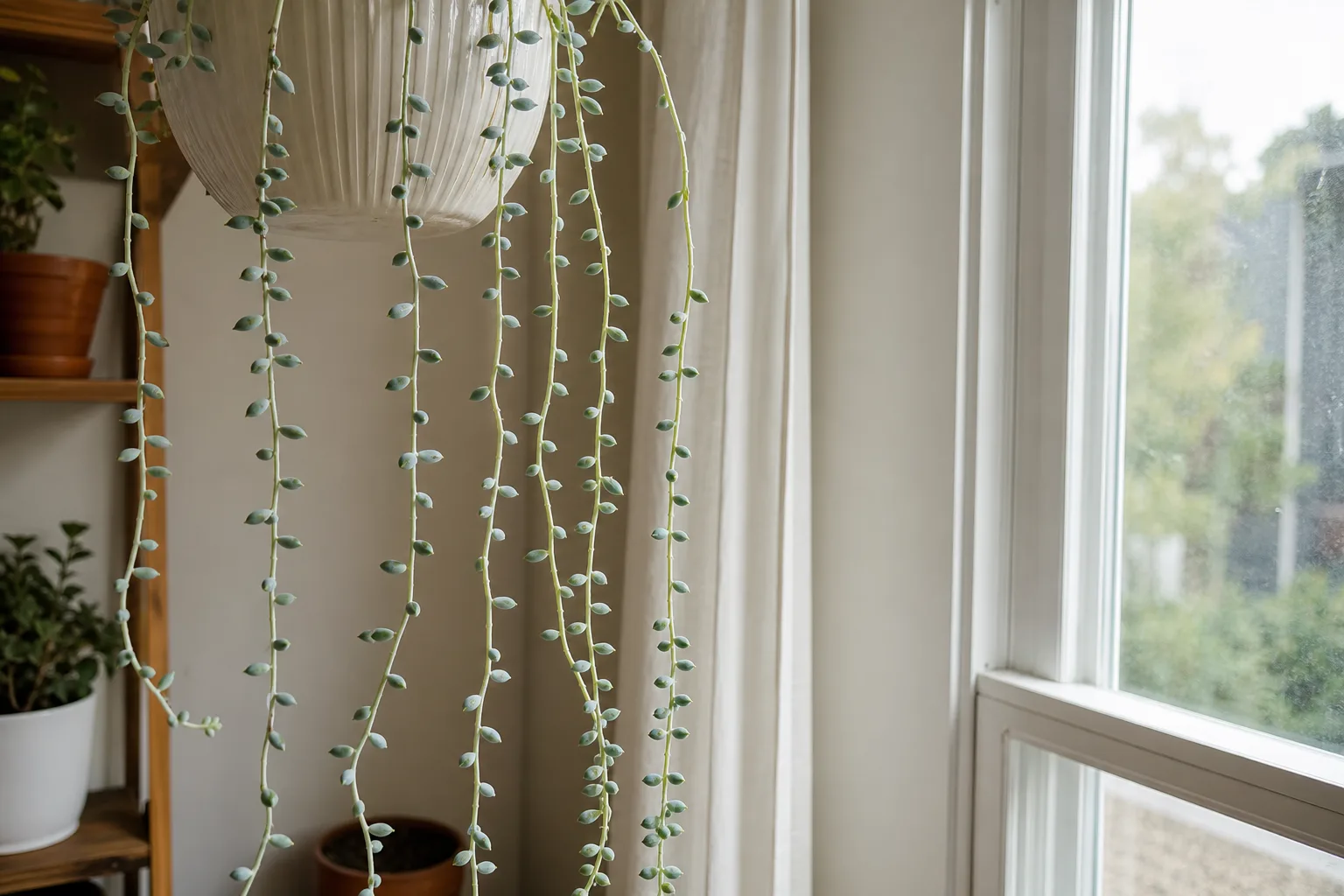
The blue-gray or powdery look on healthy leaves is often the plant’s natural protective coating. Avoid rubbing or washing it away while attempting to make the leaves glossy. If leaves turn distinctly pale or yellow after a move into direct sun, return the plant to gentler light and acclimate more slowly.
Use Gritty Mix and a Drainage Hole
Choose a pot with at least one open drainage hole and a porous succulent or cactus mix. The useful property is not a particular brand or label; water should pass through rather than leaving the lower root zone wet for days. If a commercial mix stays damp, blend in coarse mineral material such as pumice or perlite to make it airier.
Wisconsin Extension’s burro’s-tail care guide recommends a well-drained medium and lists perlite, pumice, baked clay granules, or small pea gravel as amendments. It cautions that fine sand can fill pore spaces rather than improve drainage. Avoid a heavy, fine potting soil by itself, and do not try to fix a blocked pot by adding a layer of stones at the bottom; use a real drainage hole and a uniformly open mix.
The container should fit the root ball with a little room around it, not be dramatically oversized. A pot that holds a large volume of unused damp soil takes longer to dry, increasing rot risk. A shallow pot can suit the plant’s modest root system, but stability matters too: a top-heavy cascade needs a wide base or a properly rated hanger.
Water Deeply Only After the Mix Dries
Water when the mix has dried through the root zone, not because a certain number of days has passed. Check near the bottom with a wooden skewer or feel the pot’s weight; a dry surface can hide damp soil below. When dry, pour water over the mix until it runs from the drainage holes, then empty the saucer or outer pot.
This “soak, drain, and wait” routine gives roots moisture while allowing air back into the pot as it dries. Succulents and Sunshine recommends letting the mix dry completely between waterings for ‘Burrito’; the University of Wisconsin–Madison Division of Extension advises that burro’s tail be allowed to nearly dry and says indoor plants may need watering no more than monthly depending on conditions. Those are useful context points, not a universal schedule.
Expect the interval to shorten in warm, bright weather or in a small unglazed pot, and lengthen when days are cool, light is weak, or growth has slowed. In winter, water less often but do not use an automatic “every month” rule if the plant is still active in a warm, bright room. In Joy Us Garden’s care account, horticulturist Nell Foster describes adjusting her established plant’s watering for warmer, longer days and notes that clay pots dry faster; her example shows why pot material and weather matter, not a schedule every home should copy. Avoid frequent sips that keep part of the root zone perpetually damp, and skip misting: it does not replace root watering and can leave moisture lodged among leaves.
The leaves give clues, but confirm them against the soil. Slightly wrinkled leaves with a dry root ball may mean the plant is ready for water; wrinkling paired with wet soil, yellowing, or a soft stem can point to damaged roots that cannot take up water. When in doubt, do not add water until you have checked the potting mix.
Protect the Plant from Frost and Wet Weather
Donkey’s tail is a tender succulent, not a frost-hardy groundcover. NC State and Wisconsin Extension both describe it as a plant that may tolerate brief exposure near 40°F, but that should be treated as a caution threshold, not a target temperature. Bring container plants inside before frost or a cold, wet spell; prolonged cold and saturated soil together are especially risky.
After moving it outdoors for warm weather, acclimate the plant to stronger light as described above and shelter it from hard rain, wind, and foot traffic. A covered patio can provide airflow and bright light without repeatedly soaking the pot. Before bringing it in, inspect leaf joints and stems for pests, and let the pot drain so outdoor rainwater does not carry into the indoor saucer.
Most homes do not need special humidity treatment. Average indoor air is generally preferable to a humid, poorly ventilated corner. Good light, an open potting mix, and room for air to circulate around the hanging stems do more useful work than misting or placing the plant in a bathroom.
Feed Lightly During Active Growth
Fertilizer is optional when the plant is growing steadily in fresh mix. If growth has slowed despite suitable light and roots, apply a diluted, balanced fertilizer once or twice during the active spring and summer period. Follow the product label and use a weaker solution for a small container; never apply fertilizer to bone-dry soil or try to correct stretching with extra nutrients.
Both Wisconsin Extension and NC State recommend light feeding once or twice during the growing season. There is little reason to fertilize during winter dormancy, after a recent repot, or while the plant is recovering from rot. Excess salts can accumulate in a small pot, so water thoroughly enough for excess to drain and do not leave fertilizer solution sitting in the cachepot.
Repot Only When the Root Zone Needs It
Repot when roots crowd the drainage opening, the mix has broken down and stays wet, or the plant cannot be watered evenly because the root ball has become compacted. Being snug in a pot alone is not an emergency. A bigger container is not a shortcut to faster growth; it can leave too much unused soil holding moisture.
Choose spring or another warm, actively growing period. Let the mix dry first, take the plant down over a padded surface, and support the stems from underneath while easing the root ball out. Remove loose old mix without tugging on roots, set the plant at the same depth in a clean pot, and fill around it with dry, airy mix.
Wait several days to about a week before the first thorough watering, especially if roots were disturbed or broken. Then resume the normal dry-down routine. If many leaves fall, save the firm, undamaged ones for propagation rather than repeatedly repotting to chase a cosmetic problem.
Prune to Shape and Save Cuttings
Routine pruning is not necessary. Trim only stems that are damaged, badly stretched, or too long for the display, using clean sharp snips. Cut just above a leaf attachment point if you want a side shoot to develop; branch formation is possible, but the plant will not necessarily produce a perfectly balanced shape.
Use cut stem tips to fill a sparse pot or start a second plant. Pruning is also a practical response to a bare lower section: move the parent to brighter light for future growth, then root the healthy tip. Do not strip all the leaves off a healthy stem simply to make it look tidy; every handling increases the chance of leaf loss.
Propagate Donkey’s Tail by Stem and Leaf
Propagation is a low-waste way to recover from an accidental break. NC State and Wisconsin Extension describe both stem and leaf cuttings as workable; Wisconsin notes that leaf-grown plants take longer to establish. Choose firm, healthy material and work over a tray so detached leaves do not roll away.
Root a Stem Cutting
With clean snips, take a healthy section several inches long. Remove leaves from the bottom inch or two so the stem can sit in the mix, then leave the cut end in a dry, shaded place until it seals. The callusing time varies with stem thickness, temperature, and humidity, so judge the cut surface rather than following an exact count of days.
Set the callused end into dry succulent mix in a small pot, just deep enough to stay upright. A long or heavy piece may need a gentle pin or support so it does not pull itself out. Keep it in bright indirect light; after a short settling period, water lightly only when the mix is dry, then shift to thorough watering once roots have begun to anchor it.
Roots may take weeks or longer to hold the cutting firmly, and cool conditions slow the process. Resist the urge to tug it up every few days to check. New growth and gentle resistance are better signs of establishment than a quick timeline.
Start a Leaf Cutting
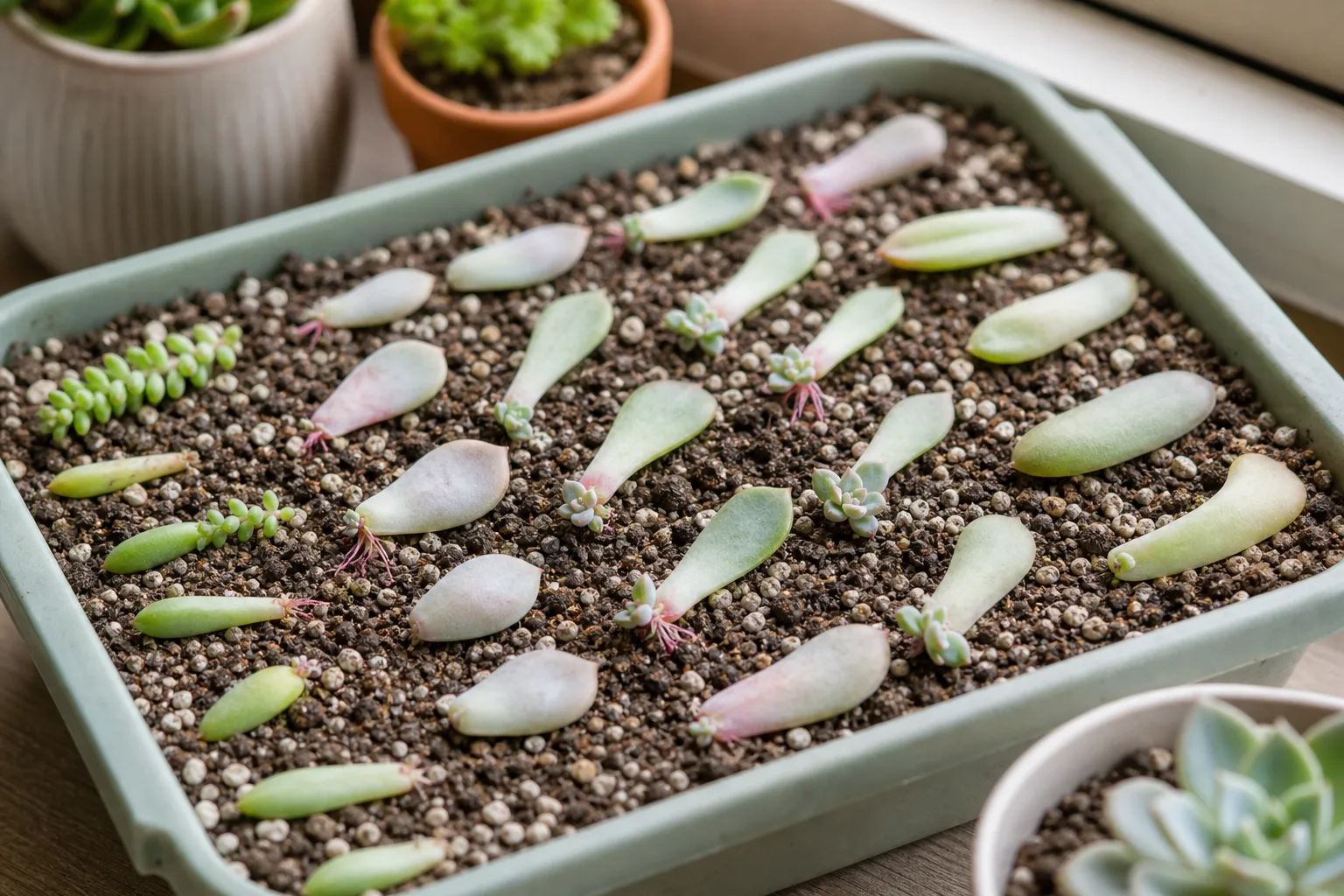
Use a plump leaf that has detached cleanly from its stem, including the small base where it joined. A torn leaf without that attachment tissue is less likely to make a new plant. Let the base dry briefly, then lay the leaf on top of a dry, gritty mix in bright indirect light.
Do not bury the leaf or keep the tray constantly wet. Once tiny roots or a rosette appear at the base, moisten the mix lightly and let it dry again between applications. Keep the original leaf in place while it shrinks and feeds the new growth; pot the young plant only after it has roots and enough size to handle.
Fallen leaves do not all become plants, and success is slower and less predictable than with a stem cutting. Use several healthy leaves if you want more than one start, but do not overwater the entire mother plant because a propagation tray looks dry.
Treat Flowers as a Bonus
Mature donkey’s tail may produce small pink or red flowers at the ends of stems, usually during warm-season growth. Indoor plants often do not bloom, even when healthy. Wisconsin Extension notes that plants need maturity and bright light, and that a cooler winter period may encourage flowering; it does not recommend stressing a plant with drought or unsafe cold.
If flowers matter to you, first build a stable, healthy plant with strong light and careful seasonal watering. A warm-weather stay outdoors can help if your nights remain safely above the plant’s cold limit, but a flowerless plant is not a sign that care has failed. Do not expose it to frost or withhold water to force buds.
Diagnose Leaf Drop, Color Changes, and Soft Stems
Some leaf loss is simply the cost of growing a delicate trailing plant. A few leaves falling after a bump, lift, or rotation do not by themselves mean the plant is sick. The pattern, texture, and soil condition help separate routine damage from a care problem.
| What you see | Check first | More likely explanation |
|---|---|---|
| A few firm leaves on the shelf or floor | Recent bumping or moving | Mechanical leaf drop |
| Wrinkled leaves and a light pot with dry mix | Dryness at the bottom of the root ball | Thirst |
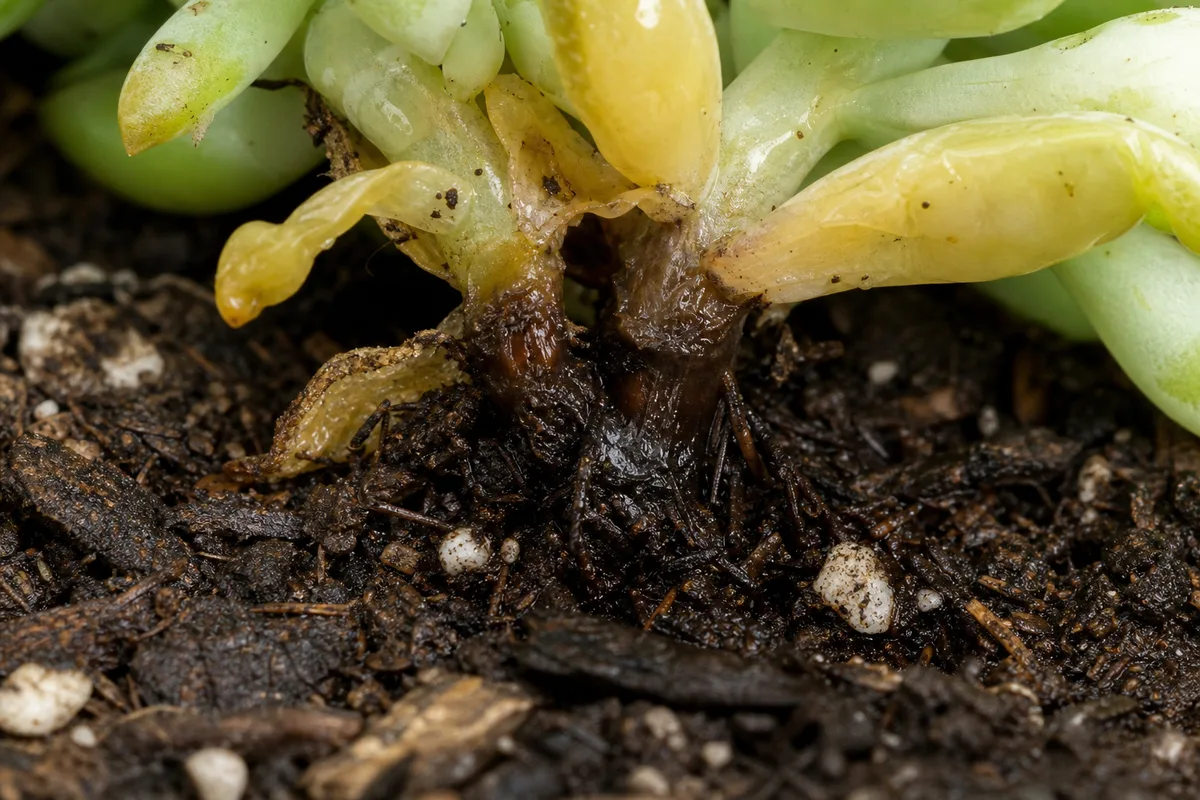
| Yellowing, translucent, soft leaves with damp mix | Drainage hole, saucer, and stem base | Excess water or early rot |
| Long bare spaces between new leaves | Distance from a bright window | Too little light |
| Pale or yellowed areas after a move outdoors | Sudden direct sun | Sun stress or sunburn |
| White-gray coating on otherwise firm leaves | Whether it wipes away with handling | Often natural wax rather than disease |
Use the soil and stem to separate drought from rot. If the whole root zone is dry, stems are firm, and leaves are wrinkled but not mushy, water thoroughly and wait; leaves may take time to plump again. If the soil is wet and the stem base feels soft, do not water to “treat” the wrinkles—unpot the plant to check whether the roots are dark and mushy.
For suspected rot, cut away soft, discolored tissue with a clean blade, keep any healthy firm tips for propagation, and discard rotted roots and old wet mix. Let sound cut surfaces dry before setting them in fresh, dry succulent mix. If the stem base and most roots are already mush, a healthy cutting may be the best rescue; continuing to water the original pot is unlikely to reverse advanced rot.
Check for Pests Without Breaking the Leaves
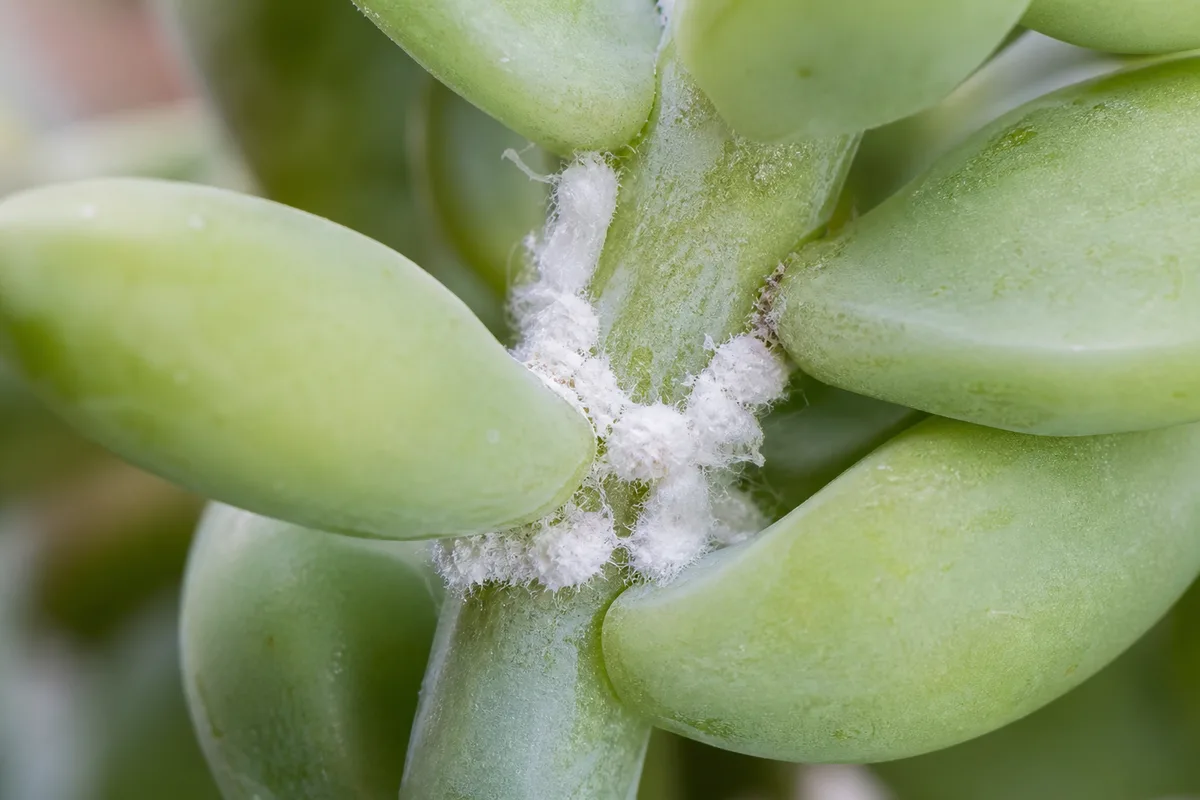
Inspect the places where stems meet and the inner side of the cascade, especially after bringing the plant indoors. Mealybugs look like small white cottony deposits, while aphids tend to gather on tender growth or flower stalks. Wisconsin Extension’s care profile describes serious pest issues as uncommon but notes occasional mealybugs; a few pests are easier to address before they spread.
Isolate an infested plant and remove visible insects carefully with a cotton swab or a gentle stream directed at the affected area, supporting the stems so they do not swing or snap. Avoid repeatedly drenching the whole plant or spraying an untested product across the waxy leaves. If using a pesticide or insecticidal soap, follow its label, test a small area first, and keep the plant away from pets until the product instructions say it is safe.
Use Outdoors as a Protected Accent, Not a Traffic-Proof Groundcover
In warm, frost-free climates, donkey’s tail can trail over a raised bed edge or rock wall if the soil drains sharply and the site is sheltered. In most regions it is safer in a movable container that can come indoors for cold weather. Wisconsin Extension recommends moving it outside only in warm months, acclimating it gradually, and returning it indoors before nighttime temperatures fall below about 40°F; its outdoor growing guidance gives the threshold and acclimation details.
It is not a good lawn substitute or a path-edge plant where people, pets, or garden tools will brush it. The stems are brittle and the leaves break easily, while many plants sold as cold-hardy “sedum groundcover” are different species with different winter tolerance. For a low carpet in a cold garden, choose a sedum identified for your local conditions rather than planting donkey’s tail by common-name resemblance.
The ASPCA lists identified Sedum morganianum as non-toxic to dogs, cats, and horses. That listing applies to this botanical species, not every plant sold under a shared common name; verify the label if a pet chews an unfamiliar “donkey’s tail,” and contact a veterinarian if the animal develops symptoms. ASPCA Animal Poison Control’s entry is the source for this species-specific classification.
Conclusion
Donkey’s tail grows best when its care is predictable but not rigid: bright light, a stable display, an airy mix, and a full watering only after the root zone dries. Keep it away from traffic, protect it from frost, and treat leaf drop as a clue to investigate rather than an automatic reason to water.
If a stem breaks, turn the loss into a cutting. If the plant looks unwell, check soil moisture and stem firmness before changing its routine. Those two habits—gentle handling and evidence-based watering—prevent most avoidable problems and help a slow-growing cascade stay attractive for years.



