How to Grow and Care for Rhipsalis Cactus Indoors
Rhipsalis is a forest cactus, not a desert cactus. Get practical advice for choosing light, soil, water, humidity, and pots for a healthy trailing plant.
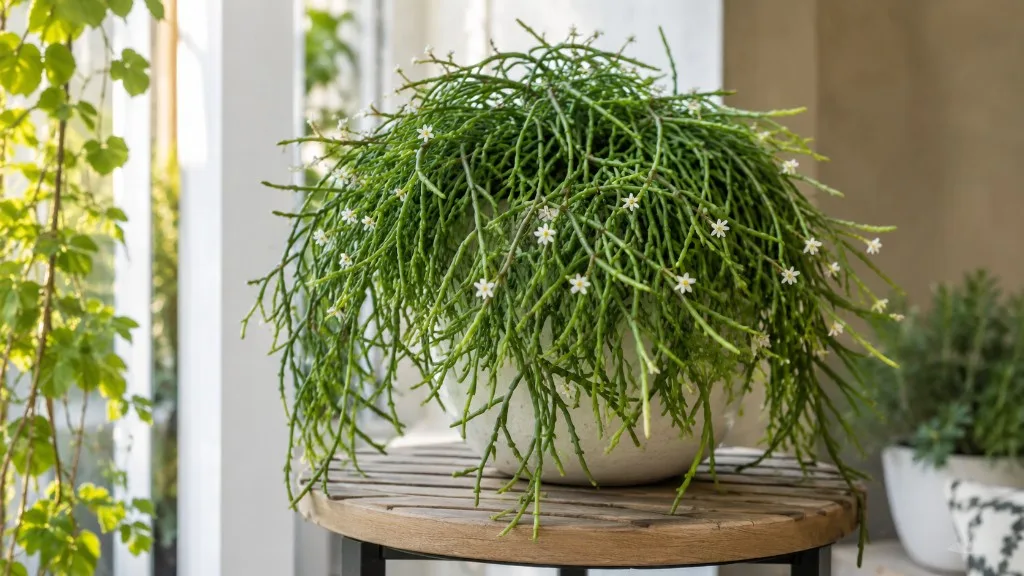
Rhipsalis is a true cactus, but it does not live like a desert cactus. Most familiar species are tropical or subtropical plants with slender, trailing stems that grow on trees, rocks, or in sheltered forest pockets. Indoors, they need bright filtered light, an airy root zone, and more even moisture than a sun-loving barrel cactus—with enough drainage that water never sits around the roots.
The genus includes many forms, from fine, threadlike Rhipsalis baccifera to branched or flattened-stemmed species. A plant sold as “coral cactus” may even be a crested Euphorbia, a different genus altogether. The care below gives a reliable starting point for Rhipsalis, then explains where a particular species or growing room may call for an adjustment.
Start With the Right Rhipsalis, Not Just the Common Name
Rhipsalis belongs to the cactus family, Cactaceae. Kew’s Plants of the World Online treats the genus as accepted and lists a native range spanning tropical and subtropical parts of the Americas, Africa, the western Indian Ocean, and Sri Lanka. That range is a useful clue: this is a varied group, not a single plant with one uniform shape or one exact care schedule. Kew’s genus profile lists many accepted species, while NC State Extension’s detailed plant profile focuses on R. baccifera, the species commonly sold as mistletoe or spaghetti cactus. NC State Extension
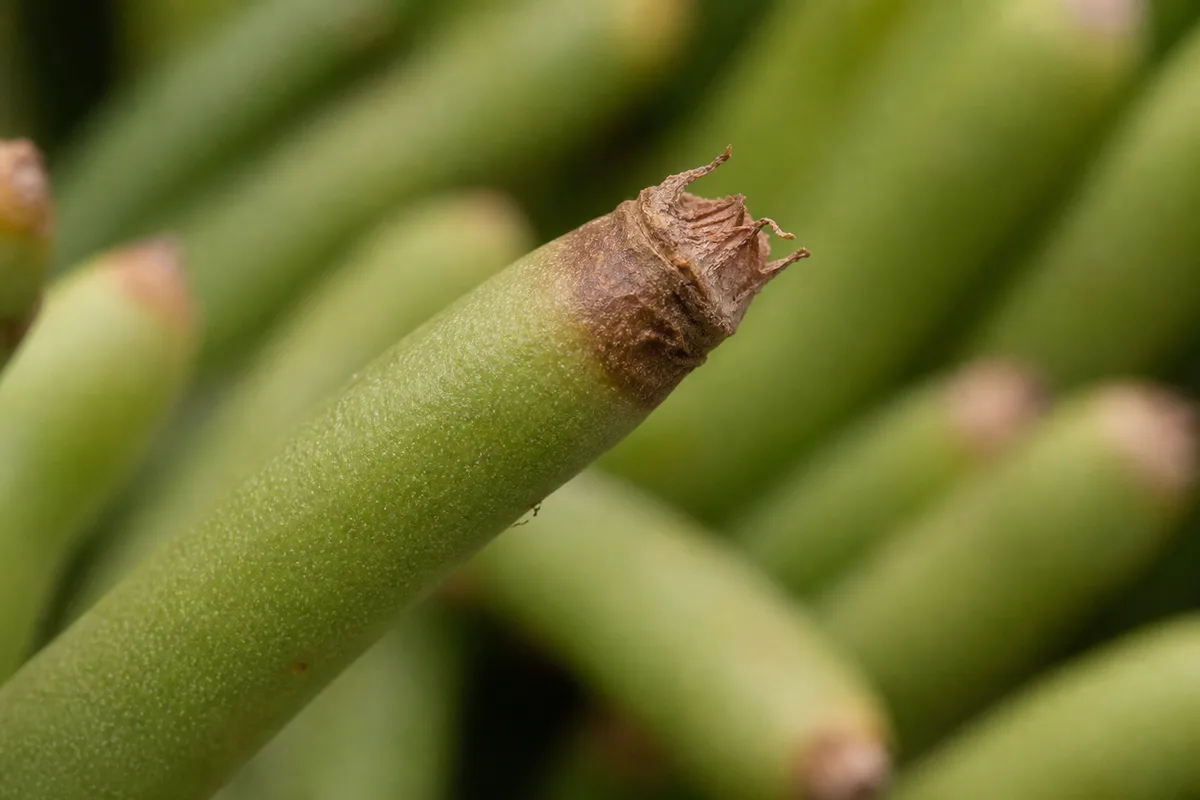
Check the stem form and label before applying care advice. R. baccifera has long, thin, cylindrical strands; R. cereuscula forms a denser cluster of branching stems; R. paradoxa is known for linked, chainlike segments; and R. pachyptera has broader, flattened stems. These examples are not an exhaustive list, and nursery names can be inconsistent. If the plant has the loose, trailing growth typical of Rhipsalis, the same basic approach—filtered light, drainage, and careful moisture—usually applies.
“Coral cactus” is especially ambiguous. Some growers use it for R. cereuscula, but the name is also widely used for a ruffled, grafted Euphorbia lactea ‘Cristata’. A fan-shaped crest growing from a thick upright stock indicates the Euphorbia, not Rhipsalis; the milky sap and care needs are different. If that is what you have, use the coral cactus care guide instead. For a species-specific profile of the familiar mistletoe cactus, see mistletoe cactus care.
Understand What Makes a Forest Cactus Different
Many Rhipsalis species are epiphytes: they use a tree or other surface for support rather than rooting in deep soil. Some can also grow on rocks. Their natural roots encounter rain and humidity, but the water drains away quickly and the roots have access to air. A houseplant pot can imitate that balance with an organic mix that holds some moisture but has open spaces between particles.
This explains the apparent contradiction in Rhipsalis care. The plant can shrivel if the root ball stays dry too long, yet it can rot if a dense mix remains soaked. Neither extreme—weeks of drought nor permanently wet soil—matches its needs. Think of the goal as a thorough drink followed by an airy dry-down, not a desert-style drought cycle or a swampy pot.
Rhipsalis Care at a Glance
| Need | Starting point | Adjust when |
|---|---|---|
| Light | Bright, indirect or filtered light | Add gentle morning sun gradually; filter hot afternoon sun |
| Water | Water thoroughly after the upper mix dries partway | Check more often in warm bright growth; less often in cool dim rooms |
| Soil | Airy indoor mix with bark and perlite or pumice | Add more aeration if it stays wet; add organic mix if it dries too fast |
| Temperature | Typical warm room conditions, roughly 60–80°F (16–27°C) | Protect from cold drafts and temperatures near 50°F (10°C) or lower |
| Humidity | Average indoor air can work if watering and airflow are sound | Use a humidifier when heated air is persistently very dry |
| Feeding | Dilute fertilizer during active growth | Pause when growth slows or roots are stressed |
| Repotting | Wait for compacted mix or crowded roots | Choose a modest pot with an open drainage hole |
Use New Growth and Pot Dryness as Your Guide
Treat those figures as a starting range rather than a timer. A small clay pot beside a bright window may dry quickly; a larger plastic pot in a cool room may stay damp much longer. The plant’s new stems also give useful feedback: compact, evenly colored growth suggests the site is working, while thin pale growth often points to inadequate light. A stable pot that stays wet for many days points to a mismatch in medium, pot size, temperature, or watering—not automatically a need for fertilizer.
Give It Bright, Filtered Light
Place Rhipsalis where it receives plenty of daylight without long periods of strong, direct midday or afternoon sun. An east-facing window is often a good starting location. A south- or west-facing window can also work if a sheer curtain filters the sun or the plant sits back from the glass. North-facing light may keep some plants alive, but growth can become sparse and flowering less likely if the room is too dim.
RHS guidance for R. baccifera allows a broader range of positions, from full sun to partial shade, and recommends bright indirect light under glass. That range makes sense when you consider climate and acclimation: gentle sun in a cool climate is not the same as hot afternoon sun through glass. A plant raised under shade can scorch if it is moved into a sunny window in one step. The RHS plant profile describes its sheltered cultivation and epiphytic habit.
If you want to move a plant closer to a brighter window, shift it gradually over one to two weeks. Begin with a little more filtered light and watch the stems facing the glass. Pale, bleached, or dry tan patches are signs of excess exposure; do not expect damaged tissue to turn green again. If new stems are long, thin, and leaning toward the window, increase the available light in small increments or use a grow light on a timer.
Light affects watering too. A Rhipsalis in a bright, warm spot uses moisture more quickly than the same plant in a cool, dim corner. If light is low, do not keep the pot wetter in an attempt to compensate; slower growth means the roots use less water. Fix the light gradually and let the mix dry at its usual pace.
Water When the Mix Has Dried Partway
Water based on the medium, not a fixed number of days. Let the top layer dry, then check deeper with a finger or a wooden skewer. When the upper portion is dry and the lower mix is no longer wet, water slowly across the surface until water comes from the drainage hole. Empty the saucer or cachepot after the pot drains. This wets the whole root ball without leaving the roots in standing water.
How long that takes depends on light, warmth, airflow, pot material, mix texture, and the amount of root in the pot. In a warm growing season, a hanging basket may need checking weekly; in winter or in a cool room, it may go longer between drinks. Use the calendar only as a reminder to inspect the plant. If the pot still feels heavy or the mix is cool and damp, wait.
Reduce the frequency as growth slows in autumn and winter, but do not impose a long, dry dormancy simply because other cacti get one. A heated home can keep Rhipsalis active and dry out its pot even in January. Conversely, a dim, cool room slows water use. Look at both the growing medium and the stems before watering: slightly puckered but firm stems in dry mix suggest thirst, while soft or dark stems in wet mix suggest root trouble.
Avoid repeated sips that wet only the surface. If the mix has become very dry and water runs down the sides, apply it in two or three slow passes a few minutes apart so it can absorb, then let it drain. Do not leave the pot standing in water. Rhipsalis tolerates more regular moisture than many desert cacti, but it still needs air around its roots.
Choose an Airy Mix and a Pot With Drainage
Use a mix that stays lightly moist for a short period after watering but does not collapse into a dense, airless mass. A practical starting blend is two parts indoor potting mix, one part fine orchid bark, and one part perlite or pumice. The potting mix supplies organic moisture retention; bark and mineral particles keep channels open for air and drainage. Adjust the blend to your conditions instead of treating the ratio as exact: add more bark or pumice if the pot remains wet, or a little more potting mix if it dries almost immediately.
Commercial cactus and succulent mixes vary. Some are suitable as-is; others are too coarse or fast-drying for a thin-stemmed forest cactus. Blend an overly gritty mix with indoor potting mix or coir, and loosen a heavy mix with bark and perlite. Avoid garden soil, pure compost, and a mix that stays saturated for days. NC State Extension describes the preferred medium for R. baccifera as slightly acidic, moist, well-drained, and gritty; the practical priority is a structure that holds a little moisture while allowing oxygen to reach the roots. NC State Extension
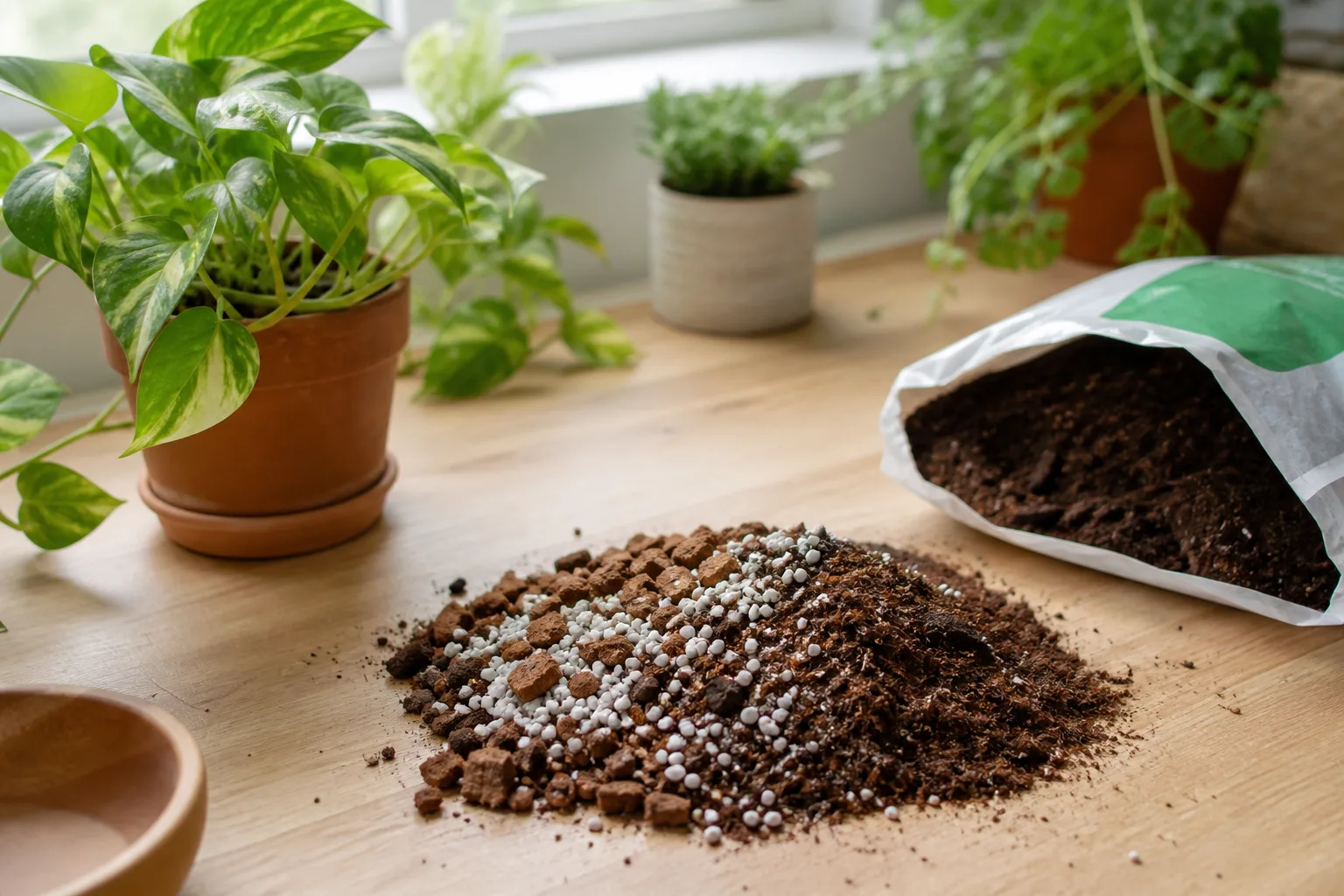
Choose a stable container with an open drainage hole. Hanging baskets show off the cascading stems, but a shelf or plant stand works just as well if the strands have room to trail. A shallow pot is often sufficient because the roots are not deep; a very large pot can hold more wet mix than the root system can use. Do not rely on gravel at the bottom to repair a pot without drainage. The hole and the structure of the mix need to work together.
Keep Temperatures Steady and Humidity Moderate
Typical warm indoor temperatures suit Rhipsalis. NC State Extension gives 60–80°F (about 16–27°C) as a preferred range for R. baccifera and notes that the plant should be protected from frost. Keep it away from cold exterior doors, chilled window glass, air-conditioning vents, and radiators that create hot, dry drafts. Temperatures near 50°F (10°C) are a sensible caution point for a potted houseplant; do not expose a plant to frost to trigger flowers.
Rhipsalis generally benefits from more humidity than a desert cactus, but many healthy houseplants adapt to ordinary home air when the mix, light, and watering are balanced. If indoor humidity drops very low for long periods—common in heated winter rooms—brown tips and spider mites may become more likely. Grouping plants or running a clean humidifier can lift the surrounding humidity more reliably than frequent misting. Leave enough space for air to move between plants.
The RHS recommends high humidity and misting for greenhouse-grown R. baccifera. In a typical living room, however, a quick spray evaporates quickly and does little to change the room’s humidity. If you choose to mist, do it only where stems can dry promptly; avoid leaving water trapped in a dense clump in cool, still air. A pebble tray may modestly humidify the air immediately around a pot, but it does not replace drainage or a humidifier in a very dry room.
Feed Lightly During Active Growth
Feed during spring and summer when the plant is making new stems. Use a balanced or slightly lower-nitrogen liquid houseplant fertilizer at half the label strength, roughly monthly, and apply it to an already moist root ball. RHS recommends a dilute, low-nitrogen feed monthly for R. baccifera under glass. If the plant is not actively growing because light is poor or temperatures are low, skip the feed until conditions improve.
More fertilizer will not make a Rhipsalis fuller or force it to flower. Too much can leave salts in the mix and damage fine roots, especially in a small pot. If a white crust forms on the mix or pot, stop feeding and flush the pot with plain water if it drains freely. Do not fertilize a plant with soft stems or suspected root rot; first correct the drainage and root problem.
Prune to Shape or Remove Damaged Stems
Routine pruning is optional. Trim only when trails are too long for the space, you want to encourage branching, or a stem is dead, broken, or diseased. Use clean, sharp scissors and cut just above a stem joint. Shorten a few outer trails rather than removing a large share of the plant at once; heavy pruning can leave a thin center and take away future flower sites. The RHS likewise notes that pruning is not required, although long stems can be trimmed when needed. RHS
Save firm, healthy cut pieces for propagation. Do not use material that is black, soft, pest-covered, or badly shriveled. If you are pruning to improve shape, you can plant several sound cuttings around the edge of the same pot once they root, giving the plant a fuller appearance over time. Gardening Know How likewise recommends using healthy trimmings to start new mistletoe cactus plants. Gardening Know How
Propagate Rhipsalis From Healthy Cuttings
Stem cuttings are the most reliable home method for multiplying a plant. Choose a mature, healthy strand and cut a few inches of it with sterilized scissors. Each cutting should include several sections or joints, enough to sit securely in the medium without burying most of the stem. Spring or early summer is convenient because warm, brighter conditions support rooting, but cuttings can root at other times if the home stays warm and bright.
Let the cut end dry until its surface is no longer fresh and wet—usually a day or so for a small cutting. The aim is a dry cut surface, not a long period that dehydrates the stem. Plant it in a small pot of lightly moistened, airy mix, setting the cut end just deep enough to stand. Keep the pot in bright indirect light and warm conditions. Maintain slight moisture in the mix, not constant saturation, while roots develop.
Root Cuttings in a Potting Mix
- Select and cut. Pick firm, green stems without pests or soft patches. Cut below a joint with clean scissors and take several pieces if you want to fill out a hanging basket.
- Let the cut end dry. Place the pieces in a shaded, airy spot until the cut surface feels dry. Thick stems may need longer than thin ones.
- Prepare a small pot. Use fresh, airy mix and a pot with drainage. A large pot is unnecessary for a few cuttings and can stay wet too long.
- Insert the cutting shallowly. Set the cut end about an inch into the mix, or deep enough to support it. Keep most of the stem above the soil and avoid packing the mix tightly around it.
- Set a warm, bright location. Give it indirect light and stable temperatures. Keep the medium lightly moist; water only when its surface begins to dry rather than watering on a daily schedule.
- Wait for establishment. Rooting can take several weeks and varies with warmth, light, and the cutting. Resist tugging or unpotting it repeatedly. A gentle tug that meets resistance or visible new growth signals progress.
UK Houseplants describes soil propagation from healthy Rhipsalis stem pieces, while Gardening Know How also recommends cuttings as a practical alternative to seed raising. UK Houseplants Gardening Know How
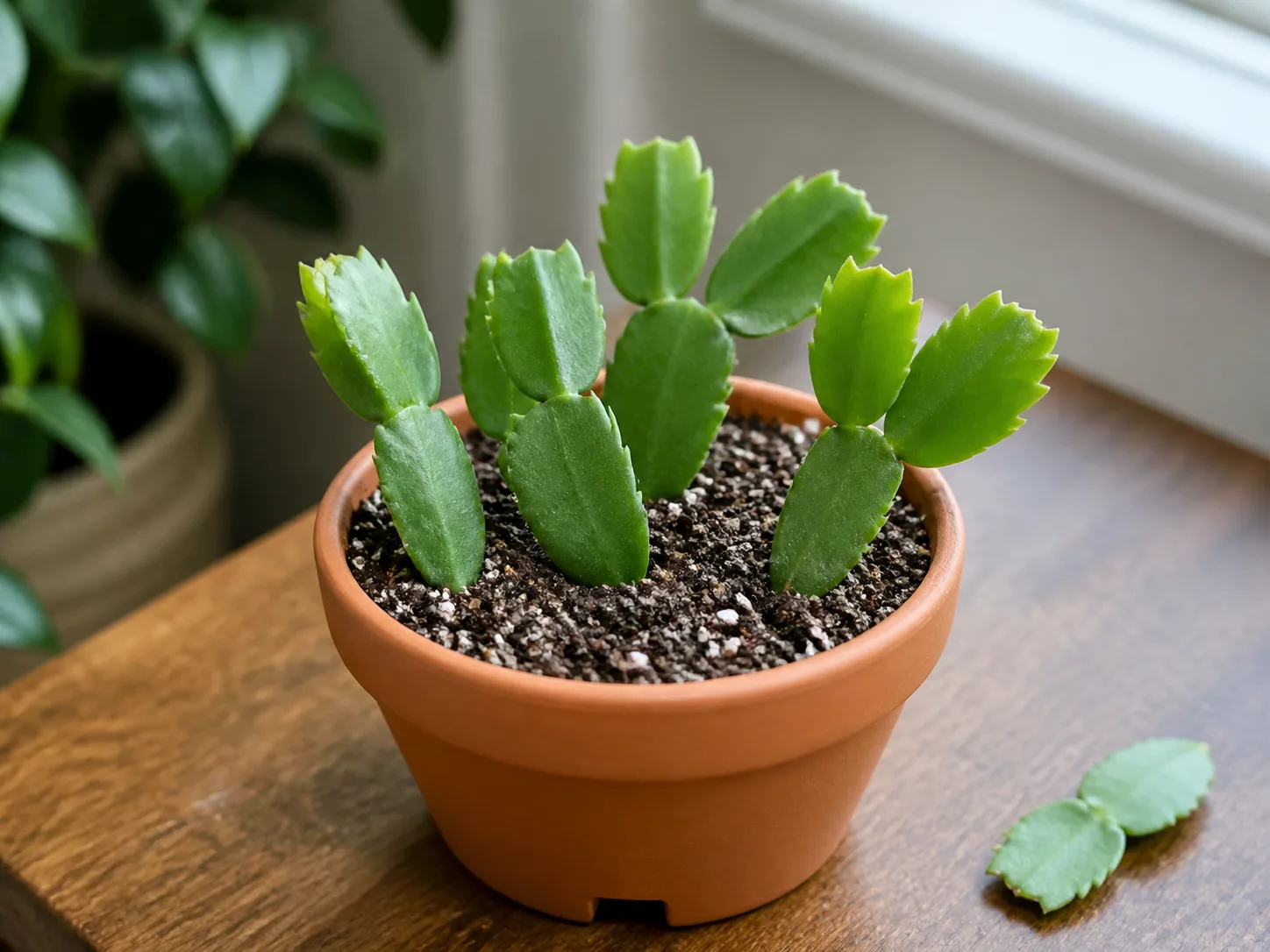
A related forest cactus illustrates the shallow planting setup; use healthy Rhipsalis stems for these steps.
Water rooting is possible, but the roots formed in water have to adjust when moved into a potting mix. For a low-fuss result, starting in a lightly moist mix skips that transition. Seed propagation is also possible if a plant produces viable fruit, but seedlings grow slowly and may not resemble a named cultivar. For most indoor growers, cuttings make a faster, more predictable new plant.
Repot Only When the Root Zone Needs It
Do not repot just because a calendar says two years have passed. Repot when roots densely fill the pot, the mix has broken down and stays wet, water no longer moves through evenly, or the plant becomes unstable. Rhipsalis often tolerates a snug container, so a few roots at a drainage hole are not an emergency by themselves.
Choose a new pot only one size larger, with a drainage hole. Gently ease the plant out, disturb the shallow roots as little as practical, and remove only dead or mushy material. Set it at the same depth in fresh mix. Water enough to settle the medium, allow it to drain fully, and keep the plant in bright indirect light while it adjusts. If repotting because of rot, remove decayed roots and use a clean pot; do not transfer a saturated root ball into a much larger container.
Encourage Flowers Without Forcing Dormancy
Flowering depends on species, maturity, light, and the plant’s growth history. R. baccifera commonly produces small white or greenish-white flowers along its stems, often from winter into spring; RHS notes that flowering can occur at other times too. Berries may follow on some plants. Flowers are small, so look closely along the stems instead of expecting a large display. RHS
To improve the chance of blooms, provide bright indirect light through the growing season, avoid excessive nitrogen, and keep care stable. A healthy mature plant is more likely to flower than a young cutting, but no care trick can guarantee flowers in a particular month. Rhipsalis species vary, and an indoor plant’s light and temperature may not mirror the outdoor seasons of its native habitat.
Do not force a long cold or bone-dry rest. Holiday cacti have well-known flowering cues, but Rhipsalis is a diverse genus, so copying a strict Schlumbergera schedule can stress rather than help it. A modest seasonal reduction in watering as growth slows is sensible; allowing the stems to shrivel or exposing the plant to near-freezing conditions is not.
Troubleshoot Stems and Common Pests
The stems are the easiest place to spot change, but color or texture alone rarely identifies the cause. Check the moisture in the root zone, the condition of the roots if the plant is declining, the amount of direct sun, and recent changes in temperature. Compare affected areas with healthy growth: sun damage is often strongest on the window-facing side, while a root problem can affect multiple stems throughout the plant.
NC State Extension lists spider mites, aphids, and mealybugs among the possible insect problems for R. baccifera. Inspect stem joints, undersides of branches, and the soil line. Isolate a plant with visible pests, rinse off reachable insects, and repeat inspections. If a persistent infestation needs treatment, use only a product labeled for houseplants and the pest, and follow the label; delicate stems can be injured by treatments that are too concentrated. NC State Extension
Match the Symptom to the Pot and Growing Conditions
| What you notice | Check first | Sensible first step |
|---|---|---|
| Wrinkled or puckered but firm stems | Is the mix dry through the upper root zone? | Water thoroughly if dry, then observe over the next day or two |
| Wrinkled stems with a wet, heavy pot | Are roots brown, soft, or foul-smelling? | Stop watering and inspect drainage and roots before adding more water |
| Yellowing or soft stems | Is the pot staying wet, or has the plant become cold? | Correct excess moisture or cold exposure; remove only dead tissue |
| Red or bronze tint | Did the plant recently move into stronger light or colder air? | Move to filtered light and stabilize the temperature |
| Brown, crispy tips | Is the air dry, mix too dry, sun too strong, or fertilizer accumulating? | Check all four conditions before changing the watering routine |
| Long, pale, weak new strands | Is the plant receiving enough usable light? | Move gradually to a brighter indirect-light location |
| Fine webbing or cottony flecks | Are mites or mealybugs hiding at joints? | Isolate the plant and inspect every branch before treating |
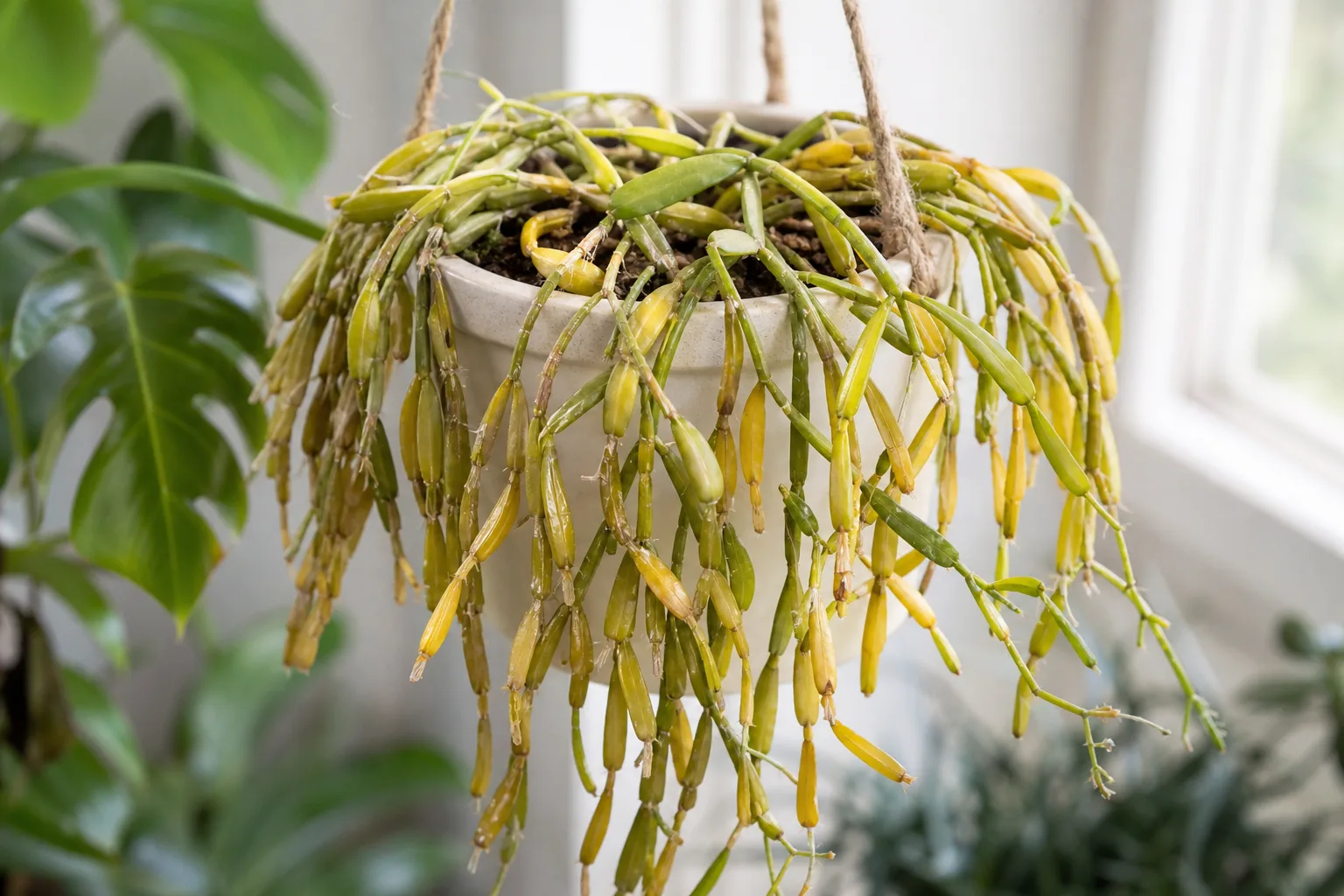
A common mistake is to treat every wrinkled stem as a request for more water. A thirsty plant in dry mix can recover after a thorough drink, but a plant with damaged roots may stay wrinkled while the pot is wet. In that case, more water deepens the problem. If roots are mostly sound, improve the mix and drainage; if they are mostly rotten, preserve firm stem sections and propagate them rather than trying to save decayed tissue.
Another mistake is to assume all browning means low humidity. Direct sun, missed watering, heater drafts, and fertilizer salts can all damage stem tips. Look for a pattern: damage on the brightest side suggests sun; crisp tips in a very dry room suggest dry air; a crusted surface suggests salts; and brown, soft stems close to wet mix call for a root check.
Move Rhipsalis Outdoors Only in Suitable Weather
A Rhipsalis can spend warm weather outdoors in a sheltered, shaded or partly shaded location. Moving it outside may give it brighter filtered light and better air movement, but the plant must be acclimated. Start in deep shade, then shift toward the chosen bright-shade location over a week or more. Protect it from strong afternoon sun, prolonged cold rain, and a pot that stays waterlogged after a storm.
Bring it back indoors before nights approach 50°F (10°C), especially if the species label is unknown or the plant has been kept warm all year. Check the stems and pot for pests before bringing it near other houseplants. Outdoors is an optional seasonal benefit, not a requirement; a stable indoor location can grow a healthy trailing plant.
Conclusion
Rhipsalis grows best when you remember that its cactus family connection does not make it a desert plant. Give it bright filtered light, an airy organic mix, and a thorough watering after the medium has dried partway; then let the excess drain and let air return to the roots. Keep the temperature steady, feed lightly during active growth, and let the species and your room conditions guide the details.
When something looks wrong, read the stems alongside the pot. Firm puckering in dry mix points toward thirst; soft stems in a wet pot point toward root trouble; pale new growth calls for more indirect light; and crispy tips call for a check of humidity, sun, and salts. That simple sequence makes it easier to grow a fuller Rhipsalis, take cuttings, and enjoy the plant without forcing it into a desert-cactus routine.



