Kumquat Indoor Care: Growing, Blooming and Fruiting
Learn kumquat indoor care, from bright light and watering to hand pollination, seasonal moves, pest checks, and realistic harvest expectations for your home.

A kumquat can live in a container indoors and produce fruit, but success depends on treating it like a small citrus tree rather than an ordinary houseplant. It needs a genuinely bright position, a pot that drains freely, and a seasonal plan that gives it outdoor sun when weather allows and a cool, bright place before frost.
The reward is unusual among citrus: the whole fruit is edible, with a fragrant sweet rind around tart pulp. That makes kumquat a useful choice when you want a compact fruiting tree, but it will not reliably crop in a dim room or tolerate weeks of soggy soil. Start with the variety and winter location, then build the care routine around those limits.
What makes kumquats different from other indoor citrus?
Kumquat is the common name for Citrus japonica, an evergreen citrus shrub or small tree in the rue family, Rutaceae. The RHS kumquat profile describes fragrant white flowers followed by small orange fruit and a bushy habit. Some older plant labels and references use Fortunella names, so a nursery may list a kumquat under more than one botanical name; check the common name, named variety, and whether the plant is grafted before buying.
The fruit is the clearest difference from a lemon or mandarin. You usually eat it whole, including the peel, which tastes sweeter than the sharp, acidic interior. Kumquats are therefore better for fresh snacking, preserves, candying, or adding a tart-sweet bite to dishes than for squeezing a glass of juice. A small tree can look heavily laden because the fruit are small, but a visible crop is not a promise of a fixed number of usable fruits.
Kumquats are also slower to flower than some indoor citrus and often mature fruit over a long stretch. A tree may carry foliage, blossoms, and fruit at once when conditions are right, but the timing varies by cultivar, climate, and whether the plant is spending winter in a bright cool room or a heated living area. If your main goal is simply to compare several citrus options for a home, see our guide to small citrus trees for indoor growing; the advice here stays focused on kumquat.
Nagami, Meiwa, Marumi: pick for fruit, not the label
‘Nagami’ is the familiar oval kumquat, with a sweet outer skin and tangy flesh. ‘Meiwa’ is typically rounder and less sharply acidic, while ‘Marumi’ is round-fruited and often more aromatic or tart. These are useful taste and shape clues, not guarantees: rootstock, growing conditions, and the nursery’s exact plant can affect size and flavor. Epic Gardening’s kumquat growing guide discusses these commonly sold types and their fruit forms.
A variegated selection may be appealing for foliage, but choose a fruiting cultivar first if eating the crop matters. Ask the seller whether the plant is a named cultivar, grafted, and already mature enough to flower. The word “dwarf” on a tag does not tell you the eventual pot size or how much pruning will be needed; a grafted tree kept in a container is usually more predictable than a seedling, but it still needs a sunny canopy to carry fruit.
Will a kumquat really fruit indoors?
Yes, a kumquat can flower and set fruit while grown in a pot, including in a home, but the limiting factor is usually light rather than the absence of a second tree. A plant may stay alive for years near a window and still make little fruit if that window receives only indirect light. Indoor fruiting improves when the tree can grow outside for part of the year or receives strong supplemental light through the darker season.
The RHS citrus guide notes that citrus flowers and fruit can overlap and that fruit ripening may take many months. That long development period is why consistency matters: a kumquat that experiences repeated drought, a major indoor-to-outdoor light shock, or a cold draft may shed buds or young fruit before they mature. Some flower or fruit drop is normal; losing most of a crop usually signals that the plant is under strain.
A small, young tree may need time to build enough leaves and roots to support a harvest. If a few fruits set on a newly purchased plant, let them develop if the canopy is healthy, but do not judge the tree by its first season. A stable evergreen canopy and steady new growth are better signs of a productive future than a large number of flowers immediately after purchase.
Choose a grafted tree if harvest matters
For a quicker, more reliable path to edible fruit, buy a healthy grafted kumquat from a nursery that can identify the variety. A grafted plant combines a selected fruiting top with a rootstock and is generally sold at a more mature stage than a seedling. The RHS buying guidance for citrus says most commercially sold citrus plants are grafted and that ungrafted citrus can take many years to fruit; do not buy a seedling expecting the same timeline as a bearing nursery tree.
You can grow a seedling as a long-term experiment, but the fruiting date and quality are uncertain and it may take years. A seed also does not necessarily produce a plant identical to the fruit it came from. If a seller cannot confirm the cultivar or graft, ask for a close photo of the trunk near the soil line and look for a visible graft union; a distinct change in bark or trunk shape is common, although not always obvious on a mature plant.
Give the tree strong light and a winter temperature plan
Put the kumquat at the brightest available window, ideally where it receives several hours of direct sun rather than light filtered through a deep porch or a tree canopy. The RHS profile lists full sun as the preferred position, and Epic Gardening recommends at least six to seven hours of daily sun, with more helpful for fruiting. A south- or west-facing window may work in a bright climate; in a cloudy winter or a home with shaded windows, a grow light can fill the gap.
Do not assume a plant is getting enough light because the room looks bright to you. Light falls sharply as you move away from the glass, and leaves can remain green even while the tree lacks energy to flower. Keep the canopy close enough to the window for useful daylight while leaving clearance from cold panes, and rotate the pot occasionally so one side does not become the only side making new growth.
Winter warmth can be as much of a problem as winter cold. The RHS advises that kumquats often need winter temperatures around 45°F (7°C) or above, while Cornell Cooperative Extension describes a bright indoor citrus environment with cooler nights than days. Those figures describe different growing contexts; they are not a license to expose a potted tree to frost. Because pot roots cool faster than roots in the ground, use the nursery’s cultivar guidance and move the tree to a frost-free place before cold nights threaten it. Avoid a hot vent, fireplace, or drafty doorway, where rapid temperature changes and dry air can trigger leaf drop.
Use leaves and growth to judge whether light is enough
A kumquat that receives too little light often develops long gaps between leaves, leans strongly toward the window, or drops older leaves after it comes indoors. Flowering may be sparse, and small fruit may fall before they size up. These symptoms are not proof of low light by themselves, so also check the soil moisture, drainage, and undersides of leaves for pests before making a change.
If you use a grow light, follow the lamp maker’s distance and timing guidance for a fruiting tree, and use a timer so the plant gets a consistent day rather than a few irregular late-night hours. A light intended for seedlings may illuminate only the top of a taller canopy; position or add fixtures so useful light reaches the leaves throughout the crown. Move the tree closer to the window or light gradually, since foliage grown in shade can scorch when suddenly exposed to intense outdoor sun.
For a home that cannot provide strong window light or a suitable grow light, choose the kumquat as a foliage and flower plant and treat fruit as a bonus. If fruit is the priority, compare the setup with our indoor citrus growing guide before bringing home a tree; light and winter space are easier to solve before the pot is large and heavy.
Move it outdoors and back in without shock
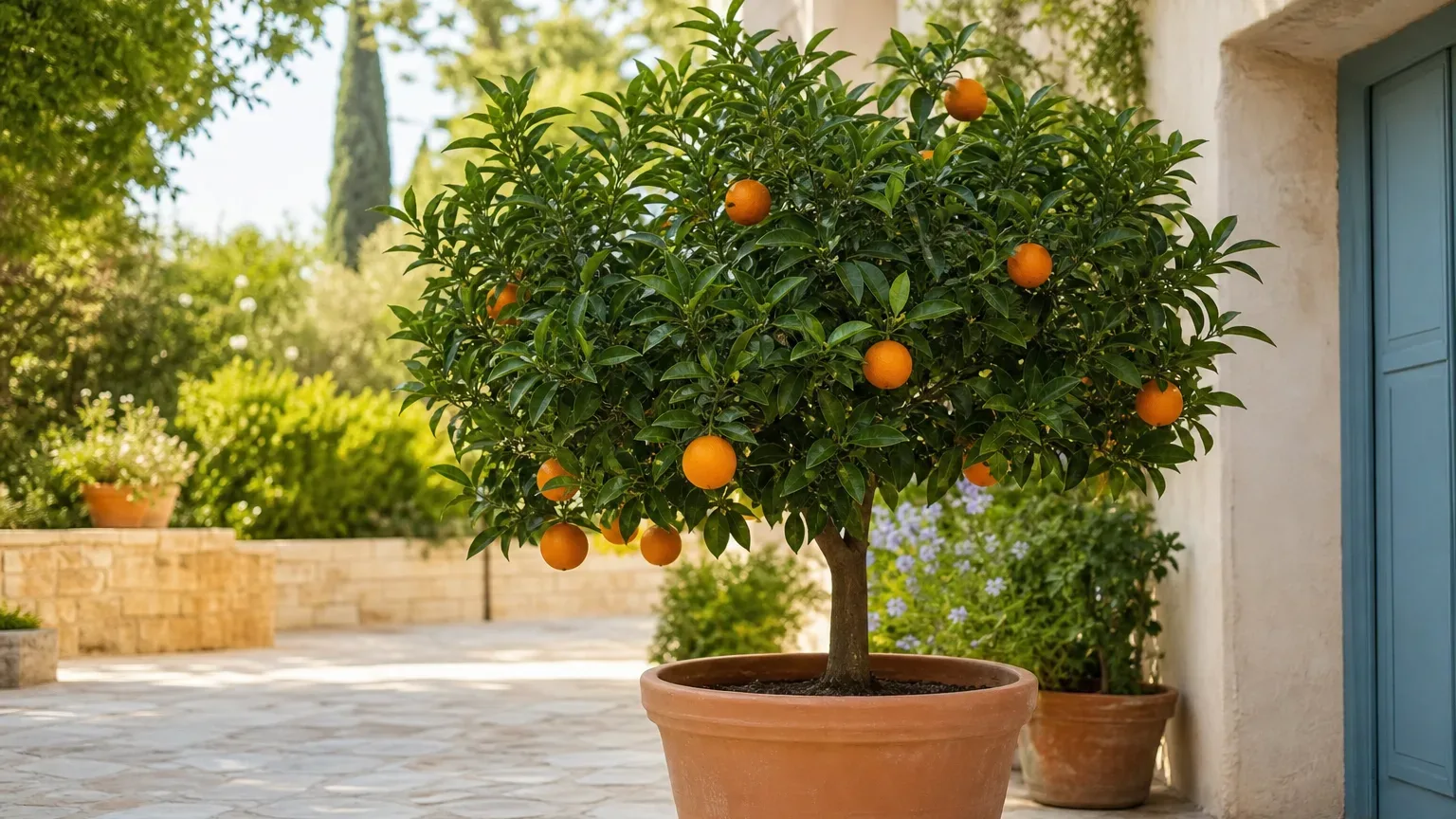
An outdoor summer can give a potted kumquat more sun and airflow than most rooms. Use temperature trends, not a date on the calendar: wait until nights are reliably mild, and do not leave the plant out during a forecast cold snap. Kumquat hardiness varies by cultivar and exposure, and a root ball above ground is less buffered from cold than an established in-ground tree.
The RHS recommends moving citrus outdoors gradually after checking overnight temperatures, while Cornell Cooperative Extension recommends a gradual transition over about two weeks. The same principle applies in reverse in fall. A move between very different light, humidity, and temperature conditions can cause leaf drop even when watering is correct, so treat each transition as a period of acclimation rather than a single-day chore.
Acclimate to summer sun in stages
Start the tree outside in a sheltered, bright-shade spot for several days, then increase direct morning sun in steps over one to two weeks. Avoid placing a tree that spent winter behind glass straight into full afternoon sun; the leaves can scorch before they adapt. Once acclimated, choose a sunny, protected patio position where the pot cannot blow over and rainwater can drain freely.
Check the root ball more often outdoors because wind, warm weather, and a smaller pot can dry it quickly. Water thoroughly when the mix is beginning to dry below the surface, then let the pot drain; do not keep the container standing in a saucer of rainwater. New growth may appear after the move, but resist feeding heavily to “reward” it—resume the fertilizer routine appropriate to active growth and the product label.
Bring it inside before cool nights become a cold test
Move the tree back to a bright, frost-free location before repeated nights approach the cold limit for its cultivar. A practical threshold for many container citrus growers is to begin planning the move when nighttime temperatures are forecast around 50°F (10°C), then use the plant’s label and local conditions to decide the exact timing. The RHS gives kumquats a higher winter minimum than some lemons, so a sheltered patio that works for one citrus is not automatically suitable for another.
Before bringing it in, inspect leaf undersides, young stems, branch forks, and the pot rim for scale, aphids, mealybugs, or mites. Rinse or wipe foliage where suitable and isolate the plant from other houseplants for a short observation period if you see pests. Reduce the light contrast as much as you can by shifting it toward shade before the final move; after it comes inside, place it in the brightest position available and do not compensate for lower winter light with frequent watering.
Pick a pot and mix that protect feeder roots
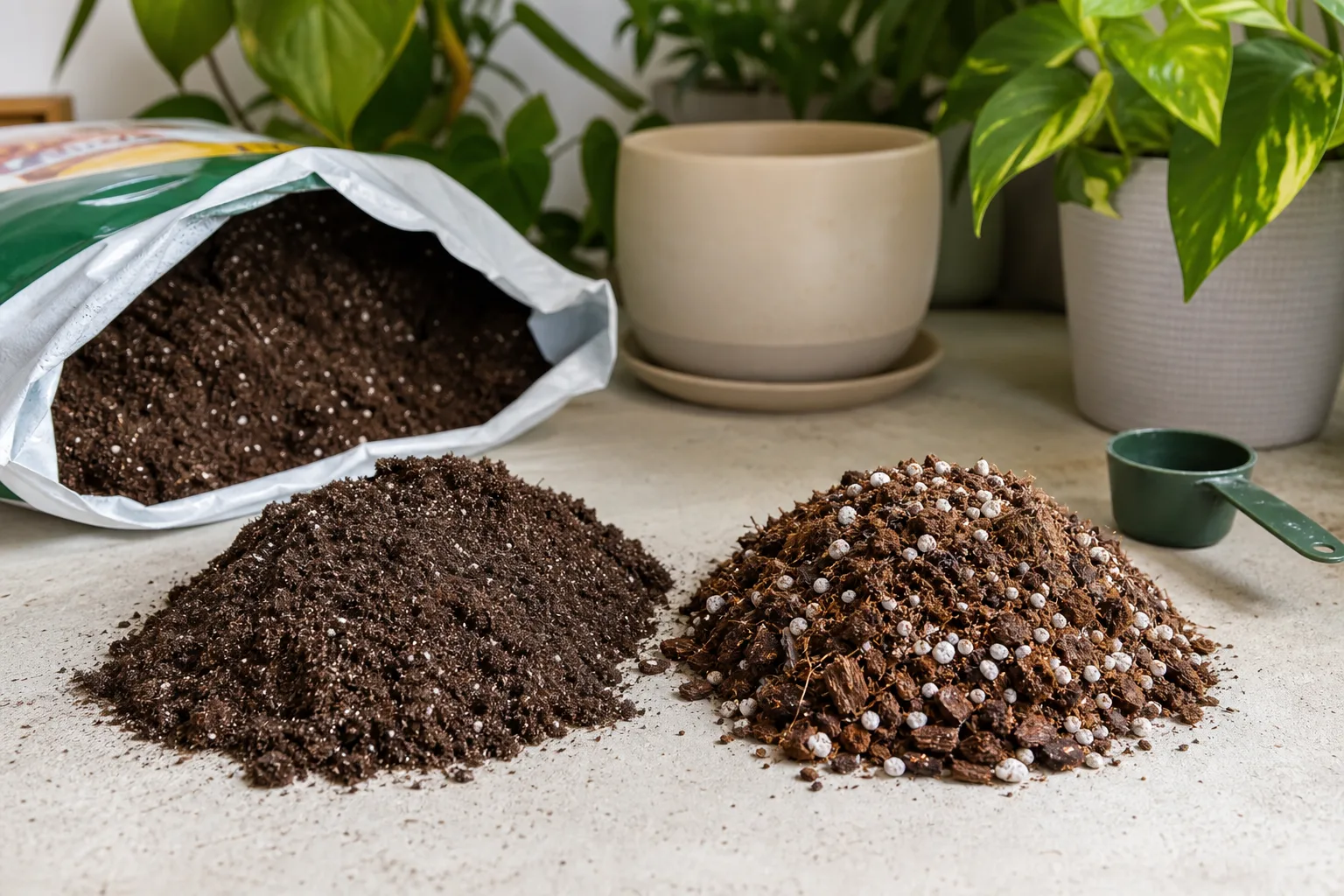
Use a container with several open drainage holes and a saucer that can be emptied. A kumquat needs moisture, but its roots also need air; a blocked hole or a pot left in runoff can keep the lower mix wet long after the surface looks dry. A heavy clay pot is stable and dries faster, while plastic is lighter and holds moisture longer, so account for the material when you check the mix.
Choose a free-draining citrus or container fruit-tree mix. The RHS recommends a loam-based citrus compost for protected growing, while a well-made citrus blend or a quality potting mix amended with coarse bark or perlite can work if it drains evenly. Avoid dense garden soil in a pot; it can compact and stay wet around roots. Do not add a gravel layer at the bottom as a substitute for drainage holes—the container needs an unobstructed route for excess water to leave.
Plant at the same depth as before and keep the trunk and graft union above the mix. After watering, let the pot drain fully and empty any saucer. The surface should not crust into a hard layer or pull away from the pot wall; if it does, the mix may be old, compacted, or difficult to rewet evenly.
Repot modestly when roots need more room
Do not repot simply because the calendar says it is time. Check the drainage holes and, when practical, slide the root ball out to see whether roots have formed a dense mat around the outside. Roots circling tightly, water rushing through without wetting the mix, or a plant drying unusually fast can indicate that it needs fresh mix or a slightly larger container.
Move up only one pot size at a time, using a container just wider than the existing root ball. An oversized pot can hold wet mix beyond the reach of the roots, especially during a dim winter. Spring or early active growth is usually the least disruptive time to repot; avoid combining a major root disturbance with a hard prune and an indoor-to-outdoor move in the same week.
Water and feed according to growth
Water when the top layer has begun to dry and the mix below is approaching dry, then soak the root ball until water drains from the base. The exact interval changes with pot size, light, wind, temperature, and season, so “once a week” is not a reliable rule. A finger check below the surface and the pot’s weight are more useful: a light container with dry mix needs water, while a heavy pot with damp mix should wait.
In warm weather, a tree in active growth may use water quickly; in a cool winter room, the same pot can remain moist for much longer. The RHS advises allowing the surface to partially dry in winter before watering and never leaving citrus pots standing in water. If leaves yellow while the lower mix stays wet, check drainage and roots before adding fertilizer; if leaves wilt and the root ball is dry, water thoroughly rather than giving repeated small splashes.
Feed during active growth with a fertilizer formulated for citrus, following its label for rate and frequency. A product that supplies micronutrients can be useful for container citrus, but more is not better: a salt crust on the mix or brown leaf edges can signal excess fertilizer or hard-water mineral buildup. The UC Statewide IPM Program’s citrus cultural guidance emphasizes balanced care and correct timing; reduce feeding when cool conditions slow new growth rather than pushing tender growth through winter.
Pollinate flowers and set a realistic crop
Kumquat flowers are self-fertile, so one healthy tree can produce fruit; you do not need to buy a second tree for pollination. Outdoors, insects and air movement help transfer pollen. Indoors, a brush can help if the room is still and flowers are open, but hand pollination is an aid, not a cure for a dim room, drought, or root stress. The RHS citrus guidance confirms that citrus is self-fertile and explains how humidity and indoor conditions influence pollination.
To help indoors, touch the center of an open flower with a small, clean, dry, soft brush, then move to another open flower. Repeat gently across several blooms while they are fresh; avoid brushing unopened buds or rubbing hard enough to damage the delicate flower. A gentle fan elsewhere in the room can improve air movement, but keep it from blasting the foliage or drying the plant. Savvy Gardening’s practical container-citrus routine also recommends moving pollen between open flowers indoors; for a self-fertile kumquat, treat that as a helpful experiment when fruit set is poor, not a required chore.
A healthy kumquat may set more fruit than it can carry, and some small fruit will naturally drop. Unlike many larger citrus fruits, kumquats can often carry a heavy crop without routine thinning, according to the RHS. If nearly every flower or tiny fruit falls, review the last few weeks: did the tree dry out during bloom, move suddenly, sit in a chilly draft, lose light, or develop pests? Correct the stress and wait for the next bloom rather than adding extra fertilizer or watering every day.
Prune without removing next season’s fruiting growth
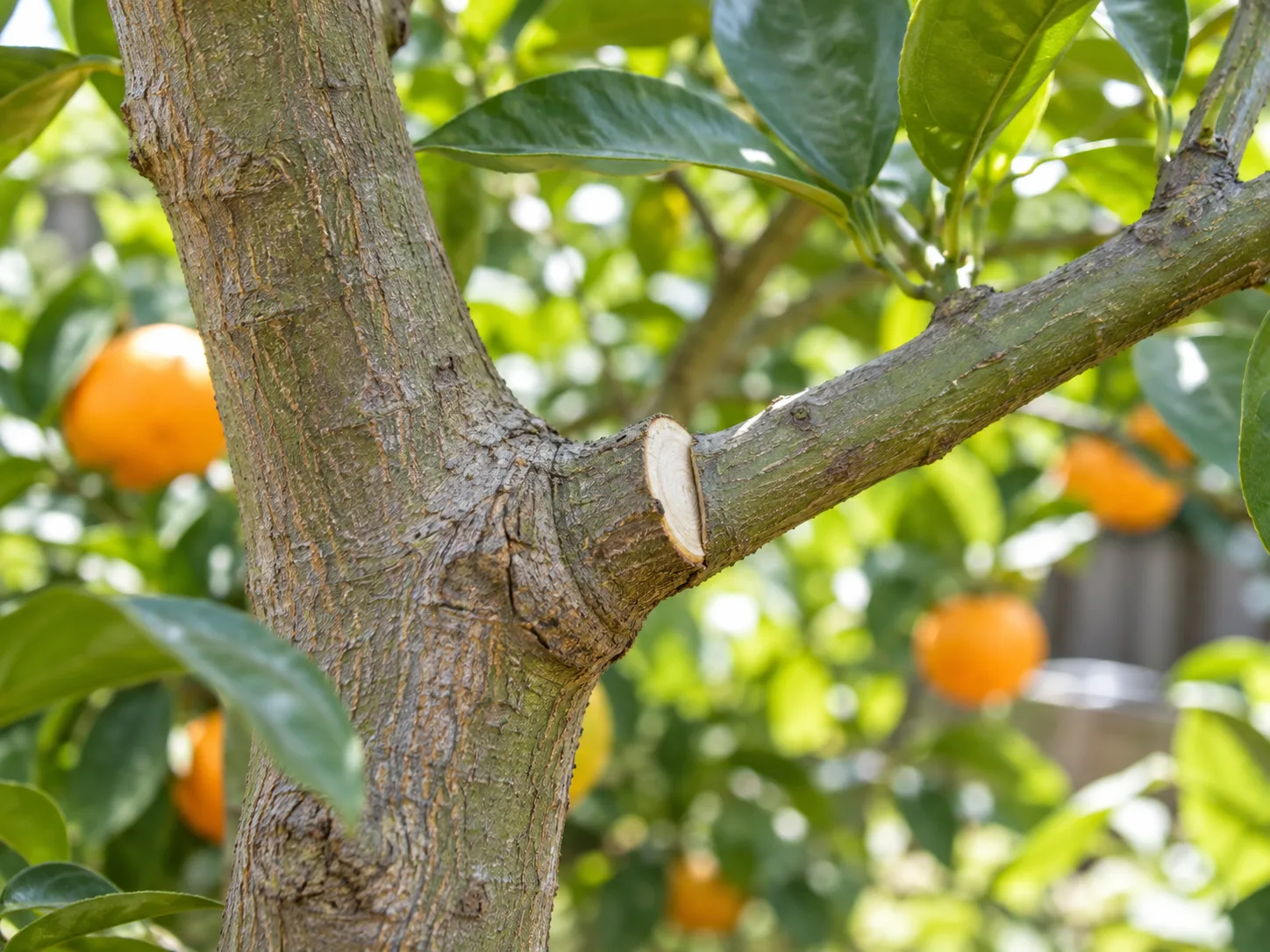
Keep pruning light and purposeful. Remove dead, damaged, crossing, or inward-growing branches, and cut away shoots that emerge below the graft union because they belong to the rootstock rather than the selected kumquat. Use clean, sharp pruners and make each cut just outside the branch collar; do not shear the whole canopy into a tight ball.
A severe haircut can remove leaves that supply energy and the young shoots where flowers may form. The RHS notes that citrus flowers develop on the tips of new side shoots and warns that over-pruning can reduce fruiting. Shape the tree after harvest or before a major growth flush, and shorten only the branches that interfere with light, access, or balance. If it is too large to move, a few measured cuts will not solve the root problem; plan a stable winter spot and a manageable container instead.
Check for pests before and after seasonal moves
Indoor kumquats can attract scale insects, aphids, mealybugs, and spider mites, especially when warm, dry air and crowded foliage make inspection difficult. Look on leaf undersides and along stems for small bumps, cottony deposits, webbing, sticky honeydew, or pale stippling. The RHS kumquat profile lists scale, aphids, mealybugs, and red spider mite among pests to watch for under glass, and UC IPM’s citrus cultural guidance recommends monitoring rather than assuming every yellow leaf is a disease.
Isolate a plant with an active infestation while you identify the pest. For a small outbreak, remove visible insects with a damp cloth or rinse the canopy, then recheck new growth every few days. If you use insecticidal soap or horticultural oil, use a product labeled for the plant and pest, follow its directions, and test a small area first; do not apply oil to a heat-stressed tree or in strong sun. Repeated spraying without identifying the pest can damage leaves and will not correct poor growing conditions.
Harvest ripe kumquats and store them
Kumquat fruit can take months to mature, and the season varies with cultivar, climate, and whether the tree spends much of the year indoors. Do not harvest just because the fruit has reached a particular month or because a few fruits on another kumquat have changed color. Wait until a representative fruit reaches its cultivar’s mature size and deep orange color, then taste it; the rind should be aromatic and sweet, while the pulp stays tart.
Cut the fruit with small pruners or scissors, leaving a short stem, instead of pulling and tearing the branch. Citrus fruit generally does not become sweeter after it is picked, so if a test fruit tastes underdeveloped, leave the rest on the tree and recheck later. The RHS harvest guidance notes that citrus ripens slowly and recommends cutting ripe fruit rather than pulling it; Epic Gardening also describes the usual deep orange color as a maturity cue for kumquats.
Kumquats are at their best soon after harvest. Refrigerate a clean, dry crop if you will not use it promptly, and discard fruit that is split, moldy, or damaged. For a small indoor tree, think of the harvest as a succession of snacks and kitchen additions rather than a large basket all at once. You can eat the fruit whole, slice it into salads, candy it, or cook it into marmalade; if the peel is bitter or the pulp too sharp, let the next fruits mature longer before picking.
Conclusion
Kumquat is one of the more practical citrus trees for container growing because it stays relatively compact, tolerates a cool protected winter, and produces small fruits that are eaten whole. It still needs more light than most houseplants, a free-draining mix, careful seasonal transitions, and time for fruit to mature; indoors, those conditions matter more than misting or a rigid watering schedule.
Choose a named grafted tree, give it the brightest position you can manage, and move it outside gradually when nights are mild. Bring it back before cold becomes a test, check for pests at both transitions, and judge ripeness by the fruit itself. With steady care and realistic expectations, a kumquat can reward a bright home with fragrant flowers and a modest, distinctive harvest.