How to Grow and Care for Cordyline (Ti Plant)
Grow cordyline (ti plant) with brighter leaves and fewer brown tips. Get useful indoor care, watering, pruning, propagation, and cold-weather guidance.
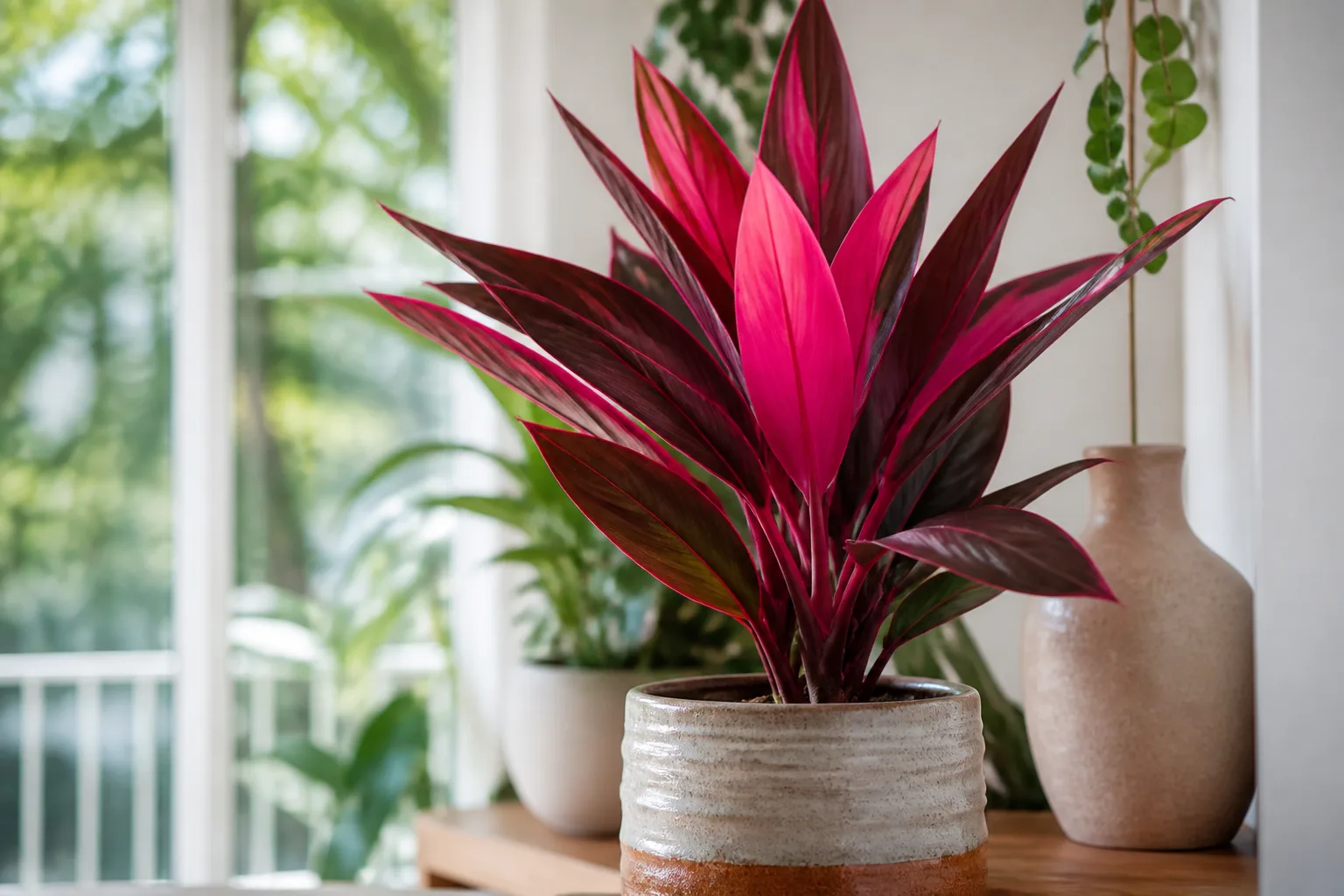
The colorful plant sold as Hawaiian ti or good-luck plant is usually Cordyline fruticosa, a tropical evergreen that can live indoors year-round or spend warm months outside. The basics are simple—bright filtered light, a pot that drains, steady warmth, and watering guided by the soil—but the details matter: a plant that looks like a tiny palm can be mistaken for a different cordyline, and brown leaf edges can point to water chemistry rather than thirst.
Start by checking the plant label and the room where it will live. If you have C. fruticosa, treat it as a warm-climate foliage plant rather than a cold-hardy shrub; if the label says C. australis, the outdoor limits and mature form are different. The recommendations below focus on ti plant indoors, then explain when outdoor growing makes sense.
Cordyline care at a glance
| Care factor | Practical starting point | What to adjust |
|---|---|---|
| Light | Bright, indirect light near an east- or west-facing window | More light if new leaves stretch or color fades; less direct sun if leaves bleach or scorch |
| Water | Soak when the upper layer of mix has dried slightly | Water less when growth and daylight slow; never leave the pot standing in runoff |
| Potting mix | Airy, fertile mix that drains freely | Replace compacted or persistently wet mix; use a pot with open drainage holes |
| Temperature | Warm, stable room conditions; protect from cold drafts | Move away from chilly glass, air-conditioning, and heating vents |
| Feeding | Dilute balanced fertilizer during active spring and summer growth | Skip feeding in dim, cool months and after a stressed plant until growth resumes |
| Outdoor use | Seasonal patio or garden placement after nights are warm | Bring the tender ti plant inside before cold nights; regional hardiness references differ |
These are starting points, not a calendar. A small pot in a warm sunny room dries faster than a large pot in a cool corner, and a variegated cultivar may need brighter filtered light to hold its pattern. For a cultivar-focused care profile, see our ti plant guide; this page focuses on recognizing the plant and making indoor care decisions.
Confirm which cordyline you have
“Cordyline” is a genus, not one single care profile. The tropical ti plant most often sold as a houseplant is Cordyline fruticosa, sometimes labeled with the older botanical name Cordyline terminalis. It has a cane-like stem topped with long, often colorful leaves. Common names such as ti, Hawaiian ti, good-luck plant, cabbage tree, and cabbage palm are used inconsistently by nurseries, so a common name alone can be misleading.
Ti plant versus cabbage tree
The most useful distinction for home growers is between C. fruticosa and C. australis. The ti plant is a tender tropical foliage shrub; C. australis, often called cabbage tree or cabbage palm, is a different species with a more tree-like mature form and better cold tolerance in some regions. The Royal Horticultural Society’s cordyline growing guide specifically identifies C. fruticosa as tender and advises bringing it indoors or into a heated greenhouse for winter, while its guidance treats C. australis as the hardier form.
Do not use a C. australis outdoor survival story to decide whether a ti plant can stay in a frosty bed. If the label is missing, look for a species name on the pot tag or ask the nursery before planting outdoors. NC State notes that ti plants are sometimes confused with dracaenas; one useful clue is that cordyline leaves have a grooved petiole, while dracaena leaves lack one, and cordyline roots are typically white rather than orange or yellow. Those clues help when repotting, but a label is better than diagnosing a plant by one trait.
Place it in bright, indirect light
Light affects both growth shape and foliage color. Put an indoor ti plant where the room is bright for much of the day, ideally close to an east- or west-facing window; a bright south window can work if a sheer curtain softens midday sun. The plant should not be tucked several feet back in a dim room simply because its leaves look tropical. NC State Extension recommends bright indirect light to maintain vivid foliage, and UF/IFAS describes ti as suitable for a bright indoor location.
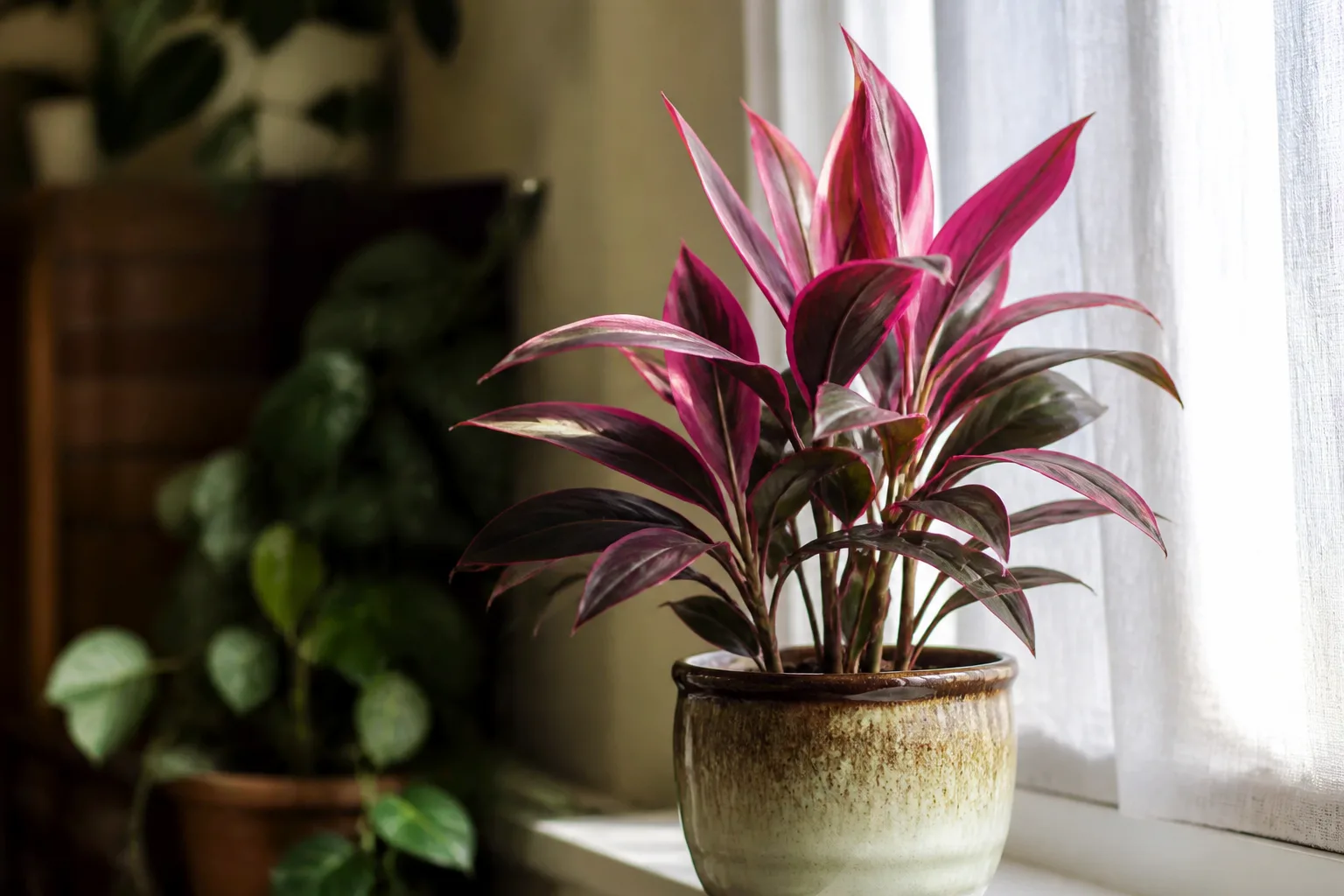
Use the newest growth as your guide. Long gaps between leaves, smaller leaves, or a plant leaning toward the glass suggest that it needs more usable light; move it closer in stages or add a grow light rather than jumping from a dark corner into hours of hot sun. Pale, dry patches on the window-facing leaves point to excessive direct exposure or a sudden change, so pull the plant back behind a sheer curtain and let it acclimate.
Outside, colorful cultivars usually look best with morning sun or dappled shade and protection from harsh afternoon rays. A ti plant that spent winter indoors needs gradual acclimation: begin in full shade outdoors, then add a little morning light over several days. That prevents leaf scorch and makes the plant less likely to suffer a second shock from wind or temperature.
Water thoroughly, then let the topsoil cue you
Ti plants like moisture around their roots, but “moist” does not mean permanently wet. Press a finger into the top inch of mix; when that layer feels dry and the pot is lighter, water slowly until excess runs from the drainage holes. Empty the saucer or outer cachepot after the pot has drained. If the mix is still cool and damp, wait and check again in a day or two instead of following a weekly schedule.
Adjust the interval to the conditions. In brighter, warmer months, a plant may use water quickly; in winter, shorter days and slower growth usually mean longer gaps between waterings. A small plant in a large pot can stay wet for too long because its roots cannot use all the soil volume, while a root-bound plant in a tiny pot may dry out rapidly. If the root ball is wet below but dry on top, water more slowly in two passes so the mix has time to absorb it.
If a pot stays wet for many days, check the drainage hole and the mix before withholding water indefinitely. Compact soil, a blocked hole, or an oversized container can keep roots oxygen-starved even when the surface looks dry. Soft stems, a sour smell, or mushy dark roots are reasons to inspect and repot into fresh airy mix; simply watering less will not repair roots that have already rotted.
Read brown tips before changing the routine
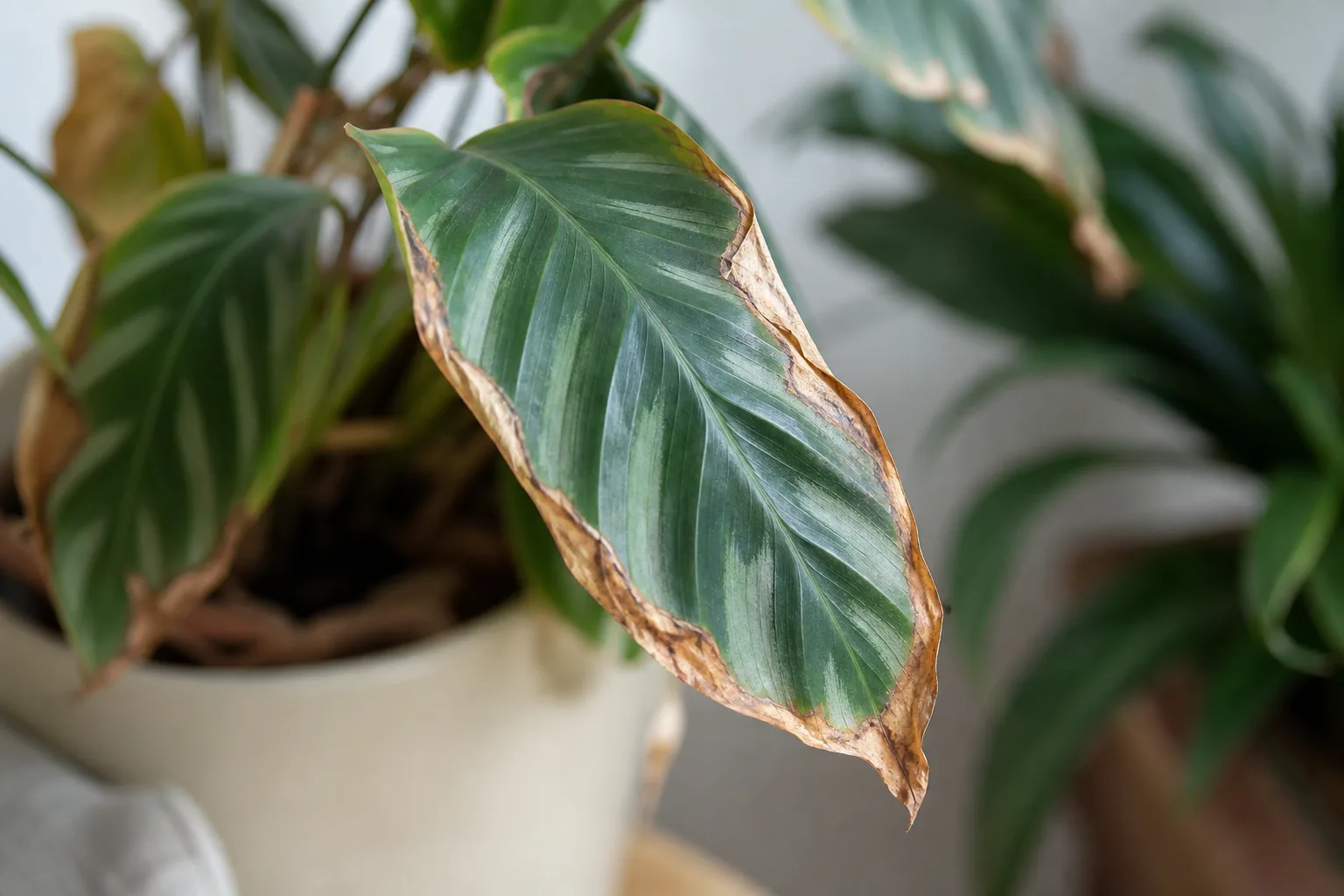
Brown tips are a symptom, not a diagnosis. On ti plants, fluoride sensitivity is a real possibility: Penn State Extension reports that excess fluoride can brown and kill leaf tips and margins, and recommends water below 0.25 parts per million fluoride along with suitable soil conditions. Dry air, inconsistent watering, fertilizer salts, and sun scorch can produce similar-looking damage, so change one variable at a time and judge the result by the next leaves.
Try a four- to six-week water-quality test if several new leaves develop dry edges while watering and drainage seem consistent. Use rainwater collected in a clean container, reverse-osmosis water, or distilled water, then compare new growth; letting tap water stand may reduce free chlorine, but it does not remove fluoride or dissolved salts. If only the ti plant reacts and a second plant watered from the same source does not, that supports—but does not prove—a species sensitivity. Brown tissue already present will not turn green again.
Use an airy mix and a pot with drainage
Choose a commercially prepared, peat-free houseplant mix or a quality potting mix with enough coarse material to keep it from packing into a dense, waterlogged mass. A small amount of bark or another drainage amendment can help when your mix dries slowly, but the pot itself matters just as much: it must have unobstructed drainage holes. Do not add a layer of stones at the bottom as a substitute; water still needs a clear route out of the container.
For fluoride-prone ti plants, potting ingredients are part of the equation. Penn State’s ti-plant disease guidance advises growers to avoid perlite and superphosphate when managing fluoride toxicity, and to maintain a soil pH between 6.0 and 6.5. That advice is especially relevant when tip burn keeps appearing despite filtered water; it is not a reason to disturb a healthy plant just because its current mix contains perlite. The practical test is whether new leaves continue to burn under otherwise stable care.
Repot when roots circle densely, emerge from the drainage holes, or the plant dries out so fast that regular watering becomes difficult. Move up only one pot size and keep the crown at the same soil level. A tall ti plant can become top-heavy, so a broad, heavy container is safer than a narrow decorative pot; set a nursery pot inside a cachepot only if you can remove it and empty runoff each time.
Hold warmth steady; add humidity only when useful
Ti plant is tropical and dislikes cold swings. NC State Extension gives an ideal range of about 65–95°F and warns that the plant does not tolerate sustained temperatures below 50°F. Indoors, keep it away from drafty doors, uninsulated winter windows, air-conditioning blasts, and heating vents. A sudden wave of leaf drop after a move often reflects combined light and temperature shock, not a need for extra fertilizer.
Humidity can help prevent dry margins, but it is not a replacement for sound watering or good water quality. If the room is very dry in winter and the leaves keep crisping, group plants together or use a small room humidifier; a pebble tray makes only a modest local difference and the pot must sit above, not in, the water. Misting leaves rarely maintains a stable humidity level and can leave foliage wet for longer in a cool room, which is unhelpful when leaf spots are present.
Feed lightly during active growth
Fertilizer supports new foliage; it cannot replace light. During spring and summer, use a balanced liquid houseplant fertilizer at the label’s recommended rate or a more dilute rate if the plant is growing slowly. Apply it to already-moist soil rather than a bone-dry root ball, and stop feeding when growth slows in fall and winter. Excess salts can burn roots and tips, which makes an overfed plant look as if it has a water problem.
If a white crust forms on the soil or pot rim, pause feeding and flush the mix thoroughly with low-mineral water, allowing it to drain completely. Do not immediately add fertilizer to correct pale color; first check light, roots, and whether the plant is producing new leaves. The practical care overview from Epic Gardening also places feeding in the warm growing season, but plant response and the fertilizer label should guide the dose.
Keep the cane compact with measured pruning
As ti plants grow, older leaves naturally yellow and fall from the lower cane. Remove fully yellow or dry leaves with clean pruners, but do not strip green leaves just to make the plant look like a palm. If the main stem is too tall or bare, cut it in spring or early summer when warmth and light support regrowth. A cut below the top can encourage shoots from lower nodes; cutting at different heights can create a fuller silhouette than lopping every cane to the same level.
Before making a large cut, decide what form you want and whether the remaining plant will have enough leaves to keep growing. Use a sharp blade, disinfect it between plants, and keep sap away from sensitive skin. New shoots do not appear on an exact schedule, and a stressed plant in a cold, dim room may respond slowly, so stabilize conditions before pruning rather than cutting in the middle of a decline.
Propagate with cane sections or a leafy tip
Propagation is useful when a cane has become too tall or when you want a backup plant. Choose a firm, healthy stem and take cuttings during active growth with a clean blade. A leafy top cutting gives you a plant that already has a crown; a bare cane section can produce one or more shoots but takes longer to look like a finished plant. Keep each piece warm in bright indirect light and keep its rooting medium lightly moist, never saturated.
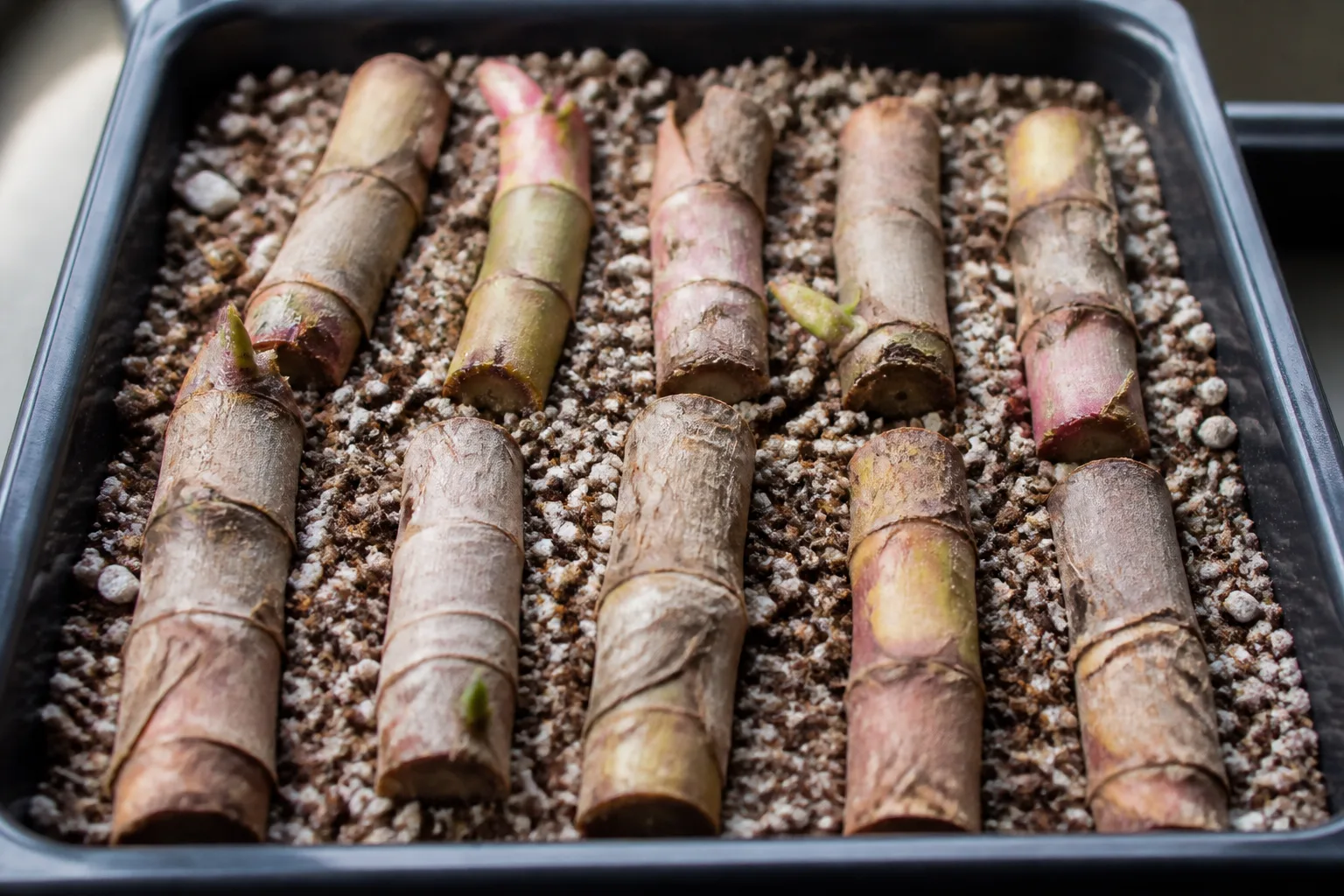
For a tip cutting, retain a tuft of healthy leaves and several inches of stem, then insert the bare end into a small pot of airy propagation mix. For a cane log, cut the stem into short sections, preserve their original top-to-bottom orientation if you stand them upright, and keep a bud or node near the surface. The RHS guide recommends stem sections that include a bud and are inserted horizontally with the growth bud just visible; its advice is a useful way to avoid burying the point where a shoot needs to emerge.
Choose the method that fits the cutting
Use a leafy tip when the parent plant is tall and you want a recognizable young plant quickly. Use cane sections when you are shortening a bare stem or have a purchased ti log. Rooting in water can be convenient for a tip cutting, but the transition from water roots to potting mix can be rough if you leave the roots to grow long and fragile; pot up once a small, healthy root system has formed. Seeds are possible after flowering, but seedlings may not retain the parent cultivar’s foliage pattern.
Do not keep checking by pulling the cutting from its mix. A gentle tug can break new roots; instead, watch for fresh growth and stable resistance after several weeks. Once the new plant is actively growing, acclimate it to its final light level over a few days and resume dilute feeding only after it has settled.
Move cordyline outdoors only when nights are warm
In frost-free climates, ti plants can grow as landscape shrubs or container specimens. Extension references do not give one perfectly uniform hardiness boundary: NC State Extension lists zones 10–12, while UF/IFAS gives a broader 9B–11B range. Those ranges reflect regional growing conditions and do not guarantee that a potted or exposed ti plant will survive a cold snap. If winter temperatures approach freezing where you live, a movable container is the more reliable choice.
Wait until nights remain warm before moving a houseplant outdoors, then start it in shade and increase morning light gradually. Protect it from strong wind, which can shred long leaves, and avoid exposed salty coastal sites because UF/IFAS rates the plant’s salt tolerance as poor. In the ground, choose fertile soil that drains well; in a container, place it near a sheltered wall where you can move it before a cold forecast.
The RHS recommends winter protection for cordylines and specifically says tender C. fruticosa should be brought indoors or into a heated greenhouse. Tie foliage only when needed to reduce wind or water collecting at the crown, and do it when leaves are dry; a tight, wet bundle can trap moisture. When nights begin approaching 50°F, bring a potted ti plant inside rather than testing its cold limit.
Spot pests and diseases early
Inspect the undersides of leaves, the folds where leaves meet the cane, and the soil surface when you water. NC State lists scale, aphids, spider mites, fungus gnats, thrips, and mealybugs among pests to monitor. Sticky residue, cottony clusters, fine webbing, or tiny moving specks are stronger evidence of a pest than a single yellow leaf. Isolate a new or infested plant, rinse foliage if appropriate, and use any insecticidal soap only according to its product label; test sensitive leaves first.
Disease patterns tend to spread or look wet rather than simply dry at the edge. Penn State describes bacterial leaf spot and stem rot as wet, slimy foliage or stems, and Fusarium problems as distinctive spots or lower-leaf decline with damaged roots. Avoid overhead watering, improve spacing and airflow, and remove badly affected leaves with clean tools. If the stem base is soft or the crown smells rotten, isolate the plant and inspect the roots; pesticide or fungicide use should follow a diagnosis and the label, not a guess.
Troubleshoot the pattern, not one leaf
One aging lower leaf is normal; a repeated pattern across new growth means the environment needs attention. Use the position and texture of the damage to choose the first check, then change one condition for several weeks so you can tell whether the plant responds.
| What you see | First check | Useful next step |
|---|---|---|
| Brown tips or narrow dry margins on several leaves | Water source, fertilizer crust, and room humidity | Trial low-fluoride water, pause fertilizer if salts are visible, then improve humidity if needed |
| Bleached or crisp patches mostly on the window side | Direct sun or a recent move outside | Filter the light and reacclimate gradually |
| Yellowing lower leaves plus wet soil | Drainage and root condition | Empty standing water; inspect roots if stems soften or soil smells sour |
| Small spots with halos, especially on young leaves | Wet foliage, airflow, and spread to nearby leaves | Keep leaves dry, isolate the plant, and remove infected tissue with clean tools |
| Pale, stretched new growth | Light level | Move closer to a bright window or add a grow light before increasing fertilizer |
| Sudden leaf drop after a room change | Cold draft, temperature swing, or abrupt light shift | Return to stable warmth and filtered light; wait for new growth before feeding |
The Penn State disease guide is especially helpful when you see spots or crown damage, while NC State’s cultural guidance is a better first stop for ordinary indoor care. A useful recovery order is to check warmth and drainage first, then light, water quality, and humidity. Avoid repotting, fertilizing, pruning, and moving the plant all at once; if the plant improves, you will not know which change mattered, and if it worsens, you will have added more stress.
Keep ti plants away from pets that chew leaves
The ASPCA lists ti plant as toxic to cats and dogs, with saponins identified as the toxic principle. NC State also lists horses and notes that handling can irritate sensitive skin. Place the pot where animals cannot nibble it, remove fallen leaves, and wash hands after pruning if sap irritates you.
If a pet may have eaten ti leaves, contact a veterinarian or an animal poison-control service promptly and share the plant’s botanical name. Do not wait for symptoms or try to induce vomiting at home. The ASPCA notes signs can include vomiting, loss of appetite, and depression; professional advice is safer than estimating risk from the amount of leaf missing.
Conclusion
For a healthy ti plant, match the care to the species and the season: give Cordyline fruticosa bright filtered light, water when the top layer begins to dry, and use a freely draining potting mix. When tips brown, investigate water quality, salts, humidity, and sun exposure instead of assuming the plant is thirsty; when growth stretches, improve light before feeding. Keep it warm, prune leggy canes during active growth, and move it outdoors only after cold nights have passed. In a frost-prone climate, a container lets you keep the colorful plant without gambling on its cold tolerance.



