4 Natural Ways to Get Rid of Mice in Your Home
Get rid of mice naturally with a four-part plan: remove food and shelter, seal entry gaps, place snap traps safely, and clean droppings without stirring dust.

Finding a dropping under the sink or hearing movement behind a cabinet calls for two jobs: stop attracting mice and deal with the ones already inside. If by “natural” you mean controlling mice without rodenticide, the dependable tools are ordinary but effective: sanitation, habitat reduction, durable exclusion, and mechanical traps. Scented cotton balls are not a substitute for closing an entrance.
Start with fresh evidence, not guesses. Look for new droppings, gnawing, shredded nesting material, or damaged food packages; the EPA’s rodent-identification guide lists these as signs to check. If the evidence seems larger than mouse-sized or you cannot distinguish mice from rats, use a professional to identify the animal before buying mouse-size traps. Rat and mouse control equipment is not interchangeable.
What “natural mouse control” means—and what it doesn’t
“Natural” is not a precise pest-control label. Here it means a poison-free plan built around changing access to food and shelter, closing routes into the building, and catching mice that are already there. A snap trap is a mechanical control rather than a repellent, but it can be part of this approach because it does not leave rodenticide bait in the home.
No single step is a cure. Cleaning alone rarely eliminates house mice because they can persist on small amounts of food and find shelter in wall voids; UC IPM’s house-mouse guidance says sanitation works best alongside exclusion and, when mice are present, population reduction. In practical terms, remove easy resources while you inspect and seal openings, then use traps to address any animals that remain indoors.
This sequence also prevents a common mistake: sealing a visible gap and assuming the problem is over. A mouse may already be nesting inside a wall or cabinet, and a different gap may remain open. Keep checking for fresh evidence after the repairs. If activity continues, widen the inspection or call for help rather than escalating to a stronger-smelling “natural” product.
1. Remove food and water mice can reach
Mice do not need a pantry full of food to stay. Crumbs beneath an appliance, an open bag of pet kibble, or a small spill in a cupboard can make a route worth revisiting. The goal is not to make a lived-in home sterile; it is to stop leaving reliable food where mice can reach it overnight.
Lock away pantry food, pet food, and crumbs

Move grains, cereal, dry pasta, nuts, birdseed, and pet food from thin bags or cardboard boxes into containers with tight-fitting lids. Glass or sturdy hard-sided containers are useful because mice cannot chew through them as they can through flexible packaging. Check the pantry corners and the backs of lower cabinets for damaged packages, then discard anything that has been gnawed or contaminated rather than transferring it into a clean container.
Wipe crumbs and spills promptly, including under the toaster, stove, and refrigerator where food debris collects out of sight. Empty kitchen garbage into a bin with a close-fitting lid and take it out regularly. Feed pets at set mealtimes, pick up what they do not eat, and store the remainder sealed; EPA’s household pest guidance specifically recommends keeping food scraps sealed and not leaving pet food out overnight.
These steps lower the payoff for entering, but do not expect them to make a mouse leave a nest. A tidy kitchen can still have an entry gap, and a mouse can forage in a neighboring room or wall void. Pair the cleanup with a deliberate inspection and trapping plan.
Remove easy food and water outside
A house can be the end of a short route from a sheltered yard. Keep garbage lids closed, clean up spilled birdseed, and avoid leaving pet food outdoors overnight. If you feed birds, pause while you are actively controlling mice or choose a setup and seed that leaves less food on the ground; the EPA advises stopping outdoor feeding during control or using huskless seed that leaves less residue.
Fix dripping faucets and leaking hoses near doors or foundations, and empty containers that collect water. Water is not always the reason mice enter, but a leak or consistently full pet bowl adds another resource. Compost can remain part of a garden, but cover new scraps and use a rodent-resistant bin or enclosure where mice are active. Do not dump food scraps in an open pile beside the house while trying to make the area less attractive.
2. Reduce shelter near the house

Food is only part of the invitation. Mice also use dense, undisturbed cover to travel and nest, especially beside a wall where a quick dash into a gap is easy. Reducing clutter outdoors makes inspection easier and removes some sheltered staging areas; it does not require stripping the yard or removing every shrub.
Clear the hiding places that touch the foundation
Move firewood, boards, bags of soil, unused pots, and storage bins away from exterior walls so you can see the foundation and the lower siding. Keep firewood raised and away from the house, and break down cardboard or other clutter stored in garages and basements. Trim ivy and dense groundcover that press against the building or hide the seam where siding meets masonry.
A clear inspection strip is more useful than chasing an arbitrary distance. The point is to make gaps visible, reduce sheltered pathways right against the building, and keep stored materials from touching doors, vents, or siding. If you cannot move heavy wood or a shed, clear the area you can reach and focus on sealing the structure and trapping activity inside.
Keep stored supplies and landscaping inspectable
In garages, basements, and sheds, store seed, grass seed, pet food, and other chewable supplies in sturdy lidded containers. Keep boxes off the floor when practical and avoid tightly packed stacks that hide droppings or gnaw marks. Do not store nesting material such as fabric, paper, or foam directly against a wall if mice have been active there.
Before bringing firewood, holiday decorations, or garden supplies indoors, inspect the container or bundle for droppings and shredded material. If a shed or detached garage has extensive signs, treat it as part of the control area: reduce accessible food and clutter, check how mice are getting in, and use traps only where children, pets, and wildlife cannot reach them. Outdoor cleanup helps prevention; it will not remove a mouse already nesting in the house.
3. Seal entry points with chew-resistant materials
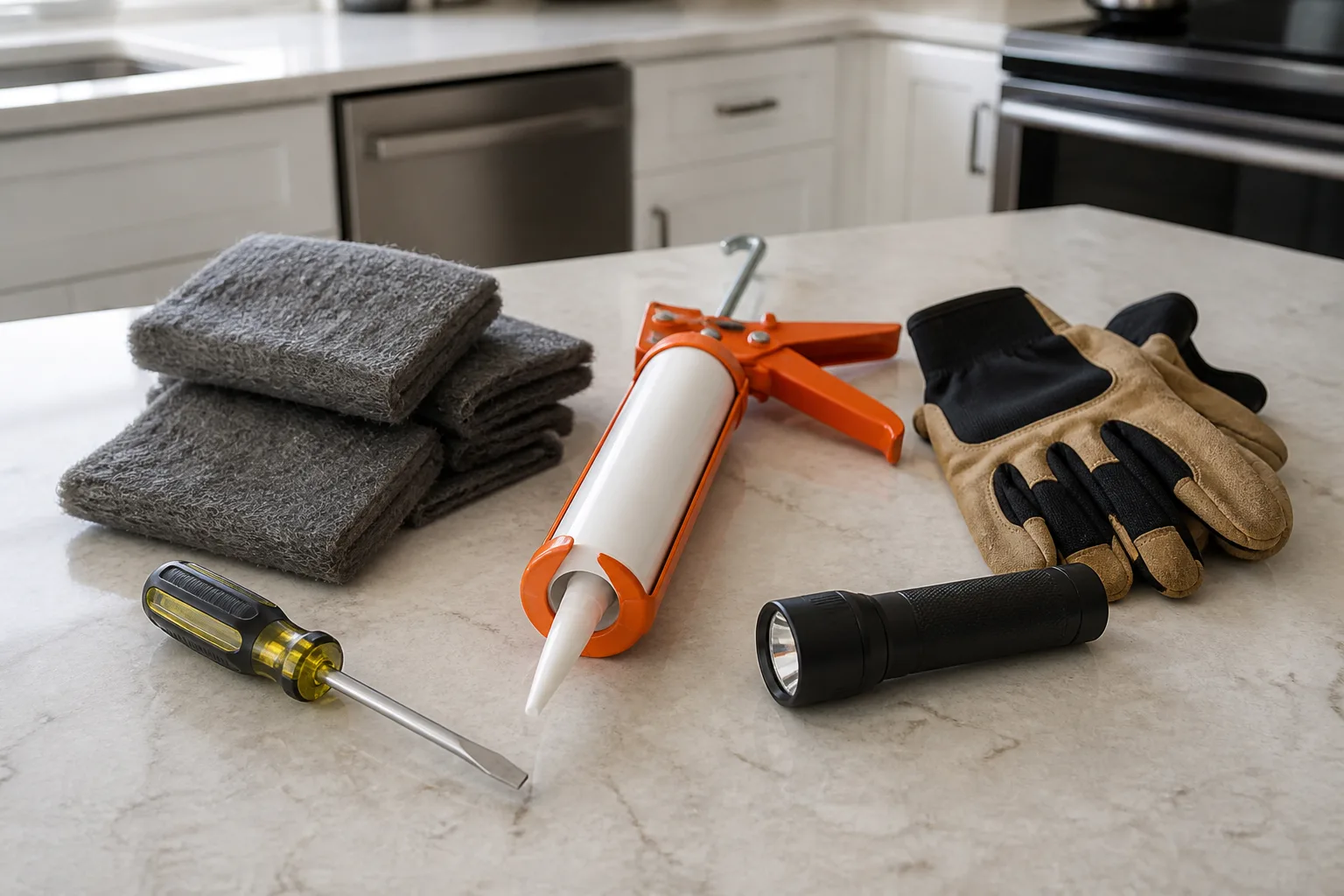
Exclusion is the lasting part of a mouse-control plan. House mice can pass through an opening about 1/4 inch wide, roughly the width of a pencil, so inspect small gaps as well as obvious holes. UC IPM identifies exclusion as the most successful and permanent form of house-mouse control, while warning that foam, plastic, rubber, and wood alone are materials mice can gnaw through.
Inspect the routes mice use most
Walk the outside of the home in daylight and look at the foundation, corners, garage door, siding transitions, roofline, vents, and the places pipes, cables, and utility lines pass through walls. From indoors, check beneath sinks, behind appliances, inside lower cabinets, around radiator or plumbing penetrations, and where the garage meets the house. A flashlight helps reveal daylight at door edges and small openings behind stored objects.
Look for a combination of clues: a gap, rub marks or gnawing at its edge, droppings nearby, and a protected route along a wall. One clue alone can mislead. If you hear movement in a ceiling or wall but cannot safely reach the likely opening, do not climb onto a roof or squeeze into an unsafe crawlspace; a pest professional or qualified contractor can inspect without creating a fall or electrical hazard.
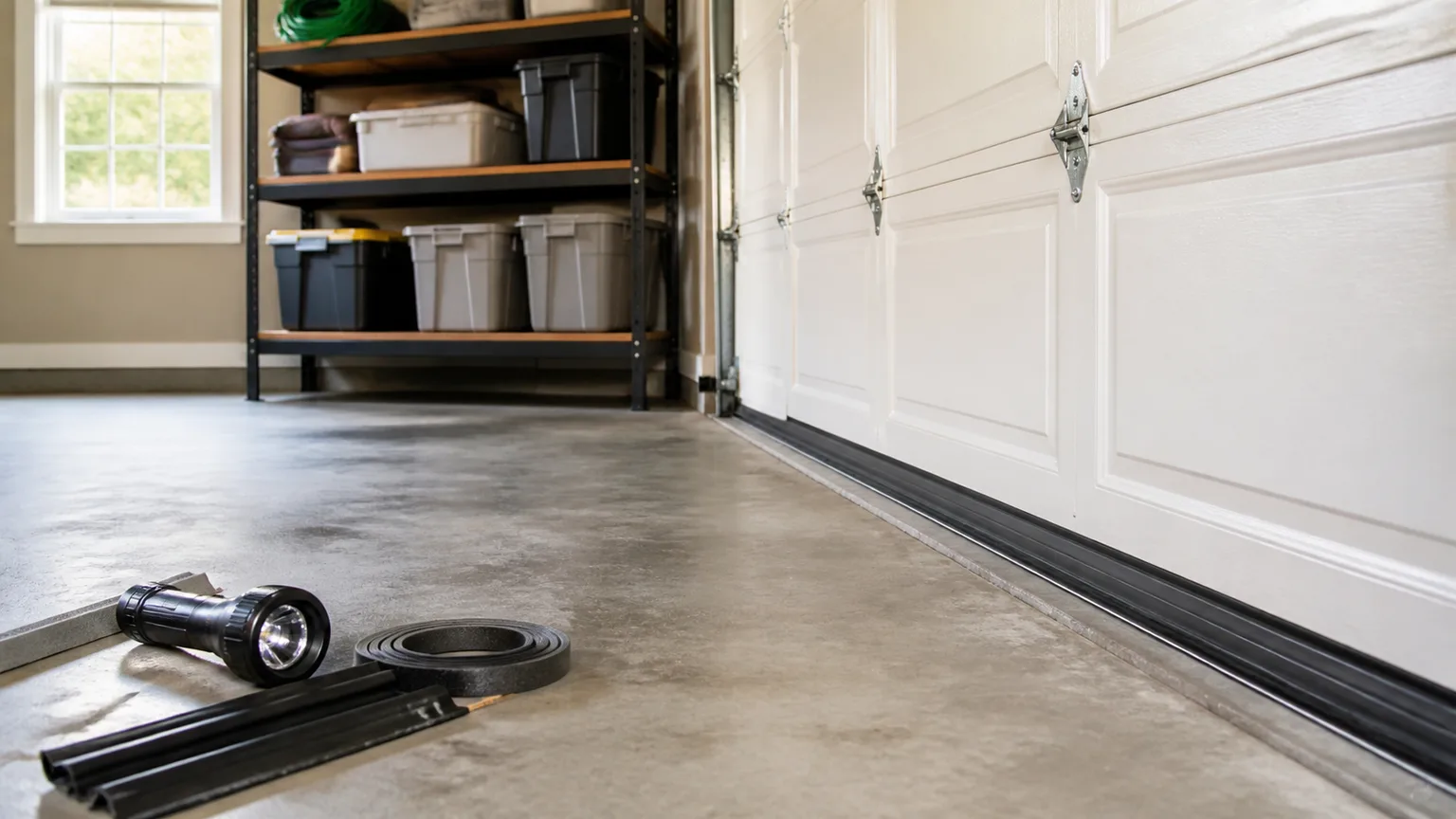
Pay attention to door bottoms and garage corners, where a damaged sweep can leave a narrow route. Check vent screens and utility openings without blocking required ventilation. The goal is to close rodent access while keeping drains, exhaust vents, and building systems functioning as designed.
Match the repair to the size and location of the gap
For a small gap, pack it with coarse steel wool or corrosion-resistant metal mesh and secure it with an appropriate sealant or repair material. For a larger opening, fasten metal hardware cloth or sheet metal over it, or use mortar or another durable patch suited to that surface. Around pipes and cables, choose a repair compatible with the utility and local building requirements; if the opening is near wiring or a hot flue, have a qualified person handle it.
Steel wool alone is best treated as a temporary plug because it can rust or loosen. Expanding foam, caulk by itself in a large opening, vinyl sweeps, plastic screen, and exposed wood do not make a durable rodent barrier. EPA prevention advice notes that small gaps can be plugged with steel wool or patched, while UC IPM details why chewable materials are inadequate. The lasting repair is one the mouse cannot simply chew through or push aside.
Do not seal every suspected hole before you have thought about animals that may be inside. For an ordinary house-mouse problem, combine exterior sealing with indoor trapping and keep monitoring; do not fill a hole in a way that traps wildlife or blocks a vent. If you suspect a larger animal, nesting birds, bats, or a significant number of mice in a wall cavity, get identification and local advice before closing the route.
4. Trap mice that are already indoors
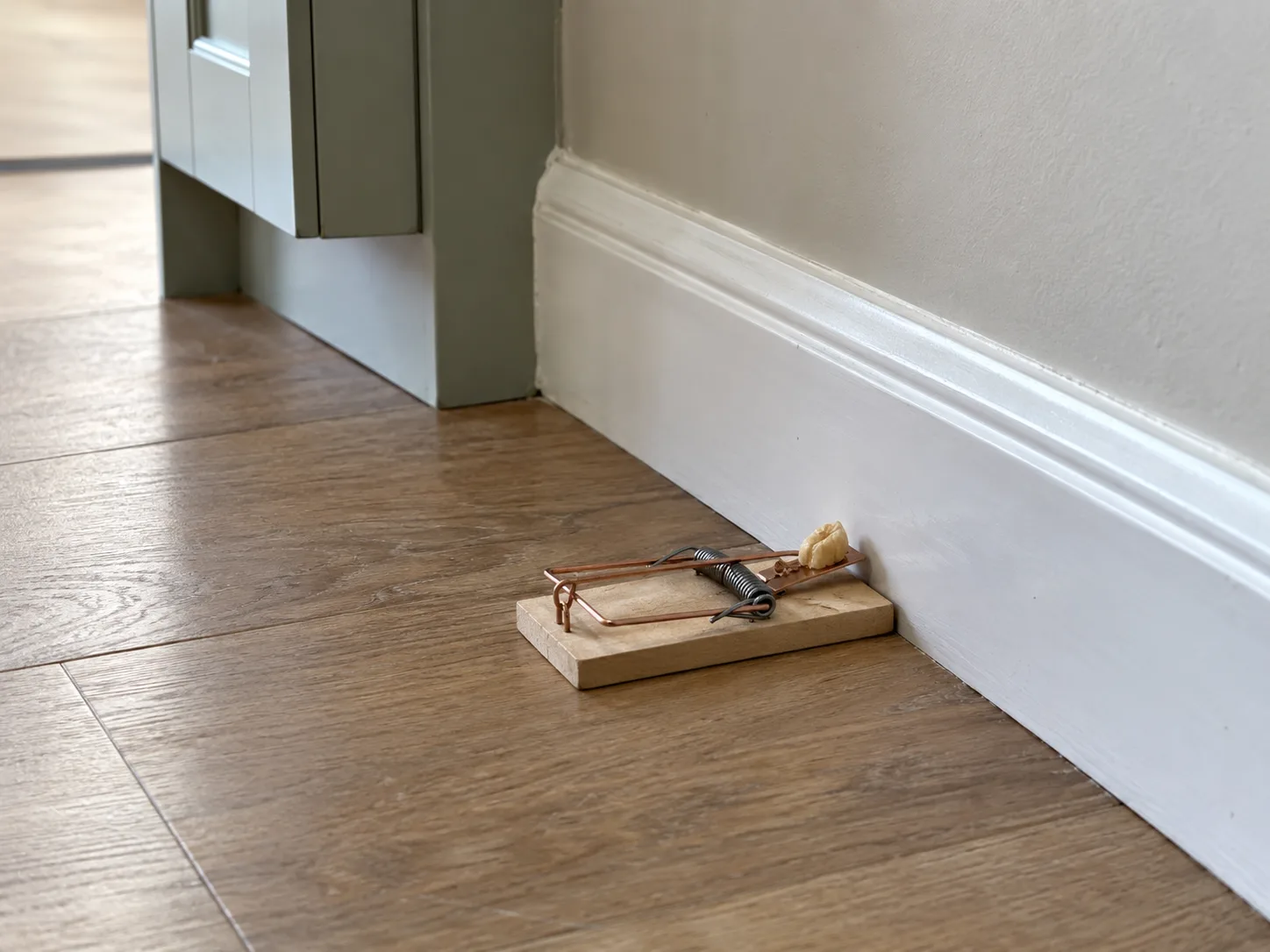
When fresh signs show that mice are inside, traps deal with the animals that sanitation and repairs cannot remove immediately. The CDC recommends traditional snap traps for reducing rodents around the home, and UC IPM describes trapping as a practical option for houses with a small number of house mice. It is also easier to know whether you are catching anything than when a mouse takes poison and dies somewhere hidden.
Put traps on active travel routes
Start where you have found fresh droppings, gnawing, damaged food, or nesting material. Mice tend to follow edges, so place a snap trap close to the wall with the baited end next to the wall, forming a T. Put it behind an appliance or in a dark corner only if you can reach it for daily checks and a child or pet cannot reach it.
Use more than one trap when evidence appears in more than one place. UC IPM advises spacing traps no more than about 10 feet apart in areas of activity and notes that two traps set 1 to 2 inches apart can improve capture where mice may jump past one. That is a guide for active routes, not a reason to scatter traps through rooms without evidence. A recent This Old House trap-setting guide also emphasizes wall and corner placement and regular checking.
Use a small amount of bait, preferably something the mouse has already been feeding on. Peanut butter is popular, but it can be an allergy concern in a household; a small piece of the food involved in the damage may be a better choice. Follow the trap maker’s setting instructions rather than improvising, and do not use a rat-sized trap to solve a mouse problem—or the reverse.
Check and reset traps safely
Put traps in locations where children and pets cannot touch, tip, or trigger them. An enclosed trap can reduce contact only if its design actually prevents access and it is placed securely; do not assume a box or a loose cover makes any trap childproof. If your home has toddlers, curious pets, or no genuinely inaccessible placement, ask a professional about a safer setup.
Check traps at least daily, dispose of a catch promptly, and reset according to the manufacturer’s instructions. Keep a simple note of the room, wall, and date for each catch; repeated catches in one location point to a nearby route or entry. Continue trapping while fresh activity appears. If bait is being taken but traps do not fire, reduce the bait amount, verify the device is set correctly, and move it to a more active edge rather than changing to glue boards.
Avoid glue boards and live-catch traps for indoor mouse control. CDC advises against them because a frightened rodent may urinate in the trap, increasing exposure to contaminated material; live traps also leave the homeowner responsible for dealing with a stressed animal. UC IPM notes that relocating house mice is ineffective and can be illegal in some places. If you do not want to use snap traps, ask a local professional or animal-control office what lawful, humane option is available where you live.
Clean droppings, nests, and dead mice safely
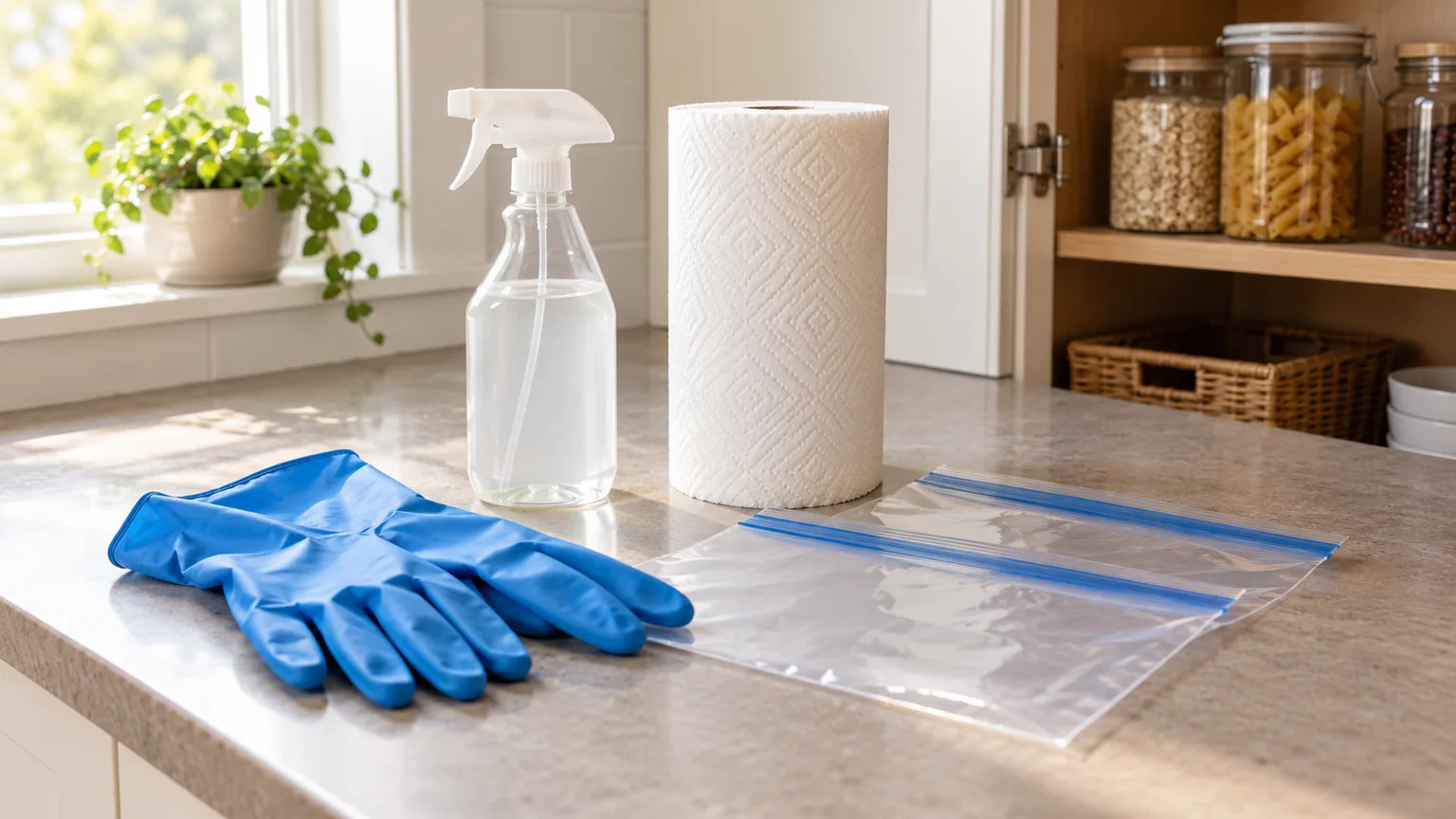
Rodent urine, droppings, and nesting material can carry germs and allergens, so cleanup is part of control—not a chore to rush through. The most important rule is simple: do not sweep or vacuum dry droppings or nests. That can put contaminated particles into the air. Use gloves and a wet disinfectant method for a small, fresh deposit; ask for professional help when contamination is widespread or difficult to reach.
Follow a wet-cleanup sequence; never sweep or vacuum
For a small deposit on a hard surface, put on rubber or plastic gloves and spray the droppings and urine until thoroughly wet with an EPA-registered disinfectant or a freshly made bleach solution. Follow the product label; CDC’s cleanup instructions say to let the material soak for five minutes or for the label’s stated time. Use paper towels to pick it up, place the waste in a covered trash container, then disinfect the hard surface again.
Keep the disinfectant away from children and pets, and never mix bleach with ammonia, acids, or other cleaners; the CDC warns that mixing bleach with other cleaners can release dangerous vapors. If you choose bleach, use CDC’s stated rodent-cleanup dilution and make it fresh: 1.5 cups household bleach in 1 gallon of water (1 part bleach to 9 parts water). Check that the surface can tolerate it, ventilate as appropriate, and follow the directions for the product you are using.
For a dead mouse or nest, wet the animal, material, and surrounding area with disinfectant and wait the label time before handling. CDC advises placing the remains and used trap in a plastic bag, sealing it, then placing that bag inside a second one before disposal; follow local health-department instructions if your area has special disposal rules. Wash gloved hands before removing gloves, then wash bare hands with soap and warm water. Do not handle the mouse with bare hands.
If a room, shed, or attic has been closed for a long time, CDC advises opening doors and windows for 30 minutes and leaving the area before cleanup. Heavy infestations, contaminated insulation, lots of nests, or droppings in inaccessible cavities call for extra precautions. Use a pest-control or remediation professional rather than dry sweeping, vacuuming, or disturbing dusty insulation.
Do peppermint oil, dryer sheets, or ultrasonic devices work?
Treat a strong smell as a possible short-lived nuisance to a mouse, not as a way to remove one. A scent does not close a hole, remove a nest, or catch an animal already feeding in a cabinet. There is no dependable household recipe for essential oils that can replace sanitation, exclusion, and trapping, and an intense smell may simply push activity to another part of the building.
The same applies to dryer sheets and homemade sachets: do not rely on them to control an infestation. For sound and vibration devices, the evidence is clearer: UC IPM reports little evidence that ultrasonic, sound, magnetic, or vibration devices drive established mice from buildings, and mice can become accustomed to repeated noises. Save the money for metal mesh, a door sweep, or correctly placed traps.
When to call a pest-control professional
Get help when fresh signs keep appearing after you have secured food, closed accessible gaps, and set traps correctly; when activity is widespread or in a wall, attic, or crawlspace; or when you cannot safely inspect or clean the affected area. A professional is also a good choice if you are unsure whether the animal is a rat, mouse, or another species, or if children, pets, or a medical vulnerability make trap handling and cleanup difficult.
Ask for an integrated pest-management plan that identifies the animal, maps entry points, specifies durable repairs, and explains how progress will be checked. You can say that you prefer a poison-free approach and ask whether the company can provide exclusion and mechanical trapping. If rodenticide is proposed because activity persists, ask about the risks, placement, and label directions; EPA says pesticide products must be used according to their label and kept away from children and pets. A reputable technician should explain both the method and its limitations rather than promise that one visit will make every mouse disappear.
How to tell whether your plan is working
After the first cleanup and trap placement, check the same routes each day for new droppings, fresh gnaw marks, bait disturbance, or catches. Old droppings can remain after the mouse is gone, so clean them safely once and use newly appearing evidence—not a stale pile—as your activity indicator. Keep a brief dated note or photo from a distance; it helps distinguish an old sign from a new one without touching waste.
A week without a catch is not enough if new droppings or gnawing continue. Keep traps active and revisit the inspection for a second opening, a gap hidden behind stored items, or food that remains available. When the traps remain empty and no new signs appear for a full week, treat that as a useful checkpoint, not a permanent guarantee: continue storing food securely and inspect the entry points after storms, repairs, or seasonal changes. CDC’s trapping guidance similarly ties the end of trapping to the absence of captures and new activity, and advises continued monitoring if signs persist.
Conclusion
The most reliable natural ways to get rid of mice are to make the home less rewarding, make the building harder to enter, and trap the mice that are already inside. Secure food and trash, reduce sheltered clutter near the house, close quarter-inch openings with durable gnaw-resistant material, and place mouse-size snap traps on active routes where children and pets cannot reach them.
Then clean droppings and catches with a wet disinfectant method, never by sweeping or vacuuming dry waste. Scented oils and plug-in repellents may sound easier, but they cannot replace those steps. If fresh evidence continues, the activity is hidden or extensive, or cleanup feels unsafe, bring in an IPM professional to identify the route and finish the job.