5 Flowers to Plant for Fall Color by Region
Choose five flowers for fall color by your climate and first-frost window. Learn which nursery transplants can bloom now and which need more time.

For color that can show this fall, buy rooted nursery plants with buds or open flowers, then match each plant to your remaining frost-free weather. A seed packet, a newly divided perennial, and a flowering container plant do not have the same timetable, and “plant now” means something different in Maine, coastal California, and the lower South.
This five-plant shortlist includes cool-season violas, fall-blooming asters, fuchsia, penstemon, and glossy abelia. They are not interchangeable: one is a bedding plant, two depend heavily on species and cultivar, one is tender in many climates, and one is a shrub. Use the local planting window and the botanical name on the tag to decide which can give you a realistic display.
The quick answer: buy rooted plants with color showing
If your priority is flowers before winter, choose a healthy transplant that already has buds or a few open blooms. A plant with buds can continue opening after you bring it home, while a seedling must germinate, build roots, and reach flowering size before cold weather stops growth. Even then, a large, heavily blooming plant may be rootbound or stressed, so check the root ball and foliage rather than choosing by flower count alone.
Start with violas if you want a low border or container that can handle cool nights. Choose a locally suited aster or penstemon only if it is the right late-blooming type and has visible buds; fuchsia is a better fit for a sheltered pot in climates where it will not be hit by a hard freeze. Glossy abelia makes sense when you have room for a shrub and a climate where it can establish and overwinter. If you want a wider menu of choices, see our late-summer flowers guide and flowers for late-summer planting guide.
Plan around your local first-frost window
The calendar date matters less than the weather and plant type. Find your area’s average first-frost date through a local extension service or climate resource, then treat it as a planning estimate rather than a promise: cold pockets, elevation, wind exposure, urban heat, and a protected wall can all shift what happens in your own garden. A forecast of a light frost is different from a hard freeze, but a tender transplant may still suffer when nights turn cool.
For a perennial or shrub, leave enough mild weather for roots to settle before the soil becomes cold or frozen. If only a short stretch remains, prioritize plants already in bud and tolerant of cool weather, and accept that the main benefit may be a short display rather than a settled, long-term planting. A transplant can tolerate some root disturbance, but it cannot manufacture weeks of warm growing weather that are no longer available.
Cool, short-season regions
In northern, high-elevation, or otherwise short-season gardens, shop early enough that the root ball has time to recover while the soil is still workable. Pick compact violas or locally hardy asters with buds already visible, and check the tag for the cultivar’s actual hardiness rather than relying on a generic name. If your first hard freeze is close, planting a tender fuchsia or abelia for permanent outdoor growth is a gamble; keep it in a movable pot only if you can protect it.
Do not wait for the first frost as a signal to begin. By the time cold weather is in the forecast, the useful planting window for a shrub or perennial may already be narrowing. Local nurseries often stock plants when they are appropriate for your region, but a clearance label does not tell you whether the plant has enough time to establish.
Moderate four-season climates
In much of the Midwest, Northeast, and mid-Atlantic, late summer into early fall can work for rooted transplants, provided heat is easing and the soil is not waterlogged or bone dry. Use the local frost estimate to count backward, but inspect the plant first: an aster already carrying buds can deliver a different result from a small seed-grown plug of the same species.
Where winters are cold enough to threaten tender ornamentals, treat fuchsia as a container plant that can be moved or protected. Choose abelia only if the specific cultivar is rated for your site and you are prepared for winter dieback or protection; its long flowering season does not make every plant hardy in every state.
Warm-winter and coastal climates
In warm parts of the South, desert regions, and mild coastal gardens, the main obstacle may be lingering heat rather than an imminent frost. Wait until the most intense heat eases, or plant in a cooler spell and provide close attention to watering. Cool-season violas may perform better after nights turn mild, while fuchsia needs protection from hot afternoon sun and drying wind.
Some abelias and fuchsias can remain useful for years in mild climates, but check local hardiness and summer conditions before making that a promise. A plant can be winter hardy yet still struggle in reflected heat, salty exposure, or a wet planting site. If you garden in the Southern Hemisphere, use your local autumn and winter conditions rather than the northern-hemisphere month names used in many catalogs.
Transplants and bulbs do different jobs
The five selections here are sold as flowering plants or rooted nursery transplants, not as dormant bulbs. A blooming transplant can contribute flowers this season if its species, maturity, and weather line up; bulbs planted in autumn are usually preparing for spring blooms, not a display later in the same fall. If you want color in the next few weeks, a spring-flowering bulb is the wrong purchase for that job.
Seeds sit on a third timetable. Read the packet’s days-to-maturity estimate, then allow extra time for germination, transplant shock, and slower growth in shortening days. Many perennials started from seed late in summer will build roots or leaves and flower the following year. If the seed packet does not give a realistic timeline for your local season, choose a rooted transplant instead of assuming a few warm weeks will be enough.
Five flowers that can add color this fall
The plants below cover different jobs: quick bedding color, late-season pollinator flowers, a sheltered container display, a cultivar-dependent perennial, and a flowering shrub. Choose by your site and remaining season, not by a broad hardiness-zone range printed next to a plant name.
Violas for cool-weather beds and containers
Violas and their larger-flowered pansy relatives are among the most useful choices when summer heat begins to retreat. They come in many colors and sizes, and some specially selected winter-flowering types can keep blooming into cold weather in suitable climates. Garden Design’s pansy guide describes pansies as cool-season plants, notes that they return to garden centers in fall, and distinguishes extra-hardy winter-flowering varieties from the broader group; that cultivar distinction matters more than the word “pansy” by itself.
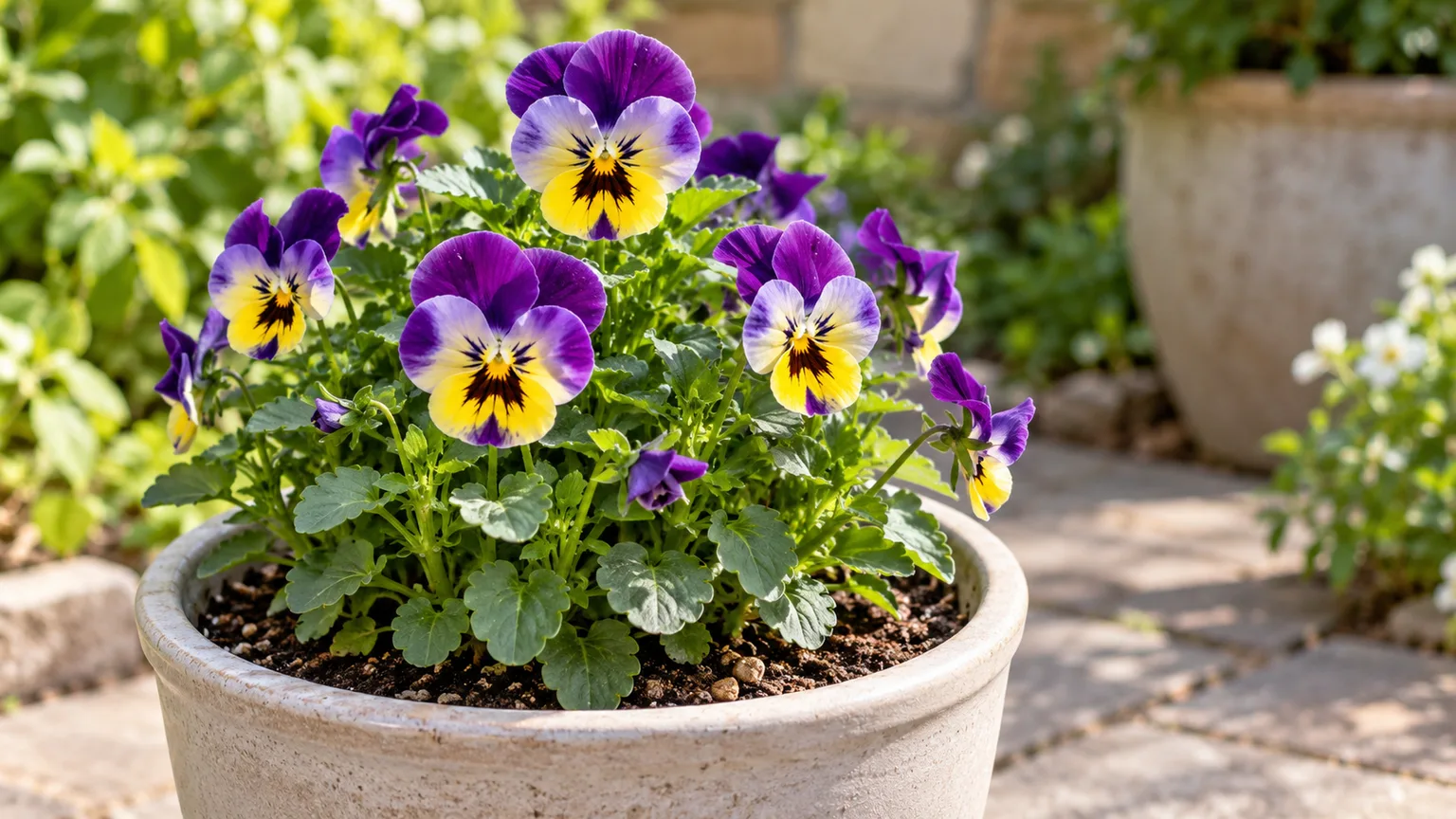
Pansies and violas provide low, close-up color for fall containers and bed edges.
Use a rooted flat or small pot with healthy leaves, a firm root ball, and buds or flowers. In warm climates, give new transplants shade during the hottest part of the day until they recover; in cool regions, choose a variety sold for your local winter conditions. Keep the soil evenly moist but not saturated, and remove faded flowers if you want the plant to keep producing rather than putting energy into seed.
Pansies can pause or look ragged during a hot spell, and a warm autumn may delay their best performance. They tolerate cool conditions better than many tender bedding flowers, but that does not mean every variety will flower through prolonged freezing weather. Ask whether the plant is a standard pansy, a viola, or a winter-flowering cultivar, then check how that selection performs locally.
Asters for a pollinator-rich fall border
Choose an aster when you want a taller patch of daisy-like color and late-season nectar, not merely an instant pot of bedding flowers. Many garden asters are now classified in the genus Symphyotrichum; bloom dates, height, and moisture preference vary among species and cultivars. Penn State Extension describes several native asters as late-summer and fall bloomers, often flowering until frost, while also emphasizing that the group differs in height and growing conditions. That variability is why a regional nursery’s cultivar recommendation is valuable.
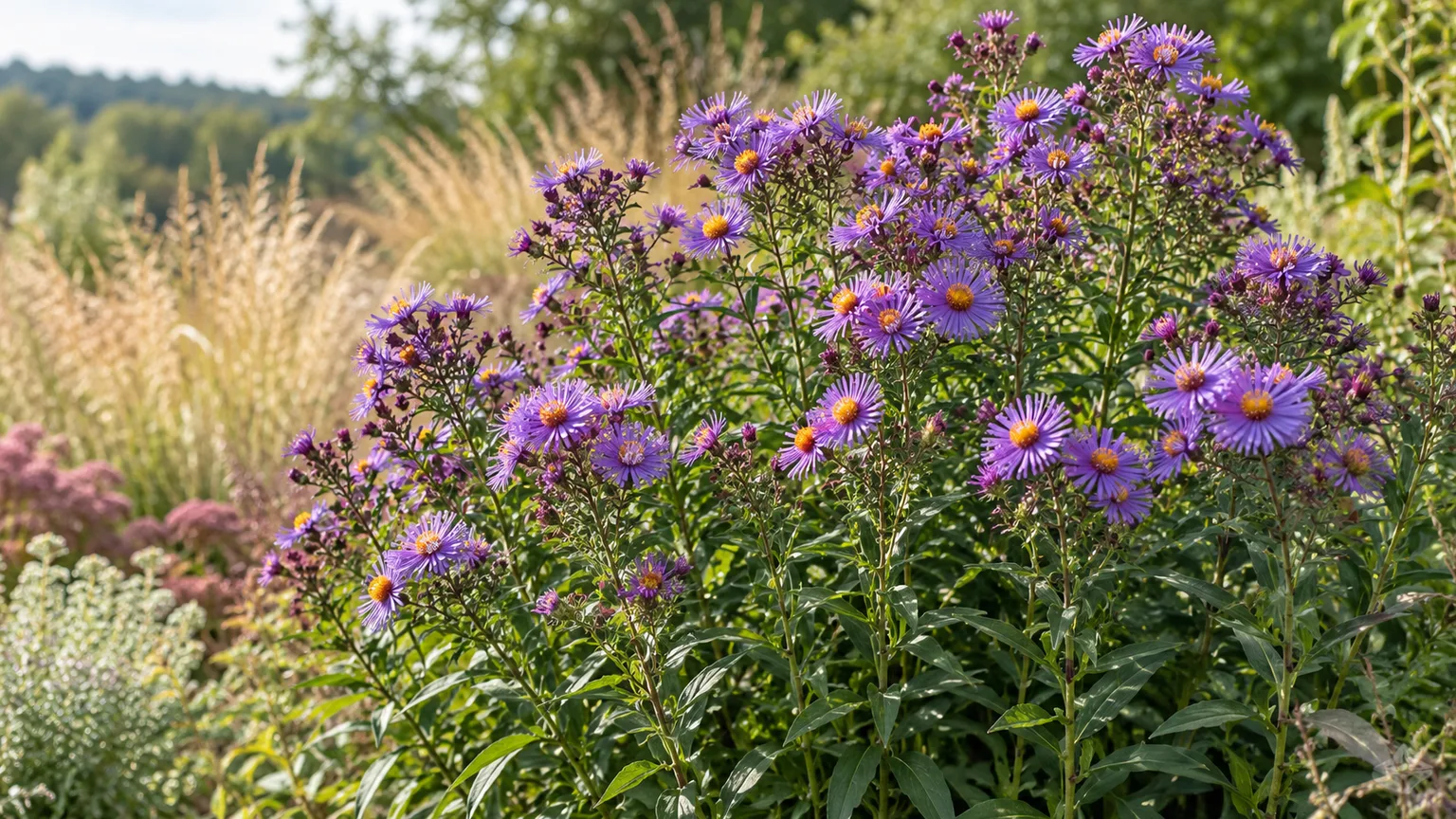
Asters can extend color and nectar into fall when the species matches the site and local season.
For a display this year, buy a healthy aster already in bud, not a small plant with only foliage. Costa Farms’ late-season perennial guide likewise describes asters as late-summer-to-fall flowering perennials and notes that many favor full sun and well-drained soil, but the exact selection still determines height and performance. Give tall varieties room and support if they flop in your garden; compact cultivars are easier to fit near a path or in a smaller border.
Do not cut back an aster in late summer if your goal is flowers before frost. Pinching can make a plant fuller earlier in the season, but a late cut may delay the very bloom you are trying to enjoy. If the tag lists a species that flowers in spring or early summer, it is not a reliable last-minute fall-color pick, even if the plant is healthy.
Fuchsia for sheltered containers and mild winters
Fuchsia gives you pendulous, high-contrast flowers that read well from a porch, balcony, or shaded seating area. It is usually a container choice for fall color because many popular garden-center fuchsias are tender and need frost protection. The genus includes different species and hybrids, so “fuchsia” alone does not tell you whether a plant can stay outdoors through your winter.
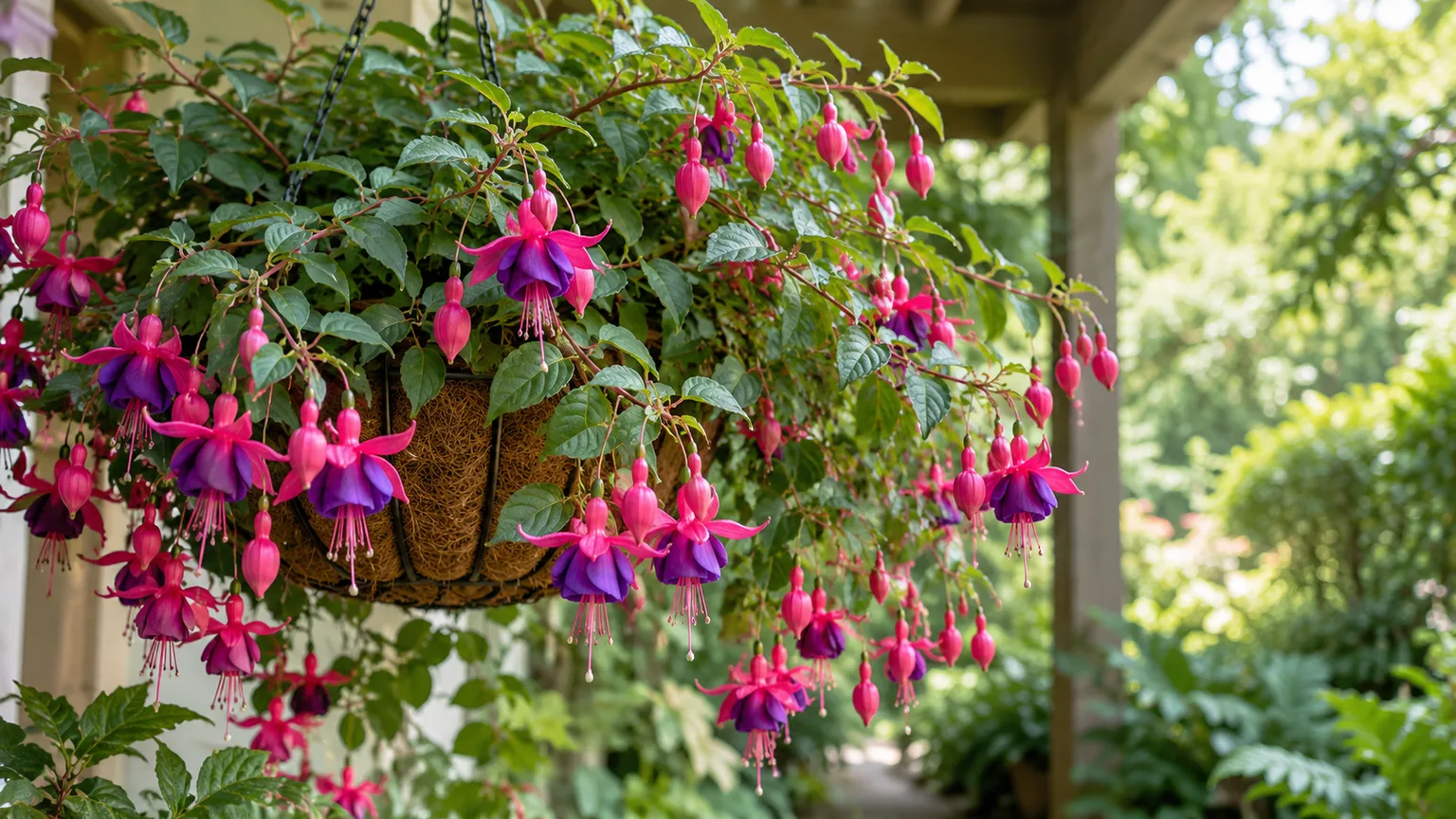
A hanging fuchsia can bring fall color to a protected porch or shaded patio.
Choose a plant that is already flowering if you want immediate impact. Bright shade or filtered light, consistent moisture, and shelter from drying wind help keep a container presentable as nights cool; do not let the pot swing between bone dry and waterlogged. In a cold region, decide before purchase where the pot will go when frost threatens. Some gardeners overwinter tender plants indoors or in a protected cool space, while others treat them as seasonal color.
Hardy fuchsia types exist, but hardiness depends on the species, cultivar, winter exposure, and whether the roots are protected. Gardenia’s hardy-fuchsia overview distinguishes tender, half-hardy, and hardy selections and notes that winter survival can depend on protecting the crown. A fuchsia in a hanging basket is more exposed to cold than one planted in a sheltered bed. Buy by the botanical name and local advice, not by a broad zone range or a promise that all fuchsias will last until a specific month.
Penstemon only when the species and buds fit
Penstemon is not one dependable fall-blooming flower; it is a large group with different bloom seasons. If the aim is color now, choose a locally adapted species or cultivar that is already in flower or has firm buds. A plant that is simply labeled “beardtongue” may have finished its main display much earlier.
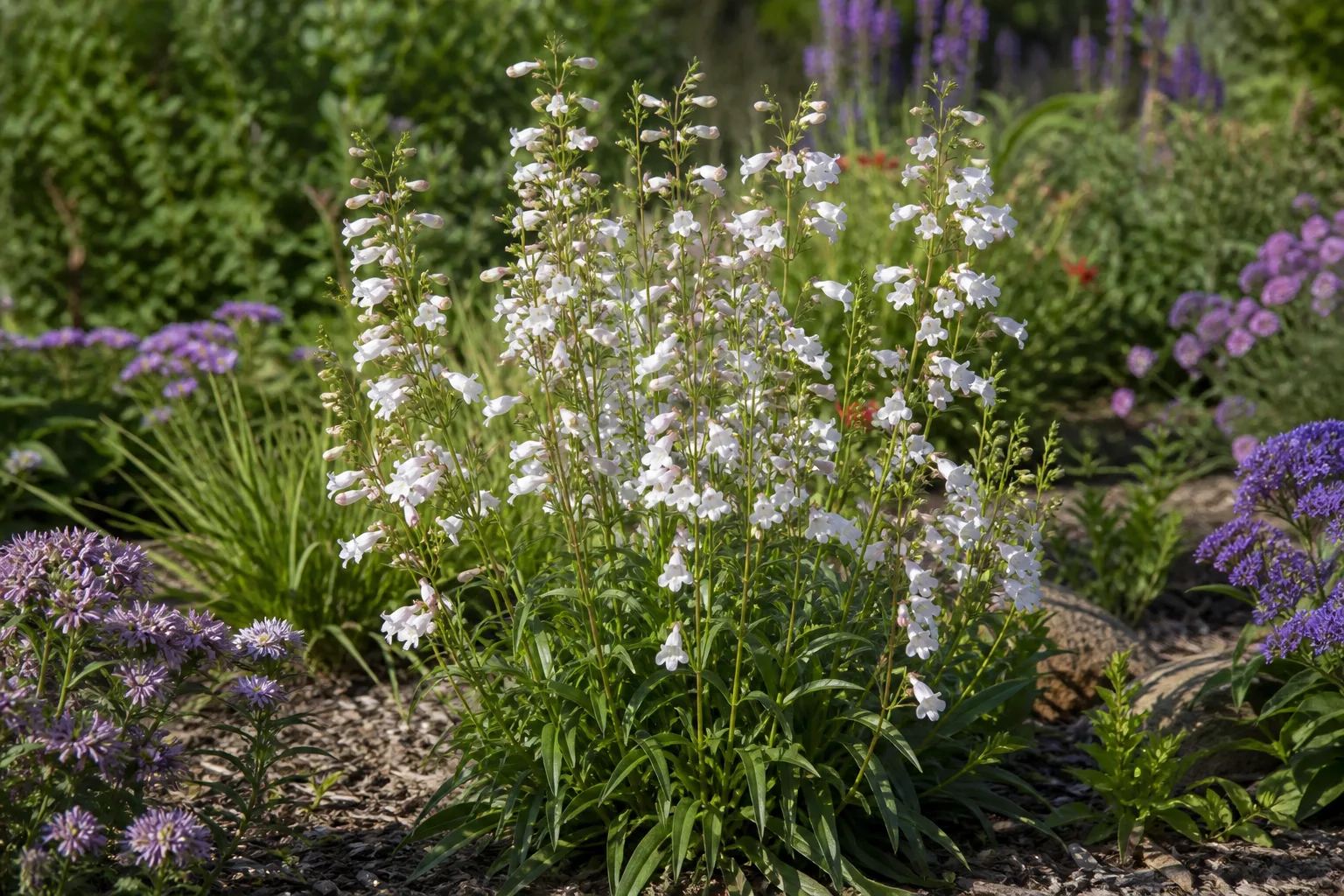
Check the penstemon’s species and flowering stage before buying for late-season color.
This is an important distinction: NC State Extension’s profile for Penstemon digitalis describes tall spikes that flower in late spring to early summer, so that species is a poor choice for an autumn display if it has already finished blooming. Other penstemons and cultivars can flower later; Martha Stewart’s late-summer flower overview includes beardtongue among possible choices, but an already blooming nursery pot and the local cultivar still determine whether it has flowers left after planting. Ask for the botanical name and expected local bloom period rather than applying a single season or hardiness range to the entire genus.
Most penstemons need a sunny site and soil that drains well; the NC State profile also notes that P. digitalis tolerates clay when drainage is adequate. Avoid planting a nursery plant into a soggy pocket or burying its crown. If your local garden center cannot identify a late-flowering type with visible buds, choose violas or a budded aster for more dependable short-term fall color.
Glossy abelia for a flowering shrub with lasting structure
Glossy abelia (Abelia × grandiflora) is a shrub rather than a small seasonal flower. It can reward a warm-climate garden with white-to-pink, funnel-shaped flowers over a long season and foliage that can turn reddish in fall. NC State Extension’s abelia profile notes that flowering is best in full sun, that the plant tolerates partial shade, and that its bloom clusters may continue from late spring through fall. It is a better fit for someone who wants a permanent border or hedge plant than for someone who needs an inexpensive filler for a few weeks.
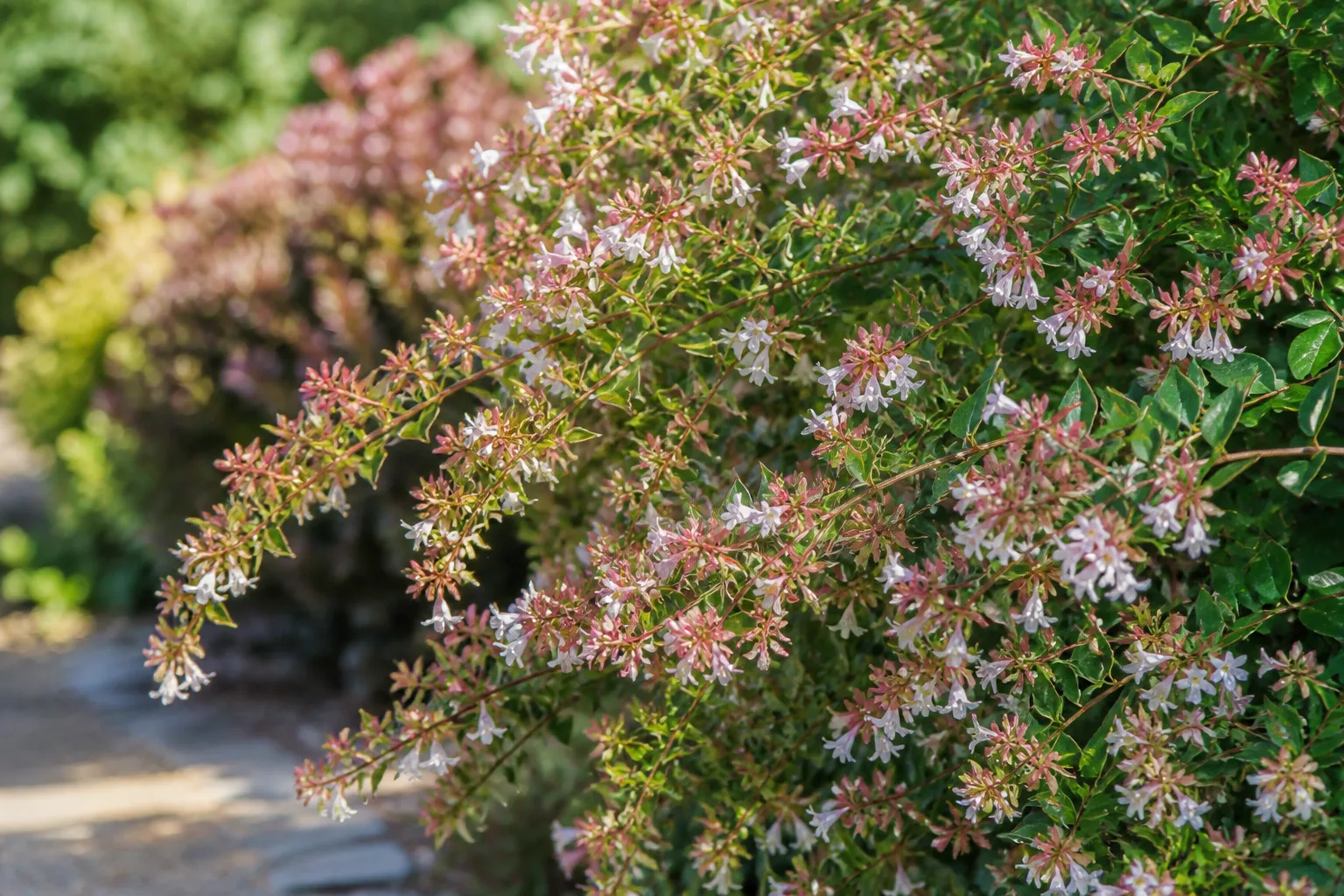
Glossy abelia combines small late-season flowers with shrub structure and changing foliage.
Buy an abelia already in bloom if you want to see its flower color before planting, but judge the plant for mature size and winter fit. NC State’s profile notes that it can be semi-evergreen to evergreen in warm climates, while colder zones may see it become deciduous or experience winter dieback; it also recommends a protected site where freeze damage is a concern. The words “long flowering season” do not make this shrub suitable for every climate.
Plant it where there is room for its mature width, good drainage, and enough light for bloom. Avoid heavy pruning at the end of the season: abelia flowers on new growth, and a major late cut can remove future flowering wood or leave fresh growth vulnerable. If you are in a colder zone or have only a tiny border, a viola or container plant may be a more practical fall choice.
Choose among the five by site and time
| Garden need | Best starting point | What to check before buying |
|---|---|---|
| Low color in a bed or pot | Violas or compact pansies | Cool-season variety; healthy roots; local winter performance |
| Pollinator color in a sunny border | A budded, locally suited aster | Species or cultivar, mature height, drainage, and bloom stage |
| Hanging or porch display | Fuchsia in a movable container | Tender versus hardy type and a frost-protection plan |
| Vertical flowers in a perennial bed | A flowering penstemon cultivar | Botanical name and actual bloom season; not every penstemon flowers in fall |
| Long-term shrub with late flowers | Glossy abelia | Local hardiness, mature size, protected position, and well-drained soil |
If you have several weeks before your local hard freeze, a transplant that has finished flowering can still be a worthwhile perennial investment, but do not expect an immediate fall show. If you have only a short window, focus on a flowering, cool-tolerant plant that can be moved or replaced. A fuchsia pot is easy to reposition; an abelia is not.
Planting sequence for hot or dry weather
Prepare the roots and planting area
Water the nursery pot before planting so the root ball is damp but not dripping. Choose a cool part of the day or an overcast interval, especially if late-summer sun is still intense. Set the plant at the same depth it grew in its container, loosen circling roots gently, and backfill with the native soil unless a local soil test or planting guide calls for a specific amendment. A deep, wide planting hole is useful; a small pocket filled with a different, very rich mix can hold water differently from the surrounding bed.
Check the plant’s mature width before spacing a group. Asters and penstemons need airflow and room to develop; abelia needs enough space for a shrub; violas can be tucked at the edge of a bed or grouped in a container. Put fuchsia where you can water and shelter it, and make sure its pot drains freely. Mulch around outdoor perennials and shrubs after watering, keeping mulch away from stems and crowns.
Water through establishment
New roots need reliable moisture, particularly if the weather stays warm or the planting area is exposed to wind. Water slowly at the base and check the soil several inches down rather than relying on a fixed daily schedule. Containers dry faster than garden beds, but they can also stay wet after rain; drainage holes and a light, free-draining mix help prevent waterlogged roots.
As nights cool and the plant begins to settle, adjust watering to actual rainfall, soil, pot size, and species. Do not keep a drought-tolerant perennial constantly saturated in the name of establishment, and do not let a newly planted shrub dry completely while it is forming roots. A light layer of mulch helps outdoor beds hold moisture and buffers temperature swings without burying the crown.
What to expect after the first frost
A light frost may mark or stop flowers on tender plants without killing every root, but a hard freeze can damage buds, leaves, or the entire plant depending on its hardiness and exposure. Cool-season violas may continue after a light frost if the cultivar and climate allow it; tender fuchsia may need to move indoors or under cover; asters and penstemons depend on species and local adaptation. Abelia may lose leaves or suffer dieback in climates colder than its reliable range.
Treat frost as a change in care, not a universal end date. Remove collapsed frost-damaged growth only after conditions are clear, and do not prune a perennial or shrub aggressively just because flowers fade. For fuchsia in a pot, move it before a hard freeze if you intend to keep it; for a new perennial, water when the soil is dry and unfrozen, and leave healthy foliage until its seasonal cycle is complete.
Fall planting mistakes that cost you color
Buying seeds when you need flowers in a few weeks. A packet’s germination time is not its time to bloom. Buy a rooted transplant showing buds when your local season is short.
Trusting the month instead of your climate. August can still be hot in one region and close to frost in another. Use your local frost window, night temperatures, and site conditions.
Assuming a plant name guarantees a fall bloom. Asters, penstemons, fuchsias, and abelias vary by species and cultivar. Confirm the botanical name and inspect buds before choosing one for immediate color.
Planting a tender container plant where it cannot be protected. A fuchsia may look hardy in a nursery display, but a hanging pot is exposed to colder air. Decide how you will move or cover it before the first freeze arrives.
Expecting a dormant bulb to bloom this fall. Many spring-flowering bulbs planted in autumn need winter and will bloom later. Use flowering transplants for color now and bulbs for a future spring display.
Forcing a new plant through hot, dry soil. A transplant under heat stress may lose flowers or fail to establish. Wait for a cooler interval when possible, water the root zone thoroughly, and keep checking moisture while roots grow.
Conclusion
For reliable fall color, start with a rooted plant already showing buds, then ask whether its species and cultivar suit your climate and remaining season. Violas are useful for low cool-weather color; asters can carry a sunny border into autumn; fuchsia works best as a protected container plant where it is not reliably hardy; penstemon needs a verified late-flowering type; and glossy abelia is a longer-term shrub for regions where it can establish and overwinter.
Use your local first-frost estimate as a planning cue, not a countdown that guarantees flowers. If the weather window is short, choose the plant with the most visible buds and the least risk from cold; save seeds, tender varieties, and spring-flowering bulbs for the season they can actually serve.