17 Best Flowers for the Vegetable Garden
Compare 17 flowers for vegetable gardens by bloom season, height, and role, with clear notes on pest claims, edible petals, bed placement, and timing.
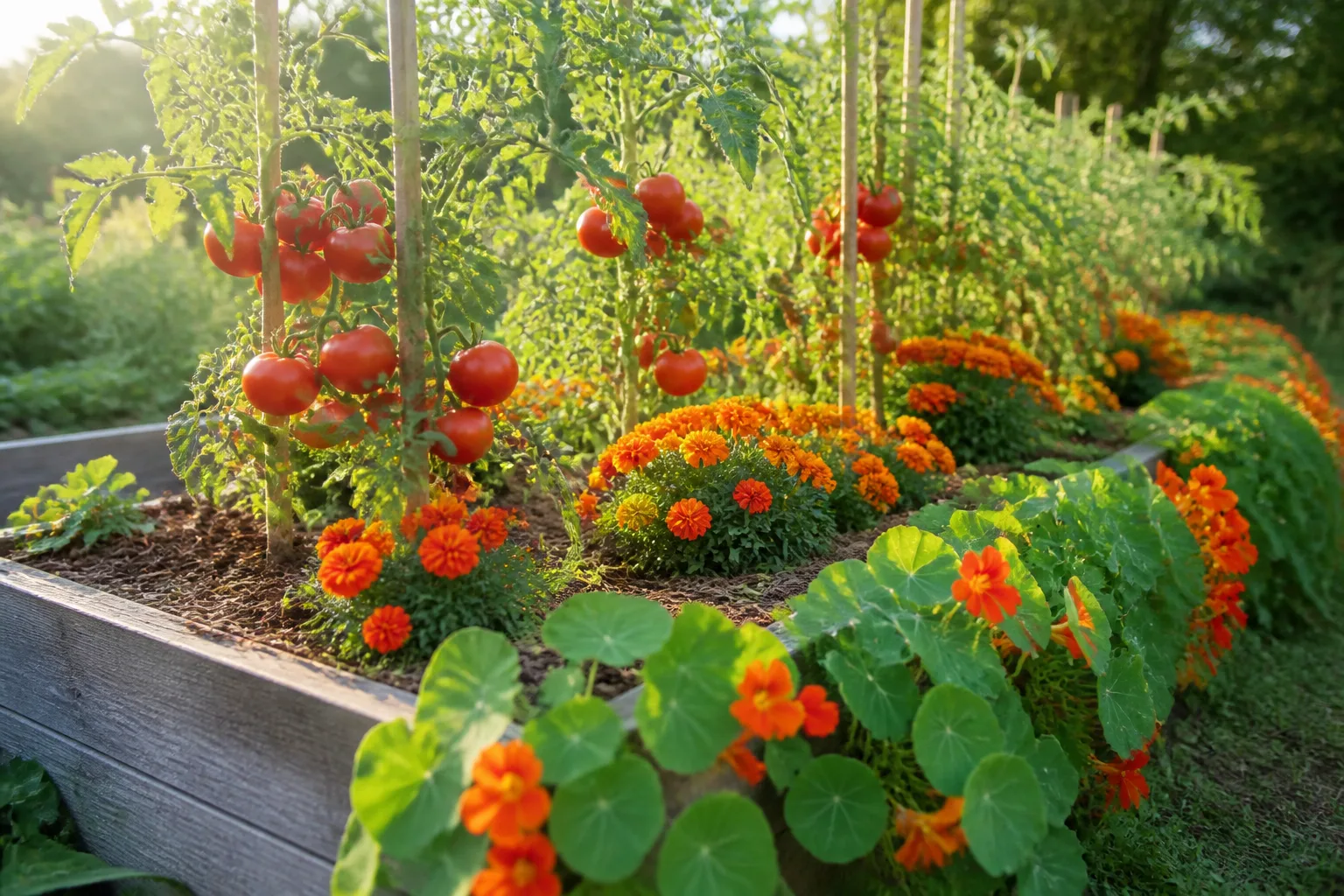
Vegetable beds do not need to be all leaves and rows. A few flowers can supply cut stems, edible petals, color between crop seasons, and nectar or pollen for insects that visit the garden. The useful question is not whether a flower is a “companion” in the abstract, but what job it can do without taking light, water, or harvest space away from the vegetables.
Flowers are not dependable insecticides. Some specific plant pairings have been studied, and flowering plants can provide food for pollinators and predatory insects, but the result varies by flower, crop, pest, timing, and local conditions. Penn State Extension’s research-based guide describes mechanisms such as masking crop cues and attracting beneficial insects, and it highlights particular crop-and-herb pairings rather than promising that any flower repels every pest. Penn State Extension
Use this quick guide to narrow the list by purpose. Put low flowers where they will not crowd the vegetable canopy, keep tall plants where their shade falls away from sun-loving crops, and reserve permanent flowers for bed edges that will not be replanted each season.
| Flower | Most useful garden job | Best position | Main trade-off |
|---|---|---|---|
| Borage | Long-lasting pollinator forage | Outer edge or dedicated patch | Large, rough, and self-seeding |
| Nasturtium | Edible blooms; monitored aphid trap-crop option | Accessible outside edge | Trailing stems can overrun crops |
| Calendula | Cool-season blooms and beneficial-insect forage | Bed edge or near brassicas | Often pauses in summer heat |
| Cosmos | Pollinator and cut-flower patch | North edge or nearby strip | Tall, wide, and self-seeding |
| Lavender | Permanent pollinator border | Sunny, dry perimeter | Wants lean, sharply drained soil |
| Marigold (Tagetes) | Compact annual color and insectary flowers | Bed edge or gaps with space | Not a universal pest repellent |
| Sunflower | Pollinator forage and seed harvest | North side or outside the bed | Shade, water, and root competition |
| Sweet pea | Fragrant cool-season cut flowers | Trellis at the north edge | Climbing ornamental; not an edible pea |
| Zinnia | Summer pollinator and bouquet flowers | Sunny border or cutting row | Needs air flow and regular deadheading |
| Pansy | Early or late color in cool weather | Low bed edge | Fades when weather turns hot |
| Petunia | Long bloom and decorative edging | Border or container beside the bed | More ornamental than functional |
| Dahlia | Long-season cut flowers and pollinator visits | Dedicated sunny border | Tall cultivars need staking and room |
| Cornflower | Easy-sown blue flowers for pollinators | Edge or small drift | Can self-sow beyond its place |
| Sweet alyssum | Low nectar source for beneficial insects | Crop edge or open inter-row pockets | Heat may interrupt flowering |
| Garden mum | Late-season color and forage | Permanent outside edge | Cultivars differ; dense doubles offer less access |
| Daylily | Low-maintenance perennial border | Beyond the crop bed | Clumps take space and are hard to move |
| Lupine | Tall spring-to-summer flower display | Perimeter, in a suitable climate | Needs room and dislikes hot, humid sites |
1. Borage
Best role: Pollinator forage and occasional culinary garnish. Borage (Borago officinalis) makes star-shaped blue flowers, sometimes opening pink before shifting color as they age. Bees work the open blooms, so a small patch can add forage while the main vegetable rows are still green. Its use is strongest when you want a flowering patch; it is not a proven shield against a named vegetable pest.
Borage grows quickly, branches widely, and often returns from dropped seed. Give it the outside of a bed or a separate corner where you can pull seedlings next year. It can reach well over knee height and may lean into a path, so a narrow raised bed is a poor place to put several plants. In a small bed, one plant is usually enough; cut stems when they begin to sprawl, and remove spent flowers before they set seed if volunteers would be a nuisance.
Planting note: Direct-sow after frost risk has passed, or let a few seedlings come up where they fit. Borage flowers are commonly used as a garnish, but only eat correctly identified blooms grown without ornamental pesticides; do not treat the plant as a medicinal remedy.
2. Nasturtium
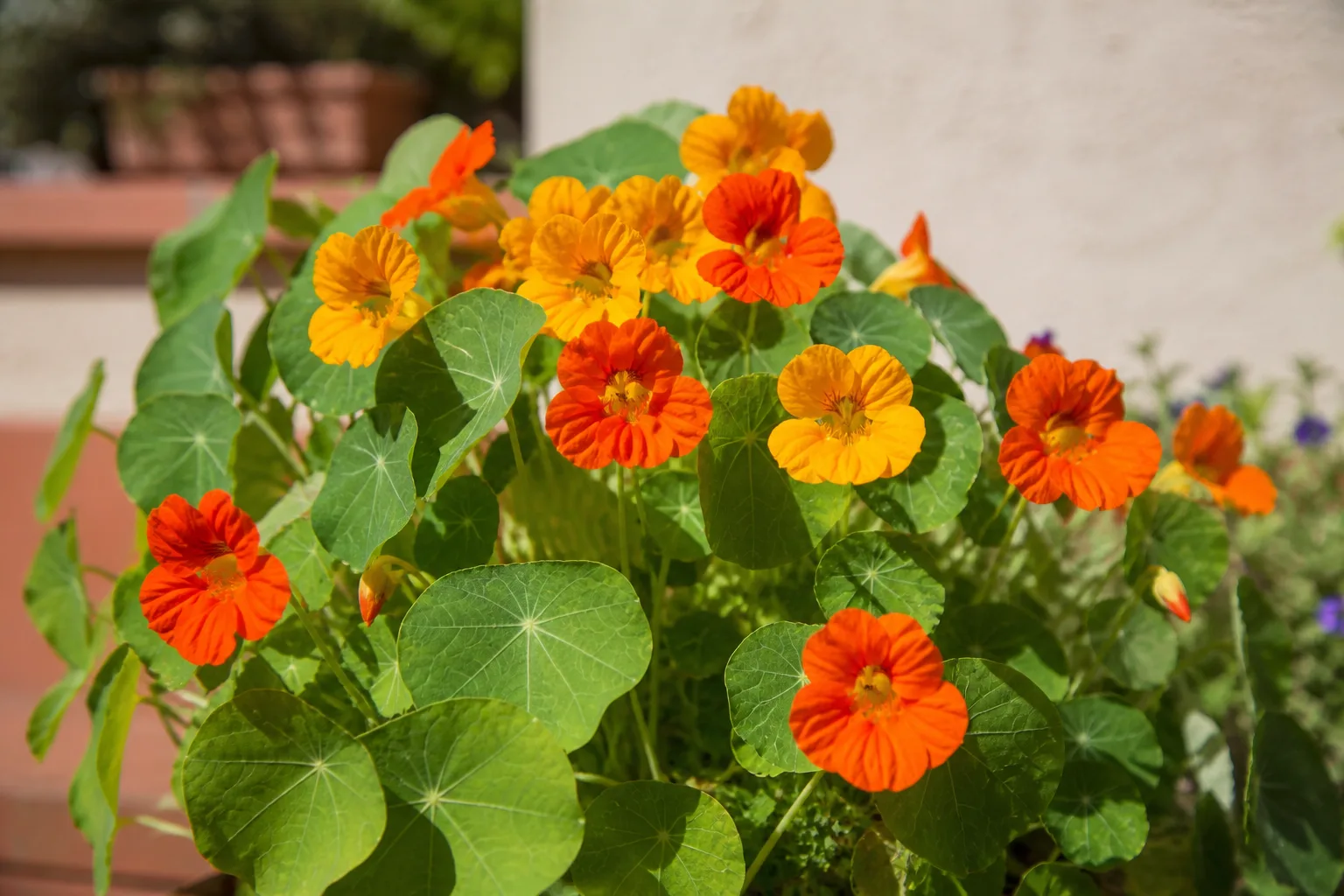
Best role: Edible flowers and a trap-crop experiment you can monitor. Nasturtium (Tropaeolum majus) trails or mounds, depending on the variety, and both its flowers and leaves have a peppery taste. Its tendency to draw aphids can be useful only when the plant is deliberately positioned as a decoy and checked often. Epic Gardening notes that evidence for broad claims that nasturtiums repel insect pests is limited; attracting insects is not the same thing as controlling them. Epic Gardening
Put a compact type at the outside edge of a bed, or send a trailing cultivar away from the crop along a path or low support. Inspect the plant at least twice a week during an aphid flare-up. If colonies build up, prune off and bag infested tips or remove the plant before winged aphids disperse; if you cannot monitor it, grow nasturtiums for flowers rather than as a trap crop.
Planting note: Sow after cold weather eases. The plant tolerates ordinary soil and often blooms more when it is not pushed with high-nitrogen fertilizer. Eat only clean, correctly identified blooms grown without pesticides that are not labeled for food crops.
3. Calendula (Pot Marigold)
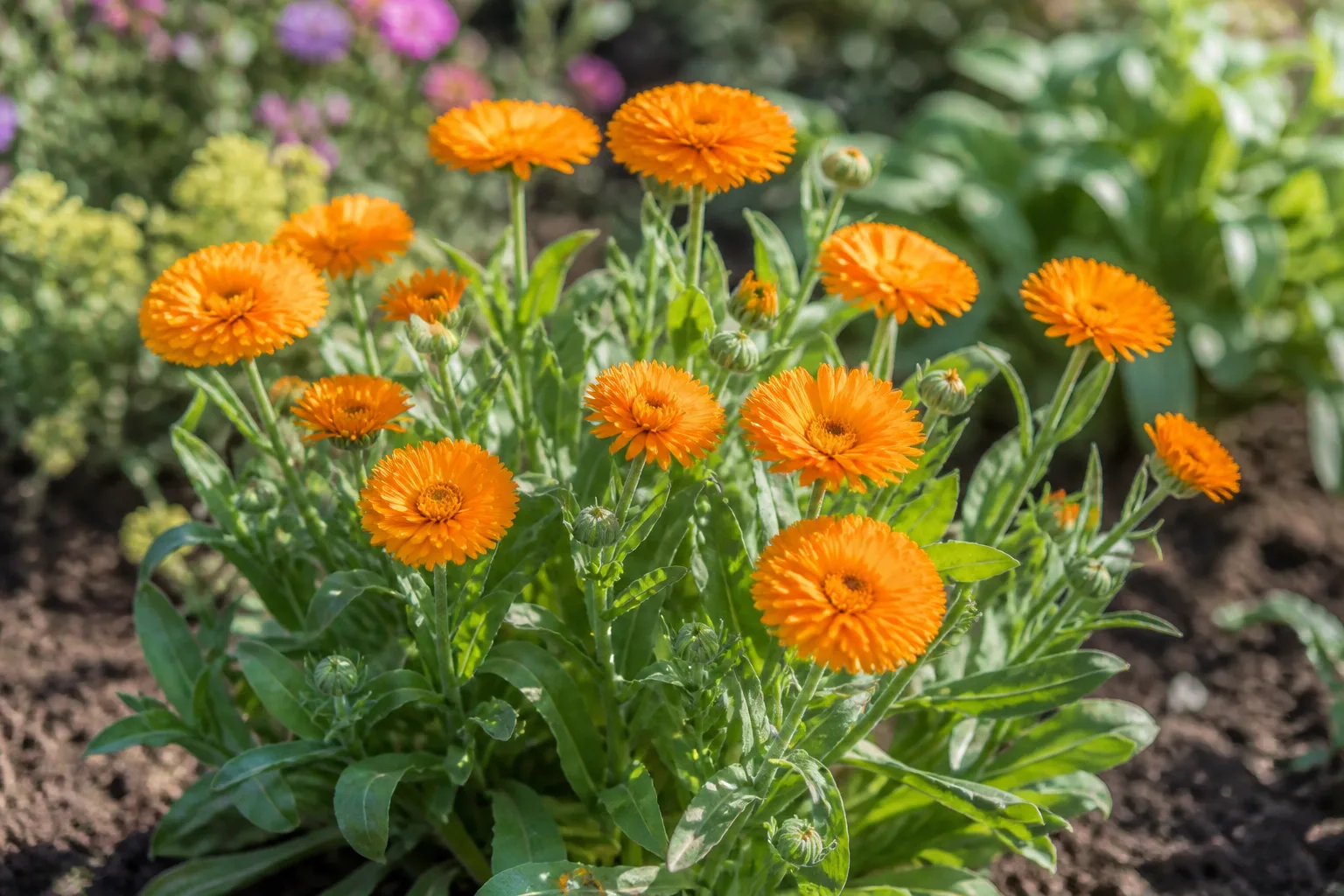
Best role: Cool-season color and accessible flowers for beneficial insects. Calendula (Calendula officinalis) is also called pot marigold, but it is not a Tagetes marigold. That distinction matters: the two plants have different growth habits and should not be treated as interchangeable just because both have orange or yellow blooms.
Penn State Extension reports a specific evidence-backed pairing: calendula can attract beneficial insects that feed on aphids, and planting it near collards has been shown to deter aphids. That is a crop-specific result, not proof that calendula protects tomatoes, squash, or every brassica from every pest. Put a few plants near collards or another leafy brassica if aphid pressure is a concern, then keep inspecting the leaves and respond if populations keep rising. Penn State Extension
Calendula handles cool spring or fall weather better than sustained heat, when flowering may slow. Deadhead it to extend blooms, or leave a few flowers to set seed if you want volunteers. Petals are edible when the plant is correctly identified and grown for food, though the flavor can be bitter; use a light hand as a garnish rather than assuming the whole flower is a pleasant salad ingredient.
4. Cosmos
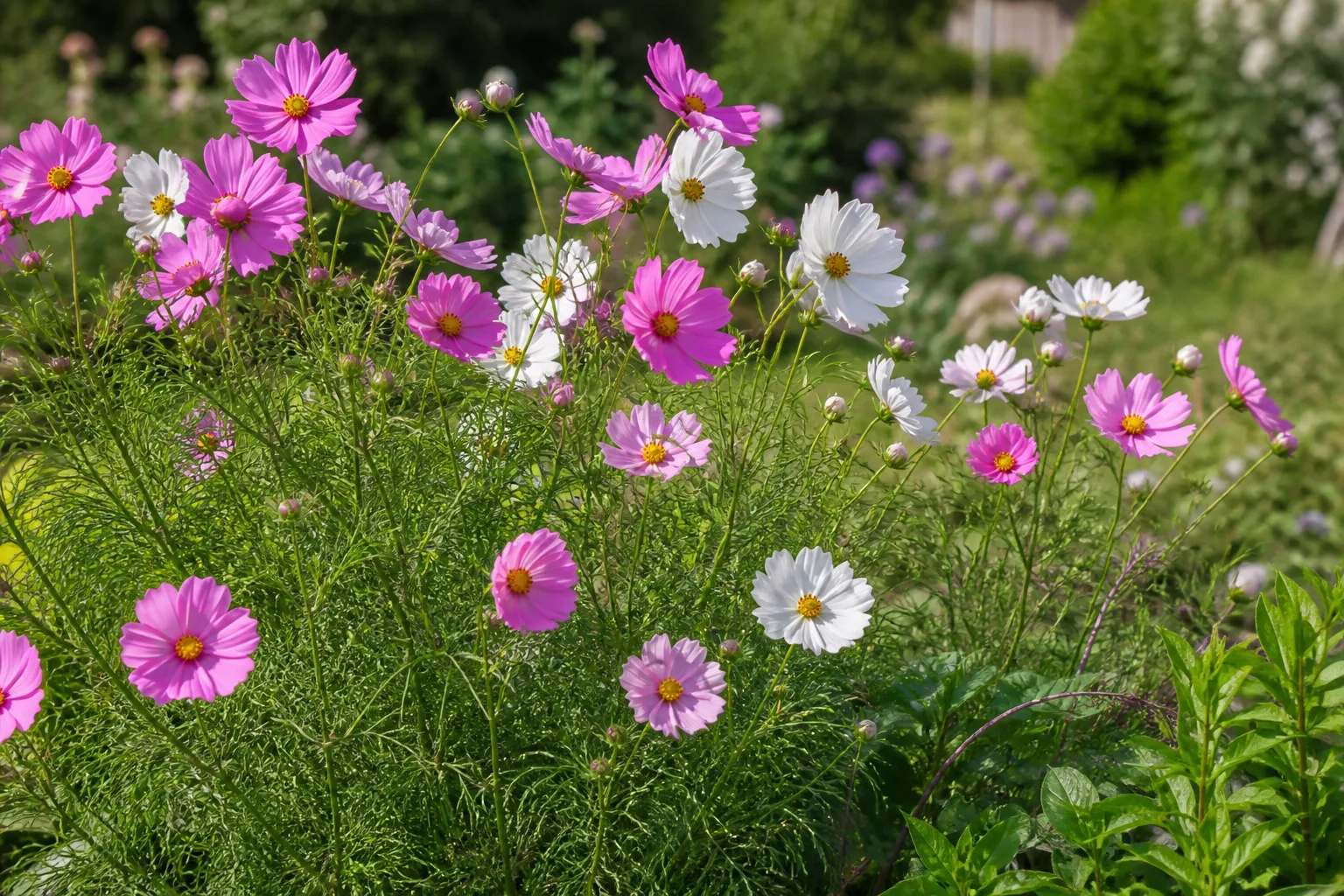
Best role: A generous summer flower patch for pollinators and bouquets. Cosmos (Cosmos bipinnatus) has open flower centers that are easy for visiting insects to reach. It is a useful choice if you want long stems to cut without leaving obvious gaps in a vegetable row, since the bouquet harvest can come from a separate strip.
The plant can become both taller and wider than a seed packet’s compact picture suggests. Site it on the north edge of the bed in the Northern Hemisphere, or outside the bed, so it does not shade lettuce, peppers, or other sun-loving crops. Cosmos can self-sow; remove spent heads when you want to limit seedlings, but leave a few late blooms if you want seed for next year. Epic Gardening also recommends allowing several feet for its spread rather than squeezing it between crops. Epic Gardening
Planting note: Direct-sow after frost danger and thin plants to the variety’s mature spacing. Avoid rich, heavily fertilized soil if it produces lots of leaves and fewer flowers.
5. Lavender
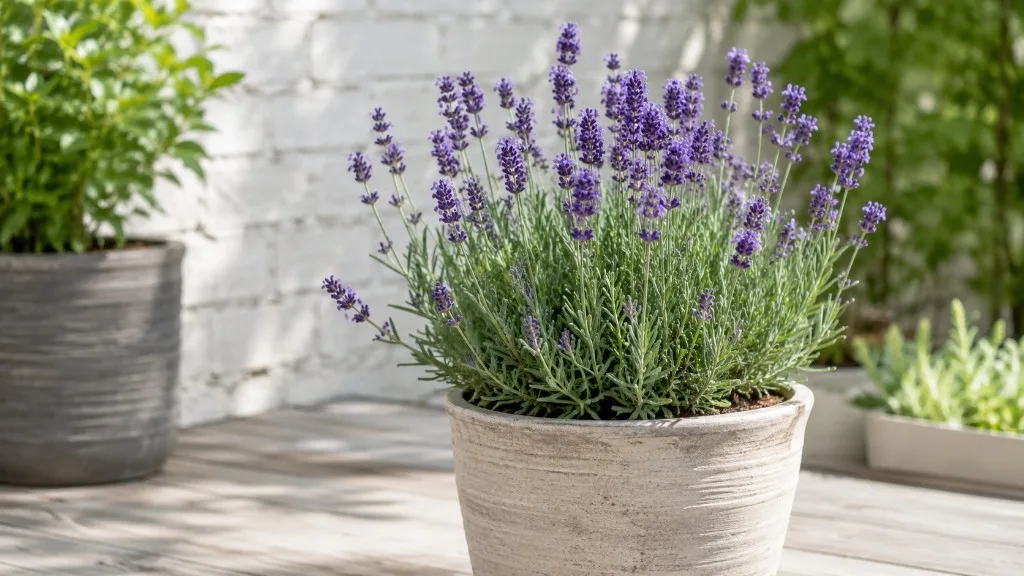
Best role: A permanent, fragrant pollinator border with stems for cutting. Lavender (Lavandula spp.) attracts flower visitors when it blooms and can bring fragrance and structure to a kitchen garden. Do not count it as a reliable mosquito, tick, or rodent barrier: an aromatic plant in a bed does not protect people or crops from those pests.
Lavender is a poor match for the same soil and watering routine as thirsty vegetables. It needs sun, air movement, and sharply drained soil; rich, regularly moist vegetable ground can shorten its life. Put it just outside the food bed, ideally in a raised, gravelly strip or a container, where vegetable irrigation will not keep its crown wet. This separation also keeps its woody stems from blocking access as the plant matures.
Planting note: Choose a variety suited to your local winter temperatures and humidity. Prune lightly after flowering without cutting far into old bare wood, and leave enough room for its eventual width. It is best for gardeners who want a lasting edge, not for a crop bed that needs annual rotation.
6. Marigold (Tagetes)
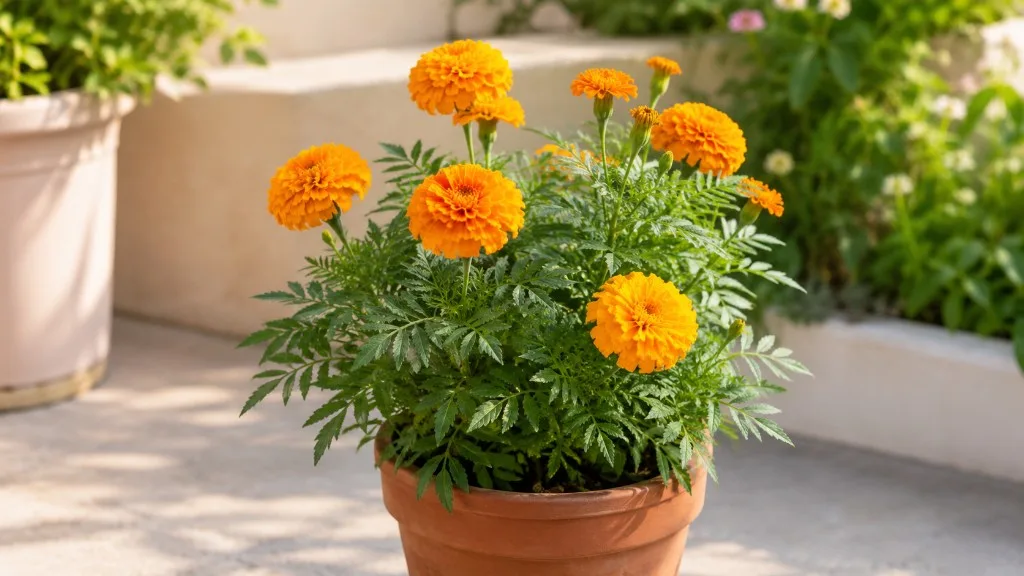
Best role: A compact annual border with flowers that can feed visiting insects. Garden marigolds are Tagetes species; French marigolds are often smaller than African types and easier to tuck along an edge. Their bright flowers are useful, but the common claim that a few marigolds “keep bugs away” is much broader than the evidence.
Some marigold species and cultivars have been studied for particular pests, including nematodes, but that does not make any marigold a general insect repellent. The outcome depends on the plant type, target pest, planting density, and timing. A row of a few marigolds is not a substitute for identifying nematodes in soil or managing a diagnosed infestation. For ordinary vegetable beds, plant them because you want the flowers and their insect visitors, then scout the vegetables as usual.
Planting note: Set them at the border or in planned gaps where the mature plant will not squeeze a crop. Remove faded blooms to keep a compact variety flowering, and leave a clear path for harvesting. For details about growing different kinds, see the marigold guide.
7. Sunflower
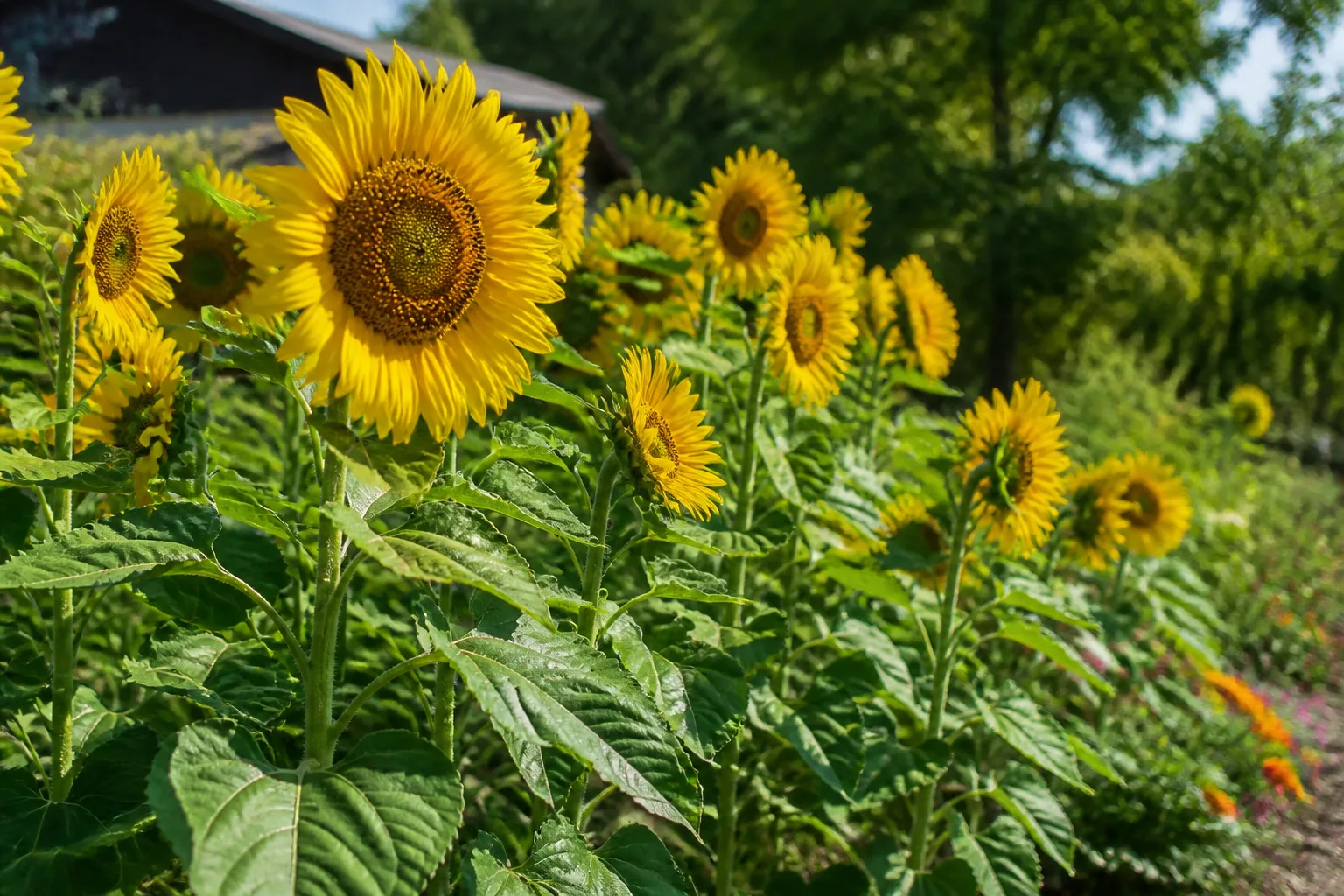
Best role: Tall pollinator forage, cut stems, and a seed crop. Sunflower (Helianthus annuus) brings height and late-summer flowers to a garden, and the heads can become a seed harvest or food for birds. Some native bees also visit sunflower blooms; Cornell Cooperative Extension notes that native pollinators can contribute to crops such as squash, tomatoes, and sunflowers, though the exact pollinator community varies by region. Cornell Cooperative Extension
Height is also the main design risk. A large sunflower casts shade and uses water, so place tall varieties on the north side of beds in the Northern Hemisphere or beyond the bed. Dwarf varieties are easier near crops, but still leave their mature spacing. Avoid assuming a sunflower stalk is a safe trellis for heavy vines: wind, stem strength, and crop weight make that an unreliable support plan.
Planting note: Sow after soil warms and water consistently while plants establish. Heads can attract squirrels and birds before you harvest, so protect seed heads if they are meant for your kitchen rather than wildlife.
8. Sweet Pea
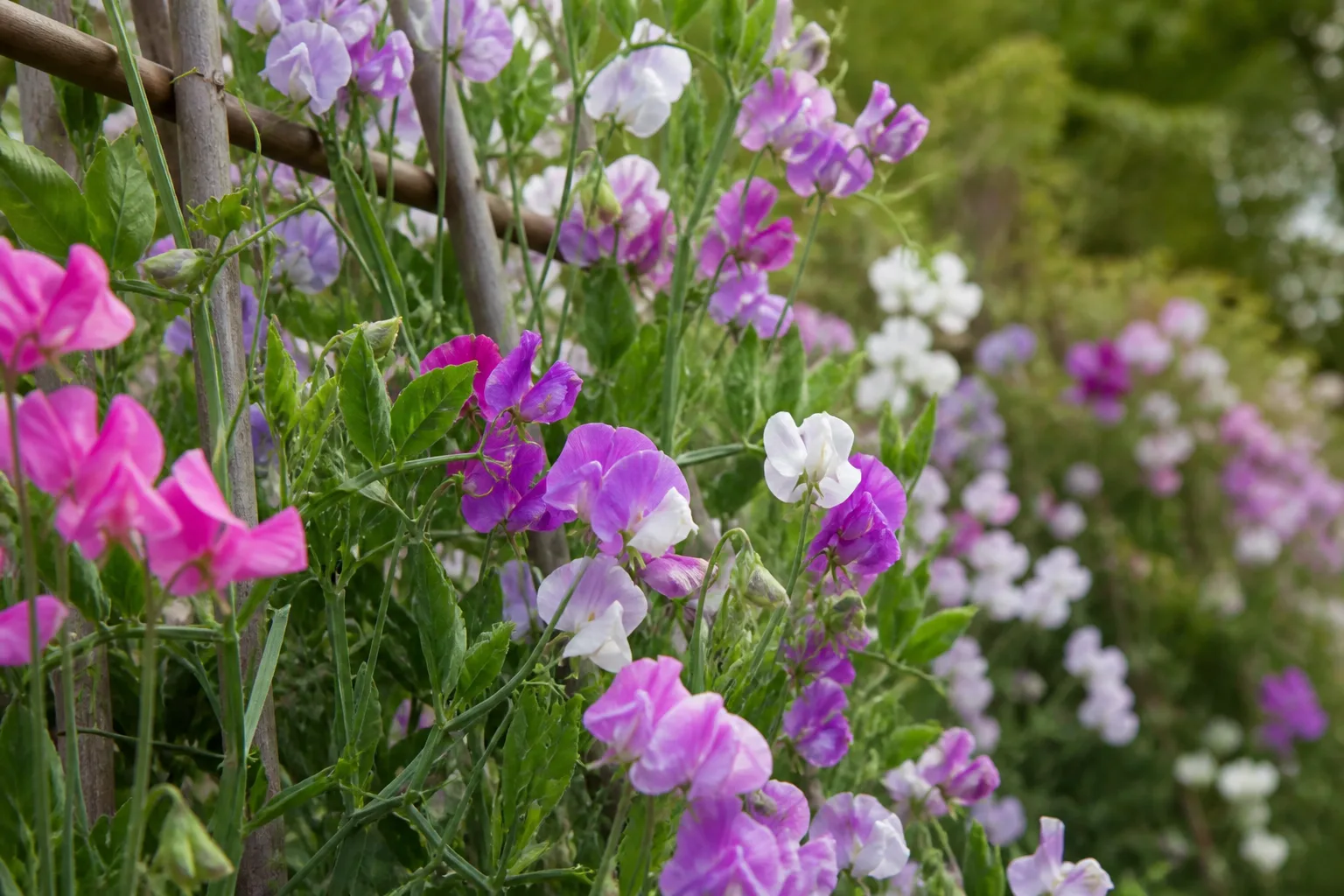
Best role: Fragrant, cool-season cut flowers on a trellis. Sweet pea (Lathyrus odoratus) is an ornamental climber, not the edible garden pea. It can flower while cool-season crops are growing and then fade as warm weather arrives, which makes it easier to fit into a spring rotation than a permanent summer bed.
Give it a sturdy support at the north edge of the garden so the vines do not shade shorter vegetables. Pick flowers frequently to prolong bloom, and remove developing pods if you do not want it to set seed. Keep the crop label clear and do not eat sweet-pea flowers, pods, or seeds; only garden peas (Pisum sativum) are grown as a vegetable.
Planting note: In mild-winter regions, sow in fall; in cold-winter regions, sow early in spring when the soil can be worked. Mulch the roots in warm weather and do not let the trellis collapse into neighboring crops. Sweet peas are best for a gardener who wants fragrance and bouquets, not a food harvest.
9. Zinnia
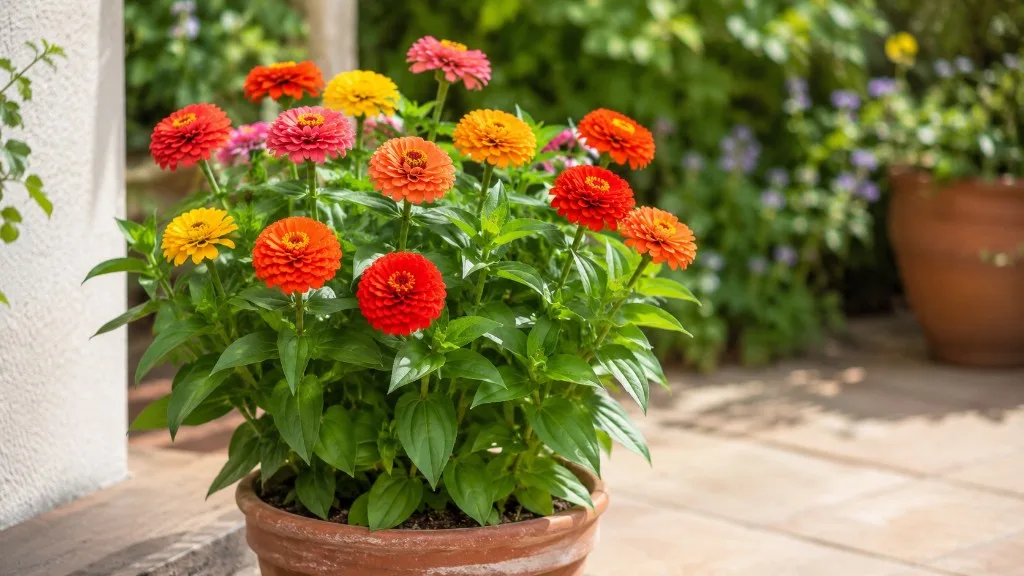
Best role: Reliable summer color and cut flowers that bring insects into the garden. Zinnias (Zinnia elegans) are warm-season annuals, and single or semi-double blooms leave a more accessible center for insects than tightly packed, fully double forms. They are easy to cut regularly, so you can harvest armfuls without pulling flowers out of a crop row.
Place them in full sun at a border or in a narrow cutting strip. Avoid crowding: dense foliage stays wet longer and is more prone to powdery mildew and leaf disease, especially where nights are humid. Leave space for airflow and water at the base rather than routinely wetting foliage. Zinnias are not a substitute for pollinating insects at crops that need them, but their blooms can add another food source through summer.
Planting note: Direct-sow or transplant after frost risk and let soil warm. Deadhead flowers for continued bloom; leave a few heads to mature if you want seed. If you have Japanese beetles, watch the flowers too rather than assuming they are a one-way diversion.
10. Pansy
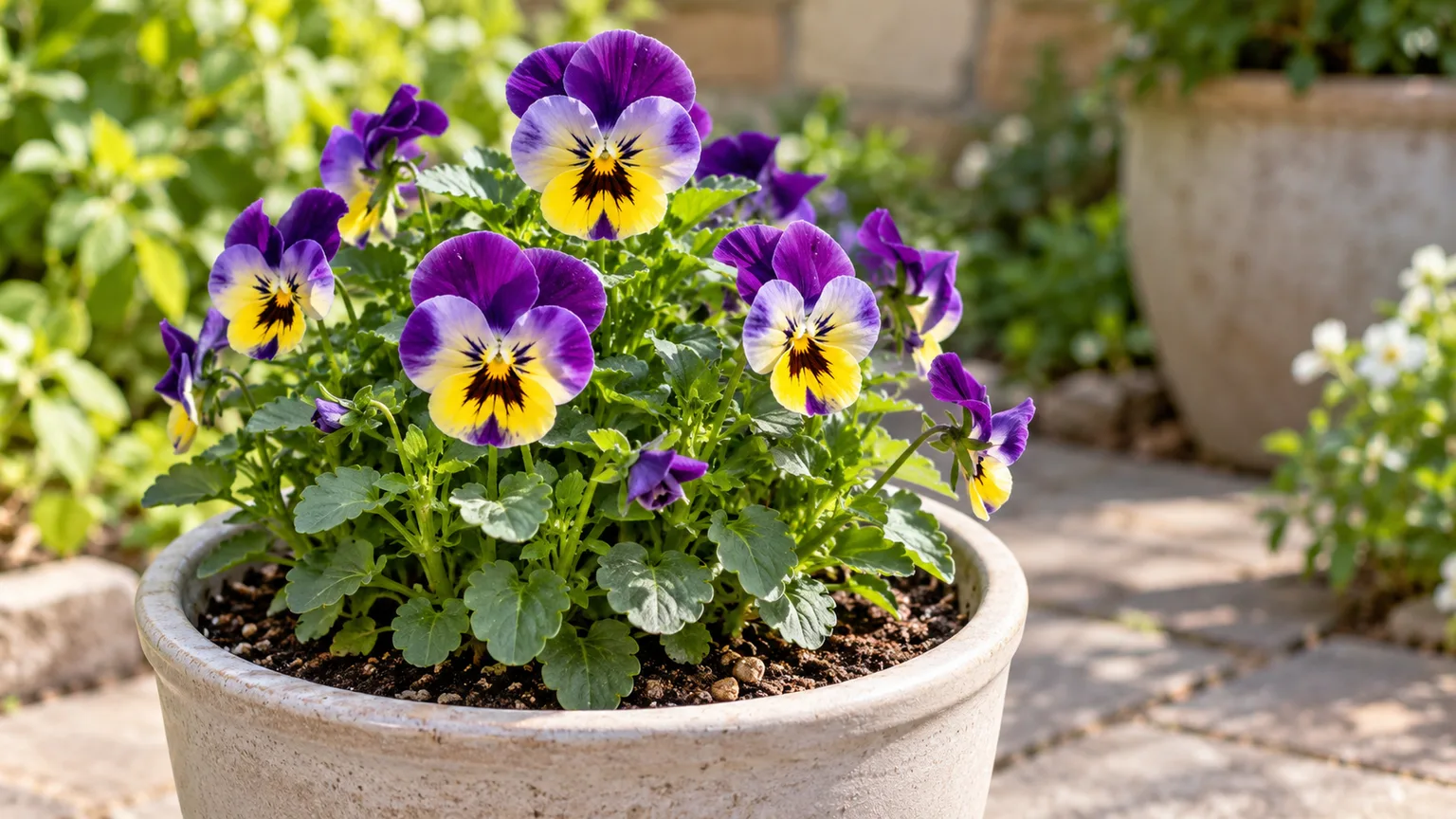
Best role: Low flowers for a spring or fall vegetable garden. Pansies (Viola × wittrockiana) fit beside lettuce, kale, and other cool-season crops because they remain short and can bloom before summer heat shuts them down. Their petals can be used as a garnish when the cultivar is correctly identified and grown without non-food pesticides.
Treat pansies as a seasonal fill, not a year-round companion. They may survive light frosts, but sustained heat makes them stretch and stop blooming. Tuck them along the outside of a bed where they will not occupy the space needed for a lettuce transplant or make it harder to reach the row. Keep soil evenly moist while they are growing, but do not create a wet, crowded mat around vegetable stems.
Planting note: Choose spring or autumn planting based on your local climate. If you intend to eat the flowers, grow them separately from ornamentals treated with products that are not labeled for edible crops, and wash blooms before serving.
11. Petunia
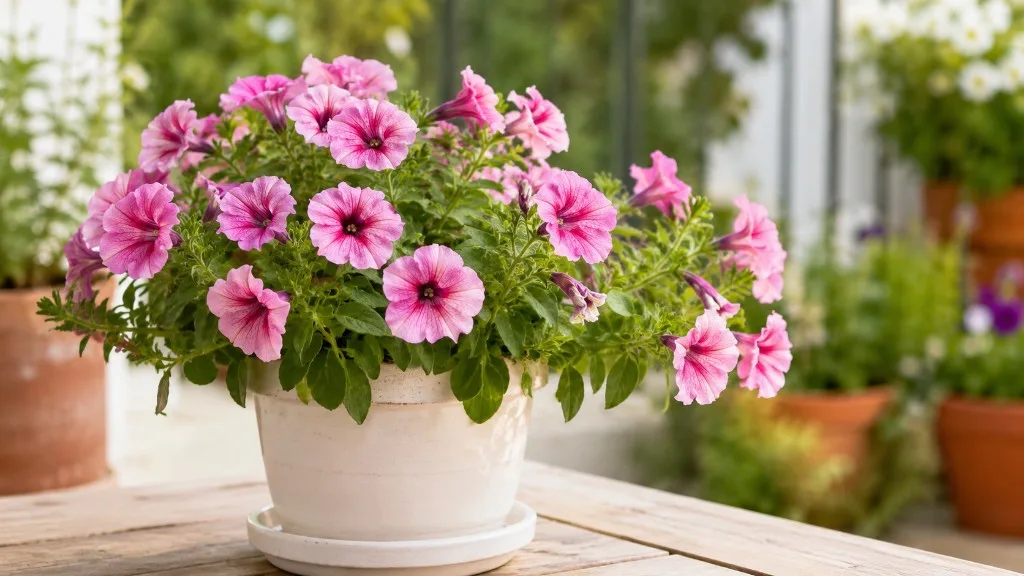
Best role: Long-blooming color in an edge, hanging pot, or container near the kitchen garden. Petunias (Petunia spp.) produce flowers over a long warm-season stretch and come in compact, spreading, and trailing forms. Their practical contribution is mainly ornamental; do not choose them expecting a guaranteed pesticide effect against beetles, caterpillars, or aphids.
A container is often the simplest placement because you can move it, water it separately, and keep its roots out of a narrow vegetable bed. If planting in the ground, reserve a border outside crop spacing. Petunias need regular moisture in hot weather, while many vegetable crops need their own steady irrigation; a thirsty petunia competing in a pepper root zone can complicate watering rather than simplify it.
Planting note: Remove faded flowers or shear tired stems to encourage a fresh flush. Check the foliage for aphids and other pests; a flower can attract beneficial insects and still host insects that damage itself.
12. Dahlia
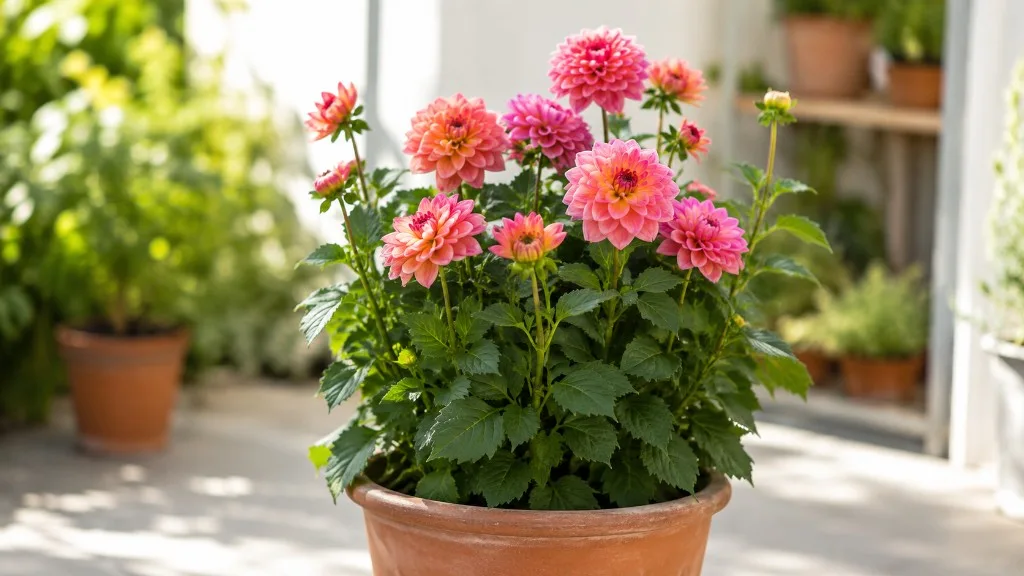
Best role: A long-blooming cut-flower planting for the edge of a productive garden. Dahlias (Dahlia spp.) can flower from summer into fall, giving pollinators and gardeners a later-season show after early spring flowers have finished. Their height and bloom form vary widely, so check the specific cultivar rather than treating every dahlia as a six-foot plant.
Give taller types their own sunny strip, stake them early, and keep them outside the main vegetable bed. They need water through active growth and can take substantial space; interplanting them among tomatoes or peppers can crowd roots and impede harvest. Single-flowered varieties expose their centers more easily to visiting insects than many densely petaled dinnerplate cultivars.
Planting note: Wait until soil is warm to plant tubers, and check how your local winter affects overwintering: in cold regions, tubers may need lifting and storage. Dahlias are a good choice if you want bouquets and can spare a planned border, not if you need every square foot for food crops.
13. Cornflower (Bachelor’s Button)
Best role: Easy-sown blue flowers for a pollinator and cutting patch. Cornflower (Centaurea cyanus), also called bachelor’s button, is an annual that tolerates cool conditions and can flower in late spring or early summer. The open flower form is useful for insect visits, while the stems make informal cut bouquets.
Sow it at the edge of a bed or in a small drift rather than scattering seed through every vegetable row. Plants can seed themselves and come back where you may not want them, so deadhead before seed forms if the bed needs to stay tidy. Its height depends on cultivar, but even a moderate stand can reduce air movement or shade small crops when planted too close.
Planting note: Check whether cornflower is considered invasive or problematic in your region before letting it reseed freely. If local guidance discourages it, choose a locally appropriate annual flower instead. Do not rely on the name “wildflower” as proof that a plant is native or harmless.
14. Sweet Alyssum

Best role: Low-growing nectar for hoverflies and other small beneficial insects. Sweet alyssum (Lobularia maritima) forms a short carpet of small flowers and is easier to fit near crop edges than a tall flower. Adult hoverflies feed on flowers; their larvae can prey on aphids, so a patch may support one part of a natural-enemy strategy. It does not guarantee that aphids will disappear.
Use it along a path edge or in a few open pockets rather than under every vegetable plant. Leave enough distance that the flowers do not smother seedlings or interfere with harvesting, and trim the mat if it starts to spill over a row. In mild climates it may persist longer; in very hot weather it often pauses or needs a trim before reblooming.
Planting note: Aim for overlap with the vegetable crop’s vulnerable period, not simply the earliest possible planting date. Penn State Extension recommends flowering diversity and different bloom times for pollinator support, while Cornell Cooperative Extension likewise emphasizes a succession of forage and biodiversity. Penn State Extension Cornell Cooperative Extension
15. Garden Mums
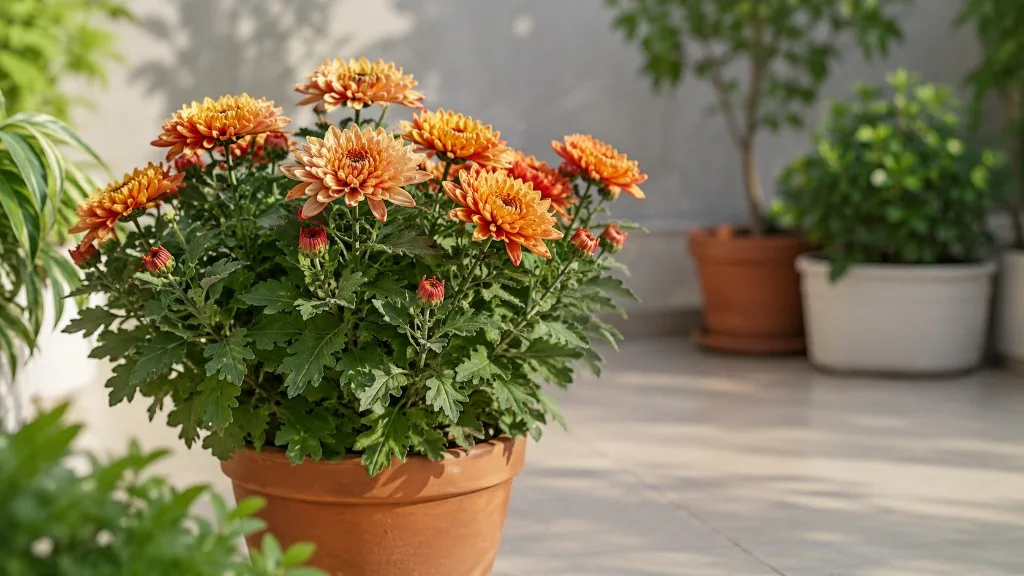
Best role: Late-season color when many summer flowers are fading. Garden mums (Chrysanthemum hybrids) can fill the autumn gap and give the garden a finished look as fall crops grow. Choose a cultivar with open, single or semi-double flowers if insect access matters; tightly packed blooms are more decorative than useful as forage.
Treat mums as a permanent border plant or grow them in pots that can be moved. They are not a quick way to repel pests, and their dense clumps can shade or crowd lettuce and fall brassicas if set directly among rows. Garden-center mums may be sold as seasonal color rather than hardy perennials, so check the specific cultivar and local winter conditions before expecting them to return.
Planting note: Plant early enough for roots to establish before winter, and pinch stems earlier in the season if a bushier plant is desired. Keep faded leaves from covering nearby crop rows.
16. Daylily

Best role: A durable perennial border outside the rotating vegetable bed. Daylilies (Hemerocallis spp.) tolerate a range of conditions and can bring summer blooms to a garden edge, but they are not a space-saving annual companion. Their clumps widen over time, and a dense mass of leaves can compete with nearby crops for light, water, and access.
Use daylilies where a permanent border already makes sense: outside the fence, along a path, or beside an orchard rather than between rows of vegetables that move each year. This keeps division and cleanup from disturbing annual crops. Some daylily cultivars bloom for a short period, so do not count on one planting to provide continuous nectar all season.
Planting note: Leave room for mature clumps and divide when they become crowded. This is a good low-maintenance landscape flower, but one of the weaker choices for a small raised vegetable bed.
17. Lupine
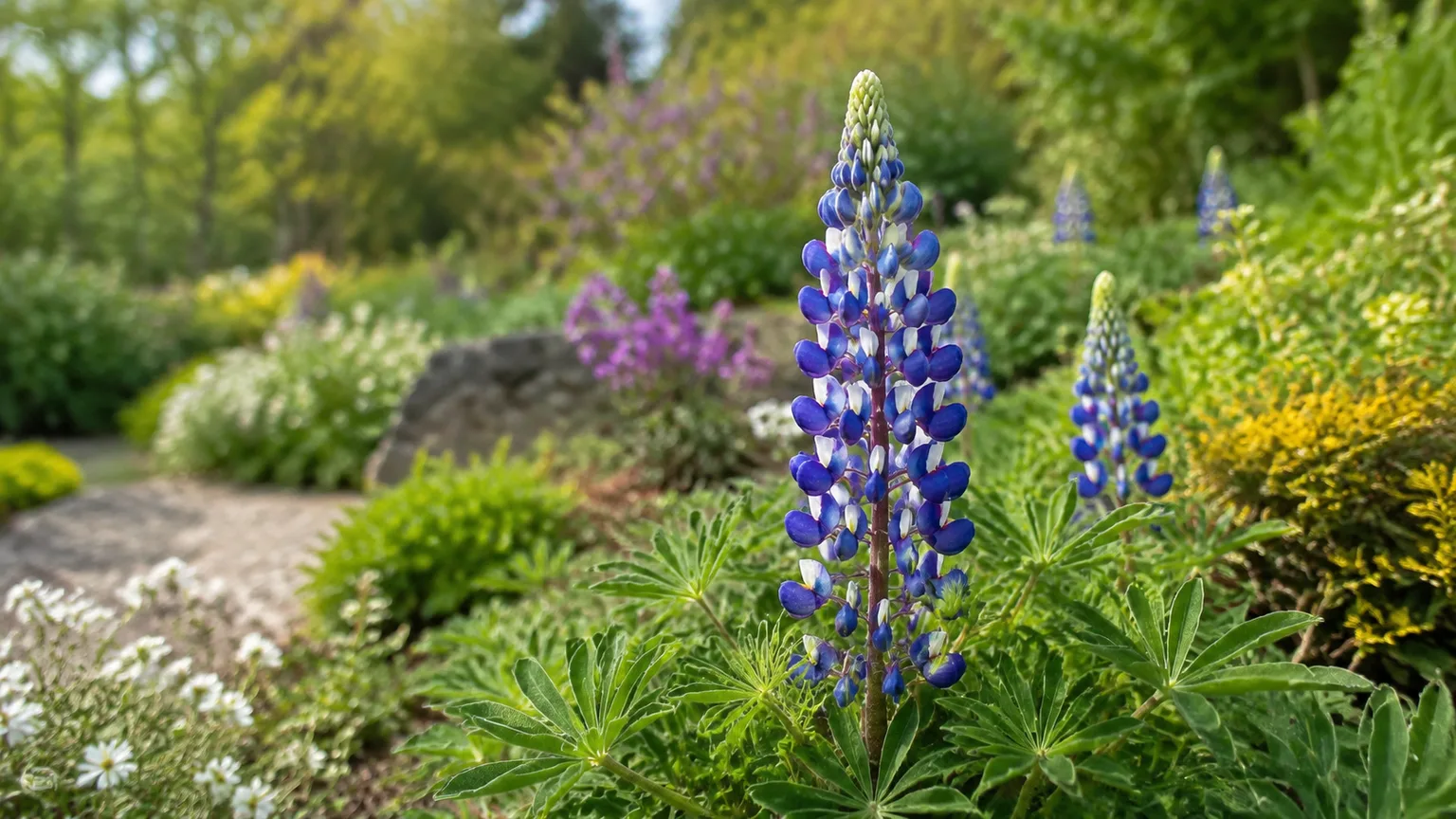
Best role: A tall flower display and pollinator resource at a permanent edge in a suitable climate. Lupines (Lupinus spp.) vary from annual species to perennial garden hybrids, so the name alone does not tell you how tall, hardy, or long-lived a plant will be. Check the species or cultivar and select one suited to your region before planting.
Keep lupines outside the main vegetable rows. Their upright flower spikes can shade low crops, and many perform best in cooler climates with well-drained soil; hot, humid summers can make them short-lived. Lupines are legumes, but a flower clump should not be treated as fertilizer for neighboring vegetables. Nitrogen benefits depend on the right plant, root nodules, and what happens to the plant material, not simply on planting a legume nearby.
Planting note: Choose regionally appropriate species and consider whether it may self-seed. If the bed rotates annually, use an annual flower there instead and reserve lupine for a perennial border.
How to fit flowers around vegetables
Start with the crop’s mature size, not the flower seed packet. A flower belongs only where it leaves the vegetable its required light, root room, and harvest access. In a narrow bed, one low border or a pot beside the path may be more useful than mixing flowers between every plant.
- For pollinators: Combine flowers with different bloom windows rather than relying on one burst of summer color. Penn State Extension explains that insects use pollen and nectar as food and recommends diverse flowers with varied bloom times; Cornell Cooperative Extension also advises a succession of forage and regionally appropriate biodiversity. That supports pollinator habitat, but does not mean every vegetable needs extra insect visits to set fruit.
- For aphid pressure: Calendula near collards is a specific extension-supported pairing. Sweet alyssum can provide floral resources for adult hoverflies, whose larvae may prey on aphids. Inspect the crop and flower patch; beneficial insects take time, and heavy infestations may need a direct, crop-safe response.
- For trap cropping: Place nasturtium outside the crop, make the aphid colony easy to inspect, and remove the trap plant before pests spread. A trap crop that is ignored can become another pest source.
- For height: Put sunflowers, cosmos, sweet peas on a trellis, and tall lupines on the north side of beds in the Northern Hemisphere, or far enough away that afternoon shadows miss the crops. For a compact garden, swap tall varieties for dwarf cultivars or use pots.
- For crop rotation: Choose annuals such as zinnias, pansies, calendula, or cornflowers inside a bed that changes each year. Keep lavender, daylily, lupine, and other long-lived plants in a fixed border so digging and rotation do not damage their roots.
- For food use: Eat only flowers you can identify with confidence and that were grown without pesticides not labeled for edible crops. Avoid flowers from florists or garden-center displays unless their production and treatment history is known. Wash blooms, remove stems and bitter parts as appropriate, and introduce unfamiliar edible flowers in small amounts.
Do not treat scent as a perimeter fence. Penn State Extension describes specific mechanisms and tested companion pairings, but results should not be stretched from one pest or crop to another. A flower border adds habitat and harvest value; it does not replace crop rotation, row covers when appropriate, or regular scouting. For a vegetable-bed map that protects crop light and access, see the vegetable garden layout guide. For pest-focused flower choices, see flowers that may help deter garden pests.
Conclusion
The best flowers for a vegetable garden depend on the job and the room available. For pollinator forage, start with open-flowered calendula, cosmos, zinnias, borage, or sweet alyssum, and choose bloom times that overlap the crops you grow. For a monitored aphid trap-crop test, try nasturtium at an accessible edge; for bouquets, use a dedicated strip of zinnias, cosmos, sweet peas, or dahlias.
Keep perennials and tall flowers outside the working bed unless you have space to spare. A few thoughtfully placed flowers can make a vegetable garden more useful and lively, but good spacing, crop care, and pest scouting still do the work that flowers cannot.



