7 Fast-Growing Shade Trees: Size, Hardiness & Site
Compare seven fast-growing shade trees by hardiness, mature spread, soil needs, and trade-offs so you can choose a canopy that fits your climate and yard.
If you want useful summer shade sooner, start with trees that can build a broad canopy in your climate—not simply the species with the biggest advertised growth rate. Red maple, river birch, tuliptree, American sycamore, dawn redwood, winged elm, and Shumard oak are seven candidates with different strengths: some favor moist ground, some need a large open site, and some are better suited to particular regions.
The title’s zone span is not a promise that every tree grows in every zone from 5 through 10. The seven picks cover different portions of that range, and a hardiness zone does not tell you whether a site is humid, dry, windy, alkaline, or compacted. If your yard sits at the warm edge of the range—or in zone 10—use local extension recommendations and choose for heat and rainfall as well as winter cold.
What “fast-growing” means for shade
A tree’s growth label describes its potential under suitable conditions, not a dependable number of inches it will add every year. A newly planted tree may spend its first seasons building roots, while drought, poor drainage, compacted soil, shade, or transplant stress can slow the top growth that looked impressive on a nursery tag. Even within a species, growth changes with age, cultivar, and site.
For shade, canopy spread matters as much as height. A tall, narrow tree may shade a wall or fence but leave a patio in afternoon sun; a wide crown can cool a sitting area sooner but needs space away from roofs, drives, walks, and utility lines. Deciduous trees provide summer shade and let more winter light through after leaf drop, while evergreen species keep year-round cover. The NC State Extension Gardener Handbook cautions that speed can come with a strength trade-off in some trees, so evaluate mature form and structure along with the growth class.
The tree profiles below use terms such as “rapid,” “fast,” and “medium” as their sources describe them. Those categories help compare candidates, but they are not interchangeable annual-growth guarantees. A healthy tree in well-matched soil with steady establishment care is more likely to grow well than a nominally faster species planted in the wrong spot.
Start with the site, not the nursery label
Before choosing a species, write down what the planting site actually offers: the lowest winter temperatures, summer heat and humidity, hours of sun, soil drainage, and whether water is available during dry spells. Then measure aboveground clearance and decide how wide a mature canopy can be without shading a neighbor’s garden, blocking a driveway, colliding with power lines, or dropping limbs over a roof.
NC State Extension recommends weighing mature size and form, hardiness, water needs, and the available above- and belowground space when selecting woody plants. That framework is more useful than shopping by a single growth-rate claim because it filters out trees that might grow quickly but cannot stay healthy or safely fit the site.
Check winter hardiness and summer heat
USDA zones help narrow winter-survival choices, but they do not replace local climate knowledge. A tree that tolerates a cold winter can still struggle with hot, dry summers; a wet-site tree can fail in a yard where irrigation is scarce. Check whether the species is suited to your region and whether its preferred moisture matches the soil after an ordinary rain—not just after a storm.
The ranges in the table are rounded from the university plant profiles cited in this guide. They are starting points, not guarantees for every cultivar or microclimate. If you garden in zone 10, notice that most of the seven selections stop below it; the warm-climate note below offers a more realistic route than stretching a cold-region recommendation past its documented range.
Measure mature canopy and root space
Measure the future tree’s mature spread, then imagine that circle centered on the trunk. Keep that canopy clear of wires and structures, and leave enough room for roots to grow into open soil. Roots are not confined to the trunk’s immediate base: NC State’s planting guidance notes that the root zone extends beyond a tree’s drip line, so a tiny mulch ring or narrow planting strip will not support every large shade tree indefinitely.
A small lot is not automatically a place for a fast-growing tree. A narrow-crowned tree may work where a wide canopy cannot, but it still needs room for height, roots, and maintenance. A practical small-yard guide from Savvy Gardening makes the same useful distinction: a narrow tree can add vertical presence in a tight space, while a tree that outgrows the garden can force severe pruning or removal. If the mature dimensions cannot fit, choose a smaller, slower species or use a temporary shade structure while it grows.
| Tree | Approximate hardiness range | Typical mature size (height × spread) | Best fit |
|---|---|---|---|
| Red maple | 2–9 | 40–70 ft × 30–50 ft | Broad native canopy; moist, slightly acidic soil |
| River birch | 4–9 | 30–70 ft × 40–60 ft | Moist ground, rain garden, or streamside setting |
| Tuliptree | 4–9 | 80–120 ft × 30–60 ft | Large, sunny property with deep open space |
| American sycamore | 4–9 | 75–100 ft × 75–100 ft | Very large yard or park-like site |
| Dawn redwood | 4–8 | 62–100 ft × 15–25 ft | Tall, narrower accent with room for height |
| Winged elm | 6–9 | 45–70 ft × 30–40 ft | Adaptable Southern and southeastern sites |
| Shumard oak | 5–9 | 50–70 ft × 30–40 ft | Large yard needing a durable native oak |
These are broad species-level dimensions; individual trees can finish outside the typical range. NC State Extension lists red maple, river birch, tuliptree, American sycamore, dawn redwood, and Shumard oak at the sizes shown; UF/IFAS Extension provides the winged elm dimensions. A nursery cultivar may have a different mature shape, so check its label and an independent regional source before you buy.
Seven fast-growing shade trees to consider
The best choices here are not interchangeable. Use the hardiness range and mature dimensions as an initial screen, then choose by the site condition each tree handles especially well. A “best fit” can still be the wrong choice if your yard lacks its preferred soil moisture or enough room for the canopy.
Red maple (Acer rubrum)
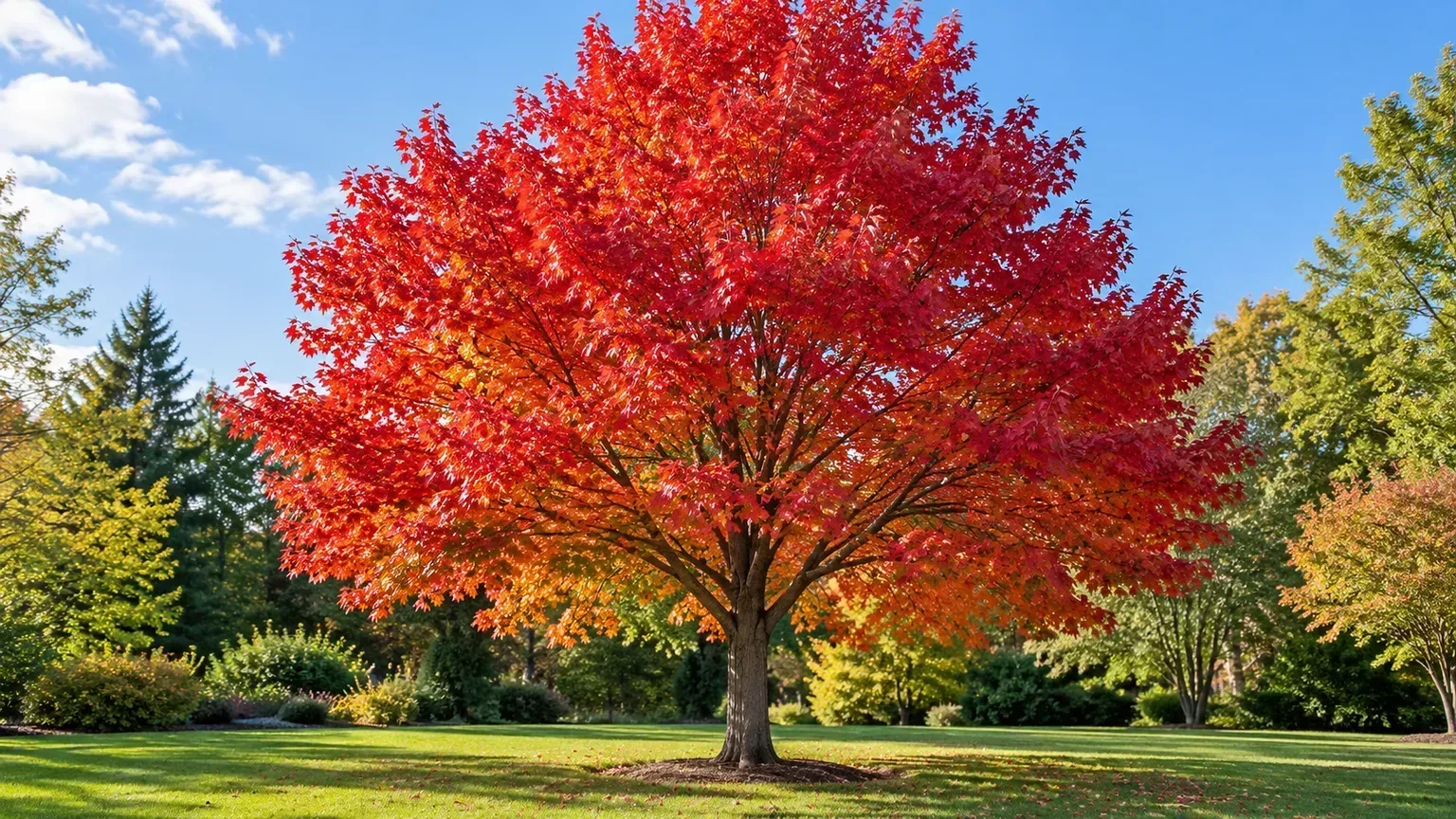
Red maple is a strong shortlist choice when you want a broad native canopy with fall color. NC State Extension rates its growth as rapid and describes a common mature size of about 40 to 70 feet tall and 30 to 50 feet wide; it is native across much of eastern North America and grows in full sun to partial shade. Fall foliage can be red, but the exact color varies by tree and cultivar, so do not buy it on the promise of one precise shade of scarlet.
Give it open soil and enough distance from pavement. Red maple tolerates a range of soils but prefers moist, slightly acidic conditions; on alkaline soil it can develop nutrient-related chlorosis. Its shallow surface roots may buckle a nearby sidewalk or driveway, and wind or ice can break branches. Its dense root mat can also make it difficult to grow other plants right beneath the crown. See NC State Extension’s red maple profile before choosing a cultivar or planting near hardscape.
River birch (Betula nigra)
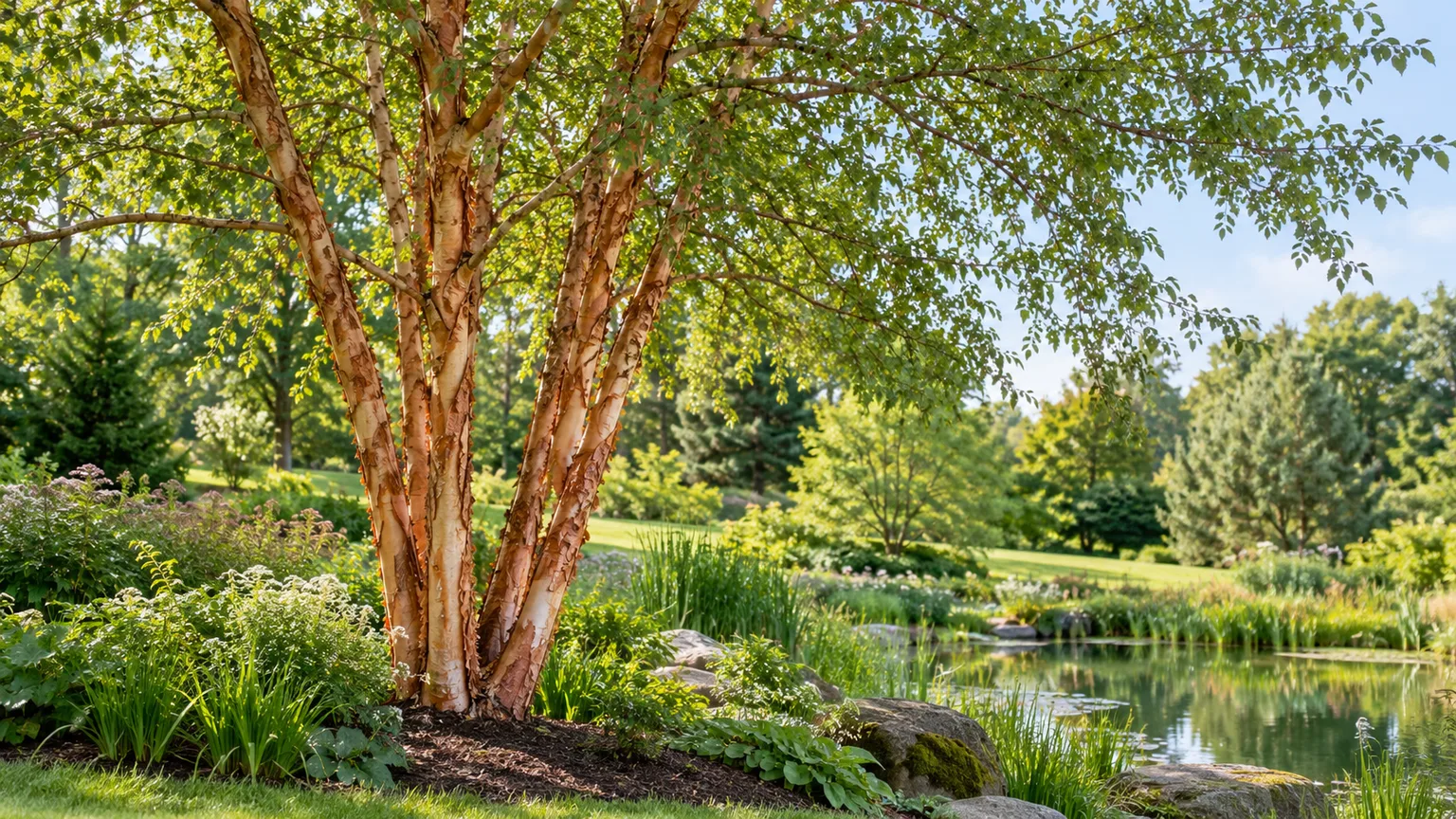
River birch earns its place where soil stays reliably moist. It is one of the more heat-tolerant birches, grows in sun or part shade, and can tolerate periodic flooding; its cinnamon-brown peeling bark adds winter interest after the leaves drop. NC State Extension describes a rapid growth class and a typical range of 30 to 70 feet tall by 40 to 60 feet wide, so even a young specimen needs more room than its nursery pot suggests.
Do not treat its tolerance of wet ground as proof that it will thrive in a dry lawn. The tree can shed interior leaves during summer drought, stress in hot dry conditions, and drop twigs; put it away from gutters and highly manicured patios. If you have a rain garden or a naturally damp part of the yard, river birch can combine useful shade with a better moisture match. The NC State Extension river birch profile also notes that it needs consistently moist soil and that pruning during active sap flow can cause bleeding.
Tuliptree (Liriodendron tulipifera)
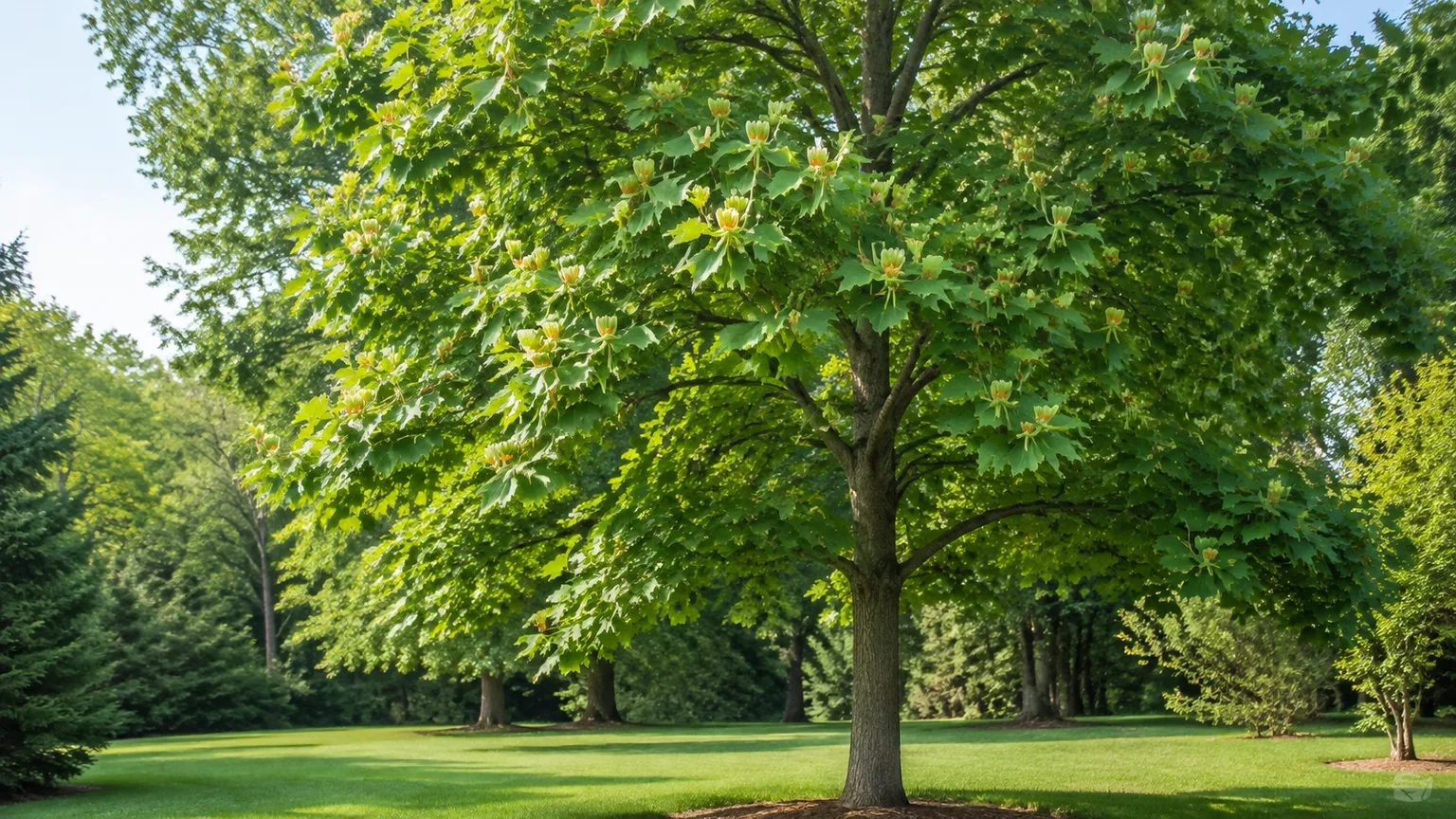
Tuliptree—also called tulip poplar or yellow poplar—is one of the fastest and largest options in this group. NC State Extension lists a rapid growth rate and a mature range of about 80 to 120 feet tall with a 30- to 60-foot spread. It can be a striking shade tree for a large sunny lot, but it is generally a poor fit beside a house, small patio, or compact urban yard.
The flowers are attractive, but they sit high in the crown of a mature tree and may be easy to miss from the ground. More importantly, the NC State profile flags weak wood and a tendency for leaves to yellow and drop during hot, dry weather; the tree also needs plenty of room. Think of it as a landscape-scale shade tree rather than a shortcut to a small-yard canopy. Read the NC State Extension tuliptree profile for its site requirements and limitations.
American sycamore (Platanus occidentalis)
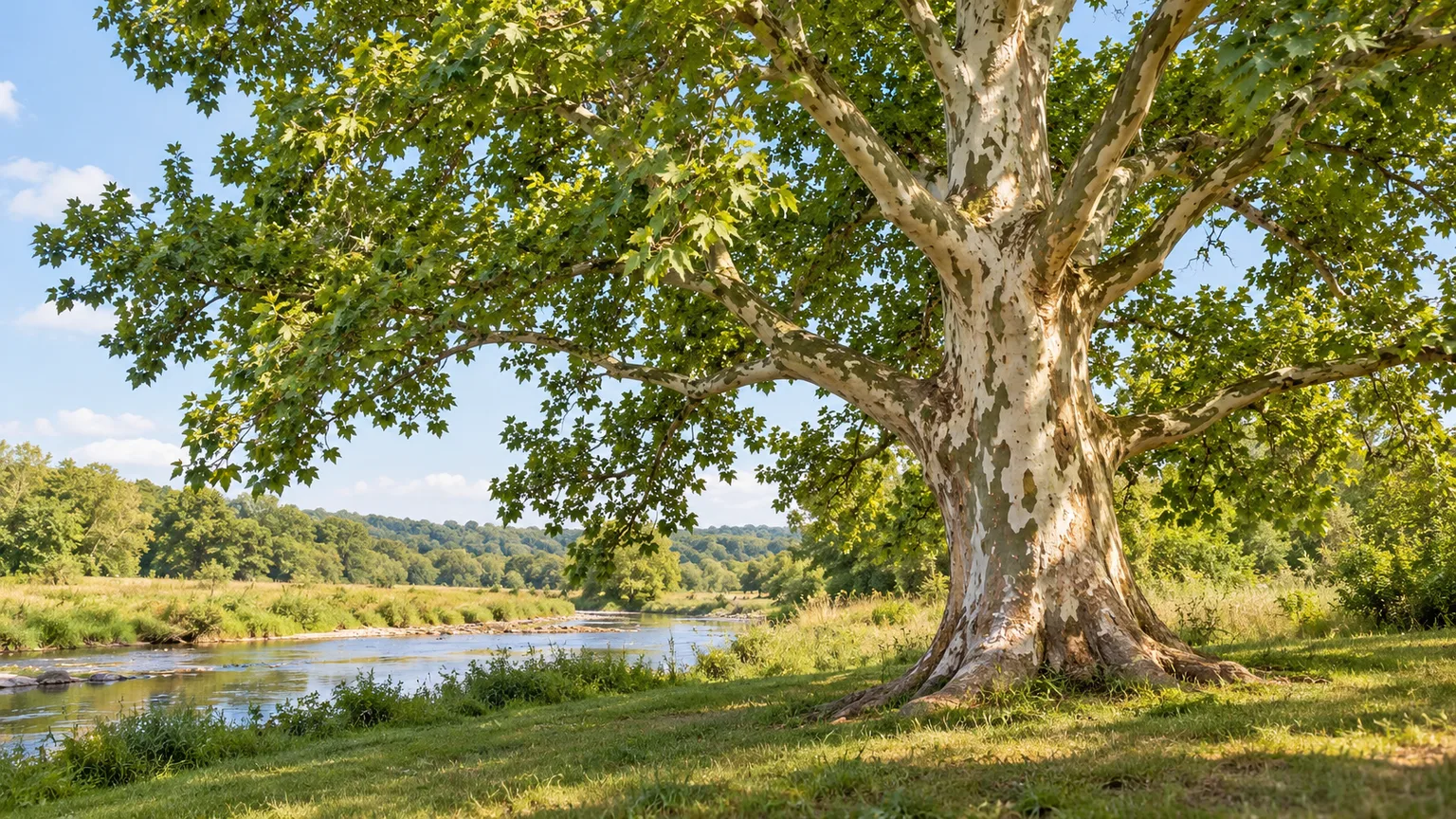
American sycamore is the choice for someone with a genuinely large site who wants a big, fast-built canopy. NC State Extension describes it as fast-growing, with a typical height of 75 to 100 feet and a spread about as wide. It favors full sun and moist, well-drained soil, but is not particularly fussy about soil texture or pH; the mottled bark is easy to recognize once the tree matures.
Its size is the main limitation, not a minor footnote. A crown that can reach 75 to 100 feet across can dominate an ordinary suburban lot, shade a broad lawn, and extend over rooflines or paving if it is planted too close. It is better suited to large yards, parks, and open riparian ground than to a narrow front-yard strip. The NC State Extension American sycamore profile gives the mature dimensions and site notes; use those measurements before choosing a planting point.
Dawn redwood (Metasequoia glyptostroboides)
Dawn redwood is a deciduous conifer: its soft, feathery foliage turns coppery in autumn and then falls, so it does not provide year-round screening. It grows rapidly and can reach about 62 to 100 feet tall, but its mature crown is comparatively narrow at roughly 15 to 25 feet across. That upright form can work where a broad oak-like canopy would be too wide, provided the site can accommodate a very tall tree.
This tree is a better fit for open lawns, larger properties, pond edges, or campus-like grounds than for a small courtyard. NC State Extension notes that it needs room and does well around ponds and water gardens; it also tolerates urban pollution. The NC State Extension dawn redwood profile places it in zones 4–8, so it is not a zone 9 or 10 recommendation just because the title spans warmer climates.

Winged elm (Ulmus alata)
Winged elm is a useful regional shade tree for much of the southern and southeastern United States. UF/IFAS Extension rates it fast-growing, with a typical height of 45 to 70 feet and a spread of 30 to 40 feet; its corky ridges on the twigs and branches give it its common name. It can grow in full sun or partial shade and is described as adaptable to both wet sites and dry, rocky ground.
That flexibility makes winged elm worth comparing when a red maple would struggle with alkaline soil or when a site has variable moisture. It is native to the southern two-thirds of the eastern half of the United States, with the UF/IFAS profile listing zones 6A through 9B. The tree is not a universal choice for colder zone 5 yards, and its natural range should guide regional use. See UF/IFAS Extension’s winged elm profile for the hardiness range and landscape uses.

Shumard oak (Quercus shumardii)
Shumard oak is a long-term shade investment with a rounded crown, red fall color, and good tolerance for the varied conditions of a large urban yard. NC State Extension says it is relatively fast-growing and can reach about 50 to 70 feet tall with a 30- to 40-foot spread. Its profile describes tolerance for drought, dry soil, pollution, wind, and short periods of flooding, with full sun and average soil as a good starting point.
There is a useful nuance in how its speed is described: the profile calls it relatively fast-growing, while the plant database rates its growth class as medium. That makes it a steadier choice than a tree selected solely for the quickest early height gain, not a guaranteed rapid-shade tree. Shumard oak is native and supports wildlife, but it still needs space for an eventual canopy and acorns. Check the NC State Extension Shumard oak profile for dimensions and regional notes.
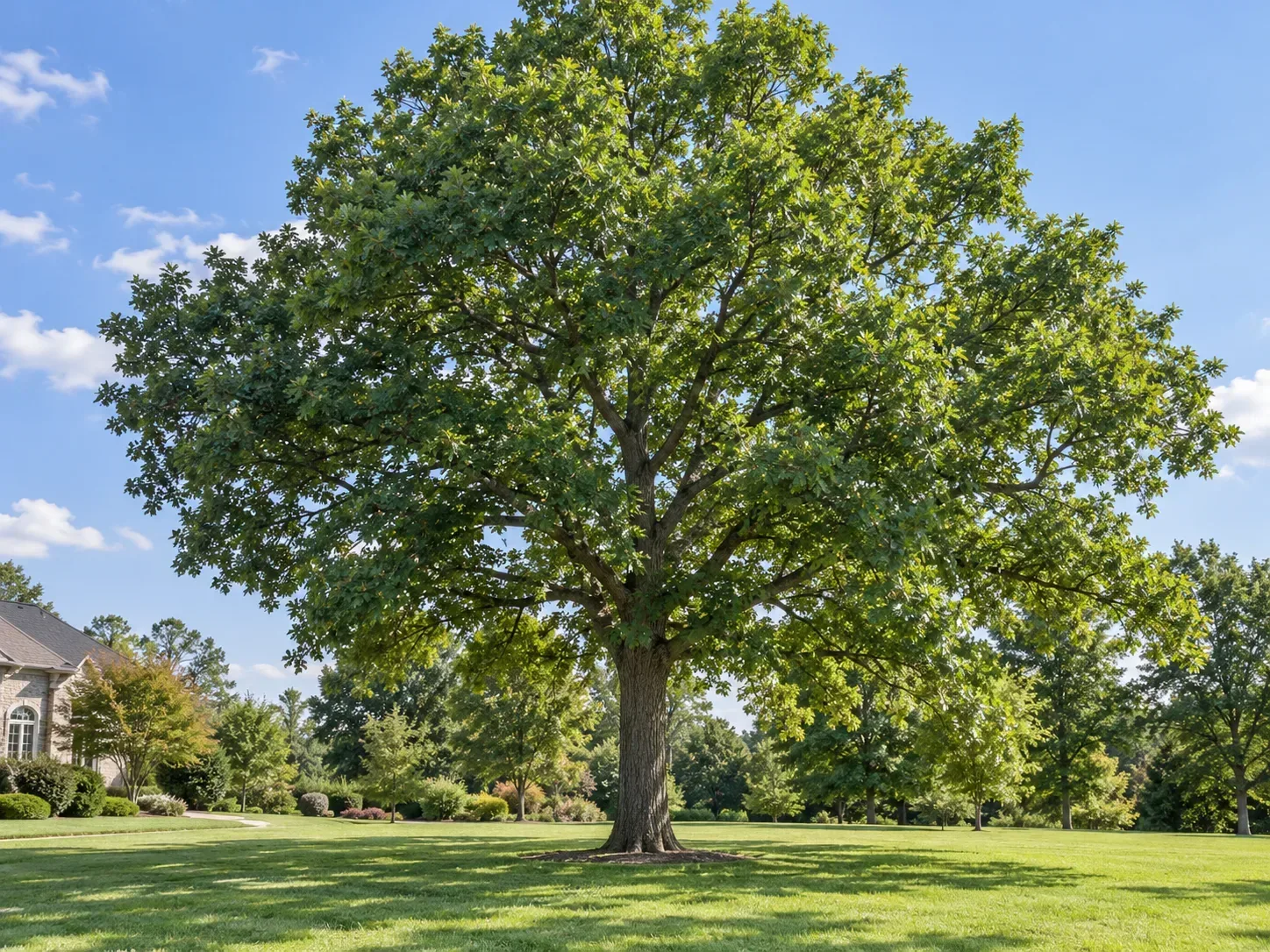
Which tree fits your site?
For a large sunny yard with room for a dramatic canopy, compare American sycamore and tuliptree first; both can become enormous, and the tuliptree is especially tall. For ground that stays moist or a rain-garden edge, river birch is a more natural fit. Dawn redwood also suits moist ground, but its narrow crown creates a taller, more upright silhouette than a wide shade ceiling.
For a dry or urban site, compare Shumard oak with winged elm if your region supports them. Red maple is an excellent broad-canopy choice where soil is moist and slightly acidic, but its surface roots make it a poor match for a tight strip beside paving. The right order is soil and climate first, mature spread second, growth speed third.
If your yard is in zone 10, do not force a species whose documented range stops in zone 8 or 9. A warm-climate tree such as southern live oak (Quercus virginiana) may be a better long-term canopy option in zones 8–10, but NC State Extension rates it medium in growth and gives it a very broad mature spread. Its profile also lists high flammability, so it should not be planted in the defensible space closest to a home. Treat it as a regionally suitable, slower alternative—not a fast-growth promise. Consult your local extension service for a zone 10 species that matches your rainfall and soil.
If you have limited yard width, do not solve the problem by topping or repeatedly cutting back a large tree. A narrow crown can reduce lateral spread, but it does not shrink root demand or eventual height. A practical tree guide from Savvy Gardening is useful for thinking about vertical form in tight gardens; its main lesson for shade planning is to compare mature dimensions with the space you actually have.
How to establish a new shade tree
Planting technique will not turn a naturally slow tree into a fast one, but it can prevent avoidable setbacks. In much of the temperate United States, container trees generally need less attention when planted in late fall or early spring; local timing may differ where the ground freezes hard or summers are especially hot. If the soil is compacted or drains poorly, address the site before the tree goes in rather than trying to fix chronic stress after the roots are established.
At planting, find the top of the root ball and the trunk flare, then dig a hole no deeper than the root ball and two to three times as wide. Set the tree at or slightly above finished grade so it does not settle too deeply, refill with the excavated soil, and water it in to settle soil around the roots. The NC State Extension Gardener Handbook recommends these steps for woody plants and explains why a deeper hole can settle and leave a tree planted below grade.
Spread an organic mulch ring beyond the planting hole to reduce weeds and keep moisture more even, but leave a clear gap around the trunk. NC State Extension recommends a 2- to 3-inch layer and at least 6 inches of space between mulch and the trunk; a mulch volcano traps moisture against bark instead of helping roots. Keep the ring expanding as the tree grows, because roots extend outside the canopy’s drip line.
Water the root ball itself during establishment rather than relying on a quick sprinkle over the leaves or a lawn sprinkler. Check moisture at the root ball and water slowly when it begins to dry; rainfall, drainage, soil texture, season, and tree size all change how often that is needed. UGA Extension notes that shallow, frequent watering does not move water deep enough for tree roots and that the soil also needs time to drain and re-aerate. Avoid fertilizing just to push height: the same UGA guidance explains that established trees rarely need routine fertilizer, while a soil test can identify a real nutrient need.
Keep the first pruning light. Remove broken or crossing branches, but do not strip lower limbs just to make a newly planted tree look taller; the foliage helps the tree build roots and trunk strength. If the plant leans or moves excessively, stake only as needed and remove supports once the tree can stand securely on its own. For step-by-step details, see the NC State Extension Gardener Handbook’s woody ornamental chapter and UGA Extension’s guidance on trees and lawns.
Mistakes that cost time
Choosing by advertised feet per year is the first trap. Growth rates vary with site and establishment, and an impressive height figure says little about mature width, branch structure, drought response, or whether a tree can tolerate your soil. The BBC Gardeners’ World overview of fast-growing garden trees notes that vigorous white poplar belongs in large gardens and well away from buildings because of its roots; use that kind of scale warning instead of treating speed as a universal benefit (BBC Gardeners’ World).
Planting a huge species in a small yard is the second. Sycamore and tuliptree are not compact trees, and even a narrower dawn redwood can become much taller than a two-story house. Do not count on aggressive pruning to keep a tree permanently smaller than its natural dimensions; pruning can change its form, add cost, and create recurring maintenance rather than solving the underlying mismatch.
Ignoring water and hardscape slows establishment and can create future conflict. River birch planted in dry compacted soil may shed leaves and stress, while red maple planted beside pavement may lift it as surface roots expand. Choose for the soil you have, allow for mature roots, and use mulch and deep watering to support establishment rather than trying to compensate with repeated fertilizer.
Assuming “hardy in zone 8” means “good for every zone 8 yard” is another avoidable error. A species can survive winter but still dislike the site’s heat, summer drought, standing water, alkaline soil, or salt exposure. Ask a local extension office or certified arborist which cultivars perform in your county, especially near the edge of the species range or in zone 10.
Conclusion
The best fast-growing shade tree is the one that can build a healthy canopy in the space and climate you actually have. Red maple and river birch suit different moisture conditions; sycamore and tuliptree need landscape-scale room; dawn redwood offers a tall, narrower outline; winged elm and Shumard oak are regional choices with useful adaptability. Start by matching hardiness, soil moisture, mature spread, and root space, then give the tree careful planting and establishment water. That decision will usually bring shade sooner than chasing a growth-rate number that the site cannot support.



