11 Species of Invasive Vines and Their Regional Risks
Some fast-growing vines are invasive only in certain places. Compare identification clues, safety risks, control steps, and native alternatives by region.
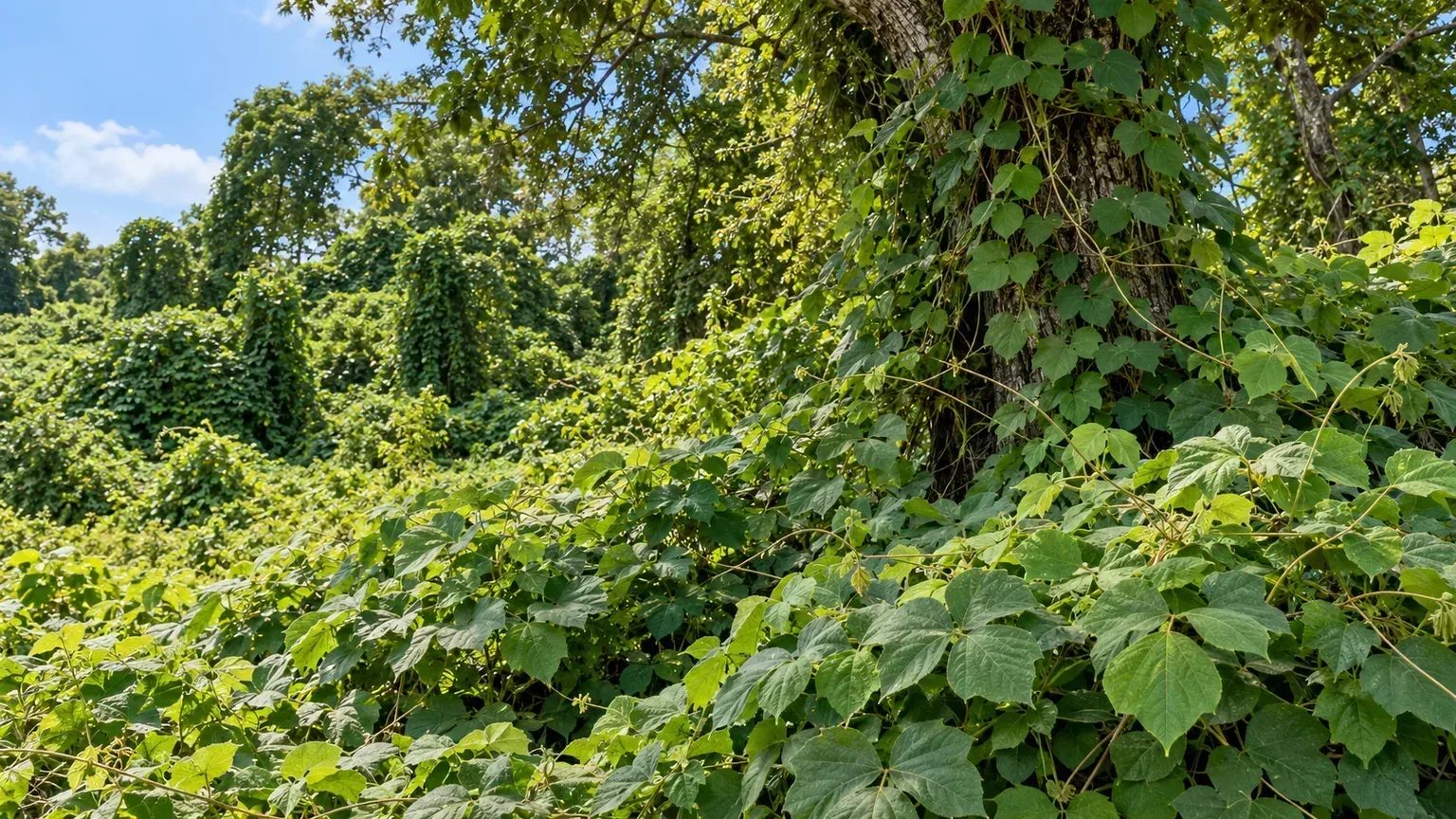
A vine can be a beautiful screen in one garden and an ecological problem a few miles away. “Invasive” is not a synonym for fast-growing, difficult to prune, or irritating to a gardener: it describes a nonnative plant that spreads in a new area and causes or is likely to cause ecological, economic, or human harm. Local climate, habitat, and state rules matter. NC State Extension, for example, lists kudzu, Chinese wisteria, Japanese honeysuckle, Oriental bittersweet, and English ivy among problematic vines in North Carolina; the Indiana Native Plant Society describes wintercreeper and Japanese honeysuckle as invasive in Indiana. Neither list makes every vine invasive in every state.
The 11 names below are plants that have been described as invasive or troublesome somewhere, not a universal removal order. Poison ivy is the important exception: it is a native plant in eastern North America, not an invasive species merely because it can cause a rash or spread vigorously. NC State Extension identifies it as a native vine. Before planting or pulling any vine, verify its identity and status with your county extension office or the current invasive-plant list for your state and region.
What counts as an invasive vine, and where?
Invasive-plant lists are regional because a plant’s ecological effect depends on where it grows. A species introduced from another continent may naturalize without becoming invasive everywhere; it becomes an invasive concern when it spreads beyond cultivation and harms native communities, wildlife habitat, forestry, agriculture, or human health. A state may also regulate sale or transport separately from whether a plant is common in your neighborhood. Treat maps and lists as local guidance, not as a single nationwide ranking. The USDA definition focuses on nonnative species whose introduction causes or is likely to cause harm; a plant’s fast growth by itself is not enough, as NC State Extension explains in its overview of invasive plants and forests.
That distinction helps separate three very different situations. A native vine can be aggressive in a small bed but still provide food or cover in its home ecosystem. A nonnative ornamental can grow vigorously but remain contained at a particular site. And a listed invasive can be a high priority near woodland or water but a smaller, manageable patch in a maintained garden. For ecological status, ask what it does outside cultivation; for a practical garden decision, also ask where it is growing and whether it is producing seed or escaping its bed.
How to identify a vine before you remove it
Start by photographing the whole plant, its leaf arrangement, stem, flowers or fruit, and the point where it roots. Note whether leaves are opposite or alternate, whether stems twine or cling with rootlets, and whether the vine makes runners or underground shoots. Use several traits together: leaf shape alone can be misleading, especially when a plant has juvenile and mature growth forms.
Two mistakes are especially costly. American bittersweet is native in much of the eastern United States and can be confused with Oriental bittersweet; the latter commonly carries fruit along leaf axils, while native bittersweet bears fruit near stem tips. Poison ivy may be a low groundcover, shrub, or hairy climbing vine, and Virginia creeper has five leaflets rather than poison ivy’s usual three. Do not remove an unidentified vine on the basis of a rhyme or one distant photograph; send clear photos to an extension office or local native-plant organization. Regional plant atlases such as the Invasive Plant Atlas can help with identification and distribution, but check the current authority for your own state before deciding what to do.
11 vines to check against local plant lists
These short profiles pair a field clue with the question that matters most: is this species listed as a problem where it is growing? If a local authority does not list a species, that is not proof it is harmless; it is a cue to ask an extension educator whether it spreads in your habitat and whether removal is recommended.
Algerian ivy (Hedera algeriensis)
Algerian ivy is an evergreen ivy with broad, leathery leaves and climbing stems that attach by aerial rootlets. It is native to North Africa and is often planted as a shade-tolerant groundcover. Like English ivy, it can move from a maintained bed into trees or natural areas, particularly where winters are mild; its status is less consistently listed than English ivy’s, so check local lists rather than assuming the same legal or ecological rating everywhere. Botanical references distinguish Algerian ivy from English ivy.
If it is spreading into a woodland edge or a protected natural area, contain the leading edge first and identify whether it is Algerian ivy, English ivy, or another Hedera. Avoid using a generalized “ivy” label to decide whether to remove it. If you want an evergreen groundcover, ask a local native-plant nursery for species suited to your region and shade conditions instead of replacing it with another spreading nonnative.
Chinese wisteria (Wisteria sinensis)
Chinese wisteria is a woody, twining vine from China, grown for long clusters of fragrant flowers. Its heavy stems can climb into tree canopies, shade branches, and add substantial weight; shoots that reach the ground can root and extend the planting. NC State Extension lists Chinese wisteria among problematic vines in southeastern forests. That regional context matters: an old, trained specimen in a contained garden is a different situation from a seedling or runner moving into woods.
Do not rely on pruning alone if you are trying to stop an escape. Remove seed pods before they mature, keep the crown and runners contained, and inspect the ground beyond the support for new rooted stems. In areas where Asian wisteria is invasive, the locally native American wisteria (Wisteria frutescens) may be a better floral substitute, but it still needs a strong support and regular pruning. Confirm regional nativity and nursery labeling before buying.
English ivy (Hedera helix)
English ivy is an evergreen vine with leathery, often lobed juvenile leaves and small aerial rootlets that grip bark, brick, and other rough surfaces. It spreads as a dense groundcover and climbs trees; mature, climbing growth can flower and produce berries that birds disperse. NC State Extension and Indiana plant authorities identify it as an invasive concern in their regions. California’s Department of Fish and Wildlife also warns against planting it. These examples show why a plant sold widely as groundcover can still be a woodland invader.
On a tree, cut the vine at the base and make a second cut higher on the trunk, leaving a gap; let the upper section die in place rather than peeling attached stems from the bark. Clear the groundcover away from the trunk and remove reachable roots without scraping the tree. Where it is not listed as invasive, its ability to creep into nearby plantings and structures may still make it a high-maintenance choice.
Five-leaf akebia (Akebia quinata)
Also called chocolate vine, five-leaf akebia has compound leaves with five oval leaflets and unusual purple-brown flowers. It is a vigorous East Asian vine grown as an ornamental, and it can escape planted boundaries by extending over supports, rooting where stems contact soil, or producing seedlings. It is documented as an invasive forest vine in the Mid-Atlantic Invaders Tool and the Southern Forest and Rangeland Ecosystem database, but that does not mean every state regulates it in the same way; do not infer local legal status from a general gardening article.
Look for stems that have moved beyond the trellis and inspect the edges of the planting for rooted nodes. If a local invasive-plant authority flags it, remove fruit before seed dispersal and follow runners back to their root points. If your local list does not flag it, decide whether you can keep its size and spread within the space. A vine that repeatedly enters neighboring shrubs may be a poor practical fit even when it is not formally regulated.
Japanese honeysuckle (Lonicera japonica)
This semievergreen, twining vine has opposite leaves and fragrant tubular flowers that open white and age to yellow; dark berries follow. It spreads by seed, runners, and underground rhizomes, so it can behave as both a climbing vine and a groundcover. NC State Extension and UF/IFAS describe it as invasive in their regions, and the Indiana Native Plant Society also identifies it as invasive in Indiana. Its strong fragrance does not make it ecologically safe to plant.
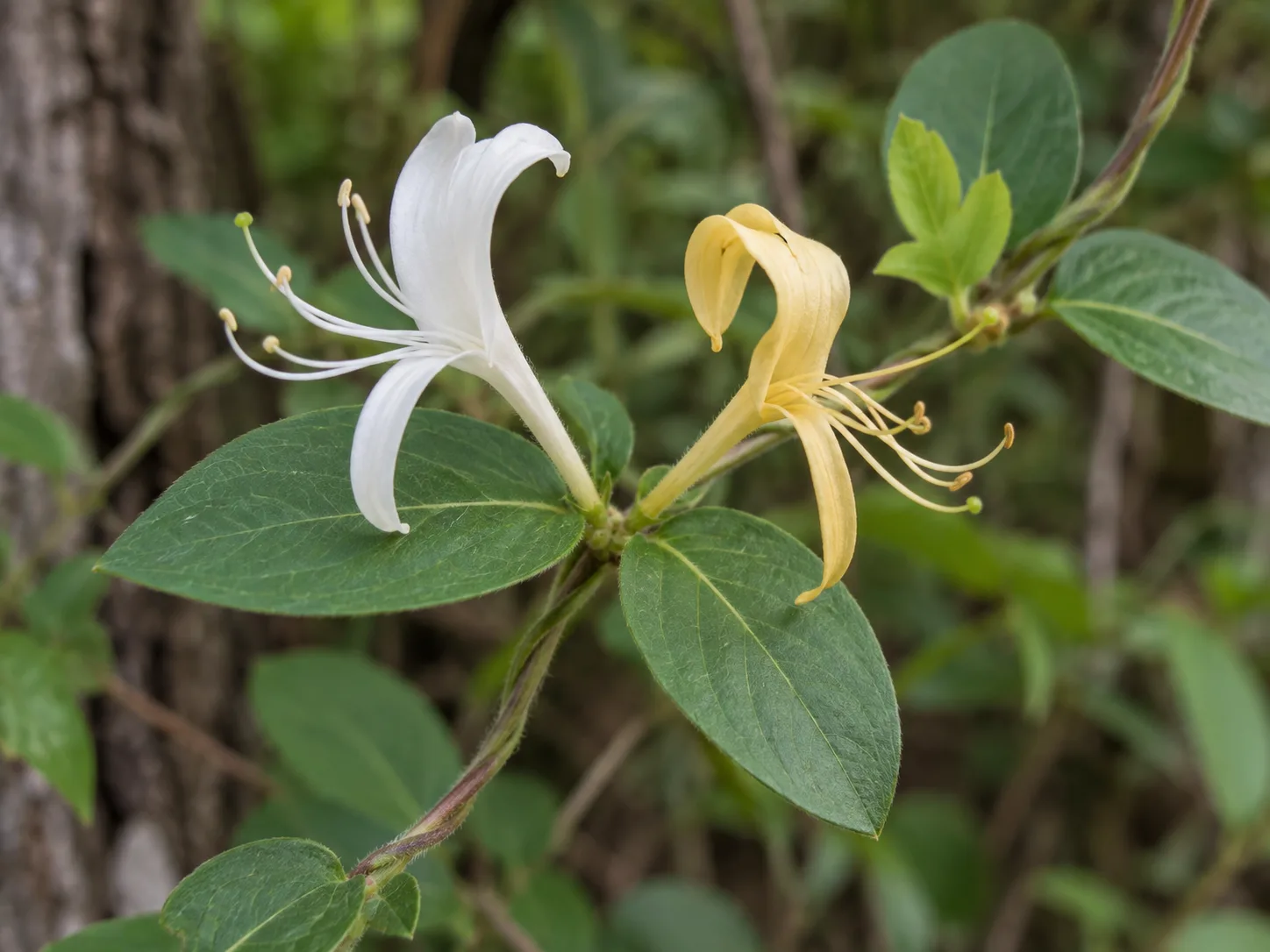
For a native flowering vine in much of the eastern United States, consider coral or trumpet honeysuckle (Lonicera sempervirens) where it is locally native. Its red or orange flowers help distinguish it from Japanese honeysuckle’s aging white-to-yellow blooms, but confirm the species label: common names can be vague. UF/IFAS also names crossvine and passionflower among Florida alternatives, demonstrating that a good replacement depends on region and garden conditions.
Japanese wisteria (Wisteria floribunda)
Japanese wisteria is another woody Asian ornamental with long, hanging flower clusters. It can become a powerful climber, wrap around trees and structures, and spread by seed or stems that root where they touch soil. The U.S. Forest Service treats Chinese and Japanese wisteria together as invaders across much of the eastern United States, while NC State specifically identifies Chinese wisteria in southeastern forests. Because the two species and their hybrids can be difficult to distinguish, verify the identification before removal or when buying a replacement.
If you garden in a region where Asian wisterias are listed as invasive, do not plant one to solve a bare-pergola problem. American wisteria is native to parts of the Southeast and Mid-Atlantic, but not to every U.S. region and not necessarily to every site. Choose a locally native vine with a growth rate and mature weight that suit the support; even a native woody climber needs routine inspection around trees, gutters, and siding.
Kudzu (Pueraria montana var. lobata)
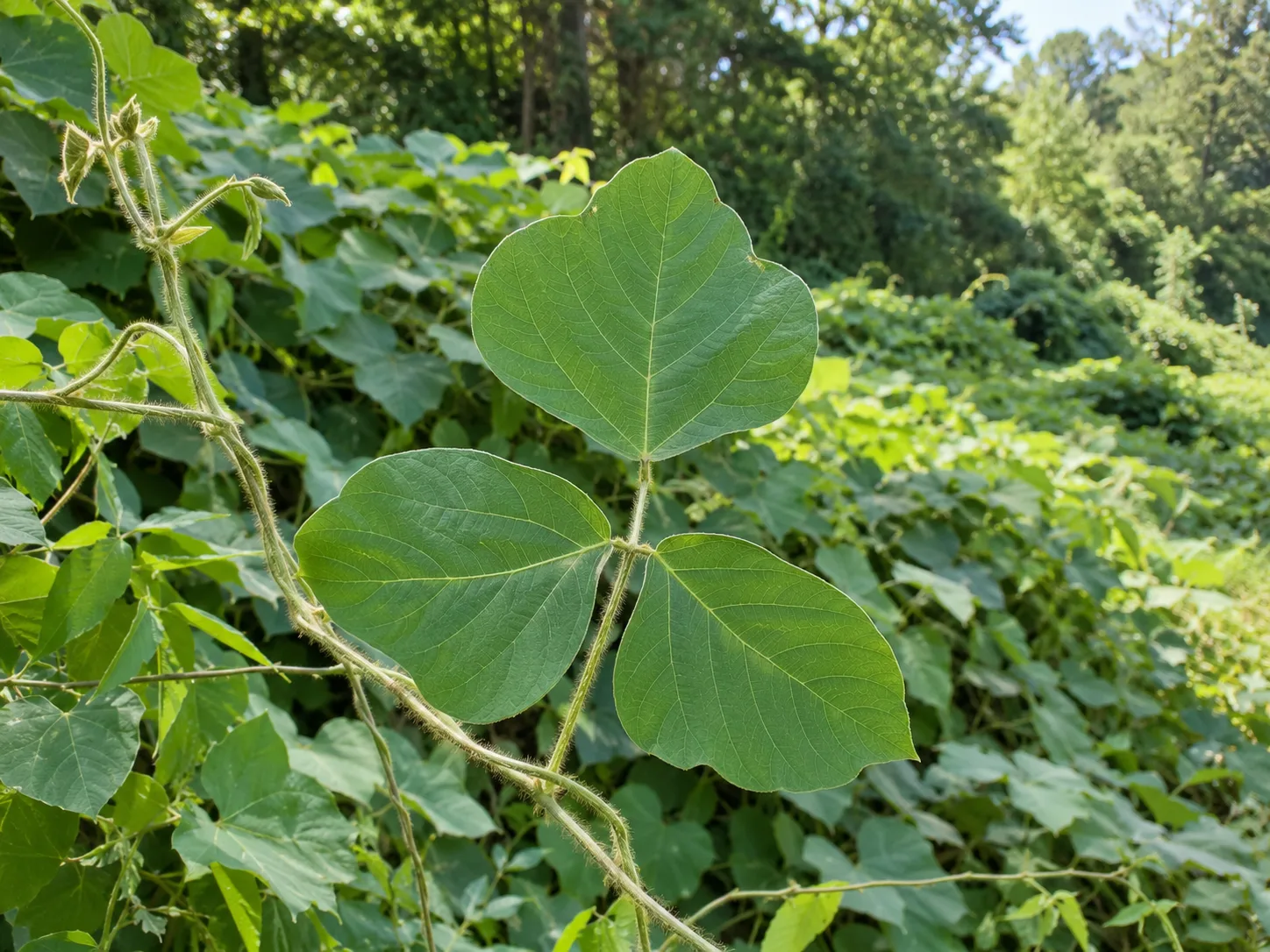
Kudzu is a sprawling perennial vine with large leaves divided into three leaflets and stems that can blanket shrubs, fences, and tree canopies. It is most strongly associated with the southeastern United States, where it was introduced for forage and erosion control and now spreads across disturbed ground, roadsides, and forest edges. NC State Extension lists it among common problematic vines in North Carolina. Farther north, infestations can be more localized, so use a state or county distribution source before assuming it is present or absent.
A large patch is not a one-weekend hand-pulling project. Map its edge, keep it from producing seed, and contact a county extension office or land manager about a multi-season control plan; established crowns and roots can resprout after top growth is cut. Avoid moving cut stems or soil to a new site. Once control begins, plant the disturbed area with regionally appropriate groundcover or shrubs and check it repeatedly for surviving shoots.
Oriental bittersweet (Celastrus orbiculatus)
Oriental bittersweet is a deciduous, woody vine with alternate leaves and yellow fruit capsules that split open to show red-orange seeds. The fruit often sits along the leaf axils. It climbs by twining, and heavy mature vines can overtop trees; birds spread the seed, while wreath-making with fruiting branches can carry it to new places. Indiana’s regional invasive-plant resource lists it as an invasive plant, and the species is a concern across parts of the eastern and midwestern United States.
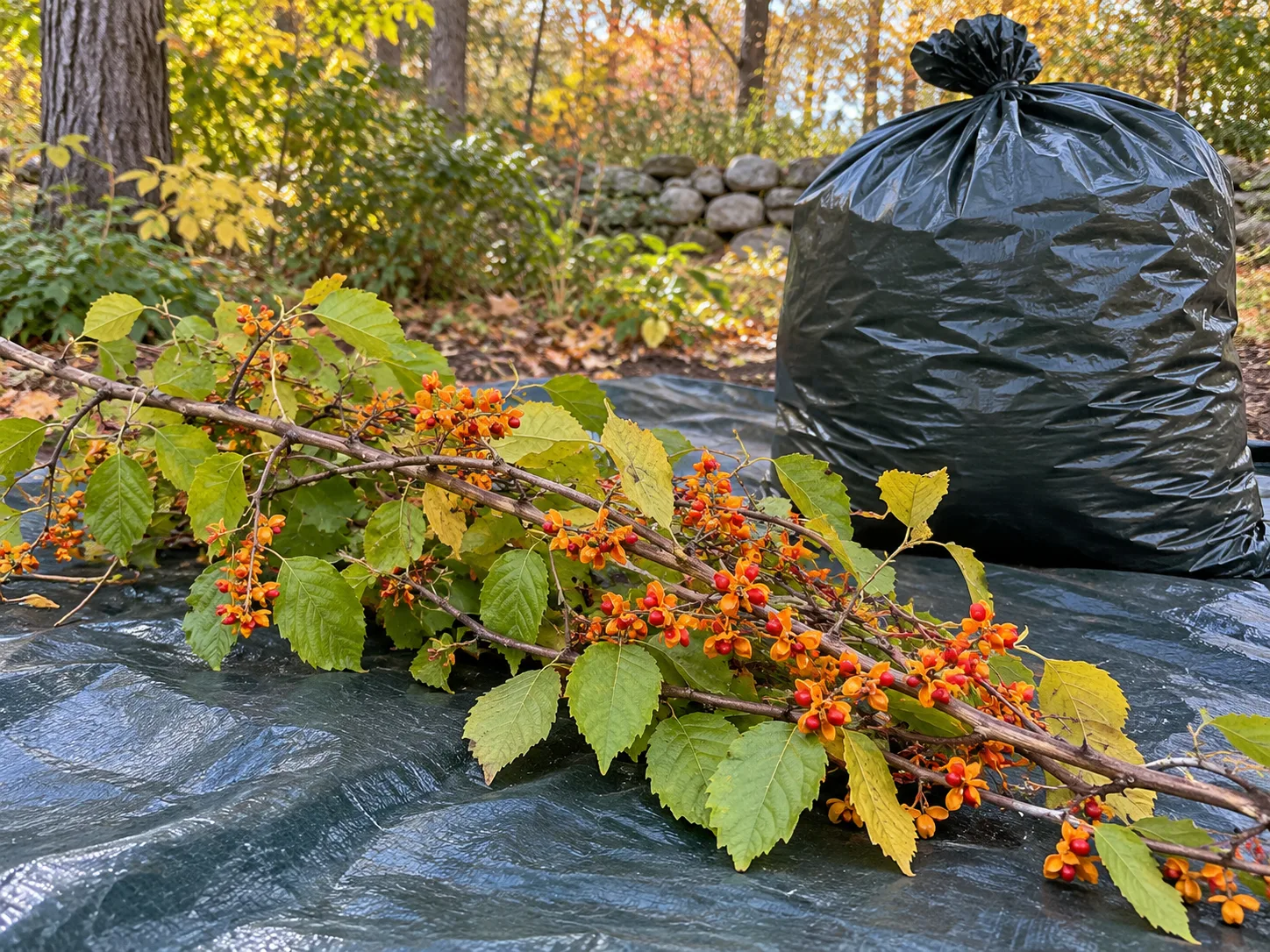
Do not confuse it with native American bittersweet, which has fruit clusters near stem ends. That distinction makes a positive identification important: removing the native vine while leaving the invasive one compounds the problem. If you confirm Oriental bittersweet, remove fruiting material carefully and do not use it in wreaths or compost it where seeds can spread. Repeated cutting or a local extension-recommended treatment may be needed for established stems.
Poison ivy (Toxicodendron radicans)
Poison ivy is not a true ivy and is not an invasive species in the eastern U.S., where it is native. It is a vine or shrub that provides food and cover for wildlife, but its oil, urushiol, can cause a severe skin reaction in susceptible people. Penn State Extension notes that all parts of the plant contain urushiol. It commonly has three leaflets, yet leaf shape and color vary; it may trail on the ground, grow as a bush, or climb by hairy-looking aerial roots. Poison Control advises avoiding contact and never burning poison ivy, because smoke can cause serious breathing problems. A Long Island native-plant group also notes that poison ivy is native there and should be managed for exposure risk rather than treated as an ecological invader.
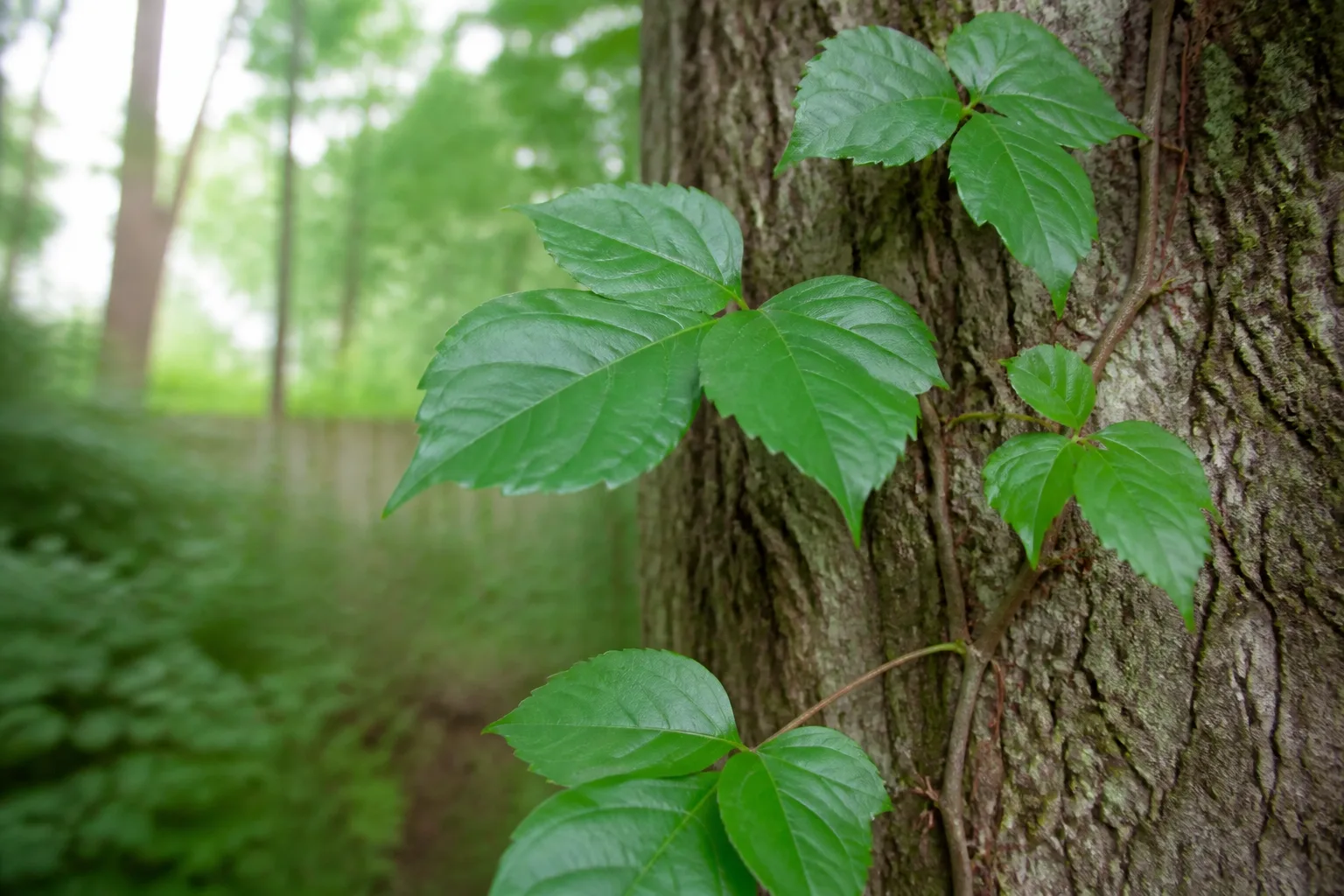
Manage it based on exposure risk, not on an invasive-plant label. If it is near a path, play area, or work zone, avoid touching it and use a professional if you cannot reliably identify or safely handle it. For small patches, follow current local public-health or extension directions, wear the recommended protective clothing, and clean tools and clothing afterward. Do not pull a hairy vine from a tree with bare hands, and do not burn cuttings.
Porcelain berry (Ampelopsis brevipedunculata)
Porcelain berry is a woody vine with tendrils and colorful berries that can mature through shades of white, pink, turquoise, and blue. It can be confused with wild grape, so look at more than the fruit: a local plant expert can check leaf shape, tendrils, stem pith, and fruit clusters together. Go Native Long Island documents it as an invasive vine on Long Island and describes its ability to spread through long roots and seedlings; NC State Extension also notes that porcelain berry can shade native plants. This is a regional example, not a claim that every jurisdiction has the same listing.
In parts of the Northeast and Mid-Atlantic where it is invasive, remove new seedlings before roots establish and contain fruiting stems before berries ripen. If the vine is tangled in native grape or shrubs, pause for identification rather than cutting everything in reach. After removal, revisit the site and pull or cut new growth while it is small. Garden berries are not a reliable reason to plant it where birds can disperse seeds into nearby natural areas.
Wintercreeper (Euonymus fortunei)
Wintercreeper is an evergreen euonymus that may form a low mat, a shrub-like mass, or a climbing vine with aerial rootlets. Its opposite, glossy leaves help distinguish it from English ivy, whose leaves are alternate and usually lobed. The Indiana Native Plant Society lists wintercreeper as a common invasive, especially near urban areas, and notes that it can form dense mats and climb into trees. In some locations it is still sold as groundcover, which makes checking current local rules particularly important.
If you need shade groundcover, Indiana Native Plant Society suggests regional native choices such as wild ginger, Allegheny spurge, or golden ragwort for Indiana conditions. These are not universal substitutes: match the plant to local climate, moisture, soil, and deer pressure. Remove wintercreeper’s rooted stems and keep checking for seedlings; clipping the visible edge alone leaves the interior mat and climbing stems intact.
A practical, safer control plan
Control is more successful when you match the method to the vine’s growth strategy. A climbing ivy attached to a tree, a twining woody stem wrapped around a trunk, and a groundcover that roots at many nodes are different jobs. NC State Extension recommends preventing spread, mapping populations, controlling or containing them, then monitoring and restoring the site. In practice, that means identifying first, prioritizing seed-producing plants, choosing a method that will not injure trees or people, and planning for follow-up before you start.
Match the method to the vine and site
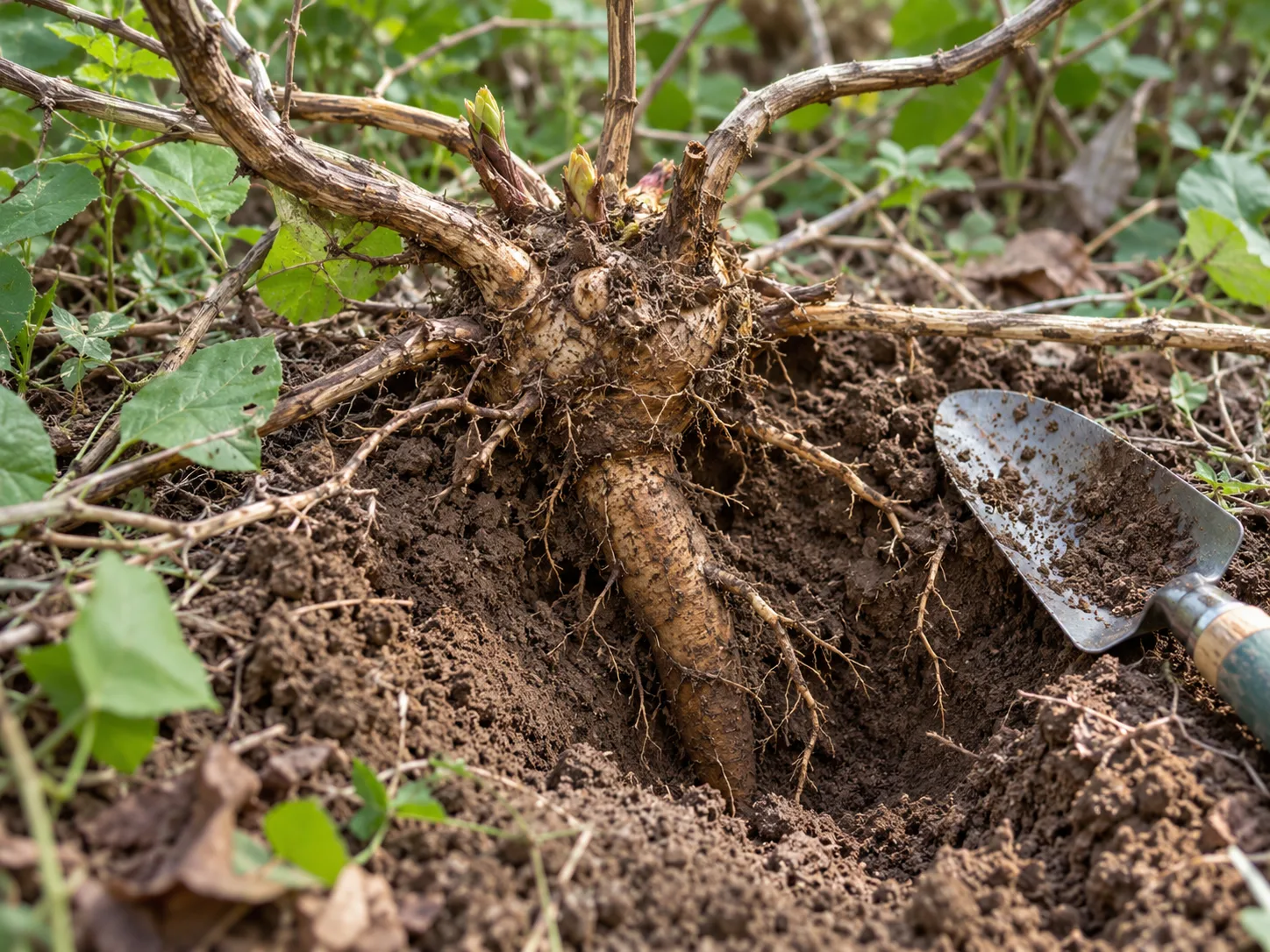
For a small, positively identified patch of a nonhazardous vine, pull when soil is moist and follow each runner to the point where it roots. Remove as much root or crown as practical without scattering fragments; bag fruiting stems, seeds, and any material that could reroot. Keep plant waste out of natural areas and do not put ripe seeds into a home compost pile unless your local waste authority confirms that its process destroys them. Recheck the patch every few weeks during active growth, then continue monitoring in following seasons.
For a vine climbing a tree, work from the ground. Cut the stem near the soil line and higher on the trunk to create a gap, then let the upper portion die and weather off naturally; pulling it down can strip bark, break limbs, or injure the tree. If stems are thick, the canopy is loaded, or the vine is near power lines, ask a qualified arborist or land manager for help. Do not climb a tree or use a ladder while cutting heavy vines.
For large colonies of kudzu, wisteria, or bittersweet, repeated mechanical cutting alone may not kill established root systems. Some sites require a targeted herbicide treatment, but suitability depends on the plant, nearby desirable vegetation, water, weather, and local law. Use only a product labeled for the site and target plant, follow every label direction, and consult extension or a licensed applicator rather than copying an online concentration. Keep children, pets, and pollinators away as the label directs.
Poison ivy changes the safety calculation. Urushiol can remain active on plant material and tools, and burning it is dangerous. If you are sensitive, cannot identify it confidently, have a large patch, or must work where exposure cannot be avoided, use a trained professional. Do not assume gloves alone make an uncertain removal job safe; follow public-health guidance for protective clothing, cleanup, and disposal.
After the vine is controlled, restore the site rather than leaving bare soil. Plant a locally suitable native ground layer or shrub, water it while it establishes, and check the area for resprouts and seedlings. A dense, healthy planting reduces open space for reinvasion, but it will not replace monitoring. Mature invasive vines can keep producing seed nearby, so watch fence lines, woodland edges, and areas where birds perch.
Choose a replacement for the job, not just the look
First decide what you wanted the original vine to do: cover a trellis, screen a view, stabilize a slope, supply fall color, or fill a dry shaded bed. Then match the replacement to the local plant community and site. Coral honeysuckle can offer flowers and nectar where native; Virginia creeper can cover a fence or wall in much of eastern North America; American bittersweet can provide fruit and a twining habit where it is native. None is automatically right for every state, and a native vine can still be too large for a small structure.
For an evergreen mat, consider native ground-layer plants recommended by your regional extension or native-plant society instead of reaching for another aggressive groundcover. Fine Gardening’s discussion of native vine replacements emphasizes that a substitute should also suit the support and growing conditions. Before purchasing, read the full botanical name on the label, check the state invasive list, and ask whether the selection is native to your county or ecoregion. “Native to North America” alone is not specific enough for a wildlife-friendly planting.
Conclusion
Use the list as a prompt to identify and check, not as a command to remove 11 plants. English ivy, Asian wisterias, Japanese honeysuckle, kudzu, Oriental bittersweet, porcelain berry, and wintercreeper are invasive concerns in documented parts of the United States; other species have more localized or less consistent status. Algerian ivy and five-leaf akebia especially deserve a location-specific check before you label or remove them. Poison ivy is a native plant through much of its range, though it warrants careful handling wherever people may contact it.
The safest sequence is simple: confirm the species, check the current regional list, prevent fruit or fragments from spreading, choose a control method that fits the plant and site, and monitor for regrowth. For poison ivy contact hazards, Poison Control explains both exposure prevention and when medical help may be needed. Replace the vine only after deciding what function you need and which plants belong in your region. That approach protects native species, reduces exposure and tree damage, and avoids creating a new problem in the name of solving the first one.