Drain Snake Not Working? Troubleshoot the Cause
Find out why a drain snake is not working, from a loose cable lock or tight trap bend to a stubborn clog, and when to stop and call a plumber.
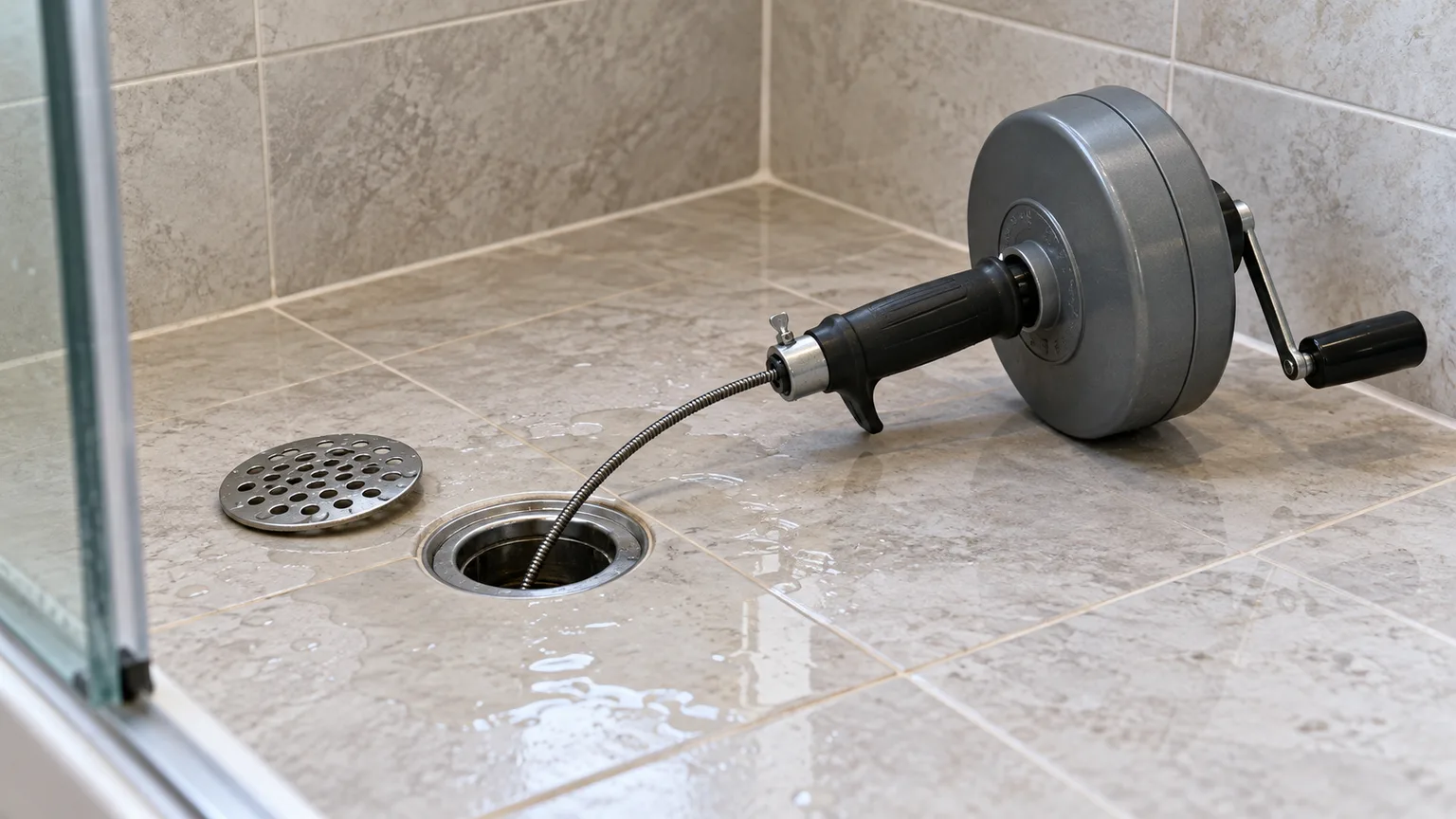
A drain snake can feel useless for several different reasons: the cable may be meeting a trap bend, slipping inside the drum, spinning without touching the clog, or caught under tension. Those symptoms need different responses. Pushing harder or attaching a drill can turn a minor blockage into a kinked cable, damaged fitting, or injury.
Start by stopping the crank and identifying what the cable is doing. If chemical drain cleaner may still be in the pipe, or if more than one fixture is backing up, do not continue troubleshooting with a hand auger; skip to the stop-and-call guidance below.
Start with a quick diagnosis
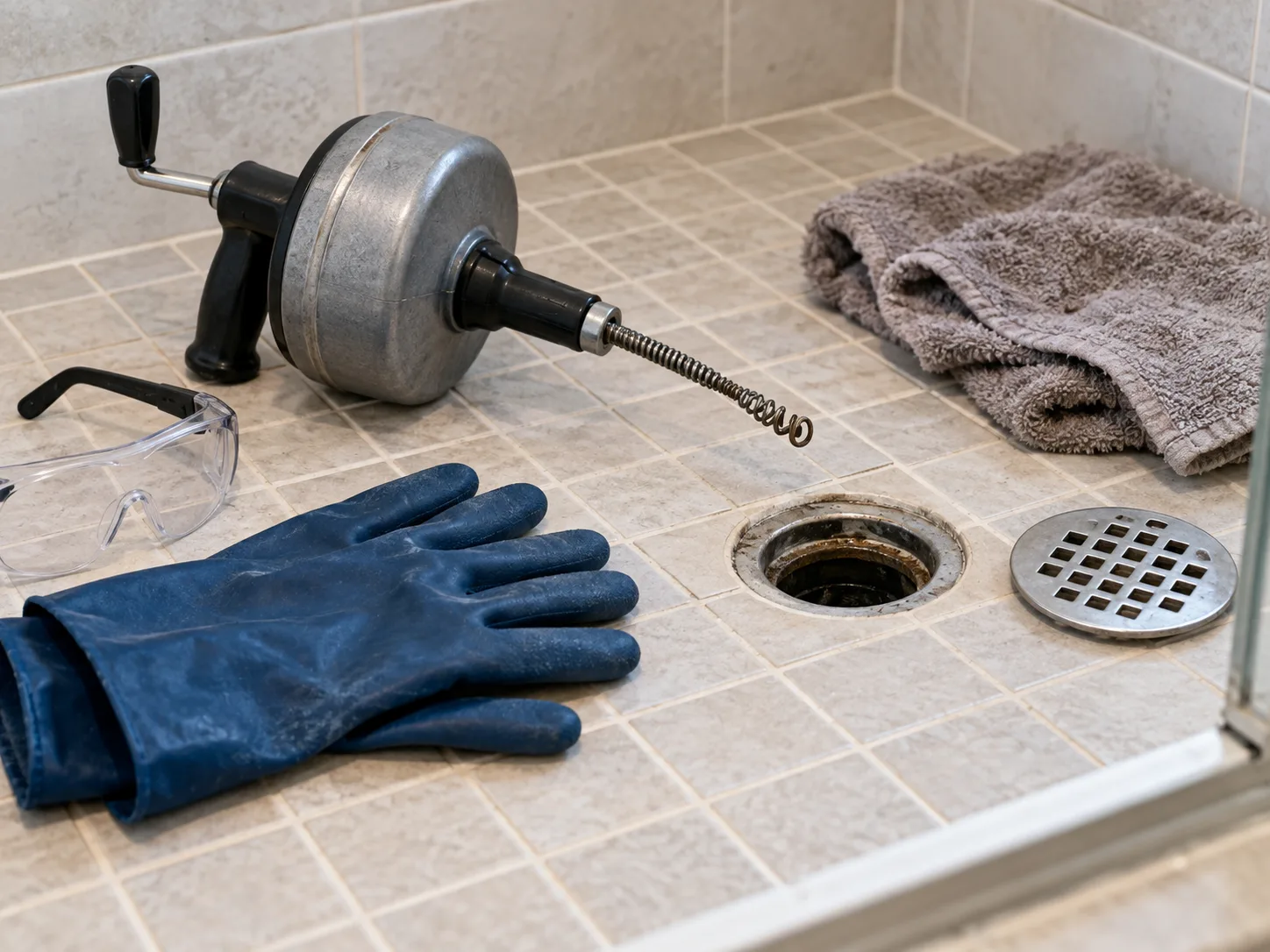
Before trying another pass, remove your hands from the cable and look at the tool and drain. Check whether the cable is visibly bent, whether its lock or chuck is set according to the manual, whether a removable strainer or stopper is blocking the opening, and whether the problem affects one fixture or several. Put on eye protection and the gloves recommended for the tool; a cable tip can be sharp, and tension can release when the cable moves through a bend.
| What you notice | Likely place to investigate | First safe check |
|---|---|---|
| Cable will not enter or stops at the same point | Drain opening, strainer, trap bend, or a hard obstruction | Back off, check access and tool fit, then guide a short amount slowly |
| Cable feeds but does not turn | Cable lock, chuck, or the drum-to-cable connection | Stop and reset the mechanism exactly as the manual shows |
| Cable turns but water still will not drain | Tip may be skimming the clog, the clog may not be snag-able, or it may be deeper | Retract, clean the tip, and reassess after one controlled pass |
| Cable catches but pulls back empty | Weak engagement or a soft clog that is being pushed rather than retrieved | Retract gradually and inspect the tip instead of yanking |
| Cable will not retract or the drum binds | Cable under load, kink, or damaged tool | Stop turning; do not add power or force |
This table is a starting point, not a diagnosis of hidden plumbing. A cable transmits limited information through bends and water, so the same resistance can come from a trap, a fitting, a clog, or damaged pipe. If you cannot tell which it is without force, stop and get help.
Confirm the tool matches the drain
“Drain snake” can mean a thin plastic hair strip, a compact hand-crank drum auger, a larger cable machine, or a toilet auger. They are not interchangeable. Match the cable diameter, head, and intended pipe size to the actual tool instructions and fixture, not just to a familiar brand name or the advertised cable length.
As one manufacturer-specific example, RIDGID lists its K-45 sink machine with different cable diameters for different line sizes: its 1/4-inch cable is intended for 3/4- to 2-inch lines, while its 5/16-inch and 3/8-inch cables are listed for larger ranges. Those figures describe that machine and its compatible cables; they are not a universal sizing chart for every hand auger. The RIDGID K-45AF product and support page also distinguishes models with a manual slide-action chuck from powered AUTOFEED versions, so even similar-looking drums can operate differently.
A standard sink or tub snake can scratch a toilet bowl, while a toilet or closet auger has a protective guide designed for the toilet trapway. Use a closet auger only on a toilet, and do not assume a small hair strip can clear a clog beyond the reach it was designed for. If the cable is too large to pass the drain fitting freely or the head catches on a fixed crossbar, switch to a tool made for that fixture instead of trying to force it through.
When the cable will not advance
First make sure the cable has a clear path into the drain. A stopper, strainer, crossbar, or narrow opening can catch the tip before it reaches the pipe; remove only parts that are intended to come off, and keep screws out of the drain. If the cable feeds a few inches and then stops, do not assume that distance marks the clog.
It stops at the fixture trap
A sink, tub, or shower line changes direction through a trap. The cable may slow at that curve even when the pipe is clear. Ease back slightly, keep only a short section exposed, and rotate gently while guiding the tip; allow the cable to find the bend rather than driving it forward.
A cable that advances after slow rotation may simply have negotiated the bend. A cable that repeatedly stops at the same point, folds back toward the opening, or has to be forced is giving you a reason to stop and change access or tool. The pipe fitting may be too tight for that cable, the head may be too large, or the obstruction may be something a small hand auger cannot safely pass.
For an under-sink clog, an accessible slip-joint P-trap can sometimes be removed so you can inspect the trap and feed a compatible snake into the drain arm beyond it. That option is different from a shower or tub, where the trap is usually hidden and disassembling the drain assembly is not a casual next step. This Old House’s drain-snaking guide explains fixture-specific access; if the layout is unfamiliar, glued, corroded, or difficult to reach, leave it intact and call a plumber.
It buckles or springs back
A cable bows when too much length is exposed, the tip is pushing against resistance, or the cable cannot turn freely. Retract it until the unsupported section is short, inspect for a kink or flattened coil, and resume only if the cable is still sound and the tool maker allows it. Do not straighten a damaged cable and send it back into the pipe; a kinked spring can bind again or break.
Keep the drum near the drain and feed in small increments. Lowe’s drain-snake instructions caution that cable twisting can damage the tool and that built-up tension may release unexpectedly. That is why a snake that whips, springs back, or repeatedly bends at the opening should be treated as a stop signal rather than a cue to push harder.
When the cable feeds but does not turn
On many hand augers, a thumbscrew, slide chuck, or other lock holds the cable so the handle can rotate it. If that mechanism is loose, the crank may move while the cable slides in or out without rotating. Stop, retract enough cable to inspect the connection, and reset the lock as the manual directs; do not tighten an unfamiliar mechanism while the cable is loaded or jammed.
Some models use an AUTOFEED lever or a separate clutch, so there may be no thumbscrew at all. RIDGID’s K-45 product information, for example, lists manual-chuck and AUTOFEED versions. Check the label or manual for the exact model before adjusting parts or assuming the handle is broken.
If the lock is set correctly and the cable still does not turn, inspect the exposed cable and drum for obvious damage or debris only after releasing tension safely. Do not put fingers into the drum, dismantle a loaded canister, or grip a rotating cable with a rag. If the handle spins freely, the cable slips despite the proper setting, or the tool binds when empty, stop using it and have the tool inspected or replaced.
When the cable turns but the clog stays
A rotating handle does not prove the tip has reached or engaged the blockage. The cable can be turning in a trap, passing through a soft mass, or rotating inside the drum if the lock is not holding. Pull the cable back slowly, check whether the head is clean and intact, then make only a controlled pass if you can feed it without buckling.
The corkscrew or bulb tip is better at catching hair and similar stringy material than at retrieving every type of clog. Grease, soap film, food residue, mineral deposits, wipes, or a hard object may need another method or professional access. Turning faster does not change what the tip can grab, and continuing to drill through an unknown obstruction risks damaging a cable or pipe.
Try one deliberate adjustment at a time: change the cable angle slightly, advance a few inches while turning gently, then retract to inspect the head. If the cable travels its usable length without bringing anything back and the drain remains slow, the stoppage may be beyond the tool’s reach or may not be a removable wad. Avoid sending a longer or powered machine into a line unless that model is designed for the pipe and you know how to operate it.
When the tip catches but will not retrieve debris
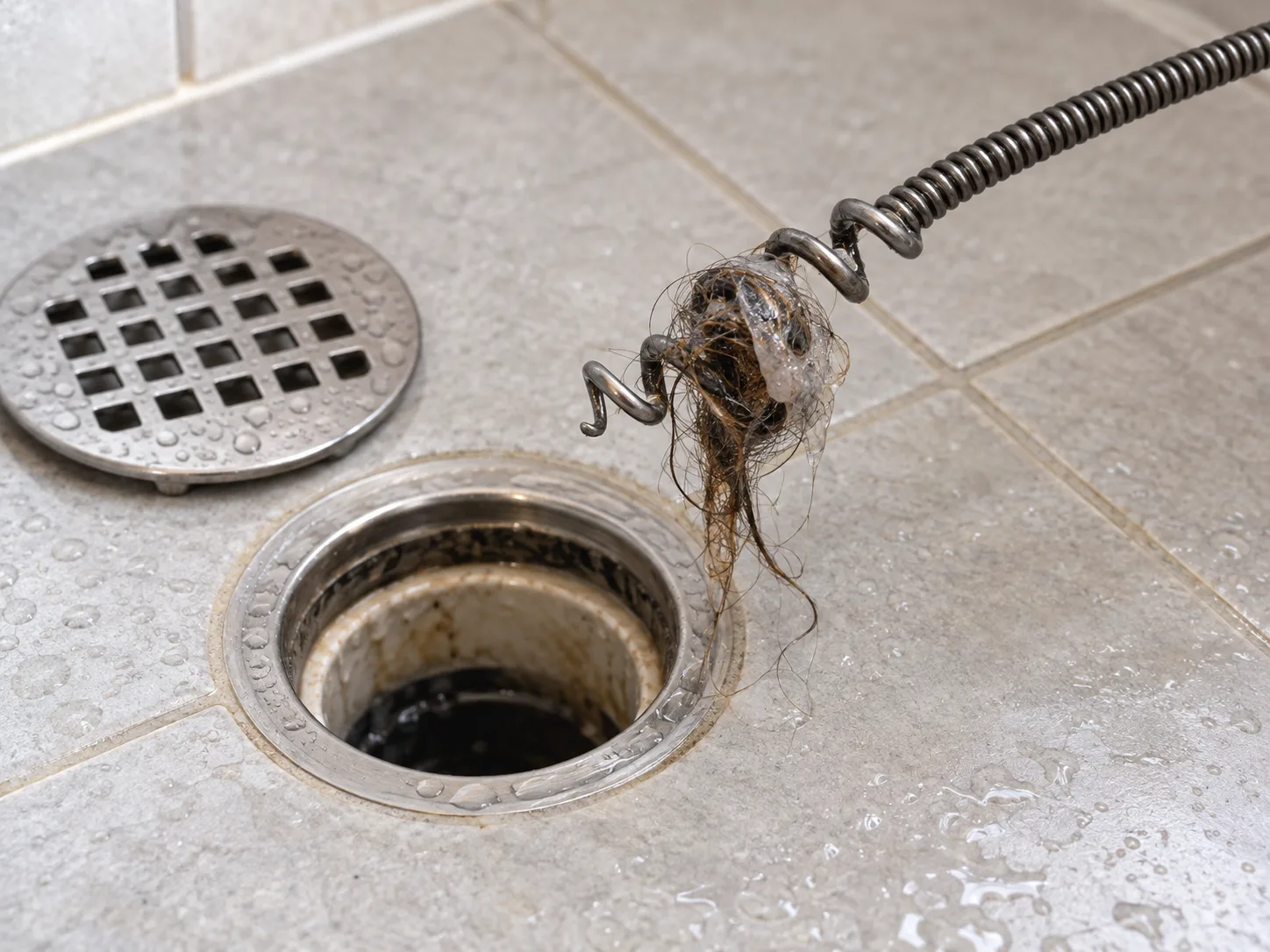
A real catch should produce some resistance as you withdraw, but it should not require a hard pull. Keep the cable controlled and retract slowly, following the tool’s specified rotation direction if its instructions call for rotation during retrieval. Pause to remove debris from the tip over a bucket or trash bag rather than pushing it back into the drain.
If the cable comes out clean, it may have touched the clog without hooking it, or it may have loosened a soft blockage that will not cling to the head. A second careful pass can change the angle of approach, but repeating the same forceful motion is unlikely to help. Clear the debris from the tip between passes so the next attempt can engage material rather than carry an old wad around the pipe.
A cable that catches hard and then slips free can be snagged on a fitting, crossbar, or object instead of the clog. Do not jerk it to prove that it is attached. If slow withdrawal and a small, controlled change in rotation do not release it, stop and seek help before the tip or cable becomes lodged.
When the cable is stuck or will not retract
Stop cranking as soon as the cable will not move freely. A cable trapped around a bend or caught in debris can store torsional tension; turning harder may tighten the bind, kink the coil, or make the handle spring back when it releases. If you are using powered equipment, switch it off immediately and follow the manufacturer’s release procedure before touching the cable.
For a small manual auger, you can sometimes relieve light twist by backing off gently in the direction specified by its maker while keeping the cable supported. Do not use pliers, a second tool, a vehicle, a drill, or an improvised extension to add leverage. Lowe’s notes that twist can build in a cable and release unexpectedly; its guidance supports unwinding a twist carefully, not hauling against a solid snag.
If the cable remains stuck, the cable is kinked at the drain opening, or it will not retract without substantial force, leave it in place and call a plumber. Tell the plumber where the tool entered, how much cable is out, whether it is manual or powered, and what you felt. If cleaner has been used, name the product and say when it was applied.
When the drum or crank fails
A stiff drum can result from debris or corrosion inside the canister, cable damage, a lock in the wrong position, or a worn handle mechanism. Disconnect or unload the tool according to its instructions, then inspect only accessible parts. Clean and dry the cable after use; Lowe’s specifically advises cleaning and drying the cable before storage to reduce rust and corrosion.
If the handle turns but the cable does not, revisit the cable lock and model-specific feed mechanism before deciding the unit has failed. If it is a powered model, a motor that runs while the cable stalls is a jam condition: stop power, do not keep triggering it, and do not use a drill to bypass the machine’s controls. A wrong direction or high speed can turn a recoverable tangle into a damaged cable.
Check for a crushed section, sharp bend, separated head, or cable that no longer stays wound inside its drum. Do not repair a frayed or broken spring with tape, wire, or improvised attachments. Replace the cable or have the tool serviced using parts approved for that model; if the line itself may be damaged, stop at the drain and call a plumber.
Should you remove a sink P-trap?
Removing an accessible sink trap can be a reasonable way to find a nearby blockage or give the snake a straighter entry into the branch drain. Place a bucket underneath, protect the cabinet, and proceed only if the trap uses serviceable slip-joint nuts that you can reassemble without force. The blockage may be in the trap itself, which is easier to inspect than sending a cable farther into an unseen line.
Do not open the trap after using a chemical drain cleaner or when it is holding unknown chemical liquid. Avoid forcing corroded metal, glued PVC, leaking joints, or plumbing that shifts when touched. If you remove a trap and find damage, a missing washer, or a connection you cannot align, stop and get a plumber rather than tightening until the leak disappears.
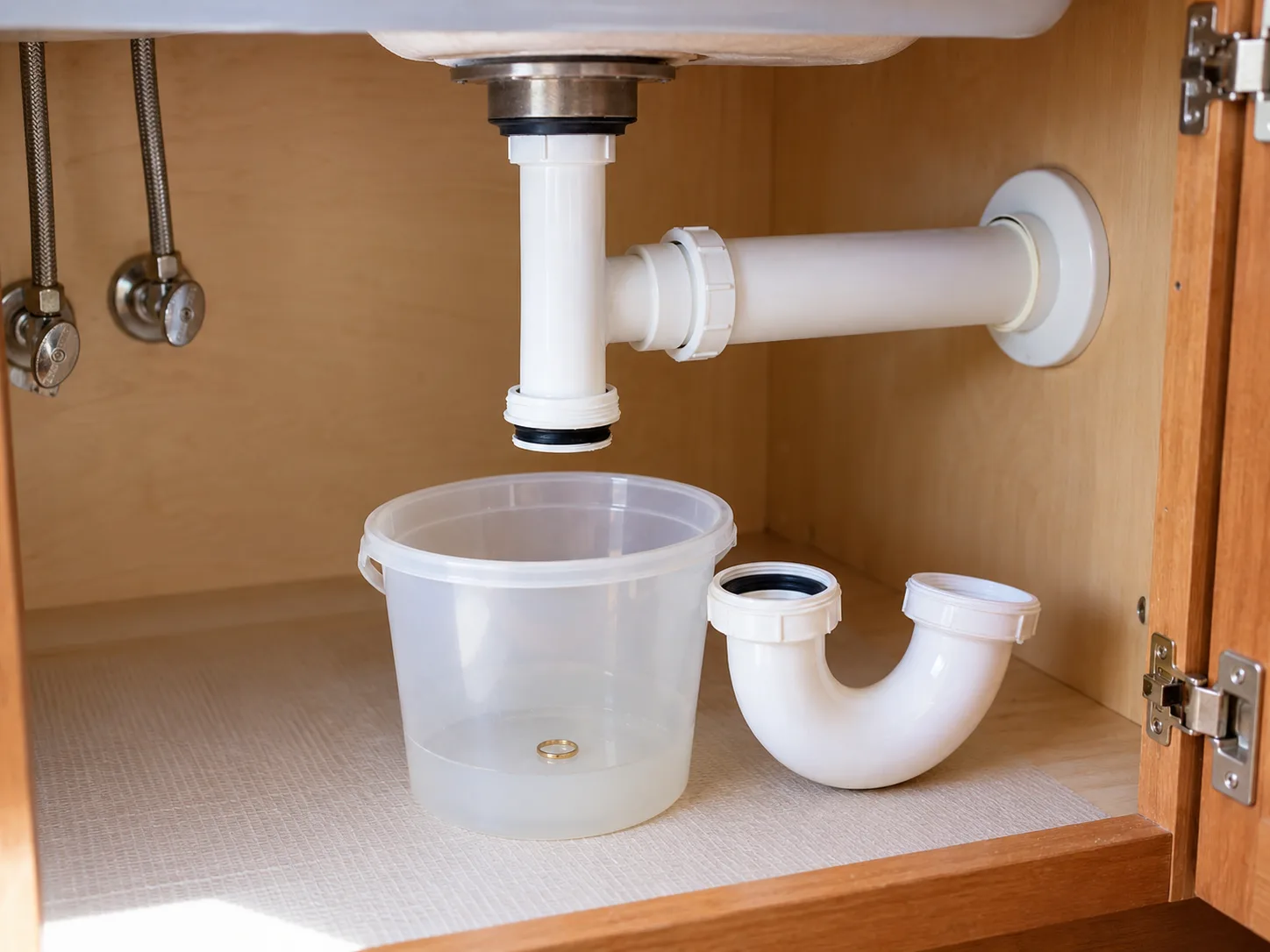
This approach does not transfer to every fixture. A tub or shower trap is often under the floor, while a toilet has a built-in trapway; removing either requires different access and a fixture-specific tool. If the obstruction is past the under-sink trap and your cable still will not advance, a plumber can choose the proper cleanout or machine instead of forcing a small snake through a difficult route.
Chemical drain opener and septic-system cautions
If a caustic or acidic drain opener may be sitting in standing water, do not put a snake, plunger, or hand into that drain. The cable can splash the liquid onto your face or skin, and opening a trap can expose you to concentrated product. Poison Control explains that some drain cleaners contain corrosive chemicals and can cause serious injury; follow the product label and do not mix it with another cleaner or homemade neutralizer.
If cleaner has already been added, stop DIY work and tell a plumber exactly which product was used and when. The label may specify a waiting period or other handling steps, but a blocked drain can leave cleaner pooled even when the label expects water to move through. If exposure occurs, rinse affected skin or eyes with running water and contact Poison Control in the U.S. at 1-800-222-1222 or use its drain-cleaner guidance for immediate instructions.
A septic system adds another reason not to improvise with drain chemicals. Product formulas and labels differ, so do not infer septic compatibility from phrases such as “pipe safe”; check the exact label and your septic service provider’s advice before use. This Old House cautions that some drain-cleaning chemicals can harm septic systems and create a hazard for the plumber who later opens the line. A mechanical snake is not a reason to send more chemical cleaner into a blockage or to push an unknown backup farther into the system.
Test the drain and clean the tool
When the cable is fully out and the drain is clear of loose debris, start with a small amount of water rather than opening the faucet fully. Watch whether the water level falls steadily and whether nearby fixtures gurgle, back up, or change. If the fixture drains normally, increase the flow briefly and check for leaks around any trap parts you reassembled.
If the water level rises or there is no improvement, stop after one or two careful passes. Continued snaking can push a blockage beyond the accessible branch, and a repeat clog can indicate buildup or a deeper defect that a hand tool cannot diagnose. Do not flush the line with boiling water or add another product unless the fixture and product instructions specifically call for it.
Clean the entire cable and tip according to its manufacturer’s directions, then let them dry before rewinding and storing the auger. Keep the drum and cable out of reach of children, and replace a damaged or badly kinked cable before the next job. Clean the floor and disinfect contaminated surfaces with a product appropriate for that material, following its label.
Know when to stop and call a plumber
A plumber is the safer next step when the cable is stuck, the drain fitting is fragile or unfamiliar, or a single careful pass cannot get through the route. It is also time to call if the same drain clogs again quickly, a hard object or tree roots may be involved, or the stoppage seems beyond the length and head of a household auger. A professional can use a cleanout, inspection camera, or properly sized machine when the problem is not a simple fixture clog.
Pay attention to the pattern across the home. Two or more slow drains, bubbling toilets, sewage odors with backups, water appearing in a lower fixture when an upper one runs, or wastewater coming up in a tub can indicate a shared branch or main-line blockage. Stop using affected fixtures so you do not add more wastewater, and contact a plumber or your sewer utility if the issue may be on the public side of the connection.
Do not keep testing a snake if the cable is twisting, the handle has stopped engaging, chemical cleaner is present, or the tool requires more force than its manual permits. Explain what you already tried and whether the home uses septic; that information helps the plumber plan safe access and avoid unexpected chemical contact.
Conclusion
A drain snake that is not working is a symptom to diagnose, not an invitation to push harder. Check the tool fit and cable lock first, then distinguish a trap bend from a snag, a turning cable from a tip that has actually engaged a clog, and a loose retrieval from a cable that is under tension.
Make only a careful, controlled retry when the cable and drain remain sound and there is no chemical residue or wider backup. Stop when the cable kinks, binds, or will not retract; when more than one fixture is affected; or when a gentle pass does not improve flow. A plumber can reach the blockage through the right access point without turning a stuck auger into a second problem.