Does Snow Fertilize Plants? A Garden Guide
Does snow fertilize plants? Learn what snow adds, when snowmelt helps, why salt and plow piles hurt, and what to use for real soil fertility.

Snow can add a small amount of atmospheric nitrogen to soil, but calling it a fertilizer makes the effect sound bigger and more predictable than it is. For most home gardens, snow’s most valuable jobs are insulating the root zone, slowing moisture loss, and softening freeze-thaw swings.
The practical answer is simple: leave clean, evenly spread snow on garden beds and dormant plants unless it is breaking branches or creating a wet, compacted pile. Keep snow that touched salted roads, driveways, or walkways away from beds, and use compost, organic matter, a cover crop, or a soil test when you actually need to improve fertility.
The short answer: snow feeds soil a little, but protects it more
Snow is precipitation, not a balanced bagged fertilizer. As flakes form and fall, they can collect small amounts of nitrogen compounds and other atmospheric particles. When the snow melts, some of that material reaches the soil, but the amount depends on the air, the storm, the landscape, and whether the meltwater can enter the ground.
The old phrase “poor man’s fertilizer” survives because the process is real and costs nothing. It is still a poor substitute for a soil test or a measured fertilizer recommendation: snow does not reliably supply the nitrogen, phosphorus, potassium, and micronutrients a particular crop needs, and it gives you no useful application rate.
That distinction matters most in spring. A garden may look unusually green after snow melts, but the color can reflect water availability, warmer temperatures, reduced wind stress, or the plant’s normal return from dormancy—not proof that snow supplied a complete feeding.
What snow contributes to garden soil
Nitrogen is trace and variable
Plants cannot use atmospheric nitrogen gas directly. Useful forms such as nitrate and ammonium have to enter a cycle that includes atmospheric deposition, soil chemistry, microbes, and roots. Snow can carry some of those forms, but it is not a special nitrogen-making process and it is not the only precipitation that does this.
The University of Arizona’s record of a peer-reviewed snowpack study found that labeled ammonium applied to seasonal snow moved into underlying soil, where it could be rapidly immobilized. The same research found no evidence that nitrification occurred inside the snowpack itself, which is a useful correction to the idea that snow somehow “activates” fertilizer before it reaches the ground. See the University of Arizona snowpack research record for the study details.
Garden writers commonly cite a broad estimate of 2 to 12 pounds of nitrogen per acre per year from rain and snow combined in the United States. That is an atmospheric-deposition range, not a dependable amount delivered by one snowstorm or to one backyard bed; local air quality, precipitation patterns, and measurement methods change the result. Fine Gardening’s explanation of snow as “poor man’s fertilizer” and Gardening Know How’s snow-fertilizer overview both emphasize that the contribution is small.
Even if a storm brings measurable nitrogen, the plant may not use it immediately. Soil organisms can immobilize nutrients, roots may be dormant, and excess water may move nitrate below the root zone. Think of snow as a background input to an outdoor nutrient cycle—not as a feeding event you can schedule.
Snowmelt is not fertilizer delivery on frozen ground
Snow can sit on the surface for days or weeks, creating a slower release than a short rainstorm. That only helps if the meltwater reaches soil pores. If the soil is frozen, saturated, compacted, steeply sloped, or already covered by ice, the water can run over the surface and carry dissolved nutrients away.
This is why “snow melts slowly” is not enough to prove that snow fertilizes a bed. A thaw followed by gentle infiltration is the favorable case; a warm spell over frozen ground can produce runoff, erosion, and puddles instead. Fine Gardening notes the same limitation for frozen or saturated soil.
Do not dig or cultivate a wet winter bed to help snowmelt enter. Working soil while it is saturated destroys pores and creates compaction that lasts beyond the storm. Let the surface drain, keep traffic to paths, and address drainage after the ground is workable.
The useful winter benefits are mostly physical
Insulation and frost-heave protection
A stable snow layer contains many air spaces, so it slows heat loss from the soil. That insulation can keep the root zone from following every sharp air-temperature drop and may reduce the freeze-thaw movement that pushes shallow roots, crowns, and bulbs upward.
North Dakota State University Extension describes snow cover as especially helpful when it arrives before the coldest weather, because it helps soil retain heat and moisture. The same guidance warns that root injury is more likely during long, cold periods with little snow cover, particularly when the soil is dry; see NDSU Extension’s winter insulation guidance.
That does not mean every plant needs a deeper snowbank. Hardy perennials, fall-planted bulbs, and established shrubs often benefit from ordinary cover. A tender plant in the wrong hardiness zone may still need a proper mulch, wind barrier, container shelter, or other protection; snow is not a guarantee against an extreme low temperature.
Moisture without guaranteed infiltration
Snow is also a reserve of water. A fluffy snowfall may contain much less water than its depth suggests, while wet, dense snow can release considerably more as it thaws. The eye-catching number on a ruler is therefore a poor guide to how much moisture a bed will receive.
The best snowmelt pattern is gradual thawing into soil that has a clear surface and functioning drainage. It can reduce winter desiccation for shallow-rooted plants and evergreens, especially where cold wind would otherwise pull moisture from foliage faster than roots can replace it.
The worst pattern is a frozen crust over dense soil with meltwater trapped above it. That water may flow toward a low spot, refreeze at night, or leave the bed carrying fine soil with it. Snow supports a moisture budget; it does not repair a drainage problem.
When snow helps and when it hurts
The source and shape of the snow matter more than the word “snow.” Use this quick decision rule before you move any of it:
| Snow situation | Best choice | Why |
|---|---|---|
| Fresh snow that fell directly on a bed | Leave it in place | It can insulate soil and melt gradually without adding road chemicals. |
| Light or moderate cover spread across dormant perennials and bulbs | Leave it unless branches are bending | Even cover protects the root zone and reduces temperature swings. |
| Snow shoveled from a clean, untreated path | Move sparingly and spread it thinly | Avoid burying crowns, creating a wet pocket, or adding excess weight in one spot. |
| Snow from a salted driveway, road, or treated walk | Keep it out of beds and away from roots | Meltwater may carry deicing salt and other pavement debris. |
| A tall plow pile against one shrub, tree, bed edge, or lawn strip | Distribute it to a safe non-garden area if practical | Concentrated weight, slow drying, and contaminants create a different risk. |
| Ice crust or packed snow over turf | Do not walk or scrape aggressively | Compression can worsen icing and damage grass crowns. |
Clean, evenly spread snow
Clean snowfall landing directly on a garden bed is usually not something you need to remove. Let it act as a temporary winter blanket over dormant bulbs, garlic, herbaceous perennials, and the soil surface. You do not need to shovel snow onto every bed; ordinary weather will provide whatever benefit the site can use.
Even cover is safer than a mound. A thin, broad layer distributes weight, melts more predictably, and is less likely to stay wet and airless for weeks. If you have to relocate snow, choose an area that drains well and is away from edible beds, tree trunks, delicate crowns, and spring bulbs that are already emerging.
The same rule applies to snow around newly planted shrubs: a natural blanket around the root zone can help, but do not pack it tightly against stems. Keep the crown and lower trunk visible enough to dry, and do not turn a winter-protection job into a standing-water problem.
Salted or concentrated snow piles
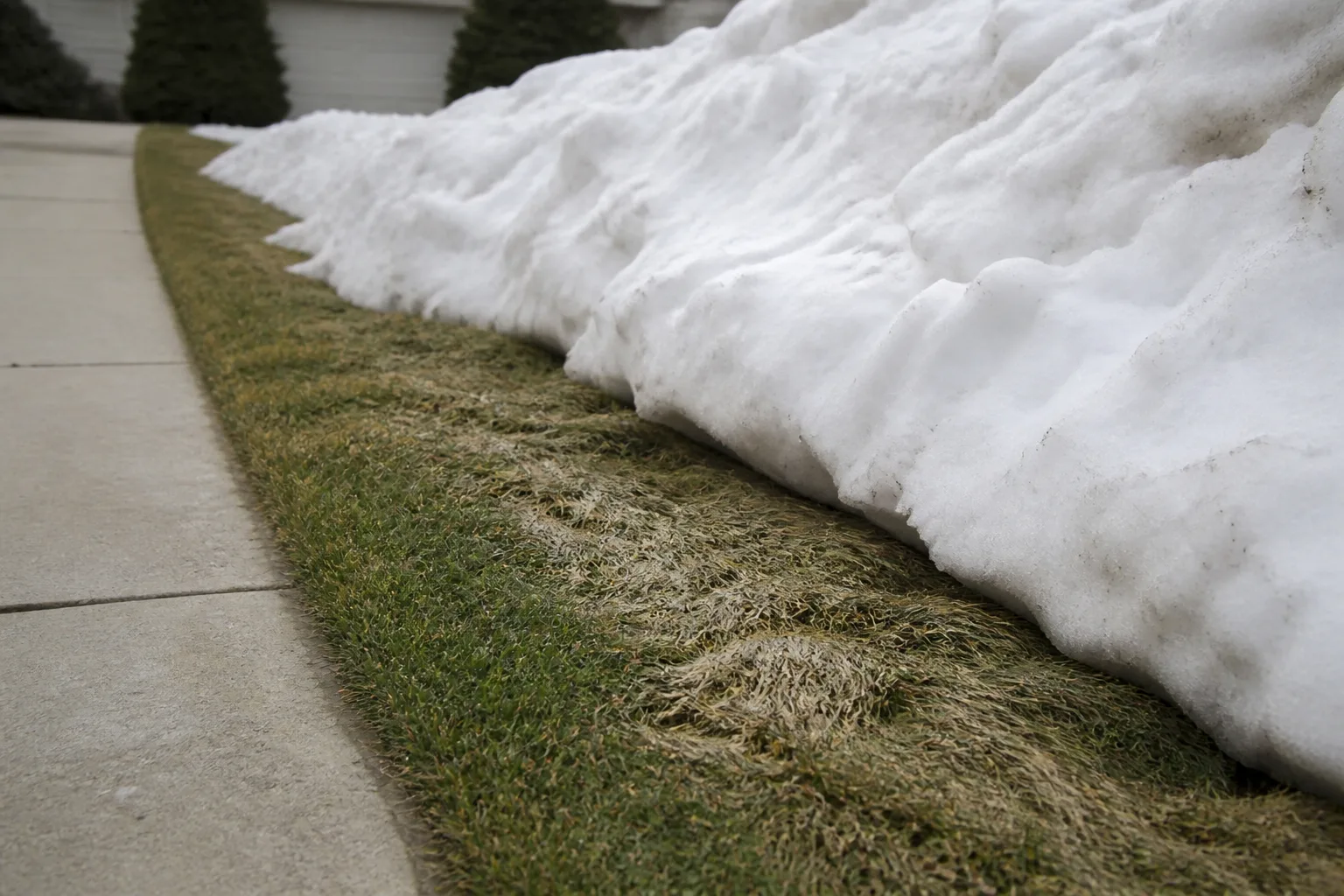
Driveway snow is not interchangeable with snowfall from the sky. It can contain sodium chloride or another deicer picked up from pavement, along with grit and concentrated runoff. When that pile melts beside a bed, salt can remain in the root zone and interfere with the plant’s ability to take up water.
University of Illinois Extension’s advice on road-salt-damaged arborvitaes makes the key point: a barrier can reduce direct spray, but evergreens close to a treated road are especially vulnerable, and plastic wrapped tightly around the plant can trap moisture. Read the University of Illinois Extension salt-damage exchange before improvising a winter wrap.
Concentrated snow can also create a physical problem even when it is clean. A deep mound stays cold and wet longer than the surrounding bed, presses down on turf, and can block air movement at the surface. If the pile is on a lawn, spread it toward a non-planted area as conditions allow rather than repeatedly adding more weight to the same strip.
If salt-contaminated snow has already melted near a plant, do not dump fertilizer on the damage. Once the soil is thawed and drainage is adequate, deep, slow watering can help move soluble salts below the active root zone, but the site and plant determine whether leaching is appropriate. A soil test that includes soluble salts is a more responsible next step than adding an unmeasured amendment; Colorado State University Extension’s soil-testing guidance explains what a standard test can and cannot reveal.
Snow on branches is a separate risk
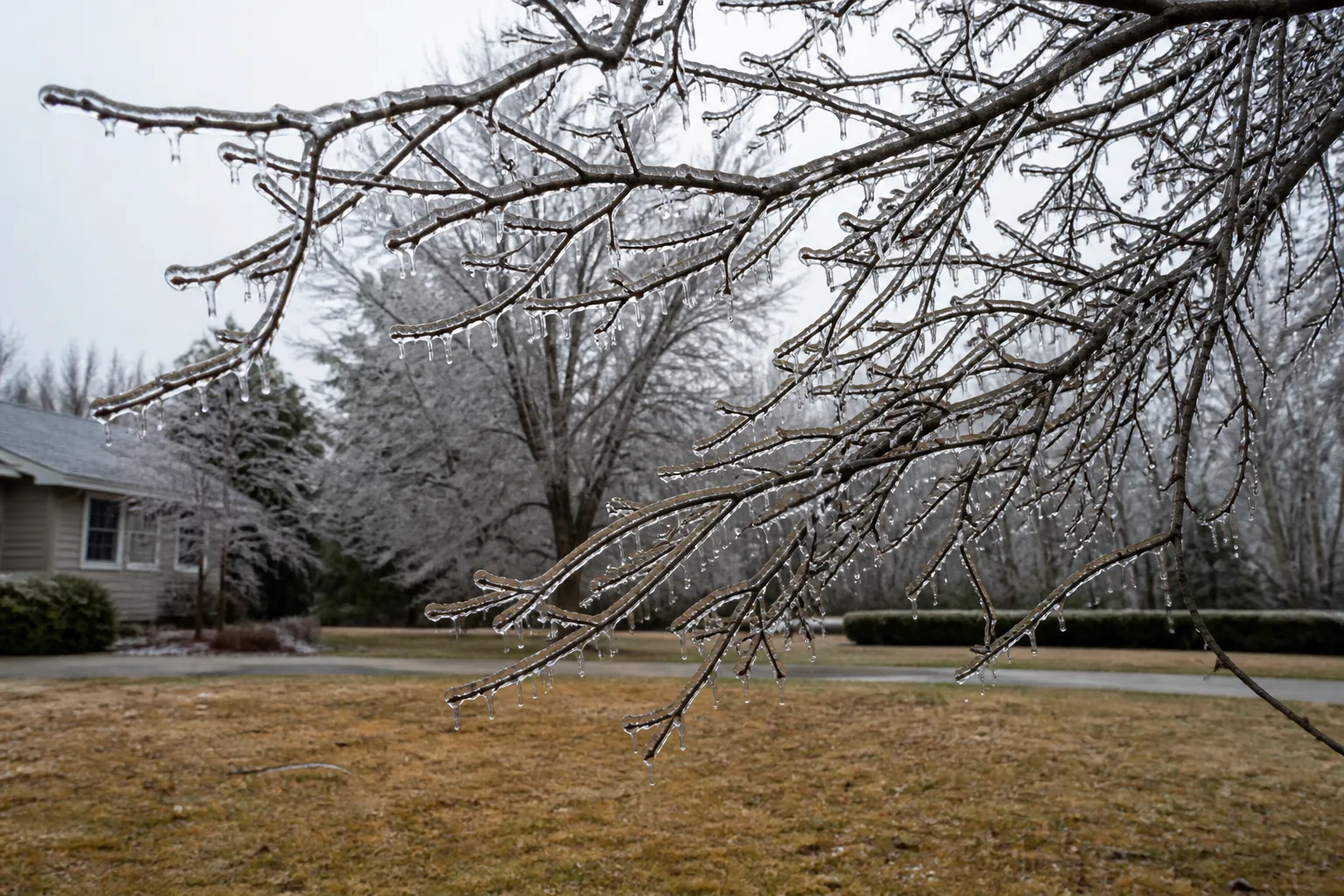
Snow on soil and snow on a branch are two different management questions. A light cover on a dormant shrub may be harmless or helpful, while a heavy, wet load can bend or break narrow branches, especially where weak structure, wind, or ice is involved.
For a small shrub, you can gently brush loose snow upward from below the branch, using a soft broom and staying on the ground. Do not shake, hit, or scrape frozen snow and ice from a branch; brittle tissue can break under the rescue attempt. Leave tall trees, power-line contact, split trunks, and large suspended limbs to an arborist or utility crew.
After a storm, assess the plant when it is safe and wait before cutting questionable wood. A branch that looks limp may recover as the snow leaves, and a branch that is not clearly dead may still carry viable buds. This is one reason not to strip a bed or shrub of every snowflake simply because it looks untidy.
How to use snow in a garden safely
Snow requires very little work. The safest “use” is usually to let clean snow remain where it fell and to manage the exceptions created by salt, weight, ice, and runoff.
A four-step checklist after a storm
- Check the source. Identify whether the snow fell on the bed or was pushed from a road, driveway, walkway, roof edge, or treated parking area. Keep pavement snow away from food gardens and sensitive shrubs when deicers were used.
- Check the distribution. Leave broad, even cover alone. Flag or redistribute a single deep pile that is crushing a lawn, burying a crown, blocking drainage, or leaning into a small shrub.
- Check the load above ground. Brush loose snow from small, reachable shrubs only if branches are bending and the snow is not frozen. Never climb or work around downed limbs and wires.
- Check the thaw path. Before the melt, identify low spots and blocked drains. After the ground softens, note where water sits, runs, or carries soil; that observation is more useful for spring planning than guessing how much fertilizer the storm supplied.
Do not walk across a snow-covered lawn just to inspect every patch. Foot traffic compresses snow and turf, and the resulting ice can keep grass wet and oxygen-poor. If you need a path, use an existing hard surface or wait for conditions that will not create ruts.
For beds, resist the urge to mix snow into soil or dig in frozen compost. Snow will melt on its own. The most helpful winter actions are keeping soil covered, preserving drainage, protecting plants from deicer spray, and postponing soil work until it crumbles rather than smears in your hand.
What to use for real soil fertility
Snow can be part of a healthy winter garden, but it should not carry the fertility plan. If plants struggled last season, start by asking whether the problem was actually nutrition: drought, waterlogging, compaction, low light, pests, root disease, and unsuitable pH can all look like a fertilizer shortage.
Compost and leaves
Finished compost supplies organic matter and a mixture of nutrients while helping soil structure. It is slower and less precise than a soluble fertilizer, but it improves the root environment in ways snow cannot. Apply it to the surface of a bed when the soil is workable, and keep it away from direct contact with woody stems and crowns.
Shredded leaves or leaf mold are useful winter coverings when applied in a way that does not mat into an airless blanket. Leaves gradually break down, protect bare soil from erosion, and return carbon and nutrients through decomposition. Mulch should remain a surface layer; mixing large amounts of undecomposed material into soil can temporarily change nitrogen availability as microbes break it down.
Other organic materials can help, but “natural” does not mean “ready to use.” Fresh manure, pet waste, unknown compost, and chemically treated grass clippings can create contamination, weed, salt, or plant-injury problems. Use finished, known materials and follow local guidance for food gardens.
Soil tests, cover crops, and fertilizer timing
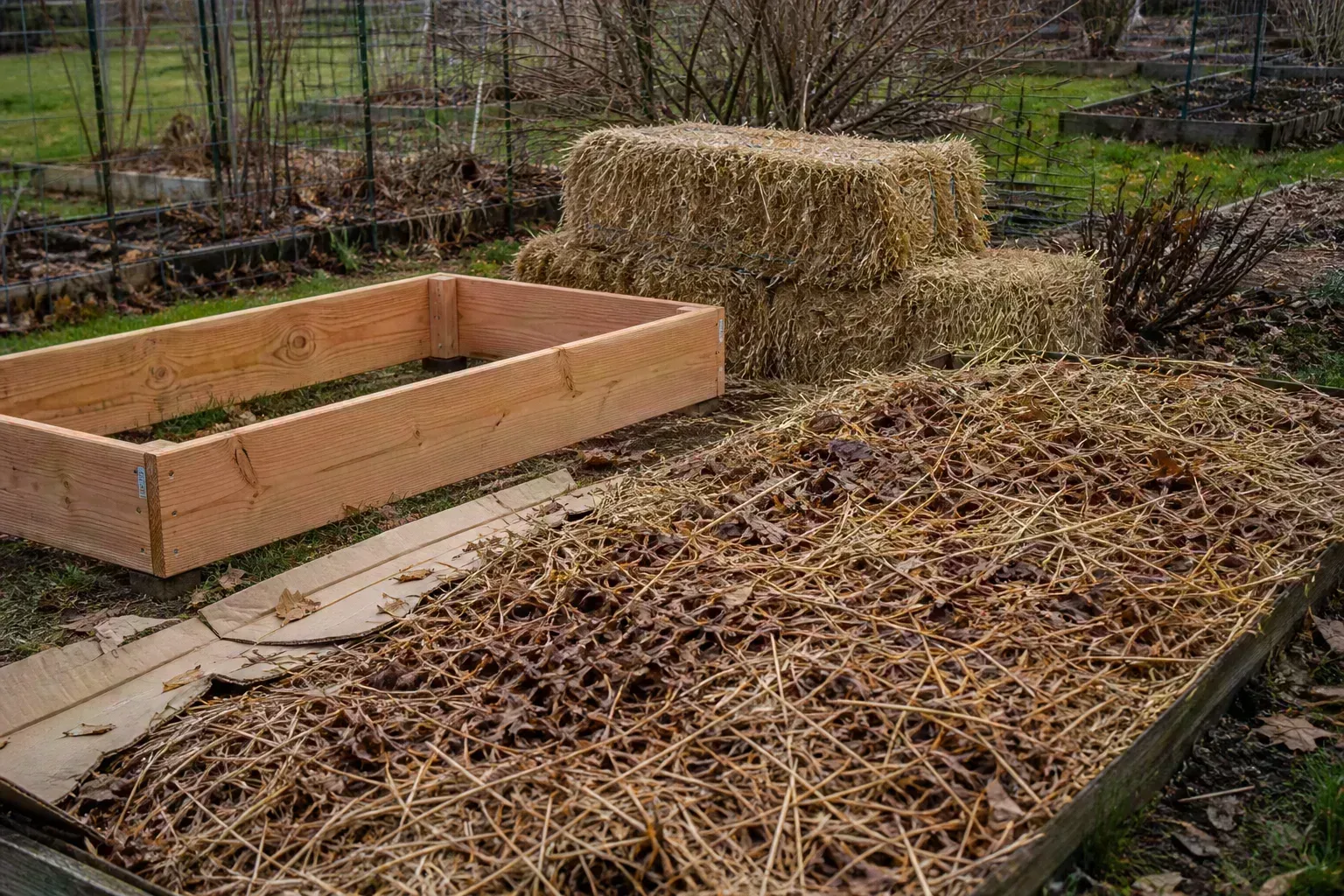
A soil test is the tool that turns “my garden needs feeding” into a defensible decision. Colorado State University Extension notes that a home-garden test can establish a baseline for pH, soluble salts, phosphorus, potassium, and fertilizer needs, while also warning that a standard test will not diagnose drainage, compaction, watering, pests, or disease. The soil sample must represent the area you plan to manage; sample a vegetable bed separately from a lawn or ornamental border.
Cover crops are another way to build a better winter-to-spring cycle in empty vegetable beds. A suitable cover can protect soil from erosion, hold nutrients in living tissue, and add organic matter when managed at the right stage. Choose the species and termination method for your climate and planting calendar; a cover crop is a plan, not a last-minute substitute for a fertilizer application.
Use a commercial fertilizer only when the crop, soil test, and label support it. Match the product to the plant and the season, measure it, and avoid late high-nitrogen applications to turf or tender growth that must enter winter hardened. The RHS guidance on Fusarium patch and snow mould notes that lush, high-nitrogen turf is more prone to the disease and recommends avoiding high nitrogen in late summer or autumn.
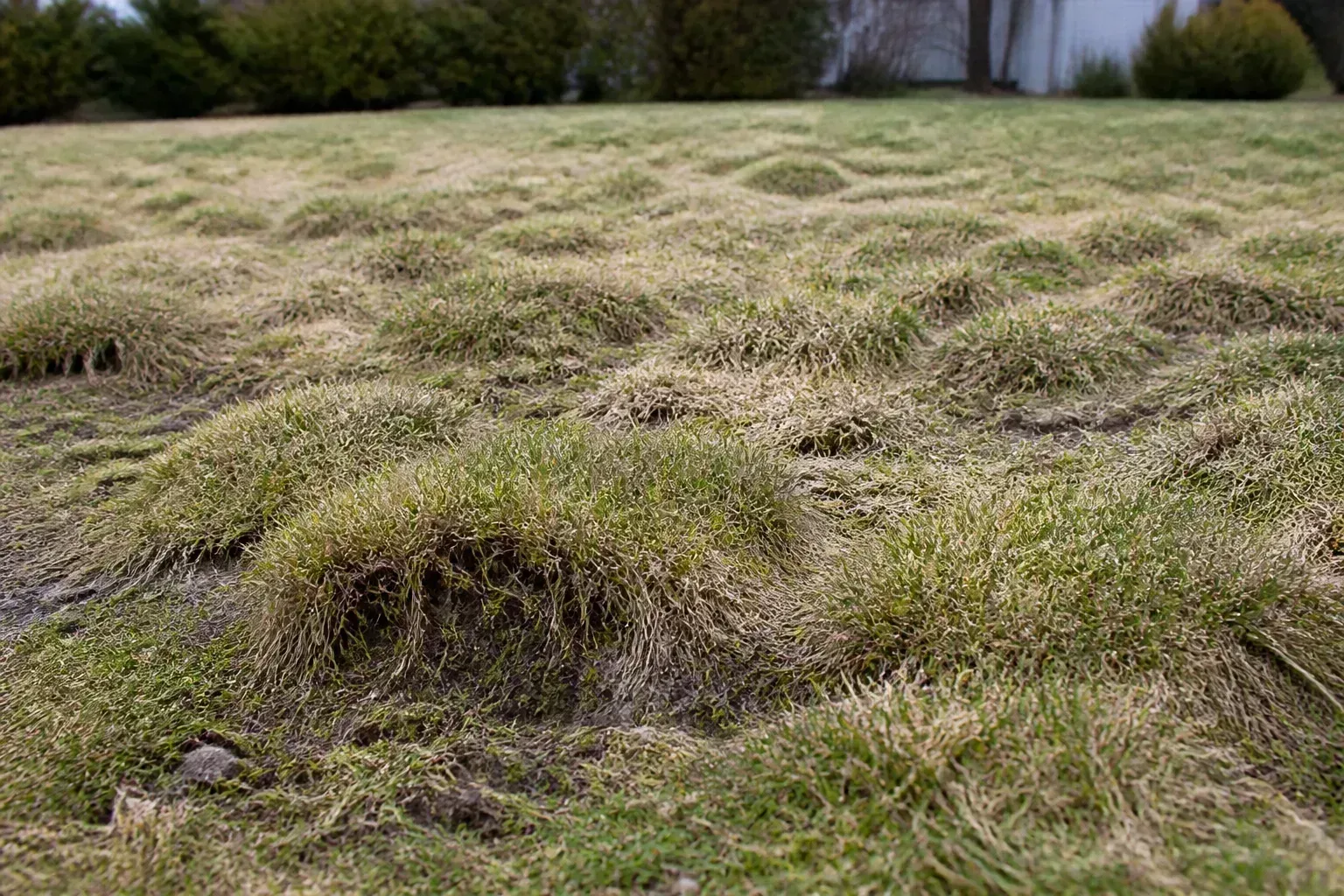
Watch the lawn after snow disappears. Straw-colored, matted circles or cottony growth can indicate snow mold, especially after prolonged snow cover. NDSU Extension says light raking can improve air circulation once the lawn is no longer muddy, and the RHS recommends improving drainage and airflow while avoiding excessive late-season nitrogen; see NDSU’s snow-mold guidance and the RHS snow-mold advice.
Conclusion
Snow really can contribute trace nutrients to a garden, including nitrogen carried from the atmosphere. But the contribution is variable, small, and impossible to manage like a balanced fertilizer. The dependable benefits are usually winter insulation, moderated soil temperature, reduced frost heaving, and gradual moisture—provided the snow is clean, spread reasonably, and able to melt into the soil.
Leave natural snow on dormant beds when it is not causing damage. Keep salted or plow-pushed snow away from roots, avoid concentrating piles on lawns, protect small shrubs only with gentle upward brushing when necessary, and wait for thawed soil before leaching or testing. For fertility that you can actually improve on purpose, rely on finished compost, shredded leaves, cover crops, and a representative soil test—not on how white or deep the snowfall looked.