Does Mulch Attract Termites? A Homeowner's Guide
Does mulch attract termites? Learn what really draws subterranean termites, which mulch types are riskiest near foundations, and how far to keep mulch from your house.
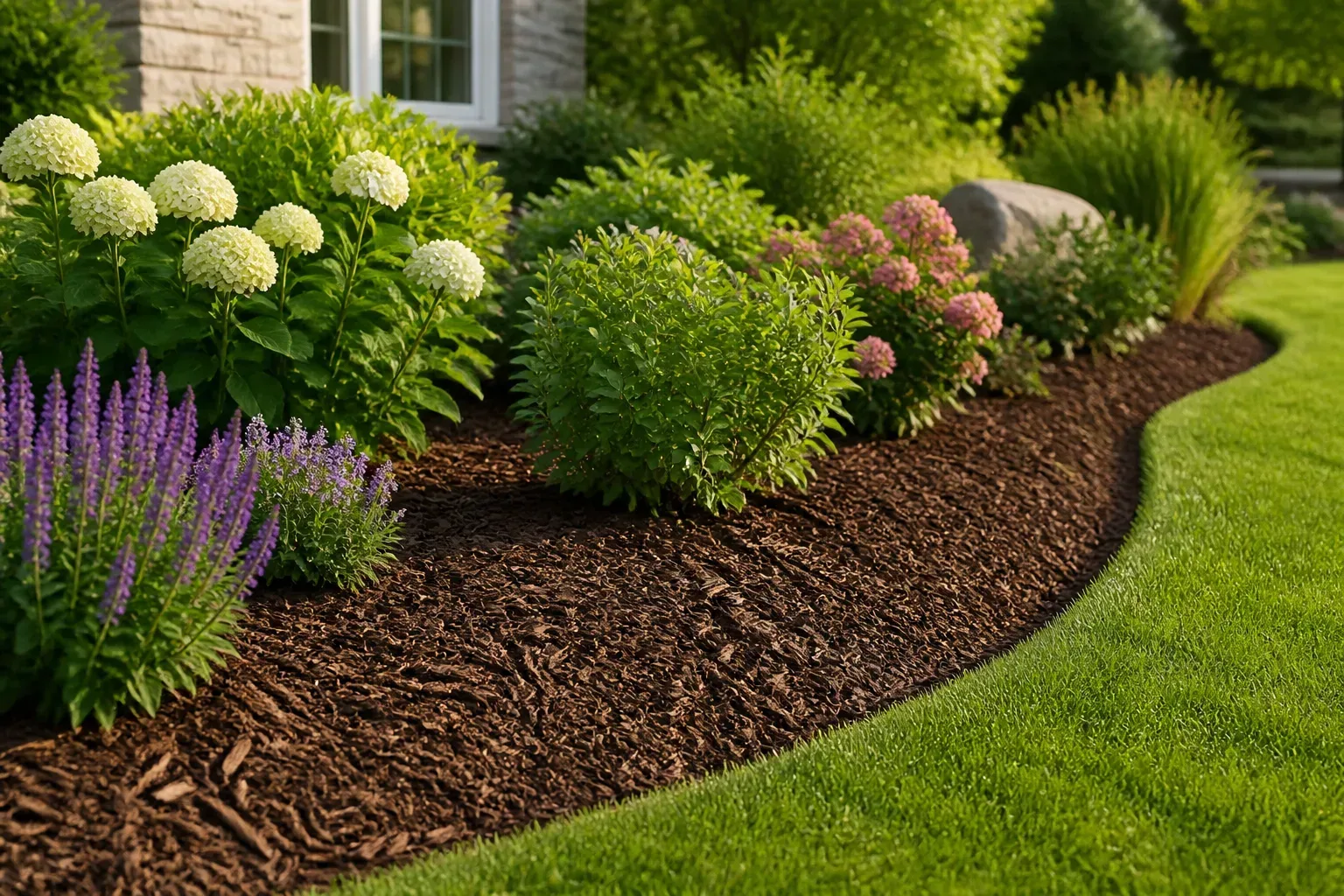
Mulch does not pull termites in from across the neighborhood, but the wrong mulch placed too close to your foundation can give subterranean termites exactly what they already want: moist soil, cover from predators and drying air, and a protected path toward structural wood. The risk is not the bag of bark itself. It is how deep you spread it, how wet you keep it, and whether it touches siding, door frames, or untreated wood.
If you are refreshing landscape beds this season, you do not need to rip out every chip. You need a dry inspection zone along the house, sensible depth limits, and eyes open for mud tubes before damage moves indoors.
The Short Answer: Mulch Is Habitat, Not a Termite Magnet
Termites are not sniffing out your fresh hardwood mulch from hundreds of feet away. Subterranean termites live in soil, send workers out to forage, and settle where moisture and cellulose are easy to reach. Mulch improves those conditions at ground level. That is different from “attracting” a new colony to a yard that had none.
Research summarized by Iowa State University Extension notes that termite foragers can travel substantial distances underground while searching for food. When they encounter a favorable spot during that normal exploration, they are more likely to stay—not because mulch sent a signal, but because the habitat works (Iowa State University Extension). A University of Maryland study frequently cited in arboriculture literature found termites beneath eucalyptus, hardwood, and pine bark mulches about as often as beneath pea gravel and bare soil—which means switching to stone alone is not a magic fix if the soil stays wet and wood touches the house.
Practical takeaway: Mulch is safe for most homes when you keep organic mulch at least 6 to 12 inches away from the foundation and siding, limit depth to 2 to 3 inches near the structure, and fix moisture problems first.
Why Homeowners Worry About Mulch and Termites
The fear makes sense on paper. Mulch is wood. Termites eat cellulose. Therefore mulch equals termites—except biology and building science are messier than that headline.
Most U.S. homes are vulnerable to subterranean termites, the ground-nesting type that builds mud shelter tubes to reach above-ground wood. They were often already on the property—or one property over—before you opened a mulch bag. What changes with landscaping is whether your beds hide their activity and bridge the gap between soil and sill plate, rim joist, or siding.
How Much Damage Termites Cause
Termites and other wood-destroying organisms cost U.S. property owners billions of dollars in damage and control expenses each year. Colonies can work quietly inside walls for years before you see a swarm or a sagging floor. That is why pest pros treat mulch questions seriously: the material is rarely the root cause, but it can be the last few inches between soil and your house’s structural wood.
What Subterranean Termites Need to Survive
Three needs drive almost every termite decision in your yard:
- Moisture. Termites desiccate quickly in open air. They follow damp soil, leaky irrigation, and mulch that stays wet.
- Cellulose. They prefer soft, spring-growth wood—the same reason they love framing lumber and chunky wood chips more than bark nuggets alone.
- Cover. Mulch, shrubs, and stored lumber let workers tunnel without drying out.
Remove any one of those near the foundation and you have already reduced risk more than swapping cedar for pine ever will.
Does Mulch Really Attract Termites?
No—in the sense of drawing new colonies from far away. Yes—in the sense of making an existing population more comfortable and harder to spot.
Pest professionals often reframe the question: mulch does not invite termites to the party, but it can reserve them a table near the house if placement is sloppy.
Foraging vs. Attraction: The Distinction That Matters
“Attract” sounds like a scent plume pulling insects across the block. Subterranean termites do not work that way. Colonies expand through random soil exploration. Workers hit a moist mulch bed, find cellulose, and keep foraging outward. If that outward path reaches your rim joist, you have a problem—but the mulch did not teleport termites onto your property.
Field research comparing mulch types underscores the nuance: termites showed up under several organic mulches and under gravel in study plots (Journal of Arboriculture). Gravel can even hold heat and moisture at the soil line. Material choice matters less than moisture and contact with the structure.
Moisture, Shelter, and Cellulose: What Mulch Actually Provides
Mulch is doing its job when it slows evaporation and moderates soil temperature—that is also why termites like it. A 4-inch blanket of year-old hardwood chips over constantly wet soil is a different beast than a thin 2-inch layer over a graded, draining foundation bed.
Wood mulch also offers cellulose, but termites in mulch beds are usually exploring, not building the main colony inside the chips. The colony stays in soil. The danger is the highway mulch creates to structural wood, especially when it is piled against siding or hides mud tubes on the foundation.
Can You Bring Termites Home in Bagged Mulch?
Unlikely to start an infestation, but not impossible to see a live insect.
Commercial mulch goes through chipping, aging, and bagging that kills most colony ties. Even if a worker survived, it would be cut off from its nest and die without the soil moisture and queen that keep subterranean termites alive. Termites feeding on loose mulch also have lower survival than those feeding on solid structural wood.
What you might find in a torn bag: ants, beetles, earwigs, or an occasional termite worker that will not establish a colony in the bag. The real entry path is almost always from the ground up, not from the garden center aisle.
If you want peace of mind, spread bagged mulch the same week you buy it, avoid storing open bags against the foundation, and inspect the soil line after installation.
Which Mulch Types Carry the Most Risk Near a House?
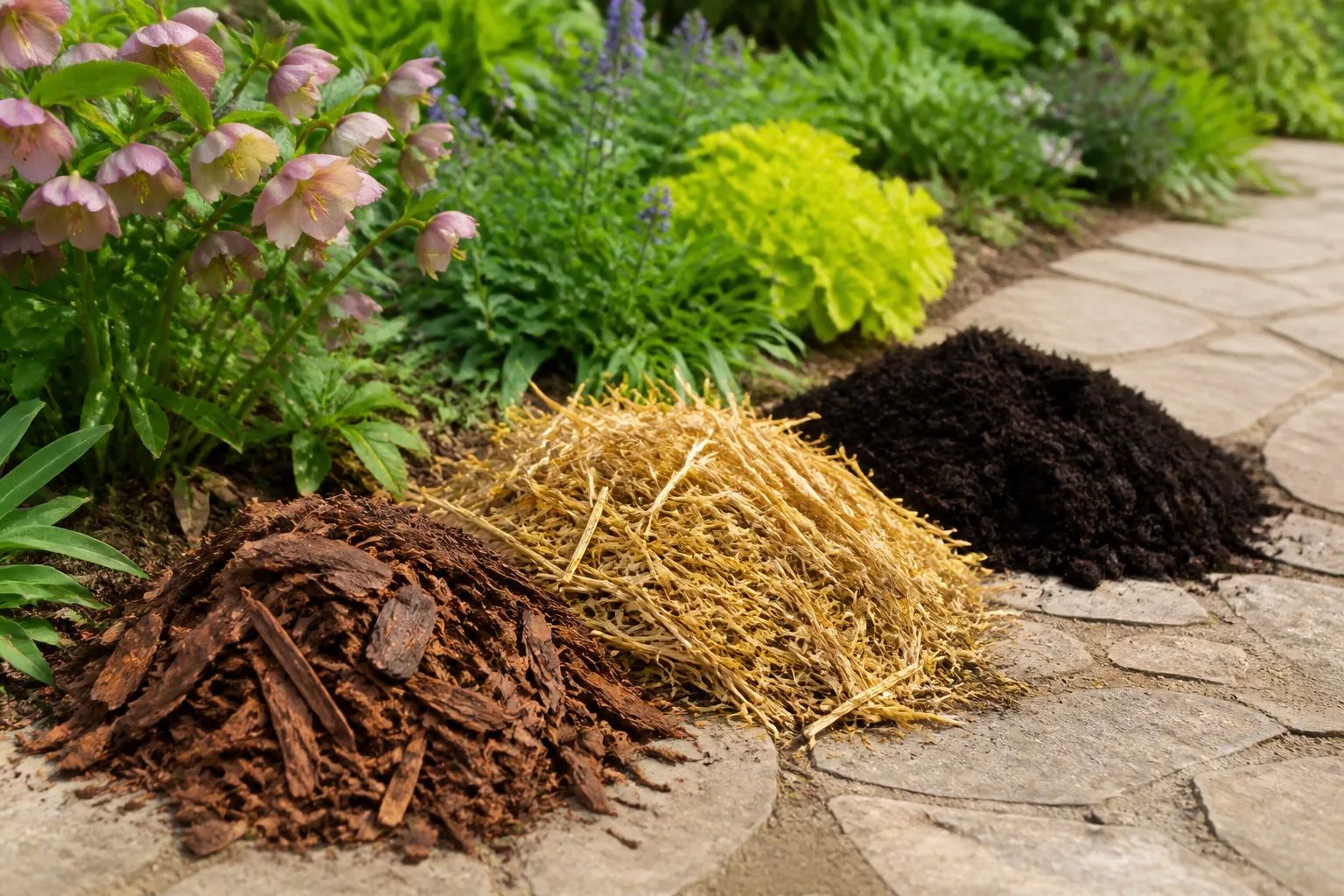
No mulch comes with a termite-proof guarantee. Think in risk tiers based on cellulose content, how long the material holds moisture, and whether it touches wood on the house.
Wood Chips, Bark, and Hardwood Mulches
Standard shredded hardwood, pine bark nuggets, and utility wood chips are the most common landscape mulches—and the ones pest pros discuss most. They contain cellulose, hold moisture when over-watered, and break down into a spongy layer that termites can tunnel through.
Chunky wood chips with lots of soft spring wood are more appetizing than mostly bark. That does not mean you must ban them. It means they belong in beds away from the structure, not in a ring pressed against the foundation. For a full material comparison—including depth and renewal timing—see our guide on what mulch is and how to apply it.
Cedar, Cypress, and “Resistant” Labels
Cypress heartwood and cedar contain oils and extractives that can reduce termite feeding in lab and field tests. Cypress sapwood, loblolly pine, and slash pine are more palatable to termites. The catch: many bags labeled “cedar” or “cypress” are mostly sapwood, which offers little real resistance once the aroma fades and the chips stay wet.
Treat heartwood mulches as slightly lower risk, not zero risk. Refresh them before they compost into a dense mat, and still keep the foundation gap. Epic Gardening’s mulching guidance applies the same logic to trees: even beneficial mulch becomes a pest problem when it is piled against wood (Epic Gardening).
Inorganic Mulches: Gravel, Rubber, and Stone

Rubber mulch has no cellulose, so termites do not eat it—but it can still shade soil and trap moisture, which supports termites already in the ground. Stone and gravel do not feed termites either, yet research plots show termites traveling under gravel layers when soil stays damp.
Inorganic mulch can still be useful as a visible, rake-back buffer near the house because it does not decompose into a hidden blanket. Pair it with drainage and the spacing rules below—not with the assumption that rock alone solves termites. For design ideas that separate stone from planting beds, browse front-yard landscaping with rocks and mulch.
How Far Should Mulch Be From Your Foundation?
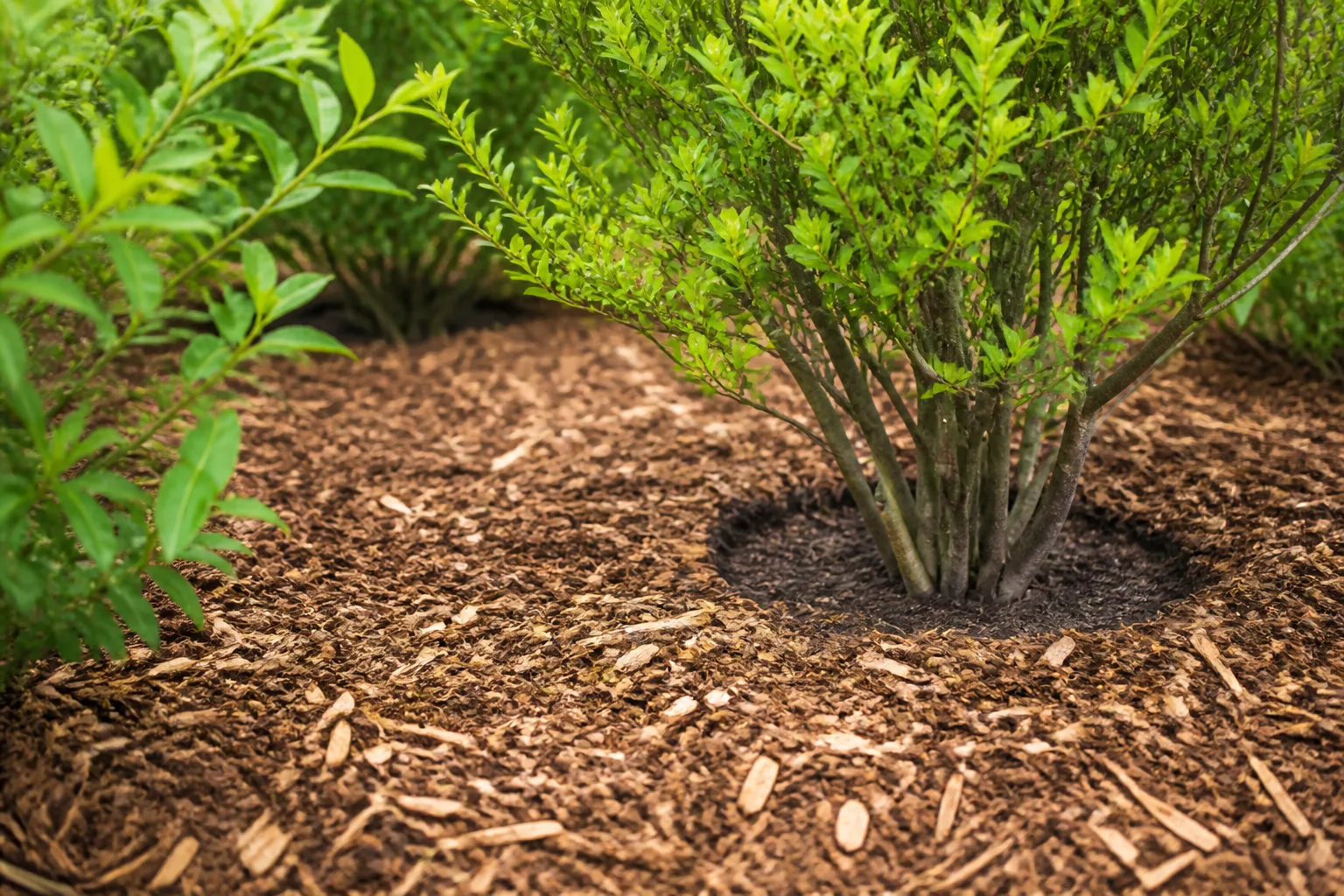
Keep organic mulch at least 6 to 12 inches away from the foundation wall, siding, and wood trim. Many pest professionals prefer 12 to 18 inches in high-pressure regions (Gulf Coast, Southeast, parts of California and Hawaii) where Formosan and other aggressive subterranean species are common.
That gap is your inspection zone—bare or thinly mulched soil where you can see pencil-width mud tubes, swarmers, or damaged wood before entry. Building and pest codes in several states reference a 6-inch visible clearance between soil or mulch and wood siding for exactly this reason.
Also keep mulch away from:
- Door thresholds and window frames
- Deck posts and fence posts set in soil (use metal post bases where possible)
- Firewood stacks (store off the ground, away from the house)
- Wooden planter boxes in direct soil contact—concrete, metal, or stone is safer against the foundation
How to Mulch Safely When Termites Are a Concern
Safe mulching is mostly building maintenance disguised as gardening. The mulch rules support what your pest pro already wants: dry perimeter soil and visible foundation.
Depth, Slope, and the Dry Inspection Zone

Follow these application rules near the house:
- Depth: 2 to 3 inches maximum within a foot of the foundation; never exceed 3 inches in termite-conscious zones. Deeper layers stay wet longer and bury mud tubes.
- No mulch volcanoes: Pull mulch back from trunks and siding. The donut spacing shown in proper tree mulching also protects structures (Epic Gardening).
- Slope: Grade soil and mulch so water drains away from the foundation—about 6 inches of fall per 10 horizontal feet is a common target.
- Renewal: Remove compacted, decomposed mulch before piling fresh layers. Adding year after year without stripping creates a termite-friendly sponge. Colorado State University Extension emphasizes correct depth and placement for all mulch benefits, including moisture control (CSU Extension).
Moisture Control Beyond the Mulch Bed
Mulch multiplies whatever moisture pattern you already have. Fix the source:
- Gutters and downspouts: Discharge at least 6 feet from the foundation where possible.
- Irrigation: Keep spray heads and drip lines from soaking the wall line daily.
- Leaks: Repair hose bibs, AC condensate lines, and outdoor faucet drips promptly.
- Planters: Empty saucers under pots against the house; move large containers off bare soil touching siding.
- Wood-to-soil contact: Use treated lumber for ground-contact structures, or elevate with concrete footings.
Weed suppression matters too—a clean edge is easier to inspect. Our guide on whether mulch prevents weeds covers depth by material without encouraging excessive buildup near walls.
Signs of Termites in Mulch Beds and Along the Foundation
Walk the perimeter monthly during warm weather and after heavy rain. You are looking for evidence, not necessarily the insects themselves.
- Mud tubes: Narrow, earthen tunnels on foundation walls, piers, or hidden under mulch where it meets the house. Do not knock them down before a professional documents them—they are diagnostic.
- Damaged or hollow wood: Soft, blistered, or easily punctured wood in sill plates, porch posts, or door frames.
- Swarmers or discarded wings: Flying reproductives near windows or exterior lights in spring; piles of equal-length wings on sills.
- Workers in disturbed mulch: Pale, soft-bodied insects about 1/4 inch long that scatter when you rake—distinct from faster ants with narrow waists.
Termites in a bed 20 feet from the house are less urgent than tubes bridging mulch to siding. Distance and dryness are your friends.
What to Do If You Find Termites Near the House
Call a licensed pest management professional for mud tubes on the foundation, swarmers indoors, or structural wood damage. Termite control is not a DIY borax-and-hope situation; mis-treatment can scatter colonies and complicate proper treatment.
While you wait for inspection:
- Pull mulch back at least 3 feet from any active tubes or damaged wood.
- Photograph tubes and damage for the inspector.
- Fix water against the wall—stop soaking the zone tonight.
- Do not spray random insecticide on soil; you may mask activity without eliminating the colony.
If activity is confined to a distant bed and the foundation is clear, improve spacing and moisture, then schedule a routine termite inspection if you live in a high-risk region. Prevention beats panic.
Conclusion
Mulch does not attract termites the way a porch light attracts moths. It gives ground-foraging termites moisture, cover, and sometimes cellulose—especially when it is deep, wet, and touching your house. Keep a 6- to 12-inch dry inspection zone along the foundation, limit depth to 2 to 3 inches nearby, control irrigation and drainage, and choose materials for plant health—not as a substitute for spacing.
Bagged mulch is a poor way to import a colony. Placement and moisture are the levers that matter. Check for mud tubes when you refresh beds, link mulch strategy to the basics in our mulch overview, and bring in a licensed pro at the first sign of tubes on the structure. You can have attractive beds and a defensible perimeter—you just cannot have both mulch piled against the siding.