Do Roses Like Coffee Grounds? A Practical Garden Guide
Do roses like coffee grounds? Learn when used and composted grounds help, why fresh grounds fail, and how to feed roses without matting soil or skipping real fertilizer.
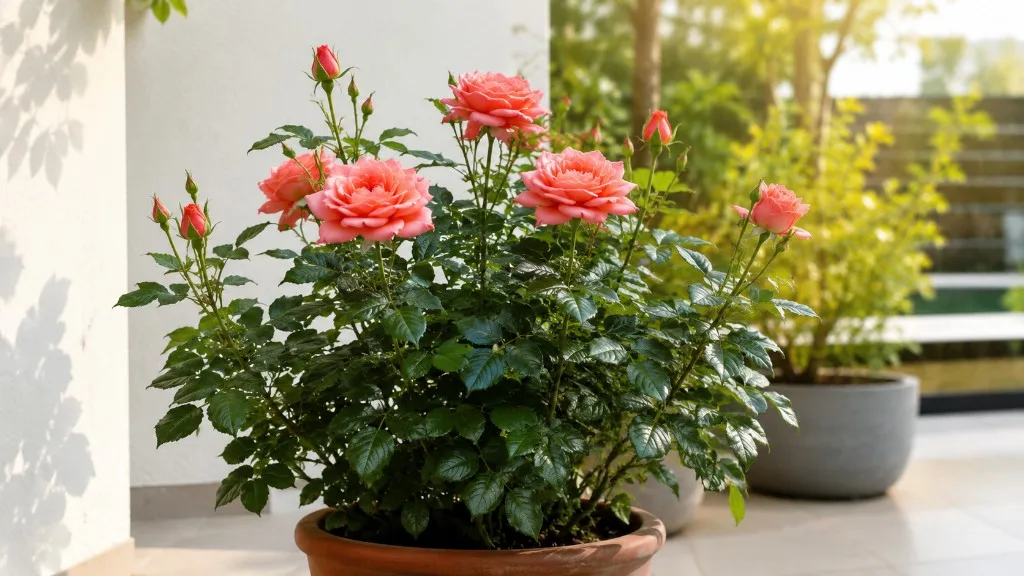
Roses can live with a modest amount of used coffee grounds, but they do not need them, and they will not forgive the same mistakes many gardeners make with kitchen scraps. The safe pattern is simple: treat spent grounds as a compost ingredient, spread finished compost thinly over the root zone, and keep a complete fertilizer program for plants that are actively growing. Fresh grounds, thick surface layers, and brewed coffee are poor substitutes for that plan.
If you are standing at the kitchen counter with a wet puck of grounds and a rose bed out back, the decision is not whether roses “love” coffee. It is whether those grounds will improve soil structure without sealing the surface, stealing nitrogen during breakdown, or convincing you to skip a soil test when the plant actually needs phosphorus, better drainage, or more sun.
The honest answer: yes in small amounts, no as a rose diet
Used coffee grounds can be a useful source of organic matter when they are composted or mixed in thinly. They are not a dependable acidifier, not a bloom booster, and not a measured replacement for rose fertilizer. The Royal Horticultural Society recommends incorporating spent grounds into compost and notes that their effect on soil pH is minor and temporary (RHS guidance on coffee grounds).
That matches what rose culture actually requires. Most garden roses grow best in fertile, well-drained soil with steady moisture and plenty of light. The Missouri Botanical Garden places ideal rose-bed pH between about 5.5 and 6.5 and recommends a soil test before guessing at fertilizer (Missouri Botanical Garden rose fertilizer guidance). Coffee grounds can nudge organic matter upward when used correctly, but they cannot diagnose yellow leaves, fix waterlogged roots, or supply phosphorus on demand.
Why roses do not need kitchen scraps to thrive
A healthy rose is usually a site-and-management problem before it is an amendment problem. If the shrub has six or more hours of direct sun, drains freely, and receives water that reaches the root zone without leaving the crown soggy, it already has the foundation coffee grounds cannot provide. Grounds become relevant when you want to recycle waste and slowly build soil organic matter—not when you are trying to rescue a weak plant with whatever is left in the filter basket.
That distinction also applies across rose types. A tough landscape shrub rose in improved clay may shrug off a thin compost top-dressing that includes coffee. A newly planted hybrid tea with a shallow root system, a graft union sitting high in heavy mulch, or a repeat bloomer in a half-day sun bed will show mistakes faster. Coffee grounds do not change those baseline needs; they only add another variable on top of them.
What roses actually need from soil before you add anything
Roses are heavy feeders compared with many landscape shrubs, but “heavy feeder” does not mean “accept any kitchen by-product.” They need a root zone that holds moisture without staying saturated, allows air to move, and delivers nitrogen, phosphorus, and potassium in proportion to growth stage. The RHS rose-growing guide emphasizes rich soil, mulch, and appropriate feeding rather than a single homemade amendment (RHS rose-growing guide).
Before you add coffee grounds, ask three practical questions. Is the soil already rich in organic matter from compost and mulch? Is the rose making normal new growth for the season, or is it stunted, yellow, or defoliating? Has a soil test shown a real need for more nitrogen or a pH change? If you cannot answer those, grounds are a distraction.
pH, drainage, and shallow feeder roots
Many roses prefer slightly acidic to neutral soil, often cited around 6.0 to 6.5, though the exact target depends on rootstock, cultivar, and local water chemistry. That range matters because pH changes which nutrients are available, not because roses require coffee specifically. Used grounds are commonly near neutral once brewed and are a weak tool for shifting whole-bed pH. Washington State University Extension research on coffee grounds in gardens stresses that they should not be counted on to acidify soil in a predictable way (Washington State University Extension coffee grounds).

Rose feeder roots also sit relatively close to the surface. That is why a crusted amendment layer hurts roses faster than it might hurt a deeply rooted tree. Anything that mats on top—coffee grounds included—can shed irrigation, limit oxygen, and keep the upper root zone oddly dry even when the surface looks damp. For rose-specific soil and drainage context, see the rose care guide.
Fresh, used, and composted grounds are not the same material
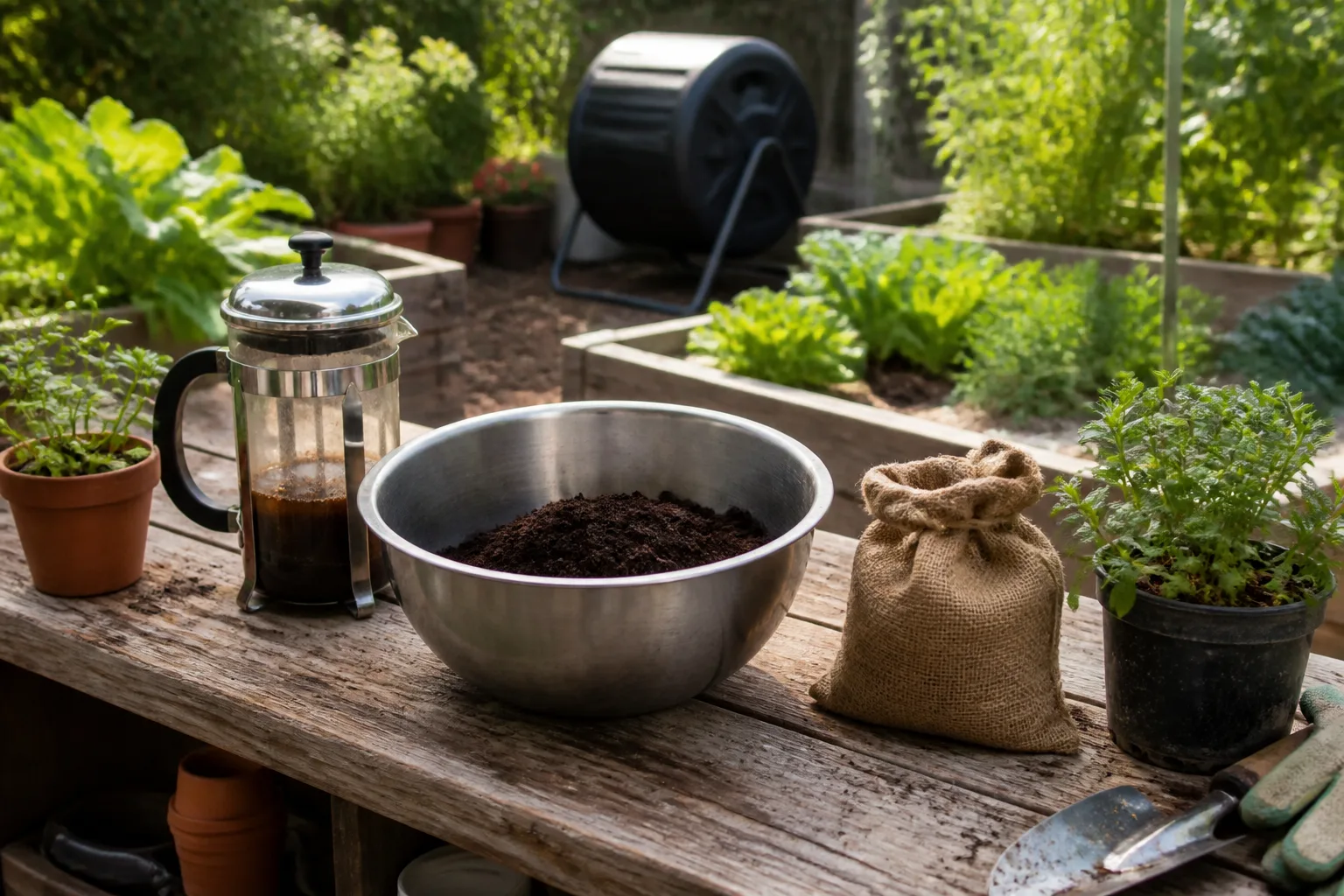
The phrase “coffee grounds” hides four different products. Treating them as interchangeable is how rose beds get sealed, nitrogen-starved, or dosed with compounds the plant never needed.
| Material | Typical best use for roses | Main risk |
|---|---|---|
| Fresh/unbrewed grounds | Compost pile only | Stronger acidity and caffeine; poor texture |
| Used/spent grounds | Small compost addition or thin soil mix-in | Surface matting; temporary nitrogen tie-up |
| Composted grounds | Finished compost around established roses | Still not complete fertilizer |
| Brewed liquid coffee | Not routine irrigation | Variable acidity; milk/sugar additives |
Fresh grounds cost more, behave less predictably, and are a poor direct mulch around any rose you care about. Used grounds have already surrendered much of their water-soluble acidity and caffeine to the cup, but they remain fine-textured and easy to overapply. Composted grounds are the form most likely to help because decomposition has started and the material is diluted among other ingredients. Brewed coffee is a beverage, not a fertilizer program.
What coffee grounds add to soil—and what breaks down first
Spent grounds contribute organic carbon, some nitrogen, and smaller amounts of phosphorus, potassium, and magnesium. Those nutrients are useful, but they are locked inside plant tissue until microbes break it down. The benefit is therefore indirect: better soil structure and microbial activity over time, not an instant rose feed.
Oregon State University Extension describes appropriately used coffee grounds as a soil improver rather than a standalone fertilizer (Oregon State University Extension coffee grounds). That distinction matters for roses because gardeners often apply grounds when they want more flowers, yet blooms depend heavily on overall plant health, phosphorus availability, and genetics—not on a handful of nitrogen-rich organic particles.
Nitrogen tie-up and why roses feel it quickly
When fresh or raw grounds are mixed into soil, soil microbes consume them and temporarily compete for available nitrogen. Gardeners call this nitrogen immobilization. The plant may look pale or slow even though you “fed” it, because the nitrogen is busy fueling decomposition instead of leaf color and new canes. Composting grounds first gives microbes a head start in the pile, so the finished product is less likely to rob nitrogen from rose roots at the moment you spread it.
University of California Cooperative Extension guidance on composting coffee suggests keeping grounds to roughly no more than one-fifth of the compost volume, which is easy for most households but important if you collect café buckets (UC Cooperative Extension coffee compost guidance). Dense, wet grounds need plenty of dry “brown” material—shredded leaves, straw, shredded paper—to stay airy.
Worm bins are another workable route for small households. Red wigglers will process spent grounds when the bedding stays moist but not soggy and when coffee never dominates the bin. The finished castings can be used like any other mild compost around established roses, still in thin layers and still not as a fertilizer substitute. If the bin smells sour or the worms crawl out, you added too much wet coffee at once.
Do coffee grounds acidify soil for roses?
Not reliably, and not enough to correct alkaline soil. The acid in coffee largely brews into the cup; the spent solids that remain are much closer to neutral. The RHS is explicit that spent grounds have only a minor, temporary effect on pH. If your rose bed is too alkaline for the cultivars you grow, you need a soil test and a labeled amendment chosen for that result—not another ring of kitchen waste.
Some gardeners on naturally acidic, humus-rich soils report that a little finished compost containing grounds fits their routine without harm. That does not prove grounds acidified anything. It usually means the rose already had appropriate pH, drainage, and fertility, and the compost added organic matter in a thin, workable form. Chasing acidity with coffee is especially risky on container roses, where the small soil volume magnifies every mistake.
Coffee grounds vs. a complete rose fertilizer
Roses need nitrogen for leaves and canes, phosphorus for roots and flowering, and potassium for overall vigor and stress tolerance. Coffee grounds are nitrogen-skewed organic matter. They are not a balanced N-P-K product and should not be compared with a labeled rose fertilizer.
The Missouri Botanical Garden recommends balanced fertilizers such as 5-10-5 or 4-8-4 when a soil test is unavailable, applied in spring at bud break, again when flower buds form, and once more in early summer—then stopping before late-season growth that may not harden off (Missouri Botanical Garden rose fertilizer guidance). Coffee grounds fit nowhere in that timing as a substitute. They can coexist with a soil-building plan, not replace it.
If your goal is bigger blooms, look first at sun, pruning, disease control, and whether phosphorus is actually available—not at whether the filter held breakfast. Other slow kitchen amendments, like eggshells, follow the same rule: optional in compost, poor as emergency nutrition (eggshells for roses guide).
Should you water roses with leftover coffee?
Do not make brewed coffee part of a rose irrigation routine. Liquid coffee is far more acidic than spent grounds and far more variable in strength. Milk, cream, sugar, and flavored syrups add sugars and fats that belong in the compost bin or trash, not around plant crowns. Even black coffee applied repeatedly can stress roots in pots and may attract pests when sweetened.
If a cup goes cold, pour it on the compost pile or down the drain. Use plain water on roses, watering deeply enough that moisture reaches the root zone without soaking the graft union for long periods. For general coffee-and-plants boundaries beyond roses, the coffee grounds for plants guide covers household rules that still apply in a rose bed.
The best way to use coffee grounds around roses
The best method is boring on purpose: compost the grounds, then use the compost. Direct sprinkling is acceptable only in small amounts on established in-ground roses, and only when the result still looks like soil—not like a coffee puck.
Compost first: the routine that scales
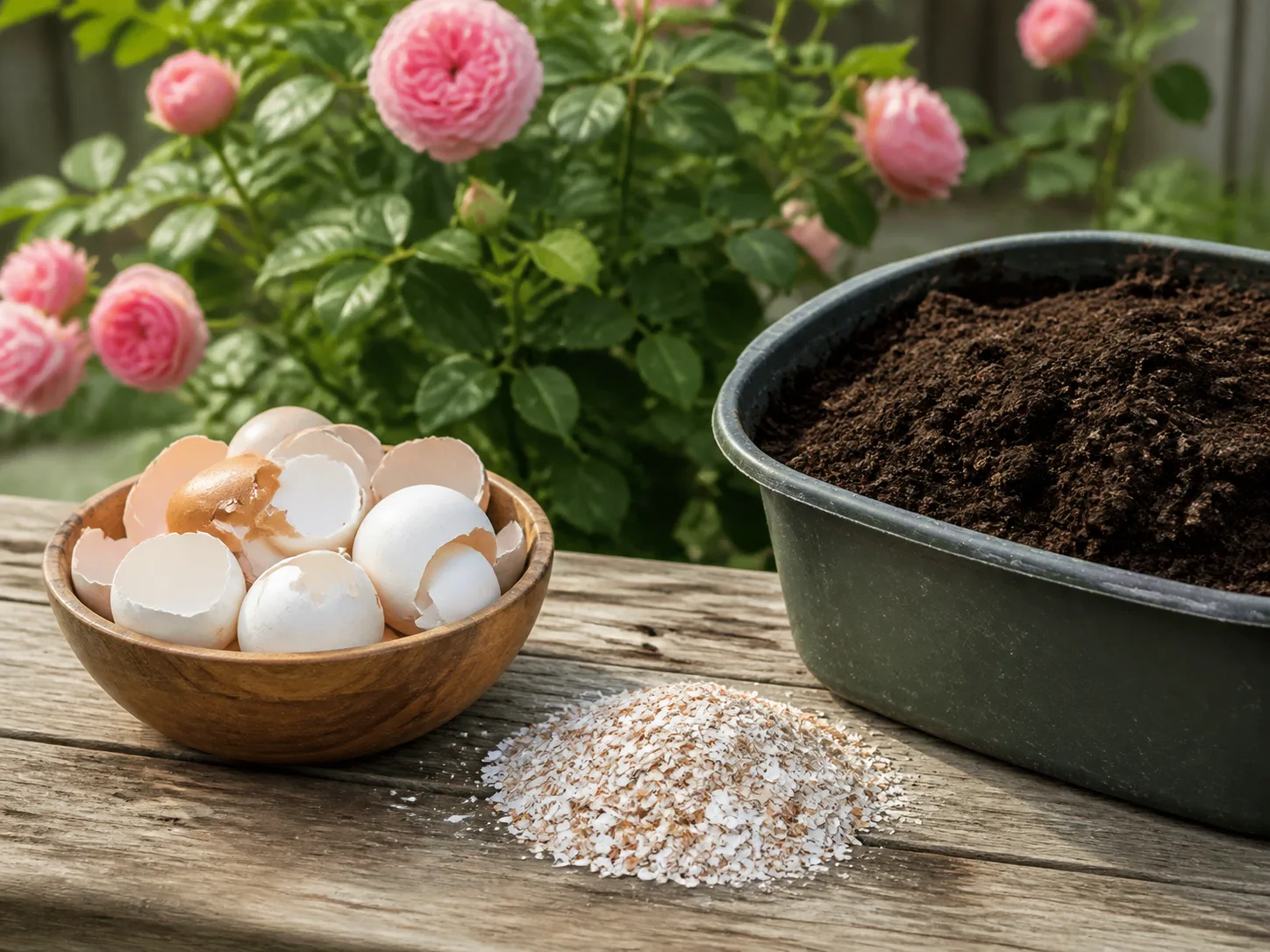
Collect cool, used grounds and mix them into an active compost pile with at least three parts dry browns to one part wet grounds by volume. Turn or fluff the pile so the coffee never forms a solid layer. When the compost is dark, crumbly, and earthy-smelling, spread a thin layer from the drip line inward, stopping several inches away from the crown and graft union.
A practical annual approach for one or two rose bushes might be a single spring application of finished compost made with coffee, followed by observation through the first bloom cycle. If growth is normal and the soil surface stays open, you do not need a coffee schedule. If you generate more grounds than the pile can absorb, give the excess to a community compost program rather than dumping it all around shrubs.
Timing matters as much as texture. The safest window is early to mid-spring, when soil is workable, new basal shoots are emerging, and you can spread compost before summer heat bakes the surface. A light midsummer top-dressing of finished compost is reasonable on an established in-ground rose if the soil is not already crusted and if you are not chasing late nitrogen pushes in a cold-winter climate. Avoid dumping fresh or raw grounds in late summer or fall on roses that should be hardening wood for dormancy; soft, nitrogen-driven growth that arrives too late is a poor trade for a bucket of kitchen waste.
Direct application when you only have a daily brew
When you have just one day’s grounds and no active compost, scatter a thin dusting over moist soil, mix it into the top inch with a hand cultivator, and cover with loose leaf mulch or finished compost. Do not exceed about half an inch of grounds before mixing, and never leave a continuous mat. Work gently; rose feeder roots are shallow and easily damaged by enthusiastic digging.
Avoid direct grounds on newly planted roses, bare-root plants settling in, or any rose showing wilt, black spot stress, or root problems. Those plants need stable moisture and minimal root disturbance, not experimental kitchen amendments.
Coffee grounds on potted and container roses
Container roses have less buffering soil and less room for error. A thick layer of fine grounds can seal a pot surface in a single afternoon, especially on a sunny patio where the mix dries quickly. For most potted roses, skip raw grounds entirely and use a reputable potting mix plus a container-appropriate fertilizer according to label rates.
If you insist on using grounds on a large outdoor tub rose, limit yourself to a tablespoon or two of spent grounds mixed into the top inch of an established plant, then wait through several watering cycles before repeating. Watch for fungus gnats, sour smells, or water running off the pot lip. Those are signals to scrape the surface clean and return to plain compost or mulch.
Signs you used too much around a rose
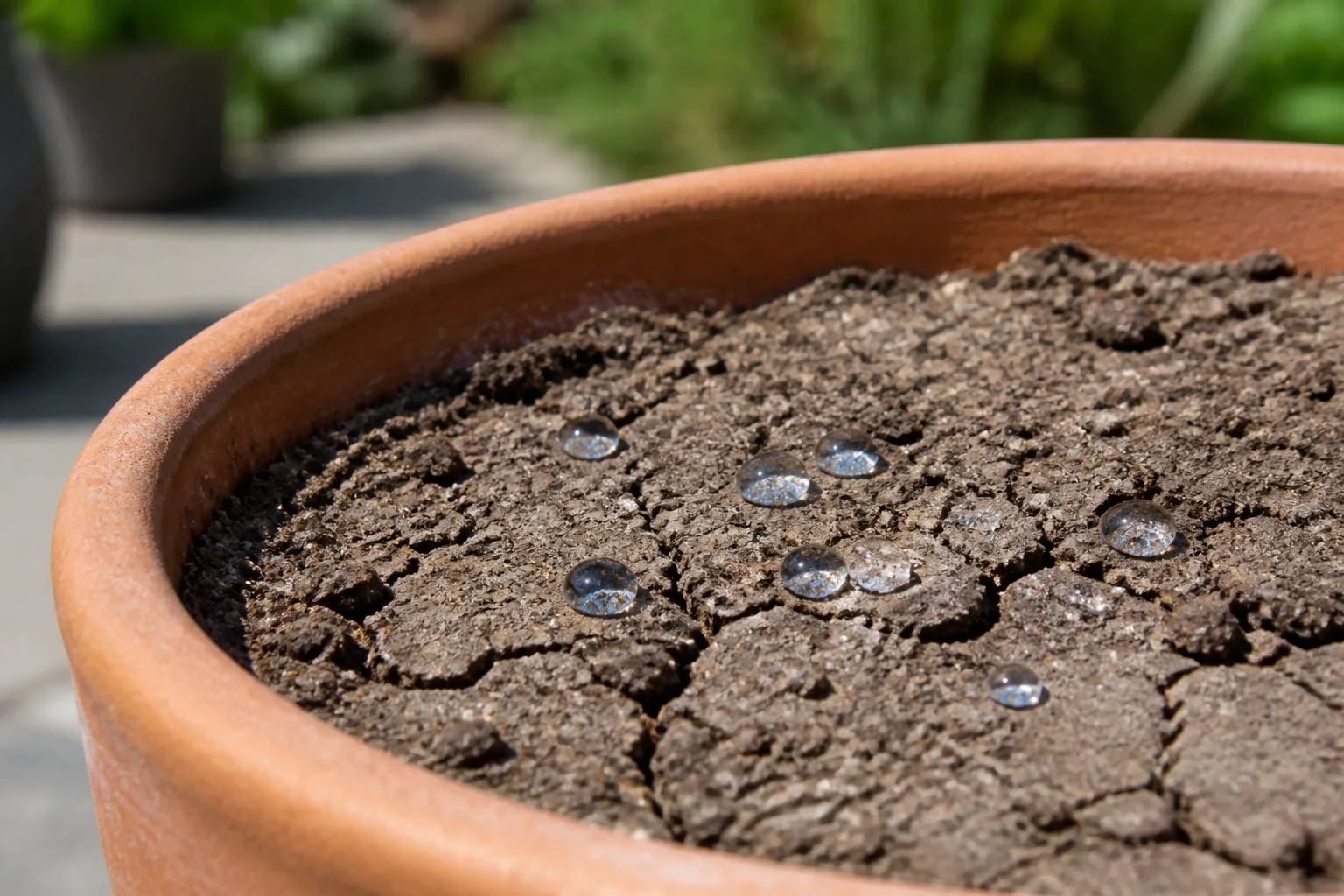
Overapplication usually announces itself at the soil surface before it shows up as a perfect bloom count. Watch for a crusted or greasy-looking layer, irrigation water running off the root zone, white or green mold on the coffee layer, fungus gnats, sour odors, or new leaves staying pale while the soil stays wet. Canes may look stunted, or the plant may push soft, overly leafy growth if nitrogen later surges after immobilization ends.
Recovery is straightforward if you act before roots suffocate. Rake away visible mats, loosen the crust lightly without tearing surface roots, and replace the top layer with finished compost or coarse organic mulch. Water slowly in several passes so moisture penetrates instead of racing around the planting hole. Hold off on extra fertilizer until normal growth resumes; a stressed rose does not need a second variable.
If pale new leaves appeared right after a heavy grounds application, suspect nitrogen immobilization rather than a permanent nutrient deficiency. Removing the mat and adding a thin layer of finished compost often lets soil biology rebalance without forcing a rescue dose of synthetic fertilizer. If leaves stay yellow after the surface is fixed, sample the soil or compare the affected cane with a healthy one on the same plant before assuming coffee caused a long-term problem.
Common mistakes rose gardeners make with coffee grounds
The most common mistake is treating grounds as mulch. Mulch should let air and water pass; coffee particles pack together. The second mistake is using fresh grounds to “acidify” soil for roses that were never tested. The third is doubling down—adding grounds weekly because the plant still looks mediocre—when the real limiter is shade, competition from tree roots, poor pruning, or disease.
Another frequent error is confusing organic matter with complete nutrition. A rose can sit in compost-rich soil and still flower poorly if phosphorus is low, if aphids are sucking new growth, or if a once-flowering old rose is being judged like a repeat bloomer. Coffee does not clarify any of that. Finally, gardeners sometimes copy houseplant advice and pour leftover coffee on outdoor roses. Outdoor shrubs need volume and consistency plain water provides.
Better fixes when a rose is struggling
Start with observation, not the coffee canister. Check whether the rose receives enough direct sun, whether water reaches the root zone without flooding the crown, and whether mulch is piled against the stem. Inspect leaves for black spot, powdery mildew, aphids, and rose slugs. If growth is chronically weak, run a soil test and follow the report for pH and nutrients.
Feed actively growing roses with a complete product labeled for roses or flowering shrubs, following local timing that avoids late-season soft growth in cold climates. Improve soil with finished compost and coarse mulch rather than repeated thin kitchen layers. Prune for airflow and remove diseased leaves. Those steps address the problems gardeners hope coffee grounds will magically solve.
When yellow leaves are the trigger for reaching for coffee, read them in context. Lower leaves yellowing on an otherwise healthy repeat bloomer may simply be old foliage aging out. Uniform yellowing with wet soil points to roots or drainage. Interveinal yellowing on new growth may involve pH or micronutrients a soil test can clarify. Coffee grounds do not sort among those patterns, which is why the amendment belongs at the end of a diagnostic sequence—not at the beginning.
If you want a structured overview of rose culture—planting depth, mulch clearance, feeding windows, and variety differences—the rose care guide is a better next read than another bucket of grounds.
Conclusion: recycle grounds, feed roses properly
Roses tolerate modest amounts of used coffee grounds when those grounds are composted or mixed in thinly and kept away from crowns and graft unions. They do not need grounds, and they will not outperform a well-sited plant fed with a complete fertilizer and maintained with sensible watering and pruning.
Use coffee grounds to build compost, use finished compost to improve soil structure, and use a soil test plus labeled fertilizer when the plant shows a real nutrient need. That order respects both your morning habit and the rose’s actual biology—without asking wet kitchen grit to do a rose feed’s job.