How to Grow Bananas From Seed
Learn whether bananas have seeds, why grocery bananas are usually seedless, and how to germinate viable wild banana seeds in pots.
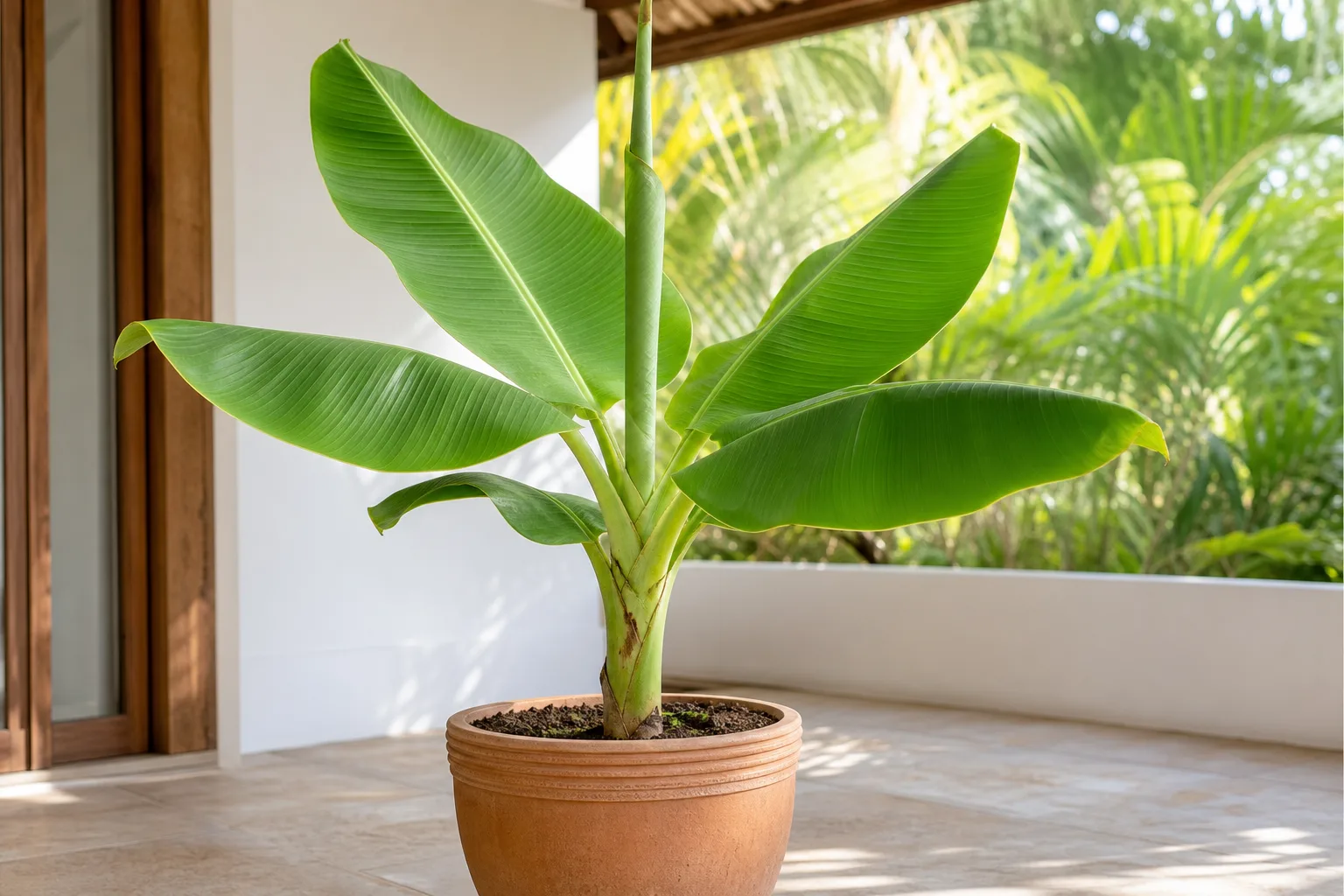
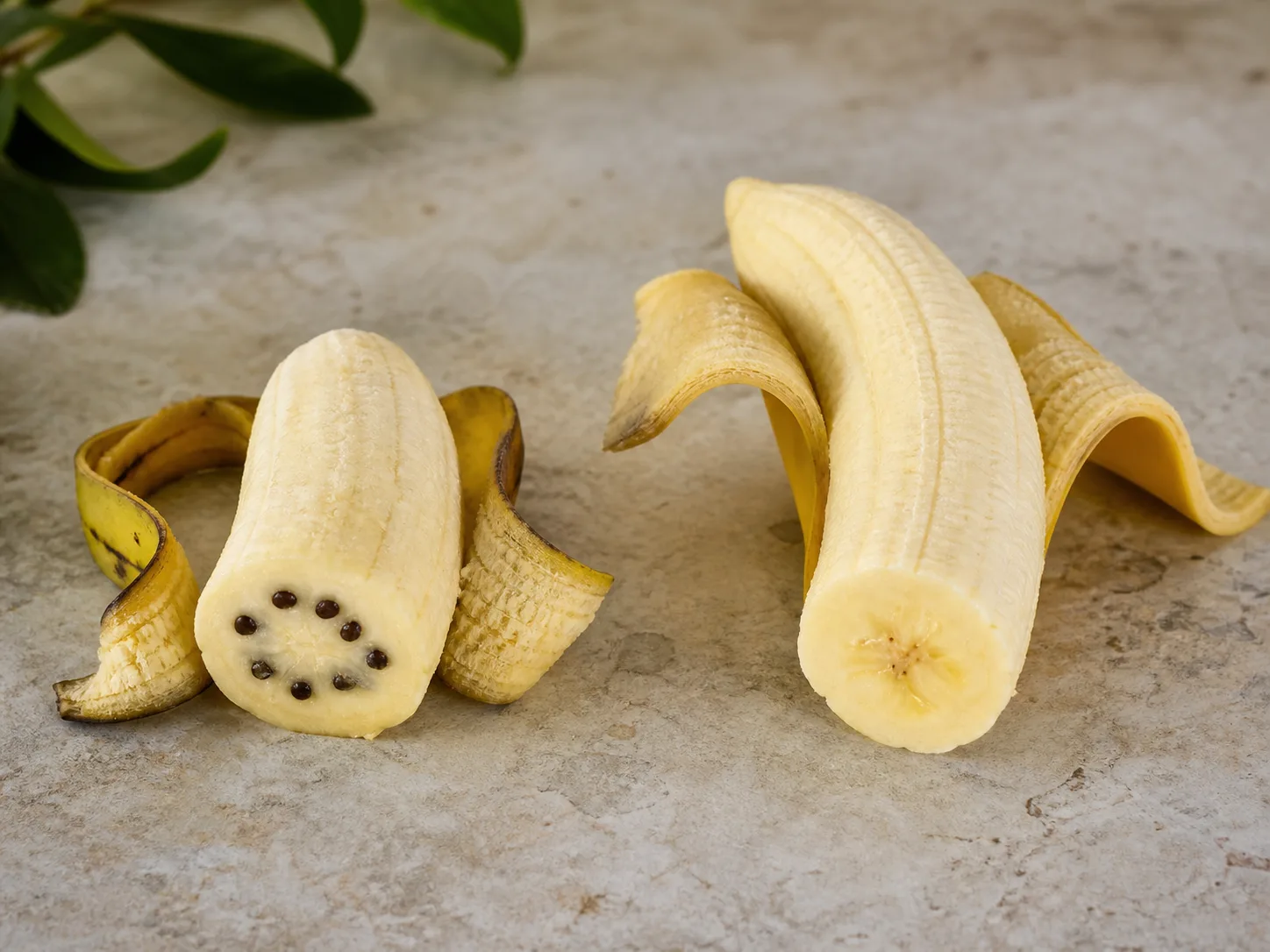
Wild and ornamental bananas can produce hard, dark seeds, but the yellow dessert banana in most grocery stores is bred to be seedless. If you slice open a Cavendish bunch, you may see tiny black specks in the flesh. Those are not the same as a mature, viable seed with a living embryo, and they will not give you a supermarket-style plant if you try to plant them.
To grow bananas from seed, you need correctly identified seed from a wild or ornamental Musa species sold for propagation. The process is slow, warm, and sometimes unpredictable. Germination can take a few weeks or many months, and a seedling may need well over a year before it flowers. That timeline is normal. The reward is either a distinctive ornamental plant or the experience of raising a banana from its natural starting point—not a shortcut to cloning your lunch.
Do bananas have seeds?
Yes—on wild plants. Open a ripe fruit from a seeded banana such as Musa balbisiana or certain wild forms of Musa acuminata, and you will find hard, rounded seeds embedded in the pulp. ProMusa describes wild banana seeds as usually less than 1 cm in diameter, with a tough wrinkled coat and a sealed micropylar plug that protects the embryo inside. The flesh around those seeds is often sparse compared with a dessert banana, which is one reason seeded fruit is not what most shoppers want to eat fresh.
Cultivated dessert bananas are a different story. Most commercial clones are triploid hybrids selected for parthenocarpic fruit—that is, fruit that develops without successful fertilization and therefore without mature seeds. UF/IFAS Extension notes that although most banana cultivars produce seedless fruit, some fertile types can set seed; the Cavendish bananas in stores are not in that group for practical home propagation.
Botanically, a banana “tree” is not a tree at all. The upright trunk is a pseudostem built from tightly wrapped leaf sheaths, and the plant spreads from an underground rhizome or corm. New shoots called suckers or pups arise from that rhizome. Commercial growers multiply named cultivars from those vegetative offsets or from tissue culture because every pup is genetically identical to the parent. Seed propagation introduces genetic variation, which is useful for breeding and species conservation but a poor fit if you want a predictable dessert banana.
Why grocery bananas are usually seedless
The seedless habit is not an accident of modern shipping alone. Humans have been selecting bananas with fewer and smaller seeds for centuries. Wild Musa acuminata and Musa balbisiana—the main parents of edible bananas—are naturally seedy. As people bred and cloned sweeter, fleshier types, seedlessness became a prized trait. The old Gros Michel export banana was already largely seedless; today’s Cavendish replaced it after Panama disease devastated Gros Michel plantings in the mid-1900s.
Parthenocarpy explains why you can eat a banana without crunching through seeds. The ovary develops into fruit without a fertilized embryo in each locule. The tiny dark dots you sometimes see are aborted or undeveloped ovules, not planting stock. Even when a dot looks large enough to notice, the cultivar’s genetics and the fruit’s commercial harvest stage make germination extremely unlikely.
If your real goal is fruit that tastes like a grocery banana, buy a named cultivar as a nursery pup rather than hunting for seeds inside the peel. If your goal is to understand banana biology or grow an ornamental or wild type, seed is the right path—just not seed from the produce aisle.
Know the difference between seed-grown bananas and grocery clones
A seedling is a genetic lottery. Two seeds from the same packet can differ in height, leaf color, cold tolerance, and fruit quality. A pup from a Dwarf Cavendish or Goldfinger (FHIA-01) is a clone: what you see at the nursery is what you get, minus environmental stress.
Seed makes sense when you want species-level plants, pink-flowering ornamentals, or breeding experiments. Vegetative propagation makes sense when you want a known edible cultivar, faster establishment, and predictable bunch size. UF/IFAS lists sword suckers and pieces of healthy rhizome as the standard home propagation material in Florida because they fruit sooner and match the chosen cultivar.
Wild species worth trying from seed
Seed catalogs and specialty nurseries most often offer Musa acuminata, Musa balbisiana, and ornamental species such as Musa velutina (pink velvet banana). Musa acuminata is one parent of many dessert types and is often grown for foliage in warm climates NC State Extension. The Missouri Botanical Garden notes that younger container plants may not flower for two or three years, which matters when you are planning around seed-grown juveniles. Musa balbisiana is more truly wild, with seedy fruit and greater drought tolerance in some strains UF/IFAS Extension. Musa velutina is compact and grown for pink flower bracts and small ornamental fruit, not for a Cavendish-style bunch.
Read the seller’s species name carefully. Mixed “tropical banana seed” packets with no botanical name are a common source of disappointment. Look for harvest date, storage notes, and germination guidance. Fresh seed generally outperforms old stock, though banana seeds can remain viable for years under cool, dry storage if handled properly ProMusa.
Choose viable banana seed before you sow
Viable banana seed feels firm and dense, like a small hard bead. Avoid seeds that are cracked, lightweight, or obviously moldy. If you collect seed from fresh wild fruit, wash pulp away immediately; sugar residue encourages fungal growth during storage and sowing.
Species choice should match your climate and purpose. A tall Musa balbisiana seedling is a poor fit for a small apartment unless you plan to treat it as a temporary tropical foliage plant. An ornamental diploid may never produce fruit worth eating but can still be a striking container specimen. NC State Extension notes that container bananas in colder zones are often grown for leaves rather than harvest, especially when plants are cut back each fall.
Order more seed than you expect to need. Germination percentages vary, and some seeds in a batch may be dormant or nonviable. Starting six to ten seeds when you only want two plants is reasonable insurance.
Store leftover seed in a labeled paper envelope inside a sealed jar with a desiccant packet, then keep the jar in a cool, dark place. Avoid the refrigerator door, where temperature swings reduce viability. If your supplier includes a “sow within six months” note, treat that as guidance rather than a hard rule—old seed can still sprout, but it deserves a longer warm soak and more patience.
How to germinate banana seeds
Banana seeds are built for the humid tropics. The coat imbibes water slowly, and the inner layers can block moisture from reaching the embryo until conditions mimic a warm, disturbed forest gap ProMusa. Your job is to supply steady warmth, clean moisture, and patience—not to rush the process by burying seeds in cold garden soil.
Clean, soak, and prepare the seed coat
Rinse seeds in lukewarm water and rub off any remaining fruit gel with your fingers or a soft brush. Soak the cleaned seeds for 24 to 48 hours in warm water, changing the water if it clouds or smells sour. This begins imbibition—the water uptake that precedes germination.
Many growers lightly scarify the seed coat with fine sandpaper on one side, especially for Musa acuminata, whose embryos can be more dormant than Musa balbisiana ProMusa. The goal is to thin the hard outer layer without crushing the seed. Stop when you see a slightly lighter patch; you are not trying to drill into the embryo. Some suppliers recommend nicking near the micropylar end; follow their species-specific instructions when provided.
ProMusa research shows that piercing the inner integument increases water uptake more than sanding the outer coat alone ProMusa. Home growers usually combine gentle scarification with warm soaking rather than aggressive damage that invites rot.

Sow in warm, airy mix
Fill a seed tray or small pots with sterile, well-drained mix. A blend of seed-starting medium with extra perlite or coarse sand works well. Bananas dislike heavy, waterlogged soil at every life stage, and saturated mix is the fastest way to lose seed to rot.
Sow seeds about ¼ inch (6 mm) deep—roughly one seed diameter—and cover lightly. Label species and sowing date; when germination spans months, you will forget which pot is which. Place the tray where you can maintain stable conditions rather than on a windowsill that cools sharply at night unless that sill is consistently warm.
Outdoor sowing is only practical where soil stays above about 68°F (20°C) day and nightUF/IFAS Extension. Most gardeners start indoors on a heat mat.
Maintain heat, humidity, and airflow
Soil temperature matters more than air temperature. Aim for 75–85°F (24–29°C) at the mix surface; a horticultural heat mat with a thermostat is the most reliable tool. UF/IFAS reports that banana shoot growth is best around 78–82°F, and germination responds to similar warmth.
Cover the tray with a clear dome or loose plastic to hold humidity, but vent it every few days so condensation does not turn into mold. Keep the medium evenly moist, like a wrung-out sponge, not dripping wet. If algae or mold appears on the surface, improve airflow and let the top layer dry slightly before the next watering.
Alternating day and night temperatures can help some Musa balbisiana seed lots break dormancy ProMusa. If your first warm, static attempt fails after several months, try a setup with cooler nights around 65°F and warm days near 85°F for a few weeks before returning to steady warmth.
Germination time is highly variable: two to three weeks for some fresh lots, two to six months for others, and occasionally longer. Resist digging seeds up to inspect them. Disturbing the root radicle as it emerges often kills the seedling.
What banana seedlings look like week by week
The first visible sign of success is often the micropylar plug popping out of the seed, followed by a pale spear that becomes the first leaf. ProMusa notes that the endosperm is used quickly and that within about three weeks a seedling may have a lateral root system and an emerging shoot ProMusa. By the fourth week, the young plant depends on roots for nutrition rather than seed reserves.
Early leaves are narrow and delicate. They are not the broad paddles of a mature banana yet. Provide bright, indirect light at this stage. Direct sun through glass can cook a covered tray; strong outdoor sun will scorch unhardened seedlings.
If multiple seeds germinate in one cell, either snip the weakest at soil level or transplant carefully when each has two or three leaves. Banana roots are fleshy and easy to tear; handle seedlings by the leaf, not the stem.
Pot up and harden off young plants
Move seedlings into individual small pots when roots hold the mix together and several leaves have unfolded. Use a pot only one size larger—often 4 inches (10 cm)—with drainage holes. Deep, wet unused soil around a tiny root ball encourages rot.
Use a loose, organic potting mix with good drainage. Water when the upper inch begins to dry, and never let pots sit in saucers of standing water. Begin dilute, balanced fertilizer only after active new leaf growth; seedlings still living on seed reserves do not need heavy feeding.
Before planting outdoors, harden off over seven to fourteen days: move pots to bright shade, then short morning sun, then longer outdoor exposure. Bananas are tropical plants; a seedling that grew under a humidity dome will burn if it meets midday summer sun without adjustment.
Grow bananas outdoors in warm climates
In frost-free areas (USDA Zone 10 and warmer for most edible types), bananas can live in the ground year-round. Choose a site with full sun, shelter from strong wind, and rich, well-drained soil. UF/IFAS recommends loamy, high-organic soil with pH 5.5–7.0 and warns that standing water kills plants quickly.
Plant when soil is warm and nights stay above about 60°F (16°C). Growth slows below 60°F and stops near 50°F (10°C). Chilling injury can prevent the flowering stalk from emerging—a condition growers call choking—and misshapen fruit can follow marginal temperatures.
Space plants according to mature size: dwarf types may need 8–10 feet (2.4–3 m), while large species need more room for the mat of pseudostems and suckers. Mulch heavily to conserve moisture, but keep mulch a few inches away from the pseudostem base to reduce rot risk.
Water deeply and regularly; bananas are not drought tolerant during active growth. University of Hawaii guidance and Florida extension materials both emphasize steady moisture and high fertility, especially in sandy soils. A balanced fertilizer with generous potassium supports leaf and bunch development once the plant is established.
Wind is another outdoor factor easy to overlook. Tall pseudostems catch gusts like sails. UF/IFAS Extension warns that winds above 25 mph can topple full-sized plants and shred leaves on shorter cultivars, so a fence line, wall, or hedge on the windward side is cheap insurance. A seedling planted in an open corridor between buildings may lean after the first autumn storm even when temperatures stay mild—use a south-facing wall for radiant warmth, not a wind tunnel.
In marginal subtropical zones, spring-planted seedlings may grow vigorously through summer yet stall when nights drop below 60°F in early fall. That slowdown is normal; protect the pseudostem base with mulch and plan to either lift container plants or accept foliage-only performance until the next warm season.
Grow bananas in containers when frost is a risk
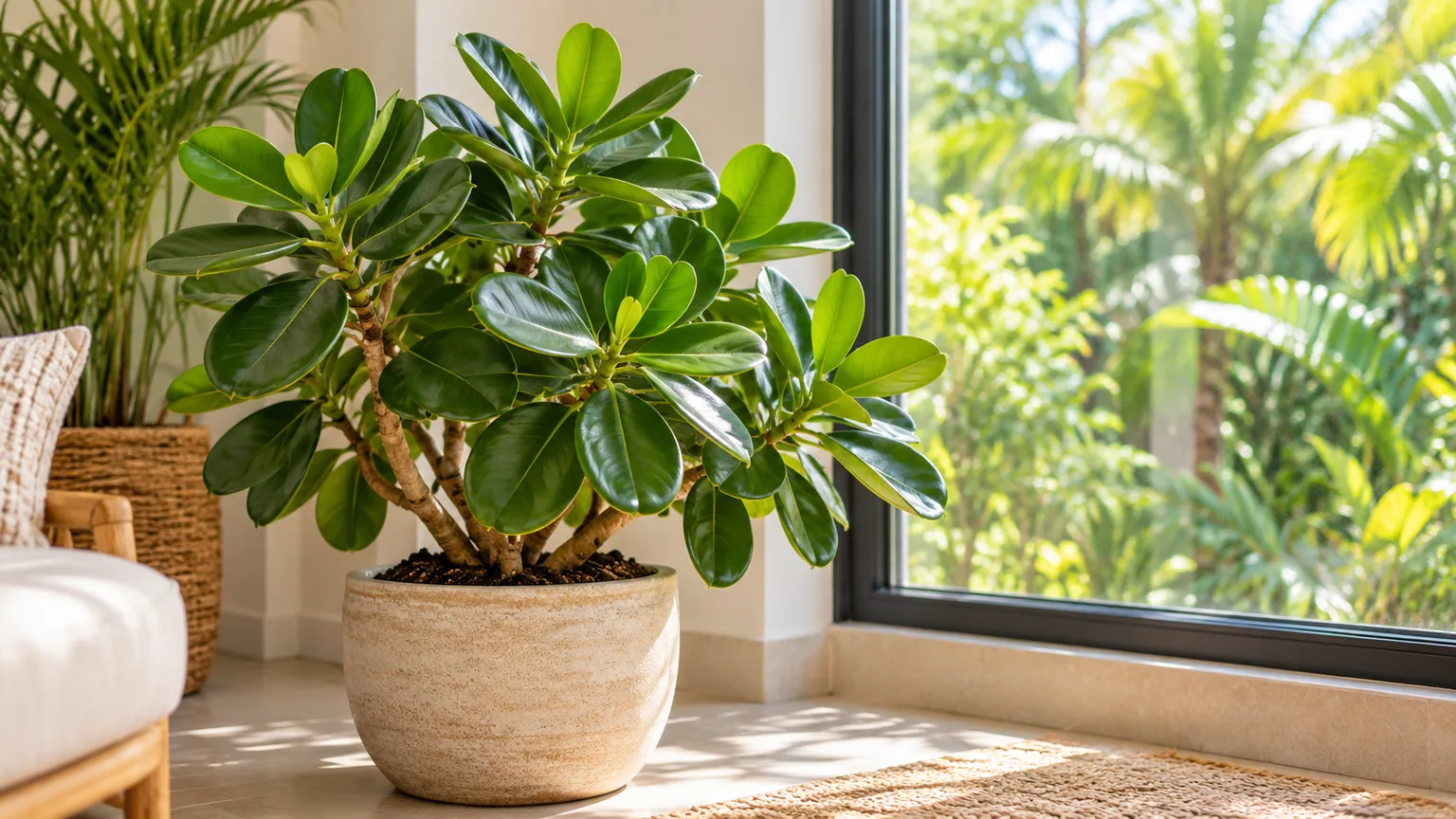
If you live where frost occurs, treat seed-grown bananas as container plants or seasonal outdoor specimens. Start in a manageable pot and step up gradually. A mature ornamental may need a 15-gallon or larger container with wheels if you move it indoors for winter.
Use a quality potting mix with perlite or bark for drainage. Container plants dry faster than ground plantings and need more frequent watering in summer, but they still cannot sit in saucers of standing water. Indoors, place the plant in the brightest spot available—supplement with grow lights if winter leaf color fades or new leaves stay small.
NC State Extension cautions that bananas cut back hard each fall in pots may never flower indoors. That is acceptable if your goal is tropical foliage. Fruiting in a pot requires size, heat, humidity, and time—often multiple years after germination.
Before first frost, move containers to a frost-free room or greenhouse. Expect leaf damage below about 60°F and serious injury at freezing. Do not fertilize heavily during low-light winter months; reduce water slightly while growth slows, without letting the root ball dry completely.
Seedlings, pups, and realistic fruiting timelines
A seed-grown banana is not on the same schedule as a rhizome piece planted in the tropics. UF/IFAS reports that suckers may harvest in about 9–20 months depending on cultivar and care, while plants grown from seed commonly need 14 months or more before the inflorescence emerges from the pseudostem. After shooting, fruit development may take another 80–180 days.
The flowering stalk—technically the inflorescence—pushes through the center of the pseudostem after the plant has produced dozens of leaves. Female flowers and developing hands appear first; male flowers follow at the tip. In seeded species, fruit may contain hard seeds; in parthenocarpic types, fruit sets without pollination.
After fruiting, that pseudostem dies, but new suckers continue the mat. Manage the clump by keeping one fruiting stem, one half-grown stem, and one or two sword suckers, removing excess pups at ground level to limit crowdingUF/IFAS Extension.
When pups make more sense than seed
Once you have a desirable plant—whether from seed luck or a nursery purchase—multiply it from sword suckers with narrow leaves and strong roots, not from water suckers with broad leaves that yield weak plantsUF/IFAS Extension. Cut the mother pseudostem after harvest to direct energy to the next generation.
Seed remains valuable for exploring species diversity, growing ornamentals, and learning banana reproduction. Pups remain the practical choice for edible cultivars with known flavor and yield.
Common banana seed failures and fixes
No germination after months: Seed may be old, dormant, or from a seedless cultivar packet. Verify species, try scarification plus alternating temperatures, and maintain heat at the mix—not just the air. Starting a fresh batch from a different supplier is often faster than rescuing a stalled tray.
Mold on seeds or medium: Reduce humidity, improve ventilation, use sterile mix, and clean all fruit pulp from seeds. A light surface mold may be harmless, but black, soft seed is dead.
Seedlings collapse at the base: Usually overwatering, cold soil, or fungal damping-off. Improve drainage, warm the tray, and water less often. Discard severely affected seedlings to protect neighbors.
Yellow or scorched first leaves: Too much direct sun too soon. Move to bright filtered light and harden off gradually.
Tall, thin indoor seedlings: Insufficient light. Add a grow light a few inches above the foliage and rotate pots weekly.
Plant outgrows space before fruiting: Normal for many species. Choose shorter ornamentals, prune for foliage display, or plan to donate oversized plants. Seed-grown giants are not houseplant mistakes—they are biology.
Keep a simple propagation log with species name, soak date, scarification notes, and first emergence date. Banana seed lots vary enough that your own records become more useful than generic timelines when you order a second packet.
Conclusion
Bananas do have seeds in wild and ornamental species, but the seedless dessert banana at the store is not a practical source. Start with named, viable seed; use warm, clean, well-drained sowing conditions; and budget months for germination and years for meaningful size or fruit.
If you want a known edible cultivar with predictable flavor, start from a nursery pup instead. If you want to grow a banana from its natural beginning, seed offers a slow, fascinating path—provided you respect the seed coat, the heat, and the wait.