15 Deer-Resistant Annual Flowers for Your Garden
Compare 15 deer-resistant annuals by light, heat, and plant habit; see where each fits, when deer may still browse, and how to protect fresh transplants.
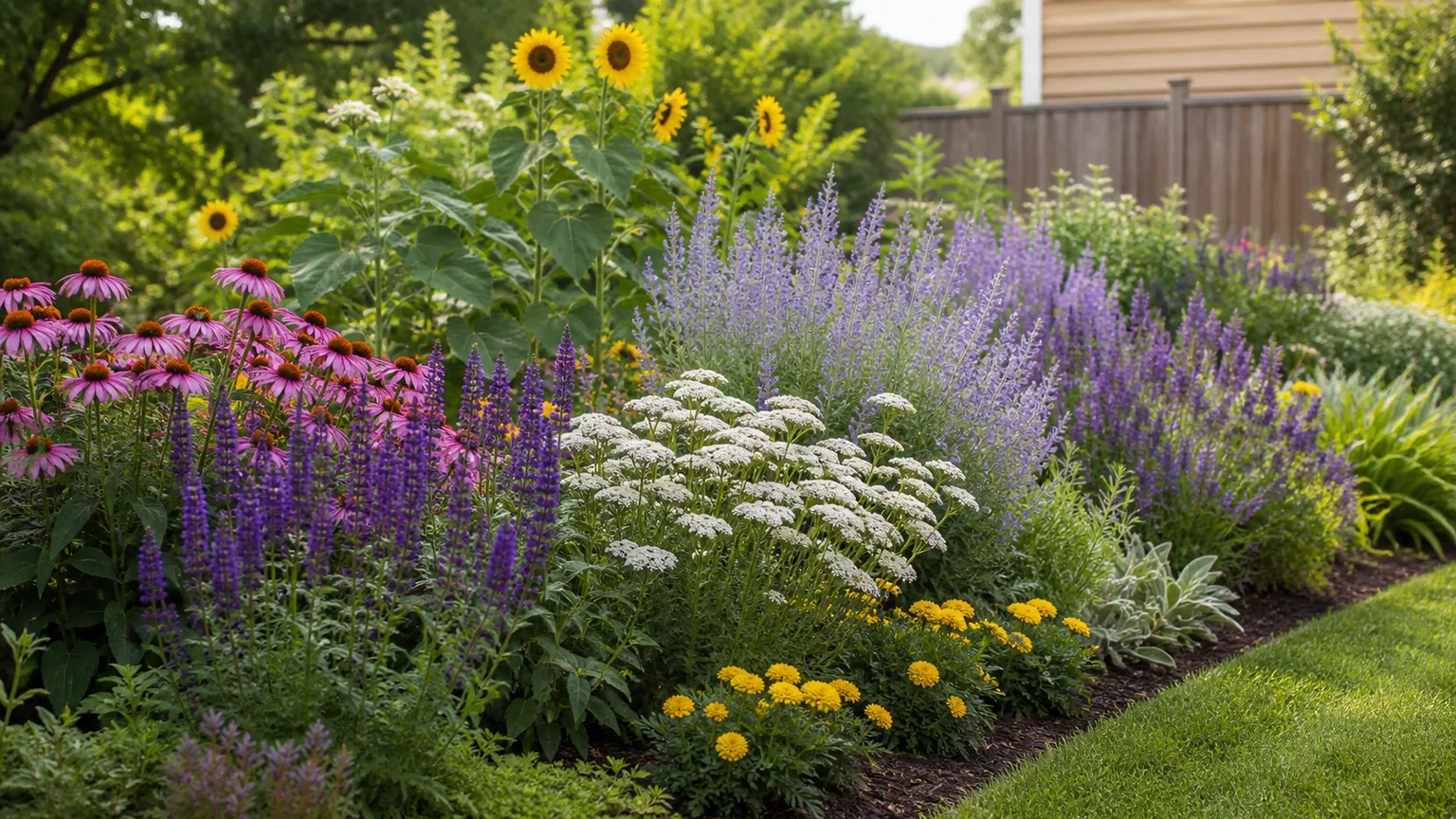
A garden can be full of flowers deer usually pass over and still lose fresh growth overnight. “Deer-resistant” describes a tendency, not a fence: deer preferences shift with the animals in your area, the time of year, nearby food, and how recently a plant was moved. The best strategy is to choose flowers that fit your site, then protect the vulnerable stage instead of expecting a plant list to do all the work.
The 15 options below include true annuals and tender perennials commonly grown as annuals. Some are better suited to cool spring beds, others to hot summers or containers. Each has a useful place in a garden with deer, but none is a guarantee when browsing pressure is high.
What “Deer-Resistant” Can—and Cannot—Tell You
Deer resistance is a relative rating. Plants with strong aromas, bitter or irritating compounds, coarse leaves, or other less-palatable traits are often passed over when better food is available. Colorado State University Extension lists those traits as general deterrents, then cautions that no plant list is foolproof: hungry animals may eat plants they normally avoid. It also notes that newly transplanted specimens are more likely to be nibbled than established, larger plants. Colorado State University Extension explains the limits of resistant-plant lists.
A resistance list also reflects its place. Rutgers New Jersey Agricultural Experiment Station’s landscape ratings draw on observations from nursery and landscape professionals, extension personnel, and Master Gardeners in northern New Jersey. That is useful local evidence, not a universal ranking for every herd or climate. The Rutgers plant ratings and practical guides from Savvy Gardening and GrowVeg offer a starting palette; your own first season is the local test.
“Annual” needs a little context, too. Some flowers below complete their life cycle in one season, while others are short-lived perennials or tender shrubs grown as annuals where winter kills them. Use the plant label and local extension advice for timing and cold tolerance, rather than assuming that one hardiness-zone range applies across a large continent.
15 Annual Flowers to Consider in Deer Country
Think of these plants as candidates, not as a perimeter alarm. The most dependable arrangement is usually a mix matched to the bed’s light and moisture, with a few trial plants planted where you can monitor them before you commit a whole border.
Sweet Alyssum

Sweet alyssum, or Lobularia maritima, stays low and spreads into a soft edge for a path, container, or vegetable bed. Its small fragrant flowers and compact growth make it useful as a filler beneath taller annuals. It is often included among deer-resistant choices, but its low habit means a hungry deer can reach every part of it without effort.
Use it for cool weather and for small patches where a little browsing would not ruin the design. In hot, dry weather it may pause or thin out, so do not make it the only plant expected to carry a summer display. The practical annual list from Savvy Gardening also notes how useful alyssum can be as a low, flexible planting; its real value here is that it can fill a bed without blocking taller flowers.
Calendula
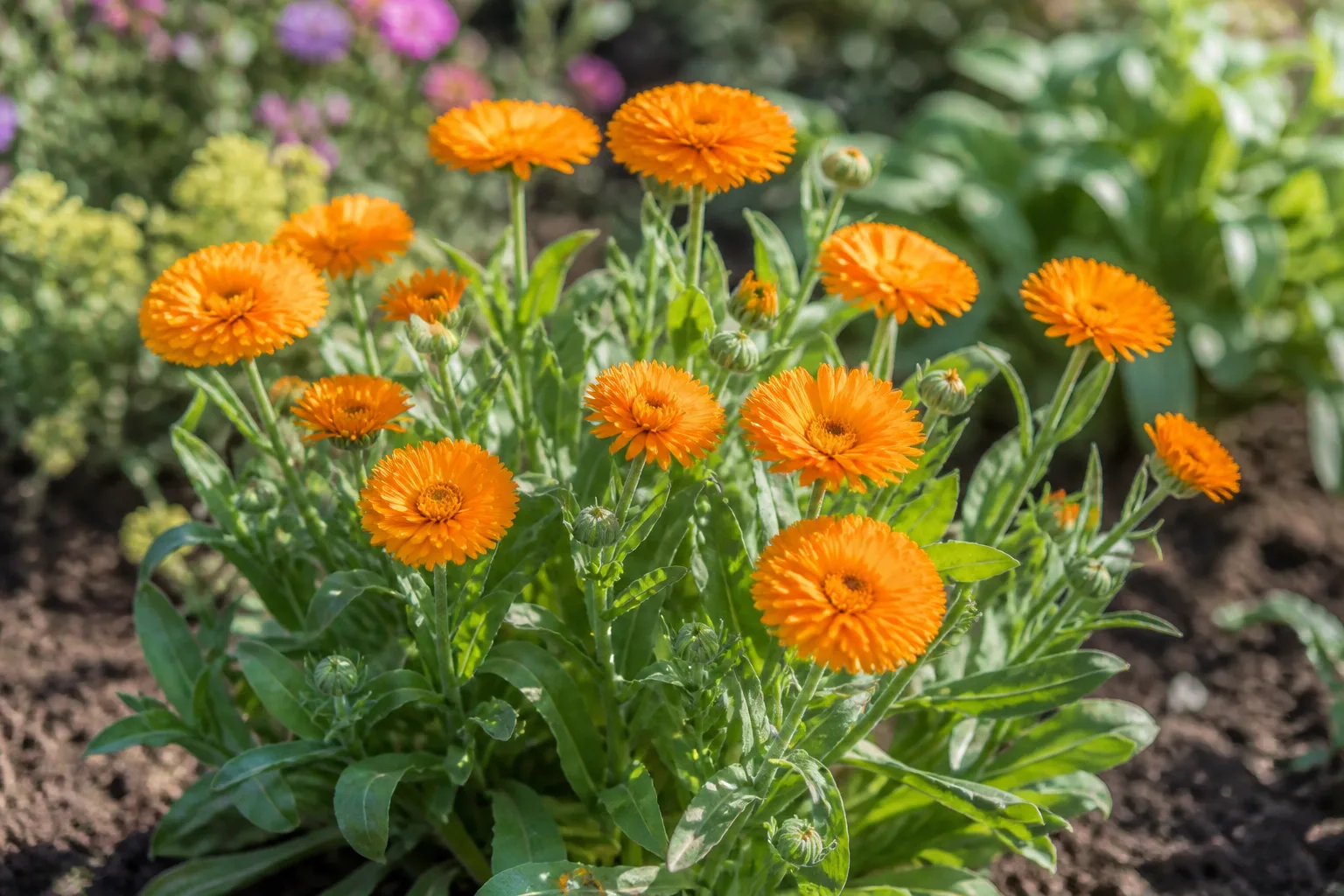
Calendula officinalis is a cool-season annual in many gardens and often gives its best show in spring or fall, when heat-sensitive flowers struggle. The edible-looking, daisy-shaped blooms suit borders and cutting beds, and deadheading can extend flowering while the weather stays mild. Its foliage is aromatic, one reason gardeners often try it in deer-prone beds.
Calendula is not a summer heat solution everywhere. In regions with hot summers, plants may fade or stop blooming when temperatures rise, and a freshly installed flat of seedlings can still be browsed. Sow or transplant it when local timing favors cool-season flowers, then leave a few spent blooms if you want to test whether it self-sows in your garden.
Marigolds
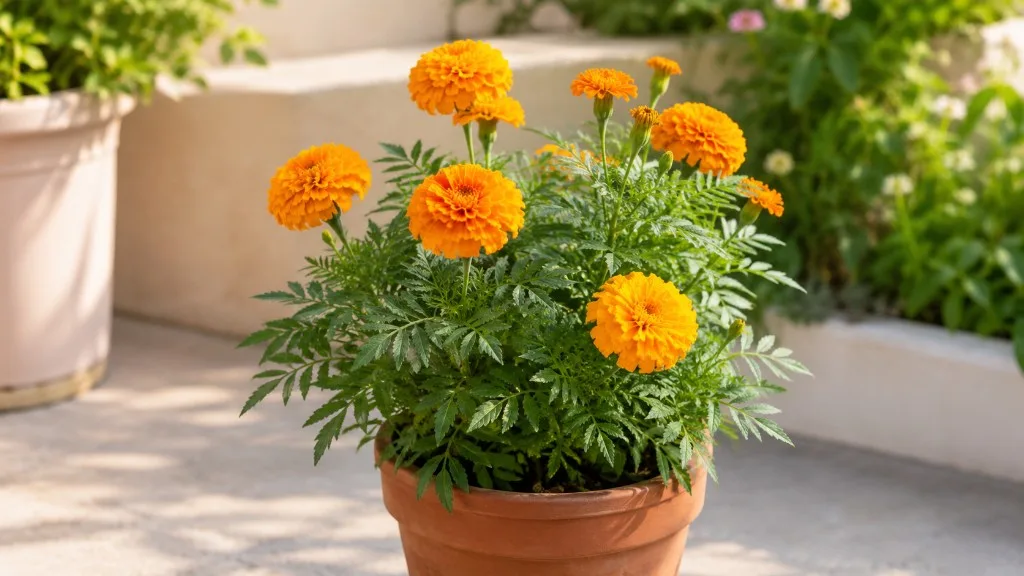
Tagetes marigolds are a sensible first trial for a sunny bed: they flower over a long warm season, come in compact and taller forms, and have scented foliage that many gardeners find less appealing to deer. French marigolds fit low borders and pots; taller African types create more height. Match the variety’s size to the space so plants do not shade out smaller companions.
Do not confuse “strong scent” with a dependable repellent. A deer may still nip young marigolds, especially when local forage is limited, and a marigold border will not protect a more palatable plant behind it. Give them full sun and well-drained soil, water deeply while establishing, and remove faded flowers if you want continued bloom rather than seed production.
Snapdragons
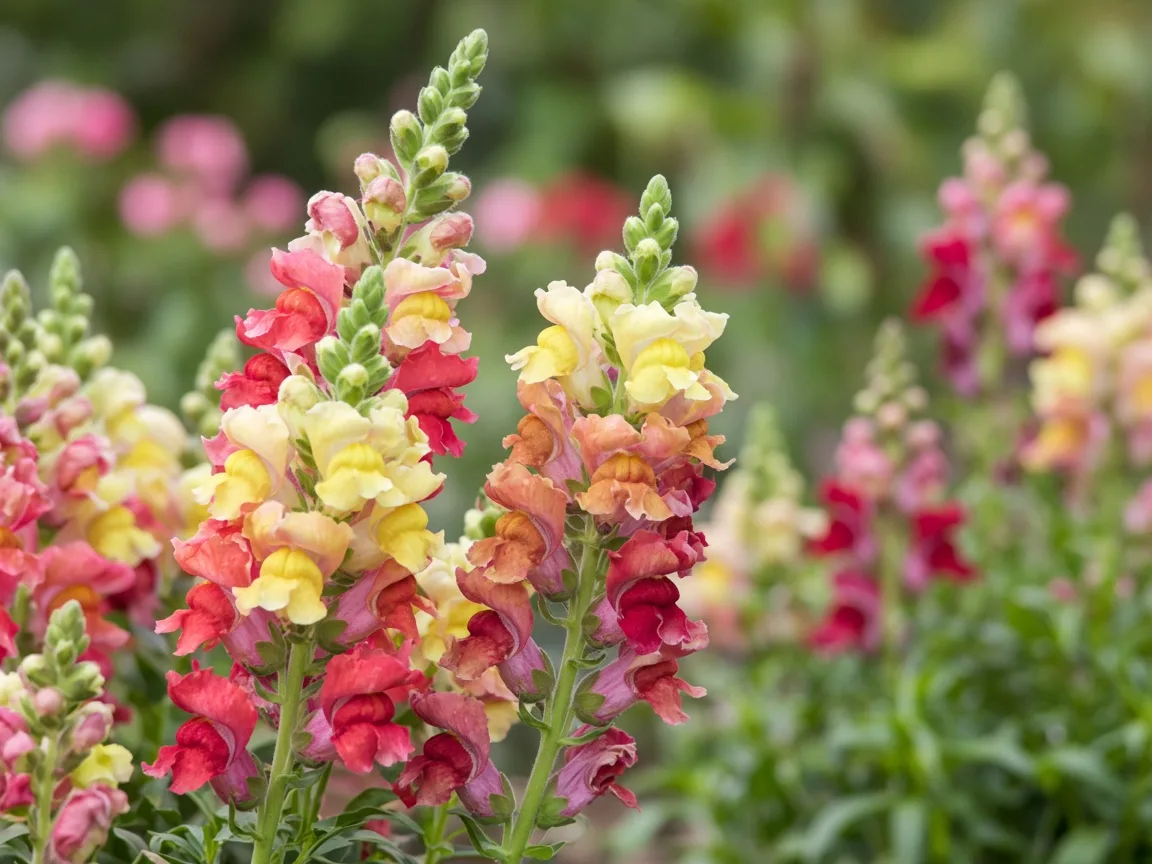
Snapdragons bring upright color to the cooler parts of the growing season and make useful cut flowers. They are often grown as annuals, although the plant may persist briefly in mild climates. Choose dwarf types for containers and the front of a border, or taller cultivars for the middle and back where their flower spikes remain visible.
They are a better choice for spring and fall than for prolonged summer heat. In hot weather, flowering can slow, and deer may sample tender shoots before the plants reach their mature size. Start with established transplants only if you can shield them during the first weeks; seedlings and newly moved plants are the stage when even less-preferred flowers are most exposed.
Cornflower
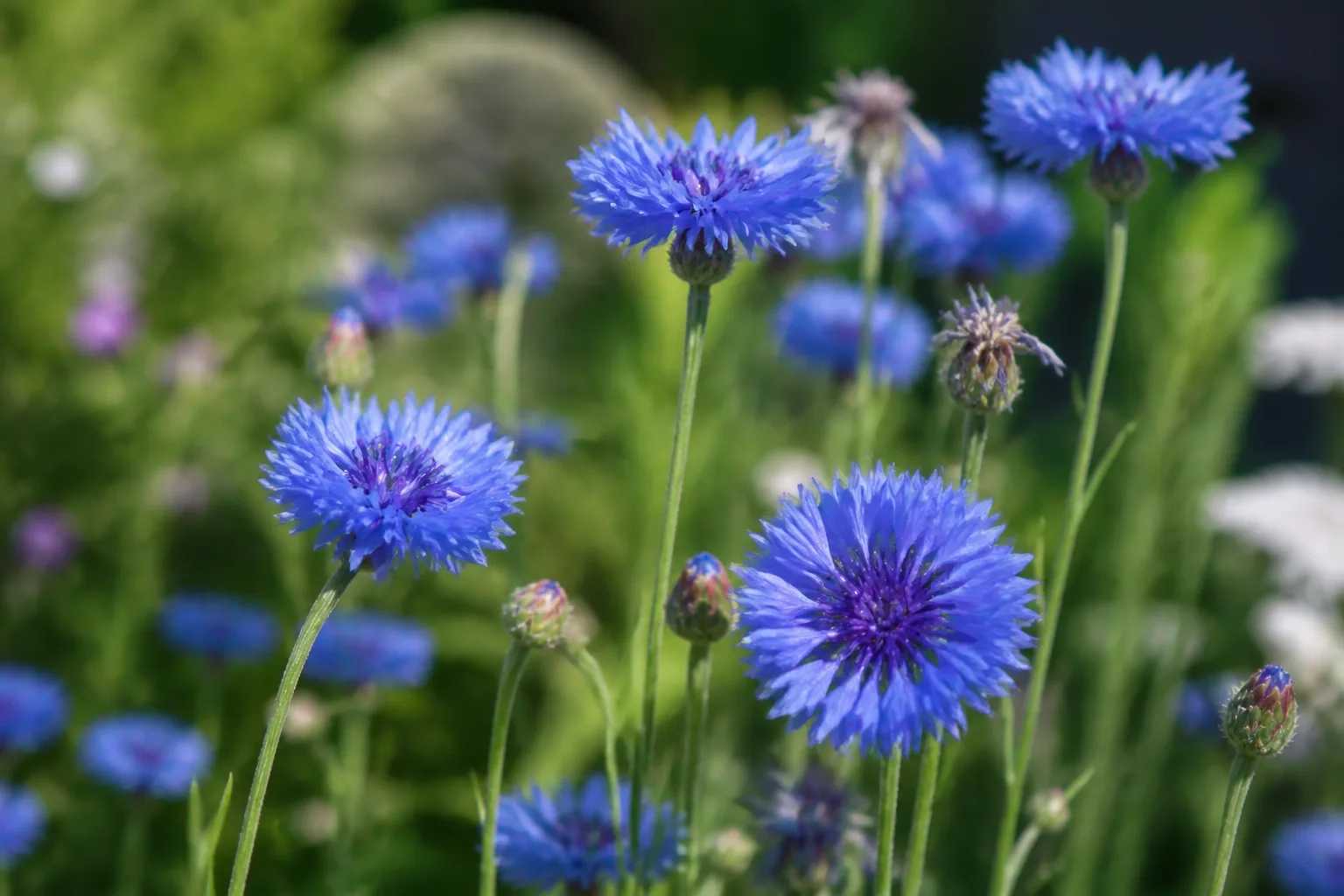
Cornflower, or bachelor’s button (Centaurea cyanus), is a cool-season annual with blue, pink, or white flowers on long stems. Direct-sow it where you want a natural-looking patch or cut flowers, because it dislikes being repeatedly moved once its roots are established. It can reseed, which is a benefit in an informal garden and a nuisance in a carefully edged bed.
Its season and height make it less useful for a compact, heat-baked foundation planting. Sow at the time recommended for your climate and allow room for stems to rise above neighboring plants. Like other young annuals, the new seedlings need protection if deer are already feeding in the same bed.
California Poppy
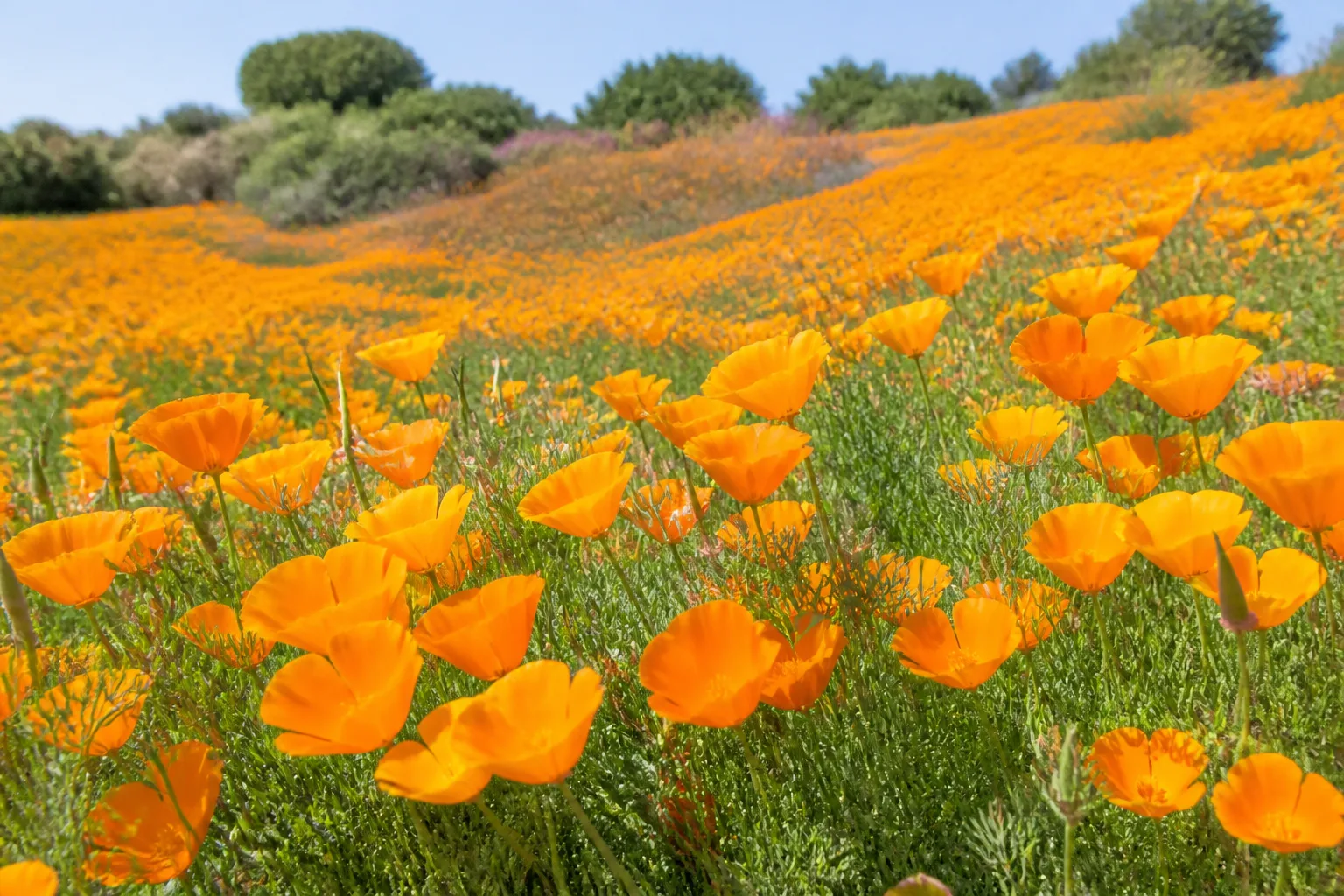
California poppy (Eschscholzia californica) is a good fit for a sunny, lean, well-drained bed and for gardens where frequent watering would be inconvenient. It often behaves as an annual in cold-winter regions, but can persist or reseed in milder places. Give it sun and avoid rich, constantly wet soil, which encourages weak growth rather than the open, natural look most gardeners want.
This is a regional choice, not a universal replacement for a bedding plant. It may reseed freely where the climate suits it, while in other gardens it is simply a one-season flower. Deer may ignore it when other forage is plentiful, but a dry season or a newly seeded patch can change that equation; treat self-sowing as a bonus, not a promise.
Annual Vinca

Annual vinca (Catharanthus roseus), also called Madagascar periwinkle, is a heat-loving flower for sunny beds and containers. It is commonly grown as an annual in cooler climates and can keep blooming through hot weather after it has settled in. Glossy leaves and a tough, upright or mounding habit make it attractive for a spot where some other bedding flowers wilt.
There is an important safety tradeoff: the plant is toxic if eaten. North Carolina State Extension’s plant profile describes its poisonous properties, so keep it away from children who may taste garden plants and pets that chew foliage. Deer resistance is not a reason to put a toxic plant within easy reach of animals.
Lobelia
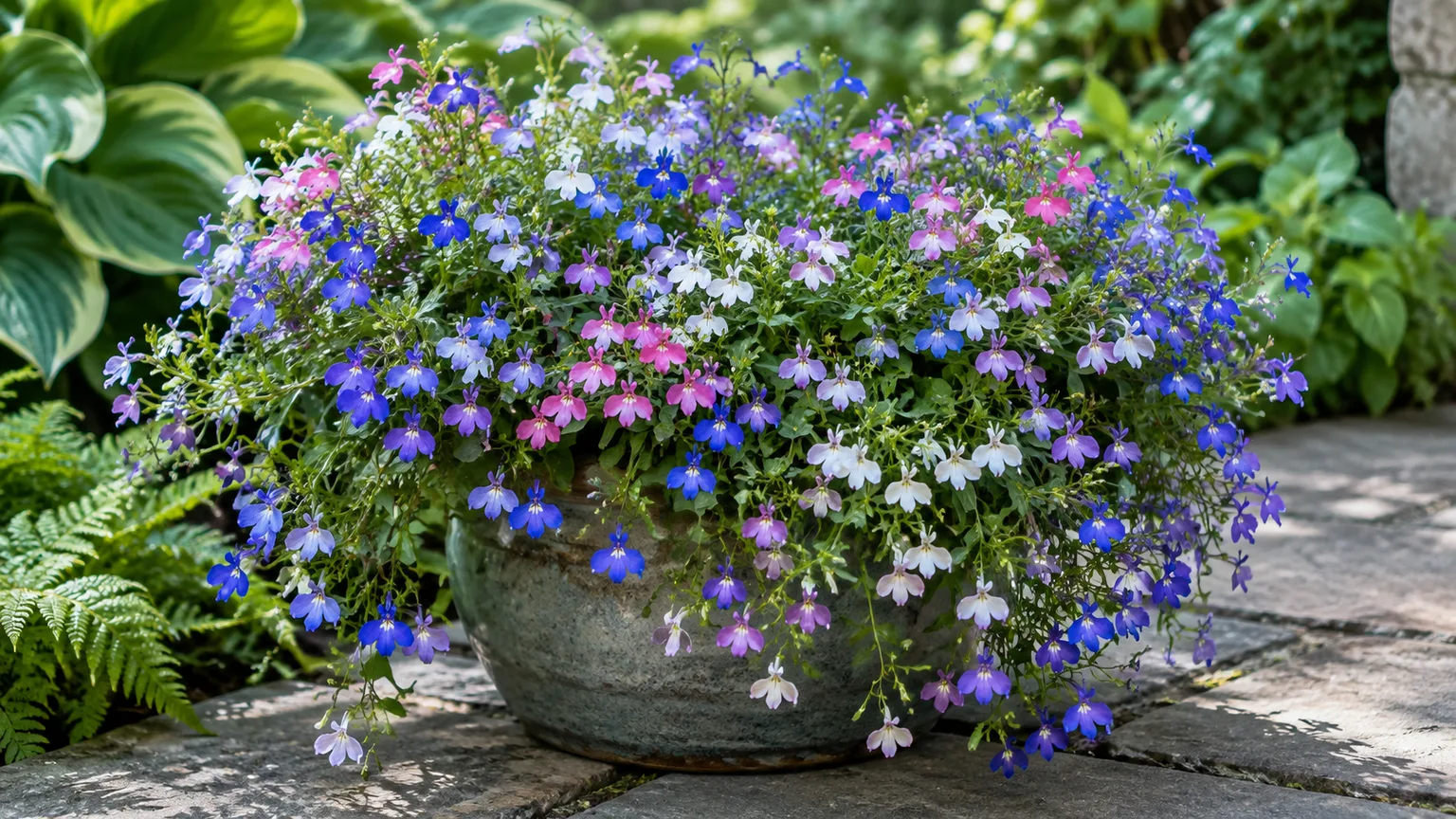
Lobelia erinus is useful where you want a low edge, a hanging basket, or color in a cooler, partly shaded spot. Many varieties have a trailing habit, while others mound more tightly. It is usually treated as an annual in temperate gardens, though it is perennial where winters are mild enough.
Lobelia is not the answer for a hot, dry site that receives intense afternoon sun. Keep the root zone evenly moist, choose morning sun or bright filtered light in warm climates, and use it in a pot where you can move it if heat becomes severe. Its tender growth can be sampled by deer, so use it as a flexible accent rather than the main protective planting.
Lantana

Lantana camara is a strong warm-weather option when you want flower color through heat and periods of dry weather. In cold-winter areas it is grown as an annual; in frost-free climates it can become a woody shrub. Its rough, aromatic foliage and clusters of small flowers add texture and attract pollinators, but choose a cultivar whose mature spread suits the bed or container.
Lantana has a serious pet-safety limitation. The ASPCA lists it as toxic to dogs and cats, and North Carolina State Extension also flags poisoning concerns. If pets can access the planting, pick another annual rather than relying on a pot placed where it can be knocked over. It may be deer-resistant in many gardens, but it is not a safe deterrent plant for every household.
Spider Flower

Spider flower (Cleome hassleriana) creates height and an airy silhouette at the back of a sunny border. Its unusual flowers draw pollinators, and some varieties reach well above the height of compact bedding annuals. Colorado State Extension includes cleome among plants reported as critter-resistant in its regional guidance, but that local inclusion should not be read as a guarantee for a different region or herd.
Give cleome space and check the packet or cultivar label for mature height. It can self-sow vigorously, so remove seed pods if you want to control where next year’s seedlings appear. Tall, established plants may withstand incidental nibbles better than newly moved seedlings, but fencing or another physical barrier is still the dependable choice where deer feed nightly.
Zinnia
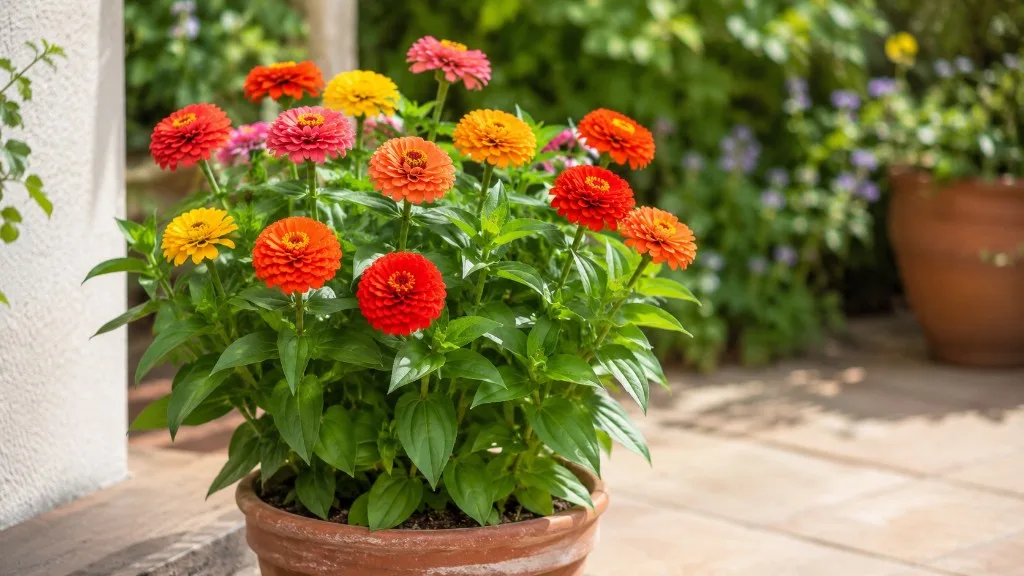
Zinnias are easy, heat-loving annuals that bring a long run of color to a sunny border and provide stems for cutting. They are worth considering where deer browse lightly, but gardeners’ reports are mixed enough that I would not plant them as the only flower in a high-pressure yard. Use them in the protected center of a bed or in containers near the house, where you can notice damage early.
Water at the soil line and give the plants enough space for airflow; crowded foliage stays wet longer and can develop powdery mildew. If deer take the growing tips, the plant may branch, but repeated browsing can remove the flower buds and leave you with leafy stems instead of the display you planted for. Trial a few before buying a flat.
Strawflower
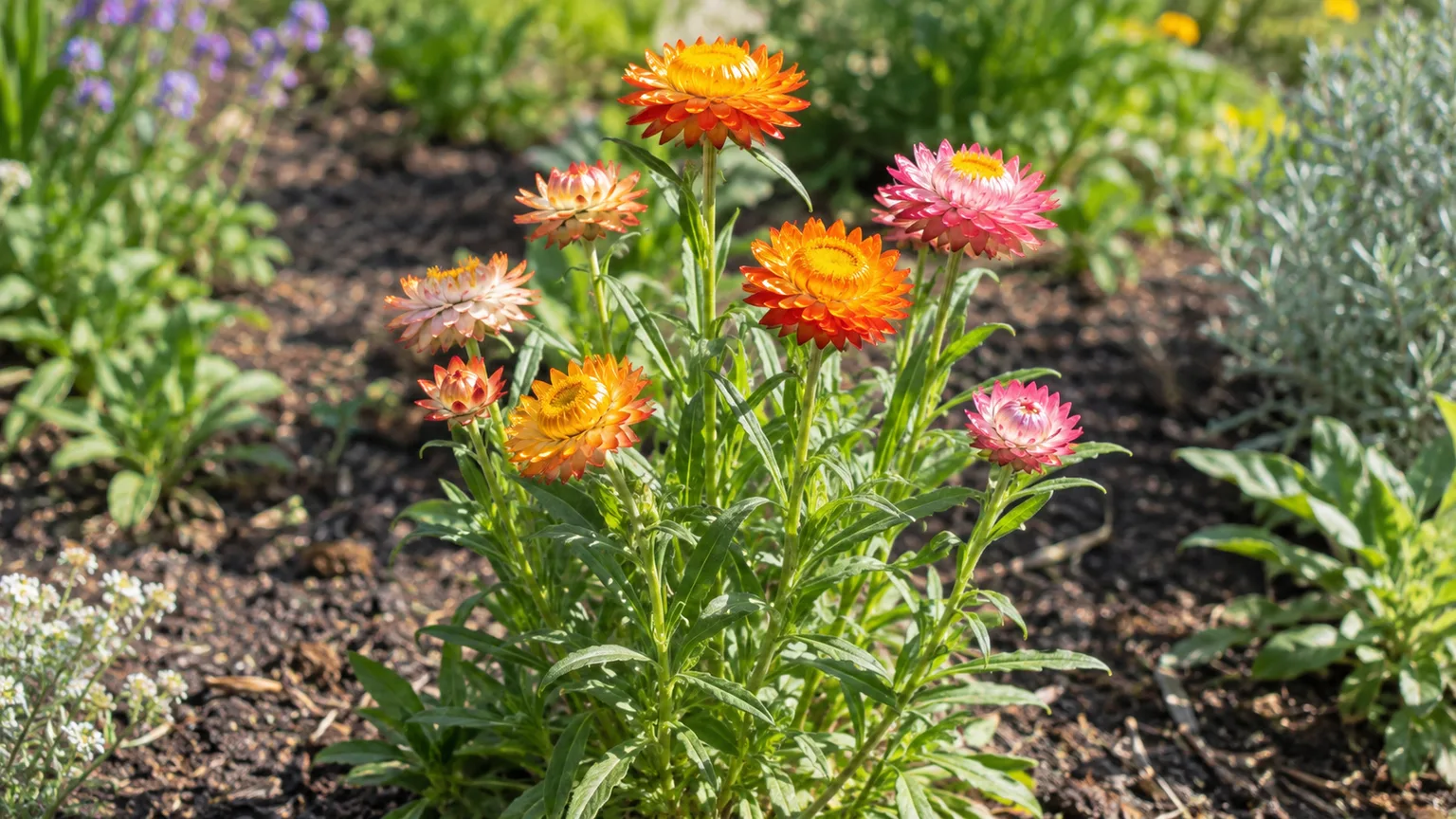
Strawflower (Xerochrysum bracteatum) is a warm-season annual in many cooler regions and a short-lived perennial in some mild ones. Its firm stems and papery-looking flower bracts suit sunny borders and cutting gardens; the blooms also hold their shape when dried. Grow it in full sun with drainage, and avoid heavy, wet soil that keeps roots stressed.
This plant can extend a cutting garden through summer, but the dry texture does not make it immune to browsing. Start it in a place where it will not be a costly loss if deer sample it, and protect it while small if the bed is a regular feeding route. Its main advantage is the combination of heat performance, long stems, and flowers that are useful after the garden season ends.
Angelonia
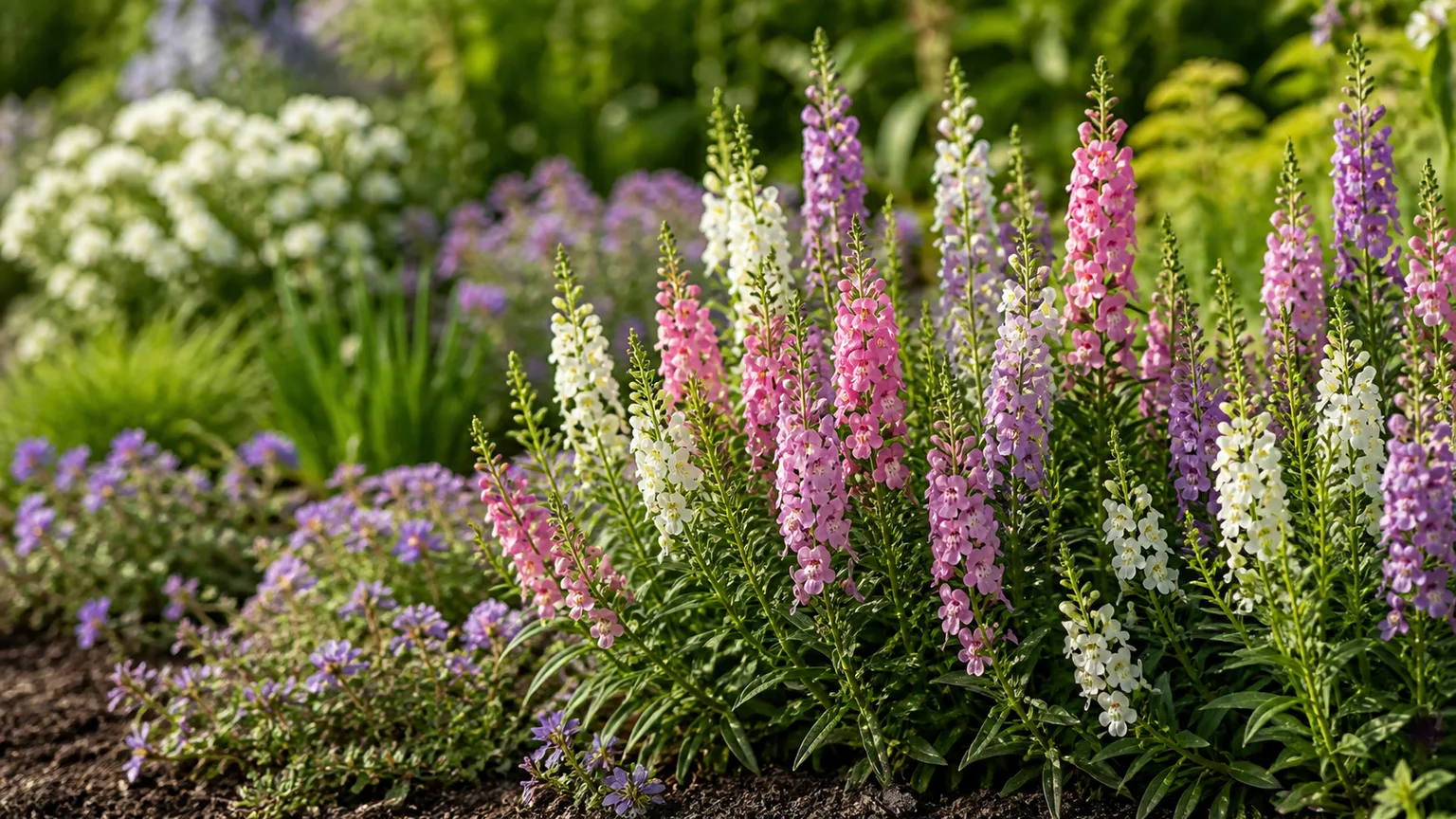
Angelonia, sometimes called summer snapdragon, handles hot weather better than true snapdragons and gives a sunny bed or container a continuous-looking line of flower spikes. It is a tender perennial in warm climates and is generally planted as an annual where frost ends the season. Compact cultivars fit pots; taller ones work in a middle border layer.
Choose it for heat and color, not as an animal-proof shield. Its resistance varies by garden, and a fresh transplant is still a soft, easy target while roots are forming. Give it a warm site with drainage and let it establish before expecting full flowering; if deer browse it in the first few days, replace or protect the plant rather than applying more fertilizer.
Globe Amaranth
Globe amaranth (Gomphrena globosa) is a heat-tolerant annual with rounded flower heads that keep their shape on the plant and in dried arrangements. It works well in full sun, where a compact cultivar can fill gaps among taller flowers without needing frequent deadheading. The papery flower texture also gives a summer border a different look from the daisy-shaped blooms of calendula or zinnias.
Gardeners often include globe amaranth in deer-resistant palettes, but the useful claim is that it may be less attractive than tender, soft-leaved annuals—not that deer will never eat it. Check the seed packet for mature height and spacing, because cultivars differ. It is a good trial plant for hot, sunny sites where you want a sturdy flower, provided you protect seedlings and do not depend on it as a barrier.
Annual Salvia
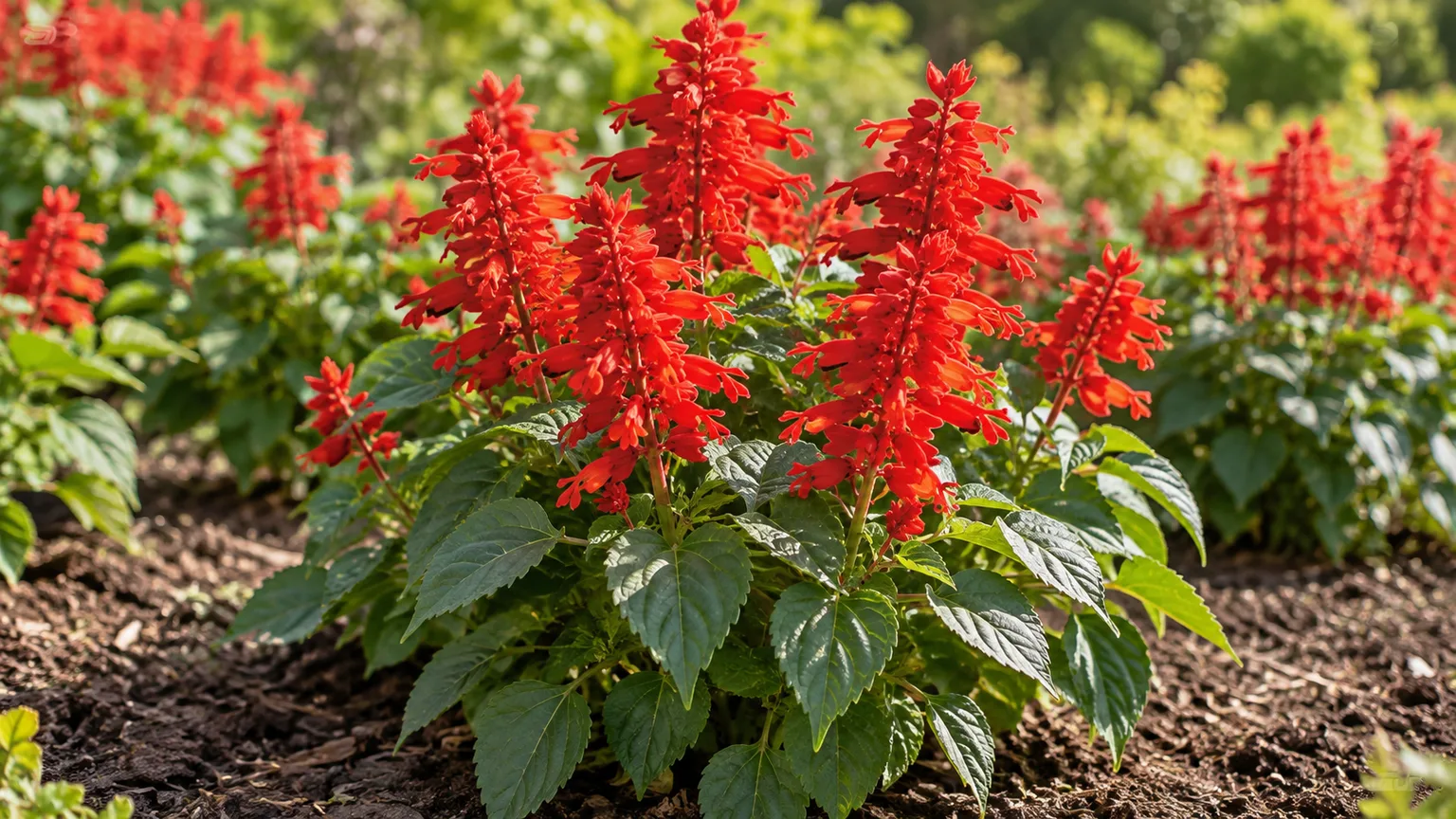
Annual salvias such as Salvia splendens or Salvia coccinea add upright color and nectar-rich flowers to a sunny bed. In colder regions they are normally planted for one season, while some species can persist in mild climates. Their aromatic foliage and tubular flowers make them useful in a pollinator planting, and the vertical flower spikes pair well with lower annuals such as alyssum.
Use the species and cultivar name on the tag rather than assuming all salvias behave alike. Garden salvias range from annual bedding plants to hardy perennials and woody shrubs, with different water and winter needs. Deer may pass over aromatic leaves when other food is available, but any young salvia can be browsed; plant it as part of a varied border, not as a line expected to keep deer out.
How to Give New Annuals a Better Chance
Start with the conditions that make plants grow well. Match the flower to the number of hours of direct sun, your summer heat, drainage, and how often you can water. A drought-tolerant poppy in soggy soil or a moisture-loving lobelia in hot reflected afternoon sun may fail before deer become the main problem. Group plants with similar needs so watering one bed does not overwater another.
Next, identify where deer enter and what they are already eating. If the damage is concentrated along one path or one edge, protect that section instead of guessing that a whole-yard planting change will help. Take a photo of the bed when you plant and check it after several days; comparing new growth and bite marks makes it easier to see whether browsing is occasional or routine.
Give new transplants an establishment window. Colorado State Extension specifically warns that recently moved plants are more likely to be eaten than larger, established specimens. If deer visit often, use a temporary, visible barrier around the new bed or protect individual plants with a rigid cage until they have rooted and started growing. Keep barriers taut and check them so animals, people, or pets cannot become tangled.
For a persistent route, physical exclusion is more dependable than trying to hide desirable plants inside a ring of strongly scented annuals. Colorado State notes that deer fencing needs to be high—about eight feet—to prevent deer from jumping it. A shorter decorative fence may mark a bed, but it should not be mistaken for a reliable deer barrier. Follow local regulations and choose a design that is visible and maintained, especially around paths and driveways.
Treat commercial repellents as maintenance, not as a one-time fix. Rain, irrigation, new growth, and changing food availability can reduce their effect, so read the product label and reapply only as directed. Do not use homemade mixtures that could harm pets, pollinators, or plants, and do not place poisonous annuals where a child or animal might chew them just because deer tend to avoid them.
Finally, run a small garden trial. Plant a few options from different groups—perhaps marigolds for sunny color, lobelia for a cooler edge, and lantana for a hot pot only if pets cannot reach it. If one variety is browsed repeatedly while another is not, let that local observation guide next year’s choices. Keep the plants that fit your site and actual deer behavior, and protect the rest with a barrier rather than escalating the promise attached to a seed packet.
Conclusion
Deer-resistant annuals can reduce the odds of losing every flower, but they cannot guarantee an untouched garden. Begin with plants suited to the light, heat, moisture, and season you have; then give fresh transplants time to establish behind a barrier if deer already visit. Marigolds, calendula, cleome, lantana, and other less-preferred annuals are useful candidates, while choices such as zinnias are better treated as local trials.
A balanced planting also needs to work for the people, pets, and pollinators who share the yard. Check regional guidance, use toxic plants only where access is controlled, and watch how your own herd responds. That combination—good site fit, realistic expectations, and early protection—gives a colorful annual bed a much better chance than a “deer-proof” label ever could.



