How to Grow and Care for 'Crimson King' Maple
Get practical 'Crimson King' maple care, mature-size guidance, watering steps, and a clear way to weigh its shade, roots, samaras, and local invasive status.
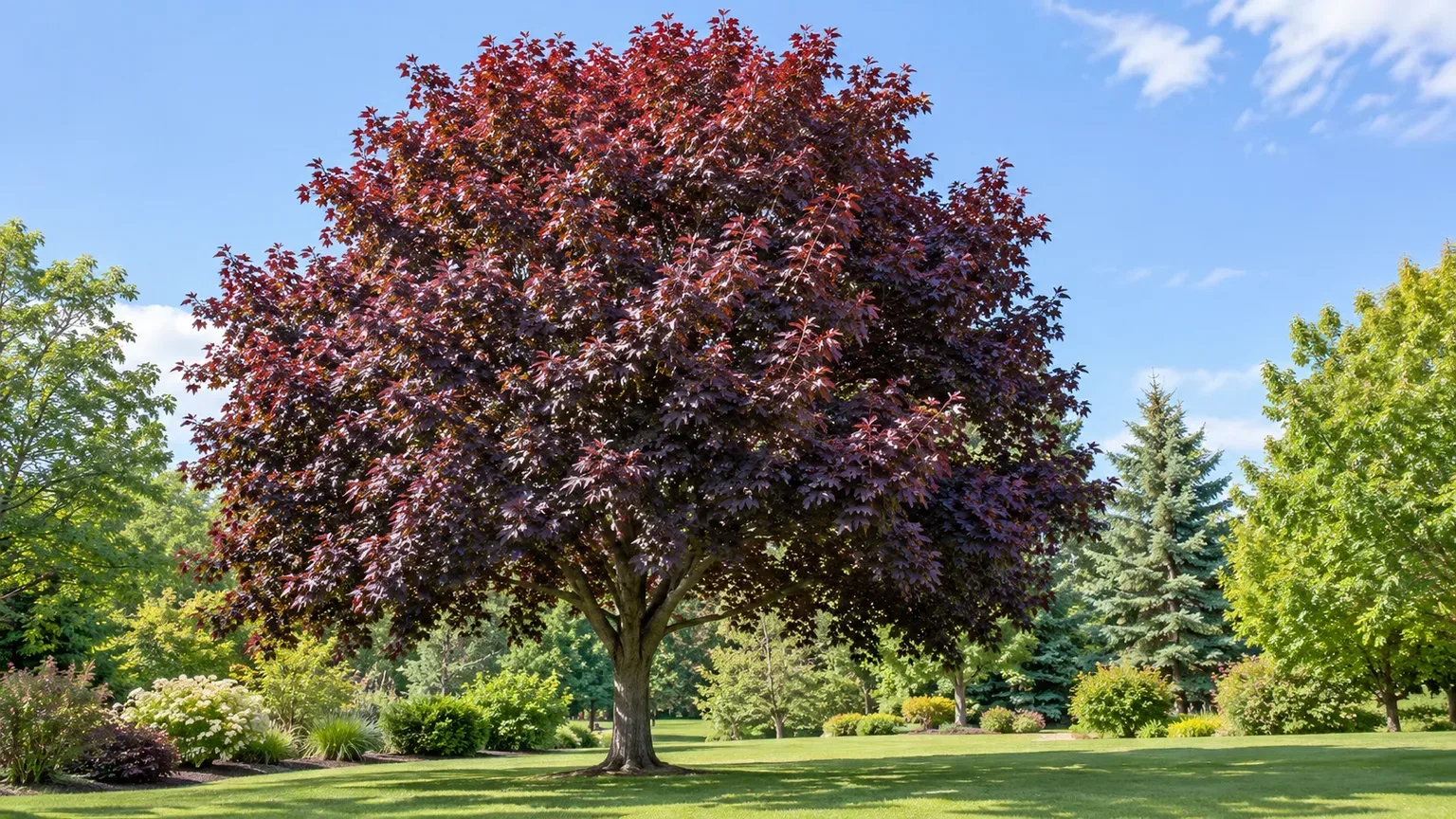
‘Crimson King’ is a red-leaved cultivar of Norway maple (Acer platanoides), prized for its dense rounded canopy and deep maroon foliage. Before planting one, consider the whole tree: it can grow into a broad shade canopy, has shallow roots, and produces winged seeds that may establish beyond the planting bed. In parts of North America, Norway maple has become invasive, and the cultivar shares the species’ ability to self-seed.
If you already have one, you do not need to treat every tree as an emergency. Give a young tree steady establishment care, protect its root zone, remove seedlings while small, and check local guidance before propagating or planting another. The right plan depends on your region, the tree’s size, and the space available around it.
Is a ‘Crimson King’ Maple a Good Fit?
This maple can provide fast-growing shade and a strong color contrast against green plantings, but those qualities come with trade-offs. Its parent species tolerates varied soils, shade, drought, and urban conditions; it also produces plentiful seeds and can compete with native vegetation. UConn Extension describes Norway maple as invasive in the Northeast and Midwest and documents its spread into woodlands, while NC State Extension notes that its cultivars freely self-seed and that the species is invasive in several northeastern states (UConn Extension; NC State Extension).
That does not mean every tree is illegal to own or that every region classifies it the same way. If you are considering a new planting, first check your state or county invasive-plant list and any local sale or planting rules, then weigh whether you can give a large tree room without creating a recurring seedling problem. If the tree is already established, focus on containment and safe care rather than assuming that removal is automatically the best next step.
The location around the yard matters too. A tree near a wooded lot, stream corridor, park edge, or other natural area can send seeds beyond the garden where seedlings are harder to find and remove; if that describes your property, the case for selecting a different tree is stronger. Ask whether you can inspect the ground beyond the canopy and whether a neighbor or shared property will inherit cleanup from seeds carried on the wind.
What Makes It Different From Other Norway Maples?
The cultivar name describes a selected form, not a separate species. ‘Crimson King’ keeps its rich purple-maroon foliage through summer and bears purple samaras, while the straight species usually has green leaves and yellow fall color; the Missouri Botanical Garden notes that the cultivar is more compact and slower-growing than the species, though still a substantial tree (Missouri Botanical Garden).
Its foliage can also help you recognize why a seedling beneath it may not be a true-to-type replacement. Norway maple cultivars can produce seedlings whose foliage does not retain the parent’s distinctive color, as Michigan Tech’s Keweenaw Invasive Species Management Area explains for ornamental Norway maples (KISMA at Michigan Tech). Buy a named, nursery-grown cultivar when the purple foliage matters; do not count on a volunteer seedling to match it.
How Large Will a ‘Crimson King’ Maple Get?
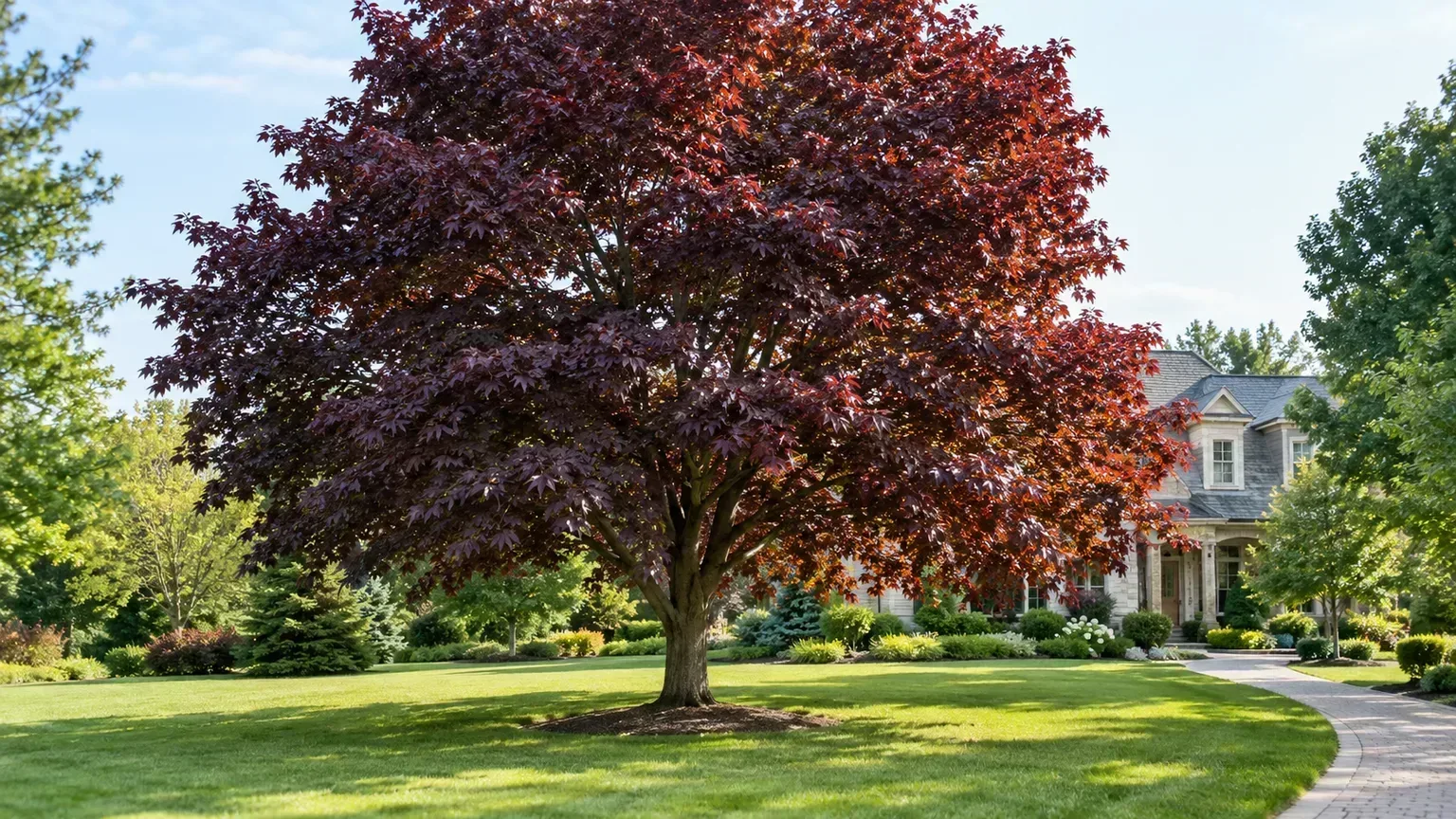
Published dimensions vary by source and growing conditions. The Missouri Botanical Garden lists ‘Crimson King’ at about 30 to 40 feet tall and 20 to 40 feet wide, while general Norway maple references often give larger ranges for the species; the UK guide from Gardeners’ World describes the cultivar as a large tree that needs plenty of room (Missouri Botanical Garden; Gardeners’ World). A nursery tag is a useful estimate, not a guarantee that a mature tree will stay at the lower end.
For layout, plan around a broad canopy rather than the young tree’s current pot size. Check overhead clearance, the mature crown’s relation to the house, and the likely rooting area before you dig; avoid a site where the eventual trunk and surface roots would sit beside a narrow walk or small lawn strip. If your yard cannot accommodate a large shade tree, select a smaller locally appropriate species instead of relying on heavy pruning to keep this maple compact.
Choose a Site Before Buying or Planting
Look for open space with good drainage and enough room for both crown and roots. Norway maple’s shallow, wide-spreading roots compete with turf and other plants, and the Missouri Botanical Garden warns that they can crack or heave nearby paving; UConn Extension also notes sidewalk damage in urban sites. That makes a tight planting strip between pavement and a foundation a poor fit even when the sapling looks small.
Think through the mature tree’s shade as well as its footprint. The dense canopy can make lawn and understory planting difficult, so place it only where a large shaded area is useful and where you can accept fewer plants beneath it. If you cannot verify adequate clearances from utility lines or structures, ask a local arborist or utility provider before planting.
When to Plant It
For a tree you are keeping, planting during a cool part of the growing season reduces the stress of transplanting. Early spring after the soil can be worked or early fall while the ground remains warm enough for roots are common windows, but local frost dates, heat, soil moisture, and whether the tree is bare-root or container-grown all matter. Gardeners’ World’s Norway maple planting instructions likewise emphasize preparing and watering the root ball rather than treating planting as a hole-filling exercise (Gardeners’ World).
Do not plant during frozen ground, waterlogged soil, or a period of extreme heat if you can wait. If you acquire a container tree outside your ideal window, keep the root ball evenly moist and shaded from hot afternoon sun while you arrange planting; do not leave it drying out in its pot for weeks. Where regional rules or ecological guidance discourage this cultivar, postpone purchase and choose a locally recommended alternative instead.
Plant It Without Burying the Root Flare
Before planting, find the root flare—the point where the trunk widens into the main roots. Remove excess potting mix from the top of the root ball if needed to locate it, then dig a hole no deeper than the root ball and several times wider; set the flare at or slightly above finished grade so the tree does not settle with its trunk buried. Backfill with the excavated soil, water to settle it, and avoid packing amendments into the hole that could create a sharply different soil pocket.
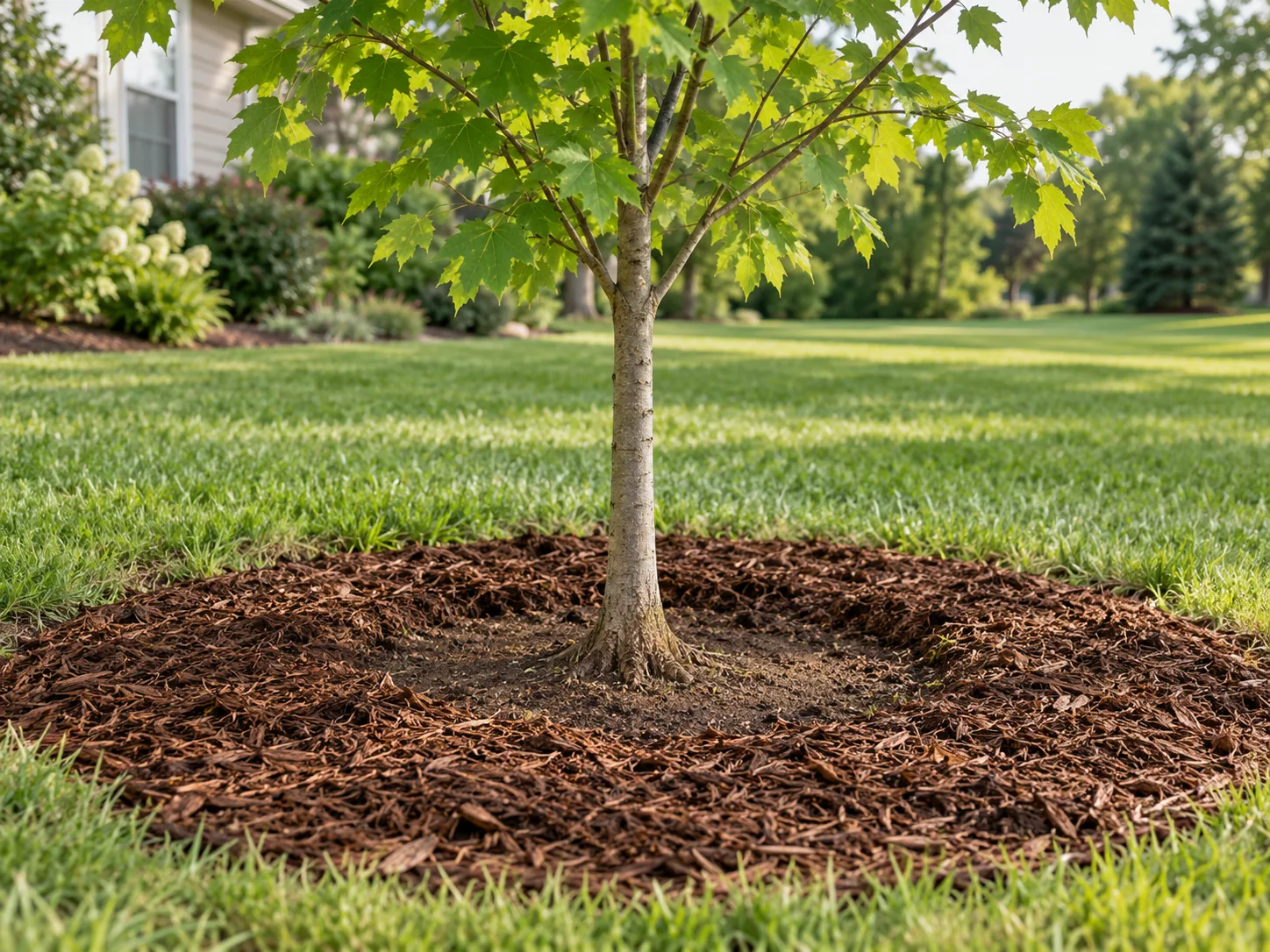
Spread roots outward where the root ball allows, remove only damaged or circling roots you can handle cleanly, and do not tug the tree by its trunk. Add a broad, shallow mulch ring after watering, leaving the trunk and root flare exposed. A newly planted tree may need temporary staking in a windy or unstable site, but ties should be loose enough to allow slight trunk movement and removed when the tree can stand on its own.
Sunlight and Leaf Color
Full sun is the best starting point if you want a dense crown and the cultivar’s strong purple color. Missouri Botanical Garden describes ‘Crimson King’ as suitable for full sun to part shade and notes that full sun is preferred; Gardenia similarly reports that the cultivar tolerates part shade but is a sun-loving tree (Missouri Botanical Garden; Gardenia). A little afternoon shade may be useful in a hot, exposed site, but deep shade can reduce vigor and make the color less striking.
Do not use a color shift by itself as a diagnosis of disease. New leaves can emerge with different tones, and autumn color depends on weather and local conditions; the cultivar’s fall display is often less reliable than its summer maroon foliage. If the color change comes with wilting, branch dieback, or premature leaf loss, inspect water and root-zone conditions and seek a proper diagnosis before applying fertilizer or pesticide.
Soil and Drainage
An average garden soil that drains well and stays moderately moist is adequate. The tree tolerates a range of soil types and pH, but flexibility does not mean it will thrive with water sitting around the roots; avoid low spots where drainage is poor and do not redirect roof or driveway runoff toward the trunk. If you are unsure about drainage, observe the site after a soaking rain before planting rather than trying to correct a persistently wet location with a small planting-hole amendment.
Keep the soil surface under the canopy as undisturbed as possible. A thick layer of imported topsoil can bury the root flare, and frequent digging near shallow roots can injure them or compact the soil they need for air and water. Where the tree’s roots have already spread, use shallow mulch or groundcover alternatives suited to shade rather than routinely tilling the area.
Water a New Tree by Checking the Root Zone
Water thoroughly when planting, then keep checking the root ball and nearby soil while the tree establishes. Do not rely on a fixed “once a week” rule: a container-grown tree in hot sandy soil may dry much faster than a larger balled tree in cool clay, while saturated soil needs time to drain. Penn State Extension recommends frequent watering for new trees and checking moisture several inches into the rooting zone; its schedule is a starting point to adapt to rainfall, soil, and tree size (Penn State Extension).
Apply water slowly enough that it reaches the root ball and surrounding soil instead of running off the surface. Probe or dig carefully about 6 to 9 inches down near the root zone; if the soil is dry there, water deeply, and if it is still moist, check again later rather than adding more immediately. Continue regular checks through the first growing season and into the next as needed, especially during prolonged dry spells; an established tree is more drought tolerant but still benefits from watering during severe drought.
Move the water point outward as the tree grows so the expanding root zone receives moisture; repeatedly soaking only the trunk base leaves much of the feeder-root area dry. In heavy soil, slow the flow and allow extra time between waterings so the root ball does not stay saturated, while a sandy site may need smaller, more frequent checks. If water runs across the surface or pools after irrigation, stop and reassess drainage instead of adding more.
Mulch and Fertilizer
Spread organic mulch in a broad ring to conserve moisture and moderate soil temperature, but keep it a few inches away from the trunk and do not build a volcano against the bark. Penn State Extension advises keeping mulch no deeper than about 3 inches and clear of the trunk, which helps avoid persistent wet bark and hidden root-flare problems (Penn State Extension). Renew the ring as it thins, but first check that you are not piling fresh material over the root flare each year.
Do not fertilize automatically just to make the tree grow faster or deepen its leaf color. The Missouri Botanical Garden describes the cultivar as vigorous and adapted to a range of soils, while published cultivar care recommendations vary on spring feeding; if growth is weak, first check planting depth, water, drainage, root damage, and light. Use a soil test or local extension advice to guide any nutrient application rather than guessing at a high-nitrogen dose.
Prune for Structure, Not for Size
An established tree with a sound structure usually needs only occasional pruning for dead, broken, crossing, or poorly attached branches. Make small corrective cuts while the tree is dormant, and avoid topping or repeatedly cutting back the crown to force a large maple into a small space; the tree will respond with weak regrowth and the underlying site mismatch remains. Gardeners’ World also recommends minimal pruning for Norway maple and places routine work in winter dormancy (Gardeners’ World).
Keep pruning work to branches you can reach safely from the ground with clean, sharp tools. A mature limb over a roof, driveway, or power line can injure someone or damage property if it falls, so use a qualified arborist rather than climbing or attempting a large cut yourself. If you see a new crack, hanging branch, or sudden lean, keep people out of the drop zone and arrange an in-person assessment.
Plan for Shallow Roots and Dense Shade
Surface roots are part of the tree’s normal growth, not a sign that it needs to be “fixed” by cutting them. Mowers, trenching, paving, and repeated soil compaction can injure the shallow root system, while removing a large root may destabilize the tree; keep equipment away from exposed roots and ask an arborist to evaluate a conflict before excavation. If pavement begins to lift, use a tree professional to compare repair options with the tree’s condition and the risk at that specific site.
Do not expect a dense, mature canopy to support a lush lawn right up to the trunk. Shade and root competition make turf establishment unreliable, and adding a deep layer of soil or mulch to hide roots can worsen the problem. A broad mulch bed or a few shade-tolerant plants installed carefully is usually less stressful than repeated digging, but avoid adding plants that could spread into nearby natural areas.
Avoid cutting large exposed roots to make a new path or to fit edging around the trunk. Root pruning can affect stability and water uptake, and it is difficult to judge the consequences from the surface alone; get an arborist’s assessment before major grading, trenching, or installing a root barrier around an established specimen. Keeping the existing soil grade stable is usually safer than trying to bury or reshape the root zone.
Handle Samaras and Volunteer Seedlings
The paired winged seeds, or samaras, mature after spring flowering and can travel away from the parent tree on the wind. Norway maple seed can germinate in shade, which helps explain why volunteer seedlings may appear along fences, beneath shrubs, or at the edge of woodland; UConn Extension describes this dispersal and shade-tolerant germination as key parts of the species’ spread (UConn Extension).
If you keep an existing tree, collect or sweep seeds from paved areas when practical and pull unwanted seedlings while they are small, removing the root system rather than mowing them repeatedly. Check beds, hedges, and the far side of fences after seed fall, since seedlings are easier to remove before their roots become established. The illustration below shows why the cleanup may extend beyond the trunk’s immediate planting ring.
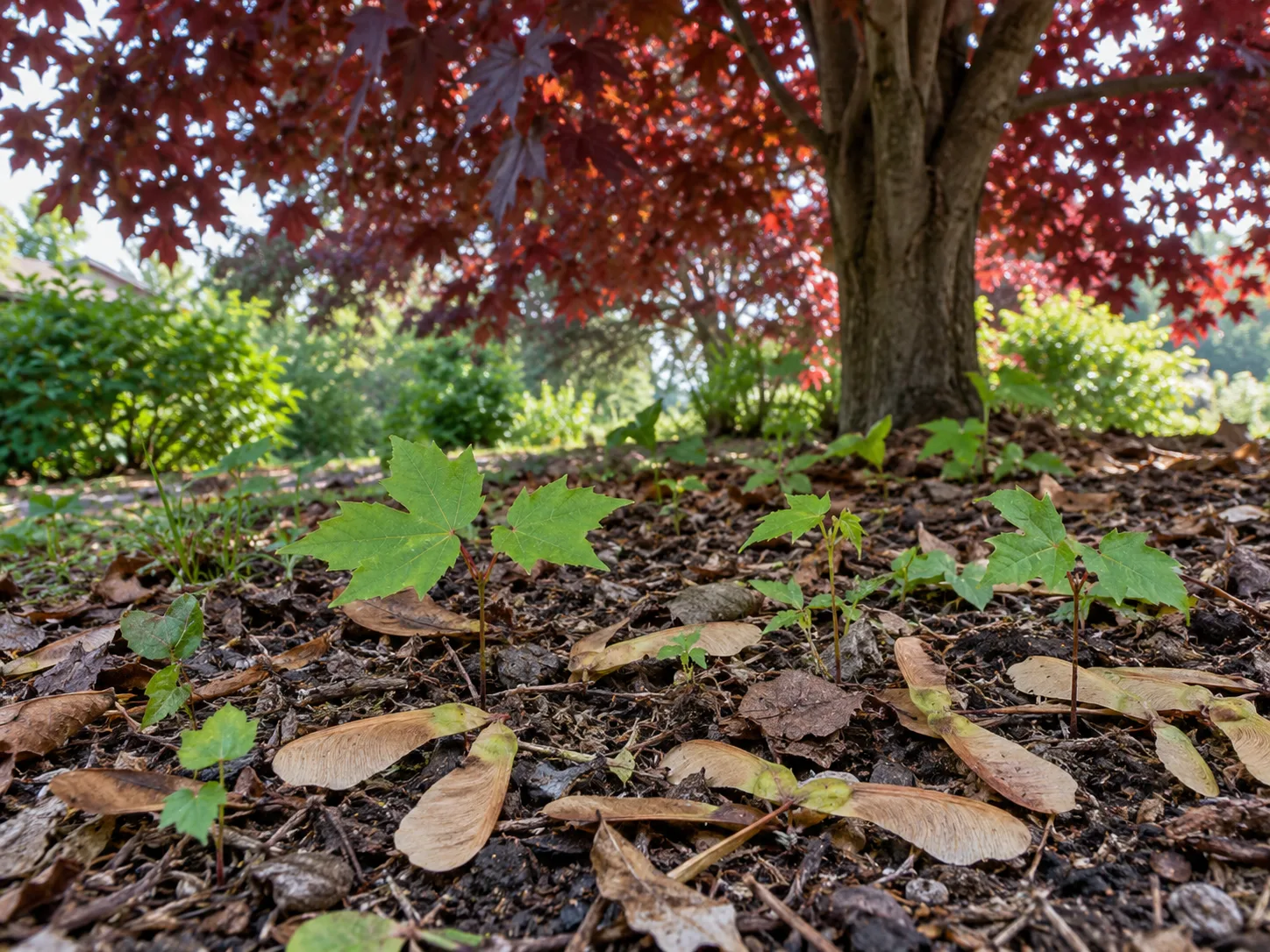
Do not propagate the named cultivar from seed if you want a matching purple-leaved tree. Seedlings are genetically variable and may lose the parent’s ornamental color; Michigan Tech’s invasive-species guidance notes that ornamental Norway maple offspring can be green even when the parent is a red- or purple-leaved cultivar (KISMA at Michigan Tech). Nursery-propagated stock is the reliable way to obtain the cultivar, but first consider whether Norway maple is appropriate in your area.
Watch for Disease Without Overreacting
The Missouri Botanical Garden lists verticillium wilt as a concern for Norway maple and notes that young bark can suffer sunscald or winter frost cracks. Leaf scorch, wilting, dead branches, or fungal growth at the base can have multiple causes, so a photograph or one symptom rarely proves which disease is present. Check whether symptoms affect one branch or the whole canopy, note when they began, and consider recent drought, construction, or watering changes before taking action.
Do not assume a tree must be removed because it has a spotty leaf or one dying branch. For declining trees or signs of structural decay, ask a local extension diagnostic service or qualified arborist to inspect the specimen; they can distinguish a manageable stress problem from a disease or hazard that requires more work. Avoid applying pesticides or fertilizer without a confirmed target and an appropriate local recommendation.
Seasonal Care Through the Year
In spring, check the mulch ring, look for seedlings, and note whether buds and leaves emerge evenly. Water a newly planted tree when the root zone needs it, rather than waiting for leaves to wilt; for an established tree, reserve supplemental watering for dry conditions. If you prune, work during dormancy and keep cuts modest so you are shaping the structure rather than trying to control final size.
During summer, monitor young trees through hot, dry stretches and inspect the soil below the surface before watering again. In late summer and fall, watch for samaras and remove seedlings while they are easy to pull; keep leaves and debris from smothering the root flare. In winter, check for broken limbs after severe weather from a safe distance, then arrange professional help if a branch is hanging or the crown has changed shape.
Better Alternatives for Many Yards
If you have not planted yet, a native maple suited to your region may offer shade and seasonal color without the same invasive-species concern. UConn Extension recommends red maple (Acer rubrum) and sugar maple (Acer saccharum) as Norway maple alternatives in its regional fact sheet, and NC State Extension lists several native maples for its region (UConn Extension; NC State Extension). Match the replacement to your soil, climate, mature size, and local conservation guidance; a species native somewhere in North America is not automatically native or suitable everywhere.
For a smaller yard, ask a local extension office or reputable native-plant nursery about a compact native tree that fits your region and the space available. Red fall color and purple summer foliage are different design goals, so decide which matters more than trying to duplicate the cultivar at any cost. If you already own a healthy mature ‘Crimson King’, seek local advice on its status and containment before deciding whether to retain or remove it.
Conclusion
The care basics for ‘Crimson King’ are straightforward: give it room, plant it with the root flare visible, provide steady water while it establishes, mulch without piling against the trunk, and prune only when there is a clear structural reason. The harder decision is whether a self-seeding Norway maple is the right tree for your region and property.
Check current local invasive guidance before planting another one, and plan for surface roots, dense shade, and seedlings if you already have a mature tree. Where those trade-offs do not fit your yard, choose a locally appropriate native tree that can deliver the size and seasonal effect you want.



