30 Clever Ways to Hang Plants Indoors and Outdoors
Find 30 ways to hang plants from ceilings, walls, windows, shelves, and outdoor beams, with practical notes on light, load, watering, placement, and upkeep.
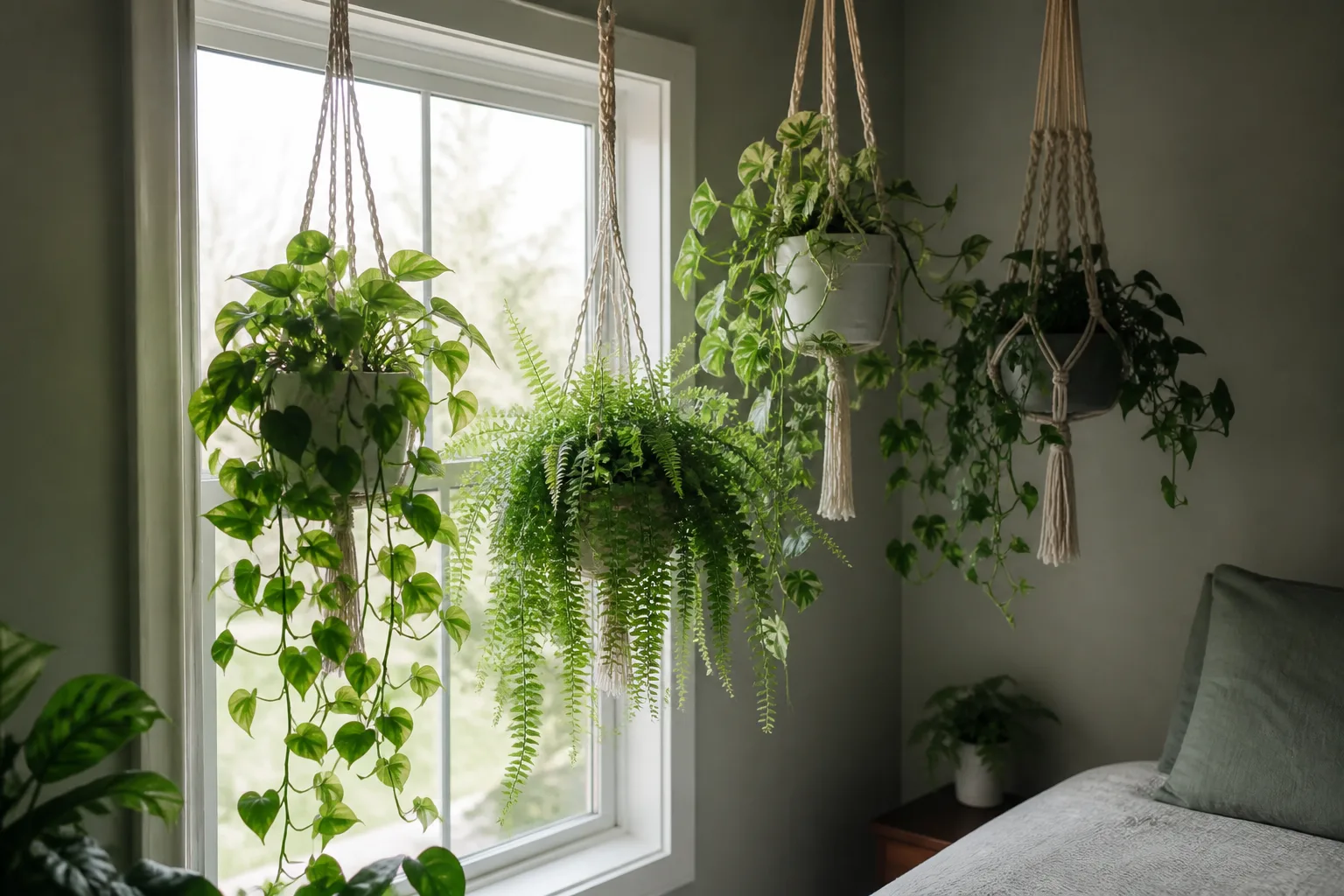
Hanging plants free a crowded sill or side table, soften a bare wall, and put trailing foliage where it can frame a window or doorway. The best setup does more than look good: it gives the plant enough light, supports the planter after watering, and lets you take it down without climbing over furniture every week.
Use the ideas below as a menu, not a reason to hang every pot from the ceiling. A light air plant and a large, waterlogged basket need different hardware, and a bright window may be perfect for a succulent but too harsh for a fern. Choose the support and plant together.
Before You Choose a Hanging Method
A hanging display is a small load-bearing project. Soil, a mature plant, a ceramic pot, and water all add weight; the planter can become much heavier after watering than it feels when empty. Better Homes & Gardens’ guide to ceiling hooks recommends weighing the full assembly and choosing hardware rated above that load, with a ceiling joist as the reliable attachment point for a screw hook. Better Homes & Gardens’ ceiling-hook guide also distinguishes joists from hollow drywall, where the anchor type and installation instructions matter.
Start with the full, watered weight
Weigh the pot after watering and draining, including its hanger, chains, and any cachepot. Choose a hook, bracket, rail, and mounting method whose published capacity applies to the material you are fastening into; a hardware rating for wood does not automatically apply to drywall, plaster, masonry, or a hollow door. For a heavy ceramic planter, a high-traffic location, or a ceiling you cannot inspect, use a qualified installer rather than guessing.
The decorative hanger is not the anchor. Macrame, wire, and chain may look sturdy, but the screw or bracket attached to the building is what must carry the load. Do not rely on adhesive strips, suction cups, curtain tension rods, or plastic drywall plugs for a potted plant overhead. Reserve those for a lightweight paper decoration or a vine that cannot hurt anyone if it falls.
Match the spot to light, access, and clearance
Light does not become brighter because a plant is higher. Oklahoma State University Extension notes that very few houseplants tolerate dark corners, while Wisconsin Extension recommends matching placement to both the plant’s light needs and the amount and duration of light in the room. A plant near glass can also face hot sun, cold drafts, or a temperature swing; trailing plants such as pothos and heartleaf philodendron tolerate a wider range of indoor placements than sun-loving succulents such as string of hearts or burro’s tail. Epic Gardening’s hanging-houseplant guide discusses those contrasting habits and light preferences.
Stand where you will walk and sit before marking a hook. Keep leaves out of door swings, fans, cooking zones, curtain tracks, and stair headroom, and leave enough space to lift the pot off its hook. If light is the main challenge, compare your window with the plant’s needs first; our guide to low-light hanging plants can help narrow the choices.
Ceiling and Overhead Displays
Ceiling hangers make use of otherwise empty space, but they should be the first choice only when there is a dependable mounting point and a simple way to water the plant. Use one or two substantial pots rather than filling every overhead spot with heavy ceramics. A row of small nursery pots is easier to maintain and gives you more flexibility if the light changes.
Fixed hooks, beams, and sloped ceilings
-
A macrame hanger from a ceiling joist. A screw hook anchored in a ceiling joist is the classic way to lift a trailing plant off a table. Pick a hanger that cradles the pot securely, make sure its chains or cords are intact, and choose a compact, lighter nursery pot if you plan to lower it often.
-
An extender hook over an exposed beam. A sturdy over-beam hook can avoid drilling into a visible timber and can move along the beam as the room changes. Confirm that the hook is designed for the beam’s thickness and that the beam itself is structural, not a decorative wrap or thin trim.
-
A bracket made for a sloped ceiling. In an attic room, a purpose-made angled base can keep a hanging pot upright where the ceiling follows the roofline. Fasten it into the rafter or framing specified by the hardware maker; a standard ceiling screw hook driven at an awkward angle can loosen or tilt.
Flexible rails and pulleys
-
A swivel hook over a bright window. A swivel lets you turn a plant as it grows, which can even out the direction it leans toward the light. Use it for a manageable pot and rotate the plant gradually; the swivel is a convenience, not a substitute for a securely mounted anchor.
-
A ceiling track for a shifting plant row. A short, load-rated track screwed into multiple joists can hold several small pots and make it possible to slide them along a window or room divider. Keep each hanger’s load within the track maker’s limit, stop plants from colliding, and lock the track ends so a pot cannot roll off.
-
A pulley hanger for plants that need frequent care. A counterweight pulley can lower a basket for watering or inspection, then raise it back into place. Buy a plant-specific, load-rated pulley and follow its instructions; improvised rope-and-cleat arrangements can slip, and a pulley is not useful if the pot is too heavy to handle safely when lowered.
Windows and Bright-Spot Displays
Windows create the most natural backdrop for greenery, but the plant should not block the sash, curtain, or useful daylight. A window’s direction and nearby trees or buildings change its brightness, so observe the actual spot through the day. Houseplant guidance from Wisconsin Extension and Oklahoma State Extension emphasizes that needs vary by species and conditions rather than by a single room-wide schedule.
Use the window without blocking it
-
A curtain rod with S-hooks. Hang one lightweight pot from an S-hook on a rod with brackets firmly fastened to the wall. The rod must carry the plant’s watered weight without bowing, and the hanger should sit far enough from curtains that vines do not tangle in the fabric.
-
A double-rod window treatment with one plant rail. A second, independently supported rod can separate a small plant display from curtains or a shade. Treat it as a plant support only if the rod and its brackets are made for that load; do not overload the usual thin tension rod that simply presses against the sides of a recess.
-
A wall bracket beside the window. A decorative arm screwed into a stud or suitable masonry anchor lets a basket hang just outside the curtain line. Choose the side that will not catch the sash, and check the plant at midday so direct sun does not scorch leaves that prefer filtered light.
-
A slim shelf over the window. A shelf above the frame can hold a few pots with vines that fall down the sides, creating a curtain effect without hanging a heavy planter in front of the glass. Secure the shelf into framing, use saucers or cachepots, and trim vines before they cover the window latch or pull against the pots.
-
A plant rail across a deep window recess. A short, purpose-built rail fixed into the recess can hold several small containers at staggered heights. This works particularly well in a bay window, but leave the bottom of the window usable for ventilation and avoid putting leaves directly against hot glass or a cold pane in winter.
-
A vine curtain on discreet clips. Instead of suspending a pot across the window, train a trailing vine from a nearby anchored pot along a light cable or plant clips above the frame. This creates the green-curtain look while keeping the container accessible; make sure clips support the vine without pinching stems and do not attach them to fragile wallpaper or dusty paint.
Wall-Mounted Plant Displays
Walls are useful when the floor is crowded, and a shallow display can make a narrow hallway feel more finished. Before drilling, locate studs or identify whether the surface is drywall, plaster, brick, or concrete so the fastener matches it. Keep a removable nursery pot inside a wall holder so you can water it elsewhere instead of trying to balance a watering can against the wall.
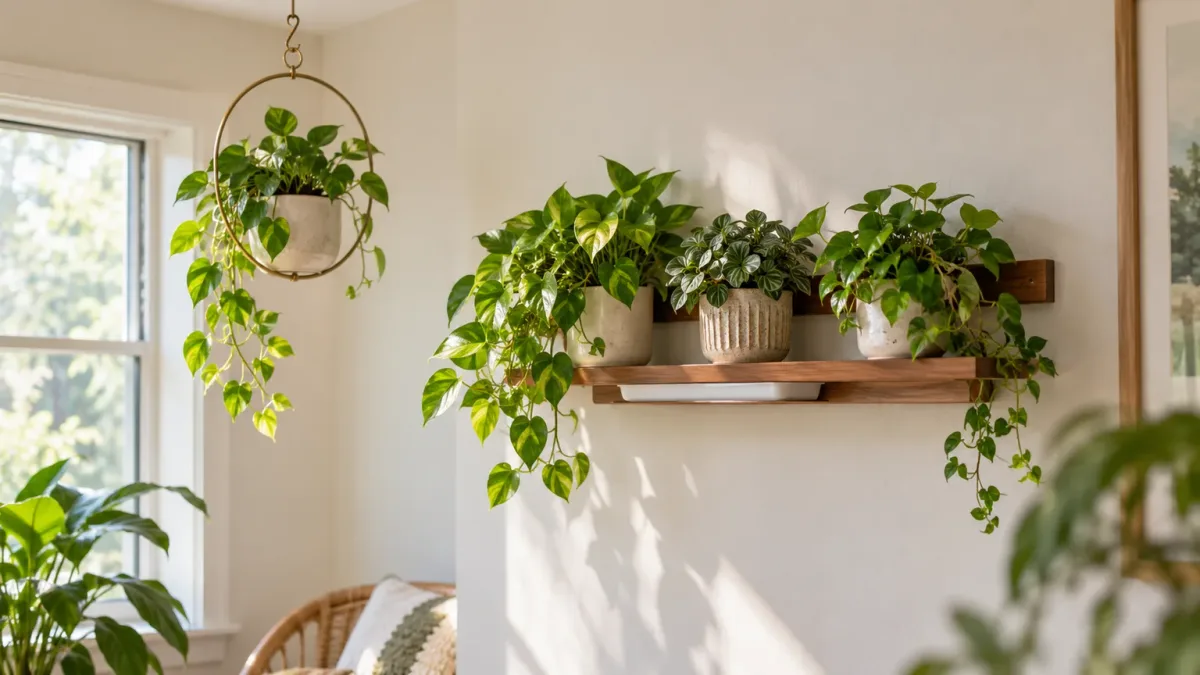
Keep the display light and serviceable
-
Individual wall-mounted pot rings. A simple metal or wooden ring puts one small pot on the wall and works well in a bathroom or between windows. Use a pot with a stable lip that cannot slide through the ring, and keep the mounting point accessible enough that the pot can be lifted out for watering.
-
A woven wall basket with a hidden nursery pot. Hang a basket as a decorative shell and place a lightweight, drainable pot inside it. The nursery pot keeps wet soil away from wicker or seagrass, while the basket adds texture; lift the insert out after watering so standing water does not damage the natural fibers.
-
A slatwall with adjustable hooks. A slatted panel lets you change the height and spacing of plant hooks without making a new hole for every move. Mount the panel to wall studs, choose hooks designed for that panel system, and keep the heaviest planters close to the fasteners instead of at the far edge of a long cantilever.
-
A pegboard plant wall. A sturdy pegboard can combine tiny air-plant holders, a few shelves, and lightweight hanging pots in one vertical arrangement. Attach the board to studs with spacers so hooks can seat fully; ordinary pegboard hooks and small decorative boards are not automatically rated for wet containers.
-
A wall grid or narrow trellis for trailing vines. Secure a wire grid or wooden trellis to the wall, then hang small pots from its crossbars or guide vines through clips. This creates a living panel that can grow over time, but leave the pots removable and do not allow a large vine to pull the grid away from its anchors.
-
A living moss or framed plant wall. A preserved-moss panel gives a leafy focal point with less watering, while a planted modular wall can support living greenery when it has proper irrigation and drainage. They are very different products: check whether a display is live or preserved before buying, and account for water access and wall protection if it contains growing plants.
Furniture and Everyday Hardware
If you rent or do not want to drill into a ceiling, look for existing furniture or hardware that can carry a small pot. A practical “no-drill” answer is usually an elevated shelf or a purpose-built freestanding hanger, not a pot suspended from an unknown hook. Keep the plant easy to remove so you can clean leaves, check for pests, and empty excess water.
-
A towel bar with S-hooks. A firmly mounted towel bar can hold one or two small planters in a bright bathroom or hallway. Check the bar’s load rating and attachment, not just the thickness of the metal, and do not use a loose suction-mounted towel bar for a plant.
-
A kitchen pot rail. A wall-mounted rail intended for cookware can also organize small herb pots or indoor planters, provided the rail and hooks are rated for the full load. Keep leaves away from hot burners, splashing grease, and frequently used utensils, and position the rail where you can remove each pot without reaching over a stove.
-
Hooks under a sturdy wall shelf. Screw small hooks into the underside of a shelf that is itself anchored into studs, then hang lightweight pots beneath it. This creates two layers of greenery in a compact footprint; place the hanging pots where their vines will not brush books, electronics, or objects on the shelf below.
-
A bookcase top with trailing plants. A plant on top of a deep bookcase is not technically suspended, but long stems spill down the sides and give the same vertical effect without an overhead anchor. Choose a pot that sits fully on the shelf, leave room for it to be lifted, and do not let vines obscure a doorway or stretch toward a lamp.
-
Wooden pegs on a mounted rail. A row of solid pegs can hold small hanging planters, lightweight baskets, or air-plant holders, adding a simple handmade look. Secure the rail into framing, avoid thin decorative dowels, and reserve the end pegs for the lightest items because they often take more leverage when a pot swings.
-
Decorative baskets grouped with one live plant. Hang a cluster of shallow wall baskets and let one basket hold a removable pot while the others carry dry decor. The asymmetry feels less formal than a row of identical planters, and using only one live container keeps the total weight and watering burden easier to manage.
Stairs, Bathrooms, Balconies, and Pergolas
Transitional spaces are tempting because they often have empty vertical surfaces, but they also have more people passing under or beside the plant. Keep handrails, windows, doors, and walking routes clear. Outdoors, rain, wind, and sun change both how heavy a basket becomes and how often it needs attention.

-
A plant hanger wrapped around a stair spindle. A soft strap or hanger can loop around a sturdy stair spindle without drilling, a useful option for a small air plant or light pot. Secure it so it cannot slide down or swing into someone using the stairs, and never attach it where a vine or planter narrows the handrail or catches clothing.
-
A landing rail with removable hooks. A short, firmly installed rail at a stair landing can hold several small pots at staggered heights and makes a blank wall feel intentional. Keep every plant above shoulder or hip level only when it stays outside the path of travel; the landing should remain clear enough for people to turn and carry items safely.
-
A bathroom wall corner, away from the tub. A compact wall basket can soften tile and work for a plant that tolerates the room’s real light and temperature. Humidity from a shower does not compensate for a dark bathroom, so use a window or supplemental grow light when needed and keep the pot away from direct spray, cleaners, and a place where it could fall into the tub.
-
A headboard-side wall hook. If you want greenery near a bed, mount a light plant on the side wall beyond the pillow area rather than directly over the mattress. The plant stays part of the room’s composition without hanging above someone who is sleeping, and a removable liner makes watering easier to manage.
-
A balcony railing bracket. A purpose-built bracket can hang a basket inside the railing, freeing the balcony floor for chairs. Confirm the rail’s shape and the bracket’s fit, use a locking or clamping design that resists wind, and keep the pot on the inside of the barrier so it cannot fall onto people below.
-
Hooks on a pergola or porch beam. A solid timber beam can carry outdoor hanging baskets when the hook is designed for the wood and the beam is sound. Place the basket where it will not be struck by a door or walking traffic, use outdoor-rated hardware, and check it after storms because wind can swing or twist a hanger.
Keep Hanging Plants Healthy and Easy to Maintain
Choose a potting setup that is easy to take down. A nursery pot with drainage holes inside a lighter decorative hanger is often simpler than planting directly into a heavy ceramic or fiber-lined basket. When it is time to water, lift out the inner pot, water thoroughly over a sink or basin, let excess water drain, and return it only when it stops dripping. Oklahoma State Extension notes that hanging baskets can dry faster in warmer air and recommends thorough watering with drainage; it also cautions against leaving houseplants standing in water. Its houseplant-care guide is a useful reference for the basics.
Do not water every hanging plant on the same weekday. Wisconsin Extension advises checking soil moisture and accounting for the plant, pot, season, and growing conditions; a small pot or a sunny window can dry far sooner than a large one in a cooler room. A finger check near the surface or lifting the pot to compare its dry and watered weight is more useful than a fixed calendar. For a mix of sun-loving and low-light trailing plants, start with the species and window rather than styling them all in one row. Wisconsin Extension’s houseplant-care guidance explains those placement and watering differences.
Inspect the support when you dust or water. Look for a leaning bracket, pulled fastener, frayed cord, corroded chain, cracked pot, or water-damaged wall, and lower the plant if any part has shifted. Prune vines before they become a lever that tugs on the hanger, remove fallen leaves, and rotate plants only when the hanger can turn freely without unscrewing. A display should be easy enough to maintain that you will actually do it.
Conclusion
The most successful ways to hang plants start with the structure and end with the routine. Use a ceiling joist, sound beam, properly mounted rail, or rated wall bracket for the weight; save light-duty hardware for small, harmless decor. Then choose a position that fits the plant’s light, keeps traffic clear, and lets you lower the pot for watering. With those decisions made first, a window rail, plant wall, stair spindle, or porch basket can add greenery without making care harder.



