Chinese Fringe Tree Care: Planting and Growing Guide
Learn Chinese fringe tree care, from mature size and hardiness to planting depth, watering, pruning, flowers, fruit, and common problems by region.
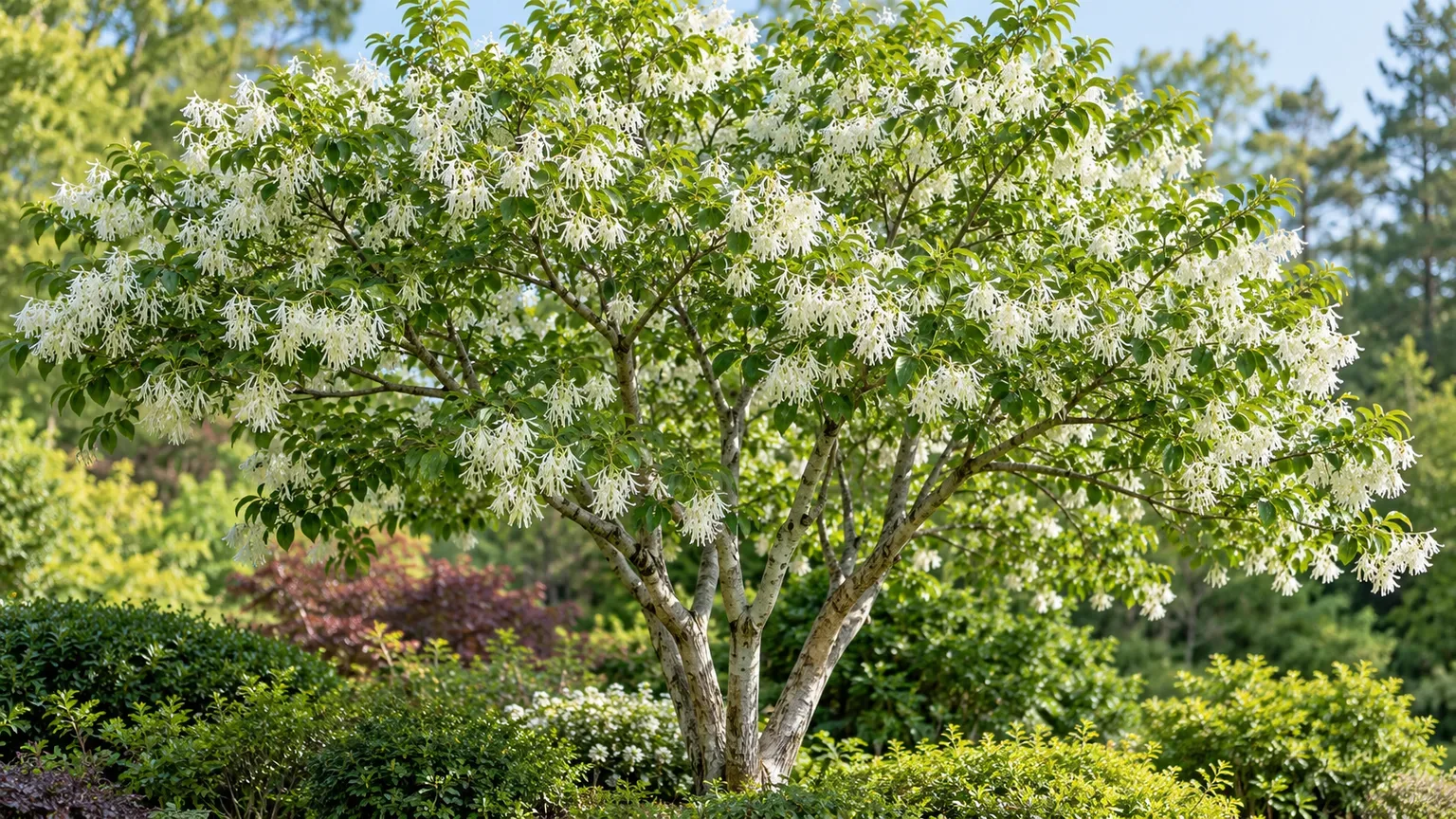
Chinese fringe tree (Chionanthus retusus) is a deciduous East Asian ornamental tree grown for clouds of narrow-petaled white flowers in late spring, blue-purple fruit, and bark that adds winter texture. It can remain a manageable focal point for years, but “small tree” does not mean “compact everywhere”: specimens vary from multistemmed shrubs to broad trees, and the mature canopy can be much wider than a quick nursery tag suggests.
The first care decision is therefore the site, not fertilizer. Give the tree room to mature, a bright position if you want the heaviest bloom, and soil that stays evenly moist without remaining waterlogged. After establishment, routine care is generally light; the complications tend to come from an undersized planting spot, buried roots, drought stress, or pruning away the branch ends that carry the display.
Chinese fringe tree at a glance
| Feature | What to plan for |
|---|---|
| Botanical name | Chionanthus retusus, in the olive family (Oleaceae) |
| Habit | Deciduous large shrub or small tree; naturally single- or multi-stemmed |
| Mature size | Common references range from roughly 10–30 feet tall and wide to 15–25 feet tall and 30–40 feet wide; plan for a broad canopy |
| Hardiness | NC State lists USDA Zones 5a–9b; exposure and local conditions still matter |
| Light | Full sun for the strongest flowering; partial shade is tolerated |
| Soil | Moist, well-drained soil; Oregon State reports tolerance of alkaline soil |
| Seasonal interest | Fragrant white flowers in late spring, female-tree fruit in fall, textured bark |
Those dimensions are not a contradiction to “correct” by choosing one number. Plant records measure different specimens and growing conditions, and the species has variable growth forms. Oregon State’s landscape plant record gives 15–25 feet tall and 30–40 feet wide, while NC State’s Plant Toolbox lists a broader 10–30-foot range in both directions; the Harvard Arnold Arboretum describes mature open-grown trees around 20–30 feet. Treat the larger spread as a sensible space-planning allowance unless a local nursery can document the mature form of the exact cultivar you are buying (Oregon State University Landscape Plants, NC State Extension, Harvard Arnold Arboretum).
Identify the tree—and avoid a common name mix-up
The botanical name matters because Chinese fringe tree and Chinese fringe flower are different plants. Chionanthus retusus is a woody deciduous tree or large shrub in Oleaceae, the olive family. Loropetalum chinense, often called Chinese fringe flower, is an evergreen or semi-evergreen shrub in a different family; their names and fringed flowers can make plant listings easy to confuse. Check the botanical name on the tag before buying or applying advice.
Chinese fringe tree usually has opposite or nearly opposite, glossy dark-green leaves with smooth edges and oval-to-elliptic shapes. In spring, clusters of fine, strap-shaped white petals hang at the ends of branches, giving the crown a soft, fringed outline. The flowers are pleasantly fragrant, while older trees add peeling pale bark when young and more ridged, furrowed texture with age (NC State Extension, Harvard Arnold Arboretum).
The species is native to parts of China, Korea, Japan, and nearby East Asia. In U.S. landscapes it is cultivated as an introduced ornamental, not a native replacement for the American white fringe tree, Chionanthus virginicus. That distinction is useful if your planting goal includes local native habitat or if a nursery label says only “fringe tree.”
Decide whether it fits your garden
Choose this tree when you want a spring focal point with more than one season of interest and can accommodate a spreading canopy. It is especially effective where you can view its flowers from a path, patio, or frequently used window, and where winter sun can reveal the branching and bark. In an open lawn, the canopy can be allowed to develop broadly; in a border, leave room for the eventual width rather than forcing it into a narrow clipped shape.
It is a poor choice for a tight strip beside a foundation, beneath a low utility line, or in a spot where you need a permanently narrow column. Slow early growth can make a young specimen appear small enough for a cramped bed, but the final canopy—not the nursery height—is the relevant measurement. BBC Gardeners’ World Magazine makes the same practical point when selecting small-garden trees: check both ultimate height and the time needed to reach it, because a tree that initially fits can eventually crowd a small space (BBC Gardeners’ World Magazine).
If a more compact silhouette is important, ask for the exact cultivar name and its documented mature width in your region. Compare that with the available space, overhead clearance, paving, and neighboring plants before purchase. Do not rely on annual shearing to keep a naturally broad, multi-stemmed tree permanently undersized; that creates repeated work and sacrifices the relaxed form that makes the plant attractive.
Choose a site for the mature canopy
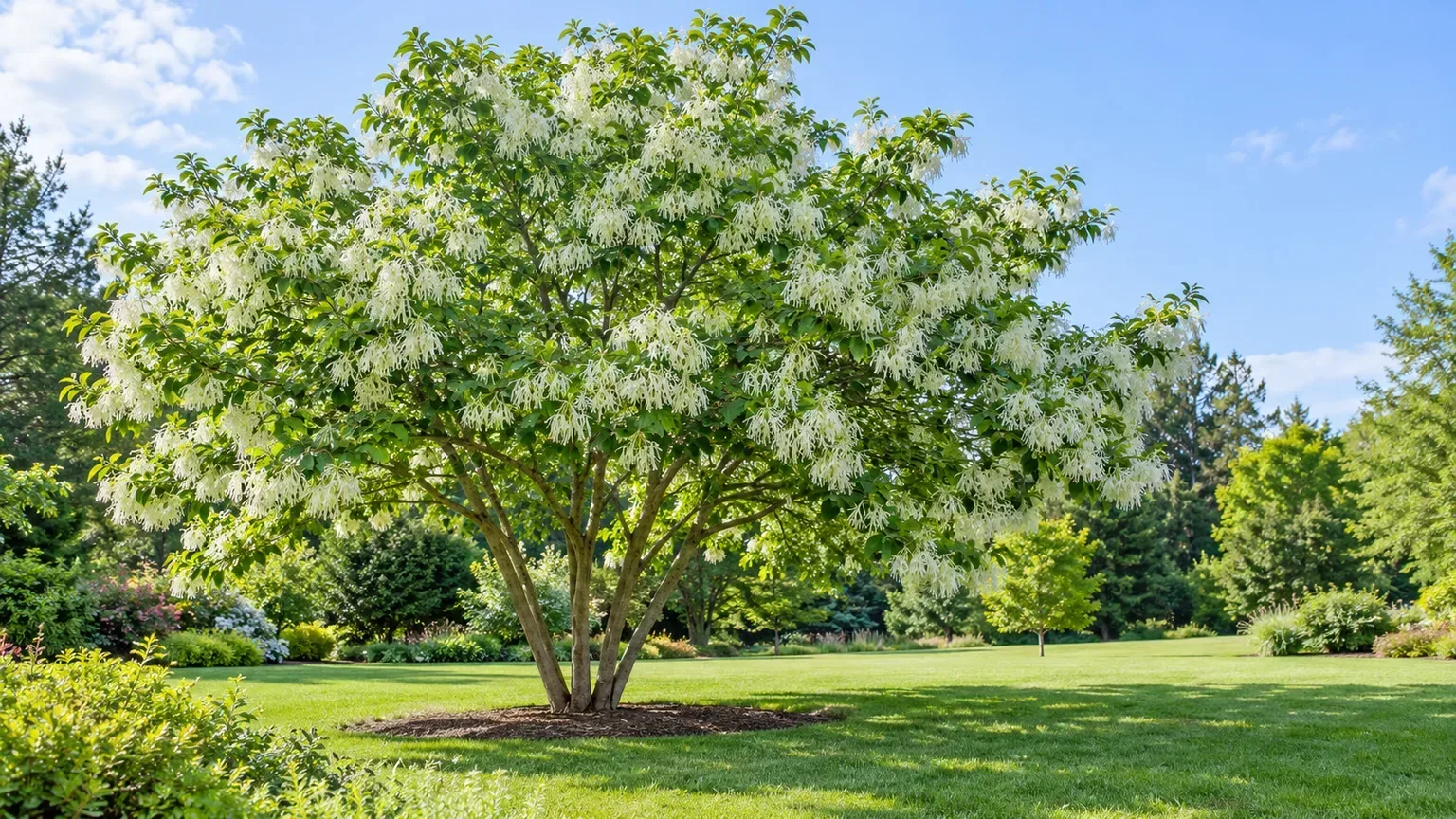
Look for an open position with good air movement and enough horizontal space for branches to spread. If you plant several trees, measure from trunk center to trunk center using the expected mature width of the actual selection. A 30-foot canopy needs about 15 feet of radius from its trunk before you add clearance from buildings, fences, walks, or another tree. Increase the spacing where you need access or want to preserve a visible gap between mature crowns.
Avoid a shallow pocket that fills with water after rain, compacted construction soil, or a location under roof runoff where the root zone alternates between saturation and drought. The tree can tolerate a range of soil conditions, but root-zone oxygen remains essential; standing water can suffocate roots even when the foliage looks thirsty. If you have dense clay, observe the site after a soaking rain before planting. A low spot that stays muddy for days is a drainage problem, not a signal to amend only the planting hole.
Before digging, check local underground utility marking requirements and keep the mature tree away from overhead wires. Consider how shade will change as the crown expands: a site that receives sun now may become shaded by a house or neighboring tree in a few years. Since spring light supports flowering, evaluate the site after surrounding deciduous trees leaf out, not just in winter.
Give it enough light for spring flowers
Full sun is the dependable choice when abundant bloom is the main goal. Chinese fringe tree also grows in partial shade, but a tree receiving only a few hours of direct light may flower less heavily or develop a more open, reaching form. Oregon State and the Harvard Arnold Arboretum both describe sun to partial shade as suitable, with better flowering in sun (Oregon State University Landscape Plants, Harvard Arnold Arboretum).
In a hot-summer region, a little afternoon shade can reduce heat load, especially during establishment, without making deep shade the target. Prioritize morning sun, then judge the tree by how it performs locally: sparse flowers with vigorous, healthy foliage often point to insufficient light or immaturity, while scorching and premature leaf drop during a heat wave are more consistent with water stress. Do not cut healthy neighboring trees solely to force maximum bloom until you have considered the value of their shade and the long-term canopy balance.
Balance soil moisture with drainage
Aim for soil that holds usable moisture but drains between rains. NC State lists moist, well-drained conditions and an acidic soil profile; Oregon State notes that Chinese fringe tree can tolerate alkaline soil. This suggests that drainage and a reliable supply of moisture deserve more attention than trying to force a particular pH number. If leaves look chlorotic or growth remains poor, test the soil before adding sulfur, lime, or fertilizer instead of guessing from a general care chart (NC State Extension, Oregon State University Landscape Plants).
Loam is easiest to manage, but clay or sandy soil is not automatically disqualifying. Clay can support the tree when it drains adequately; compacted or persistently saturated clay cannot. Sandy soil drains quickly and may need more frequent deep watering during hot, dry stretches. Add organic matter across a broad planting bed when preparing new landscape soil, but do not create a rich, amended “pot” only inside the planting hole, where surrounding clay can trap water around the root ball.
Choose a planting window and prepare the hole
Plant when the tree can establish roots before its most stressful season. In cold-winter areas, early spring after the ground is workable is a reliable option; in regions with mild winters and hot summers, fall planting often gives roots a cooler, longer establishment period before summer heat. Avoid planting in frozen, waterlogged, or baking-hot soil, and follow local extension advice for your climate and stock type. Container trees are more flexible than bare-root trees, but they still need regular moisture and time to root outward.
Before planting day, water the nursery container so the root ball is evenly moist. Dig a hole two to three times wider than the root ball but no deeper than its height; the goal is to loosen the surrounding soil sideways, not sink the tree. A common nursery problem is a root flare buried under potting mix. Gently expose the first structural roots so you know where the trunk transitions into the root system before measuring the planting depth.
Fine Gardening’s practical tree-planting guidance likewise emphasizes exposing the root collar, loosening circling roots on container stock, planting the collar just above grade, and backfilling with the original soil (Fine Gardening). These details matter more than enriching the hole with fertilizer: roots need to expand into the surrounding ground rather than remain circling in a soft amended pocket.
Plant it without burying the root flare
Set the tree upright with the exposed root flare level with or slightly above the finished soil grade. If the root ball is tall because the nursery buried the flare, remove excess surface mix and set the true flare at the right level; do not compensate by planting the buried trunk deeper. Backfill in layers with the excavated soil, gently firming it to eliminate large air gaps while resisting the urge to pack it hard.
Water slowly as you backfill and again when the hole is filled. This settles soil around the roots and reveals whether the tree is leaning. Stake only if the root ball rocks, the site is windy, or the trunk cannot remain upright on its own. Use loose ties and remove the supports once the root ball is stable; permanent tight ties can girdle the trunk.
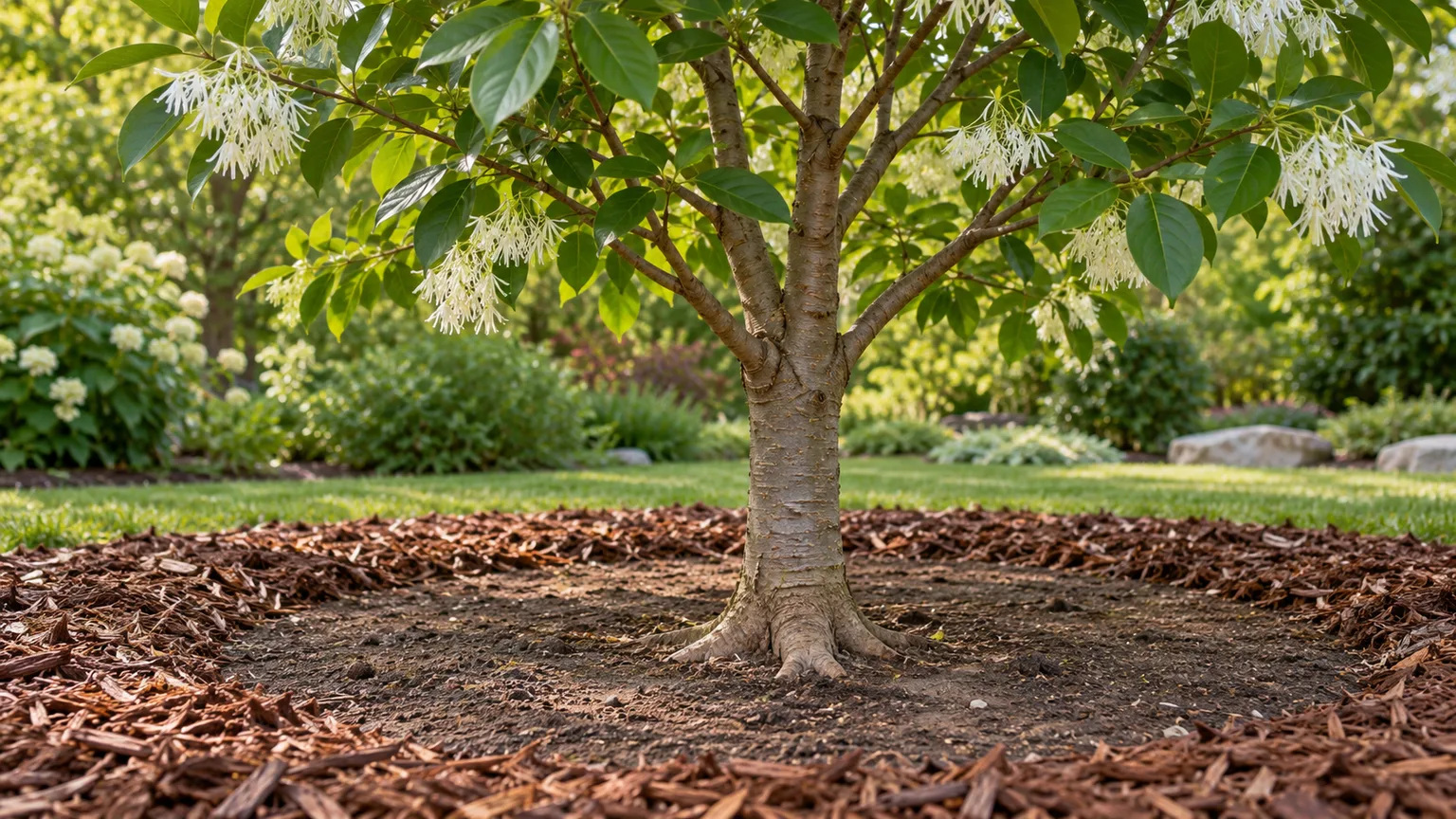
Apply a broad mulch ring after planting. Keep mulch several inches away from the trunk and do not pile it against bark. The finished ring should look like a shallow saucer or doughnut, not a cone. Leave the root flare visible so you can check for settling and inspect the trunk base in the first year.
Water by root-zone moisture, not a rigid calendar
The first year is when a Chinese fringe tree most needs your attention. Newly planted roots occupy a limited area around the original root ball, so a brief sprinkle over nearby lawn may wet the surface without soaking the roots. Penn State Extension recommends checking moisture 6–9 inches down and wetting the full root zone; its tree-watering guidance also cautions that both dry soil and repeatedly saturated soil impair root function (Penn State Extension).
Probe the soil at the edge of the root ball before watering. If it is dry at root depth, give a slow, thorough soak across the root ball and surrounding soil; if it is still moist, wait and check again rather than watering automatically. Adjust for rain, heat, wind, soil texture, and drainage. In sandy soil during hot weather, the interval may be short; in cool, clay-rich soil, frequent watering can keep the root zone oxygen-poor.
During prolonged summer drought, established trees can still benefit from a deep soak, particularly if leaves begin to curl, wilt, or drop early. Oregon State and Purdue list the species as drought-sensitive, while the Harvard Arnold Arboretum reports tolerance of moderate summer drought at its established specimens. Read that difference as a useful caution: a mature tree may ride through a limited dry spell in a favorable site, but it is not a tree to leave without water through repeated hot, dry periods, especially when young (Oregon State University Landscape Plants, Purdue Arboretum, Harvard Arnold Arboretum).
Mulch and fertilize only when there is a reason
Maintain a 2–3-inch layer of organic mulch over the root zone and extend it outward as the tree grows. Shredded leaves or bark help reduce weeds and slow moisture loss, but keep the trunk base uncovered and refresh only what has broken down. A deep mulch mound can hold moisture against the bark, hide the root flare, and encourage the roots to grow into the mulch instead of the soil.
Do not assume yearly fertilizer will create more flowers. If the tree makes healthy leaves and shoots, extra feeding may add maintenance without solving a problem. First check sunlight, root-zone moisture, planting depth, and maturity. If growth is weak or leaves are unusually pale, get a soil test and follow the lab or local extension recommendation; avoid high-nitrogen fertilizer unless the test or diagnosis supports it.
Prune lightly to preserve its natural form
A Chinese fringe tree looks best when its natural shape guides the pruning plan. Decide early whether you want a multi-stemmed specimen or a single trunk, then make small corrective cuts over several seasons rather than removing several major stems at once. Remove dead, broken, crossing, or badly placed branches, and keep cuts just outside the branch collar instead of flush against the trunk.
Because the floral display forms at branch ends in spring, heavy shearing or shortening every branch can remove many of the visible flower clusters. If you need to reduce a live branch for clearance, use selective cuts to a suitable side branch rather than topping the crown. For shaping beyond a few small cuts—or for work near power lines—use a qualified arborist. Fine Gardening’s tree guidance also recommends sparse pruning after planting, focusing on damaged or dead wood rather than cutting back a healthy crown by default (Fine Gardening).
Timing depends on the purpose. Remove a hazardous broken branch promptly when it is safe to do so; for routine shaping, work just after flowering so you can enjoy that season’s bloom and see the tree’s framework. If you are training young structure, make restrained dormant-season cuts and accept that a small amount of bloom may be sacrificed for the long-term form. Avoid repeatedly pruning at random times simply because the tree has grown beyond an undersized site.
Diagnose a tree that is not blooming
Start with the tree’s age, light, and growth condition before applying fertilizer. A newly planted specimen may spend its early years rebuilding roots and extending branches before it produces a showy display. A mature tree in dense shade can also flower sparsely even when its leaves appear healthy. Compare bloom from year to year rather than judging a single season after a late frost, drought, or major transplant.
Then inspect recent pruning. If you shortened many branch tips during winter or spring, you may have removed the ends that would have carried clusters. For future years, prune selectively and after bloom when possible. If the tree produces vigorous leafy shoots but almost no flowers, review shade and excessive nitrogen before trying a flowering fertilizer; if both shoots and foliage look weak, check soil moisture, compaction, planting depth, and root damage first.
A cold snap can damage developing flower buds, and the timing of bloom shifts with local spring temperatures. Do not treat one missed flowering season as proof the tree is failing. Record when it leafs out, when nearby trees flower, whether buds were visible before a freeze, and how dry the soil became. That simple timeline can separate a one-season weather setback from a persistent site problem.
Understand fruit, pollination, and wildlife value
Chinese fringe tree is dioecious: individual trees bear male or female flowers, and female trees produce the ornamental blue fruit. A female without a compatible nearby pollen source may flower but set little or no fruit. Purdue Arboretum describes the species as dioecious and notes that known-sex nursery trees are not usually available unless they are large enough to flower, so ask the nursery what it can verify rather than assuming every young tree will fruit (Purdue Arboretum).
The small blue-purple drupes ripen in fall and attract birds. That gives the tree a second seasonal display, but fruit set depends on sex, pollination, maturity, and weather; it is not a guaranteed feature of a single retail specimen. If a fruit crop is important, buy flowering-size stock with the sex confirmed and check whether a pollen source is already growing within the surrounding landscape. There is no need to plant a second tree solely for pollination if you do not want fruit.
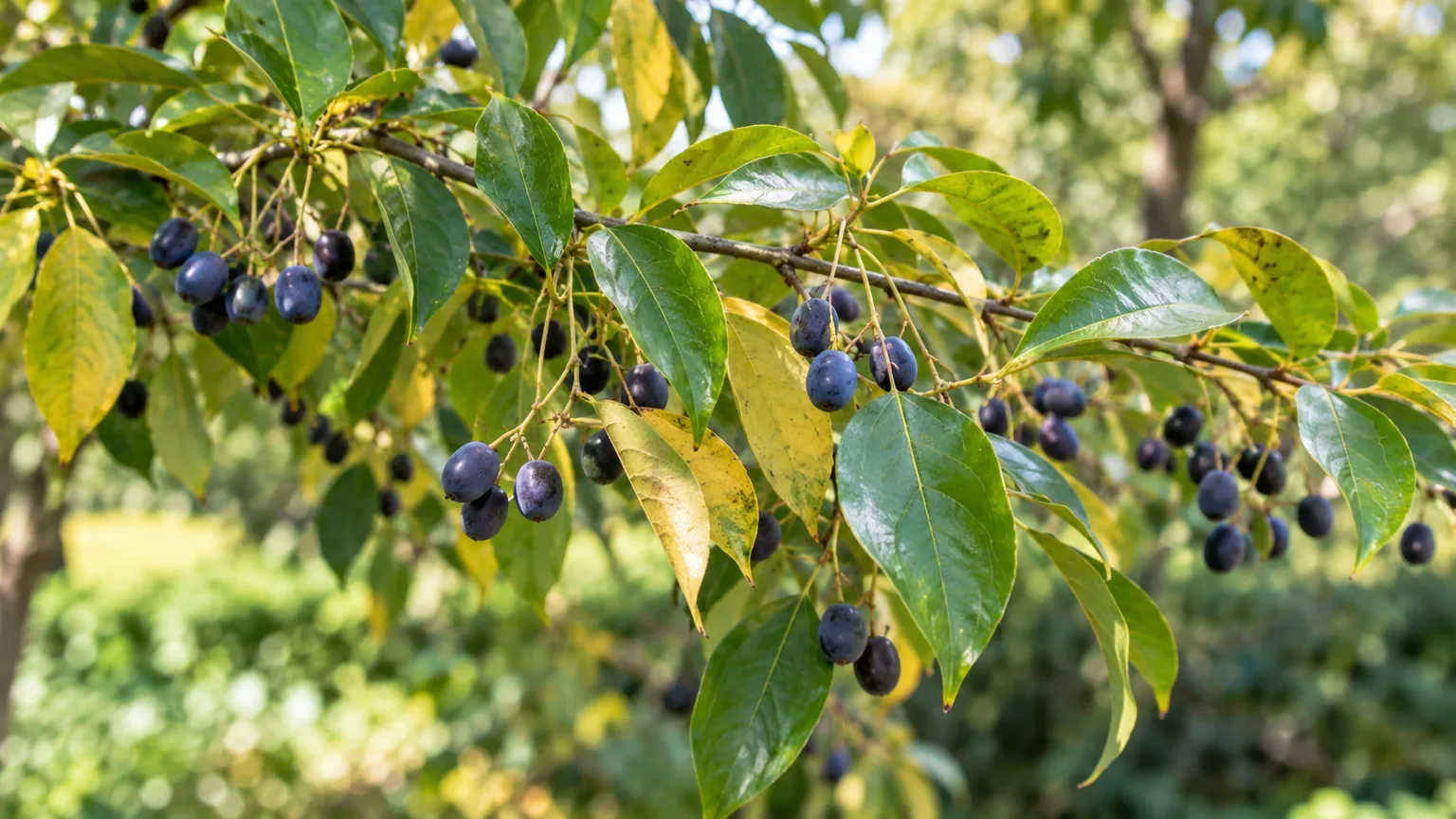
The tree drops leaves in autumn, and a fruiting female may drop some fruit, so it is not literally mess-free. The cleanup is modest compared with large-fruited trees, but consider a paved sitting area or clean walkway if you want to avoid seasonal litter. Leave some fruit where safe if you value the bird food; rake it from paths when slippery or unsightly.
Check pests, diseases, and stress before treating
Chinese fringe tree is generally a low-maintenance landscape plant, and arboretum profiles report few serious pest or disease problems. The most useful routine is observation, not a preventive spray. Look for a pattern: scattered leaf spots after wet weather differ from uniform wilt during a hot dry week, and pale leaves on one side may reflect root or soil differences rather than an insect infestation.
When foliage fades, first check moisture several inches down, drainage after rain, and whether mulch has buried the trunk. If you see fine webbing or stippling, inspect leaf undersides for mites before choosing a treatment. If powdery-looking growth appears, check whether it wipes away or repeats, improve airflow where practical, and confirm the diagnosis; fungicides do not correct drought, root damage, or poor drainage. Follow local extension advice and product labels if treatment is truly needed.
Deer browsing can occur, particularly on young landscape plants in areas with pressure. If browsing is common locally, use a sturdy, correctly sized guard or fencing and keep it from rubbing the bark as the trunk expands. Do not rely on the tree’s ornamental status as evidence that wildlife will leave it alone.
Propagate only if you can wait for a slow result
Starting a Chinese fringe tree at home is possible but is not the quickest path to a flowering tree. Seed may have dormancy requirements and seedlings vary in growth habit; if you raise a seedling, you will not know its sex until it matures enough to flower. That matters if your reason for propagating is to get blue fruit or preserve a particular nursery selection.
Woody plant propagation by cuttings can be inconsistent, and named cultivars may be protected or sold under propagation restrictions. If you want a reliable landscape specimen, choose a correctly identified nursery-grown tree and verify the cultivar, root-ball condition, and mature dimensions. If you want to experiment, keep propagation as a separate project and label the plant with its source and planting date so you can track its long establishment period.
Adapt care to local winters and summers
NC State Extension lists Chinese fringe tree across USDA Zones 5a–9b, while Oregon State and Purdue note Zone 5 hardiness. Those are broad species references, not a guarantee for every nursery selection or exposed garden. Winter wind, late frosts, summer heat, drainage, and the first few years after planting can all change performance. In a colder edge-of-range garden, choose a protected but sunny site and avoid fall planting so late that roots cannot establish before freeze-up. In hot regions, plant in a mild season, mulch the root zone, and monitor moisture through summer heat.
Growth and flowering dates also vary geographically. The Harvard Arnold Arboretum has documented specimens from both a cold, moist New England setting and a warm, dry Zone 9 climate, while Oregon State reports that young trees can grow faster in Sacramento than generic slow-growth descriptions suggest. Use local botanical gardens, extension services, or a nursery familiar with your region to judge the size and seasonal timing you can expect rather than applying a single national calendar (Harvard Arnold Arboretum, Oregon State University Landscape Plants).
If native planting is a priority in the eastern United States, ask about American fringe tree (Chionanthus virginicus), which NC State lists as a native alternative. It is a related but separate species, so compare the local hardiness range, mature size, soil needs, and nursery form before substituting it. Where Chinese fringe tree is already established, check local invasive-species and planting guidance rather than assuming every introduced ornamental behaves the same in every region (NC State Extension).
Conclusion
The strongest Chinese fringe tree care plan begins with enough space and a well-drained, moisture-retentive site. Choose full sun for better flowering when your climate permits it, set the root flare at grade, water the root zone deeply while the tree establishes, and keep mulch away from the trunk. Afterward, prune only for sound structure and clearance rather than trying to hold the tree to a size the site cannot support.
Expect variation. A plant may be single- or multi-stemmed, grow broader than a catalog photograph suggests, and flower or fruit on a schedule shaped by local climate and its age. Confirm the botanical name and cultivar before buying, reserve room for the mature canopy, and treat fruit as a bonus unless you can verify a fruiting female and a pollen source. With those decisions made up front, Chionanthus retusus can provide fragrant spring flowers, fall wildlife value, and bark interest with relatively little routine maintenance.