Faux Plants Outdoors: What Works and What Fails
Can you plant faux plants in your yard? Learn when outdoor-safe fake greenery works in containers, where it fails, and how to keep it from harming real plants.
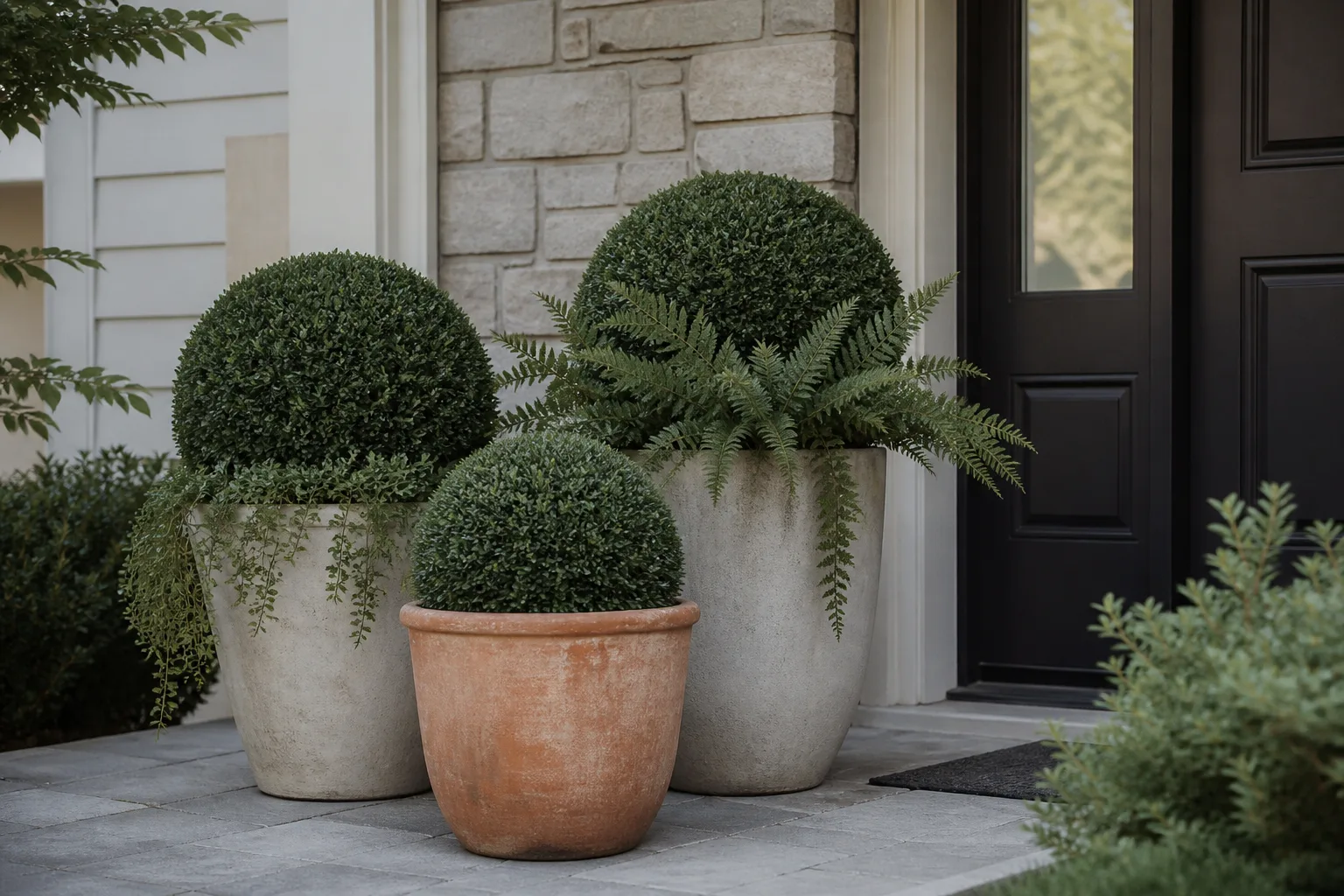
You can use faux plants outdoors, but “planting” them is not the same as putting a living shrub in the ground. Most failures happen because someone buries an indoor silk fern in a garden bed, buys the cheapest plastic topiary on the porch, or mixes fake foliage into a bed where real roots still need light and drainage. The question is not whether faux greenery is allowed—it is whether your spot, materials, and maintenance expectations match what plastic can actually do outside.
The Short Answer
Yes, you can use faux plants in your yard when they are rated for outdoor UV exposure, anchored in containers or on paved surfaces, and kept away from living plants that depend on that soil for water and light. Aaron Steil, consumer horticulture specialist with Iowa State University Extension, notes that most fake plants are not built for outdoor sun and can look terrible after only a few weeks of exposure. Outdoor-rated polyethylene (PE), polyblend, or PVC pieces in heavy pots are the practical approach—not sticking indoor decor into open beds.
No, you should not treat faux plants like permanent in-ground landscaping in mixed beds, under the drip line of trees you want to keep healthy, or anywhere poor drainage already stresses living plants. Faux foliage does not drink water, but it still blocks rain, casts year-round shade, and can shed plastic particles as it weathers. For those situations, living groundcovers, gravel, or a dedicated container zone usually works better.
What “Planting” Faux Plants Actually Means
Retailers say “plant” because the stems sit in soil or moss. Horticulturally, you are staging a prop, not establishing a root system. That distinction matters for drainage, wind, and how neighbors read your curb appeal.
A well-installed faux display mimics how a real container planting looks: weighted base, visible soil line, stems emerging at natural angles, and a pot scale that matches the architecture. A poorly installed one looks like a warehouse reject wedged into mulch—because it is.
Containers vs. In-Ground Beds
Containers are the default outdoor home for faux plants. Raised pots and planters sit on top of the soil profile instead of altering how water moves through a bed. Iowa State University Extension groups quality container selection around drainage, durability, weight, and insulation—four factors that matter even when nothing inside the pot is alive. A heavy ceramic or concrete planter with a drainage hole gives you stability without turning the bed into a bathtub.
In-ground “planting”—burying faux stems directly in garden soil—creates problems fast. The fake crown does not transpire water, so rain that would soak into roots instead runs off the plastic mass or pools around it. In clay soil, that can leave neighboring perennials sitting wet. In sandy soil, you get the opposite headache: dry islands where irrigation never reaches evenly. The Royal Horticultural Society emphasizes proper drainage holes and compost structure for containerized plantings; faux installs should follow the same logic even though the plant itself does not need moisture.
If you love the look of greenery emerging from soil, use a pot-in-pot method: set a fully planted faux arrangement in an buried nursery pot or liner you can lift out for cleaning and replacement. Never compress living roots around a permanent plastic trunk.
When Faux Plants Make Sense Outdoors
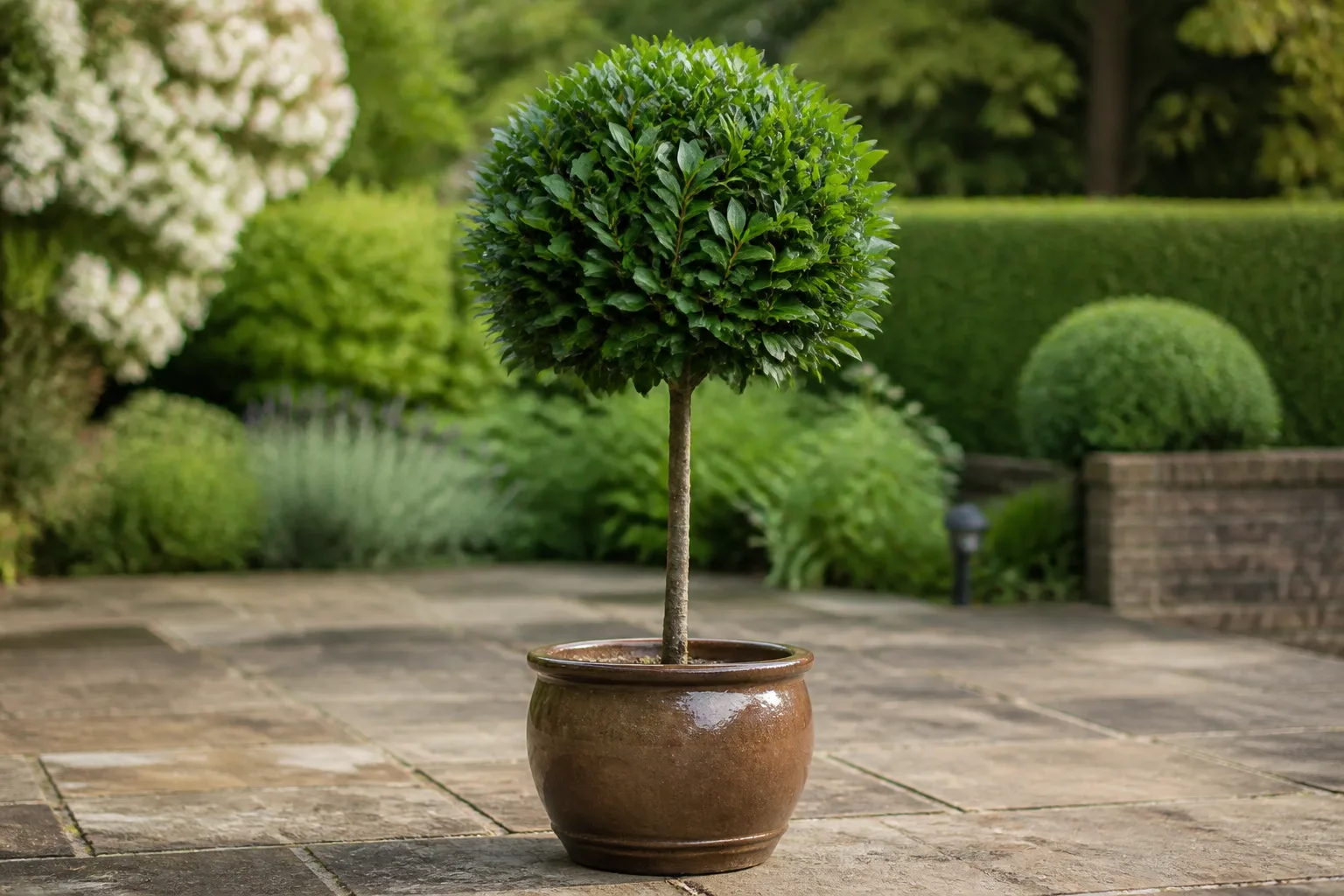
Faux plants are a design tool for places where living plants repeatedly fail despite reasonable effort—not a moral shortcut around gardening.
Shade, Pavement, and Hard-to-Water Spots
The strongest outdoor use cases share the same pattern: hardscape, deep shade, or no convenient water source.
Deep shade under eaves where even reliable shade annuals stall out can justify faux boxwood balls or ferns in pots. You are not fighting dry shade roots; you are filling a visual gap beside a door you rarely use.
Paved entries, side yards, and courtyards are ideal. A front porch with no hose, a rental with a landlord who discourages drip lines, or a vacation home you visit monthly are all situations where living containers die from neglect while faux pots stay green. Designer Liz Marie of Love Grows Wild documents using outdoor-rated artificial flowers on a front porch precisely because the space was hard to water and plants kept dying in full view—an honest example of matching the tool to the maintenance reality.
High-traffic commercial strips—restaurant patios, retail entries, staging for a home sale—also fit. Symmetrical faux topiary flanking a door reads “intentional” when the stems are scaled correctly and the pots are heavy.
Finicky living substitutes are another lane. English boxwood in humid regions, for example, battles leaf miners and blight; a UV-rated faux boxwood sphere in a pot can deliver the silhouette without the spray schedule.
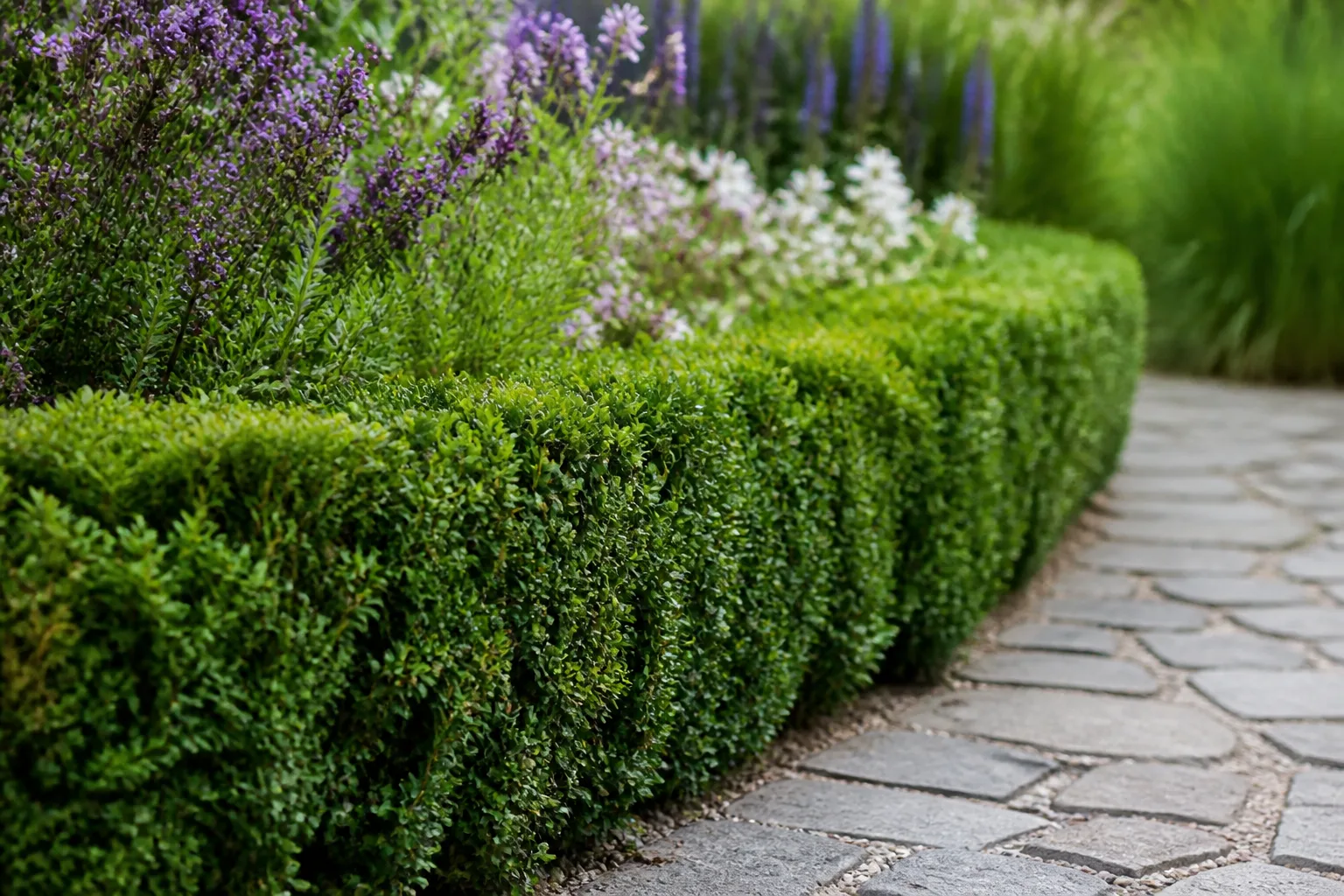
That is a style choice, not a horticultural upgrade.
Where faux plants do not earn their keep: open sunny borders you could plant with sedum or ornamental grass, pollinator beds, vegetable gardens, or any space you already enjoy watering. Living plants there will always look more alive up close—and often cost less over five years.
Quick placement test: Stand where guests or passersby will see the spot. If you are closer than eight feet for more than a few seconds a week—a porch rail, stoop, or window box—faux quality matters enormously because people will notice leaf texture. If the view is mostly from the street thirty feet away, larger simpler forms can work. Match product tier to viewing distance before you overspend on stems nobody will inspect.
Why Indoor Faux Plants Fail Outside
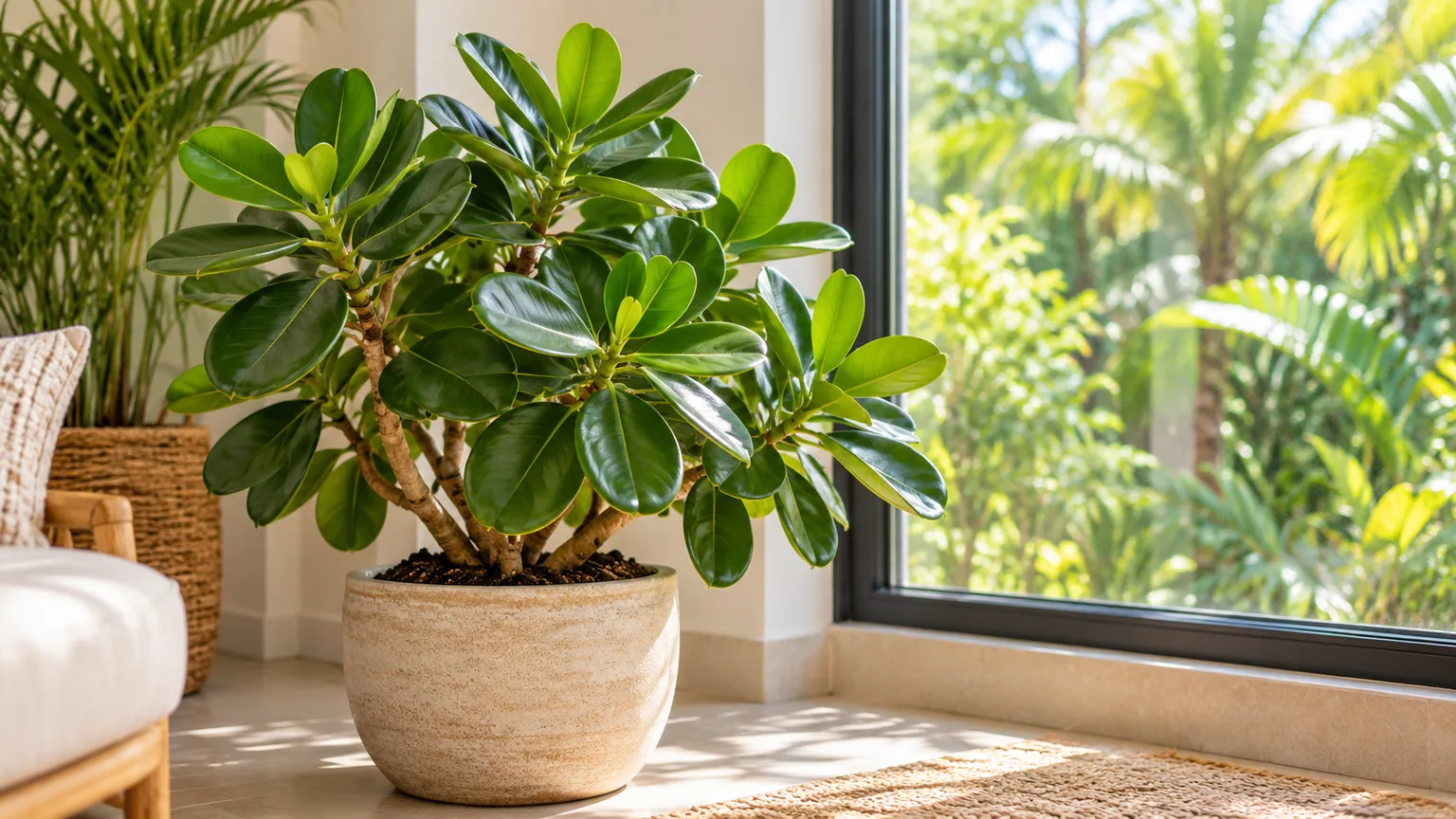
The faux ficus that looks convincing in your living room is almost certainly indoor-rated stock. Take it outside and three separate clocks start ticking: UV fade, storm damage, and plastic fatigue.
UV Fade and Material Breakdown
Steil’s warning is blunt: most fake plants fade quickly in sun and can look bad within weeks. Ultraviolet light breaks down dyes and brittle plastics long before you notice from the kitchen window. Love Grows Wild’s outdoor guide recommends looking explicitly for labels such as UV-resistant, UV-protected, weatherproof, outdoor-safe, or fade-resistant and favoring PE or polyblend construction over cheap fabric leaves meant for shelves.
Heat accelerates the same process. Dark plastic pots on south-facing pavers can cook stems at the base while the top still looks fine—until the glue joint fails in a wind gust. Even quality outdoor pieces eventually chalk and dull; budget for replacement every few seasons in harsh sun, not a one-time purchase.
Plastic also sheds microplastics as it abrades. The NOAA Marine Debris Program notes that plastic debris persists in the environment and breaks into smaller pieces that are difficult to remove—relevant when faux stems sit in open beds where rain washes particles into storm drains. That does not mean one porch pot ends the world, but it is a reason to keep faux material in contained, sweepable zones instead of loose soil you refresh annually.
How to Choose Outdoor-Safe Faux Plants
Shopping by photo is how porches end up with shiny plastic that reads fake from the sidewalk. Shop by material, label, scale, and movement.
Labels and Materials to Check
Start with the tag or product listing:
| Label or feature | Why it matters |
|---|---|
| UV-resistant / UV-protected | Slows color loss in direct sun |
| Weatherproof / outdoor-safe | Signals rain and temperature tolerance |
| PE (polyethylene) or polyblend leaves | More flexible and durable than thin fabric indoors |
| PVC trunks or stems | Common in topiary forms; check wall thickness |
| Integrated weighted base | Reduces tipping in wind |
Skip anything marketed only as “silk,” “desk decor,” or “indoor greenery” unless you plan to rotate it indoors each season. Gardening Know How reminds container gardeners that the vessel matters as much as what goes inside; for faux work, that means buying the pot and plant as a system, not a lightweight stem you will fight all year.
Scale and texture separate convincing installs from party-store props. Match leaf size to viewing distance: small leaves for porch rail boxes viewed up close, larger forms for driveway islands seen from the street. Matte finishes beat high-gloss plastic. Asymmetry beats perfect spheres—slight variation in stem angle sells the illusion.
Buy one sample piece before outfitting an entire foundation planting. Leave it in the target spot for two weeks of full sun and one rainstorm. If it chalks, twists, or bleaches, upgrade the material tier before you spend more.
How to Install Faux Plants So They Look Real
The install matters as much as the product. Designers who get faux plants past the “that’s fake” test anchor stems in real potting mix, use heavy containers, and hide factory stems under a soil or moss collar—the same tricks Love Grows Wild recommends for outdoor artificial flowers.
Anchoring, Weight, and Drainage
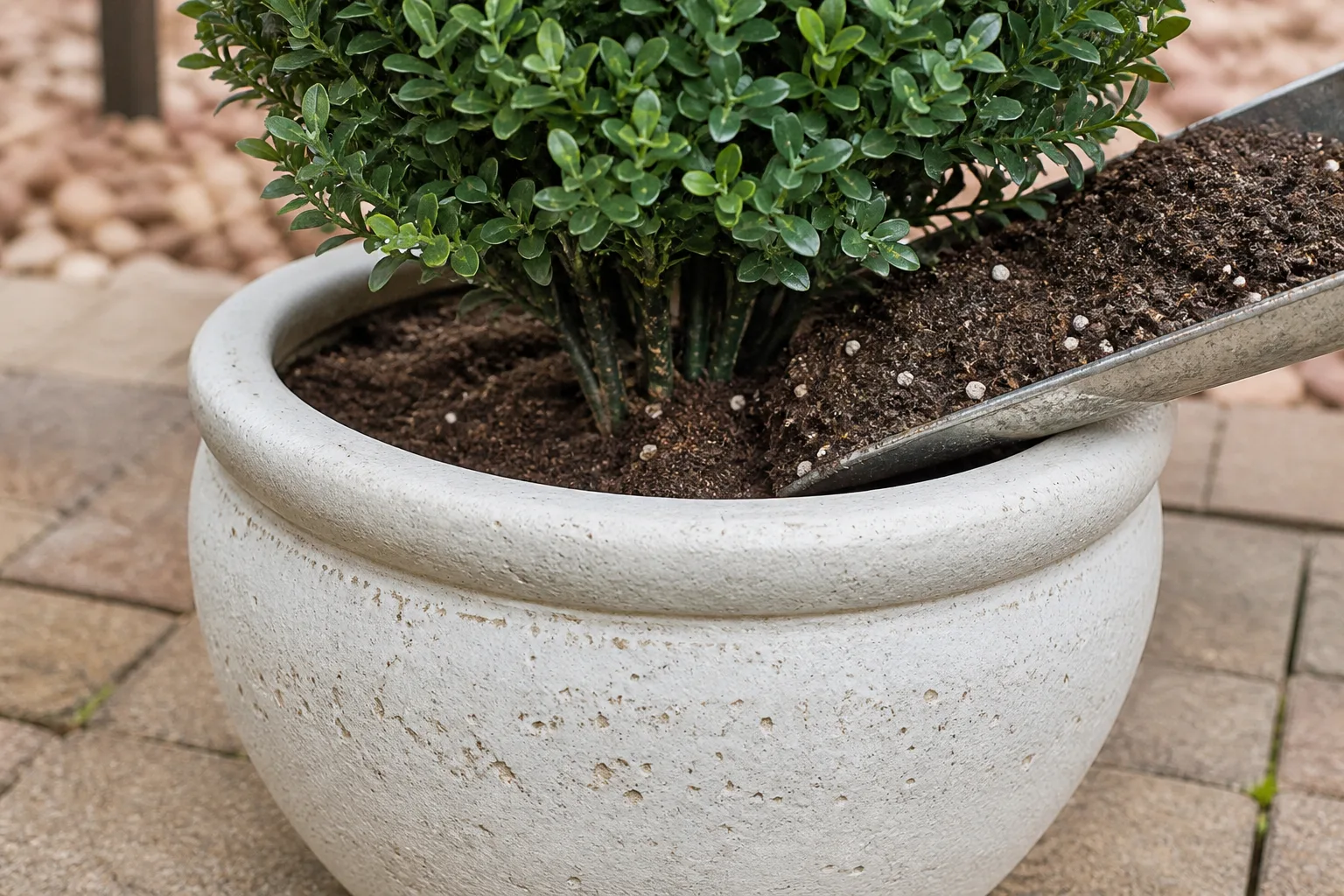
Step 1 — Choose a heavy, drainage-ready container. Concrete, thick ceramic, or a fiberglass planter filled partway with gravel outweighs a tall faux cedar in a plastic nursery pot. Drill drainage holes if water could collect and freeze.
Step 2 — Create a soil anchor. Fill the pot two-thirds with bagged potting mix or coarse sand. Seat the faux root ball or stem base deep enough that the factory “soil line” sits slightly below the rim. Top-dress with real potting soil, fine bark, or preserved moss so the transition looks grown-in, not glued.
Step 3 — Secure against wind. In open yards, add zip ties through hidden drainage holes, outdoor-rated silicone at the base, or a circle of landscape staples under the moss collar. Steil notes that wind and rain easily dislodge lightweight fake plants—treat stormy exposures like flagpole engineering, not bookshelf styling.
Step 4 — Style in layers. Mix heights and textures in separate pots rather than one overcrowded tub unless you are copying a formal topiary pair. Odd numbers (three pots on a stoop) look more natural than matched pairs with identical plastic sheen.
Step 5 — Maintain the illusion. Hose dust off monthly, fluff bent leaves after hail, and replace UV-damaged tips on the sunny side before guests arrive. Store non-frost-rated pieces in a dry garage with silica packs if your winters freeze pots solid.
Cleaning calendar: In spring, rinse pollen and road grit with a gentle hose spray and let pieces dry fully before sun hits them again—trapped moisture at the stem base encourages mildew on real moss collars. In summer, a soft brush removes spider webs without matting leaves. In fall, check zip ties and silicone joints before the first hard storm. In winter, either bring delicate stems indoors or wrap pots in burlap so freeze-thaw cycles do not crack ceramic bases while plastic foliage stays rigid.
On pavers, set saucers or pot feet so staining and mildew do not outline every circle. In gravel courtyards, nest pots into the stone so bases do not wobble.
When You Should Not Use Faux Plants in the Landscape
There are outdoor spots where faux plants create new problems instead of solving old ones.
Avoid them as permanent residents in rain gardens, bioswales, and low spots that already pond after storms. Plastic does not absorb water; it redirects flow in ways you cannot see until a neighbor’s bed floods.
Skip them under young trees and shrubs you are trying to establish. Living wood needs even moisture at the root flare, not a plastic skirt that sheds rain to one side.
Do not use faux as a weed barrier in open soil. Weeds will grow around and through it, and you will still pull real weeds while staring at faded plastic.
HOAs and historic districts sometimes regulate artificial landscaping explicitly. Check covenants before investing in a row of faux arborvitae along a fence line.
Mixing Faux and Living Plants in the Same Bed
This is where vague advice to simply let faux and living plants “coexist” needs sharper guardrails. Faux and living plants can share a yard—not the same soil volume.
Faux stems do not uptake water, so irrigation aimed at a mixed bed will overwater living roots while you think you are being thorough. Worse, evergreen faux foliage casts year-round shade on the ground. Deciduous living shrubs drop leaves and let winter light through; plastic boxwood does not. That difference can weaken low perennials and change snow melt patterns along a foundation.
The safer pattern is zoning: living plants in ground beds and borders; faux pieces on stone, decking, or in discrete containers on the edge of the bed. If you must place a faux tree near live material, keep it on a paver island with its own drip line turned off, and prune living companions so they are not competing under a plastic canopy.
Artificial turf between pavers is a separate category—useful in blazing courtyards where grass cannot survive, but it shares plastic tradeoffs and heat buildup concerns. Treat turf as hardscape, not as a faux shrub substitute.
Environmental and Cost Tradeoffs
Steil raises two underappreciated points: faux plants end up in the landfill, where plastic persists, and they are often more expensive upfront than living alternatives that propagate or return each year.
Environmentally, the honest math is mixed. Faux pots eliminate pesticides, fertilizer runoff, and daily irrigation on that spot. They also introduce durable plastic that can shed particles and cannot be composted at end of life. If sustainability is your primary goal, start with living drought-tolerant natives in self-watering pots before defaulting to PE leaves. If accessibility, travel, or a truly hostile microclimate is the driver, outdoor-rated faux in a long-lived heavy pot is a defensible compromise—especially on impervious surfaces where living roots struggle anyway.
Financially, compare ten-year cost, not checkout price. A $40 annual you water for $3 a summer can beat a $120 topiary you replace twice after fade. Conversely, a $15 faux fern that lasts one Arizona summer is not a bargain. Track replacement cycles the way you would track repainting a fence.
Faux Topiary vs. Artificial Turf
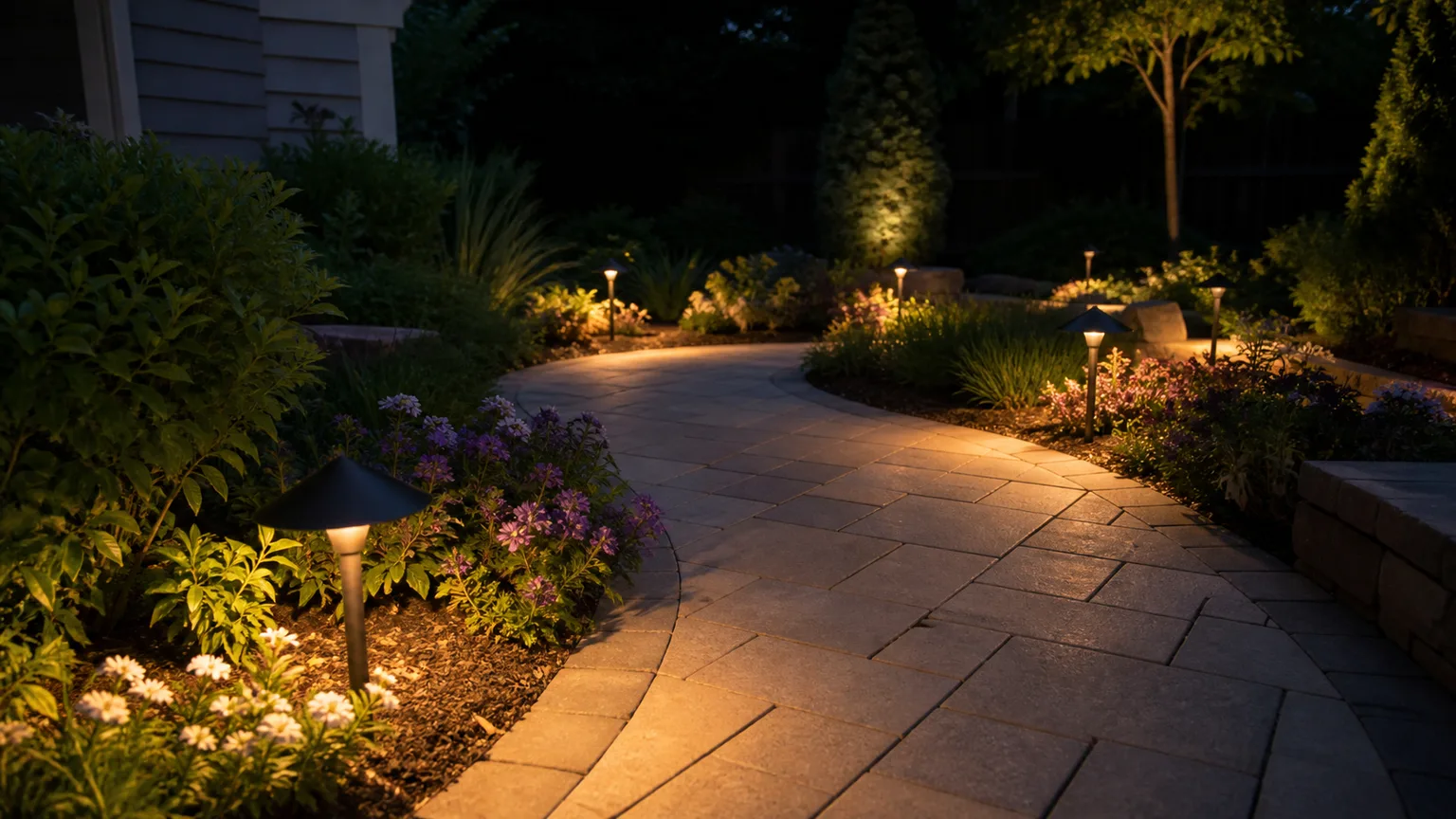
Homeowners often bundle these because both are plastic and green. They solve different problems.
Faux topiary, stems, and floral picks answer a vertical decor question: symmetry at a door, greenery in a dark corner, color on a balcony. They are portable, replaceable, and mostly above grade.
Artificial turf answers a ground-plane question: green between pavers, a small dog yard, or a roof deck where soil weight is impossible. Turf demands sub-base prep, drainage, and regular rinsing to manage heat and odor. Designers who combine both—turf in a paved courtyard plus potted faux cypress at the corners—are treating each material by its job, not carpeting a garden bed with plastic grass and fake shrubs until every surface matches.
Neither replaces ecosystem services living plants provide: habitat, carbon uptake, and soil biology. Choose them for human-use zones where those services are already limited by pavement.
A Five-Question Decision Checklist
Before you buy, run the spot through five questions:
- Sun and exposure: Will this sit in south-facing afternoon sun more than four hours a day? If yes, budget for UV-rated stock and faster replacement—or switch to a living succulent that can take the heat.
- Water access: Can you reach it with a hose or watering can without heroic effort? If yes, try living plants in self-watering pots first.
- Surface type: Is it pavement, decking, or open soil? Pavement favors faux; open soil favors living plants unless the soil is already a lost cause.
- Wind exposure: Is this an open corner that funnels gusts? Lightweight faux needs anchoring hardware; otherwise choose heavy ceramics or skip faux entirely.
- Neighbor and HOA context: Will artificial greenery violate a covenant or look out of place on your block? A quick covenant search beats a fine.
If you answer “problem” on three or more, solve the underlying site issue—shade, drainage, irrigation—before plastic leaves mask it.
Conclusion
You can plant faux plants in your yard in the practical sense—anchored in outdoor-rated containers on paved or marginal spots where living plants repeatedly fail. You should not plant them in the ecological sense—buried among roots that still need light, air, and predictable drainage.
Buy UV-labeled PE or polyblend stock, install it in heavy pots with real soil anchoring, zone it away from mixed beds, and plan on cleaning, securing, and eventually replacing faded pieces. When the site can support life, choose living plants or permeable groundcovers first. When the site is shade, stone, or impossible to water, faux greenery can look sharp and save you from another summer of crispy porch pots—as long as you treat it like outdoor decor with a maintenance calendar, not like a shrub that grows itself.