How to Overwinter Annual Plants by Moving Them Indoors
Overwinter annual plants indoors by choosing tender perennials, moving them before frost, inspecting for pests, and adjusting care to winter light and growth.
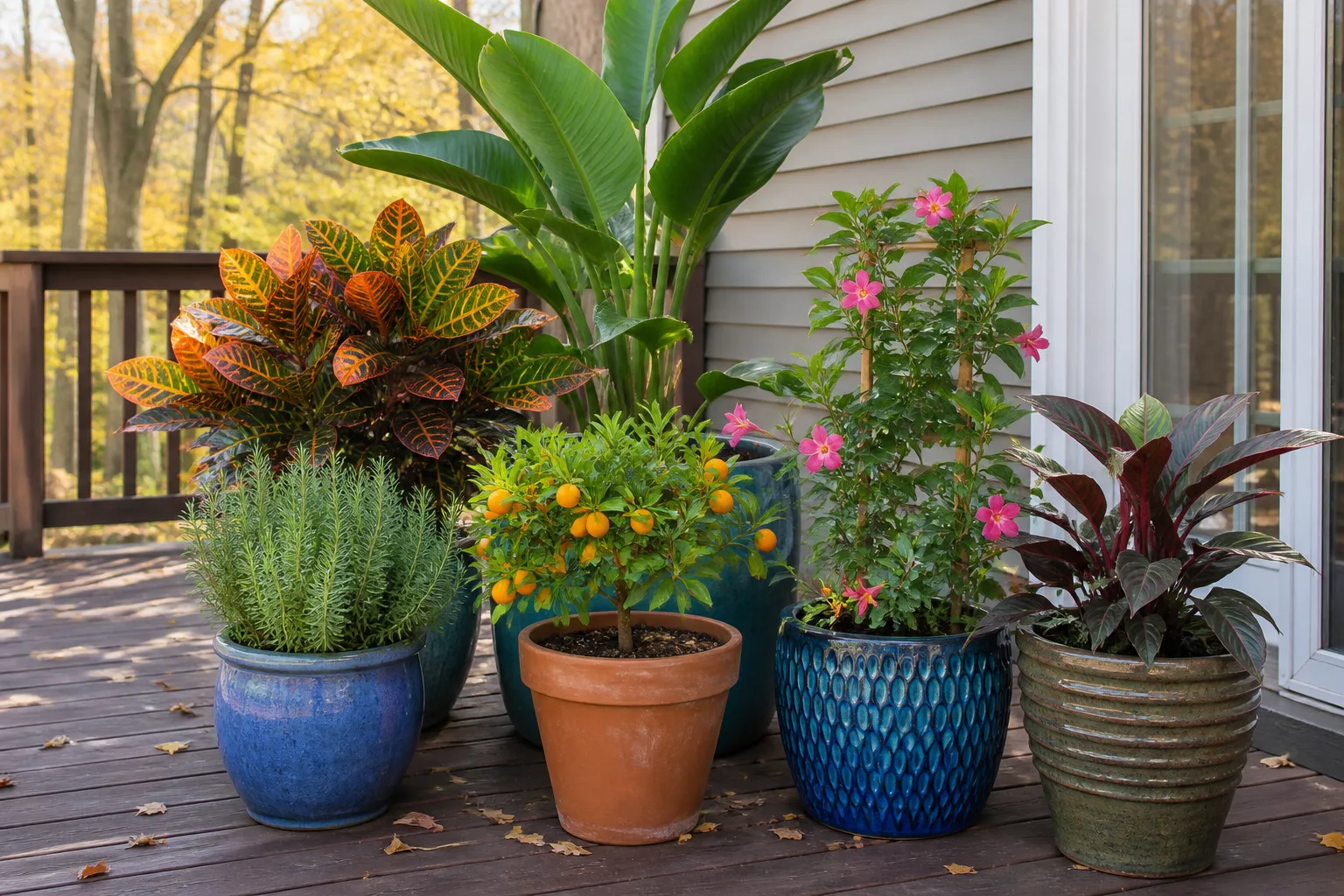
You can keep some plants sold as annuals through winter, but moving every faded flower into the living room will not save it. The plants most likely to survive as intact indoor plants are tender perennials—species that live for years in warm climates but are killed by frost in colder ones. A true annual follows a different life cycle and usually will not return as the same adult plant after it flowers and sets seed.
That distinction changes the plan. A compact potted geranium or coleus may be worth bringing in as a whole plant. A bed of zinnias is usually better treated as a seed-saving project, while a tuberous begonia may need a dormant storage method rather than active growth indoors. First identify the plant and decide what you want to preserve; then match its needs to your winter space.
Start by Asking What “Annual” Means
In gardening, annual often describes how a plant behaves in a particular climate, not its full botanical lifespan. A warm-climate perennial can be grown as a seasonal flower in a cold region because the first hard freeze ends its outdoor growth. The garden label does not tell you whether the plant can keep growing indoors, survive dormant, or only return from seed.
The difference between annuals, perennials, and biennials is explained in our plant life-cycle guide. It matters here because “overwintering an annual” often means protecting a tender perennial from a winter it cannot tolerate outside. Harvest to Table’s overview of overwintering annuals also shows how climate changes what gardeners call an annual, though the best approach still depends on the species and your actual indoor conditions.
True Annuals and Tender Perennials Need Different Plans
A true annual grows, flowers, sets seed, and dies within one growing season. Bringing a mature zinnia or marigold inside after it has finished flowering does not reverse that life cycle. If you want it next year, collect viable seed before the flower heads become weathered, or investigate whether that particular plant can be propagated from a cutting. Either way, you are saving its next generation or a clone—not keeping the same mature plant alive.
Tender perennials such as geraniums (the bedding plant Pelargonium), coleus, some begonias, lantana, and many impatiens can be kept growing indoors if their light, warmth, and watering needs can be met. Gardening Know How distinguishes plants that can continue as houseplants from those better kept dormant. Do not assume every begonia or geranium follows the same plan: tuberous begonias, for example, may be managed differently from wax begonias, and hardy cranesbill geraniums are not the tender Pelargonium sold as bedding plants.
Which Annuals Are Practical Indoor Candidates?
Choose plants that are healthy, compact enough for your room, and suited to the light you can provide. A large plant with pests, a weak root system, or a space-hungry habit may be a poor bargain even if the species can survive indoors. University of Wisconsin–Madison Extension’s geranium guidance describes keeping a healthy tender geranium in a pot as one option, while also emphasizing that a plant’s condition affects the chance of success.
| Plant commonly sold as an annual | Whole-plant indoor outlook | Important limitation |
|---|---|---|
| Tender geranium (Pelargonium) | Often a practical candidate if you have a bright window or grow light | Do not confuse it with hardy Geranium; mature plants need room |
| Coleus | Can remain a foliage plant or provide cuttings | Low light can produce weak, stretched growth |
| Impatiens | Healthy plants may continue slowly indoors | Inspect closely for pests and disease before bringing them near other plants |
| Wax begonia | Often manageable in a warm, bright indoor spot | Tuberous begonias may need a separate dormant plan |
| Lantana, fuchsia, or tropical hibiscus | Possible when you can meet their light and space needs | Large plants can be difficult to fit and maintain indoors |
| Zinnia, marigold, cosmos, or many petunias | Usually poor choices to save as the same mature plant | Save seed or check a species-specific propagation method instead |
This is a starting screen, not a guarantee. Cultivar, plant age, pests, light, and how long it has been flowering all affect the outcome. If the plant would need a south-facing window, a sizable grow light, or more floor space than you have, decide that before you dig it up. For species-specific instructions, see our guides to overwintering impatiens and overwintering geraniums.
Choose a Whole Plant, Cutting, or Seed
Keeping the entire plant makes sense when it is already in a container, has a healthy root system, and fits the space you can light. This is often the simplest option for a favorite, established tender perennial. You can also take the container outside again in spring without the extra step of potting up rooted cuttings.
Take cuttings instead when the parent is too large, crowded, or difficult to lift, or when you want several small plants for spring. A cutting occupies less space and can preserve a favorite cultivar, but it needs time to root and still requires good winter light. Saving seed is often the most sensible plan for true annuals, although seeds from hybrids may not produce plants identical to the parent. If you are unsure, keep a small healthy parent and a backup cutting rather than betting on one large specimen.
For a plant already in the ground, do not wait until frost has damaged its foliage before deciding. Digging and potting a plant is more stressful than moving a nursery container, so it needs a healthy root ball and time to settle before the cold season. If the plant is old, diseased, or already declining, saving seed or buying a fresh plant in spring may be a better use of space.
Set a Realistic Goal for the Winter
The goal of active indoor overwintering is usually survival and reasonable growth, not a flower-filled display every month. Outdoor plants receive stronger light and more air movement than most rooms provide. Indoors, a tender perennial may pause, lose some older leaves, or stop flowering while it adjusts. A plant that stays alive with firm stems and healthy new foliage can still be a success even if it looks less lush in February.
Compare the cost of keeping it with the value of the plant. A sentimental cultivar, a large established geranium, or a plant that is expensive or difficult to replace may justify a grow light and periodic checks. A common annual that is easy to raise from seed may not. There is no need to save every pot simply because it is alive; the indoor garden should fit your available windows, floor space, and ability to manage pests.
If the only available location is dim and cold, consider taking cuttings and placing them under a suitable light, or save seed instead. A realistic plan can also include composting the original plant after collecting seed. That is not a failure; it is choosing a method that matches the plant’s life cycle and your home.
Time the Move Before Cold Damages the Plant
Move tender plants in while they are still healthy, before frost or a sudden cold snap damages leaves and stems. There is no single safe date for every species or region. Check the plant’s cold tolerance, local nighttime forecast, and the conditions on your patio or near the house. An exposed pot can cool faster than the ground, and a sheltered wall can stay warmer than an open balcony, but neither replaces a plant-specific limit.
Some extension and gardening references use the approach of cool nights as a cue to bring tropical or tender plants inside. Treat such thresholds as prompts to check the species, not a universal rule. If you wait until the first frost warning, you may have little time to inspect, clean, repot, and acclimate a plant. Wisconsin Extension’s overview of bringing the garden inside recommends assessing the indoor space and matching light, temperature, and humidity needs before the move.
Start by bringing in the plants with the least cold tolerance or the highest replacement value. This staged approach spreads out the work and lets you clean each plant carefully. Keep a forecast alert on during the transition: if a colder night arrives earlier than expected, move vulnerable plants to shelter first and finish the cleaning routine as soon as conditions allow.
Prepare the Indoor Spot Before Moving a Plant
Measure the space and observe the light before you move the pot. A room that seems bright to your eyes can still be dim for a sun-loving bedding plant, especially several feet away from the window. UF/IFAS Extension’s guide to houseplant light explains that people adjust quickly to different brightness levels, so “bright” by itself is not a reliable measure. Window direction, nearby trees, screens, glass, and winter day length all change how much usable light reaches a plant.
Set a candidate near the brightest suitable window, then check whether a grow light is needed. Consider the plant’s full height and width, not just the space occupied by its pot today. Keep foliage away from cold glass and from heating or air-conditioning vents that create sharp temperature changes. Make sure you can water and inspect the plant without spilling soil across a walkway or leaving a saucer full of drainage water.
Check the room temperature and airflow as well. Many tender plants tolerate an ordinary cool room better than a hot, dry spot over a radiator, but the correct range depends on species. A grow light can help with a light shortage; it cannot compensate for an unsuitable cold room, root problems, or a plant that has completed its life cycle.
Inspect, Clean, and Quarantine Before the Move
Outdoor plants can carry aphids, whiteflies, scale, mealybugs, spider mites, slugs, or weed seedlings into a room. Pests that were difficult to notice in the garden can multiply when predators and weather are absent. Before moving a plant beside your houseplants, inspect both sides of the leaves, the joints where leaves meet stems, the soil surface, the pot rim, and the drainage holes. Remove dead leaves and debris, rinse dust and visible insects from the foliage, and wash the outside of the pot.
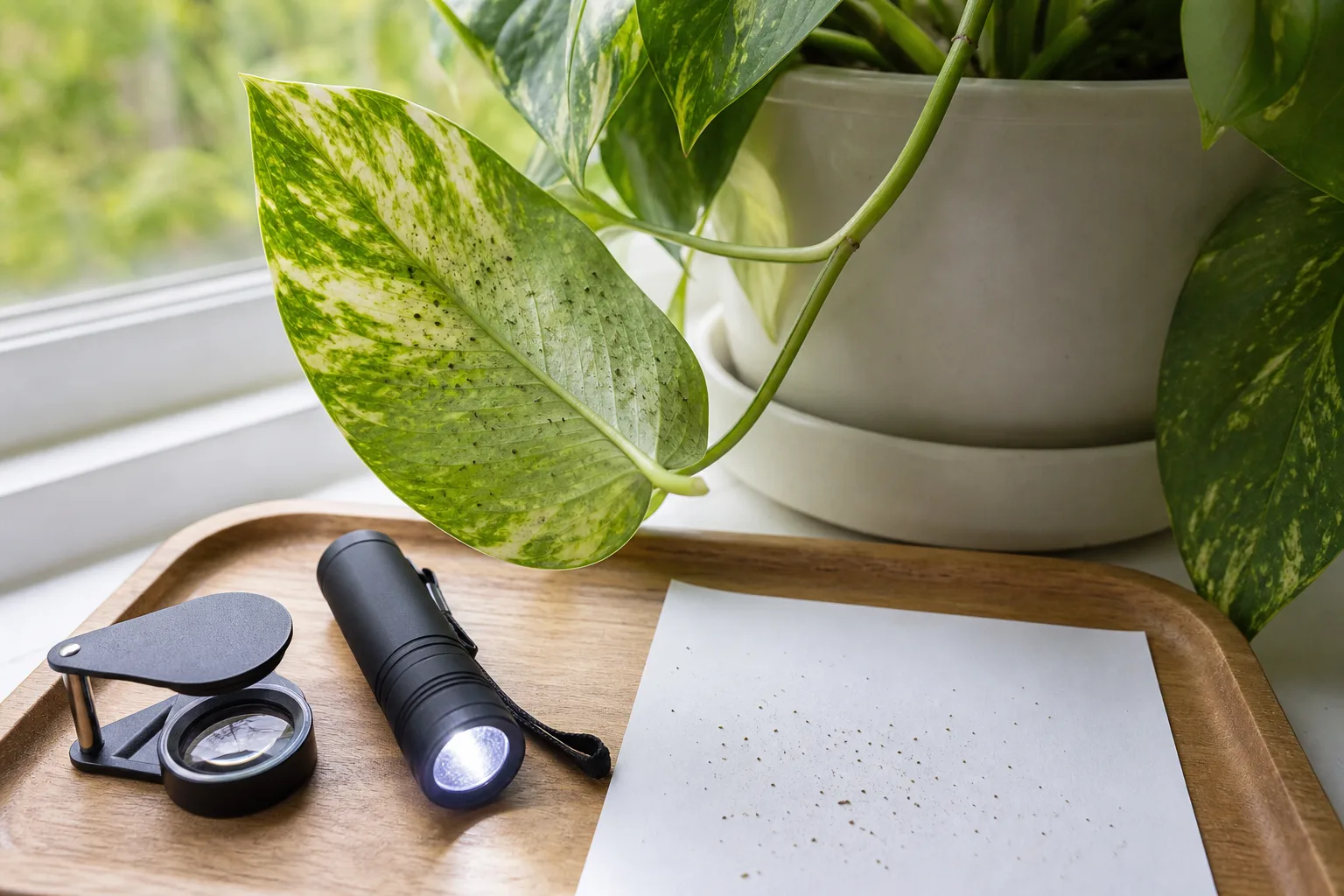
Keep newly moved plants separate from your established indoor collection for a short observation period. A spare bright room or a separate corner is better than placing a questionable plant in the middle of a shelf. Check it every few days for moving insects, sticky residue, webbing, stippling, or new spots. If you find a pest, identify it before selecting a treatment and follow the product label; do not apply an outdoor-only product inside the home.
Do not automatically soak every plant in detergent or apply oil “just in case.” Different leaves have different sensitivities, and a blanket treatment can damage foliage. A plain rinse, removal of dead material, and isolation are sensible first steps. For established infestations, follow trusted, species-appropriate pest guidance rather than turning a preventative cleaning routine into a chemical treatment.
Pot Garden-Grown Plants With Less Root Stress
A plant growing in a garden bed must be lifted into a container before it can move indoors. Water the bed the day before if the soil is dry, then dig widely enough to keep as much of the fine root system as practical. Loosen the root ball carefully, discard weeds and visibly damaged material, and use a clean pot with drainage holes. Fill around the roots with a suitable commercial potting mix rather than packing heavy garden soil into the container; garden soil can drain poorly in a pot and may bring unwanted organisms with it.
Choose a pot that holds the root ball without leaving a small plant surrounded by a large volume of wet mix. Set the crown at about its previous soil level, firm the mix gently, and water enough to settle it. Do not bury a soft stem deeply to compensate for a wobbly root ball. If the plant needs pruning to fit, remove damaged or crossing growth and only trim more if that species tolerates it; hard cutting back can remove the leaves needed to recover from root disturbance.
Already-potted plants may not need repotting at all. Check the drainage and root condition before disturbing them. The wider fall houseplant preparation checklist covers the general decision to repot before winter. For geraniums, Wisconsin Extension notes that in-ground plants should be dug before hard freeze and potted at an appropriate size, while container-grown plants can be moved directly after inspection.
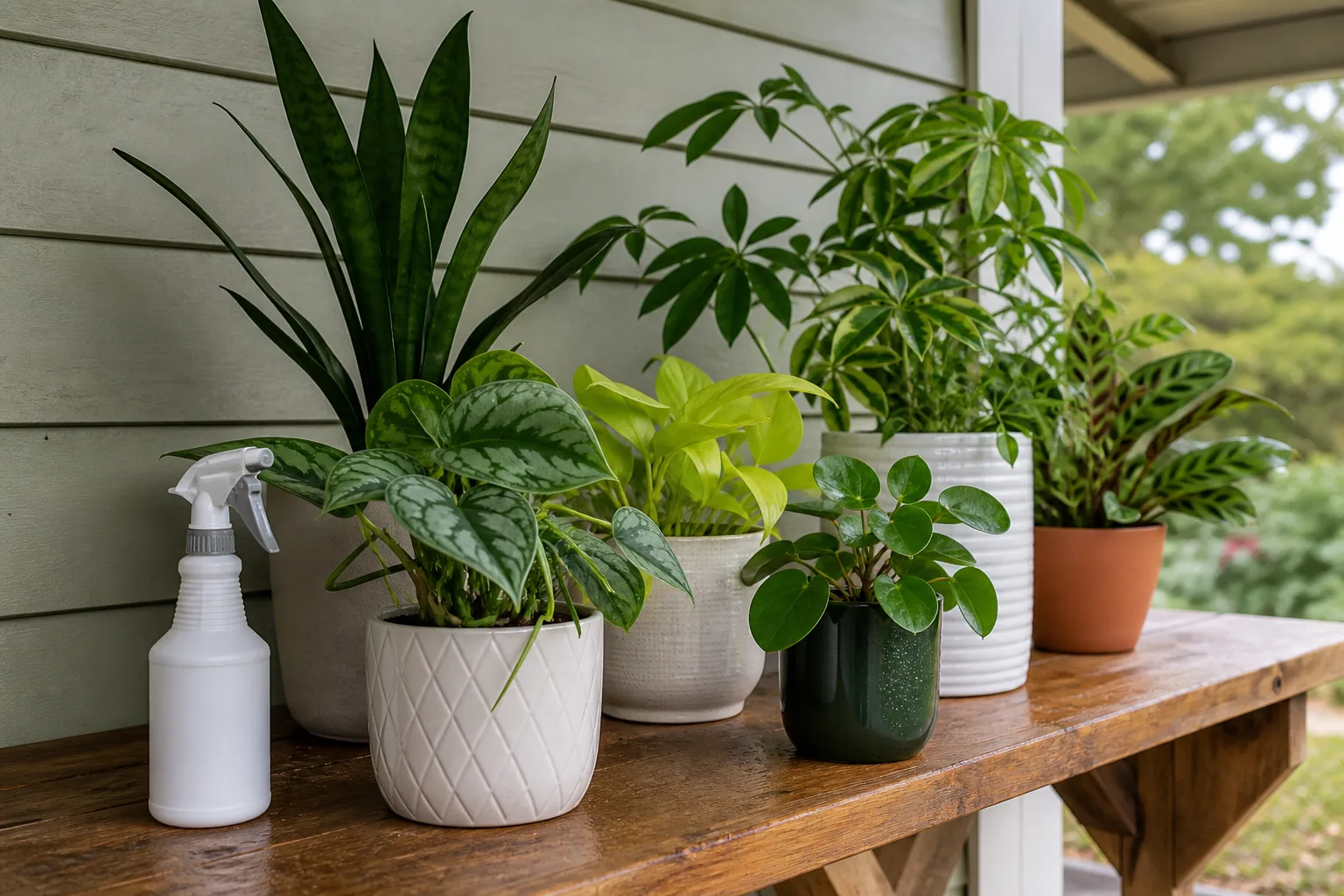
Shift From Outdoor Sun to Indoor Light Gradually
Outdoor sun is much stronger than most indoor window light, so a plant can lose leaves even when it is not cold. Do not use an abrupt pruning cut as a substitute for acclimation. If weather allows, begin by placing the plant in a sheltered, bright-shade location for part of the day, then extend its indoor time over several days. As the indoor location becomes permanent, keep it in the brightest appropriate spot and watch the new leaves for stretching or reduced size.
There is a practical tradeoff: delaying the move to acclimate slowly is not worth exposing a frost-sensitive plant to damaging cold. If the forecast forces an immediate move, prioritize warmth and pest screening, then manage the lower indoor light through a suitable grow light or a naturally bright window. Some older leaves may yellow during the adjustment; wait to see whether the crown produces healthy growth before repeatedly cutting or fertilizing.
When a plant goes back outside in spring, it needs the reverse adjustment. The detailed section below gives a gradual method. The key is to treat each move as a change in light, wind, and temperature—not simply a change of address.
Set Winter Light, Temperature, and Airflow
Use the brightest suitable window you have and rotate the pot when the crown consistently leans toward one side. A sun-loving plant may need a grow light through short winter days. Choose a fixture that illuminates the whole canopy, follow its stated distance and duration, and use a timer for a consistent schedule. Do not assume a standard room bulb provides the same usable light as a horticultural fixture. UF/IFAS notes that some plants can be grown entirely under artificial light when the source is appropriate, but a lamp’s placement and coverage matter.
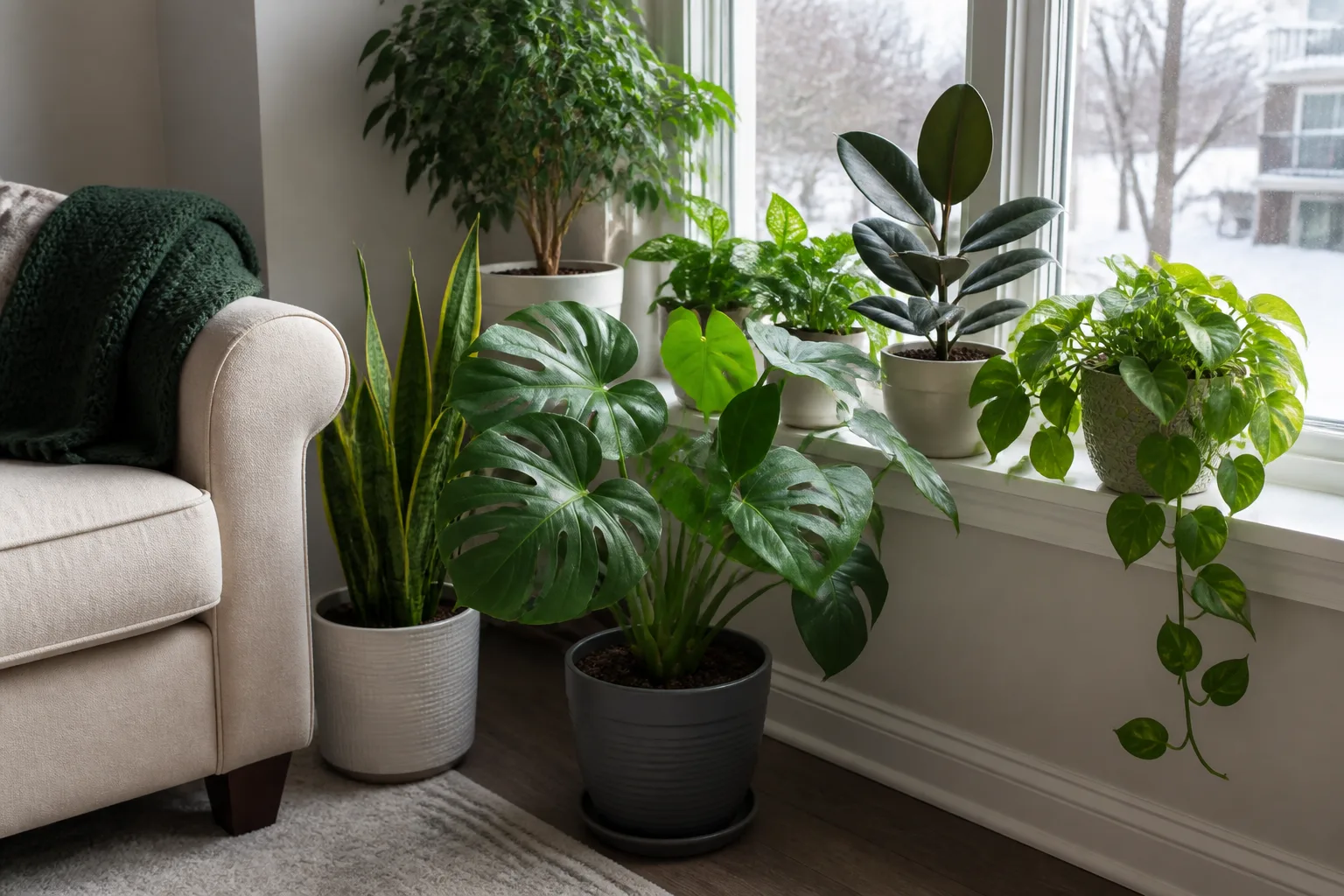
Keep plants away from icy panes, frequently opened doors, and hot vents. Sudden drafts or heat can stress leaves and dry the mix unevenly. Leave a little space between plants so air can move, and avoid enclosing foliage in plastic for long periods. A humidifier may help a plant that needs higher humidity if the room is very dry, but improving light and airflow usually matters more than misting leaves once or twice a day.
Expect some seasonal slowdown. A warm room does not create a summer growing season when winter light is weak. If new stems become long and pale, the plant is reaching for light; move it closer to a brighter window or add a grow light before increasing fertilizer. If you cannot supply adequate light for a particular flowering plant, consider a cutting or seed plan next time instead of asking it to bloom in poor conditions.
Water by Checking the Mix and New Growth
Do not give every overwintering plant the same weekly watering. Water use changes as temperatures, light, pot size, and leaf area change. Check the mix with a finger near the surface and lift the pot to learn its weight after watering and as it dries. Then water according to that species’ needs when the root zone begins to dry, and let excess water drain away. A plant that keeps growing may use more than a plant that has slowed down or shed leaves.
Use the plant’s response as additional evidence. Limp foliage with a dry, light root ball may mean it needs water. Drooping while the mix remains wet can signal poor drainage or root stress, so adding more water may make the problem worse. Avoid leaving the pot in standing water and do not keep the soil constantly saturated to compensate for dry indoor air.
Check plants more often during the first few weeks after the move, then adjust the interval based on what the pot actually does. A smaller container beside a warm window may dry quickly; a large container in a cool room can remain damp much longer. These are observations to guide your routine, not a fixed watering calendar.
Feed Lightly, Then Pause When Growth Slows
Fertilizer supports new growth; it does not replace sunlight or correct transplant shock. If the plant is still producing healthy leaves in bright conditions, follow a complete fertilizer’s label at a conservative container rate. If growth slows in winter, reduce or pause feeding rather than applying summer doses on the calendar. Excess fertilizer can build up in a pot when the plant is not using nutrients quickly.
Resume a more regular feeding routine only when days lengthen and the plant is showing active growth. If you just lifted and repotted it, give the roots time to settle before adding fertilizer, especially if the potting mix already contains nutrients. Yellow leaves alone are not proof of a deficiency. Check light, temperature, soil moisture, and pest activity first.
Flowering may also slow or stop. That does not automatically mean the plant needs more food. Most overwintering projects work best when you focus on keeping a healthy framework of leaves and stems, then let the plant resume stronger growth outdoors or under better spring light.
Troubleshoot Leaf Drop, Stretching, and Pests
Some leaf loss after a move is common, but the pattern helps you decide what to do. A few older leaves yellowing while the stem remains firm and new growth appears can be an adjustment. Sudden widespread drop calls for a check of temperature, light, watering, and root condition. A plant placed beside a cold window may suffer even if the rest of the room feels comfortable; a plant moved from full sun to a dim interior may shed leaves while it adapts.
Long, weak stems and widely spaced leaves point toward insufficient light. Move the plant closer to a bright window, add an appropriate grow light, and pinch only if the species and timing make that safe. Yellowing with wet soil, a sour smell, or soft roots suggests drainage or root trouble, not thirst. Brown edges can reflect several issues, including dry air, salt buildup, or watering stress, so change one condition at a time and observe the next growth.
Inspect for pests whenever leaves become stippled, sticky, curled, or covered in fine webbing. Isolate a plant with visible insects. If it is severely infested or diseased, do not expose the rest of your collection to save a plant that can be replaced. The value of overwintering includes protecting the plants already in your home, not only rescuing one outdoor flower.
Treat Dormant Roots as a Different Method
Some tender plants are better stored as dormant roots, tubers, or bare-root specimens than kept actively growing beside a window. Tuberous begonias and dahlias are familiar examples, but each species has different storage requirements. Dormancy is not simply “water less and put the pot in a dark closet”: the right temperature, moisture, and storage medium depend on the plant. Gardening Know How’s dormancy guide outlines why some plants rest while others can continue as houseplants.
This article focuses on moving whole plants indoors to keep them growing. If the plant has a tuber, bulb, rhizome, or a known dormant season, look up that plant’s specific storage method rather than applying the active houseplant routine. A plant that is naturally dormant can rot if kept warm and wet, while a tropical plant that is kept too cold and dark may decline. The correct winter home follows its biology.
Return Overwintered Plants Outdoors in Stages
Wait until frost danger has passed and the plant’s own temperature needs are met before leaving it outside permanently. Move it first to a sheltered, shaded spot for short visits, then lengthen the time outdoors over about one to two weeks. Gradually introduce more direct sun and wind. Watch the leaves for bleaching, crisp patches, or wilt, and return the plant to shelter if conditions are harsh.
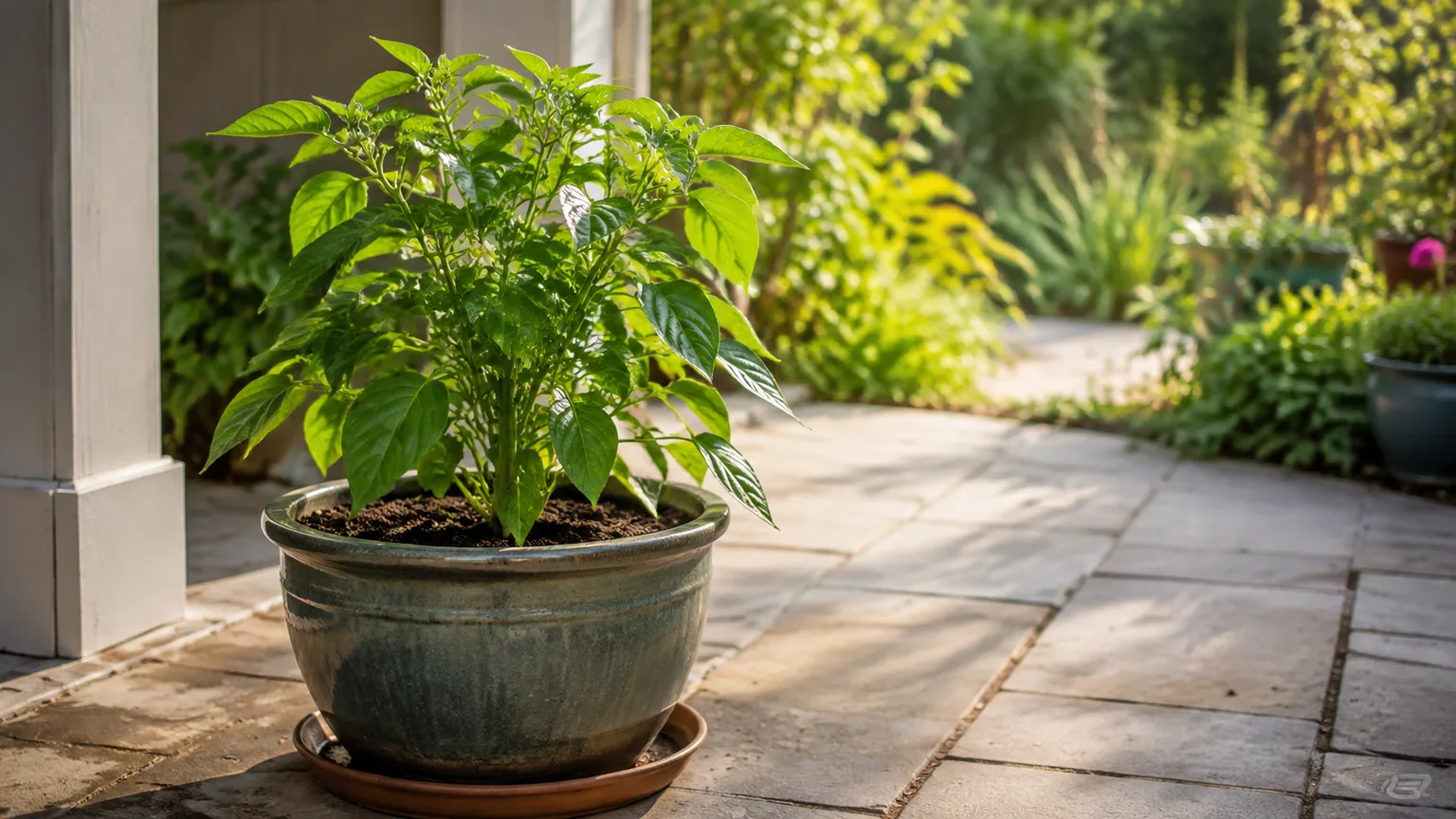
An indoor plant is not automatically ready for a full day in spring sun. Window glass filtered its previous light, while outdoor wind and temperature swings add stress. Acclimate even when the calendar says it is warm, and use the local forecast rather than assuming that the last frost date predicts every overnight low. If the plant was cut back or repotted during winter, wait for active growth before planting it in a garden bed.
Once it is established outside, check soil moisture more often because sun and moving air can dry a pot quickly. If you are planting it in the ground, select a site that suits the species and water it carefully through establishment. An overwintered plant may flower sooner than a new seedling, but its size and performance still depend on health and growing conditions.
Follow a Fall-to-Spring Check-In Schedule
Use a short record instead of relying on memory. In early fall, list candidate plants, identify each species, note whether it is a true annual or tender perennial, and decide which ones deserve indoor space. Check the cold forecast and make sure the destination has enough light and room. A small label with the plant name and move date helps you interpret changes later.
Before the move, remove spent material, inspect both leaf surfaces and stems, clean the pot, and separate any questionable plant. Over the first few weeks indoors, check the plant every few days for pests, moisture, leaf drop, and new growth. After that, a weekly inspection is often enough for a stable plant. In winter, water and feed according to its growth rather than according to summer habits.
As days lengthen, look for active growth and prepare the spring transition. Gradually increase outdoor time after cold risk has passed. Keep the plant in shelter during abrupt cold, strong wind, or intense first sun. If it fails despite appropriate care, record what limited it—light, temperature, disease, or lack of space—and adjust your candidate list next year.
Conclusion
Moving annual plants indoors works best when you first confirm that the plant can live beyond one season as an intact specimen. Tender perennials such as geraniums, coleus, and some begonias may be worth keeping, while true annuals are often better saved as seed or cuttings. Move healthy plants before cold damage, inspect them carefully, give them the brightest suitable space, and let winter growth—not a fixed schedule—guide watering and feeding. A realistic candidate and a safe spring transition give you the best chance of enjoying that plant again.