How to Grow and Care for Blood Flower (Asclepias): Tips
Grow tropical milkweed with practical light, soil, water, pruning, seed and aphid guidance—plus regional cautions for monarchs, children, cats and dogs.
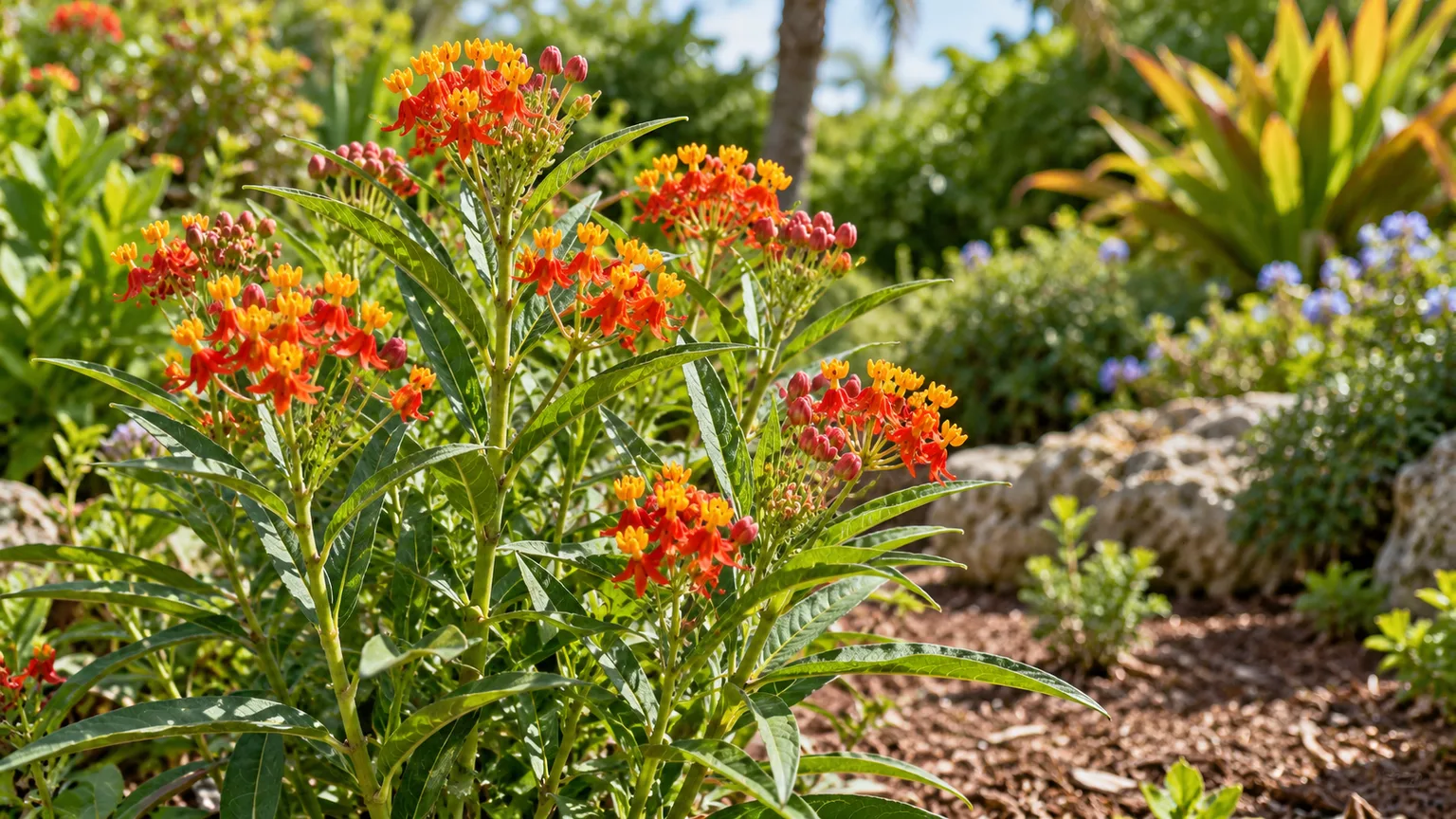
Blood flower (Asclepias curassavica), also called tropical milkweed or scarlet milkweed, is a tender, fast-growing perennial with narrow leaves and vivid red-orange flowers crowned in yellow. It is usually grown as a summer annual where frost kills it, but can remain evergreen in warm climates. Give it sun, a well-drained bed or pot, and steady moisture while it establishes; then let the soil guide watering rather than following a rigid calendar. NC State Extension describes the plant as a tender perennial often grown as an annual, reaching about 2 to 3 feet tall and flowering from spring into fall.
Before you buy one, make a second decision: is it a good choice for your region and your reason for planting milkweed? Blood flower can feed monarch caterpillars, but it can also keep foliage available through warm winters, support parasite persistence, and self-seed. In Florida, the current UF/IFAS assessment lists it as invasive and not recommended statewide. In many gardens, the best care choice is to plant a locally native milkweed instead.
Blood Flower at a Glance
| Growing factor | Practical guide |
|---|---|
| Botanical name | Asclepias curassavica; family Apocynaceae |
| Common names | Blood flower, bloodflower, tropical milkweed, scarlet milkweed, Mexican butterfly weed |
| Mature size | Usually about 2–4 feet tall and 1–2 feet wide; compact cultivars may stay shorter |
| Light | Full sun; aim for at least 6 hours of direct sunlight |
| Soil | Fertile and well drained; tolerates a range of garden soils |
| Water | Keep evenly moist while young; water deeply when the root zone begins to dry |
| Bloom | Often spring through fall in warm regions; timing depends on sowing date and frost |
| Cold tolerance | Tender perennial in warm climates, commonly grown as an annual where winter freezes occur |
| Wildlife | Nectar source and monarch larval host, with important regional conservation cautions |
| Safety | All parts are poisonous if eaten; milky sap can irritate skin and eyes |
Those ranges are a starting point, not a promise that the plant will behave the same way in every yard. A sunny, warm border may produce repeated flowers, while a shaded or waterlogged site can leave stems sparse and roots stressed. Wisconsin Horticulture at UW–Madison Extension describes the species as tolerant of varied soil moisture but best in full sun with consistent moisture; NC State likewise emphasizes sun and good drainage.
Decide Whether Blood Flower Fits Your Region
Blood flower’s easy germination and bright blooms make it tempting to add to a pollinator bed. Those traits do not automatically make it a good wildlife plant. A. curassavica is native to tropical parts of the Americas, not most of the continental United States, and its growth through mild winters changes the way monarchs encounter it.
UF/IFAS’s current assessment classifies tropical milkweed as invasive and not recommended in Florida’s north, central, and south zones. That is a Florida-specific assessment, not a blanket legal status for every state. Regulations and ecological risks vary, so check your state or county extension guidance before planting, particularly if you garden in a frost-free or subtropical climate. (UF/IFAS Assessment of Non-Native Plants)
The monarch issue is more nuanced than “milkweed is good” or “milkweed is bad.” Monarch caterpillars can feed on tropical milkweed, and adult butterflies visit its flowers. The concern is that in warm places where the plant stays leafy through winter, it can provide an unusually continuous host plant. Monarchs may breed outside their usual seasonal pattern, and the protozoan parasite Ophryocystis elektroscirrha (OE) can be left on foliage and ingested by caterpillars. UF/IFAS Extension describes OE as a risk associated with persistent tropical milkweed and recommends native species; the exact consequences vary by region and remain an active area of ecological discussion. (UF/IFAS Extension on tropical milkweed and OE)
Why native milkweed is usually better for monarch habitat
If your main goal is to support monarchs, choose a milkweed native to your local area rather than treating tropical milkweed as a universal substitute. Local species are adapted to regional seasons and provide host foliage when monarchs naturally use it. A local extension office or native-plant society can match species to your soil and rainfall: Florida gardeners, for example, may consider native swamp milkweed (A. incarnata), aquatic milkweed (A. perennis), or butterflyweed (A. tuberosa) where each suits the site. In other regions, those plants may not all be native or suitable.
There is a practical distinction between growing a colorful ornamental and building monarch habitat. Blood flower can be grown for its flowers in a location where local guidance permits it, but it is not the first-choice host plant for a conservation-focused garden. A useful companion guide to milkweed plants for monarch caterpillars can help you compare native options; verify the final selection against local recommendations before buying.
If you already have tropical milkweed, do not assume that a fall haircut makes every concern disappear. UF/IFAS recommends cutting existing plants back to the ground in fall as a mitigation step, but removing and replacing the plant with a native species is the clearer choice where local guidance advises against it. If you retain it, avoid letting seed pods split and disperse, remove cut foliage, and follow the timing recommended by your local extension service.
Light, Soil, and Water
Give blood flower an open site with six or more hours of direct sun. Full sun helps the upright stems stay sturdy and supports heavier flowering. In very hot climates, a little late-afternoon shade may reduce heat stress, but a position that is shaded for much of the day often produces lankier growth and fewer flower clusters.
The soil does not need to be perfect. A fertile loam that drains after rain is an easy fit, and the plant tolerates a broad range of soil textures. If water sits around the crown for days, fix the drainage or use a raised bed or container; prolonged saturation is a bigger threat than an imperfect soil pH. A small amount of compost at planting can improve ordinary garden soil, but avoid turning the bed into a rich, soggy pocket.
Water newly planted seedlings deeply so the root ball and surrounding soil make contact. During the first few weeks, check the soil every few days in hot or windy weather. Water when the upper inch or two has dried, then soak the root zone rather than sprinkling the leaves. Once established in the ground, blood flower can handle brief dry spells, but repeated drought can pause growth and bloom. A container dries much faster, so use the same touch test more often instead of assuming an in-ground schedule applies to a pot.
Routine fertilizer is rarely necessary in decent garden soil. If a container plant is pale and slow after you have ruled out shade, cold, waterlogging, and a tight root ball, use a balanced liquid fertilizer at the label’s lowest recommended strength during active growth. Do not try to force flowers with repeated high-nitrogen feeding: that can produce lush stems and leaves without solving the actual cause of poor bloom.
Read the plant before changing the schedule
A healthy plant should add upright growth during warm, bright weather. If leaves wilt in midday heat but recover by evening, check the soil before reaching for the hose; temporary heat wilt is not always a signal that the root zone is dry. If the soil is still wet and leaves remain yellow or limp, stop watering and inspect drainage. If the soil is dry several inches down and the plant stays wilted at dawn, give it a thorough soak and reassess the next day.
This diagnosis-first approach prevents the common cycle of watering a stressed plant more and then worsening root trouble. It also makes the advice portable: a small patio pot in direct sun may need water far more often than a bed in cool, humid weather.
Planting Blood Flower in the Garden
Plant nursery starts outdoors after the last frost, when nights are reliably warm. In regions where blood flower is not hardy, treat it as a warm-season annual and wait until cold soil and frost are no longer likely. If you sow seeds outdoors, use a prepared sunny patch after frost; expect later flowers than you would from plants started indoors.
Choose the permanent spot before planting. Although a young blood flower can be moved, the plant develops a long taproot and becomes difficult to transplant once established. Set the root ball at the same depth it grew in its pot, backfill with the native soil, and water thoroughly. Give plants roughly 18 to 24 inches of space if you want separate clumps with airflow; closer spacing can work in a mixed border but makes crowded stems harder to inspect for aphids.
Keep the first month simple: water when the root zone begins to dry, remove weeds competing at the base, and do not bury the crown under a thick mound of mulch. Once new growth is obvious, the plant should need less hands-on attention. For an annual display, leave the plant in place until frost or the planned seed-control cutback; do not dig it up and move it repeatedly to chase sun.
Growing Blood Flower in a Container
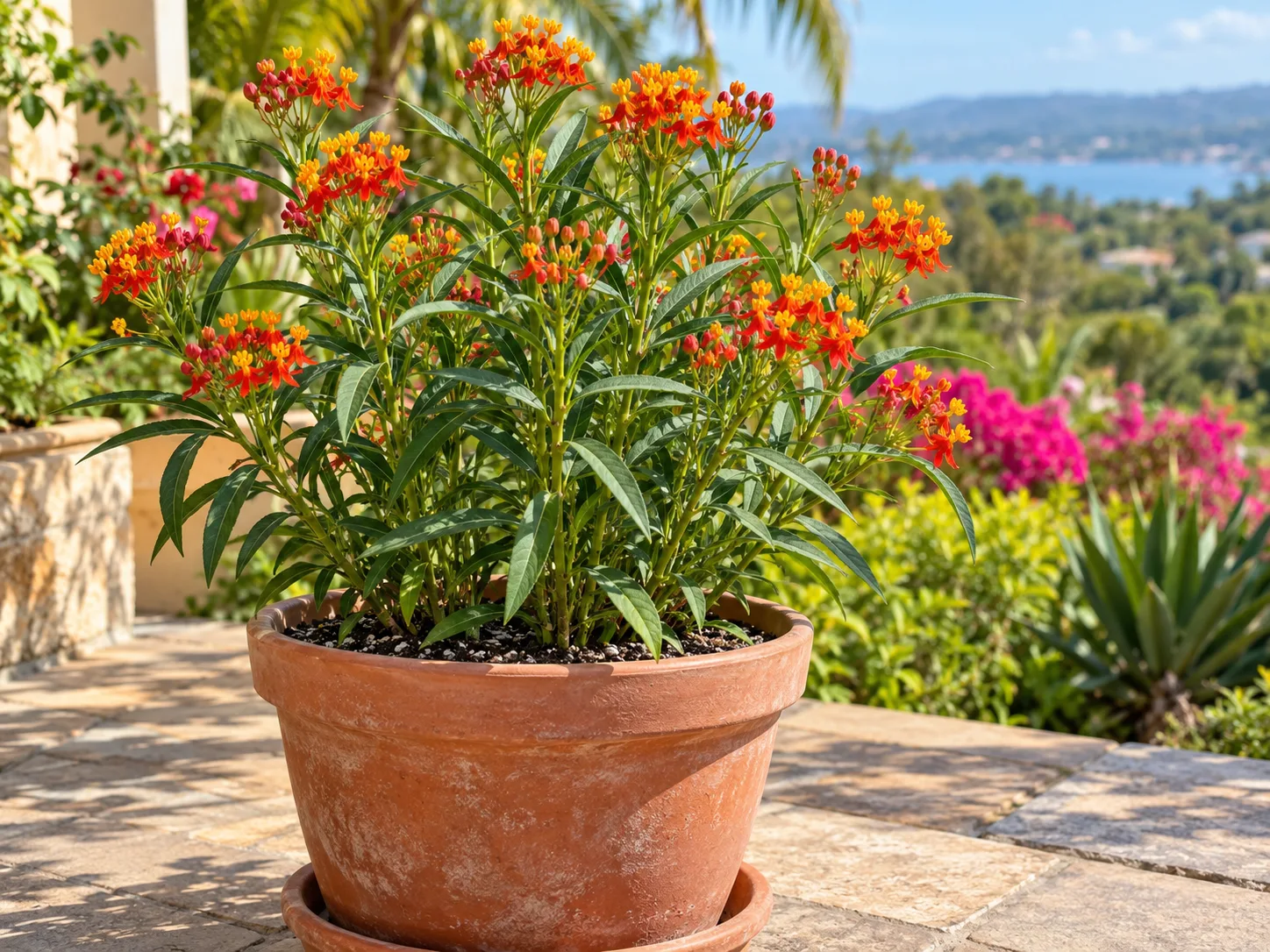
Container growing is useful when you want to control the footprint or move a plant out of harsh weather, but it does not remove the ecological questions in a warm region. Do not use a pot to keep tropical milkweed growing year-round where local guidance recommends against it. In colder climates, a container can also expose roots to faster freeze-thaw swings, so the plant is often best treated as an annual rather than carried through winter indoors.
Choose a stable pot with drainage holes and enough depth for a plant that can reach several feet tall. A practical starting point is a container at least about 12 inches wide and deeper rather than shallow; larger plants need a heavier pot to resist tipping. Fill it with a quality potting mix that drains freely. Do not add a layer of rocks under the mix—the drainage holes and a porous mix are what matter.
Place the pot where it receives full sun and where runoff can drain without leaving the container in a full saucer. Check the soil with your finger: water when the surface layer has dried, then let excess drain away. In a small pot, this may mean frequent checks during hot weather. If water races through a root-bound container but the plant wilts again quickly, slide it out and look for a dense root mass; repot only when needed, because disturbing a large taproot can set it back.
Start Blood Flower from Seed
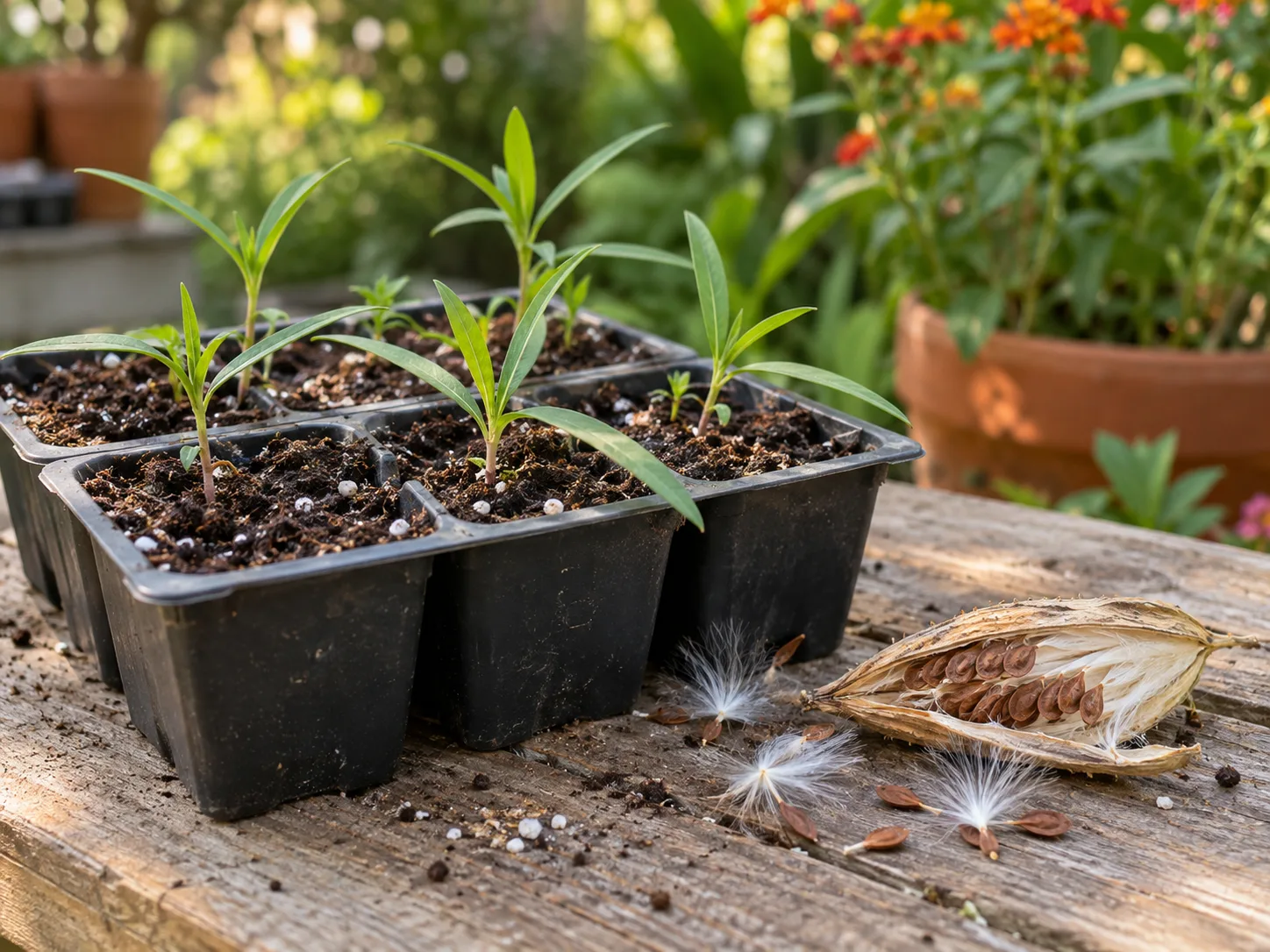
Blood flower is easy to start from seed, and indoor sowing gives it a longer season to bloom. For earlier flowers, UW–Madison Extension recommends sowing indoors about 8 to 10 weeks before the last frost. Seeds generally germinate in about two to three weeks at room temperature. Plants sown outdoors may not flower until late summer or fall, so choose the indoor route when a longer display matters. (UW–Madison Extension)
The seed steps for this tropical species differ from instructions often given for cold-hardy native milkweeds. General guides such as Savvy Gardening’s milkweed seed-starting overview describe cold stratification for many temperate species. Do not automatically apply that treatment to A. curassavica: the species-specific UW–Madison instructions use an overnight soak and room-temperature germination, without a required cold-stratification stage. If the seed packet gives different directions for a named cultivar, follow that supplier’s instructions.
Use a clean cell tray or small pots filled with moist seed-starting mix. Soak seeds overnight if you want to follow the extension recommendation, then sow them shallowly and cover with a thin layer of mix. Keep the medium evenly moist, not waterlogged, in a warm bright location. Once seedlings emerge, move them to strong light so they do not stretch toward a dim window. If several sprout in one cell, keep the strongest seedling rather than pulling neighboring roots through the mix.
Harden seedlings off gradually before planting outside: set them outdoors in a sheltered spot for a short period, then increase sun and exposure over several days. Transplant only after frost danger has passed. Young seedlings handle the move better than established plants; pot them on promptly if roots begin circling the cell instead of letting them become large and root-bound.
Collecting and storing seed
Seed pods form after flowers fade. If you are intentionally saving seed, wait for the pods to turn brown and begin to split, then collect them before the wind carries the silky-tufted seeds away. Dry pods in a paper bag in a sheltered, ventilated place, separate the seeds from the floss, and store them in a labeled paper envelope in a cool, dry location. Save seed only when you have confirmed the plant is appropriate for your area; otherwise, remove the pods before they open so volunteers do not spread.
Propagate a Named Cultivar from Cuttings
Stem cuttings are useful when you want another plant with the same flower color as a named cultivar. Seedlings from a cultivar may not reliably match the parent, while a cutting is a clone. UW–Madison Extension confirms that tropical milkweed can be propagated this way, although seed is usually the easier method.
During active growth, take a 4- to 6-inch tip cutting from a healthy, nonflowering stem, making the cut just below a leaf joint. Wear gloves and avoid touching the milky sap. Remove the leaves from the lowest joint or two, then place that section in a small pot of damp, free-draining propagation mix. Keep it warm in bright indirect light; a clear cover can slow drying, but lift it regularly so the cutting does not stay wet and stagnant. New leaf growth and gentle resistance when tugged are signs roots are forming. Pot it on while the plant is still young, before a large taproot develops.
Cuttings are not a workaround for local invasive guidance. Do not propagate a plant that you are removing because it is discouraged or listed as invasive where you live. If you simply want the flower color, look for a cultivar of a native milkweed species suited to your region instead.
Pruning, Deadheading, and Winter Care
Pinch the growing tip of a young, well-rooted plant once it has several pairs of leaves if you want a bushier shape. Pinching encourages side shoots, but it can delay the first flowers; skip it when the season is short or when the plant is already branching well. Remove damaged or crowded stems with clean pruners rather than shearing the whole plant repeatedly.
Deadhead spent clusters before seed pods mature if you do not want volunteers. This is the simplest way to prevent blood flower from spreading through a bed. If you want seed, leave only a few pods and remove the rest; a single plant can produce more wind-dispersed seed than a small border needs.
In frost-prone regions, the plant typically dies back when temperatures fall and is treated as an annual. Pull or cut it after frost, but do not carry it indoors just to preserve a plant that would otherwise die back outdoors if your reason for growing milkweed is monarch support. UW–Madison Extension specifically cautions against overwintering potted tropical milkweed indoors in cold-winter regions because keeping the foliage alive can undermine the seasonal break that is part of the ecological concern.
In warm, frost-free locations, fall management is more important because the plant can stay evergreen and keep flowering. UF/IFAS Extension advises cutting tropical milkweed back to the ground once in fall as a mitigation measure if it is retained. Remove the cut foliage and fallen leaves, and follow local timing so you do not cut through active monarch eggs or caterpillars. That haircut is not a substitute for replacing the plant where it is not recommended.
Bloom Season, Flower Color, and Cultivars
Blood flower blooms in warm weather, often from spring through fall in temperate gardens and for longer in tropical climates. Plants may flower within their first growing season, sometimes around four months after starting, but a late seed start or cool summer can push flowering into fall. The small flowers appear in rounded clusters above the leaves. Their vivid red-orange petals and yellow centers are the feature gardeners usually buy the plant for.
Named cultivars expand the color range. ‘Silky Deep Red’ has dark red flowers with golden centers; ‘Silky Gold’ and ‘Apollo Yellow’ have yellow blooms; ‘Apollo Orange’ and ‘Red Butterfly’ bring orange or scarlet tones. Heights vary by cultivar, so check the current plant label rather than assuming every selection reaches the same size. NC State Extension and UW–Madison Extension list these selections.
If a healthy plant has leaves but few flowers, look first at light and timing. Less than six hours of direct sun, a late sowing date, or a recent pinch can all delay bloom. Also check whether you applied a high-nitrogen fertilizer; stop feeding heavily and give the plant bright sun and steady, not excessive, moisture. More fertilizer will not make up for a short growing season.
Troubleshoot Aphids, Yellow Leaves, and Few Flowers
Aphids are the pest most often seen on tropical milkweed. Check the tender tips and undersides of leaves for clustered insects and sticky honeydew. Small colonies are not usually a reason to spray the whole bed. A firm stream of water can dislodge aphids, but inspect first for monarch eggs or caterpillars and aim away from them. Repeat as needed after a few days. Both NC State and UW–Madison Extension recommend water sprays as a first response; avoid broad-spectrum insecticides on a plant grown around pollinators and caterpillars. Epic Gardening’s broader milkweed guidance also favors scouting and a water spray before pesticides, a useful reminder to protect the larvae sharing those leaves. (Epic Gardening’s milkweed growing tips)
If leaves turn yellow, check the soil before diagnosing a nutrient deficiency. Wet soil, a blocked drainage hole, or a pot sitting in runoff can suffocate roots and cause broad yellowing. Let the mix drain and dry slightly; if the base smells sour or the roots are brown and soft, trim damaged roots and repot into fresh, free-draining mix. If only the oldest lower leaves yellow while fresh growth remains firm, monitor rather than adding fertilizer immediately.
Leggy growth usually points to insufficient direct light, especially when the stems lean toward one side. Move a container to a brighter site gradually; in-ground plants may need a sunnier position next season because mature taproots make relocation difficult. Few flowers can also result from a very late sowing, cool nights, shade, or pinching too close to the expected bloom period. Change one condition at a time so you can see which correction helps.
Toxicity and Safe Handling
Treat blood flower as a poisonous ornamental, not an edible or medicinal herb. NC State Extension identifies toxic compounds in the plant and notes that eating it can cause stomach upset and other symptoms; the milky sap can irritate skin and eyes. The ASPCA lists milkweed species as toxic to dogs, cats, and horses, with signs that can include vomiting, weakness, diarrhea, and more serious effects. Children and pets should not chew any part of the plant, including flowers, pods, or seeds. (NC State Extension; ASPCA Animal Poison Control)
Wear gloves when cutting stems or collecting pods, keep hands away from your face, and wash skin and tools afterward. Use eye protection if you are pruning a dense stand where sap could flick upward. Do not burn trimmings, and keep cut material away from children, pets, livestock, and grazing animals. If sap enters an eye, rinse with clean water and seek medical advice if irritation persists. If a person or animal may have swallowed the plant, contact a poison-control service, veterinarian, or emergency service promptly; do not wait for symptoms or try to induce vomiting.
What to do after sap exposure or suspected ingestion
For skin contact, wash the area thoroughly with soap and water and avoid rubbing the eyes. For eye contact, rinse with clean lukewarm water and get medical guidance if pain, redness, or blurred vision continues. If a pet chews the plant, call a veterinarian or the ASPCA Animal Poison Control number listed on its milkweed page; tell them the plant name, how much may be missing, and when it happened. For suspected human ingestion, contact your regional poison center or urgent medical service and keep a sample or photo of the plant for identification. These steps are precautions, not a substitute for professional advice.
Conclusion
Blood flower is straightforward to grow when you can give it sun, a draining root zone, warm weather, and enough room for its taproot. Starting seeds indoors extends the season; containers make it easier to manage size; pinching and deadheading let you choose between a fuller plant and fewer seed pods.
The more important choice is whether to grow Asclepias curassavica at all. In Florida, UF/IFAS currently lists it as invasive and not recommended; in other regions, check local guidance and prefer a native milkweed when the goal is monarch habitat. If you keep blood flower where it is appropriate, control self-seeding, manage winter growth responsibly, and handle the sap as a toxin around people and animals.