How to Grow and Care for Black Chokeberry
Learn how to grow black chokeberry, choose a site and cultivar, control suckers, prune an established shrub, and harvest its tart berries at the right stage.
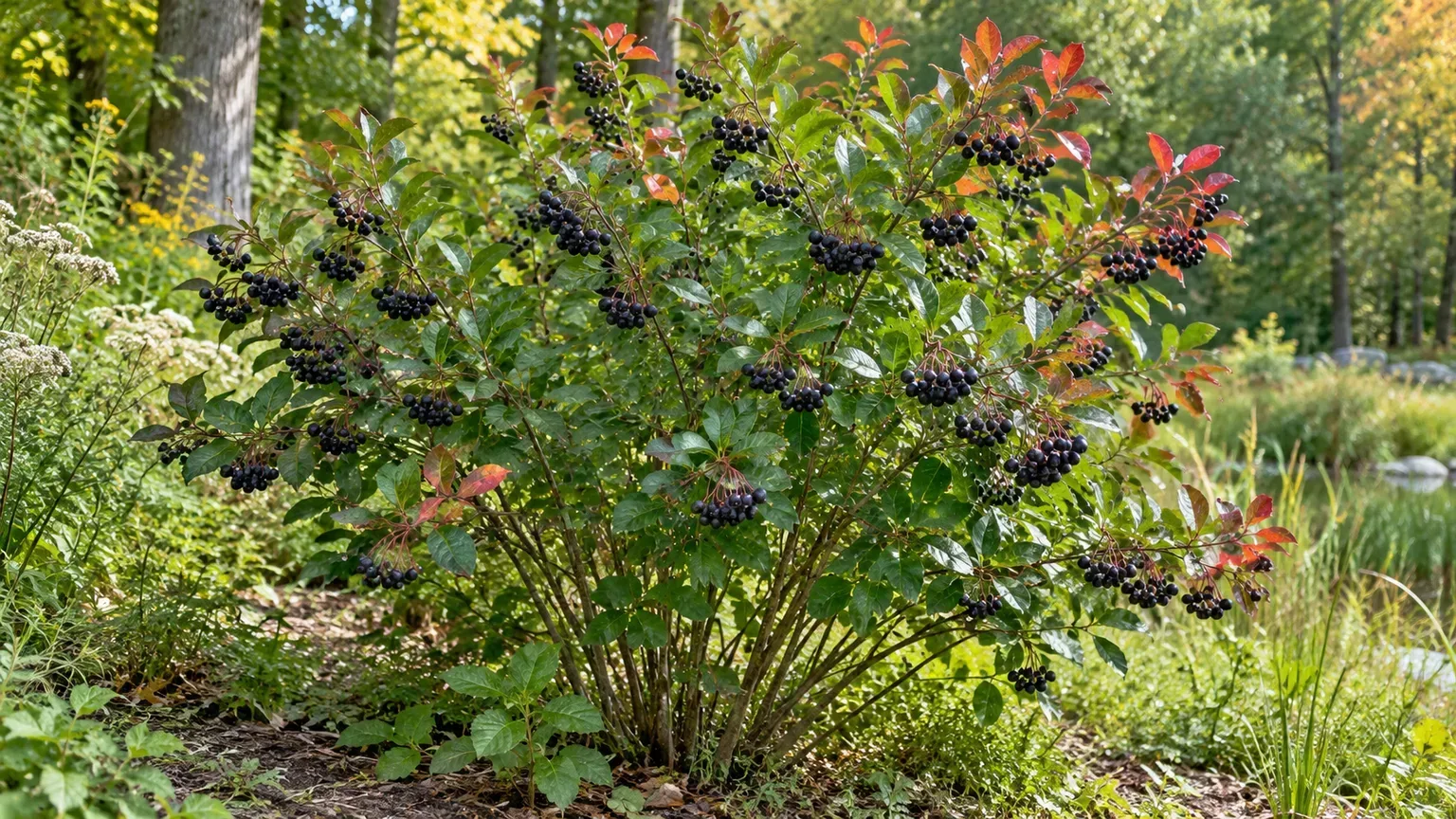
Black chokeberry is a useful choice for the damp, difficult corner where other fruiting shrubs struggle, but it is not a tidy little berry bush by default. Aronia melanocarpa spreads by suckers, and the best site depends on whether you want autumn color, wildlife value, a fruit harvest, or an informal screen. Decide how much room you can give it before planting; then the rest of its care is usually straightforward.
Black chokeberry at a glance
Black chokeberry is a deciduous, multi-stemmed shrub native to eastern North America. Depending on the plant and cultivar, it typically grows several feet tall and can spread wider than it is tall as new shoots rise around the original crown. That spreading habit is an asset in a naturalized planting or hedge, but it changes the amount of space a single specimen needs.
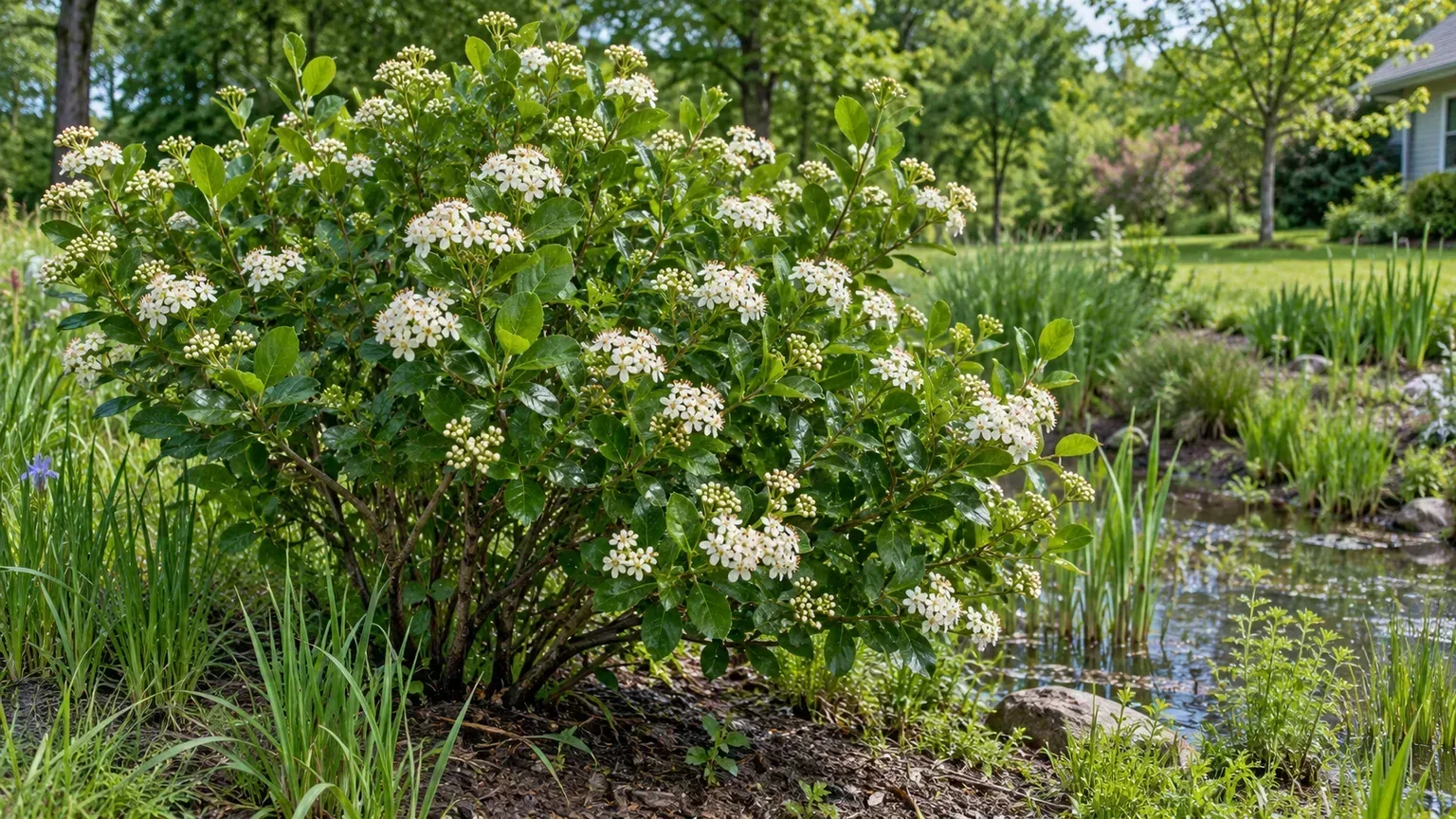
Its appeal is seasonal: clusters of white to pale pink flowers open in spring, glossy green leaves fill the summer canopy, small dark purple-black fruits ripen later in the season, and foliage often turns red or burgundy in autumn. The flowers provide nectar and pollen for native bees, while birds and small mammals use the fruit. The University of Maryland Extension describes the shrub as suitable for mass plantings, rain gardens, pond edges, and pollinator gardens, among other uses (University of Maryland Extension’s black chokeberry profile).
Black chokeberry is hardy in cold-winter regions; NC State Extension lists it for USDA Zones 3 through 8. Its tolerance of varied soil conditions makes it more flexible than many fruit shrubs, but “tolerant” does not mean every site will give the same growth or fruit yield (NC State Extension’s plant profile).
Identify black chokeberry before planting or harvesting
Black chokeberry is Aronia melanocarpa, a member of the rose family. Its small fruits grow in clusters and mature from reddish to dark purple-black. Although people call them berries, Iowa State Extension identifies the fruit botanically as a pome, the same broad fruit type as an apple. Raw chokeberries are edible but highly astringent; the puckering sensation explains the common name, not a toxic effect (Iowa State University Extension’s Aronia guide).
Do not confuse chokeberry with chokecherry (Prunus virginiana). They are different plants. Iowa State warns that chokecherry leaves, stems, and seeds contain compounds that can release prussic acid, so never eat a wild fruit based on the word “choke” or a superficial resemblance. If you are unsure of a plant’s identity, leave the fruit alone until it has been identified reliably.
There is also a red chokeberry, Aronia arbutifolia. It is closely related, but the fruits stay red rather than turning black, and it is often chosen primarily for ornamental value. Check the botanical name on the nursery tag if you specifically want black chokeberry fruit or a particular mature size.
Choose a site that fits the shrub
Think of black chokeberry as adaptable, not miniature. Before buying, decide whether the plant can spread naturally, whether you can remove unwanted shoots, and whether fruit harvest will be convenient from the spot. A shrub placed against a narrow path or tight foundation can become a repeated pruning job even when it is healthy.
Sunlight controls fruiting more than survival
Black chokeberry grows in full sun or partial shade. Choose the sunniest practical location if fruit production and dense growth matter; in deeper shade, the plant may live but flower and fruit less and can develop a looser, leggier shape. Maryland Extension and NC State Extension both describe sun to partial shade, with the strongest fruiting in full sun.
For a primarily ornamental shrub, a little afternoon shade can be a reasonable trade-off in a hot site if the plant still receives several hours of direct light. For a fruiting hedge, prioritize open light and leave space for air to move through the canopy. Avoid assuming a shaded plant will produce like one in full sun simply because it survives there.
Soil and moisture: adaptable, not aquatic
Black chokeberry can grow in clay, sandy soil, and sites that range from damp to periodically dry. Maryland Extension gives a broad soil pH range of 5.0 to 8.0, so you generally do not need to force the soil into the very acidic conditions required by blueberries. A soil test is still useful before adding amendments, especially if you plan to fertilize or the site has a persistent nutrient problem.
Its tolerance of wet ground is a major advantage for a rain garden, pond edge, or low spot that drains slowly. It is not a substitute for understanding the water pattern: note whether the location is merely moist after rain or stays submerged for long periods. Use the shrub in damp ground where its roots can still establish, and do not create a water-filled planting pocket by adding a small amount of rich compost to an otherwise compacted hole. The plant’s wide habitat range is described in the University of Maine Cooperative Extension’s Aronia profile.
Planting and spacing for a single shrub or hedge
Plant nursery-grown shrubs in spring or fall, when moderate temperatures make it easier to keep a new root ball evenly moist. In cold regions, spring planting gives roots a full growing season before winter; fall planting works where the soil remains workable and the shrub has time to settle before hard freezes. Avoid planting into frozen ground or during a heat wave if you can choose a better window.
Set the root ball at the same depth it grew in its container. Loosen circling roots at the outside of the root ball if they are tightly wound, but do not bury the crown. Backfill with the native soil, water to settle it, and apply a thin organic mulch over the root zone while keeping the mulch from piling against the stems.
For a single shrub, leave about 5 to 8 feet to nearby plants or structures as a useful starting range, then adjust for the named cultivar’s mature width and the growth you want. That is similar to the spacing range in Homes & Gardens’ aronia growing guide, but a nursery’s size information should take precedence for a specific selection. Use the wider end where you want fruiting branches, easy picking, or an open specimen. A hedge or mass planting can be closer, but it will knit into a broader, suckering clump rather than remain a row of isolated balls. Leave access for pruning and harvesting instead of planting right against a fence.
If the nursery label lists a compact cultivar, read both its height and spread. Dwarf selections may remain low but still spread laterally; a short plant does not necessarily make a narrow one. For a mixed hedge, combine chokeberry with other shrubs rather than relying on a solid row if you want varied bloom times and structure.
Water and mulch while roots establish
Water deeply after planting and keep the root zone consistently moist through the first growing season. During the second season, water during extended dry spells while roots extend outward. Once established, black chokeberry can tolerate dry periods better than many fruit shrubs, but drought during flowering or fruit development can reduce berry size and the current crop.
Check the soil several inches below the surface before watering. If it is still moist, wait; if it is dry around the root ball, water slowly enough for the moisture to penetrate rather than run off. A mulch layer helps reduce weeds and slows evaporation, particularly in full sun. Keep the mulch loose and a few inches away from the shrub’s stems so the crown is not buried.
Do not use a fixed calendar as a substitute for checking the site. A rain garden may stay moist without supplemental water, while a newly planted shrub in sandy soil can dry quickly even after a brief shower. Iowa State Extension recommends watering during the first year or two, then mainly in very dry periods; that is a better starting point than treating every established shrub as drought-proof.
Fertilize only when the soil needs it
Established black chokeberry usually does not need regular fertilizer to flower or set fruit. Maryland Extension specifically notes that fertilization is not required for fruit production. If the shrub is growing poorly, first check sunlight, root-zone moisture, planting depth, and competition from turf or weeds; fertilizer will not correct shade or water stress.
Use a soil test when poor growth persists or when you suspect a nutrient deficiency. If the soil is low in organic matter, a modest layer of finished compost can improve the surface and support soil structure. Avoid heavy nitrogen applications, which may encourage leafy shoots and a dense canopy rather than solve the cause of low fruiting. If you choose a fertilizer, follow the product label and local extension guidance for the measured need instead of applying a generic lawn product by habit.
Choose a cultivar for height, fruit, or fall color
Start with the job you want the shrub to do. A compact cultivar is useful where sightlines or low borders matter; a full-size selection works better for a wildlife hedge or a large rain garden; a fruiting selection is easiest to manage when the crop is accessible. Cultivar descriptions can vary by source and nursery, so confirm the mature height and width for the exact plant being sold.
University of Maryland Extension lists compact options including ‘Ground Hug’ at roughly 8 to 14 inches tall, ‘Low Scape Mound’ at about 1 to 2 feet, and ‘Morton’ (Iroquois Beauty) at about 2 to 3 feet. ‘Autumn Magic’ is commonly promoted for ornamental size and fall color, while ‘McKenzie’ is used in taller plantings and windbreaks. These labels describe different landscape functions; they are not a guarantee that every plant will stay within a narrow footprint.
If you are buying mainly for berries, compare fruit quality and yield information rather than choosing by fall color alone. Iowa State Extension notes that ‘Nero’ and ‘Viking’ are treated as hybrids involving mountain ash in its cultivar discussion, while other sources use broader aronia naming. If a pure native species or local provenance matters for your project, ask the nursery for the botanical identity and origin. If it does not, focus on a plant whose size, sucker habit, and fruit use fit your garden.
Prune older canes without sacrificing the whole crop
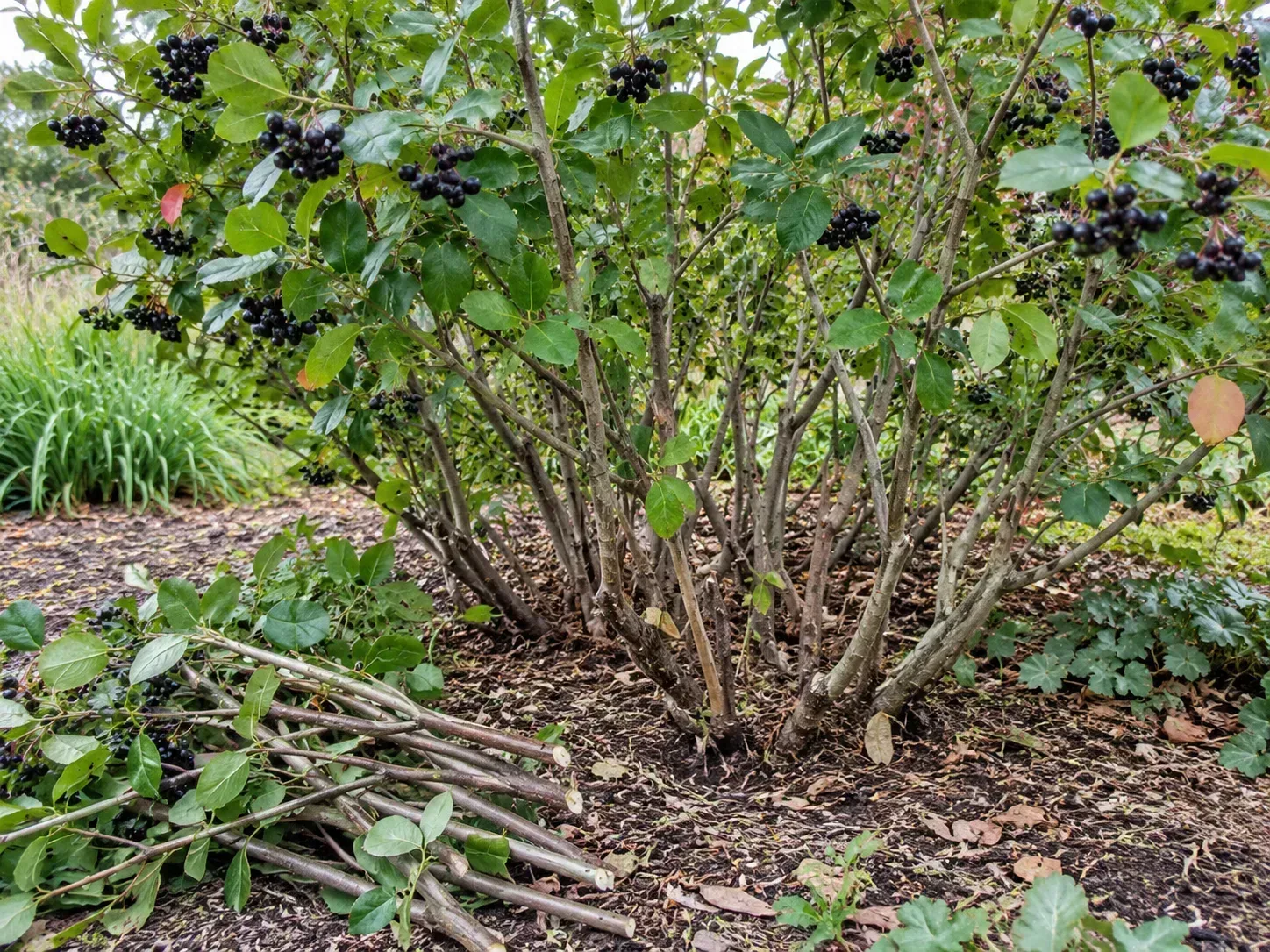
Black chokeberry usually needs selective thinning, not annual shearing. Let the young shrub establish before removing healthy canes for shape. On a mature fruiting clump, thin a few of the oldest or least productive stems at ground level in late winter or early spring before bud break; retain younger replacement canes so the shrub has flowering and fruiting wood for future seasons. Iowa State Extension describes removing five-year-old canes to maintain productivity and notes that canes are most productive at around three years.
Start with dead, damaged, diseased, or crossing branches. Then step back and remove only enough old growth to open the center and maintain the size you can manage. Cutting every stem to the ground can reset the plant, but Iowa State Extension notes that fruit may be absent for at least two years afterward. That can be a useful renovation choice for an overgrown hedge, but it is a poor surprise if you expect a crop the following summer.
Light shaping can be done after flowering if the main goal is appearance and you are willing to remove some future fruit-bearing wood. Avoid shearing the outside into a dense shell: that can shade the interior and leave you with a leafy surface that is hard to pick. A pruning saw or clean bypass pruners are enough for most home shrubs; disinfect tools between plants when cutting diseased material.
Decide whether to contain suckers or keep a thicket
Suckers are shoots that emerge from the base or from roots beyond the original crown. They are normal for black chokeberry, not a sign that something is wrong. Left alone, they can fill a hedge or naturalized bed; in a small border, they can move into neighboring perennials or lawn.
Choose a boundary before the shoots become woody. For a contained shrub, cut unwanted suckers at ground level while they are small and check around the plant once or twice during the growing season. A mower or string trimmer can injure the retained canes, so hand-pruning is more precise around the crown. If shoots appear beyond the intended edge, dig out the young shoot and as much of its connecting root as practical; simply clipping its top can allow it to return.
Do not remove every replacement shoot in a productive planting. Older canes decline, and younger suckers provide the next generation of stems. Keep a manageable mix of ages: remove a few old canes when crowded, leave selected young canes, and cut only the shoots growing where you do not want the shrub to expand. This selective approach preserves flowers and fruit while controlling the footprint.
Flowering, pollination, and a poor fruit set
Black chokeberry flowers in spring, often from April into May depending on location. Flowers are borne in clusters and attract native bees and other pollinators. A single plant can set fruit because the species is self-fruitful, so you do not need to buy a pair just to get any berries. Maryland Extension notes that fruiting may be better with cross-pollination from another cultivar or another plant of the same species, so a second plant is worth considering when yield matters.
If a mature shrub produces few berries, check the likely constraints in order: too much shade, severe drought during bloom or fruit development, late frost damaging flowers, heavy pruning that removed flowering wood, or a young plant that has not reached its productive stage. Also check whether a nearby plant is actually a different chokeberry species or cultivar if pollination is the concern. Add fertilizer only after ruling out these more common site and timing issues.
Some years may produce fewer flowers because weather shifted the bloom window or damaged buds. Observe the shrub through one full cycle before making a drastic change. A plant grown for fall color and wildlife can still be doing its job even when its fruit crop is modest.
Harvest black chokeberries when they are fully ripe
Black chokeberries ripen from late summer into fall, but the date shifts with climate, exposure, and cultivar. Iowa State Extension reports a late-August to mid-September window in its region and a harvest period that may last several weeks. Use that as a regional example, not a national date. Check fruit on the shrub rather than relying only on a calendar.
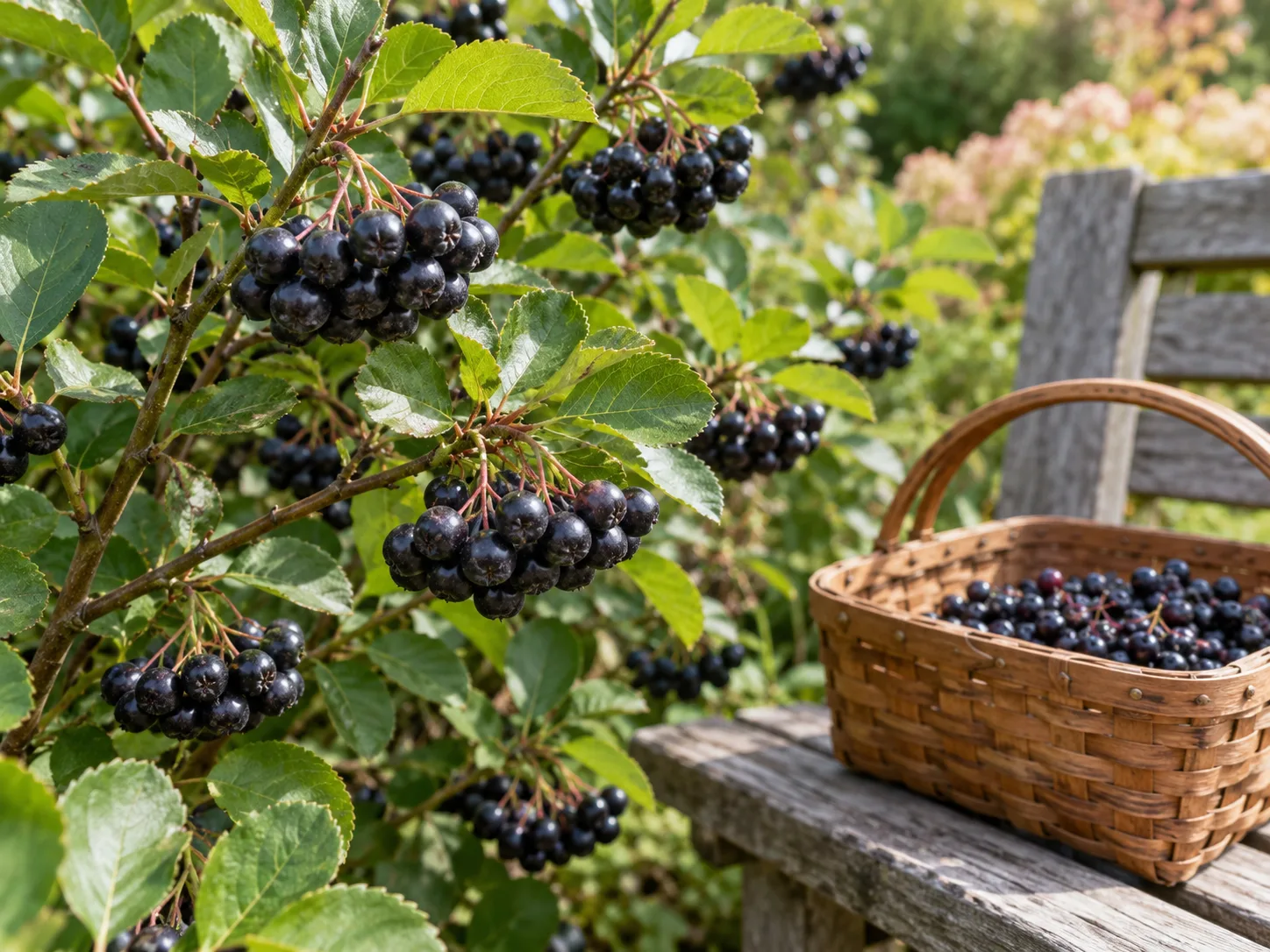
Wait until the fruits are fully dark purple-black and sample a few from more than one part of the plant. Color is a useful first signal, but taste tells you whether the crop has reached the flavor you want. The raw fruit remains notably astringent even when ripe; for many home uses, that is expected. Harvest when the berries are plump and come away readily, before they begin to shrivel or drop.
Cut or strip whole clusters into a clean container to speed picking, then remove stems and leaves indoors. Wear clothes you do not mind staining and process or freeze the fruit soon after harvest. If birds are taking the crop, use bird netting before fruit ripens and secure it so wildlife cannot become entangled; remove it when the harvest ends. A small plant can be covered with a loose net, while a large hedge is often better treated as a shared wildlife crop.
Use the fruit without expecting a sweet berry
The name “berry” is familiar in the kitchen, but aronia fruit is unusually dry and puckering when eaten raw. That strong astringency comes from tannins, and it can overwhelm a recipe if you substitute the fruit one-for-one for sweet blueberries. The berries are commonly cooked into juice, jam, jelly, sauces, or baked dishes, often blended with sweeter fruit. Maine Extension describes uses that include juice products, wine, compote, jelly, and food coloring (University of Maine Cooperative Extension’s plant and habitat notes).
For a first batch, combine aronia with apples, pears, or another sweet fruit rather than expecting it to taste like a dessert berry on its own. Cook a small amount before processing the whole harvest so you can adjust sweetness and acidity to taste. Freeze surplus fruit in a thin layer, then bag it; frozen berries are easier to measure into smoothies, sauces, or cooked recipes later.
Do not use the fruit’s antioxidant reputation as a reason to make health claims or consume a supplement. Growing and cooking the fruit are ordinary food decisions; concentrated extracts and medical effects are a separate topic. If you are picking wild plants, make certain the species is identified correctly before eating anything.
Propagate from suckers, cuttings, or seed
The simplest home propagation is to dig and transplant a small, well-rooted sucker while the plant is dormant or in cool weather. Keep as much root as possible, replant at the same depth, and water it through establishment. A sucker from a named cultivar is a clone of the parent, which is helpful when you want the same form and fruit traits.
Softwood cuttings taken in early summer can also root, but they need reliable moisture and protection from drying while they form roots. Use clean tools and a free-draining propagation medium; label the cutting so it does not get confused with seedlings or another cultivar. Fine Gardening’s black chokeberry profile lists early-summer softwood cuttings as an option, and Maine Extension discusses cuttings and division in its Aronia culture guide.
Seed is slower and less predictable for a named plant. It may require a cold period to break dormancy, and seedlings can vary from the parent. Choose seed propagation when you are willing to raise variable plants, not when you need an exact dwarf cultivar or a known fruiting selection.
Growing black chokeberry in a container
Black chokeberry can be grown in a large container, but it is usually easier in the ground. The shrub’s suckering habit and mature spread make a small pot a short-term solution, while a container large enough for woody roots becomes heavy and needs more frequent watering than an in-ground plant. Choose a dwarf cultivar if you have a genuine space constraint, and confirm its expected width before buying.
Use a stable, generously sized pot with multiple drainage holes and a durable outdoor potting mix. Keep the root ball evenly moist during establishment and check more often during summer heat, because containers dry faster than garden soil. In cold regions, container roots experience sharper temperature swings than roots protected by the ground; move the pot to a sheltered location or insulate it during severe winter conditions while keeping drainage open.
A container plant may fruit, especially in a sunny location, but do not expect it to match a mature shrub in the ground. Remove suckers as they appear, repot only when roots fill the container, and refresh part of the growing mix when you do. If fruit is your main goal and you have a suitable outdoor bed, planting in the ground is typically the more reliable setup.
Pests, diseases, and practical troubleshooting
Black chokeberry has few serious pest or disease problems, but “low-maintenance” does not mean immune. Iowa State Extension lists possible insects such as Japanese beetles, apple maggot, and spotted-wing drosophila, though which pests occur depends on the region. It also notes rust diseases and rare fire blight. Scout before treating: identify the insect or symptom, assess whether it is affecting plant health or fruit, then ask a local extension office about regionally appropriate management.
Young shrubs may be browsed by deer or rabbits even though mature plants can be less attractive to some browsers. Use a temporary barrier if stems are being eaten; do not assume a natural chemical defense will protect every planting. Keep mulch and weeds from hiding the base so you can see new shoots and damage early.
If leaves show spots or early fall color, compare the pattern across the whole shrub and consider the weather before applying anything. Isolated leaf blemishes on an otherwise vigorous plant often do not justify treatment. Remove dead or badly diseased material with clean tools, improve air circulation by thinning crowded canes, and avoid spraying a pesticide without confirming both the pest and the product label’s allowed use.
Conclusion
Black chokeberry earns a place when you can use its strengths: spring flowers, strong autumn color, wildlife value, edible but tart fruit, and tolerance of damp or variable soil. Give it sun if you want a dependable crop, leave room for the suckering clump, water new plants through establishment, and fertilize only when a soil test shows a reason.
For a neat specimen, choose a compact cultivar and remove unwanted suckers before they spread. For a hedge or wildlife planting, allow selected young shoots to replace old canes and thin the oldest stems gradually. Check the plant’s botanical identity before harvesting, wait for fully dark fruit, and plan to cook or blend it if raw astringency is not your preference.



