How to Grow Bartlett Pear Trees: A Care Guide
Learn how to grow Bartlett pear trees, choose a pollinator and rootstock, prune for a strong shape, and pick fruit at the right stage for sweet, smooth pears.
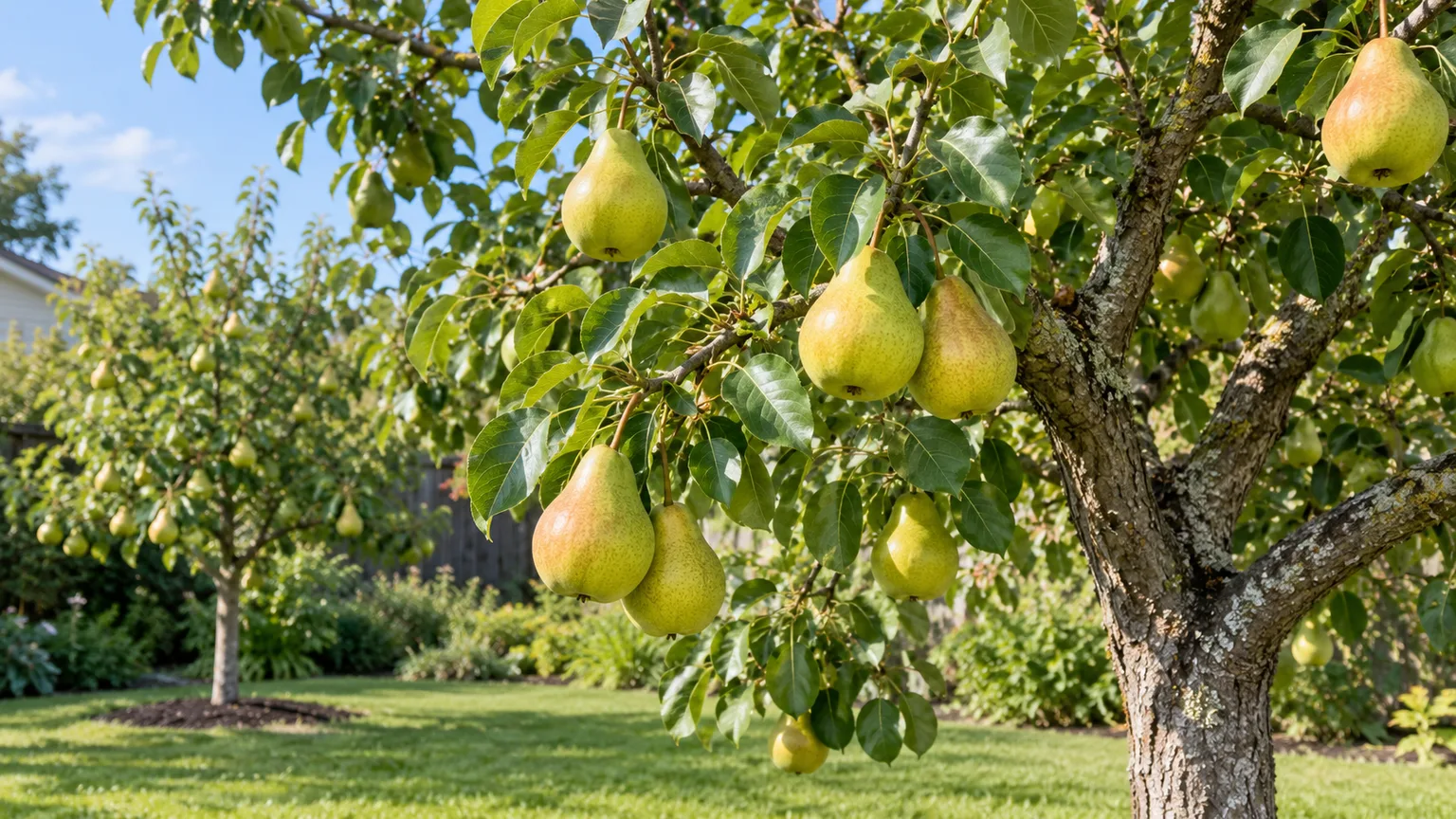
A Bartlett pear tree can give you fragrant spring flowers and a reliable supply of sweet pears for fresh eating, cooking, and canning, but the best results start before you put a shovel in the ground. Choose a tree whose rootstock and winter needs fit your yard, give it full sun and well-drained soil, and plan for a compatible pear nearby if you want dependable fruit set. Then harvest the pears while they are still firm: Bartletts are European pears, and their texture is better when they finish ripening off the tree.
Bartlett and Williams are regional names for the same cultivar of European pear, Pyrus communis. You may also see it listed as Williams Bon Chrétien. A nursery tree is almost always grafted, so the fruiting top is Bartlett while the rootstock below the graft helps determine tree vigor and size. That distinction matters: “dwarf Bartlett” describes a Bartlett grafted onto a size-controlling rootstock, not a separate miniature pear that can be planted anywhere without planning.
What makes Bartlett a good home-orchard pear?
Bartlett is a classic summer pear with smooth, juicy flesh and a familiar bell shape. The green fruit often shifts toward yellow as it matures, and some cultivars such as Red Bartlett develop a red blush. The fruit is useful both fresh and preserved, and the tree’s white spring blossoms add ornamental value. In a small yard, however, its eventual size and the need for careful harvest matter as much as the flavor.
The name is not a guarantee of a particular height, crop date, or disease performance. A standard-rootstock tree may become a substantial, vigorous tree; a dwarfing rootstock can make it more manageable but may need support and more attentive watering. Bartlett is also susceptible to fire blight, a bacterial disease that can damage branches and sometimes kill a tree. If fire blight is common in your region, compare locally recommended cultivars before committing to Bartlett.
Check winter chill, hardiness, and spring-frost risk
Pear selection is more precise than checking a USDA hardiness zone alone. A zone describes the average annual extreme winter low, but it does not tell you whether a cultivar gets enough winter chill to break dormancy normally or whether its early blossoms will be hit by a late freeze. Bartlett is commonly listed near 800 chill hours in traditional estimates, but chill models and local conditions differ; use your nursery’s cultivar information and regional extension advice rather than treating that number as a universal pass-or-fail threshold. The Arbor Day Foundation’s Bartlett profile lists an 800-hour requirement, while the University of Maryland Extension explains why chill requirements and local climate both matter.
Choose a site that gets a full winter dormancy and has a lower chance of trapping cold air at bloom. Avoid a low pocket where frost settles, especially if nearby gardens routinely lose early fruit to spring freezes. A warm wall can help in a cool climate, but it may also encourage early flowering; the best spot is sunny and sheltered without being an artificial heat trap. For gardeners with short summers, a locally proven early pear may finish more reliably than Bartlett even if the winter low seems suitable.
Choose the rootstock and pollination plan before buying
Read the nursery label for both cultivar and rootstock, and ask for the expected mature height and spread in your conditions. Standard trees can grow roughly 20 to 25 feet or more, while semi-dwarf or dwarf trees can be markedly smaller; rootstock, soil, pruning, and training all affect the final size. In the UK, for example, the Royal Horticultural Society describes quince rootstocks that range from semi-vigorous trees around 10–15 feet to dwarfing trees around 8–10 feet. Those particular rootstocks are not offered everywhere, so ask a local nursery what your tree is grafted onto. The RHS guide to growing pears explains how rootstock selection changes size and container suitability.
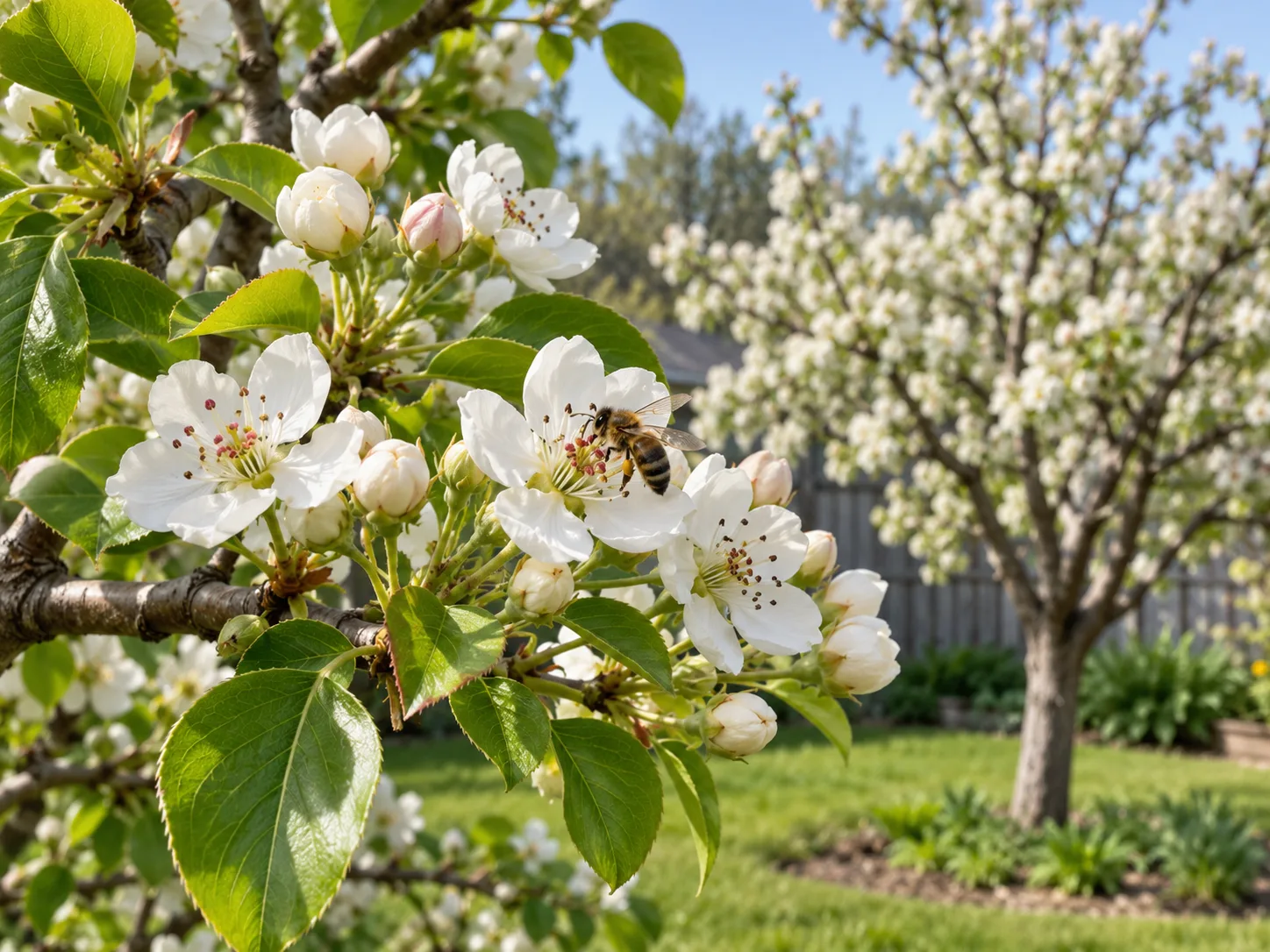
Bartlett is partly self-fruitful, and some trees can set a small crop alone. That does not make a second tree unnecessary if you want a more dependable harvest: extension guidance notes that yields can improve with another pear cultivar, and pollination results vary with cultivar, bloom overlap, weather, and pollinator activity. Utah State University describes Bartlett as partially self-fruitful and notes that a nearby pear can improve yield in its home-garden pear guide. UC Agriculture and Natural Resources likewise treats Bartlett as self-pollinating in its regional pear guidance, which is why local conditions and wording differ between references.
For the safest plan, buy a compatible European pear that blooms at the same time and is recommended for your climate. D’Anjou is one commonly used partner in some regions, but do not assume that any pear cultivar will work simply because it is nearby. Ask the nursery to confirm bloom overlap and compatibility; a neighbor’s tree may count if it is close enough for bees to move between flowers and blooms at the same time. Planting two Bartlett trees is not the only option, and two genetically identical trees do not automatically solve every compatibility issue.
Find a sunny site with room and drainage
Give Bartlett at least six hours of direct sun daily, with more sun generally supporting better flowering and fruit quality. Pears need space for both their canopy and roots, so measure the expected mature spread rather than relying on how small the nursery tree looks. Keep it away from structures, overhead wires, and other trees that will shade it or force repeated hard pruning. For a wall-trained espalier, install the support wires first and leave enough room to reach the tree for tying, pruning, and picking.
A deep, well-drained soil is more important than a perfect-looking planting hole. Pear roots tolerate a range of soil types, but standing water can deprive roots of oxygen and contribute to decline. If water remains in a test hole for a day after rain, solve drainage or choose another site before planting. Aim for slightly acidic to neutral soil and use a soil test to determine whether pH correction or nutrients are actually needed. UC Agriculture and Natural Resources’ pear guidance recommends deep, well-drained soil and notes that mature trees can need substantial spacing without a dwarfing rootstock.
Plant a bare-root or container-grown pear correctly
Plant a bare-root pear while dormant, usually in late winter or early spring when the soil can be worked; planting time varies with climate. Container-grown trees have a wider planting window, but cool, mild weather gives them a better start than hot, dry conditions. Soak a bare-root tree’s roots before planting and keep them damp while you work. For a potted tree, check for circling or kinked roots and loosen or cut through roots that are tightly winding around the root ball.
Dig a hole wide enough to spread the roots and no deeper than the root system. A useful guide for a potted tree is a hole about twice the width of the root ball, with the root flare at the soil surface. Set the graft union above soil level—often about 2 to 3 inches, depending on local recommendations—so the Bartlett scion does not root and defeat the size-controlling rootstock. Refill with the excavated soil, firm gently, and water well to settle it. Do not bury the trunk or place concentrated fertilizer in the hole; either can stress new roots. Utah State Extension’s planting guidance also advises keeping the graft union above the final soil line and staking young trees where needed.
Stake only if the rootstock, site exposure, or tree stability calls for it, and use a tie that will not girdle the trunk. Install the stake at planting so you do not drive it through established roots later. Remove or loosen ties as the trunk thickens. Keep grass and weeds away from the young tree because they compete for the same shallow water and nutrients. A mulch ring helps, but leave several inches of bare space around the trunk so bark stays dry and rodents do not nest against it.
Water by root-zone moisture, not by a fixed calendar
A newly planted tree has a small root system and cannot yet draw water from a wide area. Check the soil several inches below the surface near the root ball; if it is dry, water slowly enough to soak the roots rather than run off. During the first growing season, a deep soak about weekly is a starting point in many gardens, but sandy soil, heat, wind, rainfall, and container culture can change that schedule. The goal is evenly moist soil, never a permanently saturated root zone.
As roots expand, water less often but more deeply during dry weather. A mature tree in deep soil may need little supplemental water in a rainy climate, while an established tree in a hot, dry summer still benefits from irrigation as fruit swells. Do not wait for the leaves to droop, and do not respond to every warm day with another watering. Utah State Extension recommends deep irrigation through the fruiting season and gives different guidance for new trees and established trees; the practical lesson is to adjust by root-zone moisture and soil type, not follow a rigid “once every week” rule.
Mulch and fertilize without forcing excess growth
Spread organic mulch in a broad ring over the root zone to limit weeds and slow moisture loss. Keep the mulch a few inches away from the trunk; a volcano-shaped pile against the bark encourages rot and gives rodents cover. Renew the layer as it decomposes, and expand the ring as the tree grows. Avoid cultivating deeply near the trunk because pear roots occupy the upper soil and can be damaged by digging.
Do not automatically feed a pear tree every spring. First-year trees generally do not need fertilizer at planting, and an established tree with healthy shoot growth may already have enough nitrogen. A sudden flush of long, soft shoots can mean excessive nitrogen or hard pruning, not a need to prune even more. That vigorous growth is especially undesirable because it can increase susceptibility to fire blight. Use a soil test and observe the previous season’s shoot growth; if the tree is weak, correct a diagnosed shortage in early spring according to local recommendations. The University of Minnesota Extension’s pear guide notes that growth around 18–24 inches in a year generally indicates adequate nitrogen in garden soils.
Train a young tree and prune it for light and strength
A central leader—a single main trunk with tiers of scaffold branches—is a practical form for a free-standing pear. It lets light reach the lower canopy and makes the tree easier to inspect and harvest than a dense, umbrella-shaped crown. At planting, remove only damaged or badly placed growth and select a leader if the tree has competing upright shoots. Over the next few dormant seasons, keep a few well-spaced branches with wide attachment angles, and remove branches that cross, rub, point into the center, or compete strongly with the leader.
Prune established free-standing trees in late winter while they are dormant, after the worst cold and before strong spring growth. Make selective thinning cuts back to a branch collar instead of shearing the canopy into a shape. Remove dead, diseased, broken, and crossing limbs first; then open a few congested areas without stripping the tree. Heavy pruning can trigger a flush of upright water sprouts and delay fruiting, so do not try to shrink an overgrown tree in one year. Renovate it gradually over several seasons. University of Minnesota Extension describes central-leader training and cautions against excessive pruning; Washington State University’s Bartlett pruning discussion also emphasizes maintaining the tree’s conical form and managing competing shoots.
Bartlett pears bear fruit on short-lived spurs along older wood, so indiscriminate heading cuts can remove future bloom sites. Look for short, stubby fruiting structures and preserve healthy, well-lit spurs as you thin out congested wood. A young tree’s job is first to build a strong framework; allowing every blossom to set fruit can bend young branches or slow establishment. On trained trees such as espaliers, pruning timing differs from free-standing trees, so follow a training plan for that form rather than applying the same winter cuts to every branch.

Thin a heavy crop while the fruitlets are small
After flowering, a tree may set more fruit than its branches can mature to good size. Let the natural early fruit drop happen, then check the remaining clusters while the pears are still small. Thin crowded fruitlets by hand, leaving the strongest fruit and enough space along each branch to prevent pears from pressing against one another. For a free-standing tree, a practical target is about two pears per cluster and roughly 4 to 6 inches between fruit; a heavily laden or young tree may need more thinning.
Thinning reduces branch strain and improves the size and quality of the remaining fruit. It can also help limit alternate bearing, where a tree produces a large crop one year and a sparse crop the next. Do not wait until fruit is nearly full size: thinning is more useful while the tree can still redirect resources. The RHS pear-growing guide recommends reducing overcrowded clusters and spacing fruit, while Utah State Extension gives a similar early timing for thinning.
Watch for fire blight and other pear problems
Fire blight deserves more attention than routine leaf spotting because Bartlett is susceptible and the disease can move quickly during warm, wet bloom weather. Watch for blossoms and young shoots that turn dark or black, leaves that remain attached to wilted tips, and shoot ends that curl into a shepherd’s crook. Amber ooze may appear on infected wood. These signs are different from ordinary drought stress, which usually causes general wilting rather than a localized blackened tip.
If you suspect fire blight, act promptly but avoid spreading it. On a dry day, prune infected shoots well below visible discoloration; extension guidance commonly advises at least 8–12 inches below the obvious infection, though the exact cut depends on where healthy wood begins. Disinfect tools between cuts during active summer disease work, and dispose of infected branches rather than leaving them under the tree. Do not aggressively prune healthy growth during bloom or immediately after it, and avoid excess nitrogen that drives tender new shoots. The Utah State University fire-blight guide explains symptoms, spread, and sanitation; follow your local extension service for disease pressure and any treatment options approved for home use.
Other problems can include codling moth, pear psylla, mites, wildlife feeding, and fruit damage. Inspect leaves, young fruit, and trunk regularly so you can identify the cause before choosing a response. Pick up fallen or rotting pears and remove dead wood to reduce hiding and breeding sites. Avoid calendar-based pesticide use: treatments can harm pollinators, miss the actual pest stage, or be inappropriate for edible fruit. If symptoms are unfamiliar or spreading, photograph the affected growth and ask a local extension diagnostic service before cutting out large limbs.
Troubleshoot a tree with no flowers or fruit
First separate “no flowers” from “flowers but no pears.” A tree that has never flowered may still be juvenile, especially if it is on a vigorous rootstock or was grown from seed. It may also be shaded, overfertilized, heavily pruned, or planted where the winter chill is inadequate. Check the nursery label for rootstock, compare the site’s winter conditions with the cultivar’s needs, and look for whether the previous year’s pruning removed most fruiting spurs.
For a grafted nursery tree, allow it time to establish before expecting a meaningful crop; the first-fruiting age varies with rootstock, tree age at planting, and growing conditions. A standard-size tree may take longer to bear than a dwarfing-rootstock tree, while a seedling can take many years and will not come true to Bartlett.
If flowers appear but fruit does not, look at the bloom period and the weather. Late frost can damage blossoms, cold rain can reduce pollinator activity, and a nearby pear may bloom at a different time or be an incompatible partner. If Bartlett is the only pear in the neighborhood, adding a compatible cultivar is the most dependable improvement. A tree with a very heavy set may also shed fruit naturally; that is different from failed pollination. Avoid trying to solve every poor crop with fertilizer, since lush shoots may worsen fire-blight risk without fixing the real cause.
Harvest Bartlett pears while they are mature and firm
Bartlett pears should be harvested at mature-green, before they soften on the tree. The color often lightens from dark green to a paler green; fruit should be full-sized and firm, and the stem should release when you lift the pear gently and rotate it upward. Test a few pears first rather than stripping the entire tree based only on a calendar date. Harvest timing shifts with region, bloom date, summer heat, and crop load; mid-to-late summer is common in many areas, but your own tree’s maturity cues are more reliable than a date printed for another climate.
Hold the fruit in your palm and lift with a slight twist. Do not yank downward: that can break the fruiting spur and remove next year’s flower buds. Handle pears gently because bruises become soft spots during ripening. If fruit is beyond arm’s reach, use a proper fruit picker from the ground. Avoid climbing a ladder while reaching and twisting with both hands; a stable orchard ladder or professional help is safer than stretching from an unstable step ladder.
Chill, ripen, and store the fruit for better texture
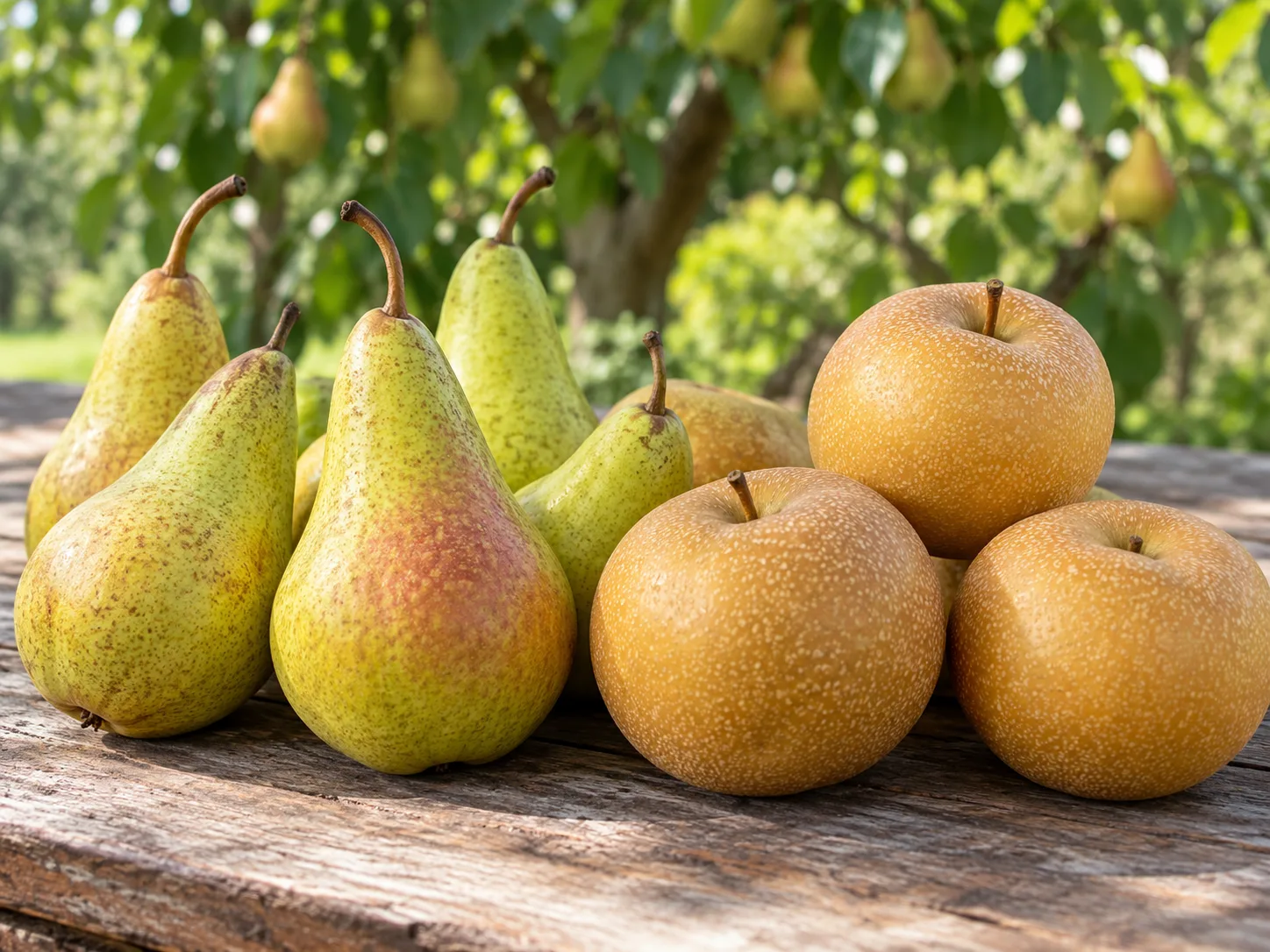
A pear that tastes hard straight from the tree is not necessarily immature; European pears are meant to finish ripening after harvest. Fruit left on the tree until soft can become gritty, mealy, or brown in the center. Once picked, cool Bartlett pears promptly, then bring a small batch to room temperature to finish. Utah State Extension suggests a brief refrigerator period before counter ripening for pears intended for immediate eating, while other pear varieties may need much longer cold storage. Bartlett is an early-season pear, so do not assume it needs the long conditioning period used for winter pears such as Bosc or D’Anjou.
Check fruit daily as it ripens. A ripe Bartlett usually changes toward golden yellow and gives slightly near the stem when pressed gently; the body may still feel fairly firm. Refrigeration slows ripening and helps you stagger a large crop. If you want to speed a few pears, place them in a paper bag at room temperature; adding a ripe banana or apple can accelerate ripening because it releases ethylene, so check the bag often and remove fruit as soon as it softens. Avoid sealing wet or bruised fruit in a bag, where decay can spread.
Grow a dwarf Bartlett in a container or small garden
A Bartlett can grow in a large container if it is grafted to a suitably dwarfing rootstock, but container culture is less forgiving than planting in the ground. Choose a heavy pot with generous drainage, a quality loam-based potting mix, and a sunny, sheltered position. A dwarfing rootstock, commonly a quince type where locally available, helps keep the tree manageable. Containers dry faster than garden soil, so check moisture often in warm weather and water thoroughly when the upper soil begins to dry rather than letting the root ball swing between drought and saturation.
You still need flowers and pollination for fruit. A partly self-fruitful Bartlett may produce some fruit alone, but a compatible pear flowering nearby improves the odds; a container tree can be placed near another pear during bloom if it is movable. Expect a smaller crop than from a well-established tree in the ground, and plan to refresh the potting mix or repot as roots fill the container. If you want fruit with minimal maintenance and no room for a pollinator, a pear tree may not be the easiest container choice. The RHS recommends dwarfing rootstocks for container pears and notes that pots need steady moisture and periodic repotting in its container pear guidance.
Understand seed-growing and propagation limits
A pear seed can germinate, but it will not reliably produce a Bartlett tree. The seed carries a new genetic combination, so its fruit may differ in size, flavor, harvest date, and disease response; it can also take many years to fruit. Growing from seed is a worthwhile experiment for someone who enjoys raising trees, not a dependable way to reproduce a named cultivar.
For a tree that produces Bartlett fruit, buy a grafted nursery tree or learn fruit-tree grafting from a local horticultural group. Cuttings of European pears are not a simple, reliable substitute for a grafted plant because pear cultivars can be difficult to root and own-root growth may not match the size and performance of a selected rootstock. The most practical route for a home orchard is a labeled, healthy grafted tree with the rootstock and pollination information included.
Protect young trees through winter
Bartlett is deciduous and needs seasonal dormancy, so a healthy in-ground tree generally does not need to be moved indoors. Young trunks are more vulnerable than established bark to sunscald and chewing by rabbits or voles. In areas with cold sunny winters or wildlife pressure, use a breathable tree guard or trunk wrap for the first few years and inspect it periodically so it does not constrict the trunk. Remove weeds and fallen fruit, and keep mulch away from the bark.
A potted tree is different: its roots are exposed to colder temperatures than roots insulated by the ground. In cold regions, move the pot to a sheltered unheated location, group it near a protected wall, or insulate the container while allowing the tree to experience winter dormancy. Do not keep a deciduous pear in a warm living room. If snow, ice, or wind is common, protect the container from tipping and avoid tying branches so tightly that they rub or break.
Conclusion
The most reliable Bartlett pear harvest begins with a site and tree that fit your climate. Choose an appropriate rootstock, give the tree full sun and drainage, and plant a compatible pear nearby when possible; Bartlett may fruit alone, but cross-pollination improves consistency. Water deeply while roots establish, avoid excess nitrogen and heavy pruning, and thin an overloaded crop before branches strain.
The harvest rule is simple once you know it: pick Bartlett pears mature and firm, then cool and ripen them indoors. Check maturity on your tree rather than relying on a fixed date, and watch for fire blight during warm, wet flowering weather. With those habits, a Bartlett or Williams pear tree can become a productive, long-lived part of a home orchard.



