Are Dahlias Perennials or Annuals? The Winter Test
Are dahlias perennials or annuals? They’re tender perennials. Learn how frost, wet soil, and pots affect survival—and when to lift, store, or replace tubers.
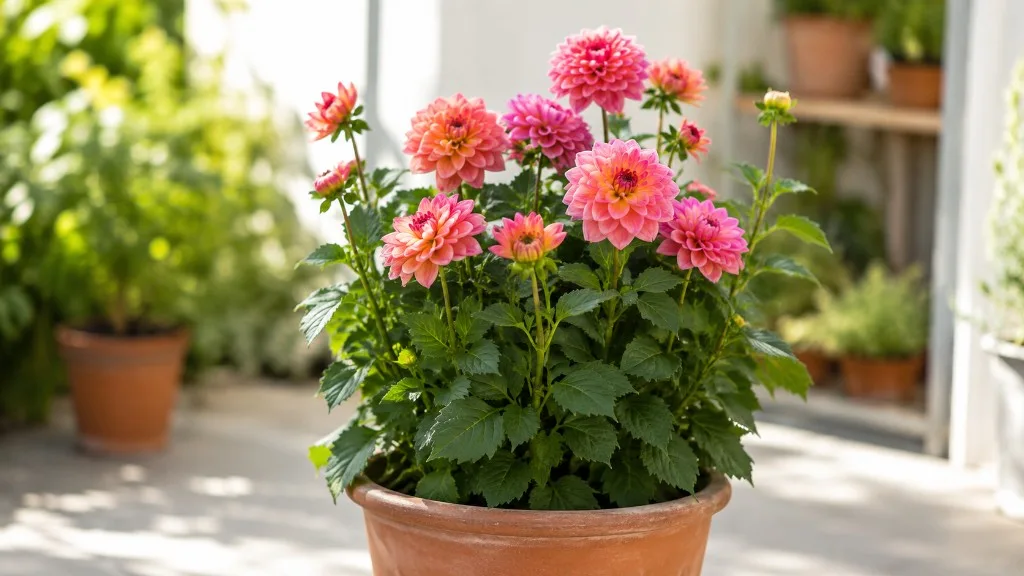
Dahlias can fill a border with flowers from summer into fall, then seem to vanish after frost. That seasonal dieback makes the label confusing: are dahlias perennials or annuals?
The botanical answer is perennial. The practical answer depends on whether the underground tubers survive your winter. In a mild, well-drained garden they may return in place; where soil freezes or stays wet, you need to lift and store them—or choose to grow them as one-season flowers.
The Short Answer
Dahlias are tender perennials, not true annuals. Their leaves and stems die back as the plant goes dormant, while the tuberous roots can remain alive and send up new growth in spring. The RHS describes dahlias as tender perennials that need protection from freezing conditions; practical guides from Epic Gardening and Longfield Gardens make the same distinction between the plant’s life cycle and how gardeners manage it in cold climates. (RHS Growing Guide; Epic Gardening; Longfield Gardens)
Whether a dahlia returns without help is a separate question. The tuber must avoid both damaging cold and winter rot. Gardeners in mild climates can sometimes leave it in the ground with protection; in colder areas, lifting and storing the tuber is the dependable way to preserve it. You can also buy a new tuber every spring and treat the dahlia as an annual for convenience.
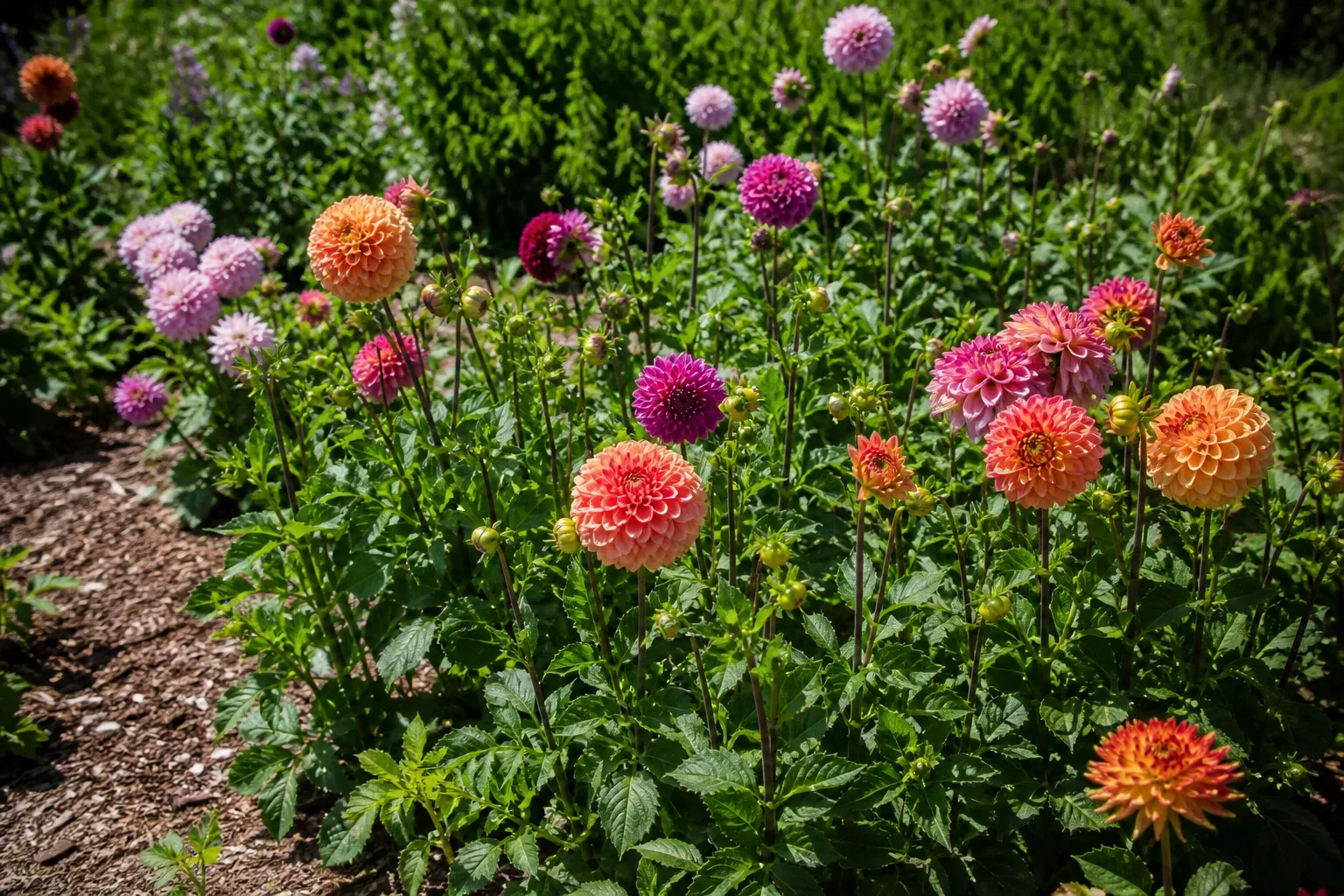
A quick rule: if your garden soil freezes deeply, do not count on an unprotected dahlia tuber to survive. A hardiness-zone label can help you estimate risk, but soil drainage, exposure, mulch, container size, and the severity of that particular winter can change the outcome.
What “Perennial” Means for a Dahlia
An annual completes its life cycle in one growing season. A perennial can live for more than one season, often dying back above ground during an unfavorable period and resuming growth when conditions improve. Dahlias fit the second pattern: their foliage is seasonal, but the underground storage organ can carry the plant through dormancy.
The part people call a dahlia “bulb” is more accurately a tuberous root. It stores energy, but a swollen root by itself is not always capable of making a new plant. The growing point, called an eye, is located where the tubers join the crown at the base of the old stem. The American Dahlia Society notes that each viable division needs a piece of crown with an eye; a plump, carrot-shaped tuber without that connection may never sprout. (American Dahlia Society)
That biology explains why gardeners use both labels. If you leave a dahlia in mild soil and it returns, you are growing it as a perennial in place. If you plant a fresh tuber each year because winter would kill the old one—or because you prefer not to store it—you are treating it as an annual. The plant has not changed its life cycle; your management has changed.
Dahlias also do not become annuals just because frost kills their foliage. A light frost may blacken leaves while soil around the crown remains unfrozen. The plant is dormant, not necessarily dead. The key question is what happens below the soil line over the following weeks.
The Climate Test Matters More Than the Label
Hardiness zones are useful for comparing winter climates, and many U.S. gardening guides describe dahlias as most likely to overwinter outdoors around Zone 8 and warmer. That is a rough guide, not a promise for every garden or cultivar. Epic Gardening discusses zones 7 to 10 with winter protection at the cooler edge, while the RHS warns that dahlias are tender and need protection from frost. Their guidance points to a practical truth: the ground around your tubers matters more than a single zone number. (Epic Gardening; RHS Growing Guide)
Why a Hardiness Zone Is Only a Starting Point
A zone estimates a region’s winter minimums; it does not tell you how cold the soil will get at the exact depth of a dahlia crown, how long it will stay frozen, or how much water the bed holds. A sheltered bed beside a house may be warmer than an exposed low spot a short distance away. Snow can insulate soil in some winters, while bare, windy ground can expose the crown to colder swings.
A marginal site deserves a conservative plan. If neighboring gardeners reliably leave dahlias in the ground, ask what their soil and exposure are like, not just what zone they garden in. If you are new to the area, lift your favorite clumps the first winter and leave only a few expendable tubers as a small trial.
How Soil and Site Change Winter Survival
Cold, wet soil is a double problem. Freezing can injure tender tubers, and saturated soil encourages rot while the plant is dormant. The RHS notes that dahlias are more likely to survive outdoors in lighter, free-draining soil; heavy soil tends to stay colder and wetter, making indoor storage the safer choice. (RHS Growing Guide)
Before deciding to leave tubers in place, look at the bed after a long rain. If water pools there or the ground stays sticky and saturated, winter protection will not fix poor drainage. A raised bed, a drier planting spot, or lifting the tubers is a better risk-control measure than piling mulch onto waterlogged soil.
Mulch helps buffer temperature changes, but it is not a substitute for drainage or a guarantee against deep freezes. A thick layer can be useful in a mild climate where winter cold is occasional and the soil drains quickly. In a cold region with prolonged freezes, a tuber protected in a box indoors is less exposed than one left in the ground.
Choose One of Three Winter Plans
Choose the plan based on winter risk and how much fall work you want to take on. You do not need to preserve every dahlia: keep treasured or unusual cultivars, and treat ordinary replacements as seasonal flowers if storage space or time is limited.
| Your situation | Practical plan | Main trade-off |
|---|---|---|
| Mild winter, free-draining soil, little or no deep ground freeze | Leave tubers in place and mulch after the tops die back | Easiest, but wet or unusually cold winters can still cause losses |
| Soil freezes, winter is wet, or cultivar is valuable | Lift, label, dry, and store tubers above freezing | Preserves plants, but storage takes space and some tubers may still fail |
| You want seasonal color without fall chores | Buy fresh tubers next spring | Simplest; you pay for replacements and discard the old clump |
Leave Tubers in the Ground
This is the lowest-effort option when local conditions are favorable. After frost damages the foliage, cut the stems back and cover the crown with an insulating mulch. The RHS suggests about 15 centimeters (6 inches) of mulch for tubers left outdoors, while also describing the approach as a risk in unexpectedly harsh or very wet winters. (RHS Growing Guide)
Do not use the mulch choice to override your site. If water sits over the bed, an insulating blanket can trap excess moisture along with warmth. In a marginal climate, you could leave one clump and lift another so that an experiment does not put the whole collection at risk.
Lift and Store Tubers
Lifting is the most controllable option if the ground freezes or the soil remains wet. It does not make success automatic—tubers can rot, dry out, or be damaged—but it moves them out of the conditions most likely to kill them. Keep labels with each clump so the variety name does not get separated from the tubers.
Use storage if you want a specific dahlia to return, if you paid for a distinctive cultivar, or if you want to multiply a plant by dividing it later. Plan for a cool, frost-free storage spot before fall; a tuber in a warm closet or freezing shed is not protected simply because it has been dug up.
Replace Them Each Spring
Treating dahlias as annuals is a reasonable choice, not a gardening mistake. You get a fresh planting each year and skip the work of digging, cleaning, labeling, and checking dormant tubers. This can make sense for common varieties, gardens with little storage space, or anyone who prefers choosing new colors each spring.
The cost is that you buy new tubers and lose the chance to keep a favorite clone. If you enjoy the ritual and have a safe storage place, keeping tubers can be economical over time. If storage is unreliable or you only want a few weeks of fall color, replacing them may be the more enjoyable option.
When to Dig Dahlias in Fall
Watch the plant and the forecast together. The usual cue is foliage damaged or blackened by frost, when the plant has stopped growing above ground. Then dig while the soil is still workable and before it freezes hard. The RHS recommends lifting after foliage is frost-damaged, and the American Dahlia Society explains that tubers continue maturing late in the growing season, so a little extra time in the ground can help when weather and soil allow. (RHS Growing Guide; American Dahlia Society)
There is no universal number of days to wait after frost. A light frost that damages leaves does not mean the soil is frozen; a forecast of hard freezes, prolonged rain, or a sudden temperature drop changes the decision. In a well-drained bed with mild weather ahead, you can wait briefly after the tops die. In heavy soil or a cold climate, do not leave the clump in place just to follow a rigid “wait two weeks” rule.
Before cutting, identify each variety and label the plant. Once the stem is gone, neighboring clumps are much harder to distinguish. If you cut the stems while the clumps remain in the ground, keep rainwater from running down hollow stems into the crown, which can contribute to rot. (American Dahlia Society)
How to Lift and Prepare a Clump
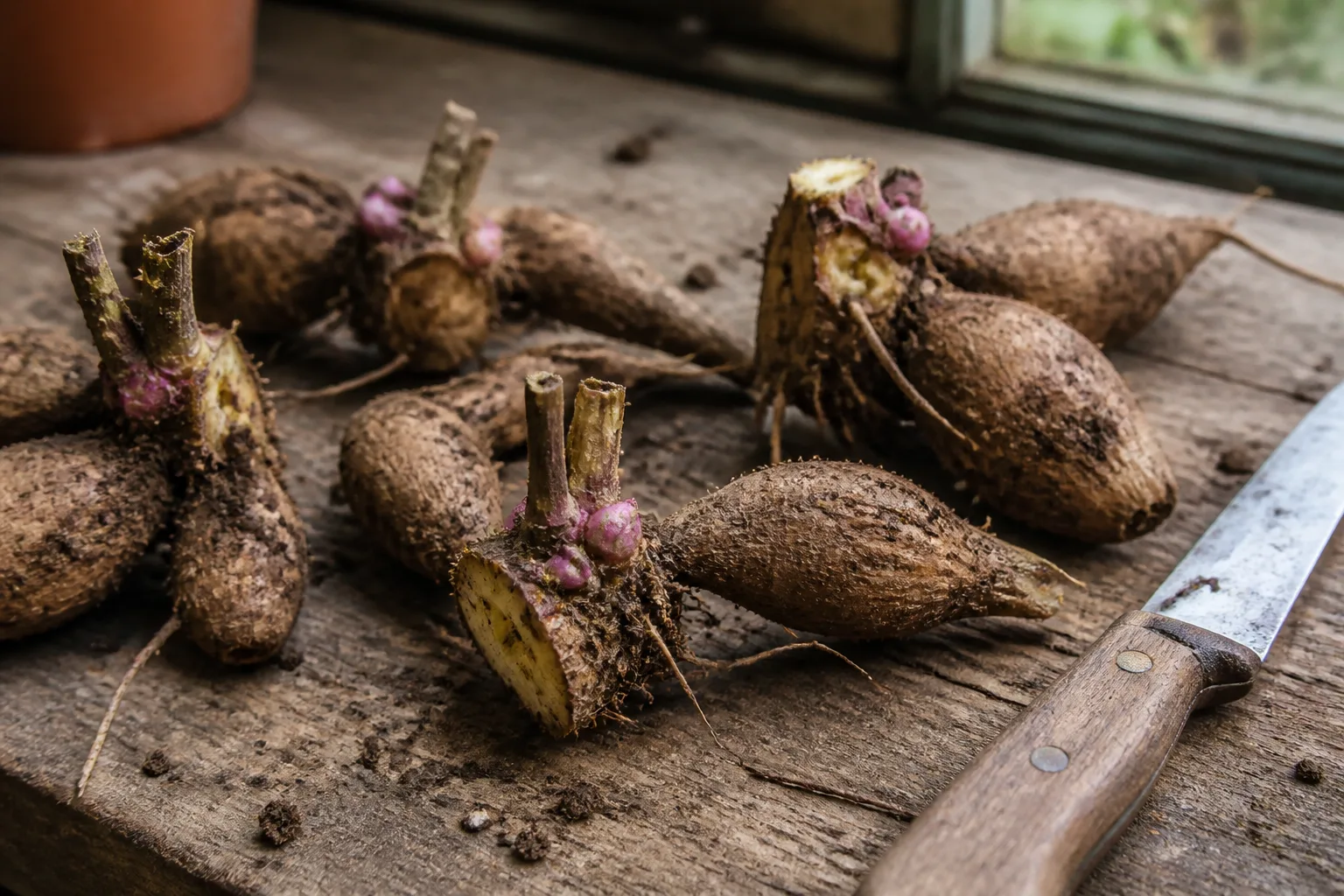
Work gently; a dahlia clump is easier to replace than a broken neck is to repair. The narrow connection between each swollen tuber and the crown can snap, especially just after digging. The American Dahlia Society advises loosening the soil around the clump rather than pulling hard on the old stem. (American Dahlia Society)
- Cut back the dead top. Leave a short section of stem to handle the clump, and remove damaged foliage. If the stem was cut before digging and will sit in the ground through rain, cover the open top or dig sooner.
- Loosen a wide circle. Start farther from the stem than you think the clump extends. Push a garden fork into the soil carefully, then work around the plant so the outer tubers are not sliced.
- Lift from underneath. Once the soil is loose on all sides, raise the clump from below. Do not pull it out by the stalk; that can break the fragile necks and leave viable tubers behind.
- Shake or rinse off soil. Brush away loose soil first. If the clump is muddy, rinse it gently so you can inspect the crown and tubers, taking care not to puncture or scrape them.
- Inspect, label, and dry. Discard soft, badly damaged, or rotting material. Keep a waterproof label with the clump, then let it dry in a shaded place with good airflow until surface moisture is gone.
Gardeners vary on whether to wash every clump, how long to dry it, and whether to divide before storage. Those differences reflect climate, storage medium, and personal experience. The stable principles are to avoid wounds, remove clearly rotten material, keep the clump identified, and put it away dry enough that water is not trapped around the crown.
Store Tubers Without Letting Them Rot or Shrivel
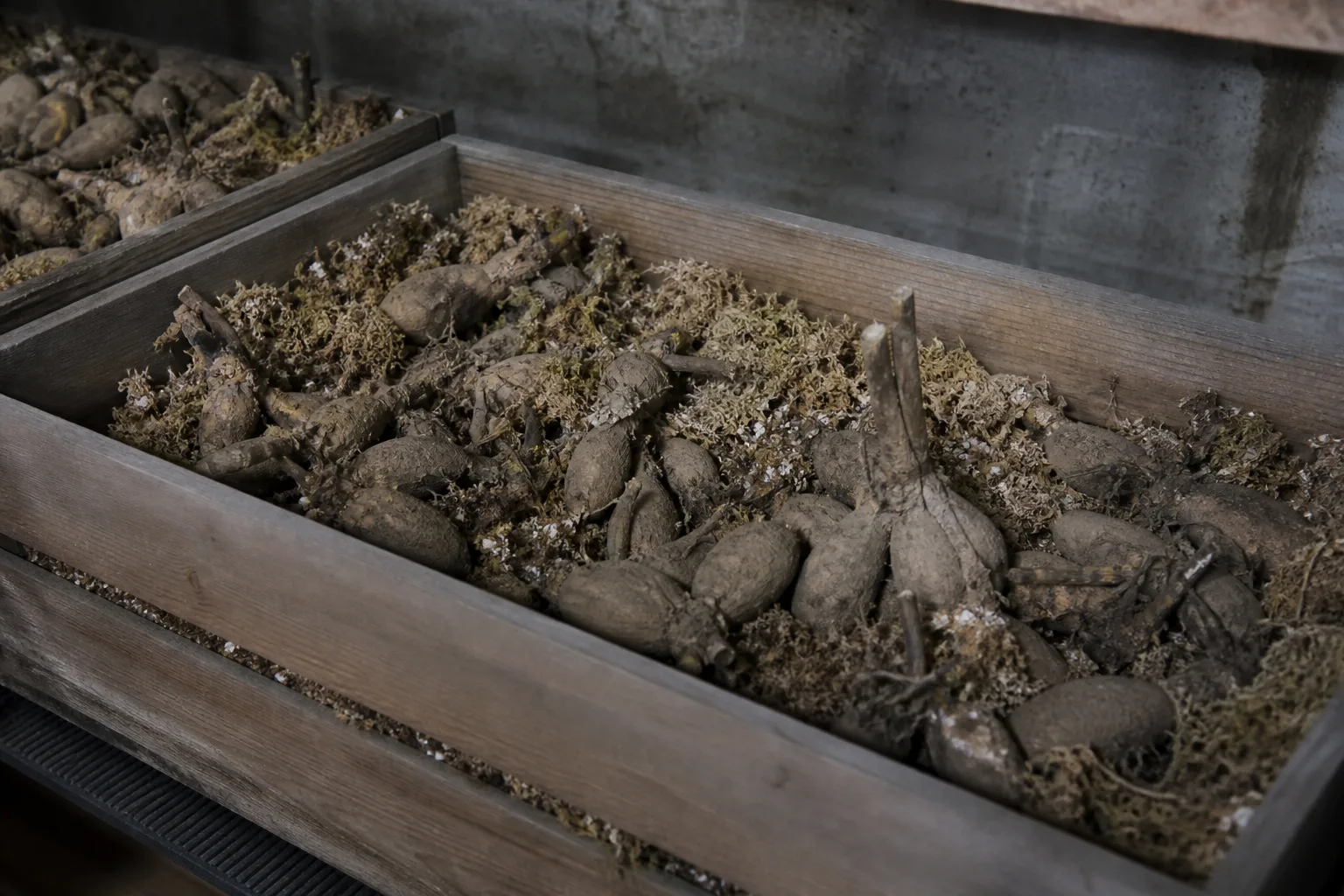
Dahlia tubers need a storage place that stays cool, dark, and above freezing, with enough humidity that they do not shrivel and enough airflow that they do not stay wet. The American Dahlia Society reports that many growers aim for a nearly constant temperature in the low-to-mid 40s Fahrenheit; RHS guidance likewise emphasizes a cool, dark, frost-free location and regular checks. (American Dahlia Society; RHS Growing Guide)
A vented box, shallow crate, or other container can work if it does not let the tubers dry out completely. Some gardeners pack clumps in vermiculite or another insulating medium; others use dry compost, sand, straw, or newspaper. No single medium is best in every basement or garage. Start with a small amount of material that is dry to barely moist, keep clumps from pressing tightly together, and avoid an airtight, dripping-wet container. The National Garden Bureau also emphasizes airflow and checking the tubers through winter. (National Garden Bureau)
Put the container somewhere with relatively stable temperatures. An attached basement, cellar, or frost-free utility room may work; an uninsulated shed that freezes or a heated room that warms the clumps is a poor choice. Avoid setting the container directly on a cold concrete floor, and do not assume the garage is safe until you know its winter temperatures.
Check stored tubers about once a month. A firm clump is a better sign than a particular color. Remove any tuber that has turned soft or mushy so it does not remain against healthy material. If tubers are becoming wrinkled and lightweight, the storage environment may be too dry; add a little moisture to the packing material rather than soaking the clump. If condensation or wet packing appears, improve airflow and reduce moisture. The National Garden Bureau describes both ends of this balance: overly moist storage can leave mushy tubers, while excessively dry conditions can shrivel them. (National Garden Bureau)
Decide Whether to Divide in Fall or Spring
You do not have to divide tubers in order to overwinter them. Keeping the clump intact is often easier for a beginner and avoids cutting a viable crown by mistake. If you do want separate plants, each piece needs an eye-bearing section of crown; a detached tuber without an eye is unlikely to grow. (American Dahlia Society)
Fall division can make sense when the eyes are easy to see and you have time to label each section. Spring division gives dormant eyes more time to become visible, which is helpful when you are unsure where to cut. The RHS recommends dividing clumps as growth starts in spring, while the American Dahlia Society describes trade-offs between fall convenience and waiting for eyes to show. (RHS Growing Guide; American Dahlia Society)
Use a clean, sharp knife and make deliberate cuts. Keep at least one eye with each section, and do not divide merely to make more pieces if the clump is small or the crown is hard to read. A handful of well-formed divisions has better odds than a tray of pieces with no growing point.
What to Do With Saved Tubers in Spring
Take the container out of storage when you are ready to check and plant the clumps, not because the calendar has reached a fixed date. Discard tubers that are mushy or badly shriveled. A tuber that is firm but not yet sprouting may still be dormant; inspect the crown for eyes before deciding it has failed.
In regions with a short season, you can start tubers in pots in a bright, frost-free place, then move the growing plants outdoors after frost danger has passed. If you plant directly in the garden, wait until the soil has warmed and the threat of frost is over. The RHS cautions that dormant tubers can rot if kept too wet while starting into growth. (RHS Growing Guide)
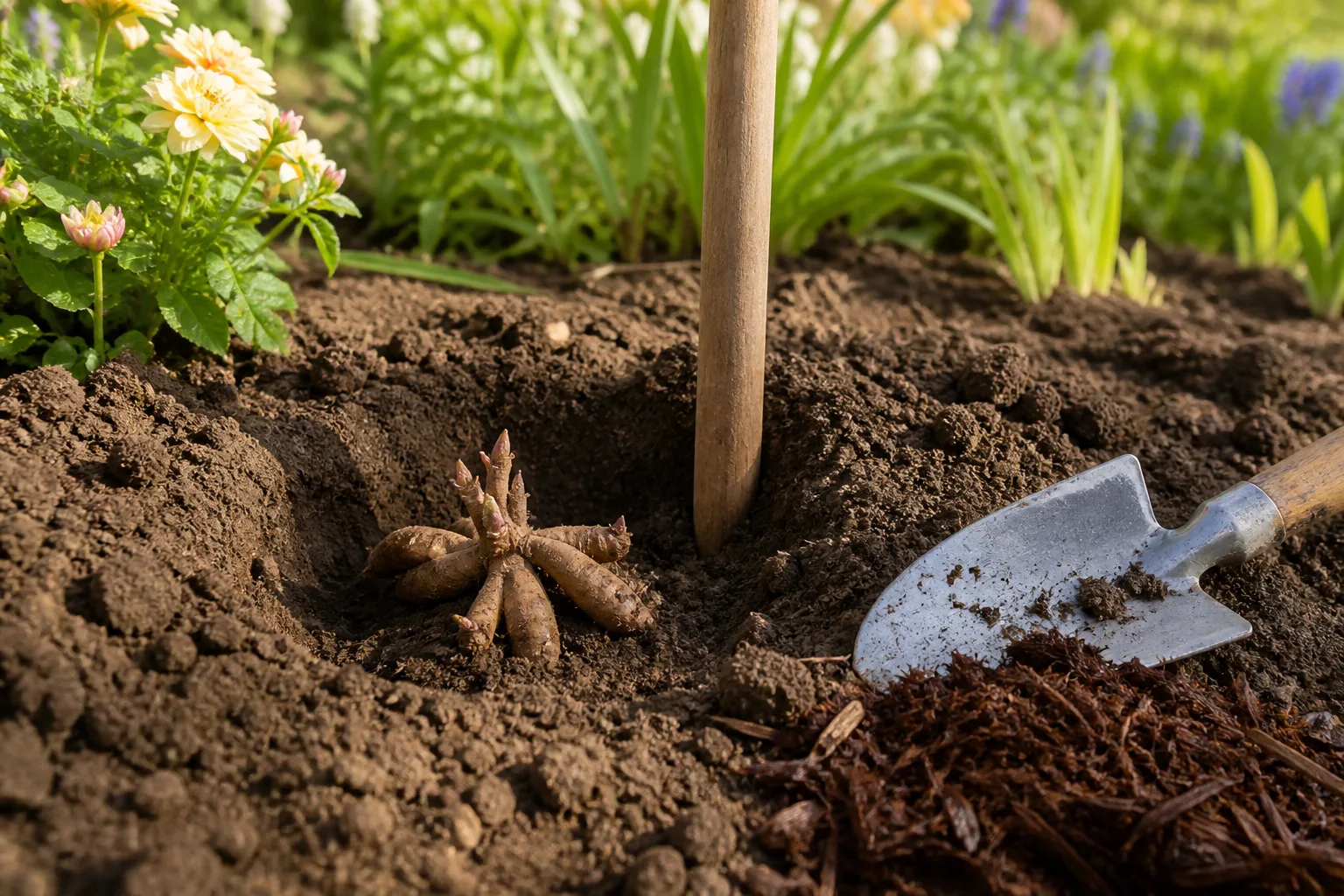
Do not flood an unstarted tuber with water or place it in cold, saturated soil. At first, it has no foliage to use much water, and a wet, inactive tuber is vulnerable to rot. Once shoots and leaves are growing, water according to the plant’s needs and your soil rather than following a fixed weekly schedule.
Write the variety on a label before planting. When a stored clump has been divided, labels help you compare which cultivars return reliably in your conditions and which ones need a different winter plan. If one tuber fails, that does not prove all dahlias are annuals in your garden; it may point to storage, damage, or drainage rather than climate alone.
Do Container Dahlias Come Back?
A potted dahlia is still a tender perennial, but the container changes its winter exposure. In a garden bed, soil surrounds the tuber and buffers temperature swings. In a pot, cold air reaches the sides of the root ball, so the tubers can freeze more quickly than the same cultivar planted in the ground.
In a mild climate, a large container against a sheltered wall may overwinter outdoors, but it remains a risk if the pot freezes or water collects around the tubers. The safest route in a climate with hard freezes is to let the top die back, move the pot or lift the clump, and store the dormant tubers in a frost-free place. If the pot is too large to move, consider removing the tubers instead of assuming the container protects them.
Keep the potting mix from staying wet while the dahlia is dormant. A pot that looks dry at the surface can still hold water deeper down, especially in cool weather. Good drainage matters in containers as much as it does in beds, and a saucer full of winter rain is a reason to change the setup.
Common Reasons Dahlias Fail to Return
A missing dahlia does not always mean your climate is too cold. The most common problems happen after flowering, when the plant is dormant and gardeners cannot see what is happening underground.
- The crown froze: The tuber was left where the soil froze deeply, or a stored clump froze in a shed.
- The clump rotted: Heavy winter soil, standing water, or a damp storage container kept the crown wet.
- The tubers dried out: Storage air was too dry, the packing medium lost moisture, or the clump was left exposed.
- The clump was damaged while digging: A fork sliced through tubers or pulling on the stem broke their narrow necks.
- A division had no eye: The tuber looked healthy but lacked a viable piece of crown.
- The plant was never dormant: A warm storage area encouraged early growth that then became weak or was damaged before planting.
When a clump looks poor in spring, inspect rather than guessing. Soft, foul-smelling tissue is not worth planting; a dry but firm tuber may still be viable if its crown is intact. Next fall, change only the factor that seems most likely—move the storage box, lift earlier from wet soil, or leave an extra tuber intact—so you can learn what your garden and storage space need.
Conclusion
Dahlias are perennials by nature, but they are tender perennials whose tubers may not survive an unprotected winter. If your soil stays mild and drains freely, you can try leaving them in place under mulch. If the ground freezes, the site stays wet, or a cultivar matters to you, lift and store the tubers; if that work is not worthwhile, grow dahlias as annuals and replace them each spring.
The right answer is the plan that fits your winter and your appetite for fall work. A hardiness zone can guide the decision, but drainage, exposure, storage conditions, and the health of each clump determine whether it returns.