Rat Tail Cactus Care: Light, Water, Soil, and Flowers
Grow rat tail cactus in the right light and mix, then use stem and pot checks to water well, prevent rot, root cuttings, and encourage spring flowers.
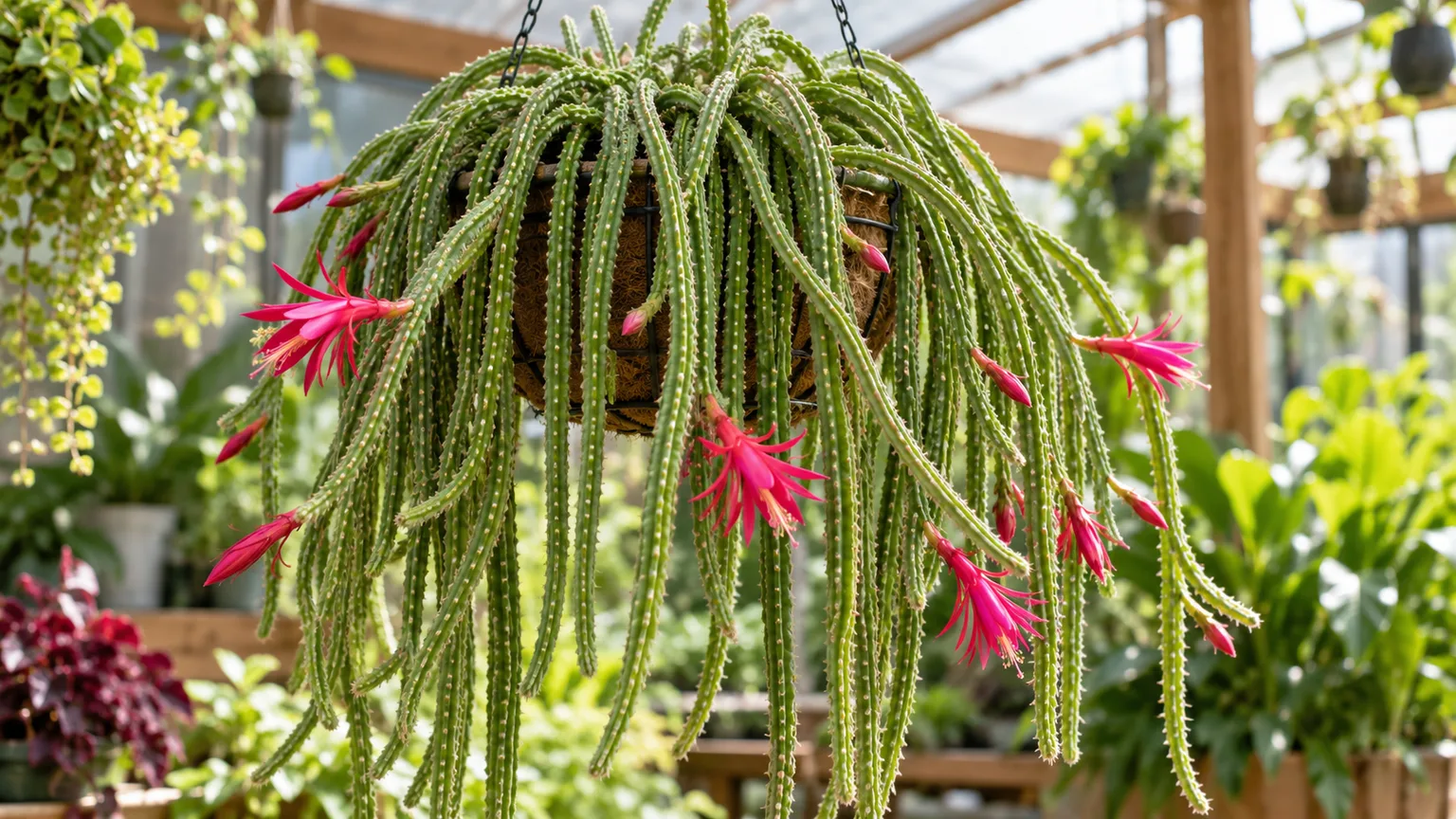
Rat tail cactus is easiest to grow when you stop treating it like a desert barrel cactus. It is a trailing cactus with an epiphytic growth habit, so it appreciates bright light, a potting mix that drains quickly but does not turn bone-dry for long stretches during active growth, and a cooler, drier winter rest. Give it a basket with an open drain, water according to the season and the mix, and keep it out of frost and harsh midday sun.
You may see it labeled Aporocactus flagelliformis or Disocactus flagelliformis. Both names are used for this plant; the name on a nursery tag does not change the practical care. The main challenge is balance: enough light and water to keep the long stems growing and flowering, but enough air around the roots to prevent rot.
Rat tail cactus care at a glance
| Need | Practical starting point |
|---|---|
| Light | Bright filtered light; introduce direct morning sun gradually |
| Growing-season water | Water thoroughly when the upper layer of mix is dry and the pot has become noticeably lighter |
| Winter water | Reduce sharply; water only when the mix is dry and the stems begin to lose firmness |
| Potting mix | An airy epiphytic cactus mix with bark and mineral material |
| Container | A shallow basket or pot with open drainage; keep the long stems clear of foot traffic |
| Feeding | Monthly, dilute liquid feed during active spring and summer growth |
| Temperature | Warm growing conditions; bring indoors before frost and provide a cool, bright winter rest if possible |
| Flowers | Tubular red-purple blooms usually appear in late spring when light and seasonal rest are adequate |
Use that table as a starting point rather than a calendar. A small plastic nursery pot in a warm, bright room dries at a different rate from a large moss-lined basket in a cool room, so check the mix and the pot before watering. The RHS lists this cactus as a trailing plant with well-drained growing conditions and recommends an epiphytic cactus compost, moderate water during growth, and monthly high-potash feed.RHS plant profile
What rat tail cactus is—and which name to use
Rat tail cactus is a flowering member of the cactus family with slender, round stems that trail over the edge of a container. Small bristles grow from the stem’s areoles, the little points where cactus spines, flowers, or new growth can emerge. In spring and early summer, a mature, well-grown plant can produce vivid, funnel-shaped red-purple flowers along the stems; the RHS describes blooms reaching about 8 centimeters long.RHS plant profile
Botanical names vary by reference. Kew’s Plants of the World Online accepts Aporocactus flagelliformis and records Disocactus flagelliformis as an alternative name; the RHS profile uses Disocactus flagelliformis and lists Aporocactus flagelliformis among its synonyms.Kew Plants of the World Online RHS plant profile That is why a search for either name leads to care advice for the same familiar trailing plant. When buying, the botanical name is more useful than a vague label such as “hanging cactus.”
The name “rat tail” describes the long, narrow stems, not a relationship to the monkey tail cactus. Monkey tail is a different cactus whose stems are covered in long, dense, hairlike spines; rat tail cactus has short, bristly spines on narrow cylindrical stems. The two can both hang from baskets, but the hairlike coat is a useful visual clue that you are looking at a different plant.
In its native range in central Mexico, this species grows in a subtropical setting, and specialist cactus descriptions identify it as epiphytic or lithophytic: it can anchor in tree branches or rock crevices rather than rooting in deep ground soil.Kew Plants of the World Online Cactus y Suculentas’ species profile That does not mean it parasitizes a tree or needs to be mounted on one. In a home, a container supplies support, moisture, and nutrients; understanding its habitat simply explains why a very dry, gritty desert-cactus routine can leave it thirsty.
Give trailing stems bright, filtered light
Place rat tail cactus where it receives strong light for much of the day, such as near a bright east- or south-facing window with a sheer curtain or a little distance from hot glass. It needs enough light to maintain firm green growth and form flowers, but a sudden move from a dim shop or room into hard afternoon sun can scorch the stems. Increase direct exposure over a week or two, beginning with gentle morning sun and watching for new red-brown patches.
Light recommendations can sound contradictory because the plant benefits from high light but does not always appreciate unacclimated, intense sun. The RHS profile labels its position “full sun,” while its cultivation note calls for bright filtered light; the RHS guide also explains that epiphytic cacti need partial shade and should be treated more like general houseplants than arid-desert cacti.RHS plant profile RHS cacti and succulent growing guide The practical compromise is bright light first, then controlled sun exposure based on the window, season, and heat.
Indoors, keep the plant close enough to a window to see distinct natural shadows during the day. If new stems grow very thin, pale, and stretched toward one side, the plant is reaching for more light; move it closer gradually or add a grow light above the basket. If older growth is healthy but new segments are weak, check both light and root condition before adding fertilizer.
A balcony or patio can work in warm weather if the basket is sheltered from harsh afternoon sun, pounding rain, and wind that whips the stems against walls. Move it outdoors in stages: start in shade, then expose it to brighter light as it adjusts. Bring it back inside before cold nights or a forecast frost rather than waiting for visible cold damage.
Water by growth, dry-down, and pot weight
Water more regularly while the plant is actively extending new stems in spring and summer. When the top layer of mix feels dry and the container is lighter, water until the whole root ball is moistened and excess drains from the bottom; then empty the saucer or cachepot. This is more reliable than small sips, which can wet only part of the pot and encourage roots to stay shallow.
Do not water again simply because a certain number of days has passed. Feel the mix below the surface with a clean finger or wooden stick and compare the pot’s weight after watering with its weight as it dries. A hanging basket may lose moisture faster because air moves around it, while a plastic pot or an organic moss lining can stay damp longer. The RHS recommends moderate watering during the growing season for this species and notes that epiphytic cacti generally need more regular moisture than desert cacti.RHS plant profile RHS cacti and succulent growing guide
In fall, taper the amount and frequency as growth slows and days shorten. During a cool winter rest, allow the mix to dry more fully between waterings; give a small drink if the plant begins to look distinctly deflated or wrinkled, but do not keep the roots continuously wet in cold conditions. If your home stays warm and the plant continues growing under a bright light, it may need some moisture during winter, but still let the mix drain and approach dry before watering again.
A wrinkled stem is a clue, not a diagnosis. If the stems feel thin but firm and the pot is very light, the plant may be dry; water thoroughly and check for recovery over the next several days. If stems are soft, translucent, blackening, or collapsing while the mix remains damp, stop watering and inspect drainage and roots for rot instead of adding more water.
Choose an airy mix that still holds some moisture
Use an epiphytic cactus mix rather than a dense, peat-heavy houseplant soil or a nearly pure mineral mix intended for desert cacti. A useful starting blend is two parts quality potting mix, one part fine orchid bark, and one part pumice or perlite by volume. The exact recipe matters less than the result: water should move through the pot freely, but the roots should not dry to dust immediately after each watering.
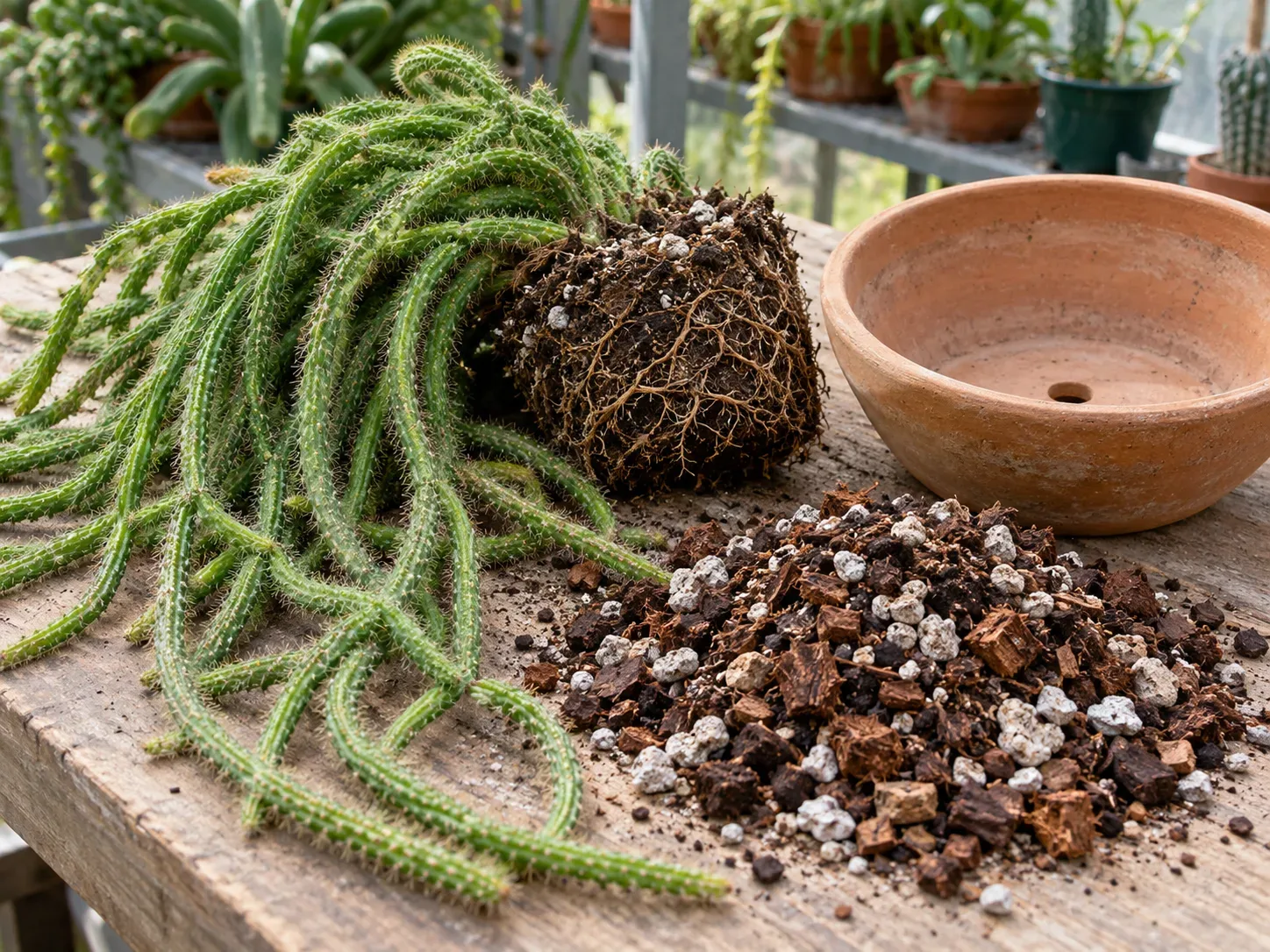
A loose, bark-and-mineral mix gives the fine roots both moisture and air.
The RHS recommends an epiphytic cactus compost for rat tail cactus.RHS plant profile If you buy a cactus mix, feel it before using it: some mixes are mostly fine peat and hold water too long in cool rooms, while others contain coarse grit and may dry too fast for this species in a warm, airy basket. Add bark or pumice if the mix compacts, or a little potting mix if it dries unusually quickly and the plant is actively growing.
Check the mix after watering. It should drain within a short period and leave no standing water, but the root ball should feel evenly damp rather than dry in the center. A simple test is to water a small sample in a pot with a drain hole: if it forms a soggy, airless clump, add bark and mineral particles; if water runs through without wetting the mix, add a modest amount of moisture-retentive potting medium.
Avoid placing gravel in the bottom as a substitute for a well-draining blend. A drainage layer does not fix a compact mix or a blocked hole; choose the right texture throughout and keep the container free to drain.
Pick a hanging pot that drains and stays stable
A hanging basket shows off the plant’s trailing habit, but the stems can eventually become long and heavy. Use strong hooks, secure chains, and a basket or pot that can support the mature plant after watering, when the mix weighs more. Hang it where the stems will not snag on doors, passersby, pets, or curtains; the short bristles can prick and the brittle stems can snap if repeatedly brushed.
A plastic nursery pot inside a decorative hanging holder makes watering easier: lift out the inner pot, water it over a sink, let it drain completely, and return it. A shallow basket with a liner can also work, but remember that moss or coir retains moisture. If the center stays wet for several days, reduce retained lining, improve airflow, or use a faster-draining mix rather than withholding water from an actively growing plant until it shrivels.
Terracotta dries faster than plastic and may suit a warm room or a heavy mix. Plastic retains moisture longer and may be easier to manage where the air is dry or the mix is very open. Neither material is automatically best; choose based on how fast the root ball dries in your home, and always use an unobstructed drainage hole.
Manage temperature, humidity, and outdoor time
Ordinary warm indoor temperatures suit the active growing season. Keep the plant away from cold drafts, freezing windows, heating vents, and sudden temperature swings. Rat tail cactus is tender to frost; in regions with chilly winters, treat it as a container plant and bring it under cover before temperatures approach freezing rather than relying on a hardiness-zone label alone.
A cool, bright winter rest can help set up spring flowering. A spare bright room or protected porch that stays cool but frost-free is useful; avoid a dark garage or a cold outdoor shed. The RHS general cactus guide describes a cooler autumn-and-winter rest for many cacti, with reduced watering, while distinguishing epiphytic cacti from desert forms that prefer a long dry period.RHS cacti and succulent growing guide Use the plant’s condition and the room temperature to adjust water rather than enforcing a strict dormant schedule.
Normal household humidity is usually workable if the mix and watering are right. Do not mist as a substitute for watering the roots, and do not place the basket where stagnant, humid air stays trapped around wet stems. In a very dry heated room, modest air movement and regular root-zone watering during active growth are more useful than leaving the plant in a water-filled humidity tray.
In summer, the plant can spend time outside in a bright, sheltered position. Acclimate it to outdoor light and wind over several days, keep it away from a place where rain repeatedly saturates the basket, and inspect for pests before bringing it back indoors. Outdoor summer growth can be vigorous, but frost sensitivity makes year-round outdoor planting unsuitable for most climates.
Build a seasonal feeding and rest routine
Feed only while the plant is actively growing. The RHS species profile recommends a monthly high-potash liquid feed during the growing season; follow the product label for dilution and apply it to already-moist mix rather than to a bone-dry root ball.RHS plant profile If you use a general houseplant fertilizer, start at a conservative dilution because repeated concentrated feeding can leave salts in a small pot.
Stop feeding when growth slows in fall and do not fertilize during a cool winter rest. Resume when new growth begins and the plant is again using water regularly. Pale stems are not automatically a fertilizer problem: low light, root loss, and a waterlogged mix can all prevent normal growth, and fertilizer cannot repair damaged roots.
A workable yearly rhythm is simple: spring brings more light, water, and monthly feed as new stems appear; summer maintains that routine while you monitor quicker drying; fall gradually reduces watering and stops fertilizer; winter keeps the plant bright and cooler, with only occasional water as needed. Let local weather and indoor conditions set the timing.
Repot only when the plant gives you a reason
Repot when roots crowd the container, the mix has collapsed or stopped draining well, the plant repeatedly dries too fast to water evenly, or the basket is unstable under the mature stems. Do not repot automatically every year. The RHS notes that mature cacti and succulents may need occasional repotting as they expand, while the species profile recommends an epiphytic cactus compost rather than a fixed annual schedule.RHS cacti and succulent growing guide RHS plant profile
Choose a pot only modestly wider than the existing root ball and confirm that it has a drainage hole. A much larger pot holds more unused wet mix, which can remain cool and damp long after the roots have absorbed what they need. Spring or the period just after flowering is a practical time to repot, when the plant can return to active growth; avoid disturbing it while buds are forming or flowers are open.
Support the dangling stems while you work instead of lifting the plant by one or two long branches. If the root ball is stuck, ease the container away from the roots rather than pulling hard on the stems. Remove loose, exhausted mix and cut away only roots that are clearly dead or mushy with a clean tool; firm roots are worth preserving.
After repotting, settle the root ball into the new mix without burying the stem base deeply. Wait a few days before the first thorough watering if roots were disturbed or cut, then resume the normal seasonal routine. If the plant had healthy roots and the root ball stayed intact, it may need less recovery time, but it still should not sit in a saturated pot.
Prune selectively and handle stems safely
Rat tail cactus does not need routine shaping to flower. Trim only dead, badly damaged, or inconveniently long stems, or remove a healthy stem when you want a cutting. Cut cleanly between areoles with sharp, disinfected snips; do not twist the stem off, which can tear tissue and leave a larger wound.
The fine bristles are short but can irritate skin, so support the plant with folded paper, thick gloves, or a towel and keep the cut stems from brushing your forearms. Keep pruned material out of walkways and out of reach of children and pets. If an old stem is brown and woody at its base but the rest of the plant is firm and green, that gradual aging may be cosmetic; remove it only if it is dead, unsightly, or blocking healthy growth.
Propagate rat tail cactus from cuttings
Stem cuttings are the quickest way to make another rat tail cactus and usually preserve the parent plant’s growth habit. Choose a firm, healthy stem during the warm growing season. A tip cutting is easy to identify, but a longer stem can be divided into several sections if you keep each piece oriented with its former growing tip facing upward.
Use a clean, sharp blade and make a straight cut. Set the pieces in a dry, shaded place with good air circulation until the cut ends form a dry callus; depending on stem thickness and room conditions, this can take several days. A practical rat tail cactus propagation guide likewise recommends callusing the cut and planting sections shallowly, which reduces the chance that a wet wound stays buried in damp mix. Planting a fresh wet cut directly into moist mix is a common way to lose the cutting to rot.
Callus, orient, and root each cutting
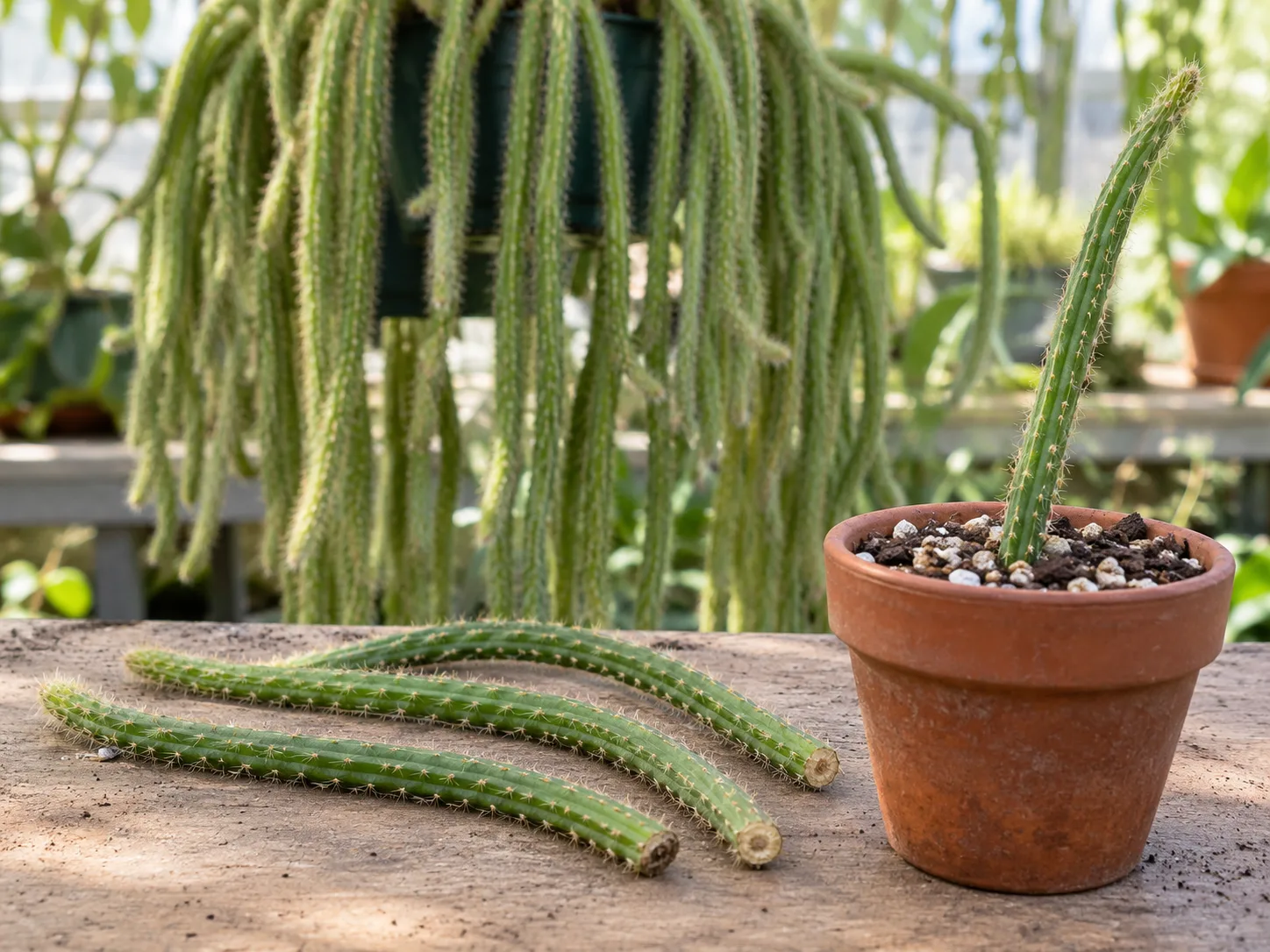
Let each cut end callus before planting it shallowly in a free-draining mix.
Fill a small pot with the same airy mix used for the parent plant and insert the callused base only shallowly, just deep enough for the section to stand. If you have divided a stem, mark the original top before cutting so you do not accidentally plant a section upside down. A wooden skewer can support a leaning cutting without forcing it deeper into the mix.
Keep the pot warm and bright but out of harsh direct sun. Moisten the mix lightly after planting, then allow the surface to dry before adding more water; the cutting has no roots yet, so the goal is slight moisture around the base, not a continuously wet pot. Resist tugging to check for roots. New growth or gentle resistance after several weeks is a better sign that roots have formed than a fixed deadline.
Once a cutting is anchored and begins growing, gradually move it into the brighter conditions used for a mature plant. If the base turns dark or soft, remove the affected part with a clean blade, let the healthy section callus again, and restart it in fresh, dry mix.
Grow rat tail cactus from seed only when it suits your goal
Seed can produce new plants, but it is slower and less predictable than a stem cutting. You need a pollinated flower and a mature fruit with viable seed, and seedlings take time to become substantial trailing plants. Choose seed if you enjoy raising plants from the beginning or want genetic variation; choose cuttings if your goal is a flowering-size plant sooner.
Use a clean, shallow seed tray with a fine, free-draining medium, sow on the surface, and keep it warm, bright, and evenly moist without direct sun or waterlogging. Once seedlings are large enough to handle, pot them individually and protect their small root systems from both prolonged dryness and saturated mix. The RHS includes seed as a propagation method for Disocactus but also recognizes stem cuttings, which are usually the simpler home method for this trailing plant.RHS plant profile
Encourage flowers without forcing the plant
Rat tail cactus usually flowers in late spring after it has made enough mature growth and received strong light through the year. The RHS describes red-purple, funnel-shaped blooms from late spring and lists a five-to-ten-year time to maturity for its plant profile; a young cutting may need several growing seasons before flowering, so lack of blooms in a small plant is not necessarily a care failure.RHS plant profile
Begin with light. A plant kept several feet from a window may remain alive but produce weak stems and few flowers. Move it nearer a bright window, acclimate it to gentle morning sun, and keep the stems evenly lit rather than allowing one side to receive all the light.
Next, give it a seasonal contrast: active growth with regular moisture and feeding in spring and summer, followed by cooler conditions and much less water in winter. A cool rest can support flowering, but cold stress is not a bloom treatment; the plant must remain frost-free. Overwatering in a cold room is especially risky because the mix dries slowly while roots are less active.
Avoid changing several variables at once. Do not increase fertilizer, move the basket into harsh sun, and repot a budding plant all in the same week. If the cactus is healthy but does not flower, first improve its light and seasonal routine for a full growth cycle; then review maturity and root condition before deciding it needs more feed or a larger pot.
Diagnose wrinkled, weak, red, or brown stems
Read the plant’s stem condition together with the mix and recent weather. One visual change rarely identifies a single cause, and responding to a symptom without checking the root zone can make the original problem worse.
- Wrinkled but firm stems with a very light pot: the root ball may be too dry. Water thoroughly, drain the pot, and reassess after several days. If the stems stay thin despite moist mix, inspect roots and drainage rather than watering more often.
- Soft, dark, or translucent sections while the mix is damp: suspect rot. Empty the saucer, improve air movement, and inspect the roots. If rot has reached the base, take cuttings from firm, unaffected stems and restart them in fresh mix.
- Red or bronze patches after a move outdoors or closer to glass: sudden strong sun may be the cause. Move the plant to bright filtered light, then acclimate it more slowly. A little color change is not enough to prove a problem; look for dry, scorched tissue and a recent exposure change.
- Pale, stretched, or unusually thin new stems: check for inadequate light, especially if growth leans toward a window. Increase light gradually and verify that the roots are not chronically wet or damaged.
- A few roots growing from the hanging stems: aerial roots are consistent with an epiphytic growth habit and do not by themselves mean the plant is thirsty. Keep the basket routine stable; do not bury or spray every aerial root in response.
- Older stem bases turning corky while newer growth remains green and firm: gradual aging can occur on long-lived stems. If the brown area is dry and stable, monitor it; if it spreads, softens, or appears with pests, investigate further.
These checks help separate thirst from root failure, sun stress, and normal stem aging. For an uncertain case, take a photo and record the last watering, pot weight, location change, and temperature; those details are more informative than the color alone.
Check for scale, mealybugs, and spider mites
Inspect the stems every time you water, especially where branches cross and around the areoles. The RHS lists scale insects and mealybugs among the pests that may affect this cactus; specialist cactus-care references also flag spider mites as a potential problem in warm, dry conditions.RHS plant profile Cactus y Suculentas’ species profile
Mealybugs look like small white cottony patches, while scale appears as fixed, shell-like bumps. Spider-mite injury can show up as fine pale stippling or a dull, dusty look; use a magnifier and check for fine webbing rather than assuming every brown mark is a mite. Isolate an infested plant before treating it so pests do not spread to nearby houseplants.
For a small infestation, remove visible insects with a damp swab or rinse the stems gently if the plant can dry promptly. If you use a labeled insecticidal soap or horticultural product, follow its directions, test a small area first, and keep the plant out of intense sun until it has dried. Recheck weekly because eggs and hidden pests can survive the first cleanup.
Conclusion
Grow rat tail cactus in bright filtered light, a freely draining but not desert-dry mix, and a container that lets water escape while supporting the trailing stems. Water more consistently during active growth, taper off in fall, and keep winter conditions cool, bright, and frost-free rather than forcing the roots to stay wet or the plant to endure cold.
If it looks unhappy, check the pot and roots before changing the whole routine: a light pot with firm wrinkles suggests thirst, while soft dark stems in damp mix suggest rot. The same seasonal approach supports propagation and flowering, and a few aerial roots or an old corky stem do not automatically signal failure. With the right balance of light, moisture, and air at its roots, this unusual cactus can trail for years and flower when mature.



