Drooping Leaves on Brahmi: Causes, Checks & Fixes
Quick answer
Drooping leaves on Brahmi usually mean turgor loss from a dry surface in hot weather, stagnant sour tray water, or weak light—not a single generic wilt. First step: press your finger 1–2 cm into the mix; if it feels barely dry and the pot is light, bottom-water in clean water until drainage runs freely.
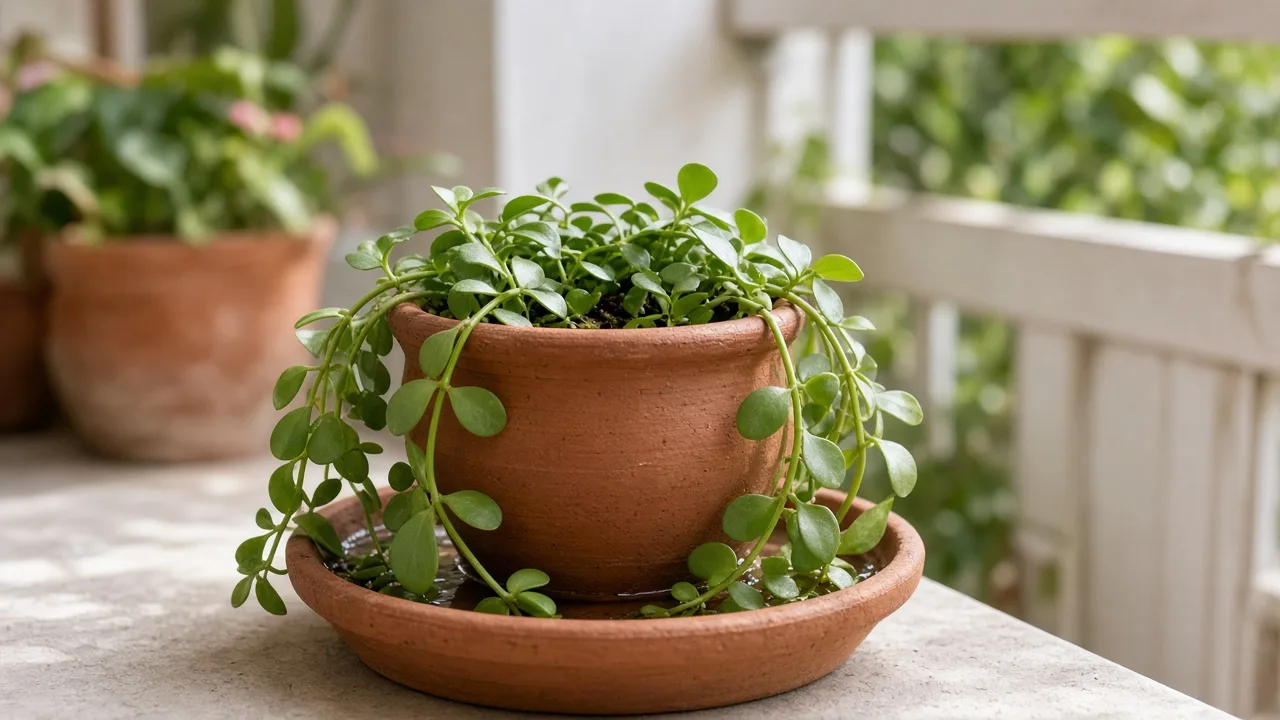
Drooping Leaves on Brahmi: Causes, Checks & Fixes
This guide covers drooping leaves on Brahmi. See also the general Drooping Leaves guide, watering, and light pages for this plant.
Drooping Leaves on Brahmi: Causes, Checks & Fixes
Quick answer
Drooping leaves on Bacopa monnieri (Brahmi, water hyssop) mean the small succulent blades have lost turgor and hang from creeping stems instead of holding a firm angle along the mat. For how turgor loss works on houseplants in general, see our drooping leaves hub. On Brahmi, the top 1–2 cm of mix and the water tray tell the story faster than the leaves alone.
First step: press your finger 1–2 cm into the mix and lift the pot. If the surface feels barely dry, the container feels light, and stems are limp, bottom-water in clean water for 20–30 minutes until the mix darkens and excess drains freely—then empty any stale saucer water. If the mix stays dark and cool while leaves droop, or the tray smells sour, stop watering, dump stagnant water, and check stem firmness before you add another drink.
When to use this page vs other Brahmi guides
| What you see | Read next |
|---|---|
| Crispy tips, dry surface, light pot in heat | Underwatering |
| Wet mix for days, sour smell, soft stems | Overwatering |
| Mushy roots, collapsing runners at soil line | Root rot |
| Whole-vine collapse after cold night | This page — frost section; also wilting |
| Thin pale mats in a dim room | Not enough light |
| Dry air with crisp edges on firm mix | Low humidity |
| Lower yellow leaves on stagnant wet mix | Yellow leaves |
What drooping leaves look like on Brahmi
Healthy Brahmi forms a low, spreading mat of small thick green leaves on prostrate stems that root at the nodes—often in a hanging basket, terrace tray, or shallow pot at a bog edge. Drooping changes that carpet in recognizable ways:
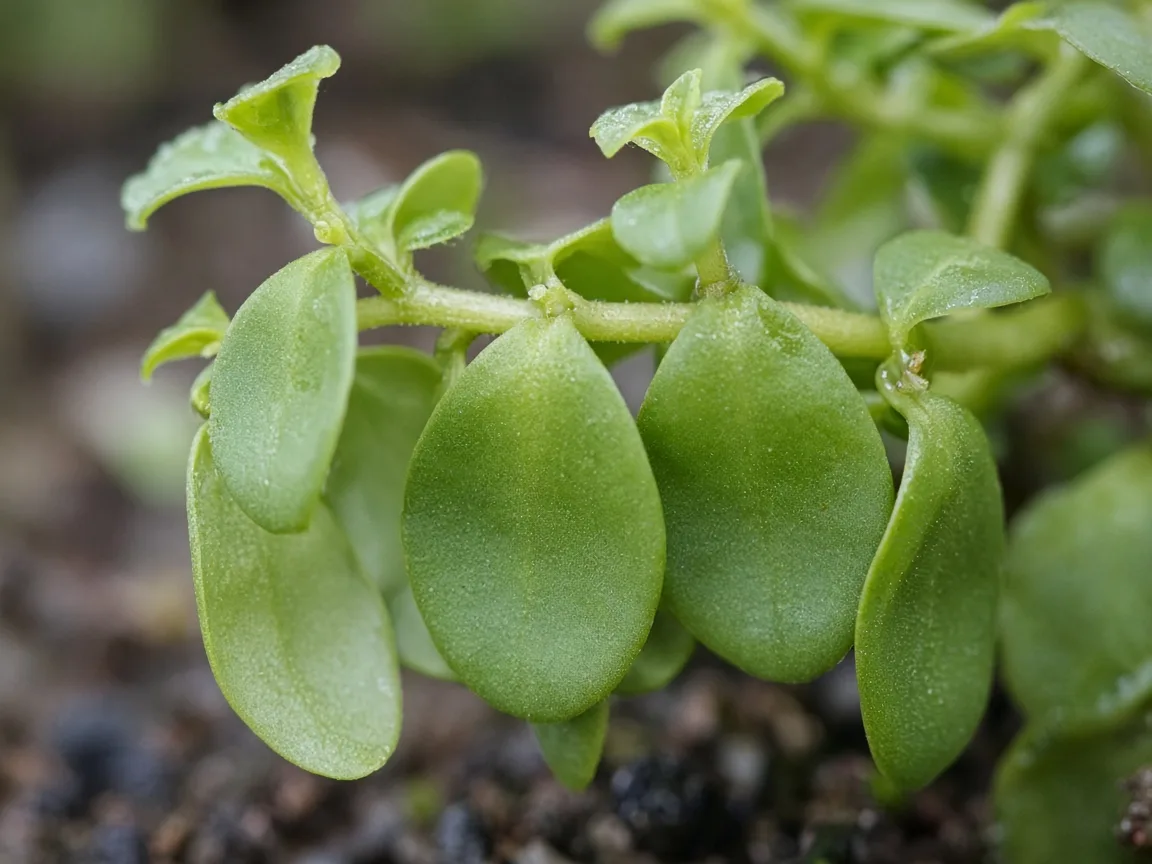
Drooping Brahmi leaves—limp succulent blades on firm creeping stems usually track a dry surface layer in hot weather, not a mystery disease.
Heat-thirst droop is the most common indoor and balcony pattern. Outer runners hang limp while the center still looks slightly damp. Leaves feel thin and soft, sometimes with brown tips starting at the margins. The pot feels light. Surface mix at 1–2 cm is pale and dry even though deeper mix may still hold moisture—Brahmi is heat tolerant but not drought tolerant at all, so the shallow roots run out of water fast in Indian summer sun.
Stagnant-wet droop shows limp or yellowing lower leaves while mix stays dark and heavy. A water tray under the pot may smell sour. Stems feel soft rather than merely limp. This is not “too much love” in the abstract—it is airless, stagnant moisture around a plant that wants wet soil with some oxygen exchange, similar to overwatering-related wilt on saturated mix.
Sudden flop after cold below about 10°C (50°F) often hits terrace mats overnight while mix still feels moist. Frost-tender Brahmi collapses when chilled dry winds follow a warm spell—warmth and stable moisture matter more than an extra soak.
Gradual sag in deep shade produces thin, pale runners that droop between waterings because the plant uses little moisture in weak light. The mix stays damp on top while growth stalls—see not enough light before you water on a calendar.
Why the 1–2 cm dry-down matters on wetland Brahmi
Most houseplant droop guides tell you to probe 3–5 cm before watering. That depth is wrong for Brahmi culture. LeafyPixels Brahmi data and NC State’s moist-to-wet habitat description align: this species evolved on mud flats, stream margins, and irrigated fields where the root zone never fully dries. Plants For A Future notes it prefers moist or wet soil and can grow in shallow water.
In a home pot that means:
- Water when the surface starts to feel barely dry at 1–2 cm, not when half the pot is dust-dry.
- A “still moist” reading at depth with a dry, light surface is a classic prelude to droop on a hanging basket in afternoon sun.
- Waiting for succulent-houseplant dryness guarantees limp mats on a species sold for aquariums, bogs, and draping basket edges.
If you only remember one Brahmi rule: shallow dryness causes droop faster than deep dryness signals thirst on drought-trained plants.
Trailing stems vs mat center in hanging baskets
Brahmi’s creeping habit is diagnostic. Stems spill over the rim and root at nodes where they touch damp mix or moss. In a hanging basket:
- Outer runners transpire in direct sun and dry first—they droop while the center still looks green.
- Dry basket syndrome looks like “I watered yesterday” with limp edges because water ran down the center and never rewetted the outer ring.
- Recovery check: after a soak, watch whether node roots along the rim turn plump and white within a few days—that is healthier than forcing every old leaf upright.
Trim crispy outer runners only after moisture stabilizes; see Brahmi pruning if mats are overcrowded.
Clean tray water vs sour stagnant bog water
Terrace growers often keep a shallow water tray under Brahmi in peak heat—a valid mimic of wet margins and pond edges. The failure mode is weeks of unchanged tray water in a sealed cachepot:
- Mix smells sour at drain holes
- Fungus gnats hover when you disturb the surface (damp organic mix supports their larvae)
- Stems soften while leaves stay wet-looking
Healthy bog moisture uses fresh water, drainage holes, and weekly tray refresh. Anaerobic stagnation needs you to dump trays, let the pot breathe for a day, then resume shallow watering per the Brahmi watering guide—not more fertilizer.
Confirm the cause: weight, smell, and label
Work through checks in order:
- Finger test at 1–2 cm — Bare dry on a light pot → thirst. Damp on a heavy cool pot → hold water and inspect roots.
- Pot lift — Small nursery pots in heat can go from wet to limp in one sunny afternoon.
- Tray sniff — Sour odor → empty water, improve airflow, read overwatering if stems dent.
- Species label — Confirm Bacopa monnieri; “brahmi” packs sometimes contain Centella asiatica (gotu kola) with different drought timing. Use the Brahmi overview for ID cues.
- New growth — Plump leaves at stem tips after correction beat older blades for judging success.
Symptom lookalike comparison
| What you see | Likely cause | Key check |
|---|---|---|
| Limp leaves, light pot, dry 1–2 cm surface | Heat drought | Soak once; recovery within hours–1 day |
| Limp lowers, wet mix, sour tray | Stagnant / root stress | Dump tray; firm stems? |
| Afternoon limp, firm by morning, moist mix | Heat + fast transpiration | Refresh surface moisture, not deep drought wait |
| Pale thin mats, damp mix, dim room | Low light | More sun per light guide |
| Sticky stippling on firm stems | Spider mites or aphids | Rinse undersides before soaking pot |
First fix after you know dry vs wet
Dry pattern (most common on sunny balconies): Set the pot in a shallow tray of clean room-temperature water for 20–30 minutes—or top-water until it runs from drainage holes—then let excess drain. Refill a fresh bottom tray if you use one. Do not fertilize the same day.
Wet sour pattern: Pour off all standing water, skip the next scheduled drink until the surface is barely dry at 1–2 cm, and move the pot to brighter airflow without direct scorch. If stems dent at the soil line, open the root rot guide before repotting.
Cold flop: Move indoors or under cover, keep mix evenly moist (not flooded), and wait 48 hours before pruning blackened tissue.
Recovery timeline and what improves
- Mild thirst droop on firm stems: often visible firming within hours to one day after a proper soak on moisture-retentive mix.
- Crispy tips from repeated dry cycles may not green up; new leaves should look plump.
- Stagnant-wet stress: recovery takes one to three weeks of corrected drainage and tray hygiene; yellow lowers may drop.
- Cold damage: surviving nodes may resprout in warm weather; mushy stems will not revive.
Judge success by new node rooting, spreading mats, and stable surface moisture—not by every older leaf returning to perfect posture.
Mistakes to avoid
- Waiting for deep dryness because generic houseplant advice says “let it dry out”—Brahmi is not a snake plant.
- Leaving sour tray water because “this plant likes wet feet.”
- Soaking a heavy, sour pot because leaves look limp—roots may already lack oxygen.
- Stacking repot, prune, and fertilizer on the same day after droop appears.
- Buying the wrong “brahmi” and applying Bacopa watering to Centella.
How to prevent drooping next season
Align culture with wetland habit: full sun to partial shade, high humidity (60–80%), and mix that holds moisture without sealing the pot airless. Water on the 1–2 cm cue, refresh tray water weekly in heat, and repot when the mat dries the pot in a single day—see repotting. Light monthly feeding in active growth only after droop resolves; see fertilizer.
When to escalate
Treat drooping as urgent if stems soften at the crown, sour odor persists after tray dumps, several runners blacken after frost, or limp tips show sticky pest residue with stippling. Chronic limp mats in a bright, correctly watered pot may mean the container is root-bound—stabilize moisture first, then consider repotting in spring.
Related Brahmi guides
- Brahmi overview
- Brahmi watering
- Brahmi light
- Brahmi soil
- Wilting on Brahmi
- Underwatering on Brahmi
- Overwatering on Brahmi
- Root rot on Brahmi
- Brahmi problems hub
Related tool
Use the Drooping Leaves Diagnosis Tool to narrow causes for drooping leaves on this plant before changing multiple variables at once.