When to Plant Sunflowers: Timing by Frost and Soil
Learn when to plant sunflowers by last frost, soil temperature, variety, and bloom date, plus how to direct sow, transplant, and succession plant.
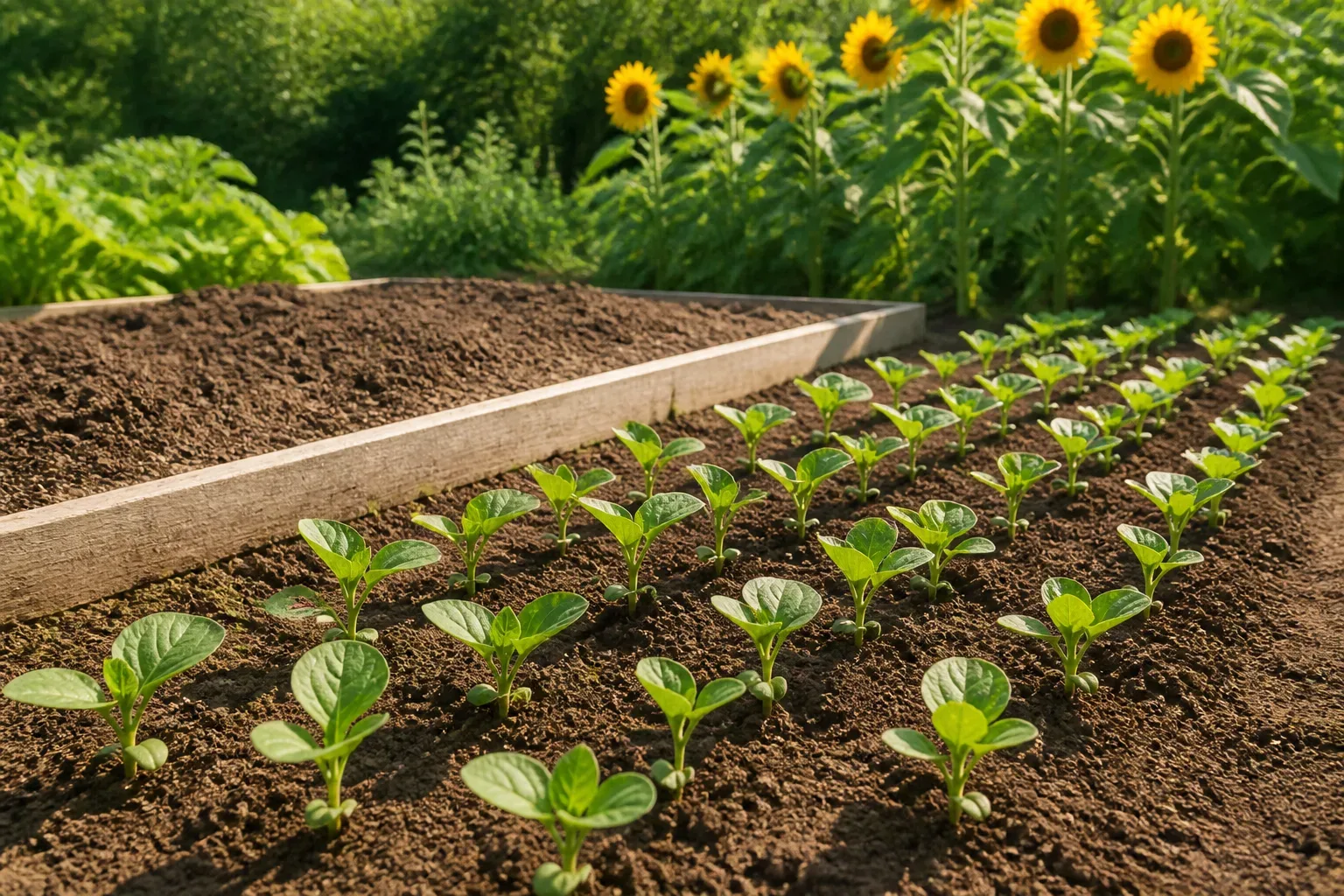
For most gardens, the right time to plant sunflowers is after the last expected spring frost, when the soil has warmed to at least 55–60°F at seed depth. That rule is more useful than a fixed month because a cool May, a warm March, a raised bed, and a large container can all reach planting conditions at different times.
The common sunflower (Helianthus annuus) is a warm-season annual. It grows quickly once conditions are right, but its seed and young stem do not appreciate cold, waterlogged soil or a surprise freeze. Use the local frost window, a soil-temperature check, and the seed packet’s days to maturity together; when all three agree, sow.
The short answer: wait for warmth, not a calendar date
The simplest decision rule is: wait until frost danger has passed, soil is warm enough to germinate, and the bed is workable rather than sticky. In many temperate gardens that means late spring. In a mild climate it may be earlier, while a high-elevation or northern garden may need to wait longer. The West Virginia University Extension growing guide recommends planting after the threat of frost and notes that sunflowers can be grown across a wide range of soils and climates.
| Your situation | A sensible starting point | Why it works |
|---|---|---|
| Cool spring or frost-prone site | Wait until the last-frost window has passed and soil reaches 55–60°F | A tender seedling has time to establish without a freeze setback |
| Warm spring with reliable forecast | Sow as soon as the soil is warm and drainable | Sunflowers gain the full growing season without sitting in cold mud |
| Indoor-grown seedling | Start only a few weeks before outdoor conditions are ready | Older seedlings become root-bound and transplant poorly |
| Late-season sowing | Count backward from the first fall frost using days to bloom | A warm soil temperature alone cannot create missing growing days |
Do not treat “after the last frost” as a magic promise. Frost dates are estimates, and a clear forecast can still change. If a cold night is likely immediately after emergence, delay a few days or keep a light row cover ready. A short wait costs less than replacing a whole row of seedlings.
Match planting time to the result you want
The best planting date changes with the job. A gardener who wants one tall statement plant has a different deadline from someone who wants a steady supply of cut stems, seed heads for birds, or a compact sunflower in a pot. Decide the outcome before choosing the date or variety.
Start with your last expected frost date
Find a frost-date estimate from your local extension service, garden center, or reliable weather resource, then use it as a planning range rather than an exact appointment. Sunflower seeds may tolerate a brief cool spell better than a newly emerged plant, but a late hard frost can kill the growing tip or leave a seedling permanently stunted.
If your soil is warm but the forecast still shows a credible freeze, you have three options: wait, sow in a protected container, or sow a small batch and cover it. Waiting is the lowest-risk choice. Covering is useful when you can remove the cover during the day and keep it from pressing against wet foliage overnight. Do not seal a clear cover over seedlings in strong sun; the temperature can rise quickly.
The RHS guidance on direct sowing makes the trade-off clear: direct sowing avoids root disturbance, but cold wet soil and late frosts can still damage young plants. That is why the frost date starts the decision, but does not finish it.
Use soil temperature as the go-or-wait signal
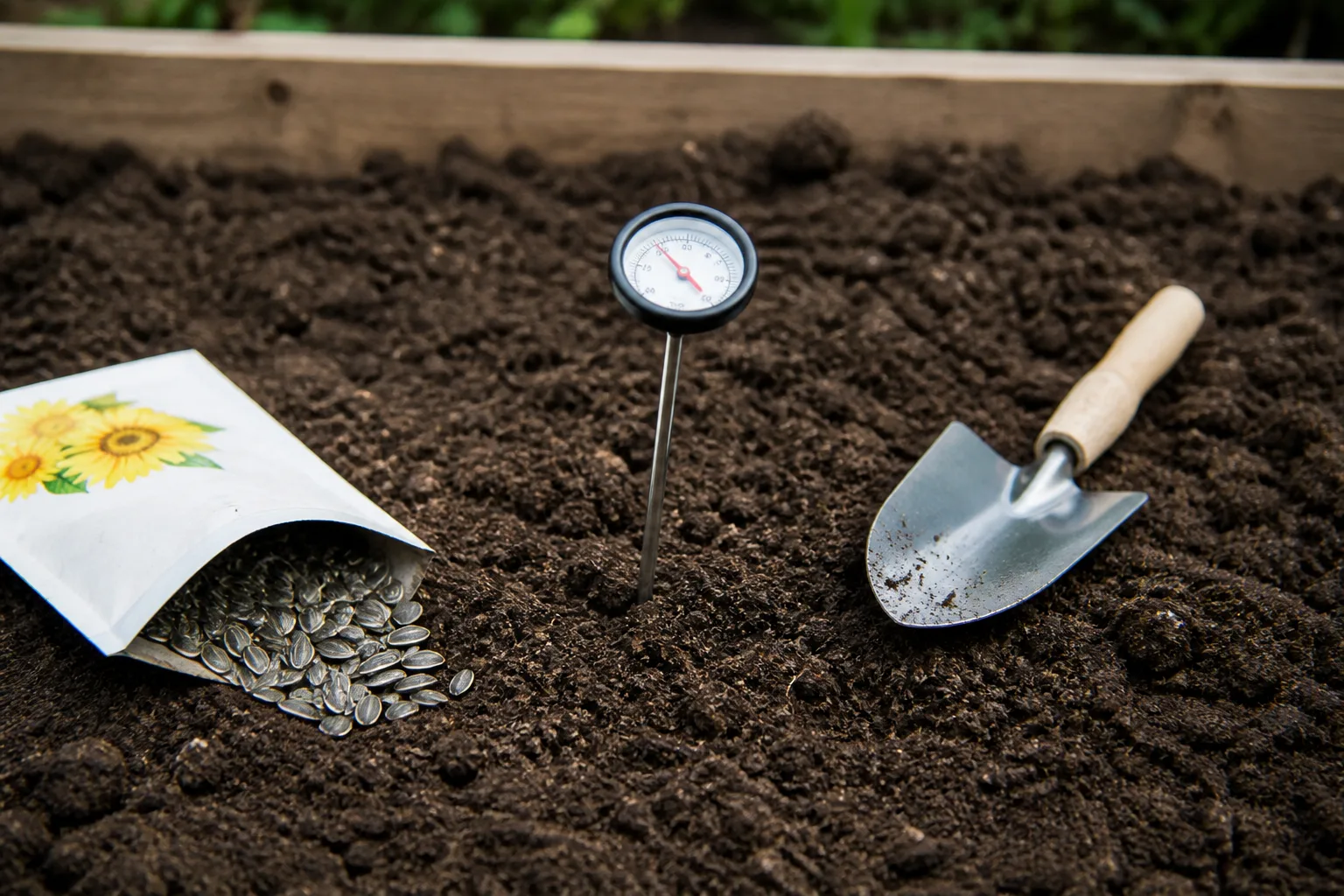
Measure soil at roughly the depth where the seed will sit, not at the surface that warms fastest in the afternoon. An instant-read soil thermometer is the most reliable option. Take readings in the morning for two or three days in the actual bed; a warm reading after a bright afternoon is not enough if the ground cools sharply overnight.
Aim for 55–60°F or warmer before sowing. Germination is usually quicker and more even as the soil moves into the 60s and 70s, but there is no prize for waiting until the bed is hot and dry. If the soil is cold, saturated, or crusted, fix drainage and structure first. Seeds need moisture, oxygen, and warmth together; a soaking-wet bed supplies the first but can deny the second and third.
The New York Botanical Garden’s sunflower guide describes common sunflowers as easy annuals to start from seed and recommends outdoor sowing after the local last frost, once soil has begun to warm. That combination—frost protection plus warm soil—is the useful principle to carry from one climate to another.
Work backward from the bloom date
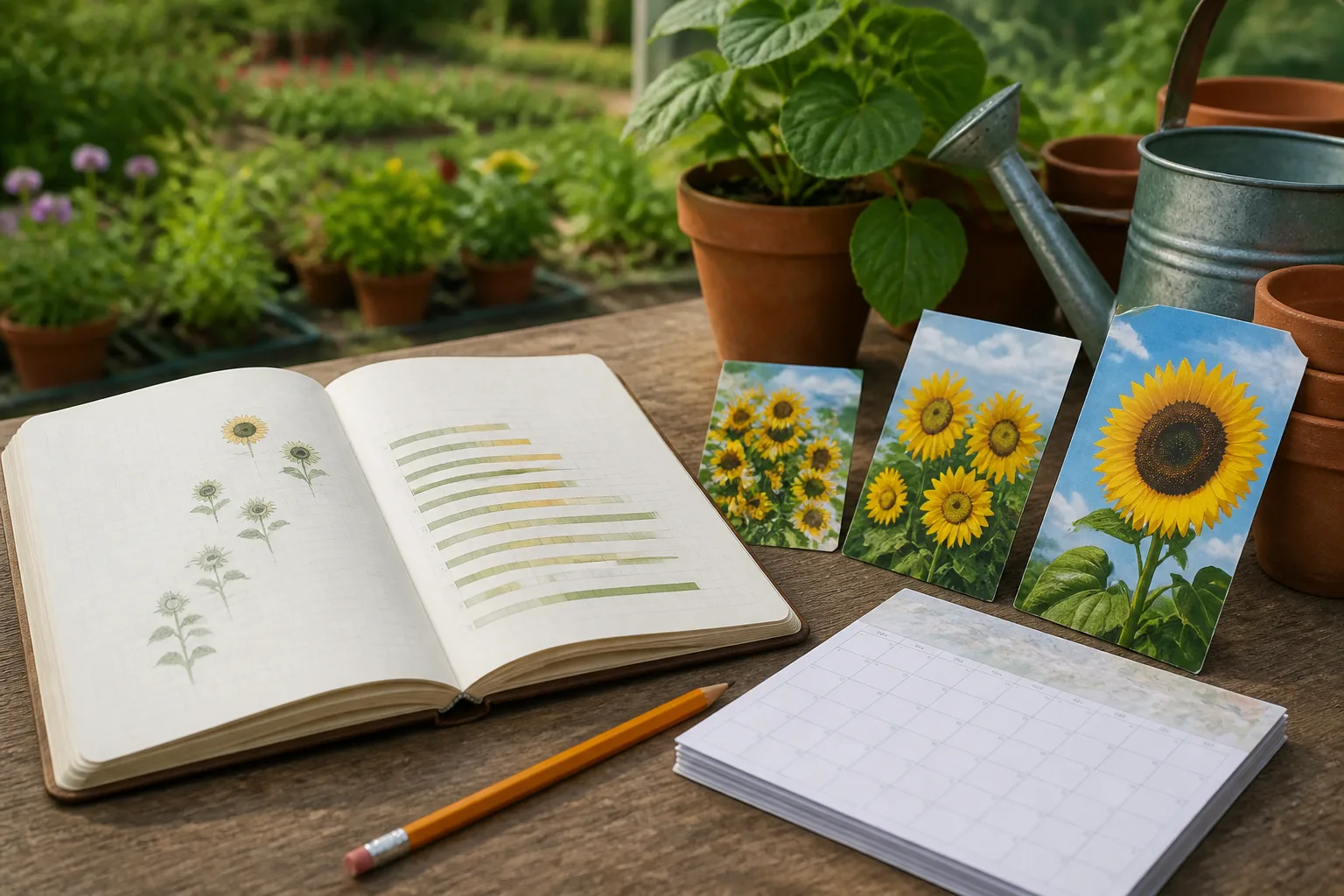
Seed packets usually give a days-to-maturity number, but the number may mean days from sowing, transplanting, or a particular production standard. Read the wording. For many garden sunflowers, first bloom lands roughly 60–90 days after sowing, while some taller varieties take longer. West Virginia University Extension gives a typical maturity range of about 85–95 days, and the New York Botanical Garden describes common sunflowers reaching flowering maturity in roughly two and a half to three months.
For a target bloom date, use this calculation:
Target first bloom − packet days to bloom − 7 to 14 weather days = approximate sowing date.
The buffer matters because cloudy weather, cold nights, drought, transplant shock, and a heavy crop of weeds can slow the plant. If you want stems for a birthday bouquet in mid-August and the packet says 70 days, do not count backward exactly 70 days and assume the date is guaranteed. Add the buffer, then make one small test sowing a week earlier if you have enough space.
Choose between direct sowing and starting indoors
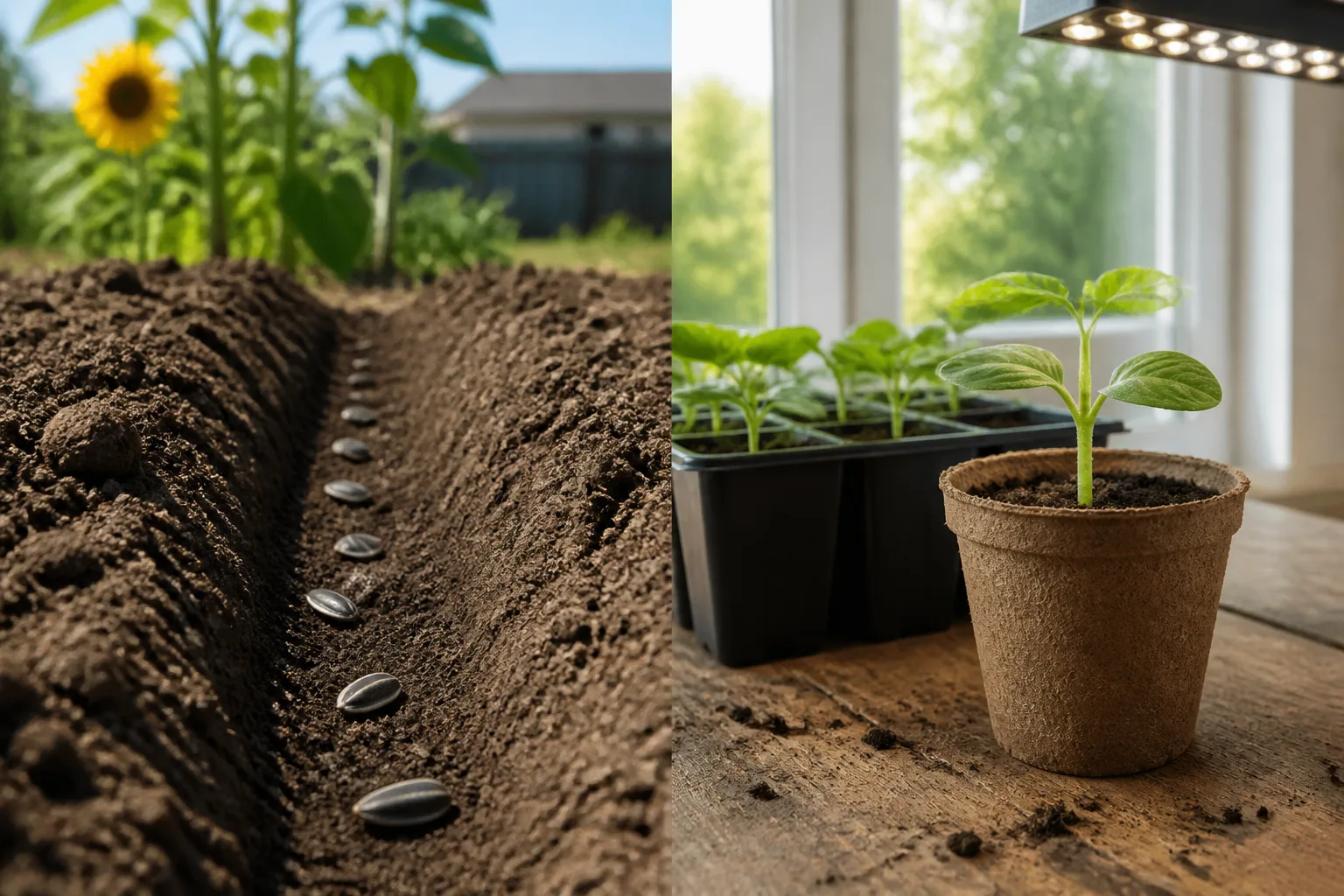
Sunflowers are unusually cooperative direct-sown flowers. Their large seeds are easy to place at the correct depth, and a plant that grows from its final position develops a root system without the stop-start adjustment that follows transplanting. Starting indoors can produce earlier flowers, but it is a timing tool—not a requirement for a successful crop.
Why direct sowing is usually the best method
Direct sowing means placing the seed in the bed or final container where it will grow. It uses less potting mix and avoids disturbing the root system. This matters especially for tall varieties that need a firm, deep root run before wind and a heavy flower head test the stem.
Direct-sown plants still need attention. Mark the row, keep the top layer evenly moist, and remove weeds while seedlings are small. A sunflower can eventually shade out some competition, but it does not outgrow weeds during the first few weeks. Thin crowded seedlings rather than leaving every seedling in place and hoping the strongest one wins; crowding produces thin stems, smaller heads, and more leaf wetness.
When an indoor start is worth the extra work
Start seeds indoors when the outdoor growing season is short, spring wildlife is intense, or you have a specific early bloom deadline. Use a deep cell or biodegradable pot, bright light, and a growing medium that drains freely. Do not start giant sunflowers far in advance just because the packet is on your desk; a large indoor seedling is difficult to move without breaking roots or bending the stem.
The New York Botanical Garden notes that sunflower seeds can germinate and be ready to plant outdoors in about three weeks, and that young plants should be transitioned outside for approximately a week. The WVU Extension guide likewise recommends biodegradable containers and gradual hardening off.
Begin hardening off when outdoor conditions are suitable, not while a frost is still expected. Put the seedlings outside in a sheltered, shaded spot for a short period, then extend the time and increase light over about seven days. Protect them from strong wind, cold nights, and sudden full sun. Plant the whole biodegradable pot if its label allows it, but tear away any exposed rim that could wick moisture from the root ball.
How to plant sunflower seeds outdoors
Once the timing signals agree, planting is straightforward. The details that matter most are mature size, drainage, seed depth, early moisture, and protection from animals.
Choose a site that can carry the mature plant
Give sunflowers at least six to eight hours of direct sun when possible. Full sun builds a sturdier stem and supplies the energy needed for a large head. A spot that receives morning shade and late-afternoon sun may grow a plant, but it can be a poor choice for a giant variety or a dense row intended for cut stems.
Look up the cultivar’s mature height and habit before planting. A dwarf sunflower may fit a patio or border, a branching variety needs room to spread sideways, and a giant can shade vegetables behind it. Put tall sunflowers where their afternoon shadow will not steal light from shorter sun-loving crops. A site with some wind protection is helpful, but avoid a stagnant corner where leaves stay wet after rain.
The Gardenia guide to Helianthus annuus groups sunflowers into dwarf, cut-flower, branching, and giant habits and emphasizes full sun and well-drained soil. Those categories are more useful for site planning than flower color alone.
Prepare the soil without overfeeding
Sunflowers handle ordinary garden soil, provided excess water can drain away. Loosen a planting strip deep enough for roots to enter easily, break up hard crusts, and mix in a modest amount of mature compost if the soil is poor. A soil test is worthwhile if the bed has a history of weak growth or repeated fertilizer use; the WVU guide gives a preferred pH range of about 6.0–7.0.
Avoid treating fertilizer as a shortcut to giant flowers. Too much nitrogen can push soft, leafy height at the expense of a balanced plant and may make stems more vulnerable to wind. Start with compost or a test-based amendment. If plants are pale or the soil is genuinely lean, use a labeled, balanced fertilizer sparingly after the seedlings have established rather than pouring a strong feed into the seed furrow.
Drainage matters more than luxury fertility at planting. A seed in cold, saturated soil can rot before it emerges. If water stands after rain, sow in a raised row or improve the bed before adding seed. In a heavy clay site, a slightly raised planting area and careful organic-matter management are safer than a thick layer of rich material that dries unevenly.
Sow at the right depth and spacing
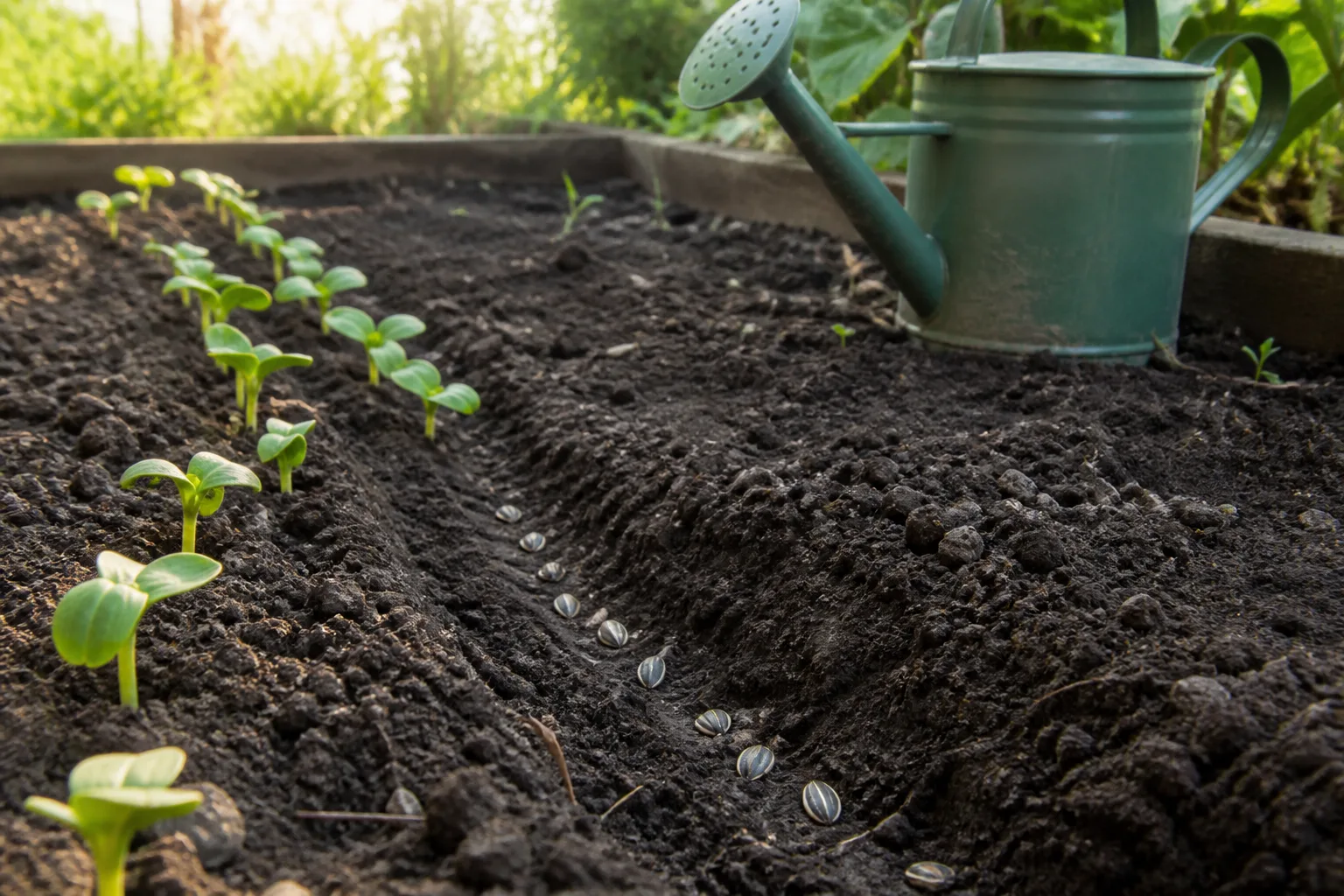
Follow the packet first, because a dwarf branching cultivar and a giant confection sunflower are not interchangeable. As a practical range, sow most sunflower seeds about 1 inch deep; in dry, light soil, some packets may call for up to 2 inches. Cover the seed fully, firm the soil gently, and water the row so the seed has close contact with moist soil.
Use mature habit to set the final spacing. Thin after emergence rather than guessing from seed size:
| Sunflower habit | Typical final spacing | Best use |
|---|---|---|
| Dwarf or compact | About 6–12 inches | Containers, borders, and small beds |
| Single-stem cut flower | About 6–12 inches | Long stems and planned succession rows |
| Branching garden type | About 12–24 inches | Multiple blooms over a longer window |
| Giant or seed-producing type | About 18–30 inches | Height, large heads, and stronger root room |
Treat those measurements as a starting range, not a substitute for the packet. Tighter spacing can produce longer, smaller stems for cutting, while wider spacing can support thicker stems and larger heads. Leave roughly 2–3 feet between rows when the plants will be tall or branching so you can water, weed, and harvest without trampling the bed.
Water and protect the seedbed
Keep the seedbed evenly moist from sowing through emergence. That may mean a light daily check in a dry, breezy bed, not automatic daily watering in cool clay. Water gently enough that the seed is not washed into a pile. Germination often takes about a week, but cool soil can extend it toward two weeks.
After seedlings establish, water deeply enough to wet the root zone and adjust for rain, soil, temperature, and container size. Around 1 inch per week is a useful baseline cited by WVU Extension, but the plant’s demand rises as it grows. Give special attention from visible bud formation through flowering and seed fill; repeated severe drying then heavy soaking can reduce head size and cause uneven growth.
Protect new rows before damage becomes obvious. Birds, squirrels, rabbits, and deer may remove a row overnight, especially when cotyledons first appear. A temporary mesh cover or low tunnel can protect the bed until seedlings are established; use a barrier that allows light and airflow, and lift it when plants begin to press against it. Mulch after seedlings are several inches tall to slow weeds and buffer moisture, keeping the mulch a few inches from the stem.
As heads mature, decide whether you want seed or cut flowers. Pollen-bearing types support pollinators and may be useful for seed saving, while pollen-free cut-flower types are tidier indoors. If birds are taking seed before it ripens, cover individual heads with breathable mesh once the petals fade and the seeds begin to fill.
Keep flowers coming with succession sowing
One sowing gives one main bloom window. For a longer display, sow small batches of the same or different varieties every two to three weeks while your season has enough time left. This is succession planting: you trade one large, crowded wave of flowers for several smaller waves that mature at different times.
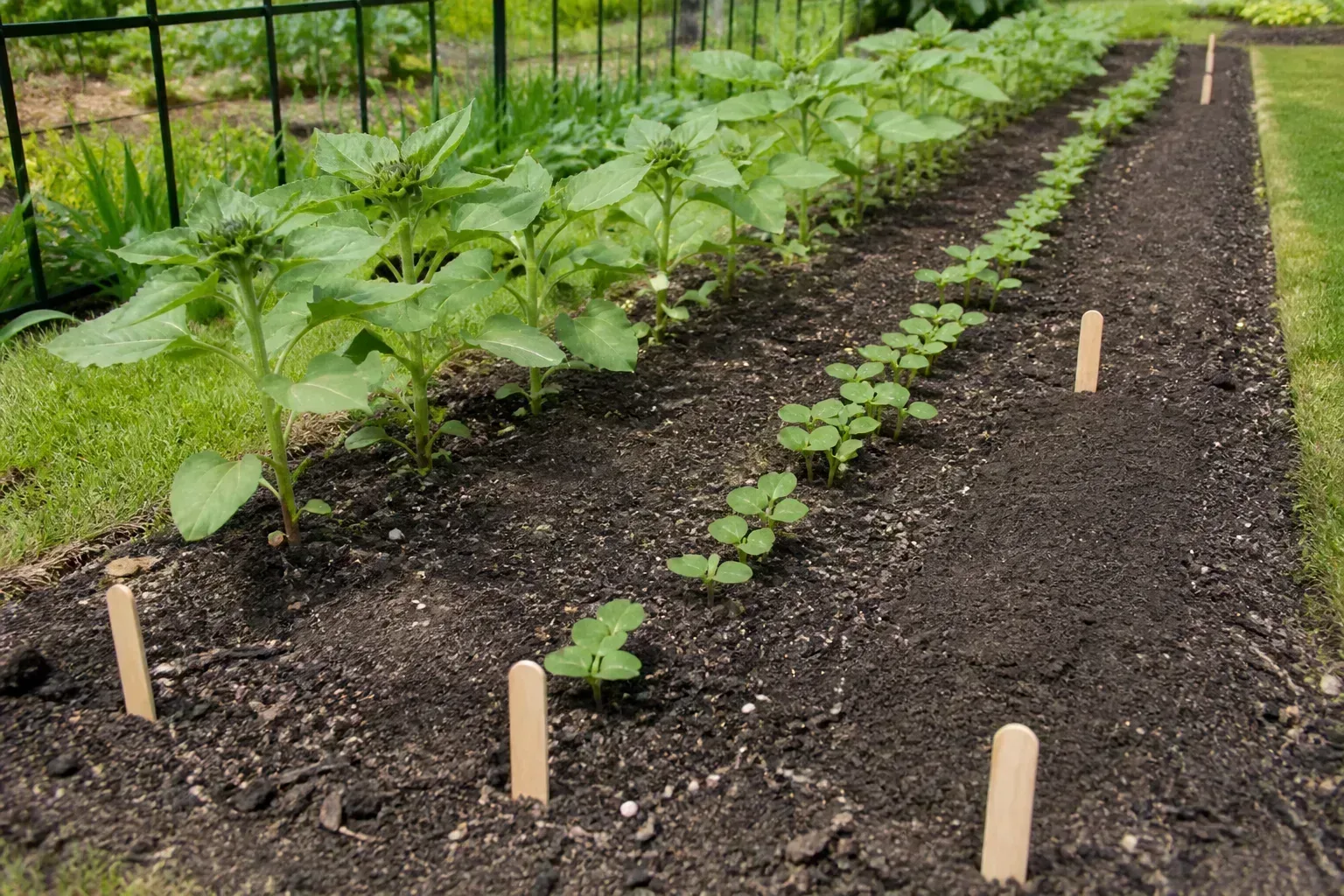
Use the packet’s days to bloom to decide when to stop. A fast dwarf or single-stem cut variety may reward a later sowing, while a giant planted late may produce a tall plant with no mature head before frost. The RHS succession-sowing guide recommends small repeated sowings and warns that weather can cause batches planted two weeks apart to catch up or fall behind. Sunflowers behave the same way: use the interval as a starting point, then watch the actual growth rate.
You do not need a separate bed for every sowing. Keep a narrow strip open, sow a short row beside an existing row, or replace a finished early crop. Label each sowing with the date and cultivar. If the first row is still small because spring was cool, wait until it is growing steadily rather than planting on a rigid calendar interval.
For cut flowers, single-stem types are particularly easy to schedule because each plant gives one main stem and a relatively predictable harvest. For a wildlife or border display, branching types are less dependent on perfectly staggered sowings because side shoots extend the bloom window. Mix the two if you want both bouquets and a longer garden show.
Planting sunflowers in containers
Containers are a good match for dwarf sunflowers and a poor match for most giants. Choose a pot with drainage holes and enough depth and width for the cultivar’s mature root and canopy. A small pot that dries from the edges every afternoon may keep a plant alive but can produce a short, stressed specimen; an oversized pot filled with wet mix can create the opposite problem.
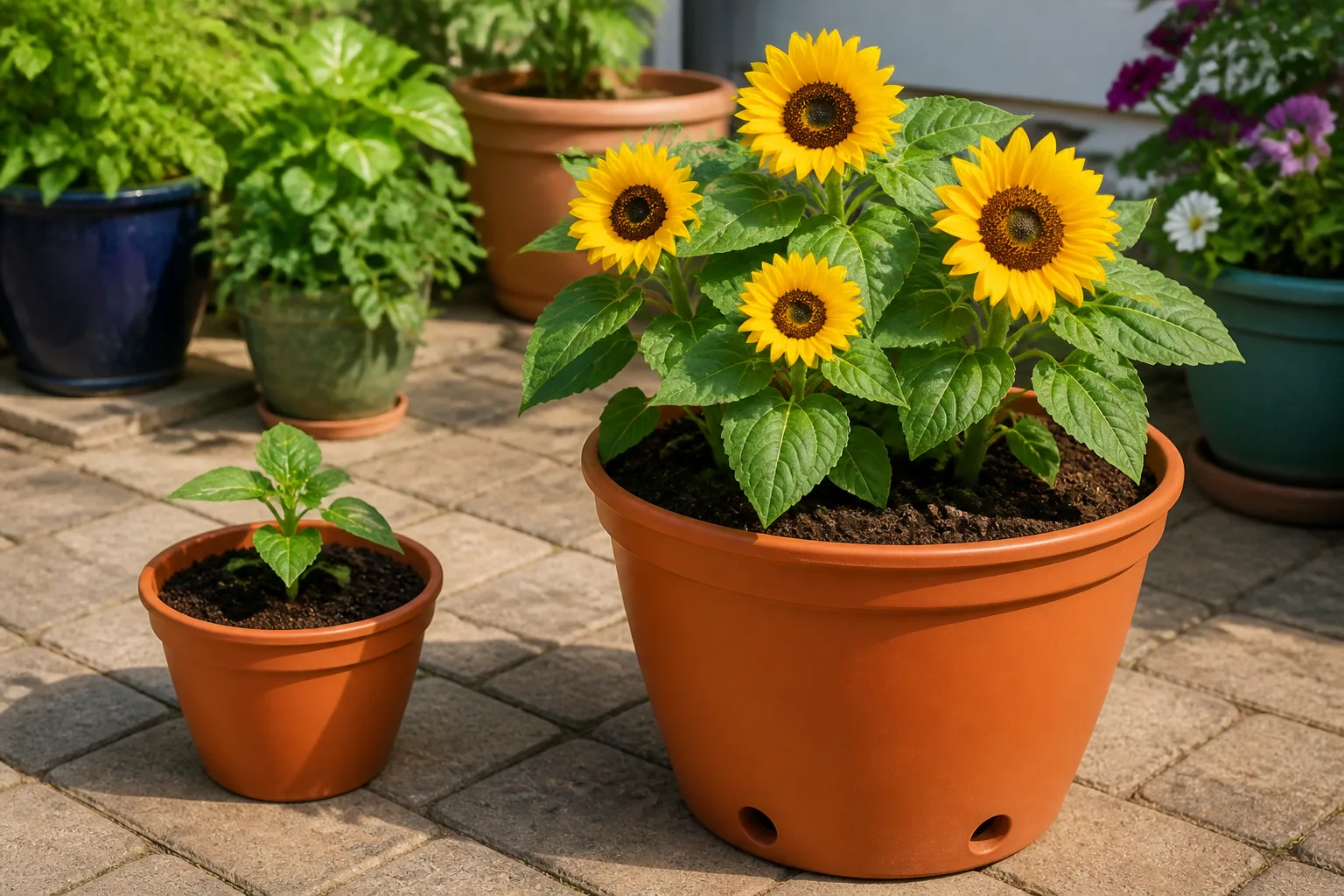
Use a quality container mix rather than garden soil. Place the pot where it will receive direct sun and where you can water it without letting runoff damage a wall or floor. Container plants often need more frequent checks than in-ground plants because wind and dark pot surfaces speed drying, but check the mix before watering instead of following a fixed schedule.
Dwarf varieties are easiest, but a compact single-stem sunflower can also work in a large, stable pot if you provide support. Add a stake while the plant is young, not after a heavy flower head has already pulled it sideways. A container is also a practical place to start a small late-season sowing, because it can be moved under cover during an unexpected cold night.
How late can you plant sunflower seeds?
You can plant sunflower seeds late in the season only if the remaining frost-free period is long enough for the chosen variety to bloom. Soil warmth helps late seed germinate, but it does not solve a short autumn. Start with the first expected fall frost and subtract the packet’s days to bloom, then subtract another one to two weeks for weather and slower late-season growth.
For example, a fast cultivar listed at 65 days to bloom needs more than 65 calendar days if the goal is a reliable flower. A late sowing in a long, warm season may succeed in July or even August, especially with a dwarf or quick single-stem type. In a short northern season, the same August sowing may produce healthy foliage but no open flower before frost. If seed heads are the goal, allow additional time after bloom for seeds to fill and dry.
Late sowing is most worthwhile when the soil is still warm, the bed is free of competing plants, and you can water consistently. It is not worthwhile when the first frost is close, the site is shaded by mature summer growth, or you are trying to grow a giant variety from seed. In that situation, save the seed for next spring or choose a perennial Helianthus species specifically suited to your climate. Annual and perennial sunflowers are different plants with different schedules; Savvy Gardening’s overview of perennial sunflowers is a useful reminder not to assume every sunflower returns the following year.
Common timing mistakes and what to do instead
Timing problems often appear as another problem: empty soil, thin stems, late flowers, or a collapsed plant. Use the pattern before changing fertilizer or watering.
| What you see | Likely timing or setup problem | What to do next |
|---|---|---|
| No seedlings after two weeks | Soil was cold, saturated, crusted, or the seed was buried too deeply | Check moisture and depth, uncover one seed, and resow a small test patch when soil is warmer |
| Seedlings emerge, then disappear | Birds, rabbits, slugs, or deer reached the row | Add a temporary mesh barrier and inspect at dawn for tracks or clipped stems |
| Tall, thin stems flop early | Weak light, crowding, excess nitrogen, or a windy site | Thin promptly, improve sun exposure, reduce rich feeding, and stake tall cultivars early |
| Plants are leafy but bloom late | Variety needs more days than the planting window allowed, or weather slowed growth | Check days to maturity, keep moisture steady, and use a faster cultivar next succession |
| Leaves wilt every afternoon in a pot | Container is too small or dries rapidly in sun and wind | Move to a larger stable pot, water the root zone thoroughly, and check again before watering |
| Heads are small despite healthy foliage | Crowding, drought during bud formation, or excess nitrogen | Increase spacing next time, keep moisture steadier, and feed only if soil testing supports it |
The most common mistake is planting by the month instead of by conditions. The second is starting indoors too early, then moving an oversized seedling that has already spent its energy circling a small pot. The third is sowing a late succession without counting backward from frost. All three are preventable with a thermometer, a packet, and a written sowing date.
Conclusion
Plant sunflowers when the frost window is behind you, the soil is at least 55–60°F, and the remaining season matches the variety’s days to bloom. Direct sowing is usually the strongest option; use a short indoor start only when you need an earlier crop and can harden seedlings off carefully.
Before sowing, choose the mature habit, give the plant full sun and free drainage, prepare modestly fertile soil, and protect the first leaves from wildlife. For weeks of flowers, repeat small sowings every two to three weeks while the first-frost calculation still works. That simple sequence turns “Is it time yet?” into a decision you can make in your own bed, on the day the conditions are actually ready.