Is It Too Late to Cut Back Asparagus?
Learn when to cut back asparagus, whether fall or spring is better, how to protect crowns, and what to do if new spears are already emerging.
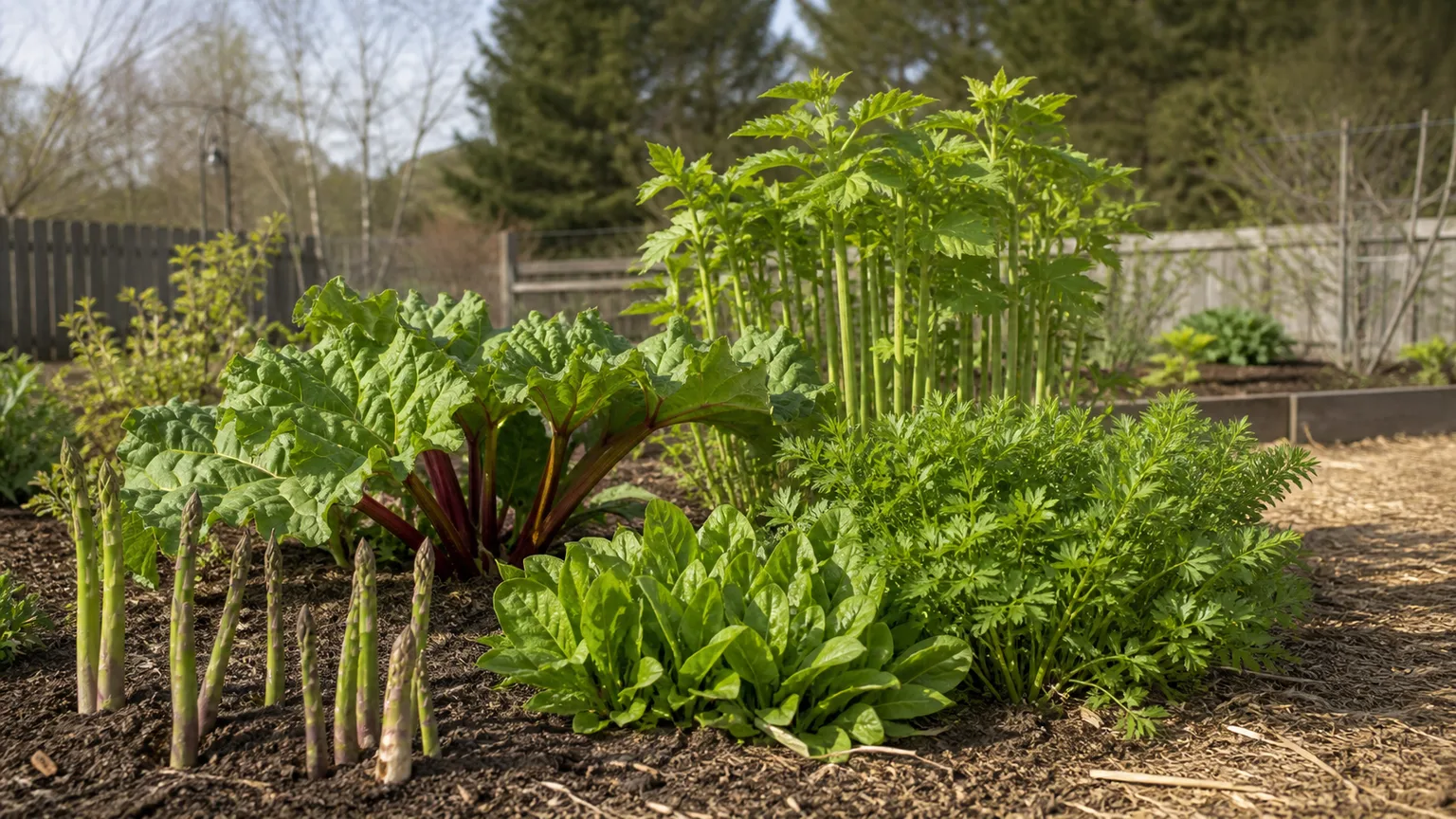
If your asparagus patch is still green, the answer is usually not yet. The best time to cut back asparagus is after the ferny foliage has naturally yellowed or browned and the plant has entered dormancy—not simply when the calendar says fall has arrived.
If the ferns are already brown, cut them down before vigorous new spears appear. If winter has arrived and the foliage is still standing, you can often leave it until late winter or early spring, especially where snow cover helps insulate the crowns. The one window to avoid is the awkward middle: cutting healthy green foliage early, or hacking through old stems after new spears have started pushing up.
The Short Answer: Cut When the Ferns Are Dormant
For an established outdoor asparagus bed, wait until the foliage is fully yellow, tan, or brown, feels dry, and has stopped making a soft green canopy. In many temperate gardens, that happens after the first hard frost; in others, the ferns die back later. Use the condition of the plant as the trigger, not a fixed date.
Once the ferns are dormant, cut the stems close to soil level—roughly 1 to 2 inches above the surface is practical—and remove the old material from the bed. NC State Extension advises allowing asparagus to grow until the foliage turns brown, then cutting it down; it specifically warns that cutting before frost can reduce the following year’s spear crop (NC State Extension’s home-garden asparagus guide).
There is one important exception to the simple “cut after frost” rule. If your garden has a history of asparagus beetles, rust, needle blight, or other recurring problems, fall cleanup soon after dieback is generally the safer choice because it removes old hiding and disease-carrying material before winter. If your bed is clean and your winters are severe, leaving dry ferns in place until spring may offer useful snow-catching and insulation.
Why Asparagus Foliage Must Stay Green as Long as Possible
The tall, feathery growth looks like a crop that has been forgotten, but it is the plant’s solar panel after harvest. Cutting it down while it is green removes the tissue that is still making carbohydrates and moving that energy into the underground crown and roots.
That stored energy pays for next spring’s spears. An early cut may not kill an established plant outright, but it can leave the crown with less reserve, so the next crop may be thinner, shorter, or less consistent. This is why tidiness is a poor reason to prune asparagus before the foliage has finished its job.
Spears, ferns, and crowns follow a seasonal cycle
Asparagus has three visible stages that make the timing easier to understand. In spring, new spears rise from the crown; those are the shoots you harvest. After harvest ends, uncut spears branch into tall fern-like stems. Through summer and early fall, that foliage feeds the crown. Finally, cold or the plant’s natural seasonal decline turns the foliage yellow and brown, and the above-ground portion becomes dormant.
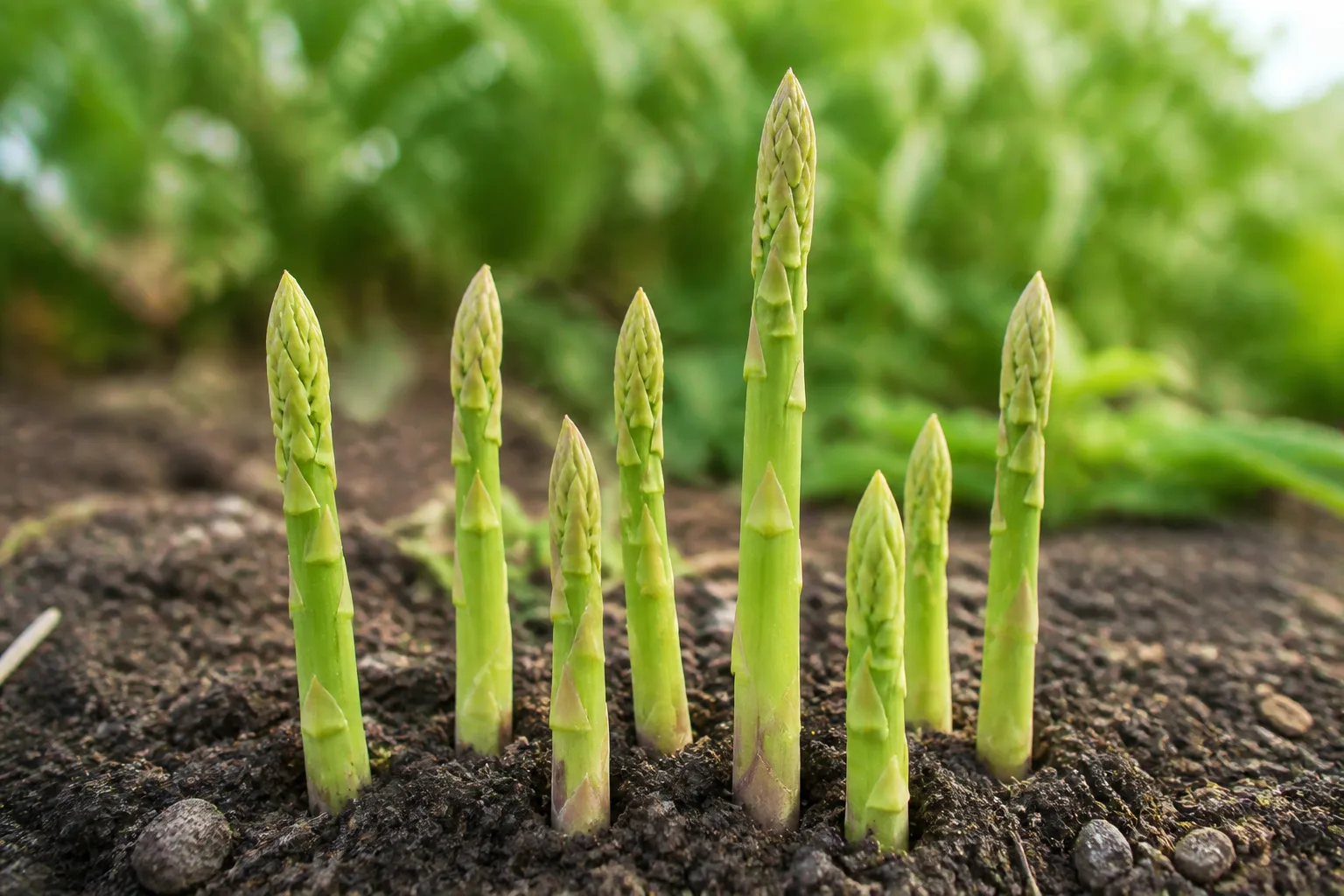
The fern stage is not a second harvest to remove. It is the recovery stage that rebuilds the plant after producing a dense flush of edible spears. Savvy Gardening describes the same cycle as spear, fern, and dormancy phases and emphasizes that the fern stage is when the plant is photosynthesizing and returning carbohydrates to the roots (Savvy Gardening’s asparagus pruning guide).
The timing also explains why asparagus is a long-term investment. A well-sited, properly maintained bed can produce for many years, but each season’s yield depends partly on how much healthy foliage you allow to mature after harvesting. The cutback is the end of that process, not a substitute for it.
Young beds need a gentler schedule
Do not apply the same harvest and pruning expectations to a new asparagus bed that you would use for a mature one. The first year after planting crowns is usually for establishment, not harvesting. In the second year, harvesting—if recommended for your cultivar and growing conditions—should still be brief and conservative. Let every unharvested spear grow into foliage so the young crown can build size.
For young plants, the key instruction is still to wait for dieback before cutting. But in a very cold region, leaving dry stems standing through winter can help catch snow around the bed. Gardener’s Path notes that first-year crowns in cold, snowy places may benefit from leaving the ferns intact until spring, while milder gardens can cut after the foliage turns brown (Gardener’s Path’s asparagus foliage guide).
The larger risk with a young bed is not that you miss the perfect pruning date; it is that you harvest too heavily, cut green growth, or disturb the crowns while trying to make the patch look finished. If a new planting looks sparse, let it fern out and focus on weed control, steady moisture, drainage, and crown establishment.
Fall vs. Spring: Choose the Cleanup Window for Your Garden
Both late fall and early spring can be sound cleanup windows. The right choice depends on what is happening in your patch after the foliage dies: pest pressure, disease history, snow and cold, and whether new spears are beginning to emerge.
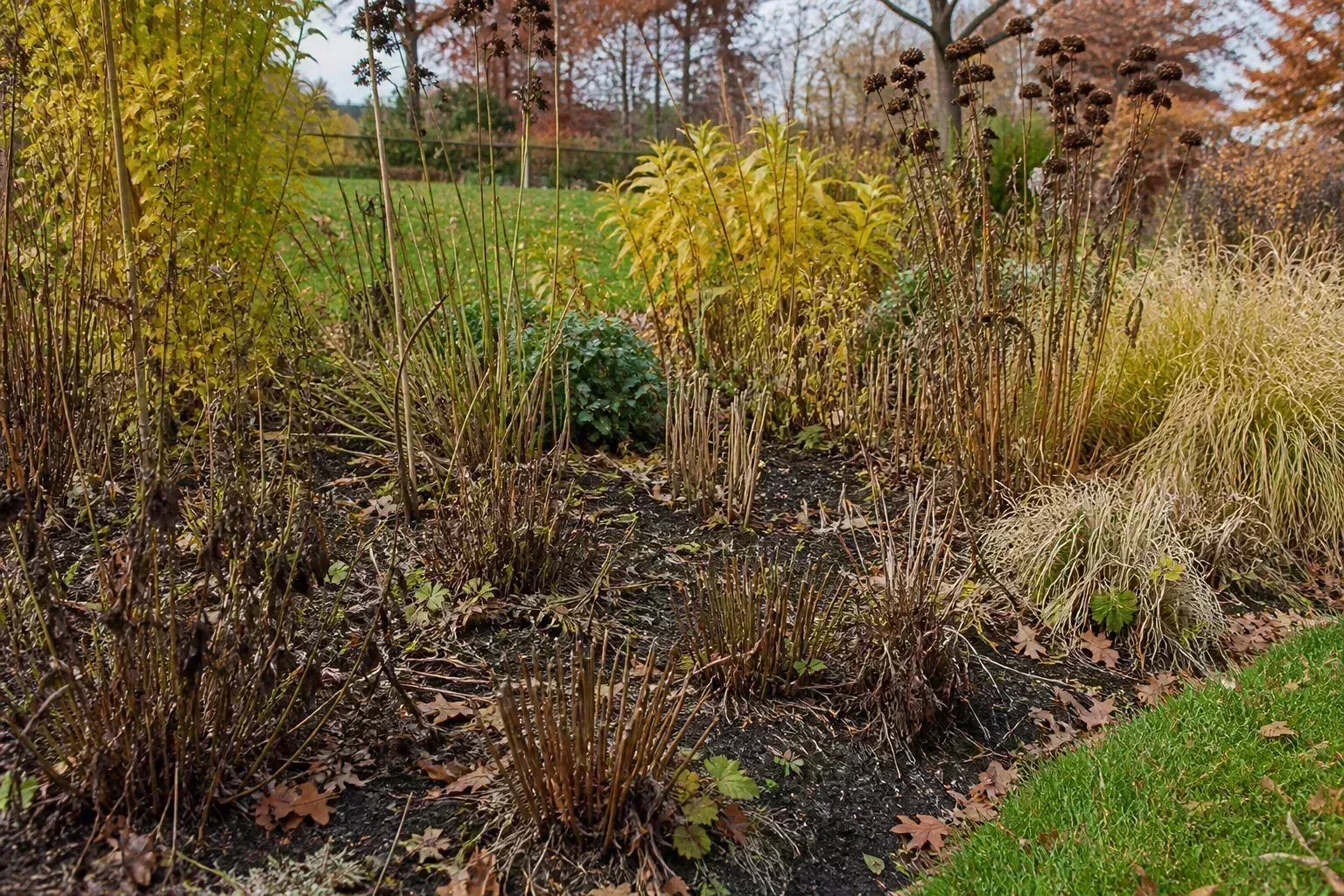
Fall is the better choice when pests or disease are a concern
If you have seen asparagus beetles, beetle eggs, rust, or blighted foliage, remove the dead fern material after it has fully died back rather than leaving it as winter cover. Old stems and plant debris can shelter pests, and infected residue can keep disease problems close to the bed. Cutting the foliage is only one part of control, but it reduces the amount of material available to carry a problem into spring.
The fall sequence is simple: wait for the foliage to finish yellowing or browning, cut it low, and take the debris away. Do not cut early just because beetles were present; the plant still needs its green foliage. The goal is to combine the latest safe cut for crown energy with timely sanitation once the foliage has stopped contributing.
Fall cleanup is also practical in wet climates where dead stems collapse into a damp mat. Removing them lets you inspect the bed, pull obvious weeds while the soil is workable, and apply a measured winter mulch without burying a tangle of old vegetation.
Spring is useful in cold, snowy gardens
Leaving dormant foliage until spring can be reasonable when your bed is healthy and the winter is cold enough for snow to accumulate. The stems can catch snow over the crown, and the snow layer can reduce rapid temperature swings. The brown ferns also give you a visible marker for where the crowns are before the bed wakes up.
The trade-off is timing. Spring cleanup must happen before the first new spears emerge, or you risk snapping or cutting the tender shoots while reaching through last year’s stems. Ask Extension recommends letting weather and plant appearance guide the job: cut brown, dry foliage to ground level in late fall or early winter, or remove it in early spring before green spears appear (Ask Extension’s asparagus winter-care answer).
If the bed is buried in snow, do not dig aggressively to find every stem. Wait until the snow recedes and the soil surface is workable. A slightly later cleanup before emergence is safer than compacting wet soil or gouging the crowns with a shovel.
Warm climates need plant signals, not a frost date
Some gardens do not receive a reliable killing frost, and asparagus may remain green for a long time. In that situation, “after the first frost” is not a useful instruction. Watch for the foliage to lose color and vigor, for the plant to enter a genuine rest period, or for your local growing conditions to provide the seasonal dormancy asparagus needs.
Do not force dormancy by cutting a fully green bed simply because the rest of the garden has been cleaned up. If the foliage never naturally declines, ask your local extension service about cultivar and regional practice; a warm climate may call for a different schedule than a cold-winter garden. A dry or hot rest period can change the plant’s growth pattern, but drought-stressing the bed on purpose is not a safe shortcut.
In a frost-free area with persistent green growth, the safest general rule is to delay a full cut until the fern has clearly stopped active growth and before any new edible spears emerge. Make a small, conservative cleanup pass first if you are unsure, and avoid cutting into a crown that is still actively producing green foliage.
Signs Your Asparagus Is Ready to Cut
Use several clues together instead of relying on a single color change. Ready-to-cut asparagus foliage is mostly or entirely yellow, tan, or brown; the fine needles have dried; the stems no longer look supple and actively green; and the plant has stopped adding fresh fern growth. A light frost often speeds this process, but frost is a signal, not a mandatory appointment.
Partially yellow foliage is a reason to keep watching, not necessarily a reason to rush. If the upper canopy is still richly green, the plant is likely still photosynthesizing. You can remove a stem that has snapped, collapsed, or is clearly diseased, but leave the healthy green majority in place until it finishes.
Do not confuse red berries with dormancy. Female asparagus plants can make red berries while the foliage is still green. If those berries are dropping and you want to prevent seedlings, you can remove the berry clusters carefully, but that does not mean the whole fern is ready for cutback. The foliage still needs to mature.
Conversely, brown does not always mean healthy. A fern that turned brown suddenly during summer may have been damaged by drought, disease, herbicide drift, or insects. Inspect the stems and surrounding plants before deciding whether the material belongs in compost. A plant that is brown because it died from a problem needs sanitation and diagnosis, not just a routine seasonal label.
How to Cut Back Asparagus Without Damaging the Crown
Once dormancy is clear, the cutback is straightforward. The hard part is choosing the right day and resisting the urge to dig, rake, or cultivate deeply around the shallow crown while you work.
Gather the right tools and choose a dry day
For a few plants, sharp bypass pruners are precise and easy to control. For a large row, long-handled hedge shears can save time, but they make it easier to catch a green spear or a nearby plant. Use the smallest tool that lets you cut cleanly without crushing the stems.

Wear gloves, especially if you react to asparagus foliage or if the bed contains dry, scratchy stems. Clean soil and plant residue from the blades before you begin, then sanitize them between beds and after any suspicious or diseased cut. Choose a dry day when rain is not immediately expected; dry cut surfaces and dry debris are easier to handle hygienically.
You do not need to fertilize or turn the soil before cutting. First remove the spent fern, then assess the bed. Digging compost or manure into the crown zone in late fall can cause more disturbance than benefit, especially when the soil is wet.
Follow a careful five-step cutback
- Confirm dormancy. Look for mostly brown or yellow, dry foliage. If substantial healthy green remains, wait.
- Clear the base by hand. Move loose leaves and weeds away from the stems so you can see where each clump meets the soil. Do not rake deeply into the crown.
- Cut low, but not into the soil. Make clean cuts around 1 to 2 inches above ground level. Cutting flush into the soil can drag mud onto the blades and nick crown tissue; leaving a short stub makes the job safer without leaving a tall, wet bundle.
- Work in sections. On a broad bed, cut a small group, pause, and check for green spears or neighboring plants before continuing. This matters most if you are cleaning up in spring.
- Collect the stems immediately. Separate healthy, pest-free material from anything diseased or infested before deciding how to dispose of it.
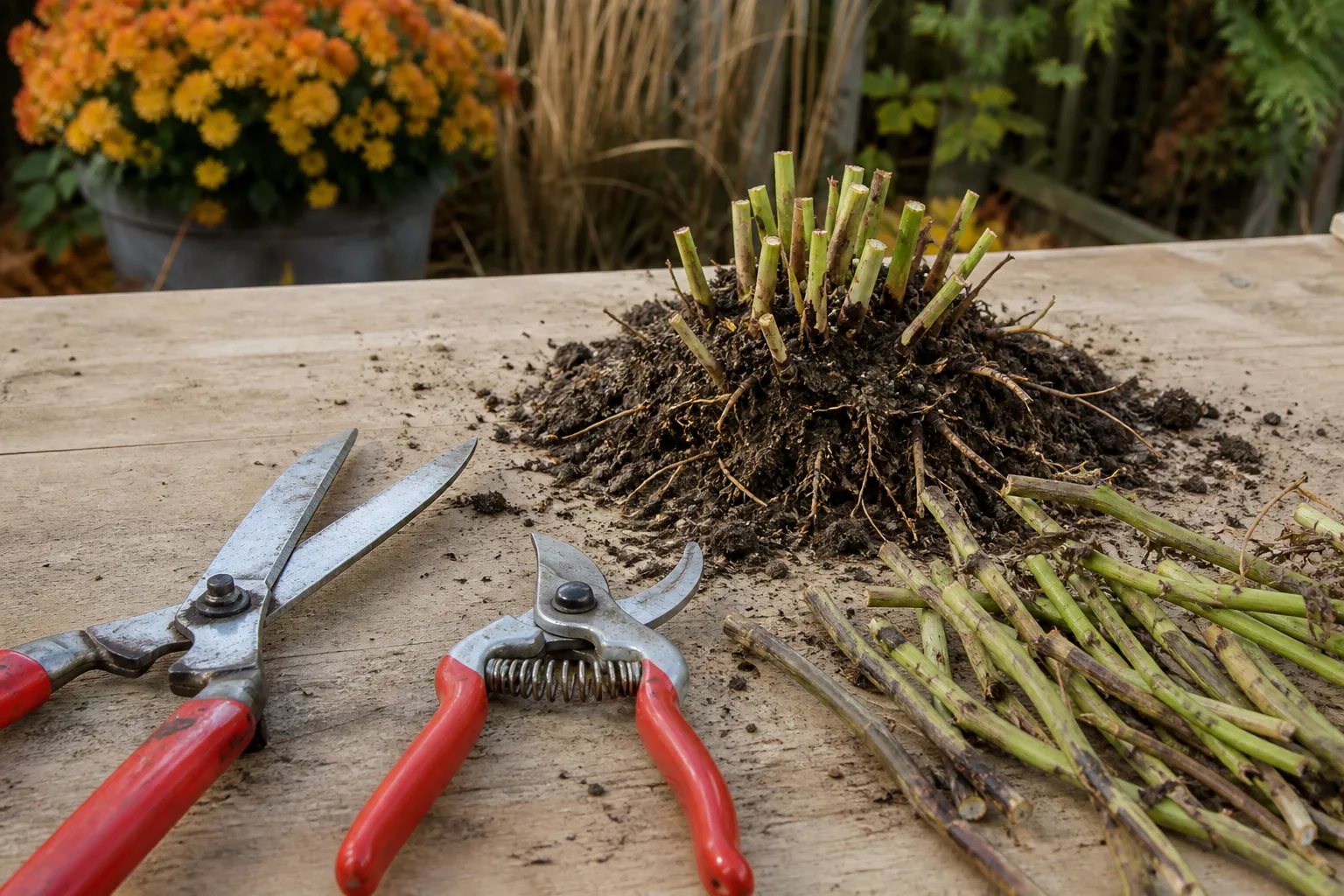
The goal is a low, open bed—not a perfectly shaved surface. A few short stubs are less harmful than digging around to remove every millimeter of old tissue. Once the tops are off, leave the crown undisturbed and move to sanitation and winter protection.
What to Do With the Debris
Debris handling depends on what you saw during the season. Clean, dry, pest-free fern can sometimes be composted or chopped for a garden use, but only if your compost system reliably breaks down the material and you are confident it does not contain beetles, eggs, or disease. Gardener’s Path cautions that asparagus beetles may lay eggs in the foliage, so composting questionable cuttings can help reintroduce the pest.
If the bed had asparagus beetles, rust, needle blight, or unexplained dieback, do not spread those stems across the garden as mulch. Bag them for municipal green-waste collection if that service accepts diseased material, or follow your local disposal rules. Do not burn yard waste unless local regulations and safe conditions expressly allow it.
Avoid piling the cut stems beside the asparagus bed “temporarily.” That pile is still close enough to shelter insects and keep spores in the planting. Clean up the row, remove volunteer seedlings if female plants have dropped berries, and wash soil from tools before using them elsewhere.
Mulch, Fertilizer, and Winter Protection After Cleanup
After cutback, inspect the crown zone. Asparagus likes moisture, but it does not like a waterlogged crown. If the bed drains slowly, fix the drainage problem rather than covering it with a thick, wet blanket of organic matter.
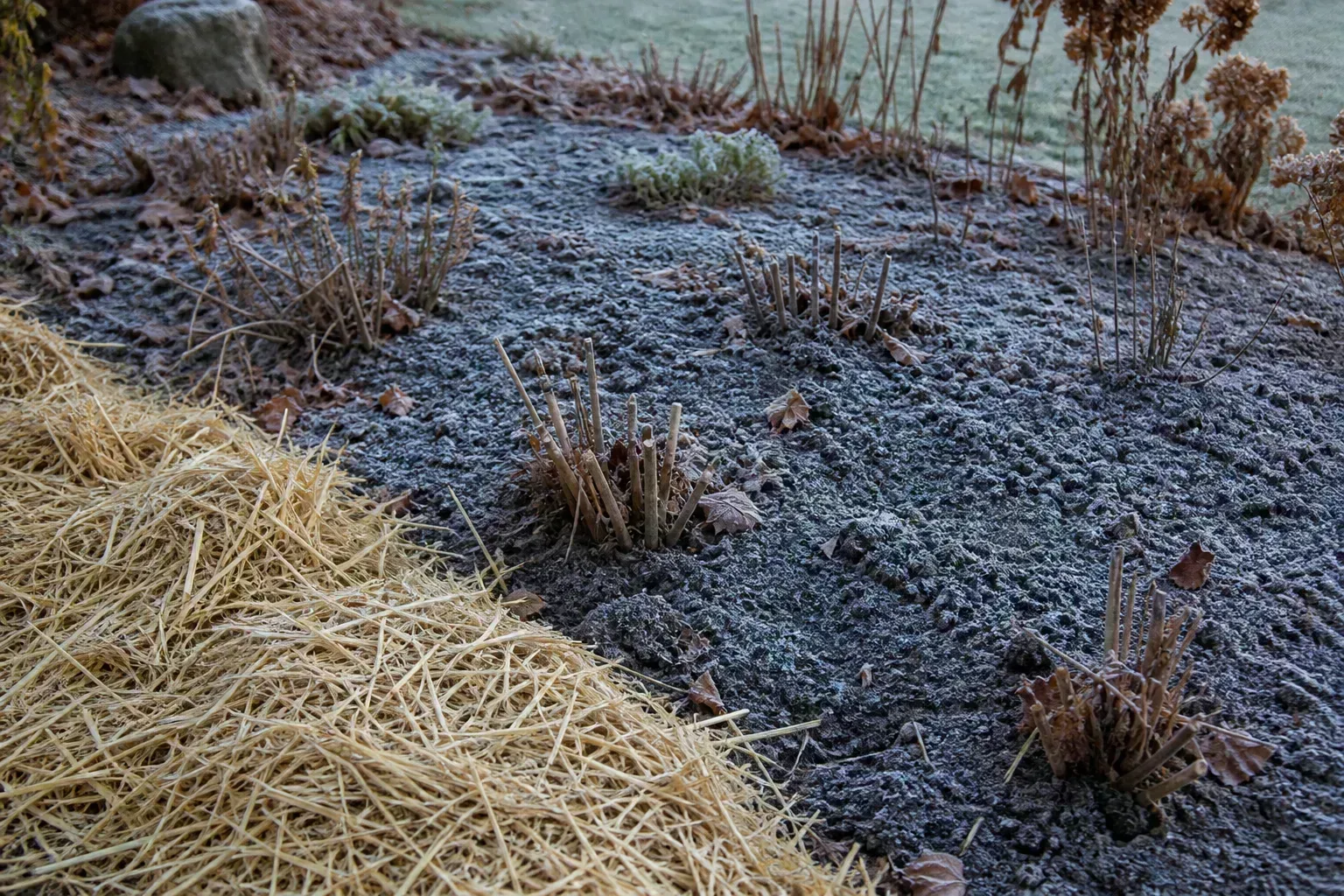
In cold regions, a light to moderate layer of clean straw, shredded leaves, compost, or well-rotted organic mulch can reduce temperature swings, slow winter erosion, and suppress early weeds. Keep the mulch loose and breathable, and avoid piling it tightly against crowns or creating a permanently saturated layer. The right depth depends on your soil and winter exposure; a couple of inches is a practical starting point, while extremely cold or wind-exposed beds may need local extension guidance.
Mulch is not a replacement for the fern stage. It protects the dormant crown after the plant has already stored energy; it cannot make up for cutting green foliage too soon. Nor is late-fall fertilizer a rescue treatment. Base fertilizer decisions on a soil test and your local asparagus recommendations, and apply nutrients at the time your region advises rather than adding nitrogen automatically after pruning.
GrowVeg describes the central cold-climate trade-off well: late-autumn cleanup can interrupt asparagus beetles, while leaving brown foliage until early spring can help hold snow and insulate crowns in colder gardens (GrowVeg’s asparagus questions guide). That is why two gardeners can make different choices and both be acting sensibly.
If You Missed the Window, Use a Gentle Recovery Plan
If winter passed and the old foliage is still standing, do not panic. Brown, dormant stems can usually be cut as soon as the bed is accessible, provided new spears have not started to emerge. The plant is more forgiving of a delayed cleanup than of a reckless cut through active spring growth.
If a few green spears are already visible, stop and switch from broad shearing to careful hand work. Cut or pull away only the dead stems you can reach without touching the shoots. Do not rake hard across the bed, walk over emerging spears, or use hedge shears where you cannot see the soil surface.
If you cut the ferns while they were still green, there is no way to put that foliage back. Leave any remaining healthy growth alone, avoid extra harvesting next spring, and focus on steady care. A weak following crop does not automatically mean the bed is lost; drought, overharvesting, weeds, poor drainage, crown age, and disease can also reduce production.
If the foliage never browned and you are in a mild climate, do not use one missed frost date as permission to cut everything. Get regional advice, observe whether the plant is actually resting, and schedule cleanup before the next flush of spears rather than in the middle of active growth.
Protect Next Year’s Harvest After the Cutback
The cutback closes one season, but next year’s yield is built by the choices you make before and during spring harvest. Keep the bed weed-free without deep cultivation, maintain even moisture during active growth, and let harvested plants fern out as soon as the picking period ends.
Do not try to compensate for last year’s early cut by harvesting every spear next spring. Mature beds can often be harvested for several weeks, but the exact duration depends on plant vigor, age, weather, and local recommendations. A thin spear is a useful message to stop or shorten harvest, not a reason to keep cutting in hopes that the crown will catch up.
Mark the row before winter mulch covers it, especially if your spring garden is busy. In late winter, check the bed often as temperatures rise. If you chose spring cleanup, cut the dry stems before new spears become numerous, then refresh mulch and complete any soil-test-based fertility work without stepping on the crown zone.
A successful asparagus routine is deliberately unhurried: let green ferns work, remove them after dormancy, sanitize and dispose of risky debris, protect the crown without smothering it, and stop harvesting while the plants still have time to rebuild. That sequence does more for long-term productivity than a perfectly timed cut made in an otherwise neglected bed.
Conclusion
It is usually not too late to cut back asparagus as long as the ferns are brown and dormant and new spears have not started emerging. In a clean bed with harsh, snowy winters, leave the dry foliage until late winter if it helps catch snow; in a bed with asparagus beetles or disease, clean up soon after dieback. Cut low with sharp, clean tools, remove questionable debris, and use a breathable layer of mulch only after the crown is dormant.
The most important rule is simple: do not sacrifice green foliage for a tidier fall garden. Let the ferns finish feeding the crown, then make the cut when the plant—not the calendar—says the season is over.