14 Tall Shade-Loving Plants for Your Yard
Choose 14 tall shade-loving plants by light, moisture, mature size, bloom, privacy value, and safety, with practical planting advice for difficult yards.

A shady yard does not have to be a flat collection of ground covers. The right tall shade-loving plants add a ceiling, a backdrop, privacy, flowers at eye level, and the layered look of a woodland edge. The important word is “right”: a tree-covered bed may be dry and root-filled, while a north-facing border beside a downspout may stay cool and wet.
This list includes evergreen shrubs, small trees, large perennials, and one plant that needs a serious spread warning. Use it as a shortlist, not a promise. Before buying, match each plant to the light, moisture, mature width, winter climate, deer pressure, and safety needs of your actual yard.
Read the shade before buying a tall plant
Watch the planting site in midsummer, when deciduous trees have their full canopy. “Full shade” usually means little or no direct sun, but it can still be bright under a high, open canopy. Dappled shade moves throughout the day; deep shade beside a wall or beneath dense evergreens is a much harder test. A few hours of gentle morning light are not equivalent to the same number of hot afternoon hours.
Then test the soil after ordinary weather. If the surface is dry a day after rain, roots from a mature tree or a roof overhang may be intercepting water. If the site stays slick or puddled, drainage is the limiting factor. Extension guidance from the University of Minnesota and Colorado State University treats site conditions, not a generic shade label, as the starting point for plant selection.
Take a quick inventory before you shop:
- Light: deep, dappled, morning sun with afternoon shade, or bright part shade.
- Moisture: dry beneath trees, evenly moist, occasionally wet, or poorly drained.
- Scale: the maximum height and width the bed can absorb without blocking windows or paths.
- Purpose: evergreen privacy, flowers, foliage, a small canopy, erosion control, or a seasonal screen.
- Constraints: pets, children, deer, fire-prone areas, overhead wires, and roots you cannot disturb.
Match the plant to moisture, scale, and garden job
The quickest way to narrow the list is to choose the job first. For year-round screening, start with a cultivar-sized yew, rhododendron, or another regional evergreen. For a moist woodland bed, ostrich fern, leopard plant, hydrangea, or camellia may be a better fit. For a small lot, Japanese maple, boxwood, bleeding heart, and foxglove give height without committing you to a full-size forest tree.
| If your site needs | Start with | Main check before planting |
|---|---|---|
| Evergreen privacy | Yew or rhododendron | Mature width, drainage, deer, and toxicity |
| Cool woodland structure | Mountain laurel or Canadian hemlock | Acidic soil, moisture, climate, and final size |
| Flowers in bright shade | Camellia, hydrangea, or foxglove | Bloom timing, winter climate, and available light |
| Moisture-loving texture | Ostrich fern or leopard plant | Summer water and room to spread |
| Formal shape | Boxwood | Cultivar height, airflow, and blight history |
| Small-canopy drama | Japanese maple | Cultivar size and protection from drying wind |
Do not improve a bad match by watering constantly. A yew planted in a boggy hole is still in the wrong place, and a moisture-loving fern beneath a rain-shadowed roof may decline even in shade. Group plants with similar water needs so one irrigation zone does not keep one plant wet while leaving another thirsty; this “hydrozoning” principle is also emphasized in Colorado State’s perennial-garden guidance.
1. Yew for an evergreen privacy screen
Yews (Taxus species and hybrids) are among the most flexible evergreen choices for shade. They tolerate full sun through partial shade, can be clipped into a hedge, and come in upright, spreading, dwarf, and weeping forms. An upright Anglojap yew such as ‘Hicksii’ can create a narrow screen, while a broader cultivar may be better for a foundation or woodland edge. Always buy by cultivar and mature dimensions rather than assuming every yew becomes a towering tree.
The NC State Extension Plant Toolbox profile for yew notes that yews prefer slightly acidic soil, need good drainage, and can lose vigor in excessive shade or dry conditions. Give new plants protection from strong wind, water them during establishment, and do not bury them in a constantly wet planting hole. Yews are poisonous if eaten, including the foliage and seeds, so place them away from browsing pets, livestock, and children likely to sample red arils.
2. Rhododendron for broadleaf evergreen height
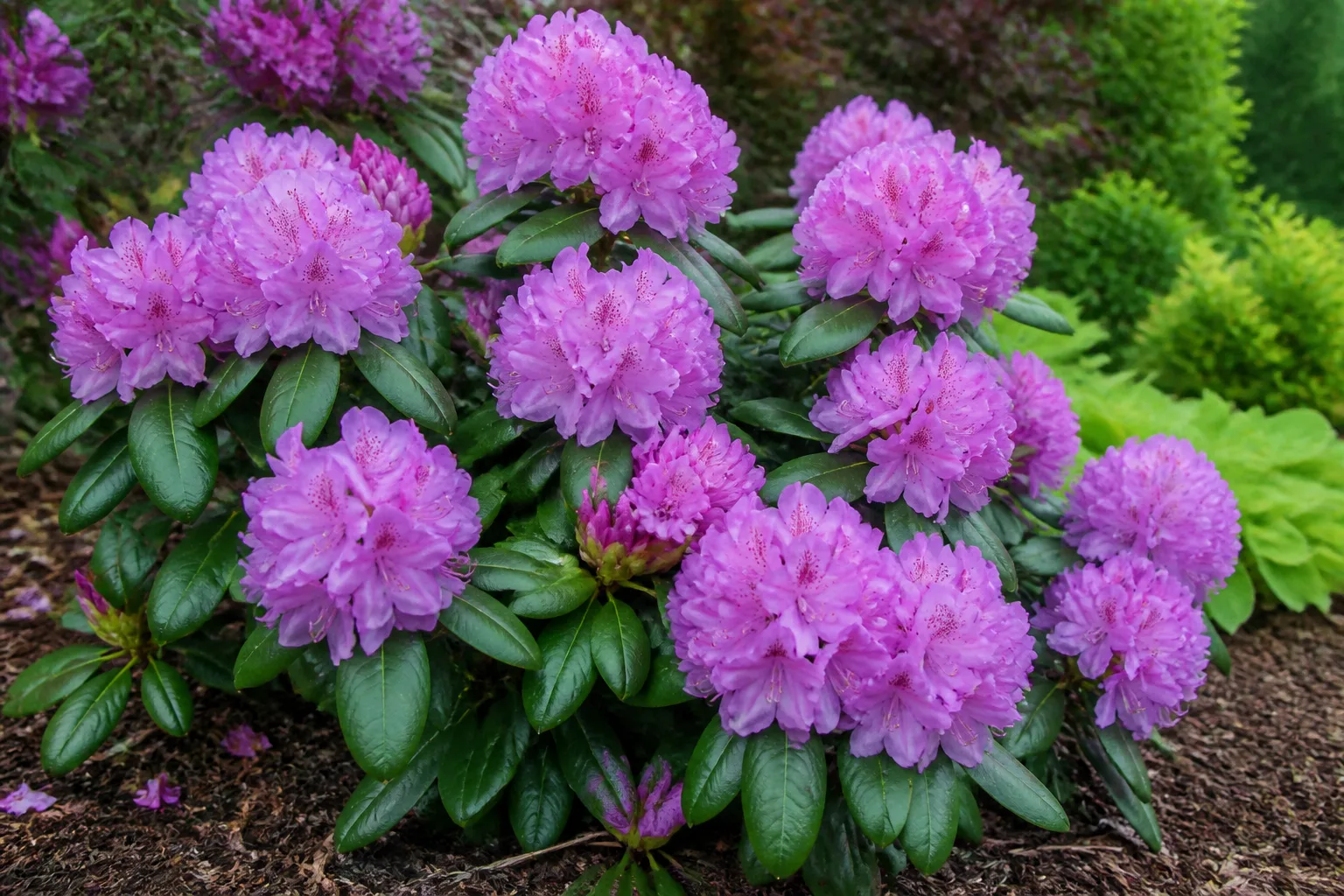
Rhododendrons bring both height and broad, glossy foliage to a bright woodland border. Many types mature around 6 to 10 feet, though cultivar size varies widely. Their flower trusses are a spring bonus; the year-round structure is the real reason to use them in a shady yard. A site with filtered light or morning sun usually produces better flowering than dense, dark shade.
Rhododendrons want acidic, organic soil that stays evenly moist but drains promptly. Their shallow root systems are easily damaged by deep digging, salt, or repeated cultivation, so improve a new bed before planting and use a light mulch layer afterward. NC State Extension flags afternoon-sun scorch, root rot in poorly drained soil, and frequent deer damage. The genus is poisonous if ingested; treat that as a real placement decision rather than an afterthought.
3. Mountain laurel for an eastern woodland border
Mountain laurel (Kalmia latifolia) is a broadleaf evergreen native to eastern North America. Its twisted, natural form and late-spring clusters of pink or white flowers suit a woodland border better than a tightly clipped bed. It can grow roughly 6 to 10 feet tall and sometimes larger in favorable mountain conditions, so give it room to mature.
The plant handles full shade through full sun but usually looks best with morning light, afternoon protection, cool roots, and acidic, humus-rich soil. It is a poor candidate for heavy clay that stays saturated. The NC State profile also notes high flammability, so keep it out of defensible space near a home in fire-prone regions. Mountain laurel has high-severity poisonous characteristics; the ASPCA plant profile is a useful reminder to choose another shrub where pets or children are likely to chew leaves.
4. Canadian hemlock for cool, high evergreen structure
Canadian hemlock (Tsuga canadensis) is a true tree, not a shrub that stays small because it is planted in shade. The species can reach 40 to 70 feet tall with a broad spread, creating a cathedral-like evergreen layer in a large property. Compact, columnar, or weeping cultivars are more realistic for an ordinary yard, but the label still needs to be checked carefully.
This conifer prefers cool, moist, acidic soil and does not tolerate drought well. It can take substantial shade, yet hot, exposed sites are a poor match. The NC State Extension profile identifies hemlock woolly adelgid as a major pest and notes sensitivity to drought and hot-weather scorch. Plant only when you can provide enough root space and when local pest pressure makes the choice sensible; do not use a full-size hemlock where you really need a 10-foot screen.
5. Camellia for flowers in mild climates
Japanese camellia (Camellia japonica) is a slow-growing evergreen shrub or small tree for climates with mild winters, generally USDA Zones 7 through 9. It brings glossy leaves and flowers from autumn into late winter or early spring, depending on cultivar. Mature plants can reach about 10 to 13 feet, but they are not instant screens; slow establishment is part of the bargain.
Camellias prefer shade or part shade, shelter from drying winter wind, organic soil, and a slightly acidic pH around 5.5 to 6.5. They need moisture, but not a waterlogged root zone. NC State Extension notes that excess shade or sun can reduce flowering, drought in late summer can affect the following season’s buds, and late pruning can remove next year’s flowers. Prune just after bloom if shaping is necessary.
6. Ostrich fern for fast vertical texture
Ostrich fern (Matteuccia struthiopteris) is one of the best tall perennials for moist shade. Its vase-shaped fronds rise 3 to 5 feet and make a strong middle or back layer beneath trees. It is especially useful along a shady slope, stream edge, or rain-garden margin where shrubs would take longer to fill in.
The trade-off is spread. The NC State profile describes slender underground runners that can form colonies and become weedy in a small bed. Give the fern room, or contain it with a defined edge and remove unwanted runners while the planting is young. It prefers constant moisture and partial to full shade; do not put it in dry shade and expect low light to compensate for a missing water supply.
7. Boxwood for a clipped formal edge
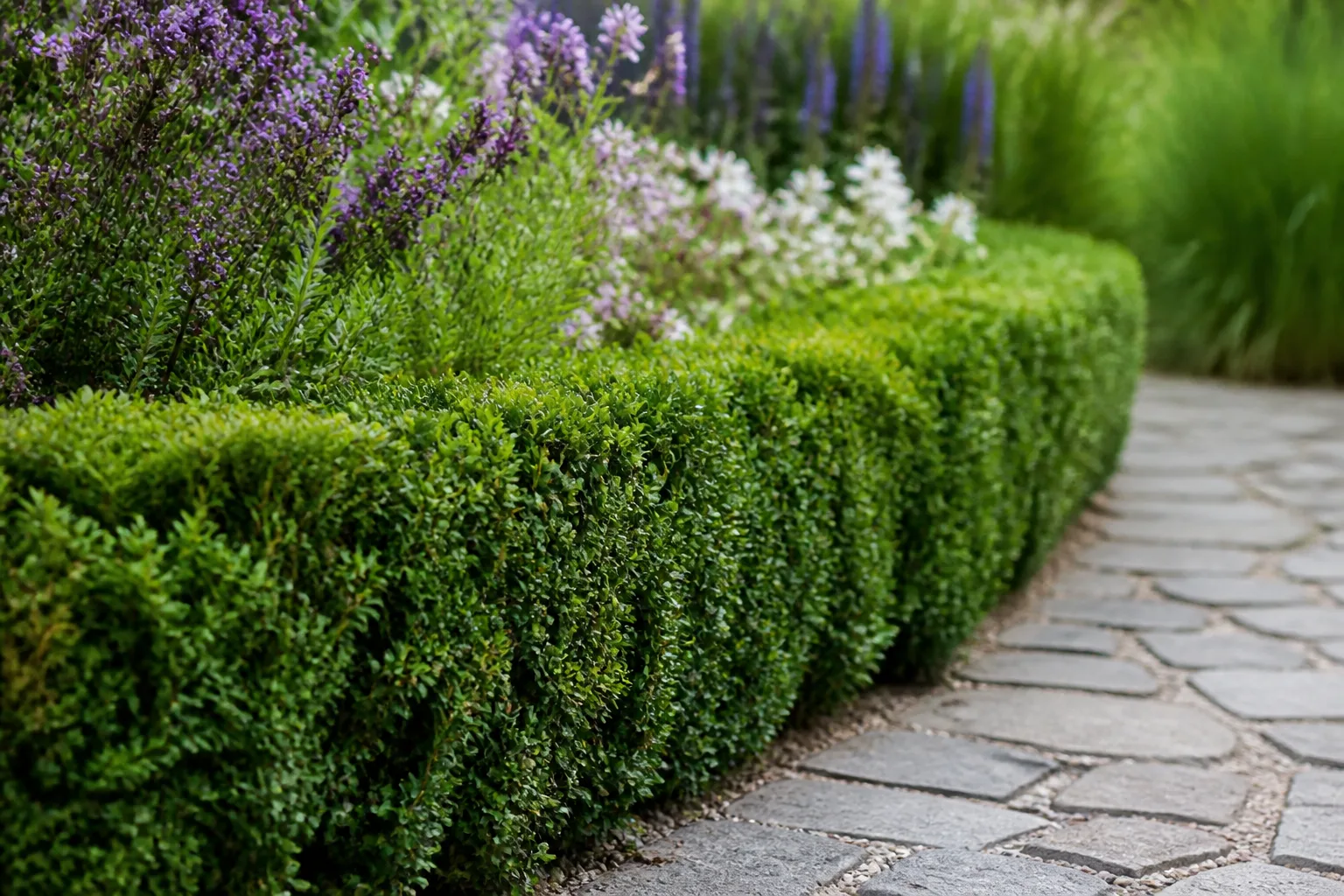
Boxwood (Buxus species and hybrids) is useful when your shady yard needs order rather than a wild woodland effect. Depending on cultivar, it can form a low border, rounded shrub, or hedge several feet tall. Dense evergreen foliage holds its shape through winter, and regular clipping can create a formal frame along a path or entry.
Boxwoods generally prefer partial or dappled shade and well-drained soil. The NC State boxwood profile gives an optimal pH range around 5.5 to 7.2 and notes that drought stress, poor drainage, boxwood blight, and leaf miner damage can all matter. Leave enough air space between plants instead of creating a solid wall immediately after planting. Boxwood is often deer- and rabbit-resistant, but that does not make it maintenance-free or immune to disease.
8. Leopard plant for bold foliage in deep shade
Leopard plant (Farfugium japonicum, formerly sold as Ligularia tussilaginea) is not the tallest plant here, but its large, round leaves make it visually tall and substantial. It usually reaches 1 to 3 feet, with yellow daisy-like flowers appearing in late summer into fall. Use it in front of taller shrubs, beside a pond, or in a moist shade pocket where its foliage can carry the composition.
Leopard plant performs best in shade because direct sun can burn the leaves. It likes rich, moist soil and deep summer watering, although it may tolerate more dryness than some relatives. NC State Extension recommends it for woodland, riparian, pool, pond, and bog settings and notes slugs and snails as occasional pests. The gold-spotted cultivars are especially useful for lighting a dark corner, but they need protection from harsh afternoon exposure.
9. Bleeding heart for spring height and softness
Old-fashioned bleeding heart (Lamprocapnos spectabilis) forms a loose 2- to 3-foot clump with arching stems and heart-shaped flowers in spring. It is a good companion for ferns and hostas because its delicate foliage creates a softer texture than a shrub. It also solves a common shade-garden problem: giving you a clear seasonal moment before the summer canopy closes.
The plant may yellow and go dormant by midsummer, especially in warm climates. Plan for the space it leaves rather than treating the decline as a failure; neighboring ferns or hostas can take over the visual role. NC State Extension notes that bleeding heart prefers morning sun with afternoon shade, moist but well-drained soil, and dislikes winter wetness or summer drought. All parts are poisonous if ingested and the foliage may cause dermatitis, so wear gloves when handling it.
10. Japanese maple for a small ornamental canopy
Japanese maple (Acer palmatum) is a strong choice when “tall” means a small tree rather than a screening wall. The species can reach roughly 15 to 25 feet, but cultivars range from compact mounds to upright trees with delicate, layered branches. Its value is shape and foliage color: a small canopy can make a shady patio edge or woodland opening feel intentional without overwhelming the yard.
Give it dappled light, high-organic-matter soil, even moisture, and protection from drying wind. Hot afternoon sun can scorch finely cut leaves, while dense shade may reduce color and vigor. NC State Extension lists Japanese maple for dappled sunlight and moist, well-drained soil and rates many forms as slow-growing with higher maintenance. Choose the cultivar for the space you have; pruning a tree down to the wrong size is a recurring maintenance problem, not a design plan.
11. Bamboo for a tall screen only with containment
Bamboo can create fast vertical drama in part shade, but it is the highest-risk recommendation on this list. “Bamboo” covers clumping and running plants with very different behavior. A running type such as golden bamboo (Phyllostachys aurea) can reach 10 to 20 feet, spread by rhizomes, and escape into neighboring beds or natural areas.
The NC State Extension profile for golden bamboo classifies it as invasive in North Carolina and describes aggressive rhizomatous spread. If bamboo is legal and appropriate in your region, choose a genuinely clumping type or install a professionally planned rhizome barrier before planting. A container is not automatically safe: vigorous rhizomes can escape through drainage openings or overtop an undersized pot. For most small yards, a noninvasive shrub or tall fern is the more responsible screen.
12. Hydrangea for reliable flowering mass
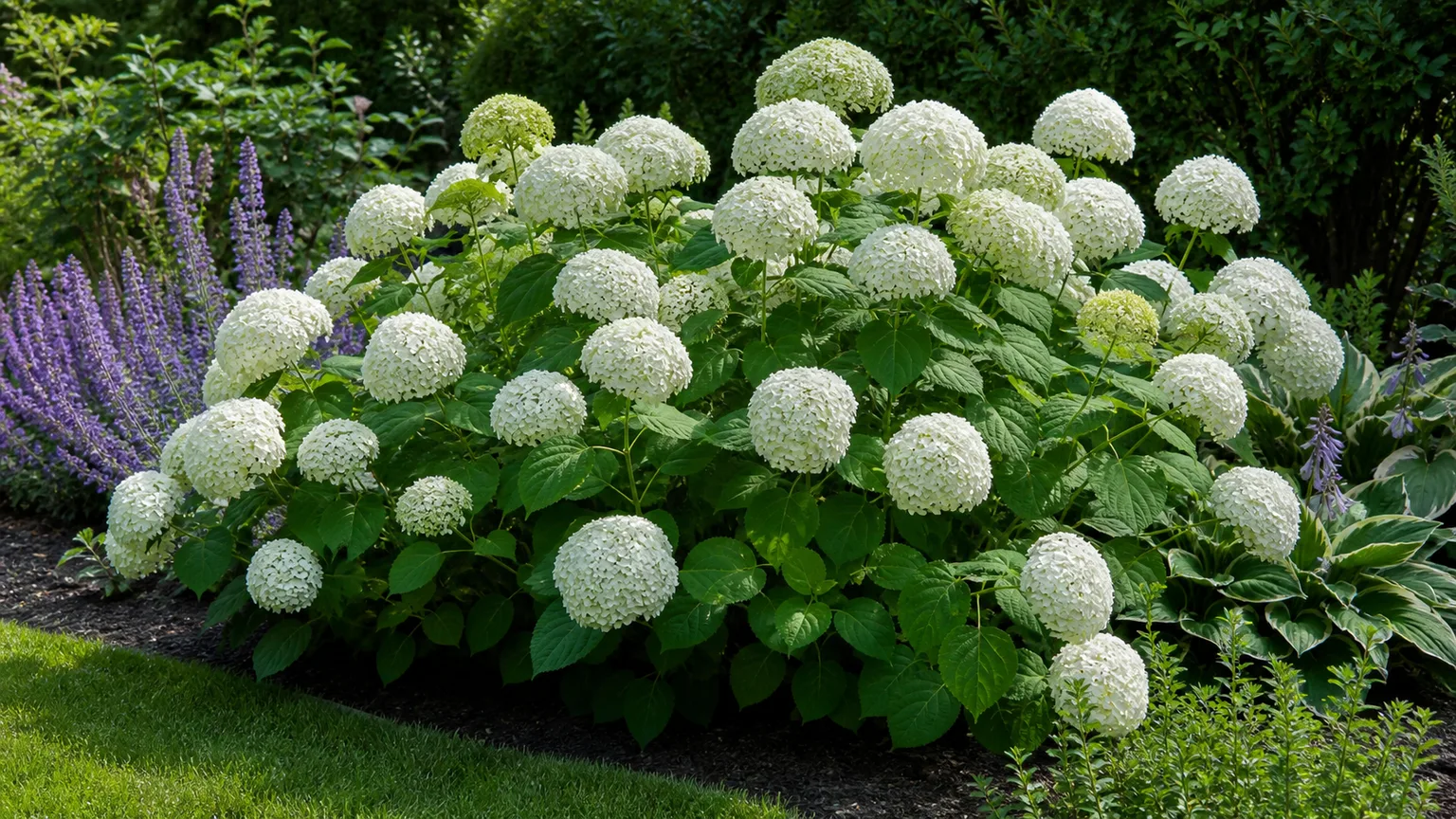
Hydrangeas are a broad group, so buy by species and cultivar rather than by the label alone. Smooth hydrangea (Hydrangea arborescens) is a cold-hardy native shrub that reaches about 3 to 5 feet and flowers on new wood. Oakleaf hydrangea can grow taller and adds lobed leaves, exfoliating bark, and fall color. Bigleaf hydrangea is excellent in bright shade but is more sensitive to winter damage and pruning mistakes.
Most hydrangeas prefer consistent moisture and protection from the hottest afternoon sun, but they still need drainage. The NC State smooth hydrangea profile notes that the shrub tolerates partial shade, blooms on new wood, and can be cut back in late winter; heavy flower heads may bend after rain. Use the species’ pruning rule, mature width, and local winter climate—not flower color alone—to choose a plant.
13. Coast leucothoe for evergreen woodland texture
Coast leucothoe (Leucothoe axillaris) is a graceful evergreen shrub with arching stems, glossy foliage, and small flowers tucked into the leaf axils. It typically reaches about 3 to 4 feet tall and spreads wider, so it works as a lower shrub layer beneath a taller rhododendron or hemlock rather than as a stand-alone privacy screen.
It prefers acidic, humus-rich, evenly moist soil and shade ranging from dappled to deep. The NC State profile warns that it does not tolerate drought or windy conditions, needs winter protection in colder regions, and has a high flammability rating. It is also poisonous if eaten. That combination makes it a good plant for a cool, sheltered woodland bed and a poor plant for a dry, exposed foundation strip or defensible space close to a home.
14. Foxglove for biennial flower spires
Foxglove (Digitalis purpurea) supplies some of the strongest vertical flower spikes in a shade border, commonly reaching 2 to 5 feet. The first year is usually a basal rosette; the second brings tall, one-sided racemes of tubular flowers. It is especially effective in front of a wall, fence, or evergreen shrub where the flower stems have a dark background.
Foxglove prefers moist, well-drained, organic soil and afternoon shade. It may reseed, which can be charming in a cottage garden and inconvenient in a tightly controlled bed. NC State Extension recommends deadheading if you want to limit seedlings, while leaving some seed if you want the colony to continue. It is poisonous, and the ASPCA profile lists cardiac glycosides and serious clinical signs for dogs, cats, and horses. Do not plant it where children or animals can graze on it.

Build a layered shade border without fighting the site
Start with the permanent structure: a small tree, a large shrub, or a narrow evergreen that will still look useful in winter. Put the tallest plant at the back of a border viewed from one side, or near the center when the bed is visible from all directions. Then add a middle layer of hydrangea, boxwood, leopard plant, or bleeding heart and finish the edge with low ferns, hostas, sedges, or ground covers that are not competing for the same job.
Repeat a few forms instead of collecting one of everything. For example, combine one evergreen shape with one broad-leaved shrub and one airy perennial, then repeat that trio down a path. Leave the mature spread between plants; a sparse first year is cheaper and healthier than an overcrowded third year. The Colorado State University Extension design guidance recommends grouping by water need, using taller plants toward the back, leaving access through larger beds, and considering mature size before planting.
Under an established tree, make the smallest possible planting holes. Do not cut large roots, bury the root flare, or build a deep raised bed against the trunk. Use small transplants, water them separately during their first growing seasons, and mulch the soil surface lightly. Grow Native!’s Shady Haven plan is a useful example of how native trees, shrubs, perennials, and sedges can be grouped with regular watering and mulching during the first two years.
Keep tall shade plants healthy and safe
Shade reduces evaporation, but it does not guarantee moisture. Tree canopies intercept rainfall, roots compete for water, and roof overhangs create dry pockets. Check the soil several inches down before watering. A new shrub or fern should receive a thorough soak that reaches its root ball, followed by a check of the surrounding soil; frequent shallow sprinkles encourage a shallow root system.
Mulch can conserve moisture and moderate root temperature, but keep it off trunks and crowns. Improve compacted soil before planting, not by burying an established tree’s roots afterward. Acid-loving plants such as rhododendron, camellia, mountain laurel, and leucothoe should be grouped so you can manage pH and moisture consistently; Gardenia’s shade-and-acid overview recommends testing rather than guessing and warns that dry roots, waterlogging, high pH, and unexpected sun can all cause trouble.
Safety belongs in the plant-selection stage. Yew, rhododendron, mountain laurel, bleeding heart, coast leucothoe, and foxglove all have poisonous characteristics, and plant labels or common names are not a substitute for checking the exact species. In homes with curious pets, grazing animals, or young children, select nonpoisonous alternatives, use physical barriers, or keep toxic plants out of accessible beds. Remove invasive bamboo from the shortlist unless you can verify local legality, containment, and long-term maintenance.
Conclusion
The best tall shade-loving plant is the one that matches the entire site, not just the number of hours of sun. Yew and rhododendron provide evergreen structure; mountain laurel, camellia, and hydrangea add flowers; hemlock and Japanese maple bring tree-scale form; ferns, leopard plant, bleeding heart, and foxglove create seasonal height; and leucothoe supplies a lower evergreen layer.
Measure midsummer light, separate dry shade from moist shade, check mature width, protect tree roots, and treat toxicity or invasive spread as a design constraint. Once those decisions are made, a shady yard can have the same depth, privacy, and year-round structure as a sunny border.