How to Identify and Get Rid of Spurge Weed
Spurge weed thrives in compact soil and pavement edges. This guide covers ID, safe hand removal, crack treatments, herbicide timing, and prevention.
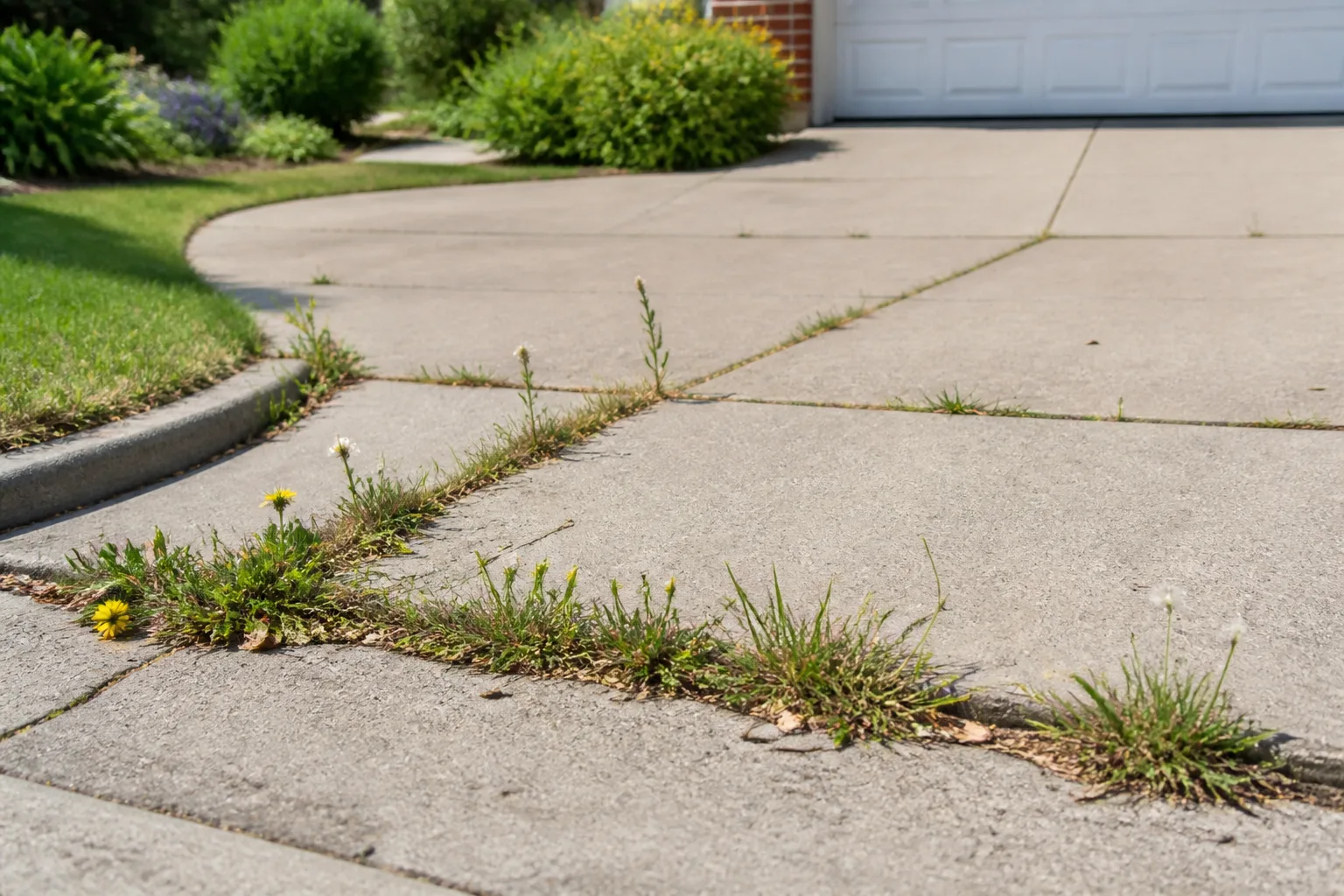
That flat, ground-hugging mat in a sidewalk crack or thin lawn patch is probably spotted spurge (Euphorbia maculata), the spurge most gardeners mean when they say spurge weed. It is a summer annual that can go from sprout to seed in about five weeks, so the job is less about one heroic pull and more about catching plants early, exhausting the taproot with repeat removal, and cutting off the next generation before the soil seed bank reloads.
The short answer: identify the mat, pull early, and starve the seed bank
Confirm the weed before you treat it. Spotted spurge grows in a loose wagon-wheel mat, has tiny opposite leaves with a reddish-purple blotch at the center on most plants, and bleeds a milky sap when stems break. Wear gloves, pull or dig while plants are young, and return to the same spot whenever regrowth appears until the taproot runs out of stored energy.
In lawns, thicken the turf so light cannot reach the soil surface. In beds and cracks, combine hand removal with mulch or, where appropriate, a narrow tool and spot treatments. A pre-emergent applied before soil at 1 inch depth warms past about 55–60°F can reduce spring germination, but it will not fix plants already growing and is not appropriate near food crops unless the label explicitly allows it.
What spurge weed is (and which species you are fighting)
Spurge weed is a common name, not a single botanical species. In North American lawns, paths, and disturbed beds, the troublemaker is usually spotted spurge (Euphorbia maculata), also listed as Chamaesyce maculata in older references. It is a summer annual in the spurge family (Euphorbiaceae), related to poinsettia and castor bean, and it behaves like a heat-loving opportunist rather than a deep perennial vine.
The plant stays low, rarely rising more than a few inches, and spreads outward from a central point in a rough radial pattern. Penn State Extension notes that it is most visible in summer and commonly appears near ornamental beds, sidewalks, and drought-stressed turf. It is not the same plant as leafy spurge (Euphorbia esula), a very different perennial weed with yellow-green flowers and an aggressive rhizome system. If someone warns you about “spurge” in a pasture or prairie-restoration context, they may mean leafy spurge, not the sidewalk mat described here.
Spotted spurge vs ground spurge vs creeping spurge
All spurges share milky sap and small, inconspicuous flowers, but the growth details matter for control. UC IPM’s spurge management guidance separates the common weedy species this way:
Spotted spurge (E. maculata) is prostrate, hairy, and on roughly 95 percent of plants carries a reddish central leaf spot. Its stems do not root at the nodes as they branch. Ground spurge (E. prostrata) is also prostrate and hairy but lacks the leaf spot. Creeping spurge (E. serpens) spreads flat like the others but forms whitish united stipules between leaves and can root at stem nodes, producing new plants vegetatively as well as by seed.
Petty spurge (E. peplus) is a cooler-season annual that prefers shady, moist beds and is generally less aggressive in open sun. Garden spurge (E. hirta), nodding spurge (E. nutans), and thyme-leafed spurge (E. serpyllifolia) cause fewer problems in most yards. If the weed roots along the stem wherever it touches soil, suspect creeping spurge, not spotted spurge.
Why spurge weed loves cracks, gravel, and thin turf
Spurge is not a sign that you failed as a gardener. It is a sign that the site offers what summer annuals want: bare soil, warmth, and light. Compacted soil along walks and driveways holds little competition from grass roots. Thin or drought-stressed turf lets sunlight reach the soil surface, which UC IPM notes is important for maximum spurge germination — seeds buried deeper than about half an inch germinate poorly, but seeds in the top layer of crack dust and lawn thatch get exactly what they need.
Spurge also travels as a hitchhiker. Sticky seeds cling to shoes, mower tires, and animal fur, and nursery pots are a classic entry point. A single overlooked seedling in a container can drop thousands of seeds into your bed before you notice the mat spreading at the soil line.
How to identify spurge weed before it seeds
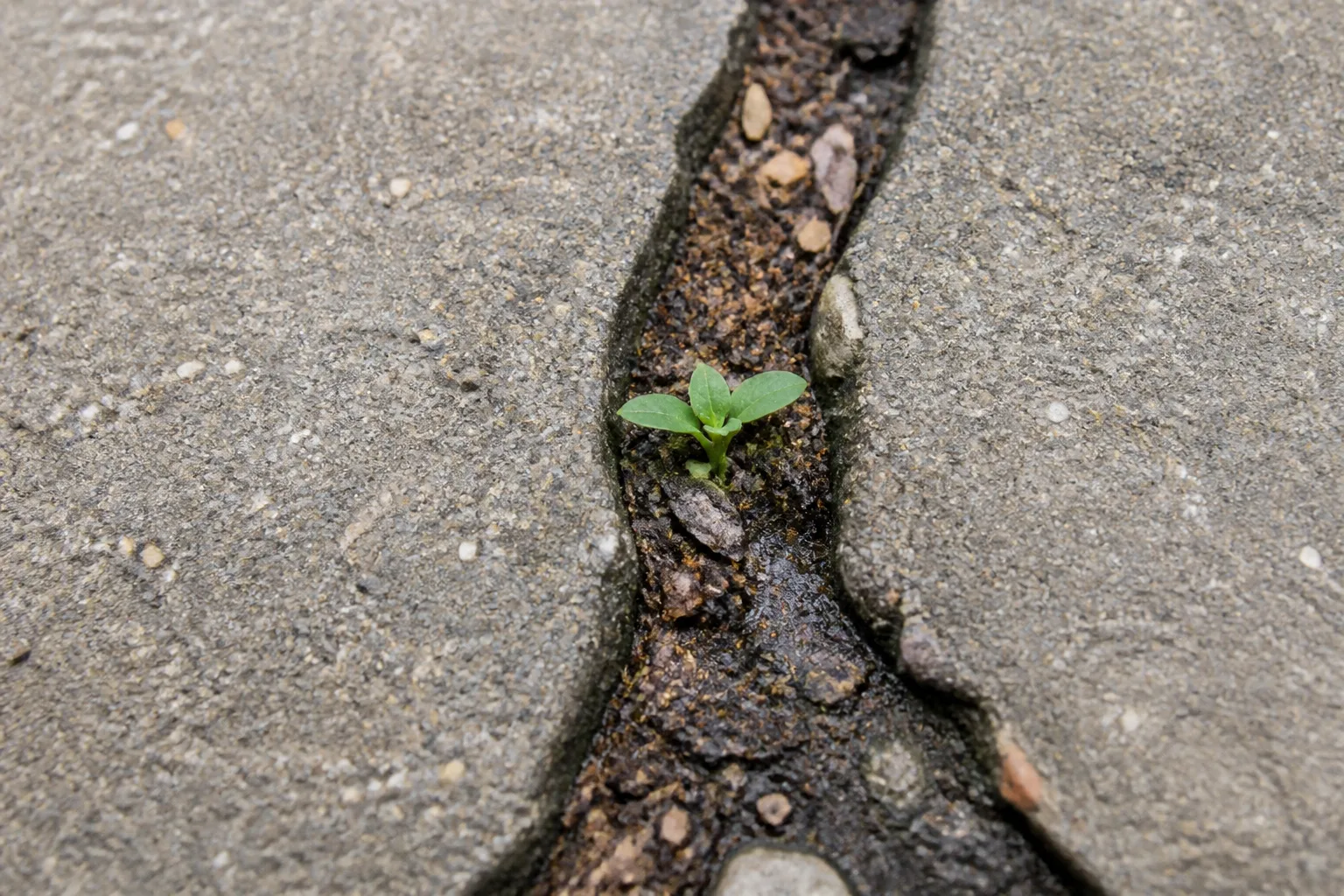
Identification should combine habit, leaf arrangement, and sap — not any one trait alone. A stressed seedling can look generic until you kneel down and look at the stem nodes.
Growth habit. Spotted spurge forms a flat mat, often a foot or more across on favorable sites. UC IPM reports that dense mats can reach about 3 feet in diameter. Stems branch from a central rosette and lie close to the ground rather than climbing.
Stems and leaves. Stems are pink to red, finely hairy, and brittle. Leaves are small — roughly half to three-quarters of an inch long — oval, opposite one another, and dark green with a purple or maroon blotch at the center on most spotted spurge plants. Penn State Extension describes smooth or slightly toothed margins and short petioles.
Sap. Break a stem. Spotted spurge exudes a milky white latex. That sap is a reliable family trait and a practical reason to wear gloves. It can irritate skin and eyes and should be kept away from children and pets who might rub their faces after playing on the lawn.
Flowers and seeds. Flowers are tiny, pinkish, and held in cup-like cyathia in the leaf axils. The fruit is a three-celled capsule less than one-sixteenth of an inch long, each cell holding a minute seed. Because reproductive growth is rapid, a plant you dismiss as “too small to matter” may already be forming seed.
Spurge weed life cycle: germination, taproot, and seed banking
Understanding the calendar keeps you ahead of the weed. Spotted spurge is a summer annual: it germinates in warm soil, grows fast, sets seed, and dies with frost. In mild climates, germination can occur from late winter through much of the growing season whenever moisture and temperature align.
Germination window. UC IPM reports best germination at soil temperatures of 75° to 85°F, with some germination possible from about 60°F up to 100°F. In many regions that means late spring through summer flushes, with seeds produced in summer often germinating quickly and fall-produced seeds lying dormant until the next warm period.
Speed to seed. Once a seed sprouts, the plant can produce viable seed in as little as five weeks under favorable conditions. A single plant can contribute thousands of seeds to the soil. Seeds are long-lived in the seed bank; while not every seed survives for years, enough persist that one good summer can fund several seasons of weeds.
Taproot. Below the mat, spotted spurge develops a central taproot that UC IPM documents as capable of extending more than 24 inches into the soil. That depth explains why a casual tug often snaps the stem and leaves regrowth energy behind. The aboveground mat may look small while the root still has reserves.
Is spurge weed harmful to people, pets, and garden plants?
Spotted spurge is invasive in the ecological sense — it colonizes open ground quickly — but it is not in the same league as woody invaders that rewrite a whole property. Its main direct harms are competition and sap exposure.
In beds and thin turf, the mat intercepts light and can weaken neighboring plants by shading their crowns. In citrus and some agricultural settings, spurges also serve as alternate hosts for certain diseases and attract ants to their seed, though those concerns matter more on farms than in a typical home crack.
For people and pets, the practical risk is the milky sap, an eye and skin irritant. Gardening Know How and multiple extension sources recommend gloves for hand pulling. Do not assume “natural” means “safe” — the latex is precisely what makes broken stems unpleasant to handle. If sap contacts skin, wash promptly; if it gets in eyes, rinse with water and seek medical advice if irritation persists.
Spurge weed is not a reliable livestock forage; spurges in general contain compounds that can be toxic to some animals when ingested in quantity. Keep curious chewers away from freshly pulled piles until you bag them.
How to remove spurge weed by hand and from tight spaces
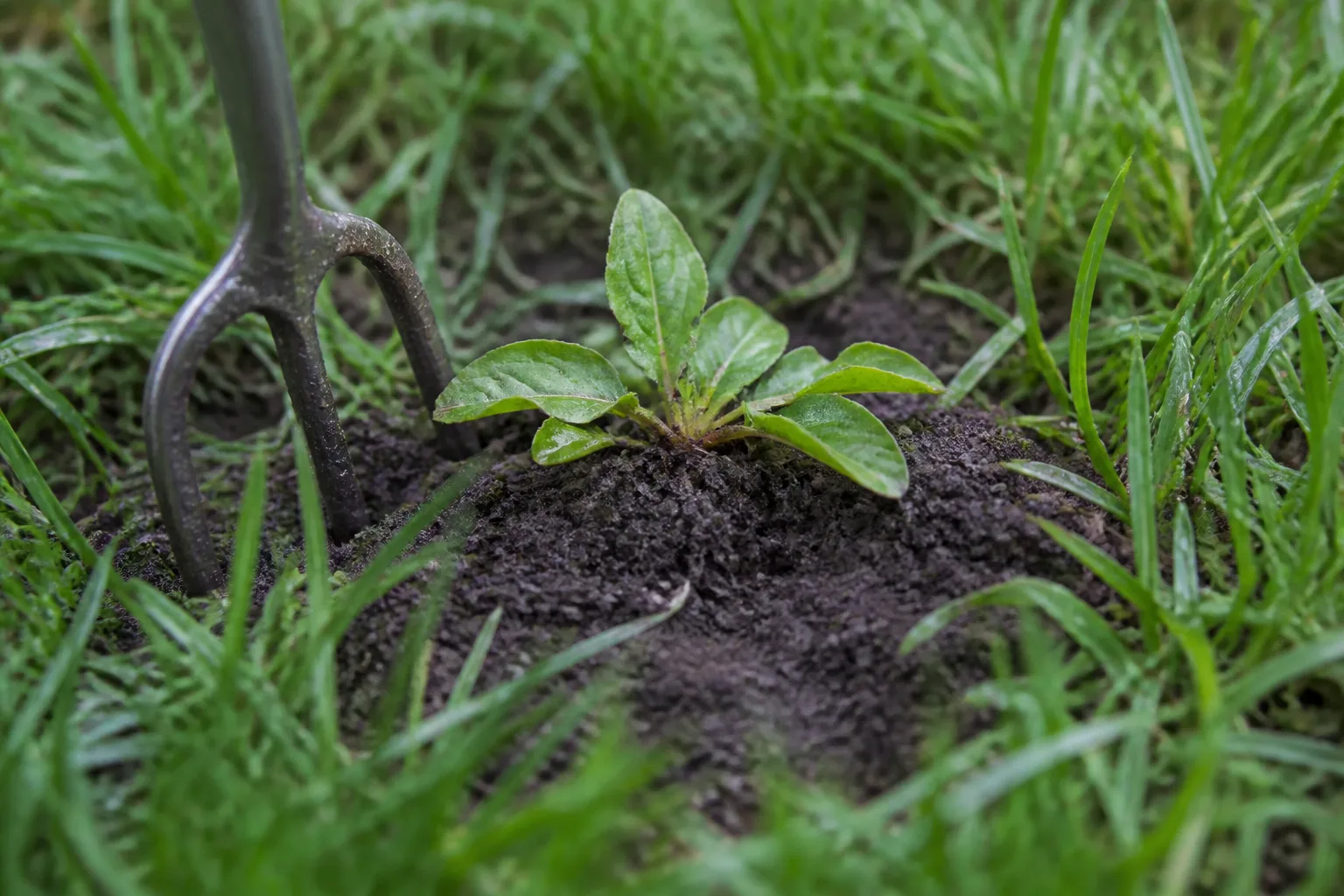
Hand removal is the first and often best tactic for spotted spurge in garden beds, lawn edges, and young infestations — if you do it before seed set and if you accept that repeat visits are part of the job.
Pull young, dig mature. Slide a hand fork or narrow trowel under the crown to loosen soil before you pull. The goal is to lift the taproot rather than snap the stem. After rain or irrigation, soil releases roots more cleanly. Remove pulled plants from the site; seeds left on stems in a compost pile or on the soil surface can still mature and drop.
Repeat until the taproot quits. Gardening Know How describes the realistic pattern: hand pull, watch for regrowth from the broken taproot, and pull again as soon as new leaves appear. Each regrowth episode spends root reserves. Stopping after one incomplete pull is the most common reason people conclude spurge is “impossible” to kill.
Bag seeding plants. If flowers or seed capsules are present, treat the plant as hazardous waste for your garden. Do not leave it lying on the bed while you finish weeding elsewhere.
Tools for sidewalk cracks and pavement edges

Where you cannot dig a wide hole — sidewalk joints, driveway seams, patio gaps — use a slim tool that reaches the crown. A Japanese weeding knife (hori hori) or a narrow crack weeder can undercut the rosette better than fingers alone. For more on working safely in paved areas, see our guide to grass and weeds in driveway, patio, and sidewalk cracks.
Work when cracks are dry enough to see the plant base but not so baked that roots shred. After removal, brush out remaining debris so new dust does not create another germination pad. Sealing wide, recurring cracks after weed removal reduces the bare-soil niche spurges exploit.
Boiling water and vinegar: what they can and cannot do
For isolated cracks away from desirable plants, pouring boiling water into the joint after mechanical removal can cook tender regrowth and reduce immediate comeback. It is a spot treatment, not a lawn strategy, and it does nothing about seeds already in the soil.
Horticultural vinegar (acetic acid at labeled concentrations) can burn small, young annual foliage on contact in pavement gaps. Household kitchen vinegar is far weaker and less predictable. Even strong vinegar is non-selective: it can damage adjacent grass or bed plants through drift and does not move through the taproot the way systemic herbicides do. Use it only where overspray cannot reach plants you want to keep, and expect regrowth from roots and seed.
Neither boiling water nor vinegar replaces repeat monitoring. They are adjuncts after you have removed the visible plant.
Herbicides for spurge: pre-emergent timing and post-emergent limits
Herbicides can help, but they work best as part of a plan — not as a single spray that erases a seed bank built over several summers.
Pre-emergent herbicides target seeds as they germinate. UC IPM advises applying before soil temperature exceeds about 55° to 60°F at a 1-inch depth — typically late winter to early spring in many regions, before the first major summer-annual flush. Active ingredients used on turf and ornamentals include pendimethalin, dithiopyr, oryzalin, trifluralin, isoxaben, and others; only some are available to home gardeners, and labels vary by state.
Pre-emergents do not kill established spurge plants. They also are generally inappropriate in vegetable gardens because residues persist and product labels routinely prohibit such use. Avoid applying pre-emergents where you depend on pollinator-friendly flowering ground covers unless the label allows those species.
Post-emergent herbicides act on living foliage. On turf, combination products containing 2,4-D, dicamba, MCPP, or fluroxypyr are commonly labeled for spotted spurge, but UC IPM cautions that 2,4-D-based mixes are often weak on larger, mature plants. Read the label for your grass species, temperature limits, and whether the product is amine or ester formulation.
Non-selective glyphosate kills spurge foliage it touches and is sometimes used for cracks and gravel, but it will damage any desirable plant it contacts. Never use a non-selective herbicide across a lawn or mixed bed “carefully” with a wand unless you are willing to accept collateral damage.
If you are comparing seasonal weed strategies, our guides on how to get rid of weeds in your lawn and natural ways to prevent crabgrass cover overlapping timing and turf-density principles that also help against spurge.
How to prevent spurge weed from coming back
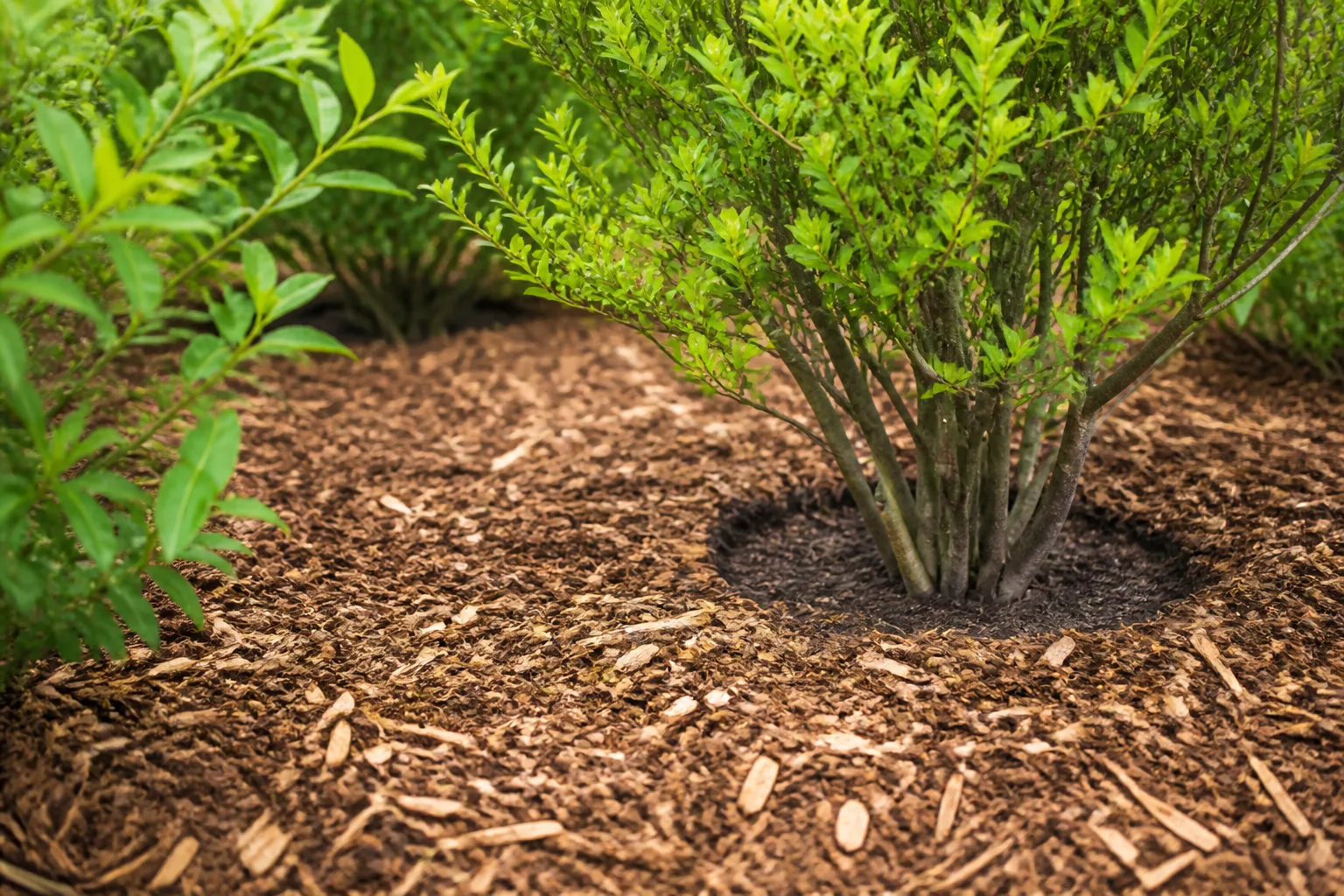
Prevention is mostly about closing the bare-soil windows spurge exploits and stopping new seed imports.

Thicken turf. Penn State Extension and UC IPM both emphasize competitive grass as the best long-term lawn defense. Mow at the higher recommended height for your species — often around 2 inches or more for tall fescue and perennial ryegrass — fertilize according to soil test, manage irrigation so grass stays dense rather than patchy, and overseed thin areas in the correct season for your grass type. Once spurge is established, cultural fixes alone will not erase it; you still need removal. But a dense sward stops the next wave.
Mulch and solarize open beds. Organic mulch at least 2 inches deep blocks light to weed seeds. Coarser bark may need 3–4 inches to be effective. Synthetic weed fabric beneath mulch can help in ornamental beds if you monitor edges where spurge often re-enters. In empty beds during hot summer weeks, soil solarization with clear plastic for four to six weeks can reduce seed numbers where daytime soil temperatures stay very hot; it is partial, not total, in cooler summer climates.
Inspect nursery plants. Before you set out containers, scan the soil surface for prostrate mats. Pull hitchhikers and refresh the top layer of potting soil if needed. Clean mower decks and shoes after working infested cracks so you do not transport sticky seeds to clean beds.
Do not expect one season to finish the job. Because seeds persist and germination extends through warm weather, plan on a two- to three-year reduction program: early pre-emergent where appropriate, zero tolerance for seeding plants, and steady improvement of turf or mulch cover. For mulch depth and longevity, see does mulch prevent weeds.
Conclusion
Spurge weed is beatable when you name it correctly, act before seed set, and match the method to the site. Spotted spurge announces itself with a prostrate mat, opposite leaves, a purple center spot on most plants, and milky sap — but creeping and ground spurges share the family traits without the same details. Pull young plants with gloves, loosen the taproot instead of snapping stems, and return to the same patch until regrowth stops.
In lawns, density is prevention. In cracks, combine slim tools and spot treatments with sealing where practical. Use pre-emergents on timing, not hope — before warm-season seeds wake at shallow soil depths — and reserve post-emergent sprays for situations the label actually fits. The seed bank will test your patience longer than the first pull, but each season you prevent seeding and close bare soil, spurge loses ground.