How to Grow and Care for Scotch Moss in Your Garden
Learn how to grow Scotch moss by choosing the right plant, sun, soil, and spacing. Get a clear watering plan and diagnose brown patches before replacing a mat.
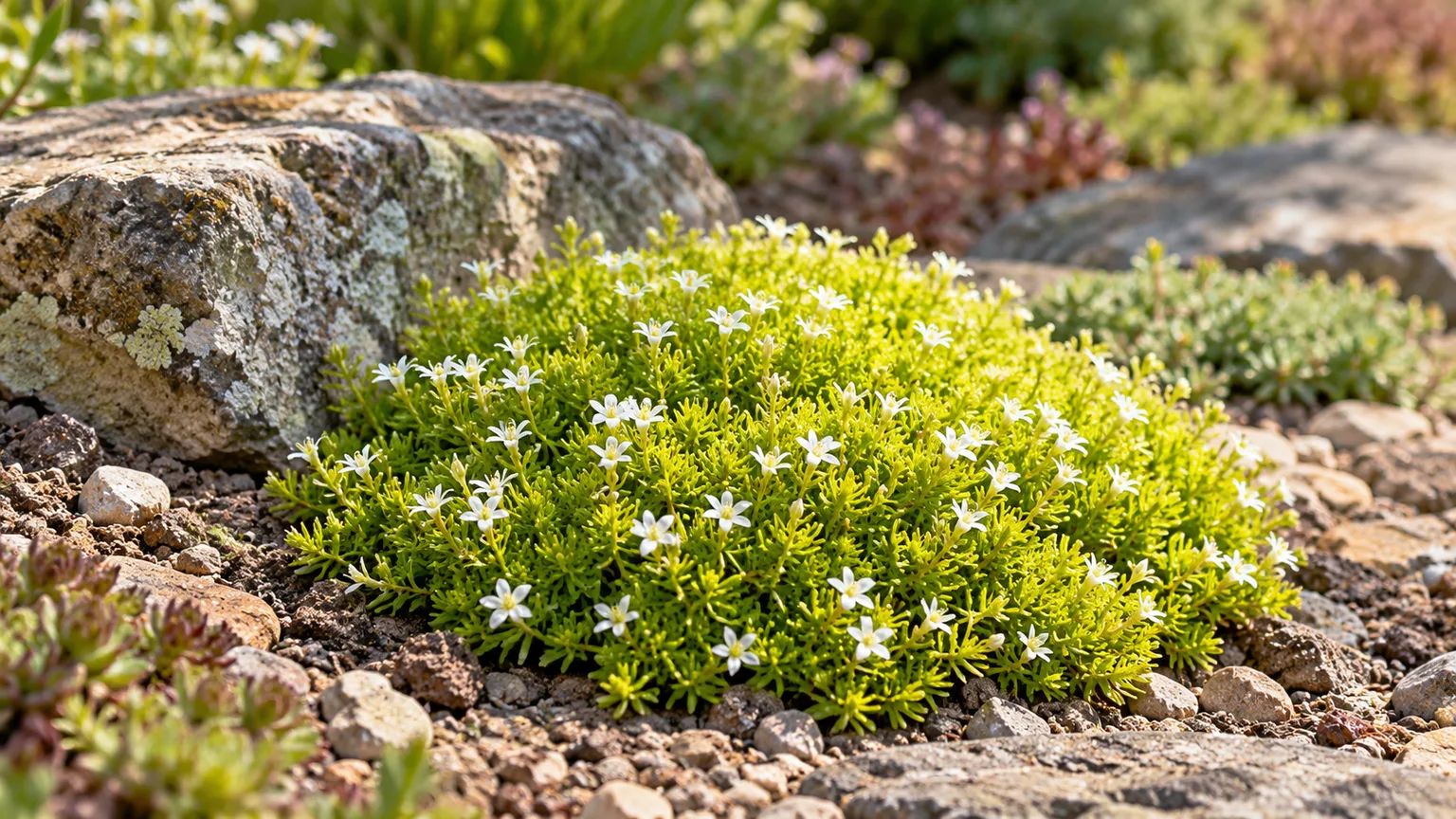
Scotch moss grows best as a low, flowering groundcover in bright light, moist soil, and a site where water drains away instead of sitting around the roots. The name is less dependable than the care label: it can refer to Sabulina verna (formerly Arenaria verna) or to the golden cultivar Sagina subulata ‘Aurea’. Check the botanical name before you buy, because the two plants are related in appearance but are not the same species.
The simplest way to keep a patch compact is to match its light to your summer climate, water when the root zone begins to dry, and avoid rich, high-nitrogen feeding. Brown areas can come from either drought or excess water, so inspect the soil and crowns before changing your watering routine.
Scotch Moss Care at a Glance
| Need | Practical starting point |
|---|---|
| Light | Full sun in cooler regions; partial shade or afternoon protection where summers are hot |
| Soil | Moisture-retentive but sharply drained; no standing water |
| Water | Keep evenly moist while new plants establish, then water during dry spells |
| Height and spread | Usually about 1 to 2 inches tall; mats can spread a foot or more |
| Cold hardiness | Depends on the plant: UW–Madison Extension lists Sabulina verna in Zones 4a–7b and Sagina subulata in Zones 4a–8b |
| Traffic | Light, occasional foot traffic; use stepping stones for a path walked every day |
| Bloom | Tiny white flowers from late spring onward; clusters on S. verna, usually single flowers on S. subulata |
Those figures describe low, mat-forming plants, not a fast turf substitute. Coverage takes time, and an older patch may thin and need to be divided or replanted. Treat any zone number as a starting point rather than a promise, especially because nursery catalogs do not always use “Scotch moss” for the same plant. (UW–Madison Extension)
What the Name “Scotch Moss” Means
The common name describes a look more than a single, consistently labeled plant. “Scotch moss” may mean Sabulina verna, a European species also called moss sandwort, or a golden form of Sagina subulata, a species more often sold as Irish moss. In both cases the foliage forms a short, moss-like carpet and can be chartreuse or yellow-green, so a photo on a plant tag may not settle the question.
This matters most when you compare hardiness or try to identify a plant by flowers. Wisconsin Extension lists Sabulina verna as hardy in Zones 4a to 7b, while Sagina subulata is listed for Zones 4a to 8b. A perennial reference lists the yellow S. subulata cultivar ‘Aurea’ more broadly, so published ranges are not perfectly aligned; the cultivar, local summer climate, drainage, and the nursery’s actual stock all matter. (Heritage Perennials; UW–Madison Extension)
Why plant labels can name two different species
The names have been mixed in horticultural trade for years. UW–Madison Extension now uses Sabulina verna for the species previously called Arenaria verna, but garden references still use the older botanical name. At the same time, several growers use “Scotch moss” for the golden selection of Sagina subulata; North Carolina State Extension includes “Scottish moss” among the common names for S. subulata, while Gardening Know How calls its yellow cultivar Scotch moss. (UW–Madison Extension; NC State Extension Plant Toolbox; Gardening Know How)
If you want the plant described in this guide’s original species profile, look for Sabulina verna or Arenaria verna on the tag. If you want a golden form of the plant sold as Irish moss, look for Sagina subulata ‘Aurea’. If the label gives only “Scotch moss,” ask the nursery which botanical name it is selling and keep the tag; that one question is more useful than relying on a hardiness zone or color photo alone.
The two species are difficult to tell apart when they are not flowering. Both have slender leaves and white flowers, but the flowers of S. verna appear in small clusters while those of S. subulata are generally solitary. They are flowering perennials in the carnation family, not true mosses; the Royal Horticultural Society describes true mosses as moisture-dependent garden organisms with a very different biology. That is why a sunny, drained garden site suits Scotch moss better than the shaded, persistently damp spot many people associate with moss. (UW–Madison Extension; Royal Horticultural Society)
Choose the Site by Sun and Summer Heat
Scotch moss needs enough light to stay dense, but strong afternoon heat can stress it. In a cool or mild-summer region, a sunny rock garden or path edge is a good starting point. In a hot-summer garden, place it where it gets morning sun or dappled light and receives shade during the hottest part of the afternoon. Deep shade can make growth loose and less compact.
Give cool climates more sun and hot climates afternoon relief
Think about the temperature at the foliage level, not only the number of hours the bed is technically sunny. Stone, paving, and south-facing walls reflect heat and can dry shallow roots quickly, while a little afternoon shade can lower stress without putting the mat in full shade. If a bed is baked dry by midday, a spot with gentler morning sun is usually a better choice than trying to compensate with repeated shallow watering.
One gardener at Flower Patch Farmhouse reports Scotch moss doing well in a mild coastal Zone 9 garden and attributes that result to the cool maritime setting, not to the zone number alone. That is a useful illustration of microclimate, not evidence that all Scotch moss is hardy in Zone 9; a hot inland summer can be far harder on the same plant. (Flower Patch Farmhouse)
Prepare Moist, Well-Drained Soil
The useful soil target is “evenly moist after watering, then able to drain.” Scotch moss does not want its roots to dry repeatedly, but standing water around the crowns can cause yellowing, dieback, and rot. A low spot that stays soggy after rain is a poor site even if it otherwise receives ideal light.
Before planting a large patch, watch the spot after a heavy rain or water a small test area. If water pools around the plants or the soil stays sticky and saturated long after nearby beds have drained, choose another site, raise the planting area, or correct the drainage across the bed. Do not hide a wet pocket under gravel; the water still reaches the roots.
Loosen compacted soil across the whole planting area so roots can settle and new stems can creep between the plugs. A modest addition of finished compost can help very poor soil hold moisture more evenly, but avoid making a rich, heavy planting pocket that stays wetter than the surrounding ground. Remove perennial weeds before planting because pulling weeds from a fine mat later can lift the moss along with them.
Plant for Coverage Without Burying the Crowns
Spring is a dependable planting time because temperatures are mild and rain often helps new roots settle in. Fall can also work where the plants have time to root before hard freezes, but avoid transplanting during a heat wave or into waterlogged winter soil. Water the nursery pots first so their root balls are evenly moist when you take them out.
Set each plant at the same depth it grew in its container. The crown should sit level with the surrounding soil, not buried beneath compost or gravel; a buried crown stays wet and is easier to rot. Firm soil gently around the roots, water the planting, and check that the surface does not sink into a depression that collects runoff.
Spacing is a trade-off between the number of plants you buy and how soon you want the gaps to close. For a display that should fill quickly, use small plugs closer together; for a larger area on a limited budget, space them farther apart and expect to wait longer while weeds take advantage of the open soil. Gardening Know How uses roughly 12 inches for the related Sagina subulata groundcover, while UW–Madison Extension notes that closer transplants shorten the time needed to cover an area; follow the mature spread and spacing guidance for the exact plant on your tag. (Gardening Know How; UW–Madison Extension)
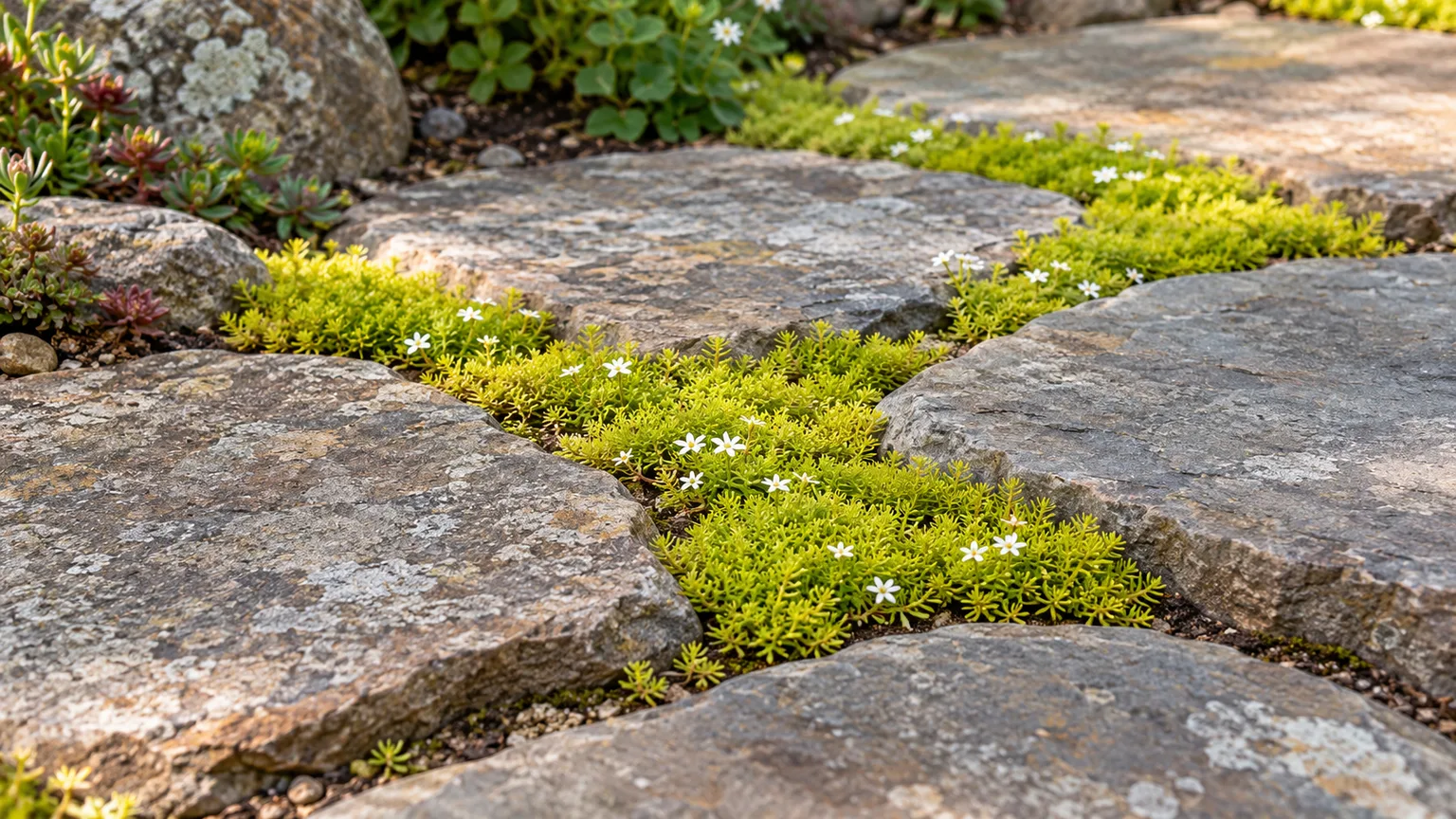
Between pavers, use soil-filled joints that are wide and deep enough to hold a root ball; a thin seam over compacted base material may dry too quickly for a shallow-rooted plant. Leave the walking surface on the stones, not the planted seams, and press the plugs into the soil rather than packing them with fine gravel. This gives stems room to spread while keeping the crown level and accessible for watering.
Water to Balance Moisture and Drainage
For the first few weeks after planting, check the soil regularly and water when the upper root zone begins to dry. A slow soak at soil level reaches the roots more reliably than frequent light sprinkles that wet only the foliage and surface. How often you water depends on rainfall, soil texture, temperature, and whether stone or tree roots speed up drying.
Once the patch is established, use soil moisture as your cue rather than following a fixed calendar. If the soil beneath the mat feels dry and the leaves are losing their fresh, springy look, water deeply and then let excess drain. If it is still damp, wait; more water will not help a crown that is already sitting in wet soil.
Hot weather can make a healthy mat look tired, especially around reflective paving. First check whether the root zone is actually dry. If it is, water the soil and give the patch relief from peak afternoon sun; if it is wet, improve drainage and hold off on watering. Repeatedly soaking a plant that is already saturated can turn a heat-stressed patch into a rot problem.
Fertilize Lightly and Keep the Mat Low
A dense carpet does not need a strong fertilizer schedule. If the plant is growing compactly and the soil is reasonably fertile, skip feeding. Too much nitrogen encourages soft, upright growth that can form mounds instead of the flat mat most gardeners want; Wisconsin Extension specifically recommends sparing fertilizer for this reason. (UW–Madison Extension)
If the soil is very poor and growth remains weak after you rule out shade, drought, and drainage problems, use a light spring application of a balanced, slow-release fertilizer at the label rate. Keep lawn fertilizer and concentrated high-nitrogen products away from the patch. Feeding will not repair a plant that is browning from waterlogged roots or hot, dry soil.
There is little routine pruning to do. Snip off dead stems, tidy the edge where the mat crosses into gravel, and remove volunteer seedlings if you do not want the patch spreading. If the surface becomes uneven, correct the cause before shearing the top: shade, overfeeding, or a too-wet site can produce the same lumpy appearance and will remain a problem after trimming.
Propagate by Division or Seed
Division is the quickest way to multiply a healthy patch because each piece already has roots and foliage. Seed is useful when you need many plants or are willing to wait, but seedlings take longer to make a continuous carpet. Both methods work best when the new planting can be kept evenly moist without sitting in saturated soil.
Divide an established patch
Divide in cool weather while plants are actively growing or just as growth resumes, rather than during summer heat. Use a sharp knife or spade to lift a narrow strip or small clump, then separate it into pieces that each have both roots and visible leafy growth. Pieces without roots may dry out before they can establish.
Prepare the new spot before lifting the division so the roots are not left exposed while you dig. Set each piece at its previous soil level, firm the soil around it, and water thoroughly. Keep the new pieces evenly moist during establishment, then shift to watering when the root zone begins to dry.
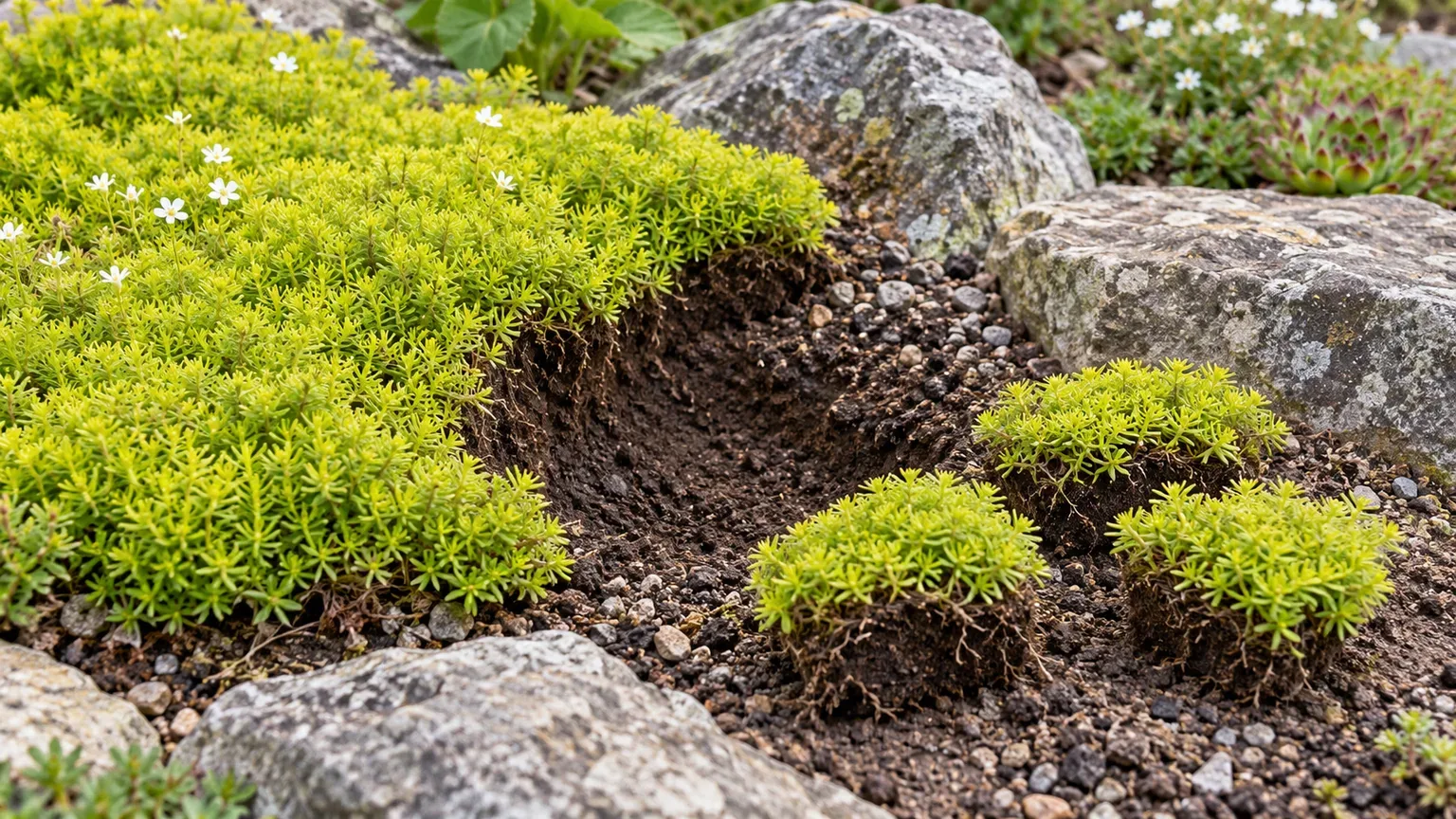
Division can also renew an old patch that has opened in the center. Take healthy, rooted pieces from the outside and replant them into gaps after removing dead material; do not try to save soft, discolored crowns from a persistently wet area. If drainage is the problem, move the divisions to a better site instead of recreating the same failure.
Sow seed slowly and evenly
Start seed indoors several weeks before the last expected frost or sow it directly outdoors in spring. Because the seeds are tiny, press them onto a fine, moist surface rather than burying them under a thick layer of soil. Keep the seedbed consistently moist but not waterlogged; UW–Madison Extension reports that germination may take two to three weeks. (UW–Madison Extension)
The hard part is usually keeping the surface from drying before seedlings establish. Use a gentle watering rose or a covered seed tray that can be vented, and avoid dislodging seeds with a strong spray. When seedlings are large enough to handle, transplant them carefully with a small plug of soil so their fine roots are not torn.
Diagnose Brown Patches and Sparse Growth
A brown patch is a symptom, not a watering instruction. Scotch moss can brown when it is too dry, too wet for too long, overheated, damaged by traffic, or simply declining with age. The fastest route to the right fix is to inspect what the soil and crowns are telling you before you add water or fertilizer.
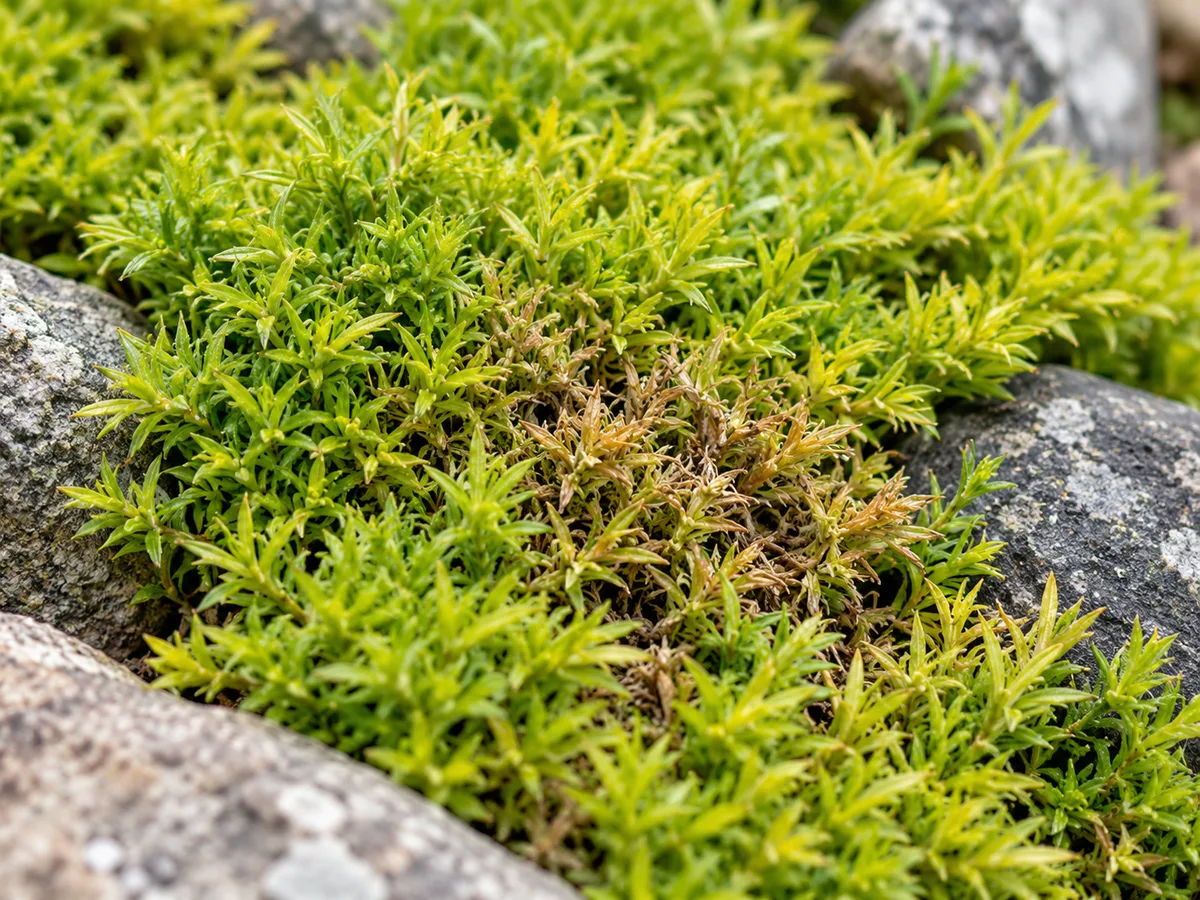
Localized browning has several possible causes; check the soil and the firmness of the crowns before changing the watering routine.
Check soil, crowns, heat, and traffic in that order
| What you see | Check first | Useful first response |
|---|---|---|
| Dry, brittle foliage across an exposed edge | Soil below the mat is dry; nearby stone is hot | Water the root zone deeply and consider afternoon shade |
| Yellowing or soft, mushy crowns | Soil stays wet or has standing water | Pause irrigation, remove rotted pieces, and improve drainage |
| Brown patches after a hot spell | Damage is strongest on the sunniest or paving-facing side | Reduce peak heat exposure and water only if the root zone is dry |
| An old mat opens from the center | Outer portions remain firm while older centers fade | Divide healthy edges and replant them into gaps |
| A low mat turns into separate mounds | Growth is upright and loose, especially after feeding | Stop fertilizer and check whether the spot has become too shaded |
| Ragged holes or missing leaf tips | Look for slugs after damp evenings | Hand-remove pests and reduce nearby hiding debris |
If the soil is dry, water once and check the mat again before repeating. If the soil is wet and the crowns are soft, watering more is the wrong response; remove badly rotted sections and correct the site so water can escape. When roots have rotted through, drying the surface alone will not restore the dead tissue.
If browning follows heat, do not assume that the plant has died. Some gardeners report seasonal browning in very hot or cold weather followed by renewed color when conditions moderate, but this response varies with the plant sold under the common name and the local climate. A mild coastal garden’s experience cannot guarantee recovery in a hot inland bed, so judge living crowns and new growth rather than color alone. (Flower Patch Farmhouse; Heritage Perennials)
Slugs can chew on these fine mats, especially during wet weather. Look for irregular missing sections rather than a uniform color change, and inspect the ground around the patch after dusk or after rain. If the patch is being walked on regularly, redirect foot traffic with stones; compacted, crushed sections are unlikely to recover as quickly as undisturbed growth.
Overwinter and Renew Older Clumps
Cold hardiness depends on which species or cultivar you bought. UW–Madison Extension lists Sabulina verna for Zones 4a through 7b and Sagina subulata for Zones 4a through 8b, while commercial listings for golden S. subulata can give broader ranges. Read the plant label and treat the range as a guide to winter minimums, not a guarantee against summer heat, wet soil, or local exposure. (UW–Madison Extension; Heritage Perennials)
Most established plants need no elaborate winter covering where the chosen plant is hardy and the soil drains well. The more important winter task is to keep the planting from remaining waterlogged. Do not apply fertilizer late in the growing season, and avoid piling wet leaves or heavy mulch directly over the crowns.
A few plants may thin after several seasons even when care is sound. Wisconsin Extension notes that these groundcovers can be short-lived; divide and replant healthy edges before an entire bed becomes sparse. Treat replacement as normal maintenance for a small, fine-textured mat, not proof that every plant was watered incorrectly.
Use Scotch Moss Where Its Texture Works
Scotch moss is most convincing at small scale: beside a rock, along the front of a bed, in a trough, or in soil-filled joints between flagstones. The fine, low foliage softens hard edges without hiding the stones. It can also surround small spring bulbs, although vigorous self-sowing may blur a carefully planned color pattern over time. (UW–Madison Extension)
Treat it as a living joint filler, not as turf for a shortcut. Light, occasional foot traffic is different from a path that people cross every day; use stepping stones to carry the weight and let the moss fill the visual gaps. For a lawn-like area that will be walked across often, choose a tougher plant or keep a conventional path rather than expecting Scotch moss to tolerate repeated compression.
In containers, choose a pot with drainage holes and use a mix that does not stay sodden after watering. A shallow trough can highlight the mat and stones, but it dries faster than open ground, so check it more often during hot weather. Keep the plant’s surface level with the mix and trim growth that spills where you do not want it.
Scotch Moss, Irish Moss, or Creeping Thyme?
Use the botanical name and the job you need the plant to do to make the choice.
| Plant | Typical look | Useful distinction |
|---|---|---|
| Sabulina verna (formerly Arenaria verna) | Often chartreuse or golden-green; white flowers in clusters | The species in many Scotch-moss profiles; commonly called moss sandwort |
| Sagina subulata ‘Aurea’ | Golden or yellow-green | Often sold as Scotch moss even though it is a cultivar of the species commonly called Irish moss |
| Green Sagina subulata | Emerald to medium green; usually solitary white flowers | Commonly sold as Irish moss; see our Irish moss care guide for that green form |
| Creeping thyme (Thymus serpyllum) | Small leaves and visible flowers, with a different scent and texture | A tougher option where the planting will take more frequent foot traffic |
The color can help you narrow the choice, but it cannot identify every plant with certainty. The flower pattern is more useful when the plants bloom, and the nursery tag is the most direct evidence before purchase. Wisconsin Extension notes that the two moss-like species can be difficult to distinguish outside flowering and that the names are often applied incorrectly in the horticultural trade. (UW–Madison Extension)
If you need a fine, low carpet between stones and can provide reliable moisture with good drainage, either moss-like groundcover may fit. If your priority is a golden color, verify whether the tag says Sabulina verna or Sagina subulata ‘Aurea’. If people will walk across it frequently, favor stepping stones or the tougher creeping thyme alternative rather than choosing by color alone. (UW–Madison Extension)
Conclusion
For a healthy Scotch moss patch, start by confirming whether you have Sabulina verna or golden Sagina subulata, then plant it in bright light that suits your summer heat and soil that stays moist without becoming soggy. Keep new plants evenly watered, feed sparingly, and use stepping stones to protect the mat from regular traffic.
When brown areas appear, check soil moisture, crown firmness, heat exposure, and plant age before watering again or replacing the whole patch. A small amount of targeted division and better site choice usually does more than a stronger fertilizer or a rigid watering schedule.