Prayer Plant Leaves Curling: 4 Causes and Fixes
Prayer plant leaves curling? Check soil moisture, humidity, light, and drafts in order. Learn what to change—and when watering can make it worse.
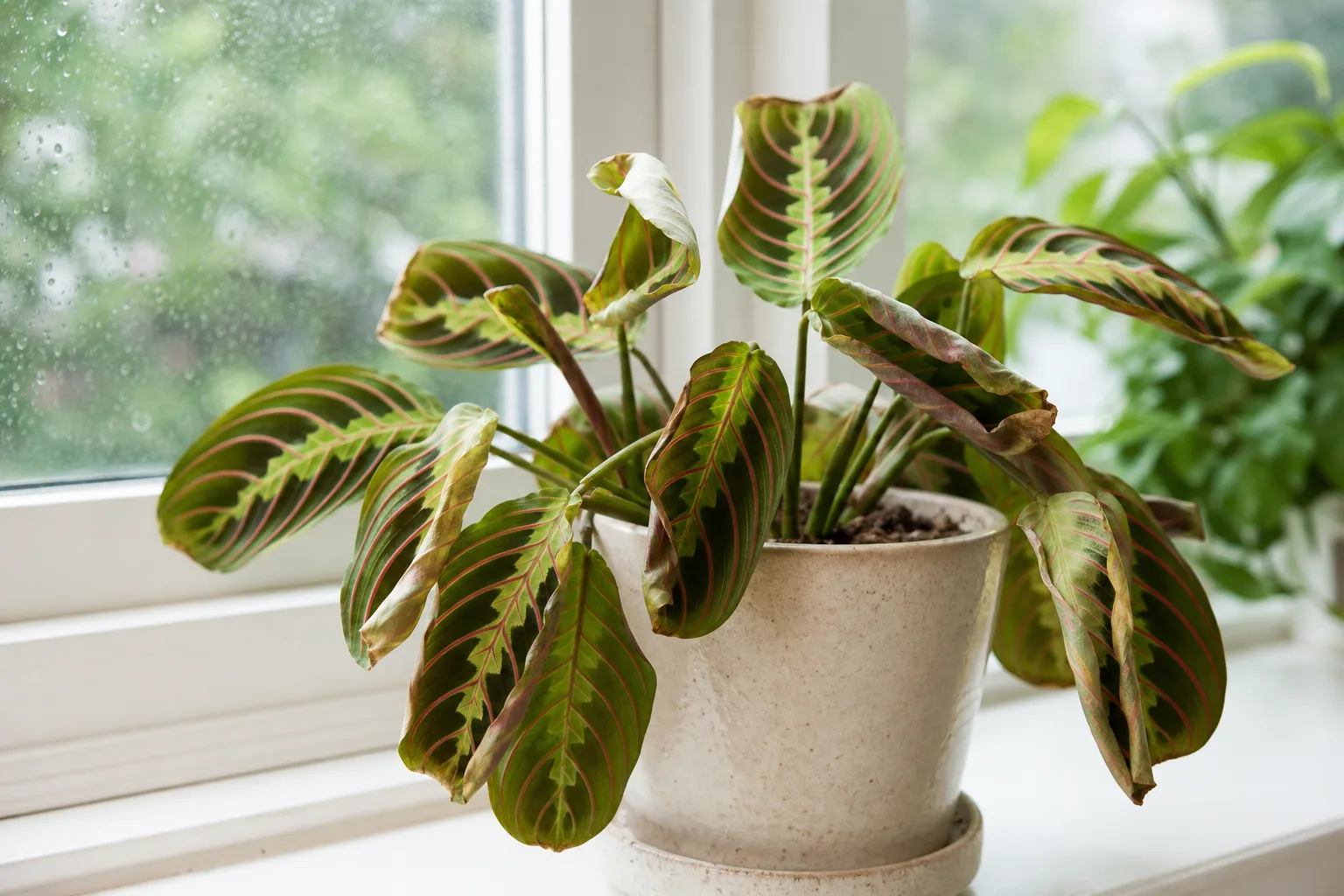
A prayer plant (Maranta leuconeura) usually curls its mature leaves because it is losing water faster than its roots can replace it, or because its environment has shifted. The most useful first step is not to water automatically: feel the potting mix, then check the air, light, and temperature around the plant. The same curled leaf can point to dry soil, roots damaged by wet soil, dry room air, or a stressful window or vent.
Before changing anything, make sure the plant is not simply doing what prayer plants do naturally. New leaves emerge as tight rolls, and mature leaves rise at night; stress is more likely when a leaf stays tightly curled in daylight or starts to look limp, crispy, spotted, or faded.
Is it normal prayer-plant movement or stress?
The common name comes from the plant’s daily leaf movement. Mature blades lie flatter in daylight and rise after dark, a behavior called nyctinasty; that evening lift is not the same as a leaf rolling inward from its edges and remaining that way all day. NC State Extension describes both the nighttime movement and the rolled tube of new growth, so check the time of day and the age of the affected leaf before treating it as a problem. (NC State Extension)
A new leaf can remain rolled while its stalk extends and the blade expands. Give it time to open if it is green, firm, and free of pests; repeated handling or pulling it open can tear the soft leaf. A mature leaf that suddenly folds tightly during the day, especially with dry soil or crispy edges, deserves a closer look.
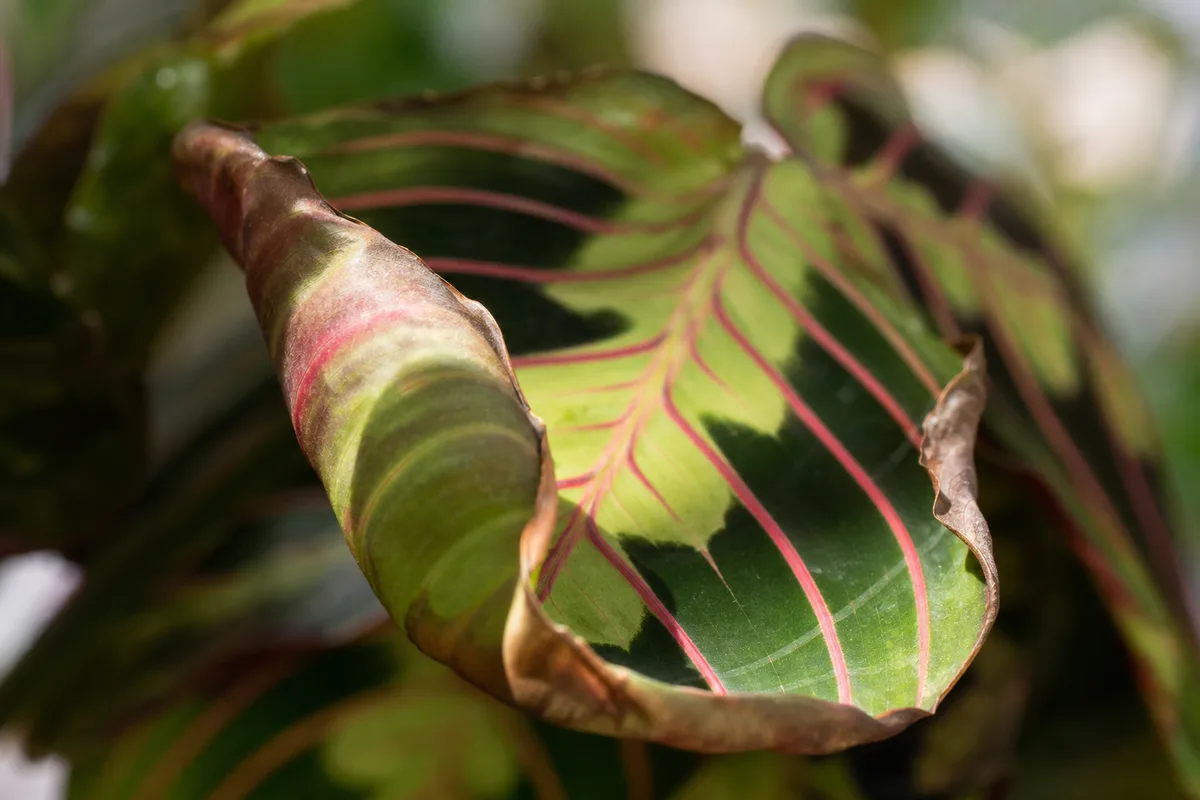
Check these clues before changing care
Start with the pot and the whole plant, not one leaf in isolation. Touch the mix about an inch below the surface, lift the pot to compare its weight with a recently watered one, look at both sides of several leaves, and note whether the plant sits in direct sun, close to cold glass, or in an HVAC stream. These quick checks often separate a simple dry spell from a root problem that more water would worsen.
| What you notice | Check first | A sensible first move |
|---|---|---|
| Inward curl, drooping leaves, light pot, crumbly mix | Root-zone dryness | Water thoroughly, then let excess drain |
| Curling plus yellow, limp foliage and mix that stays wet | Root stress or poor drainage | Pause watering; check drainage and roots if decline continues |
| Crisp margins, dry heated room, soil still evenly moist | Low humidity or a drying draft | Measure humidity at leaf height and move away from the vent |
| Pale or scorched patches facing a window | Direct sun or glass heat | Filter the light or move the pot back from the beam |
| Distorted newest leaves with speckling, webbing, or sticky residue | Pests | Isolate the plant and inspect leaf undersides |
These patterns are clues, not diagnoses. For example, low humidity and dry soil can occur together in winter, while an overwatered plant may also droop because damaged roots cannot supply enough water to the leaves. Change the factor the evidence points to first, then give the plant a few days before adjusting another part of its care.
1. The soil is too dry—or staying too wet
Water imbalance is the first cause to investigate because a prayer plant needs consistent moisture but cannot keep its roots in stagnant, oxygen-poor mix. NC State Extension recommends evenly moist soil during active growth and less water in winter; Missouri Botanical Garden likewise pairs steady moisture with well-drained potting mix and reduced winter watering. (NC State Extension; Missouri Botanical Garden)
A plant in dry mix may curl its leaves inward and droop as water becomes harder to draw into the foliage. A plant in saturated mix can show a similar loss of firmness because its roots are stressed or rotting. The distinction is in the root zone: check how damp the mix is before deciding whether the answer is water or a pause in watering.
If the mix is dry: rehydrate slowly
If the top inch feels dry, the pot feels unusually light, and the soil is pulling away from the sides, water the mix evenly until a little drains from the holes. Let the pot drain completely and empty its saucer; do not leave the bottom sitting in runoff. A small sip only wets the surface and may leave the inner root ball dry, especially if peat-based mix has become hydrophobic.
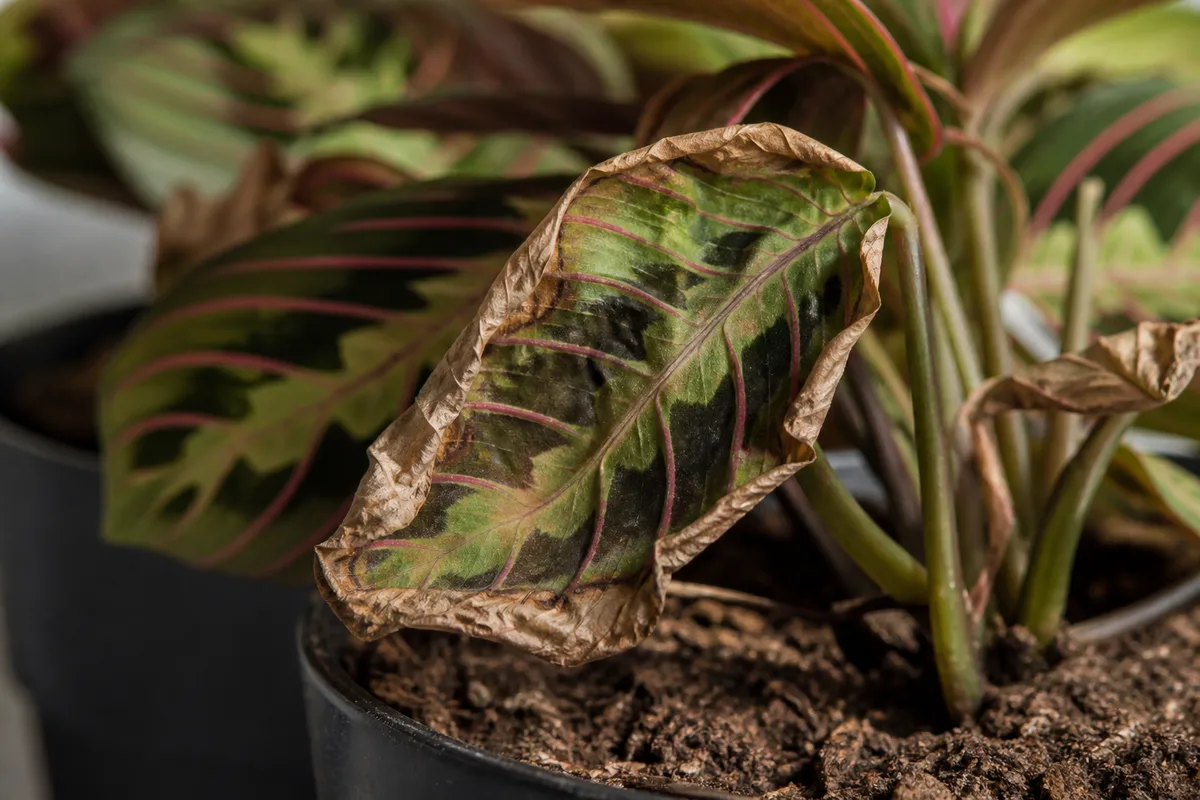
If water runs down the pot wall without soaking the middle, set the pot in a basin of room-temperature water for about 10–15 minutes, then lift it out and allow it to drain. Stop once the root ball has rehydrated; do not keep the pot standing in water. The goal is evenly damp soil, not a permanently wet saucer.
Do not use a weekly calendar as the main signal. A small pot in a warm, bright room can dry much faster than a larger pot in winter light, and porous terracotta dries faster than plastic. Recheck the mix as conditions change rather than repeating the same interval all year.
If a leaf was only losing turgor, it may relax after watering as the roots resume taking up moisture. If the leaf has crisp brown edges, the dead tissue will stay brown; the useful evidence is whether later leaves open without the same damage. A severely dried plant can take longer because root tips may have died, but lack of an instant visual rebound is not by itself a reason to uproot it.
If the mix is wet: protect the roots
When the soil is wet several days after watering, the pot is heavy, or lower leaves are yellowing and soft, do not add more water just because the leaves curl. Overwatered roots can lose their ability to supply the canopy, so the foliage may look thirsty even while the pot is saturated. Horticulturists quoted by Martha Stewart describe this root-uptake problem in prayer plants; NC State and Missouri Botanical Garden also list root rot as a risk in poorly drained soil. (Martha Stewart; NC State Extension)
First, make sure the container has open drainage holes and that the saucer is empty. Move it out of a cool, dim spot if the mix is taking too long to dry, but do not put a wet plant in harsh sun to “dry it out.” Hold watering until the surface begins to dry and the pot becomes lighter, while avoiding a bone-dry root ball.
Inspect roots only if the plant continues to decline, the mix smells sour, or stems at the soil line soften. Healthy roots are firm and light-colored; roots that are dark, mushy, and foul-smelling suggest rot. If you find decay, trim only clearly damaged tissue with clean shears and repot into a clean pot with drainage and fresh airy mix. An emergency repot can add stress, so do not disturb firm roots just because one leaf curled.
2. Room air is too dry for the leaves
Prayer plants come from humid tropical habitats and are intolerant of low humidity, according to NC State Extension. Dry indoor air can increase water loss from the leaves even when the mix is still moist, so a mature leaf may roll inward or develop crispy margins while the root zone feels normal. This often appears when the heating season starts, a plant is moved next to an air conditioner, or a heater begins blowing toward the foliage.
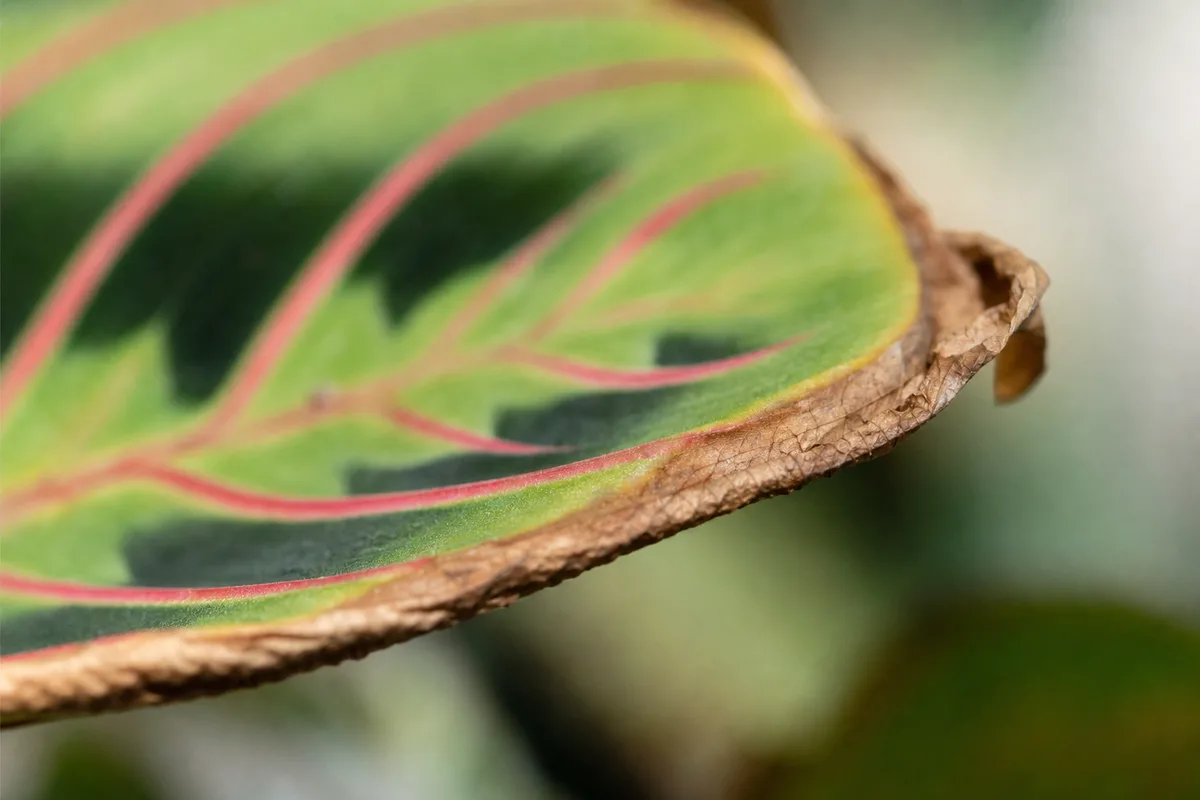
Do not assume every brown edge means the room is too dry. Direct sun, missed watering, root damage, fluoride, and excess fertilizer can also damage margins; check soil first and look for a pattern across several leaves. A crispy edge that grows while the mix stays evenly moist is a stronger reason to measure humidity than one old leaf with a small brown tip.
A small digital hygrometer is more useful than guessing from how the room feels. Penn State Extension notes that winter indoor humidity can fall below 30% and that there is no single ideal level for every houseplant; its guidance also explains why misting raises humidity only until the droplets evaporate and why a pebble tray makes little difference to a room’s overall humidity. (Penn State Extension)
Measure humidity where the leaves sit
Place the hygrometer near the foliage for several hours, away from a humidifier’s direct plume, a sunny window, or a radiator. A reading in the low 30s is a clear dry-air warning for a tropical foliage plant; if you repeatedly see readings below roughly 40–45% alongside curling or crisping, raise humidity gradually and see whether the next leaves improve. Consider 50–60% a practical starting range for Maranta, not a hard threshold or a guarantee of perfect leaves; horticultural guidance differs on an exact target. (Epic Gardening; Martha Stewart)

A room humidifier is the most controllable option when several plants need consistently moister air. Keep it clean, place it so moisture disperses around rather than directly soaking leaves or a wall, and continue to provide gentle air movement. Grouping plants may help in a small area, but a bathroom only helps if its light and measured humidity suit the plant; a dark bathroom can trade one problem for another.
Misting is brief, not a substitute for stable room humidity. It can wet the foliage without changing the reading for long, so daily spraying may add effort while leaving the dry-air cause untouched. Pebble trays can be decorative and may slightly affect the immediate space, but do not count on one to correct a dry heated room. If the reading is already moderate, investigate soil, drafts, or pests instead of raising humidity indefinitely.
3. Light and window heat are out of balance
Prayer plants do best in bright, indirect light. Direct sun can bleach or scorch the patterned leaves, while very dim conditions slow growth and reduce the plant’s ability to use water; NC State Extension and Missouri Botanical Garden both caution against strong direct sun, and Epic Gardening describes bright indirect light as the practical placement. (NC State Extension; Missouri Botanical Garden; Epic Gardening)
Curling that appears on the window-facing side after a sunny move may be accompanied by faded patches, dry spots, or warmer leaves. Pull the pot back from direct afternoon sun, add a sheer curtain, or choose a bright position that receives filtered light. Do not move it to a dark corner as the fix: the aim is to remove the harsh beam while keeping enough light for steady growth.
The room can also feel bright while the plant itself receives little useful light. Check the light at leaf level at the time the curl appears; a plant several feet from a small north-facing window may be in low light even if the room seems bright to you. If the pattern has faded and growth is sparse, improve indirect light gradually and then reassess how quickly the mix dries.
Window heat creates a separate problem from sunlight. A pane can become hot in direct summer sun, and a narrow sill can be colder than the center of the room in winter. If leaves curl or crisp only on the window side, compare that side with leaves facing into the room before increasing water.
4. Cold drafts or hot air swings are stressing it
Maranta is tropical and dislikes low temperatures and cold drafts. Missouri Botanical Garden recommends temperatures that do not dip below 60°F (about 15°C), while NC State also flags cold drafts; horticulturalist Linda Langelo gave a 60–80°F range for this plant in Martha Stewart’s current care article. Keep the plant in ordinary warm indoor conditions rather than against a freezing window or in the path of an HVAC vent. (Missouri Botanical Garden; NC State Extension; Martha Stewart)
Check the air temperature beside the leaves, not only the thermostat across the room. A plant can be chilled at night by cold glass, then hit with dry furnace air by day; those swings can curl leaves even when the average room temperature sounds fine. Move it a little farther from the window or vent, but keep it in filtered light and away from a cold hallway door.
Heat from a radiator or strong air-conditioning can dry the leaf surface and pot at different speeds. If curl began after moving furniture, turning on heating, or changing where a vent points, restore a more stable position before you start adjusting fertilizer or repotting. Draft-related damage often affects the side nearest the airflow first.
When the four causes do not fit
If soil moisture, humidity, light, and temperature look stable but only the newest leaves are distorted, look for pests and water-quality damage. Curling is a general stress response, not a diagnosis; the surface details often tell you which less common issue deserves attention. NC State lists occasional spider mites and mealybugs on Maranta, while Missouri Botanical Garden also lists thrips. (NC State Extension; Missouri Botanical Garden)
Check pests and leaf quality
Turn over several leaves with a flashlight and inspect the newest growth, leaf joints, and undersides. Fine webbing and pale stippling can point to spider mites; clusters of soft-bodied insects, white cottony material, sticky residue, or black specks deserve closer inspection. Isolate a plant with visible pests from nearby houseplants while you identify the insect and choose an appropriate treatment.
A curled but otherwise clean leaf is different from new growth that is puckered, scarred, or mottled. If only emerging leaves are misshapen and you find webbing or insects, treat the pest problem rather than raising humidity or watering more. Do not spray unidentified damage with several products at once; some thin foliage can be sensitive, and a mistaken treatment creates another stress.
Brown tips and edges may also reflect fluoride or fertilizer-salt injury. NC State notes that Maranta leaves can burn with high fluoride or overfertilization. If the curl is mild but fresh brown tips keep appearing despite stable moisture, moderate humidity, and filtered light, review recent feeding and water quality; reduce fertilizer and consider rainwater, distilled, or filtered water for new growth. (NC State Extension)
What to do over the next two weeks
A short, measured recovery plan is safer than changing water, light, humidity, and soil on the same day. Keep a simple note of the date, pot weight, top-layer moisture, room humidity, and where the plant sits. That record makes it easier to connect new symptoms to a real change rather than guessing from memory.
Day 1: record a baseline
Photograph the whole plant and one affected leaf, then record which leaves are curled and whether the curl is one-sided, new, or present across the plant. Check the soil, drainage, leaf undersides, and the distance from windows, heaters, and vents. If the pot is dry, water it; if it is wet, do not add water while you investigate.
Avoid fertilizer, pruning healthy leaves, or repotting on the first day unless you find clear root decay or a pest infestation. Each extra intervention changes the conditions and can make the original cause harder to identify. One correction based on a clear clue gives you a more useful read on the plant’s response.
Days 2–7: change one variable
Make the single adjustment that best fits the evidence: correct a dry root ball, stop watering saturated mix, move a plant out of direct sun, shield it from a cold draft, or raise measured humidity. Keep its other conditions as steady as possible for several days. If the first diagnosis was wrong, the unchanged pattern will help you reassess without having stacked several new stresses.
Inspect the plant every few days, not every hour. A leaf may open more as turgor returns, but leaf angle also changes naturally through the day, so compare photos at similar times. Do not repeat a watering simply because one leaf remains folded if the soil is still damp.
Week 2: judge new growth, not old damage
At the end of the first week and again in the second, compare the newest leaf and the spread of curling. New leaves that open with clean edges are a better sign than old leaves becoming perfectly flat. A brown or scorched patch is permanent tissue damage, and a leaf that has dried hard may never regain its original shape even after the plant’s conditions improve.
If the issue persists, return to the diagnostic table rather than adding several fixes at once. Recheck whether the pot actually dried between waterings, whether the humidity reading was taken at the canopy, and whether a vent or pane creates a local microclimate. If the plant keeps declining in wet soil or new leaves continue to distort, inspect roots and pests next.
When to inspect the roots
A root inspection is not the first response to one curled leaf. It becomes more useful when the mix stays wet for a long time, the plant droops despite damp soil, leaves yellow and soften, growth stalls, the pot smells sour, or stems at the base begin to collapse. Those signs suggest that the roots may be unable to supply water, so “water more” would make the problem worse.
Slide the plant out gently and check the roots without tearing apart every healthy section. Firm, pale roots are generally more reassuring than dark, soft roots; trim only tissue that is clearly decayed, then use a pot with drainage and an airy, moisture-retentive mix. If roots are mostly firm, put the plant back and correct the watering cadence or light level instead of repotting it as a precaution.
A severely underwatered plant can also lose roots, but the soil and pot usually tell a different story: the root ball is dry, shrunken, or pulling away from the sides rather than remaining heavy and wet. Rehydrate that mix gradually, let it drain, and wait for the plant to respond before disturbing the roots. Water propagation is not a universal rescue step; first determine whether a living root system remains and whether the potting mix is actually the problem.
Conclusion
For prayer plant leaves curling, check the soil first, then measure the air and look at the plant’s light and temperature. Dry mix calls for thorough watering and drainage; persistently wet mix calls for a pause and a root check only if the plant keeps declining. Dry air, direct sun, and drafts can all curl leaves, but the clue that matches the plant’s position should guide the fix.
Correct one cause, hold the rest of the setup steady, and judge progress by the leaves that unfurl next. Nighttime lifting and a new leaf rolled like a tube are normal; persistent daytime curl, soft decline, or fresh damage is the signal to investigate further. For the broader diagnostic map, see the houseplant curling-leaves guide or the Maranta care guide.