5 Houseplants That Can Harbor Pests—and What to Do
Aloe, indoor vegetables, ferns, peonies, and succulents can host pests in different ways. Learn what to inspect and how to prevent hitchhikers safely.
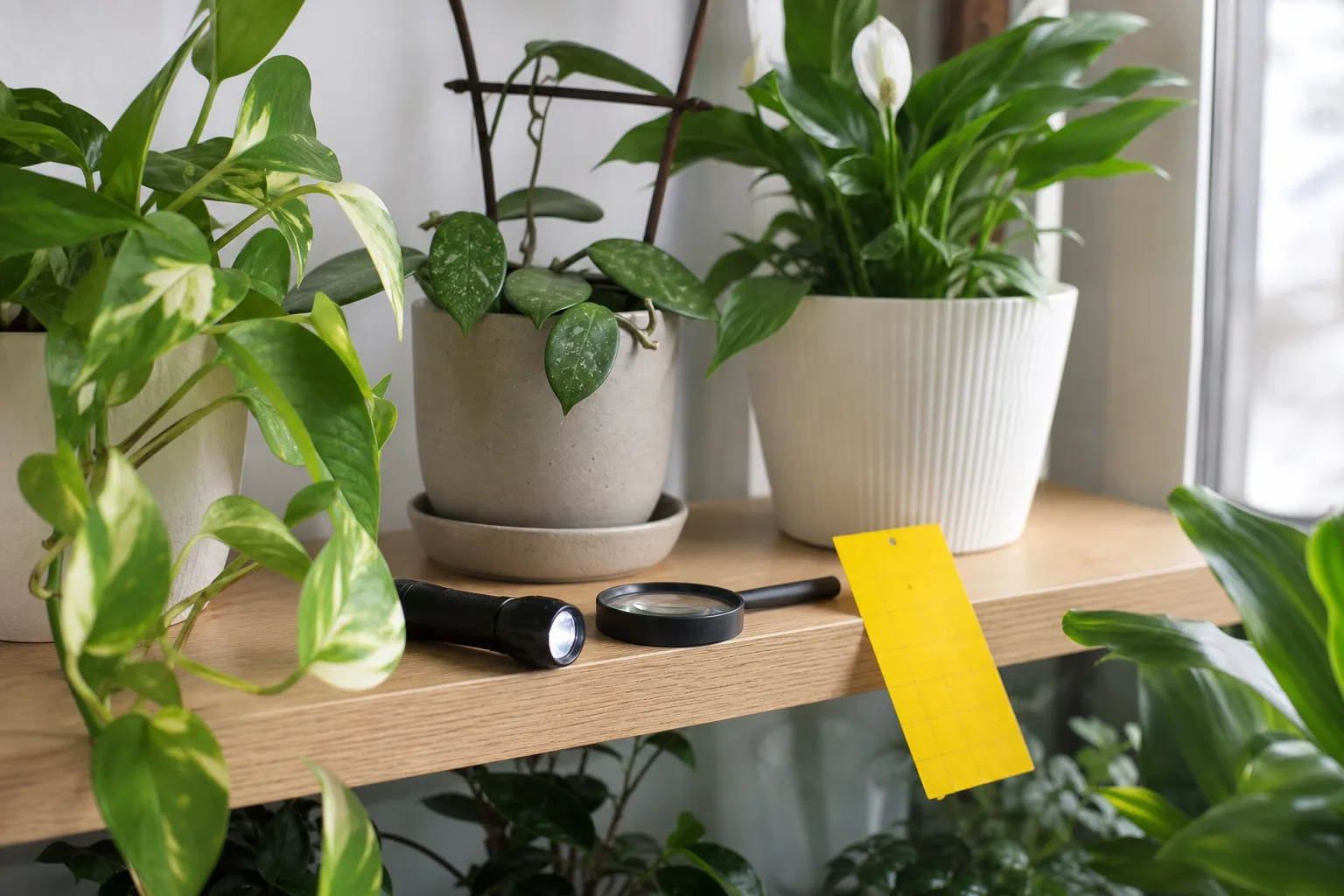
Houseplants do not make pests appear out of nowhere, and owning an aloe, fern, or succulent does not mean your home will become infested. But a plant can offer food or shelter to an insect that arrives on a new purchase, in potting mix, on cut flowers, or from outdoors. Persistent moisture can also support pests such as fungus gnats. The practical question is not which plant is “bad”; it is what the insect is using and where it came from.
The five plants below can be involved in different ways. Aloe and other plants in wet soil may have fungus gnats around the pot. Indoor vegetables can host insects that feed on fresh growth. Dense foliage can hide scale or mealybugs. A cut peony may carry an ant indoors, while a succulent’s tight leaf joints can conceal a small infestation. Identify the clue before changing care or reaching for a spray.
A plant does not create pests—but it can give them what they need
“Attracting pests” often collapses three different situations into one. First, an insect may arrive with the plant: eggs, crawlers, or a small adult can be hidden under a leaf, in a stem joint, or around the pot rim. Second, an insect may be passing through a home and briefly land on a plant. Third, a pest may reproduce because the plant or its growing conditions provide what it needs. These situations call for different responses; a single insect does not prove a plant has a spreading infestation.
The Connecticut Agricultural Experiment Station’s houseplant pest handbook describes several pests that commonly occur on indoor plants, including aphids, fungus gnats, mealybugs, scale, mites, and whiteflies. Those insects do not all respond to the same conditions. Fungus gnat larvae develop in damp organic growing media, while aphids, mealybugs, and some scales feed on plant tissue or sap. A damp pot may explain small flies, but it does not explain cottony clusters on a stem.
Some pests also travel on other items. Cut flowers can bring a few outdoor insects into a room; produce can carry insects from a garden or store; and a plant that spent summer outside may return with hitchhikers. Before blaming a particular species, look for the pest, its life stage, and any damage. A good diagnosis can save a healthy plant from needless pruning, repotting, or treatment.
Five popular plants that can host or carry pests indoors
These examples are clues to inspect, not a warning to avoid the plants. They also are not interchangeable: a fungus gnat problem around potting mix is different from ants on a vase of flowers or scale attached to a fern stem.
1. Aloe vera: damp potting mix, not aloe itself, supports fungus gnats
Aloe vera is often kept indoors in a pot, and its drought-tolerant care can be easy to misread: the plant may need water much less often than a moisture-loving fern, while its mix still needs to drain. If the pot remains wet between waterings, fungus gnats may breed in moist organic material near the soil surface. The fly is associated with the growing conditions, not a special quality of aloe leaves.
The Royal Horticultural Society’s fungus gnat guide describes fungus gnats as being associated with damp compost, especially in houseplants and seed trays. Adult flies are a nuisance indoors; larvae live in the compost and mainly feed on fungi and decaying material, though they can sometimes affect soft roots or cuttings. A yellow card can help you notice adult activity, but it does not dry the pot or remove larvae by itself.
Check whether the pot has drainage holes and whether water is sitting in its saucer. Follow aloe’s normal watering needs rather than watering on a calendar, and let the mix dry as appropriate for the plant before watering again. Do not use this advice as a reason to keep every houseplant dry: the right interval depends on the plant, pot, light, temperature, and mix.
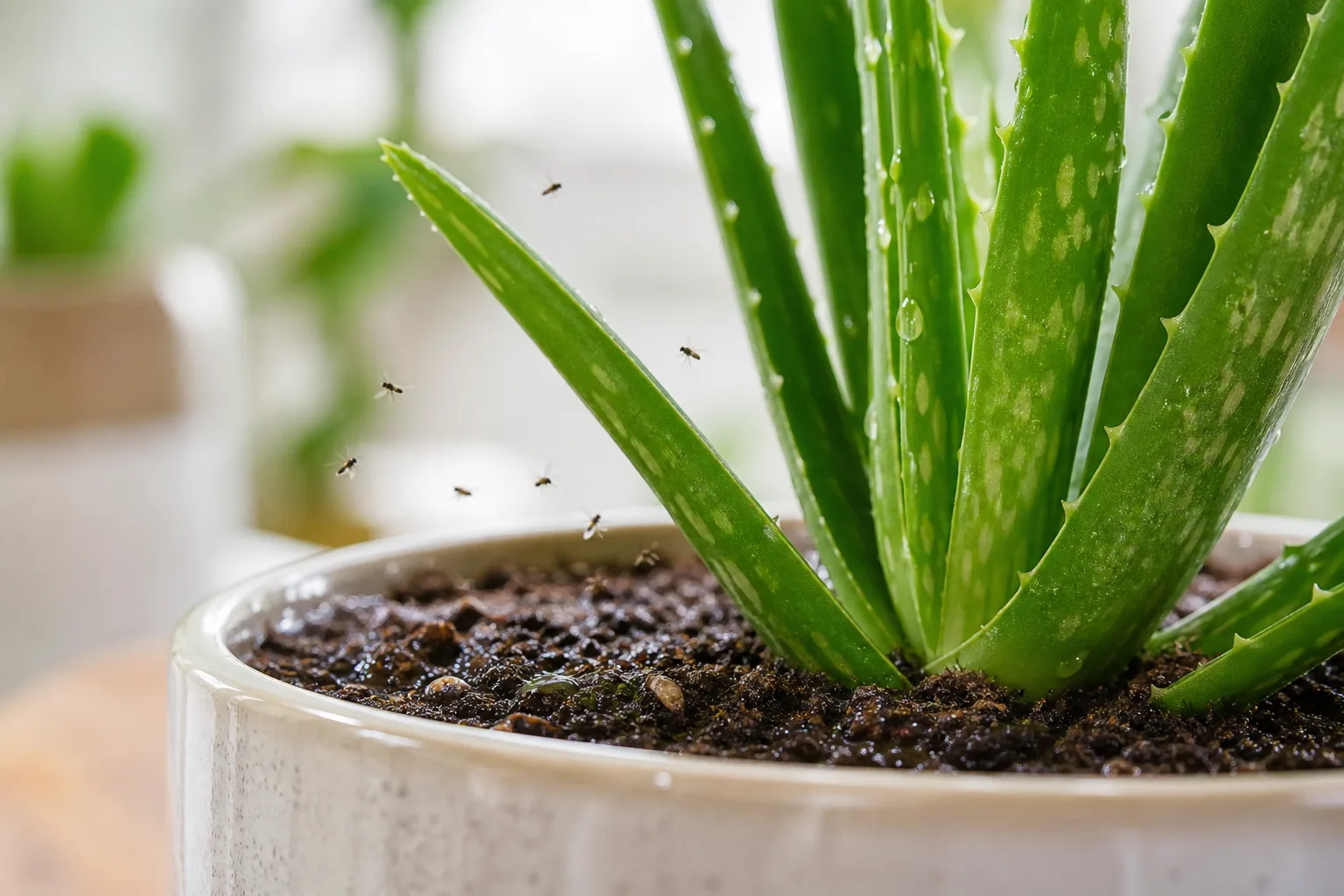
Small flies around wet potting mix point to a soil-moisture problem; the aloe itself is not the source of the insects.
2. Indoor vegetables: soft growth can host aphids and whiteflies
Tomatoes, peppers, herbs, and other edible plants grown indoors put fresh shoots, leaves, and sometimes flowers within reach of sap-feeding insects. Aphids may gather around new growth or leaf undersides. Whiteflies often flutter up when a plant is disturbed, then settle under leaves again. Scale can also appear on stems or leaf veins. The fact that a crop is indoors does not protect it from pests that came with a transplant, cutting, or outdoor summer stay.
Inspect the newest growth first, then turn over leaves and check where petioles meet stems. Sticky patches can be honeydew from sap-feeding insects; they are a reason to look closely, not a pest diagnosis by themselves. If only one plant is affected, move it away from the rest while you identify the insect. Harvest edible leaves and fruit as usual only if the plant is otherwise healthy and any product you use is explicitly labeled for that crop and indoor setting.
Better Homes & Gardens’ houseplant pest guide by horticulturist Rita Pelczar notes that scale and mealybugs may leave sticky honeydew, and that some indoor plants are more prone to particular pests. Its useful general point is to act early and isolate an affected plant rather than treating an entire collection before you know what is present. For edible plants, be especially cautious: a product labeled for ornamentals is not automatically suitable for vegetables or herbs.
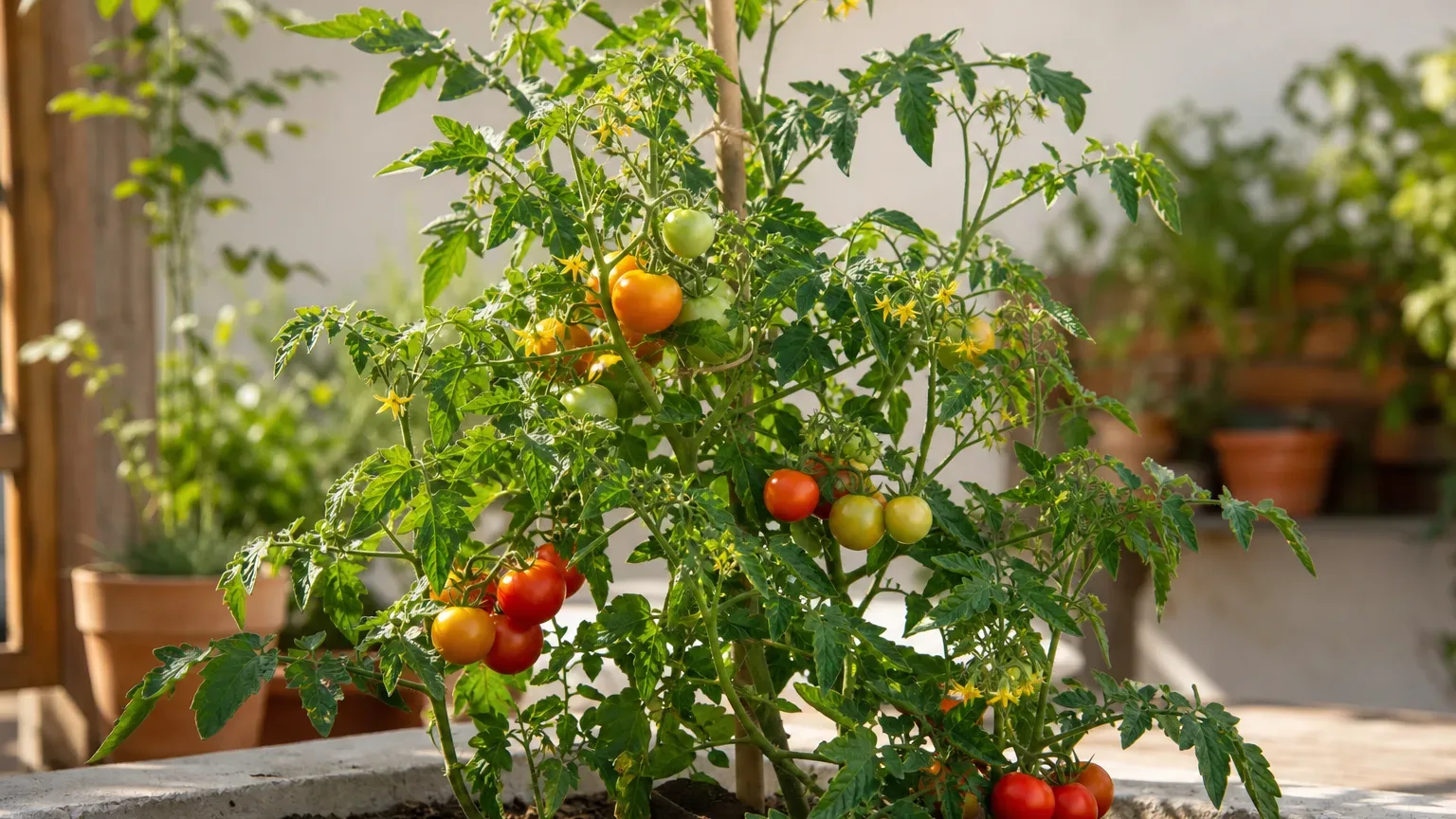
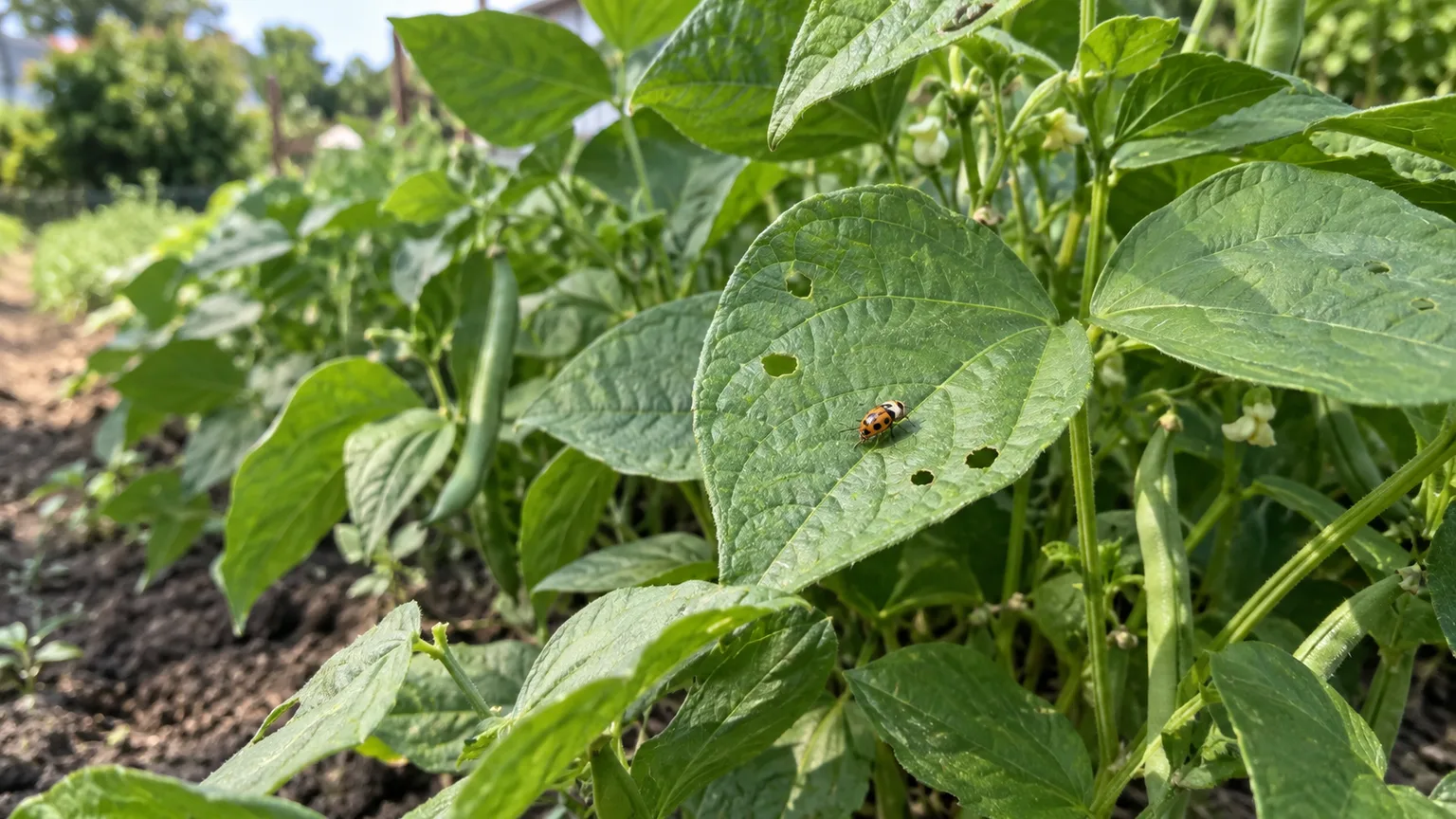
Indoor tomatoes and other vegetables have tender growth that is easy to inspect for aphids, whiteflies, and scale.
3. Ferns: dense fronds can hide scale and mealybugs
Ferns are not pests simply because they like evenly managed moisture or higher humidity. Their arching fronds and crowded crowns do create places where a small insect can go unnoticed. The Connecticut Agricultural Experiment Station lists ferns among plants that can be susceptible to scale. Mealybugs can also hide where stems meet or where fronds emerge from the crown. A quick glance at the top of a fern may miss an insect attached to a stem or leaf underside.
Use a bright light and part the fronds gently. Look for oval bumps that stay attached, cottony material, sticky residue, or a pattern of weakening leaves. Avoid blasting a delicate fern with a forceful spray simply because water works on some sturdy plants; a treatment that dislodges pests from a thick rubber plant can tear or flatten fragile foliage. Identify the pest and choose a method the particular fern can tolerate.
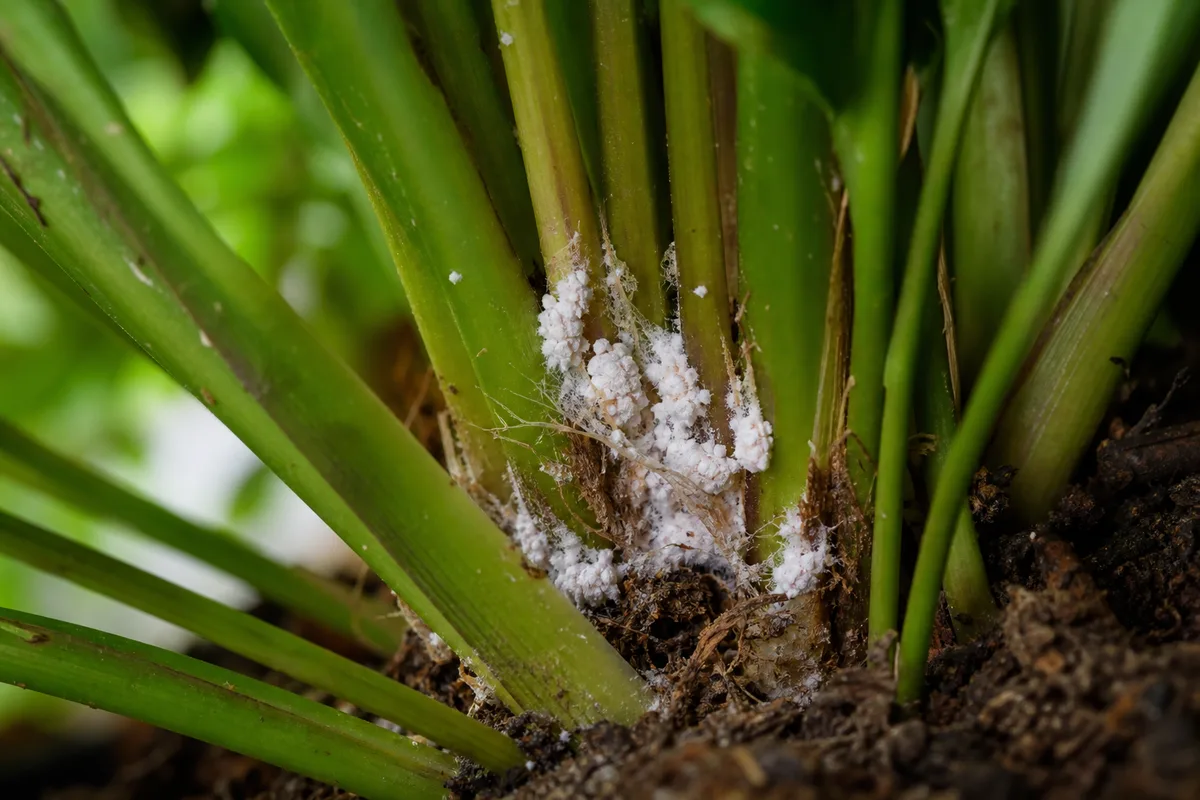
Check the crown and stem bases as well as the fronds; cottony patches can hide where leaves emerge from the plant.
4. Peonies: cut blooms can carry outdoor ants inside
Peonies are usually outdoor perennials, not everyday shelf houseplants. They appear indoors as cut flowers, and a stem brought in from the garden can carry an ant or another small visitor among its petals. If you find one ant on a vase, that is not proof that peonies have created an indoor ant colony or that your houseplants are infested. Treat the flowers as a possible passenger source first.
Before arranging garden-cut blooms, gently shake them outside and inspect the stems and the undersides of petals. Rinse only if the flower will tolerate it, then let it drain before putting it in a clean vase. If ants keep appearing after the flowers are removed, follow the trail and check for food or moisture elsewhere instead of spraying the plant shelf. An ant near a cut flower and a colony nesting in a home are different problems.
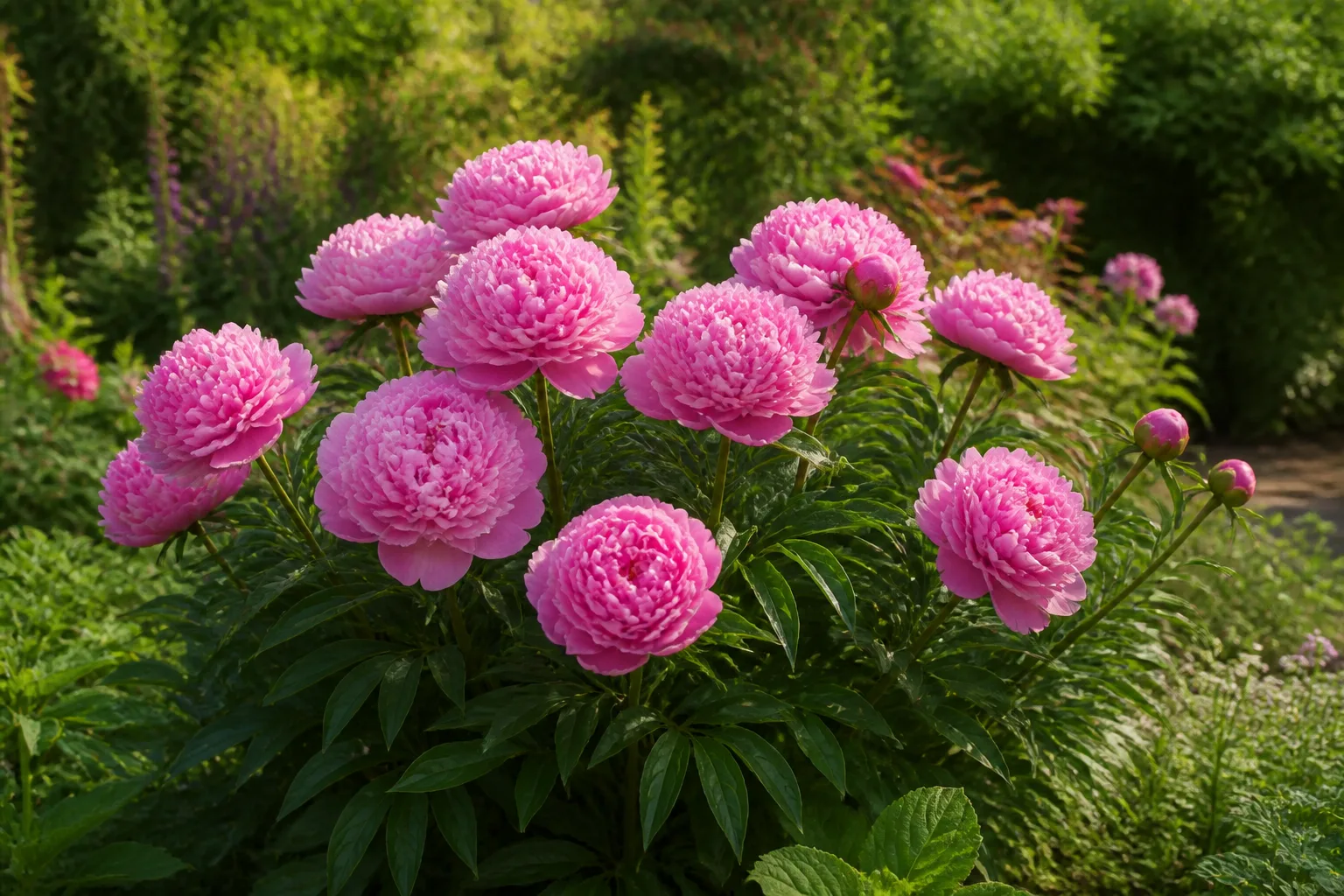
Peonies are commonly grown outdoors; a cut bloom can bring a visitor inside without turning the flower into a houseplant pest source.
5. Succulents: tight leaf joints shelter mealybugs
Succulents are a large group, not one pest-resistant plant type. Mealybugs may tuck into the joints of fleshy leaves, under a rosette, or along the stem where a casual glance will not reach. Scale can also settle on stems and leaf surfaces. A plant can look clean from above while white cottony specks collect low in the rosette or near the potting mix.
Inspect the center and underside of each leaf without pulling leaves off just to search. White cotton-like material, attached bumps, sticky residue, or slow yellowing deserves a closer look. Ants around a succulent can signal honeydew from sap-feeding insects or a separate trail from nearby food; follow the evidence instead of assuming the succulent’s sap drew them in. A succulent that needs less frequent watering still needs its own healthy light and watering routine—do not stress it to discourage insects.
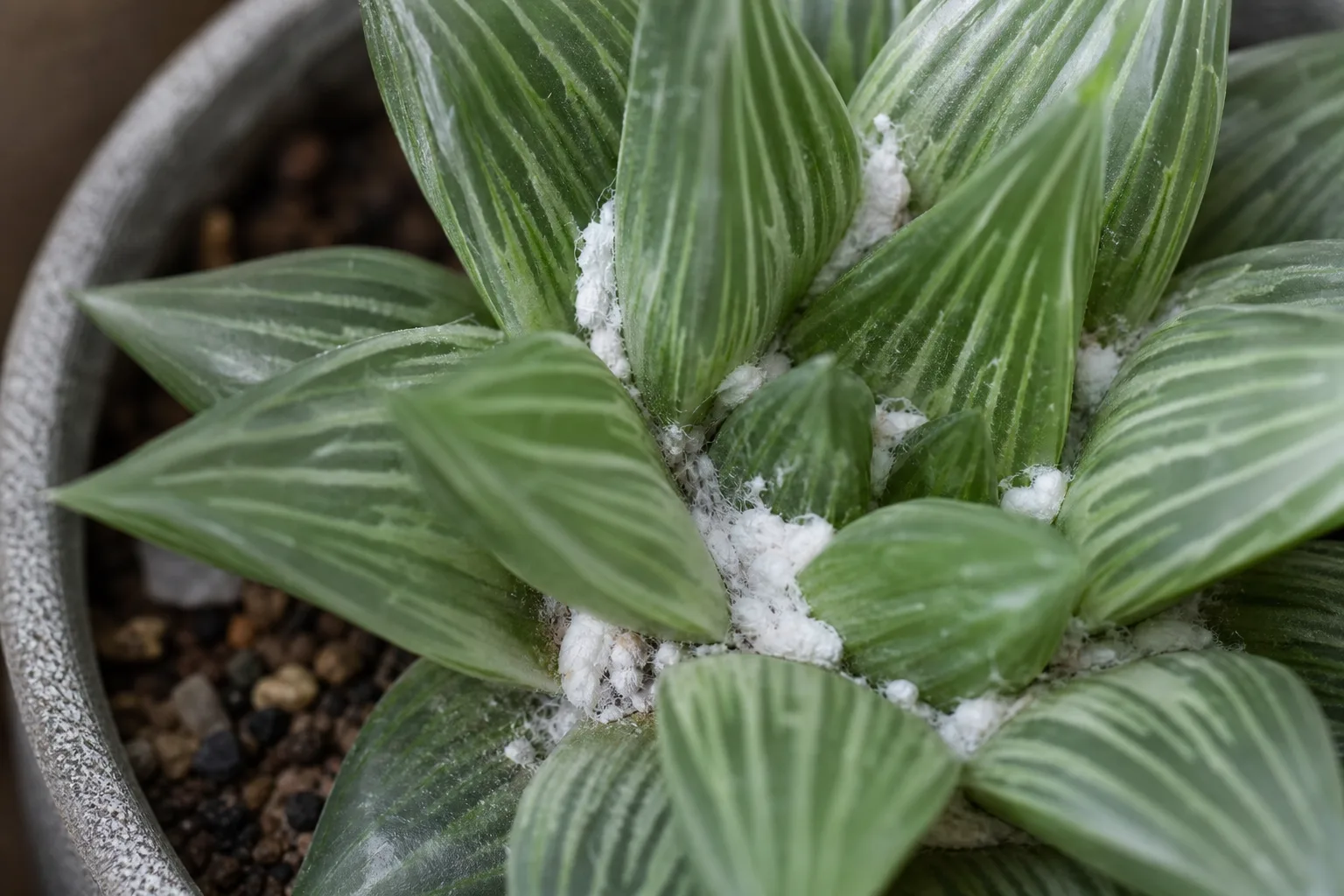
The tight center of a succulent rosette can conceal mealybugs; inspect the leaf joints and stem base closely.
Read the clues before treating a plant
Start with the location of the insect and the mark it leaves. Small flies rising from the soil, cottony clusters in a leaf joint, and fine webbing are not interchangeable symptoms. A magnifying glass, a piece of white paper held below a leaf, and a bright light are more useful than a bottle of broad-spectrum spray when the pest is still unknown.
Small flies near soil: check for fungus gnats
Fungus gnats are tiny, slender, dark flies that tend to hover or run around damp potting mix. Their larvae live in the compost; the adults are conspicuous because they fly near pots, but adult flies do not usually chew foliage. The RHS notes that the larvae mainly feed on fungi and decaying material and that damp compost is where the life cycle develops. If the flies rise from soil, check watering and drainage before you blame fruit on the counter or apply a leaf spray.
Fruit flies are a different issue. They are usually associated with ripe or fermenting food, recycling bins, or drains rather than a pot’s growing media. Watch where a fly appears when you gently tap the pot or disturb a bowl of fruit. If it gathers at the compost surface, inspect the soil; if it gathers around kitchen scraps, remove that source and clean the container.
Cotton, sticky residue, or bumps: look for sap-feeding pests
Mealybugs often look like white cotton or small waxy tufts in leaf axils, stem joints, or beneath leaves. Scale insects may look like fixed brown, gray, or pale bumps on stems and veins; some types produce honeydew, while armored scales do not. Aphids tend to cluster on young shoots and may be green, black, or pink. Whiteflies are small pale insects that lift into the air when an infested leaf is moved. The Connecticut Agricultural Experiment Station’s guide describes these pests and their typical locations on houseplants.
Honeydew is a sticky residue left by some sap feeders. It can attract ants and support a dark sooty growth on leaves, but sticky leaves can have other causes too. Check for insects directly before choosing a treatment. Garden Design’s houseplant pest overview also emphasizes matching visible clues—such as cottony mealybugs, stippling, or webbing—to the pest rather than assuming every damaged leaf means the same bug.
Pale stippling and fine webs: inspect for spider mites
Spider mites are tiny, so the first clue may be pale stippling, bronzing, or fine webbing between leaves and stems rather than a clearly visible insect. Turn over leaves and look along the midrib and veins. A gentle tap over white paper can reveal moving specks; if you see them, repeat the check on nearby plants. Webbing is a warning to inspect, but ordinary spider webs may be larger and unrelated to plant damage.
The Connecticut Agricultural Experiment Station notes that mites can multiply rapidly in hot, dry conditions and feed on leaf undersides. That does not mean raising humidity without regard for the room or plant is always the solution. Focus first on confirming mites, isolating the affected plant, and correcting any stress that makes it more vulnerable.
What to do first when you spot a pest
The fastest way to let a small problem spread is to move the plant through a collection while you examine it. Set it aside first, identify the pest second, and then choose the lightest method likely to work. Record what you found and where; repeat inspections matter because eggs or hidden crawlers can remain after visible adults are gone.
1. Isolate the plant and inspect its neighbors
Move the affected pot to a separate room or a clear distance from other plants if you can do so without spreading insects along the route. Avoid setting it beside a window that is open to other plants or carrying it over a shelf of foliage. Check the neighboring pots, especially plants touching one another or sharing a saucer. Look under leaves, at stem joints, in the crown, and around the soil surface.
The Better Homes & Gardens guide recommends isolating an infested plant to reduce the chance of spread. Take a phone photo of the insect or place a small sample on clear tape if you need help identifying it, then contact a local extension office or diagnostic clinic. Accurate identification is especially useful when a plant has sticky residue but no obvious insect, or when a small pest could be confused with a harmless speck or spider.
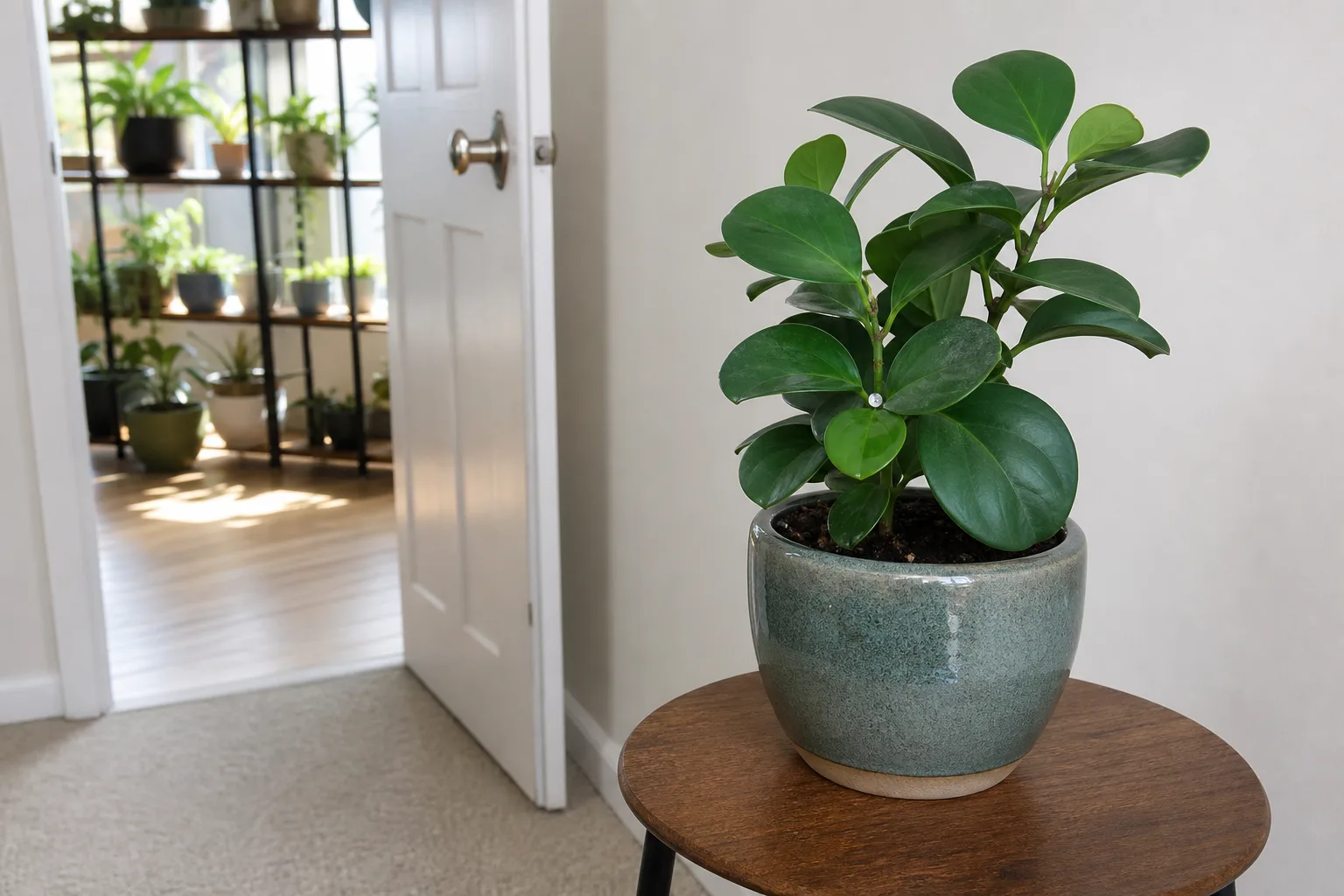
A temporary space away from neighboring pots makes it easier to inspect a plant without brushing pests onto the rest of the collection.
2. Match a low-impact method to the pest and plant
For a few visible pests on a sturdy plant, hand removal or a controlled rinse may be enough to start. Wipe an accessible mealybug or scale insect from a leaf or stem, bag heavily infested fallen material, and clean the surface under the pot. If rinsing the plant, shield loose soil from splashing and use a gentle stream that the foliage can tolerate. Do not rinse a peony bouquet into a houseplant pot or let runoff carry insects to nearby plants.
Small, localized infestations may be manageable with repeated manual removal. A large, woody plant with many mature scales may take longer because adults are protected by a covering. Fungus gnats require attention to the soil and watering pattern, not a leaf wipe. Spider mites need repeated inspection of undersides and new growth. These differences are why “spray everything” is not a useful first move.
If you use a product, follow its label and confirm it is approved for the plant, pest, and indoor setting. The Connecticut Agricultural Experiment Station’s handbook repeatedly advises users to consult product labels for dosage and safety precautions; products and registrations change, so do not copy a concentration from an old article or mix household cleaners into a homemade spray. Test a labeled product on a small area first when the instructions allow, and keep children and pets away as the label directs.
3. Repeat inspections instead of expecting a one-time fix
Check the plant again in a few days, then continue at least weekly while you are managing the issue. Inspect both leaf surfaces and the stem joints; look for new crawlers, fresh honeydew, additional webbing, or fresh damage. Clean the table, saucer, and tools used on the plant. If you use sticky cards, position them where they monitor flying adults without sticking to leaves, pets, or passersby.
A plant that looks better after one rinse may still have eggs or hidden insects. Do not move it back into the collection just because no adult flew up that day. Wait until repeat checks show no new signs. If the population is increasing, the plant cannot tolerate treatment, or you are unsure what you found, ask an extension service or plant diagnostic clinic rather than escalating to a stronger product without a diagnosis.
Prevent hitchhikers when you bring plants, flowers, or produce indoors
Inspect new plants before placing them beside an established collection. Check leaf undersides, axils, stems, crown, pot rim, and the top of the mix; look for webbing, white cotton, attached bumps, tiny flies, sticky spots, or distorted new growth. A clean-looking plant may still have hidden eggs, so keep a new arrival separate when practical and check it again over the next couple of weeks. This separation is a precaution, not a guarantee that every pest will appear on schedule.
Before moving an outdoor houseplant inside for colder weather, remove dead leaves and weeds, inspect the plant all around, and check underneath the pot. Clean the container exterior and saucer. Do not bring outdoor soil, plant debris, or a group of cuttings straight onto a shelf beside your healthiest plants. For cut flowers, gently shake and inspect the stems outdoors; for produce, remove packaging and discard damaged leaves before setting it near houseplants.
Keep plants spaced enough to inspect, and avoid letting leaves rest against one another when a pest is active. Water according to the plant rather than a uniform schedule, empty standing water from saucers, and remove fallen leaves from the soil. A weekly look at the newest growth and leaf undersides catches many problems before they are difficult to reach. You do not need to sterilize the home or throw away every bag of potting mix; focus on the actual plant, pot, and signs you can observe.
Why “keep every plant dry” and homemade sprays can backfire
Drying a water-loving fern or forcing a healthy plant into drought is not pest control. It can weaken the plant and create a different care problem. The useful adjustment is specific: fungus gnats are associated with damp compost, so check whether the particular pot stays wet, whether it drains, and whether dead material is accumulating on top. Let the surface dry only as far as that plant can tolerate; do not apply an aloe watering schedule to a fern.
Yellow sticky cards can show that small flying insects are present, but they mainly catch adults. The RHS notes that sticky cards can also catch non-target insects, so use them as monitors rather than a cure or decoration across every pot. A card will not correct consistently wet compost, and it will not remove a mealybug tucked under a leaf.
Homemade sprays can create another layer of uncertainty. Dish detergents vary, and a plant may react differently from the one in an online video. Alcohol can injure sensitive foliage if applied broadly. Essential oils, vinegar, and “natural” labels do not make a product harmless to plants, people, pets, or pollinators. Avoid spraying products not labeled for the intended plant and indoor use, and never combine cleaners or pesticide products. Start with identification, isolation, and physical removal where practical.
When to discard a plant or ask for expert help
Discarding a plant is a last-resort choice, not the automatic answer to one insect. Consider it when a severe infestation continues despite reasonable isolation and appropriate treatment, the plant is already declining, or you cannot keep the pest from contacting a valuable collection. Seal the plant and its potting debris before carrying it through the home, and do not place it beside healthy plants or in an open compost pile. Clean the area and tools afterward.
Ask a local cooperative extension office, university plant clinic, or qualified horticulturist for help when the pest is hard to identify, symptoms keep returning, several plants are affected, or a treatment might involve edible crops, children, or pets. If insects are spreading beyond plants or appear to be structural household pests, a licensed pest professional may be more appropriate than a plant-care remedy. Share clear photos of the pest, plant, soil surface, and damage; note recent purchases, outdoor moves, and watering changes.
Conclusion
Aloe, indoor vegetables, ferns, peonies, and succulents do not all attract pests in the same way—and none creates an infestation by itself. Damp compost can support fungus gnats, new growth can host sap feeders, dense leaves can hide insects, and cut flowers may carry an outdoor visitor indoors. Inspect the right place, isolate what is affected, and choose a plant-safe response that fits the pest. Avoid blanket drying and unlabeled sprays; repeat checks are what tell you whether the problem is actually ending.