12 Toxic Garden Flowers and Their Real Exposure Risks
Compare toxic garden flowers by plant part, exposure route, and species affected, then learn what to do if a child or pet may have eaten one.
Start with the route of exposure, not the scary label
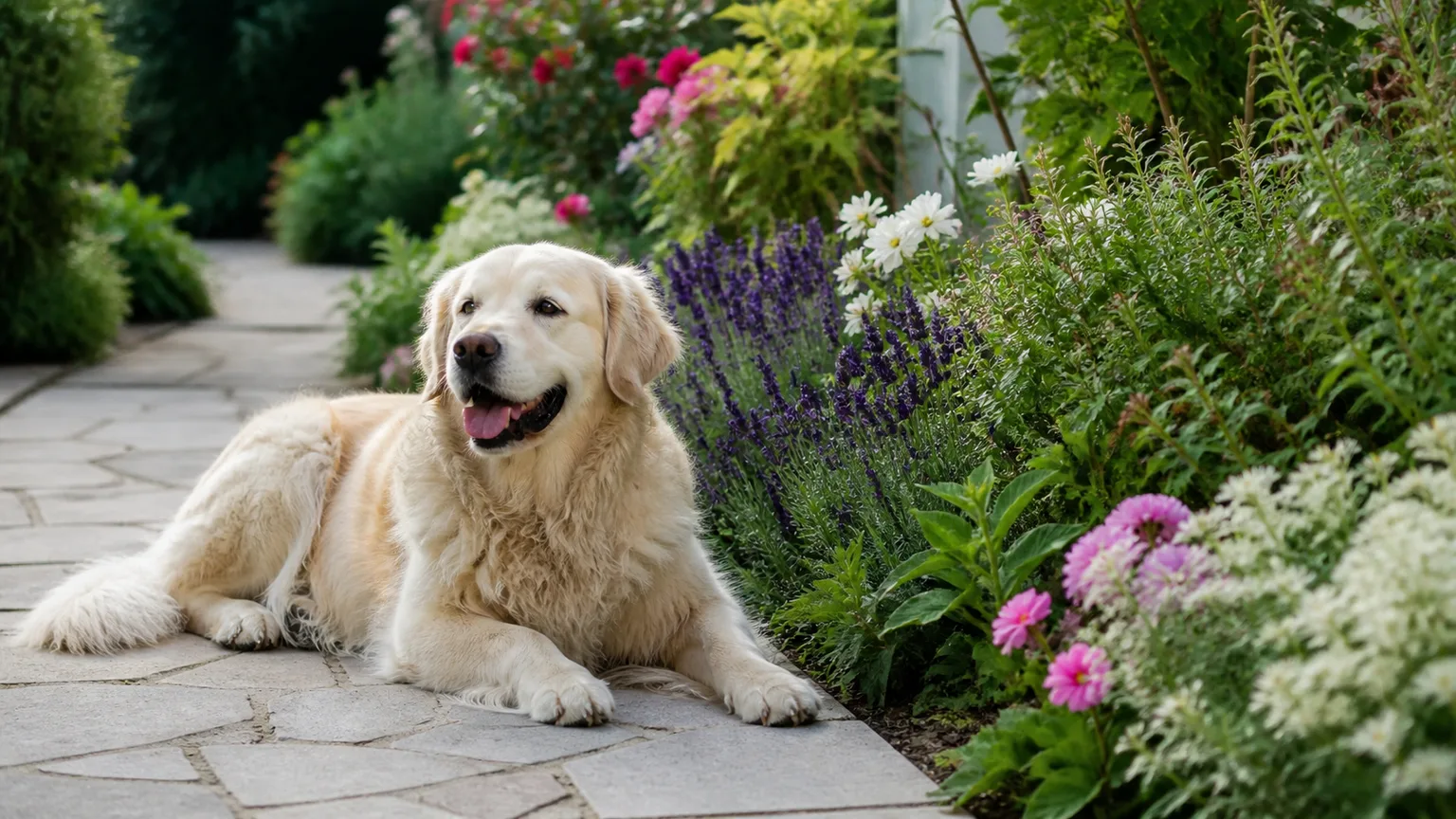
A plant described as “toxic” is not automatically dangerous from across the garden. For most flowers in this list, the main hazard is eating plant material; a few can also irritate skin when sap or leaves are handled. The species, plant part, amount, and person or animal exposed all affect the risk. A warning label is a reason to identify the plant and manage access, not a dose chart or a prediction that a brief brush will cause poisoning.
This distinction matters because garden-safety lists often flatten different hazards into the same phrase. North Carolina State Extension records contact dermatitis for lantana and oleander, for example, but not for several other plants below; its profiles also identify low, medium, or high poison severity differently by species. The ASPCA’s plant database likewise says its listings are not exhaustive and that even plants listed as nontoxic can upset a dog’s or cat’s stomach if eaten. These records help with identification; they do not establish a universal safe amount.
It is useful to think in terms of hazard plus access. A cat that can chew a true lily, a toddler who can reach bright berries, and a gardener pruning an oleander face different exposure opportunities. A plant far behind a locked fence may be manageable in one household; that same plant beside a sandbox, dog run, or open patio door may be a poor choice. A House Beautiful gardening feature quoting ASPCA veterinary toxicologist Tina Wismer, DVM, makes the same practical point: a toxic plant does not automatically need to be dug out, but access and likely contact should guide the decision (House Beautiful).
The entries below focus on the garden species people are most likely to encounter, not every poisonous plant. Use the botanical name when checking a nursery label or calling for help: common names such as “lily” and “crocus” cover unrelated plants with very different toxicology.
At a glance: how the 12 differ
| Plant | Main exposure concern | Who needs special protection | Useful distinction |
|---|---|---|---|
| Lily of the valley | Eating leaves, flowers, berries, or other material | People, cats, dogs, horses | Cardiac glycosides; meaningful risk depends on amount |
| Wisteria | Chewing seeds, especially from pods | Children, dogs, cats, horses | Extension lists seeds as the toxic part |
| True lilies and daylilies | Plant material, pollen, or vase water reaching the mouth | Cats first; other pets still need guidance | Severe kidney injury is especially well documented in cats; species and pet risk labels differ |
| Lantana | Eating foliage, flowers, fruit, or sap | Children, dogs, livestock | Fruit and leaves matter; sap may irritate sensitive skin |
| Hydrangea | Eating certain plant material | Children and pets | North Carolina State Extension identifies H. macrophylla as the known toxic species |
| Foxglove | Eating leaves, flowers, or stems | People, cats, dogs, horses | Cardiac glycosides can disrupt heart rhythm |
| Oleander | Eating any part; sap on skin | People, pets, livestock | Serious cardiac hazard; fresh and dried material remain poisonous |
| Rhododendron and azalea | Eating leaves, flowers, or nectar | Children, pets, grazing animals | Grayanotoxin exposure varies; moderate ingestion is not described as equally hazardous in every species |
| Mountain laurel | Eating leaves, flowers, or seeds | Children, pets, livestock | Grayanotoxins affect muscle, nerve, and heart function |
| Monkshood | Eating any part, especially roots or leaves | People, pets, livestock | Aconitine alkaloids make ingestion a high-concern event |
| Angel’s trumpet | Eating flowers, leaves, or seeds | Children and pets | Tropane alkaloids can cause serious nervous-system and heart effects |
| Autumn crocus | Eating any part, including the corm | People, cats, dogs, horses | Colchicum autumnale contains colchicine; it is not spring crocus |
Lily of the valley (Convallaria majalis)
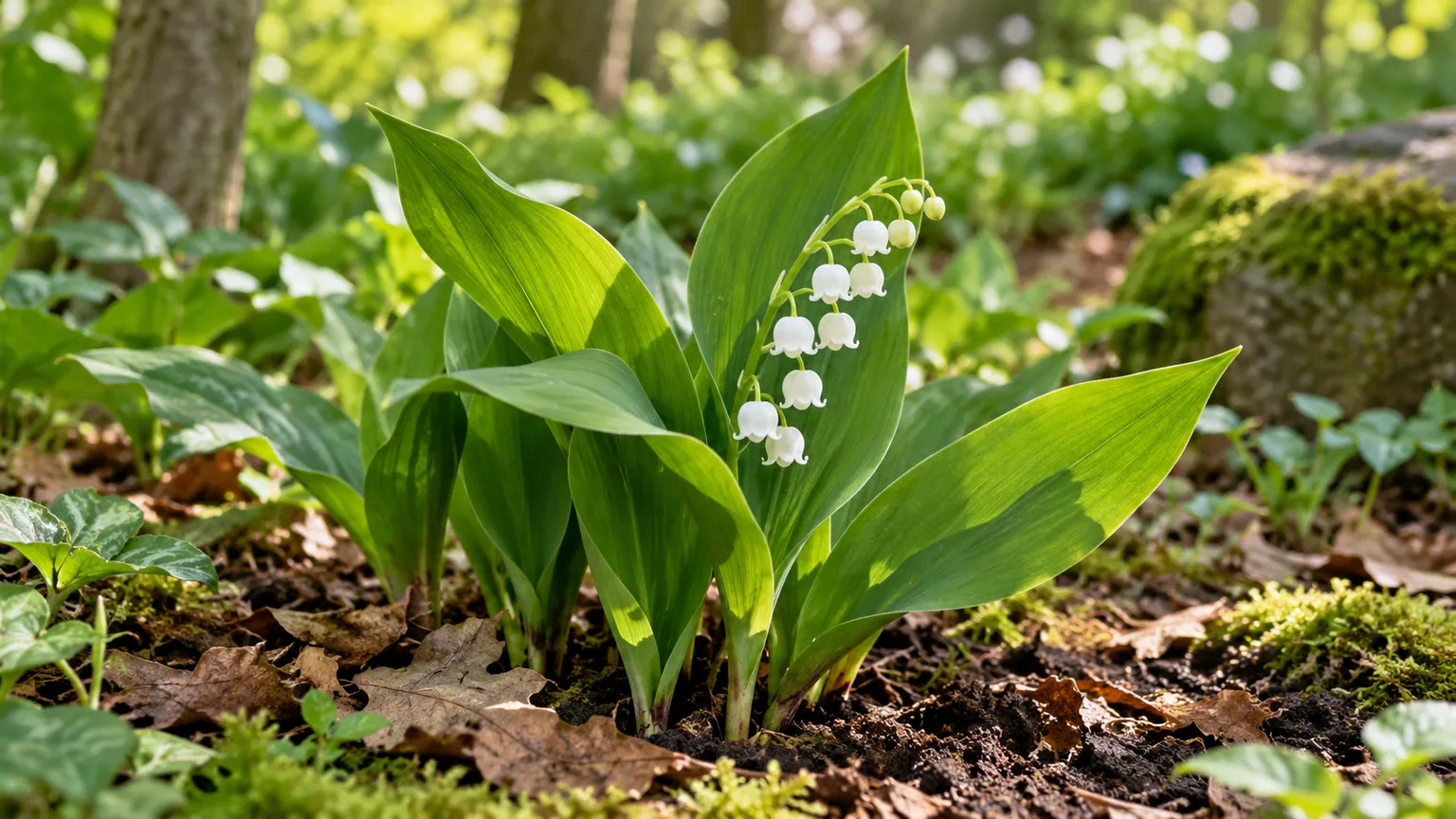
Lily of the valley is a spreading shade perennial with paired leaves and a one-sided row of small, fragrant white bells. The whole plant contains cardiac glycosides and saponins; North Carolina State Extension says poisoning is associated with eating large quantities, and lists a slow or irregular pulse, digestive symptoms, low blood pressure, confusion, seizures, and coma among possible effects. That description is serious, but it does not mean a garden’s scent or a casual brush against foliage causes systemic poisoning. The NC State Extension’s lily-of-the-valley profile identifies plant parts and exposure concerns.
The red berries that form after flowering can be more tempting than the leaves, so keep them out of reach of small children and pets. If you grow this groundcover, cut and discard fruiting stems where children play, and use gloves when clearing large patches to avoid accidental hand-to-mouth transfer. It spreads by rhizomes, so a small patch can become a broad carpet; that makes its location and the ability to supervise access more important than its modest height suggests.
Wisteria (Wisteria spp.)
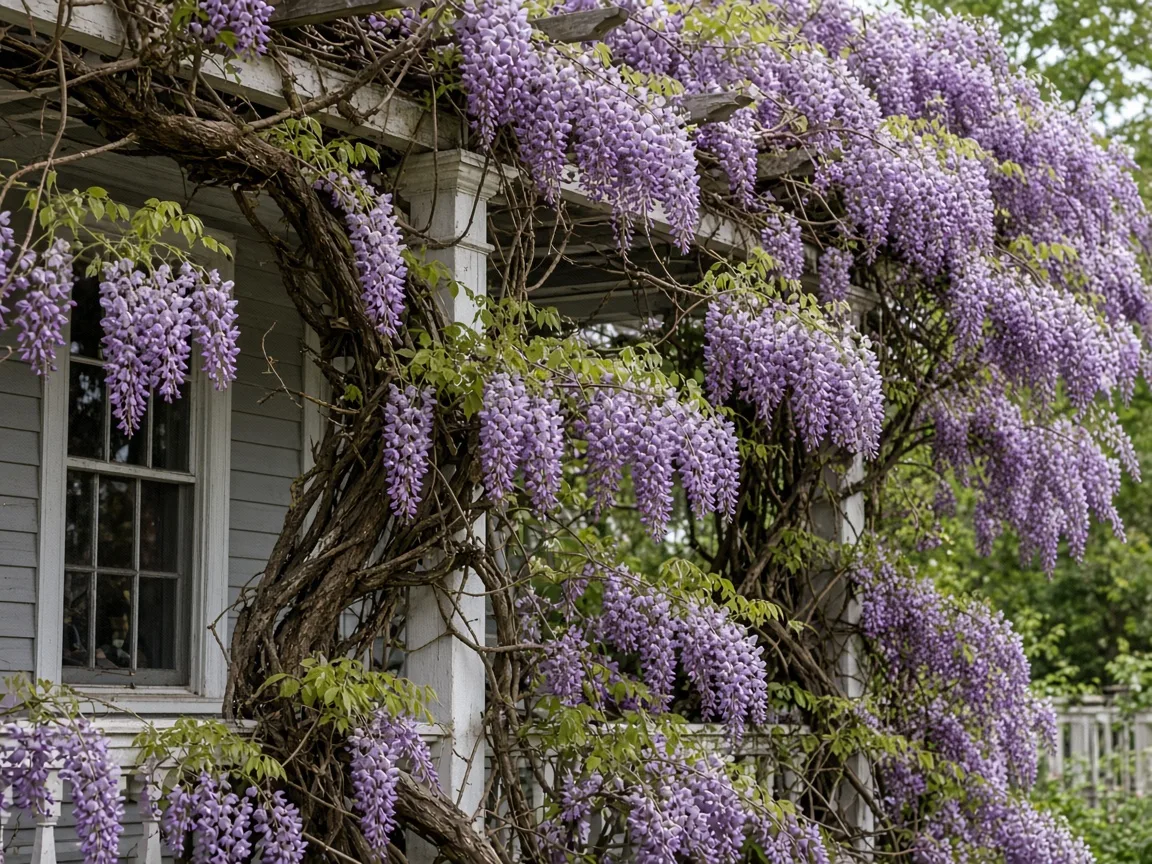
Wisteria’s most important ingestion hazard is not a mysterious danger from standing near the vine: North Carolina State Extension lists the seeds as the poisonous part, and the National Capital Poison Center explains that seeds inside the pods can cause nausea, vomiting, and diarrhea if swallowed. Pets can also become ill after chewing seeds or pods. Do not treat every flower cluster as equivalent to a mouthful of seeds, but do teach children not to taste any part of an ornamental vine.
After flowering, inspect for the long, beanlike pods, especially where children or pets can reach them. Remove low pods before they dry and split, then dispose of them in a closed bin rather than leaving them on a path or compost heap that a pet can investigate. The vine also needs strong structural support and regular pruning; if you cannot safely maintain it or keep seedpods away from a high-traffic area, choose a less vigorous climber. Check the exact wisteria species as well, because Asian species can be more aggressive in the landscape than native American wisteria.
True lilies and daylilies (Lilium and Hemerocallis)
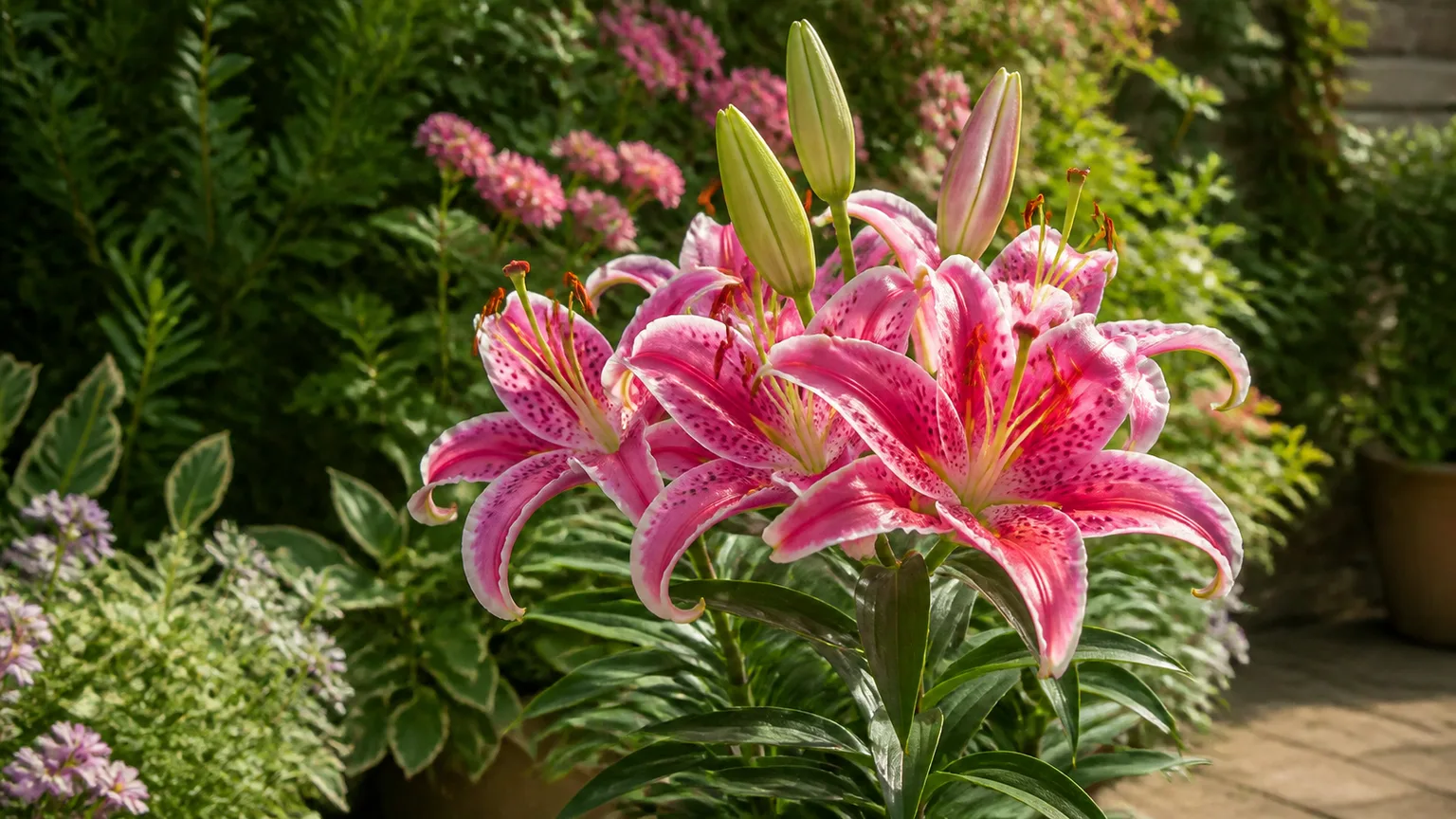

“Lily” is a common-name trap. True lilies in Lilium and daylilies in Hemerocallis are different genera, but both can cause severe kidney injury in cats. The ASPCA’s individual lily listing classifies true lilies as toxic to cats and not toxic to dogs or horses, while its broader lily overview warns that lilies, including daylilies, can affect dogs as well; both sources say effects are much more severe in cats. That difference is a reason to identify the exact plant and ask a veterinarian about any pet exposure, not a reason to assume a dog can safely chew it. The Poison Control overview of Easter lilies explains why pollen or vase water can matter for a cat.
For a home with a cat that goes outdoors, do not plant true lilies or daylilies where it can reach them, and do not bring cut stems indoors. Pollen can land on fur and be swallowed during grooming; a cat can also drink water from a vase. Not every plant called a lily shares this kidney risk: peace lily, calla lily, and Peruvian lily are outside these genera and need their own species-specific lookup. If you are identifying a plant, check the label for Lilium or Hemerocallis rather than relying on the word “lily.” Call a veterinarian promptly after any suspected exposure; do not wait for symptoms or assume the plant is safe because the cat only brushed past it.
Lantana (Lantana camara)
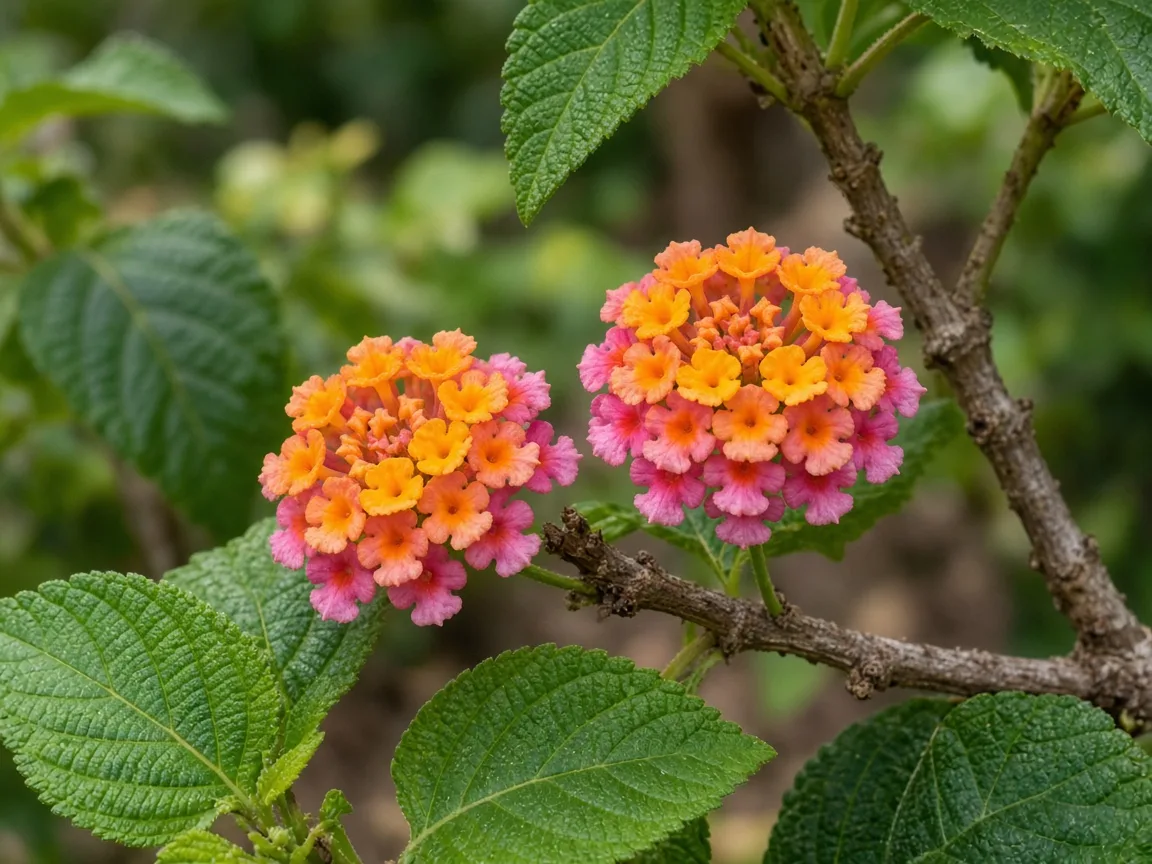
Lantana is often used in warm-climate beds and containers for its multicolored flower clusters, but Lantana camara contains triterpenes that can make ingestion hazardous. North Carolina State Extension lists flowers, fruits, leaves, and sap among the poisonous parts, and notes that eating the plant can cause vomiting, diarrhea, dilated pupils, labored breathing, weakness, and liver failure, with liver effects more common in livestock. The same NC State Extension’s lantana profile flags skin dermatitis in sensitive people from leaves or sap.
That combination means lantana deserves more caution around grazing animals and pets that chew greenery than around someone simply walking by a flowerpot. Its small fruits can form after blooms fade, so look for berries as well as flowers when you inspect a bed. Wear gloves while pruning, wash exposed skin with soap and water, and do not leave trimmings where animals can forage. If you like lantana’s continuous color, choose a substitute only after checking the exact species against a veterinary plant list for the animals that use your yard; “non-toxic” lists are not universal across cats, dogs, and livestock.
Hydrangea (Hydrangea spp.)
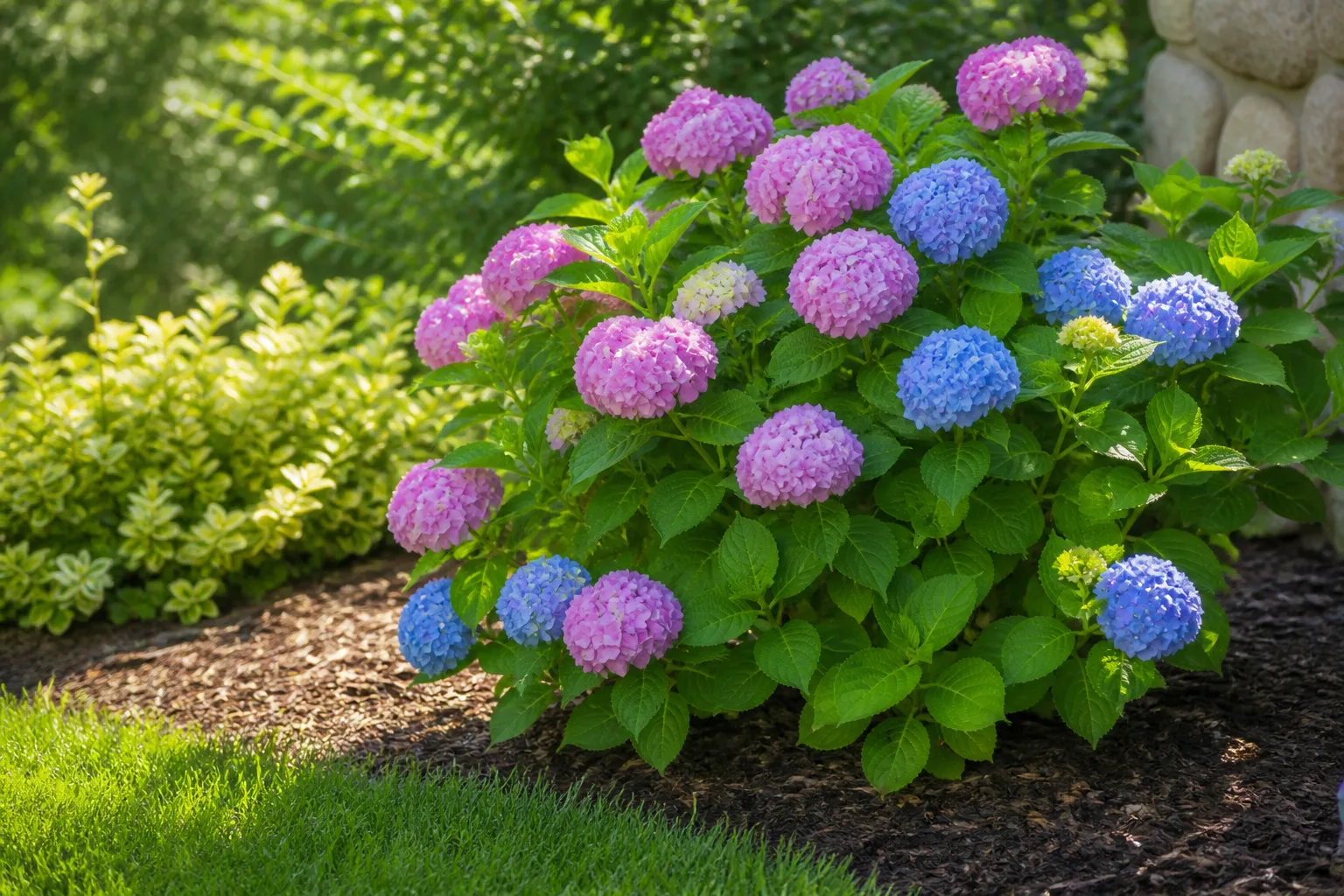
Hydrangea warnings need a species caveat. North Carolina State Extension’s genus profile says that only Hydrangea macrophylla is known to be toxic, and associates the risk with eating plant material in large quantities; it lists hydracyanosides, or cyanogenic glycosides, and nausea, stomach pain, vomiting, and sweating. That is a much narrower claim than “every hydrangea is equally dangerous.” The NC State Extension’s hydrangea profile is useful for checking which species a nursery is selling, while the ASPCA hydrangea listing identifies hydrangea as a pet-toxicity concern.
A child or animal would need to chew plant material for the main risk described here; looking at or brushing past a shrub is not the same exposure. If you have an accessible bigleaf hydrangea, prevent chewing and collect pruned foliage rather than leaving it on the lawn. If your plant is another Hydrangea species, do not infer that it is harmless from this single extension note; identify it and check a trusted local or veterinary reference. The hydrangea name covers a large group of shrubs, and a correct species ID is part of sensible risk management.
Foxglove (Digitalis purpurea)

Foxglove sends up tall spikes of tubular flowers, often purple or pink with darker speckles inside. The leaves, flowers, and stems contain cardiac glycosides. North Carolina State Extension lists nausea, vomiting, stomach pain, headache, slow or irregular pulse, tremors, visual changes, convulsions, and potentially fatal heart-rhythm problems after ingestion; its NC State Extension’s foxglove profile identifies the relevant parts and compounds. This is an ingestion hazard, not a claim that a foxglove bed gives off a harmful airborne toxin.
The plant can be particularly easy for children to pick because its flowers are tall and graspable, and its leaves may be mistaken for edible foliage by someone who does not know the plant. Keep it out of children’s reach, label it clearly in a mixed border, and wear gloves if you are handling a large amount of foliage. Do not use foxglove in teas, food, or homemade remedies: the fact that some cardiac medicines are derived from related compounds does not make the plant a safe source or a home treatment.
Oleander (Nerium oleander)
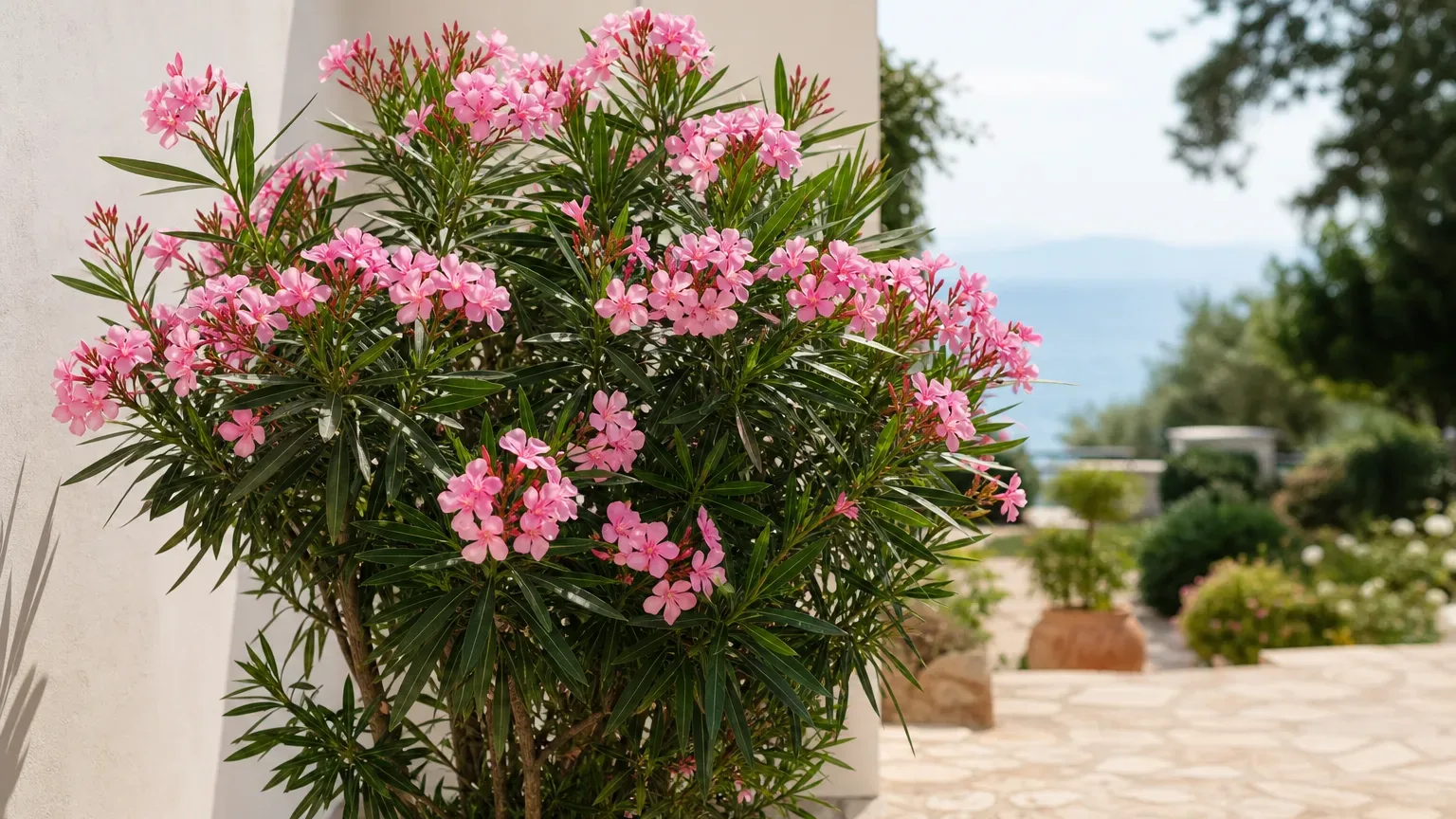
Oleander is a serious ingestion hazard, not simply a “don’t touch” plant. Its leaves, flowers, bark, seeds, sap, and other parts contain cardiac glycosides, and the plant remains poisonous when dried. North Carolina State Extension lists possible nausea, vomiting, abdominal pain, dizziness, slow pulse, irregular heartbeat, bloody diarrhea, drowsiness, and death after eating it. The NC State Extension’s oleander profile specifically records contact dermatitis as possible, so avoid getting sap on skin and wash promptly after pruning.
In a warm climate, an oleander hedge may sit beside a walkway, patio, or parking area, where fallen leaves and pruning waste are easy to overlook. Keep clippings away from children and animals, wear gloves when pruning, and wash exposed skin after contact with sap. Because the potential consequences of ingestion are severe and the shrub sheds leaves and stems, a household with curious children, pets, or grazing animals may reasonably choose a different hedge rather than rely on constant supervision.
Rhododendron and azalea (Rhododendron spp.)
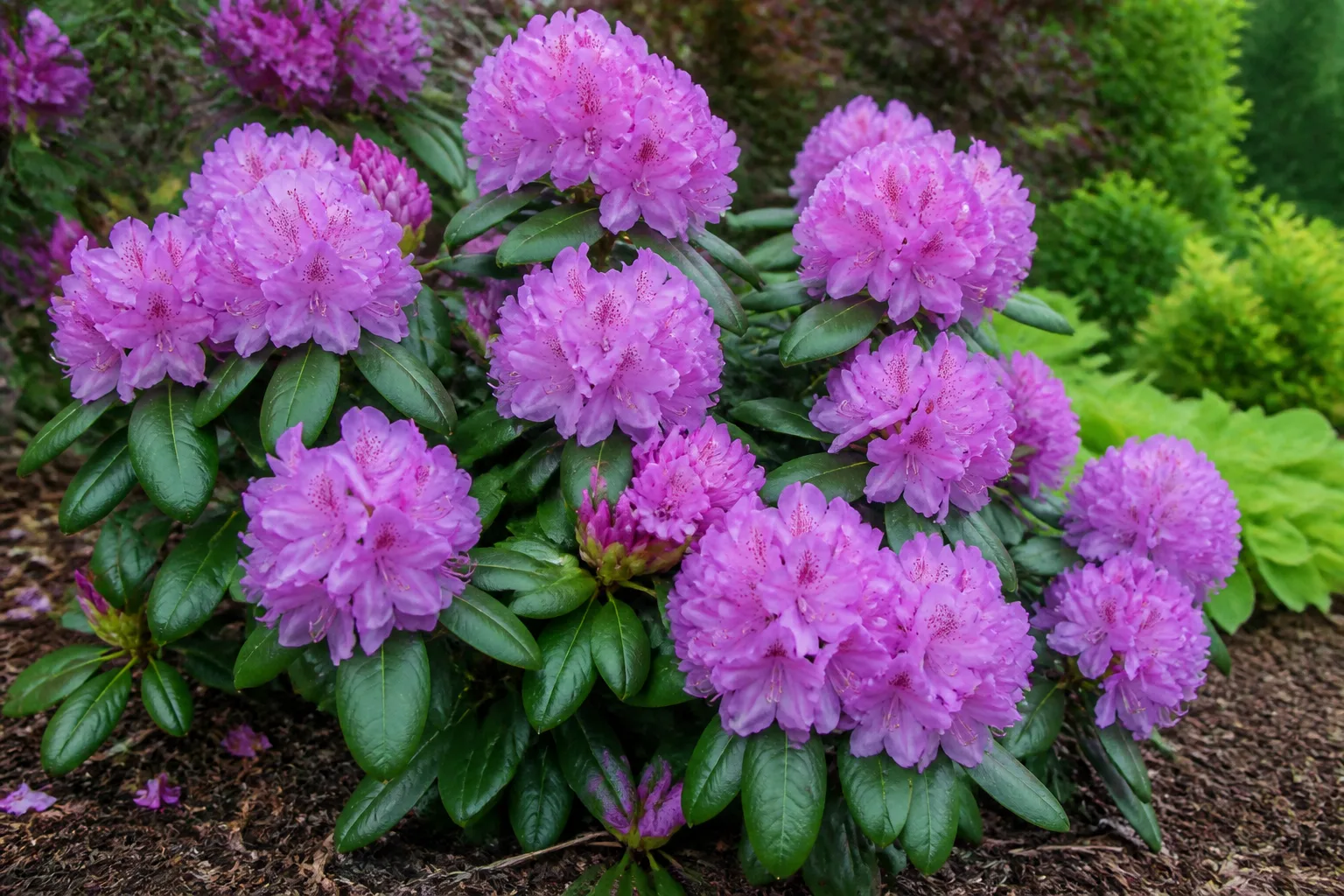
Azaleas are a group within the genus Rhododendron, and many species contain grayanotoxins. North Carolina State Extension identifies the toxin but adds an important qualification: moderate amounts of azalea nectar or leaves are described as posing little toxic hazard to people. That does not make the plant edible or make every species or exposure equivalent; larger ingestion and animal exposure can produce a different risk. The NC State Extension’s rhododendron genus profile is the better reference than a broad warning that all contact is dangerous.
Children and pets may be drawn to flowers or foliage, so keep reachable leaves and fallen blossoms out of play and chewing zones. Do not let animals browse shrubs, and avoid using flowers as food decoration unless you have a reliable identification and food-safety source. Gardenia’s overview of poisonous ornamentals also emphasizes the role of plant identity and placement in garden decisions (Gardenia); use it for broad garden context, not as a substitute for poison-control advice after an ingestion.
Mountain laurel (Kalmia latifolia)
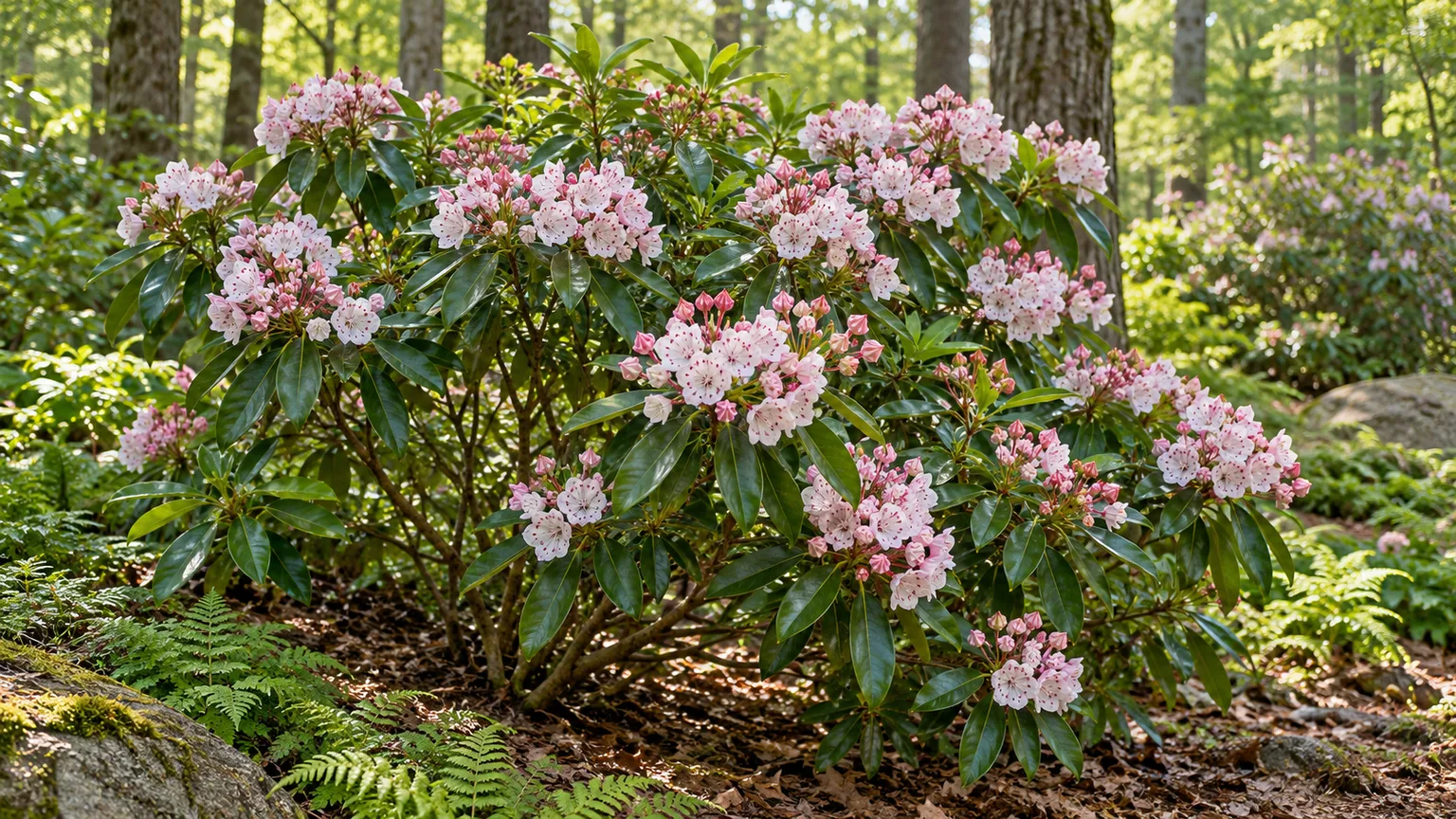
Mountain laurel is an evergreen native shrub with intricate white or pink flowers, but every part of the plant is listed by North Carolina State Extension as poisonous if eaten. Its grayanotoxins can interfere with nerve, skeletal-muscle, and heart function. The NC State Extension’s mountain-laurel profile describes digestive upset, weakness, poor coordination, and serious cardiac effects; much of its detailed animal information concerns livestock, so it should not be read as a precise prediction for a child, dog, or cat.
The sensible precaution is to prevent chewing rather than assume the shrub is dangerous to stand near. Avoid planting it beside a play structure or pet path where low branches can be sampled, and gather fallen flowers or seed capsules if an animal tends to mouth plant material. If your property borders woodland, identify existing shrubs before letting pets forage freely. Mountain laurel resembles other ornamental shrubs when it is not flowering, so a clear plant ID is useful before deciding whether to keep, move, or remove it.
Monkshood (Aconitum spp.)

Monkshood’s hood-shaped blue or purple flowers make it easy to recognize in a perennial border, but the whole plant deserves careful handling. North Carolina State Extension lists aconitine and related alkaloids in the roots, stems, leaves, flowers, fruit, and seeds; it warns that ingestion can be fatal to people and pets. Burning or numbness in the mouth, vomiting, diarrhea, weakness, spasms, a weak pulse, breathing paralysis, and convulsions are among the symptoms reported in its NC State Extension’s Aconitum profile.
The Extension page does not classify monkshood as causing contact dermatitis, but it advises gloves because the plant’s juice is narcotic and its roots can be mistaken for edible roots. Gloves are a sensible barrier against sap transfer and accidental hand-to-mouth contact, not proof that routine skin contact is equivalent to swallowing the plant. Keep monkshood away from vegetable beds, children’s play areas, and pet runs; label it in the garden, and wash tools and hands after pruning or dividing it. If a person or animal chews any part, treat it as urgent.
Angel’s trumpet (Brugmansia spp.)
Angel’s trumpet is a tropical shrub or small tree with dramatic, downward-hanging trumpet flowers. Do not confuse Brugmansia with angelica: they are unrelated plants despite the shared common name, so use the botanical label when identifying or checking the plant. North Carolina State Extension lists the flowers, leaves, and seeds as poisonous and identifies atropine, scopolamine, and hyoscyamine; ingestion can cause dry mouth, dilated pupils, weakness, increased pulse or blood pressure, fever, hallucinations, and paralysis. See its NC State Extension’s Brugmansia profile.
Because the consequences of ingestion can be severe, do not let children make pretend tea from its flowers or leave pruned material within reach of pets. The Extension source describes poisoning through ingestion and also flags inhalation of flowers, but it does not give an exposure threshold; avoid deliberate close inhalation or homemade preparations and contact a poison center if symptoms follow a suspected exposure. The mere presence of a flowering plant in the yard is not evidence that someone has been poisoned. If you cannot keep the plant away from curious children or animals, a less hazardous tropical-looking shrub is the simpler choice.
Autumn crocus (Colchicum autumnale)
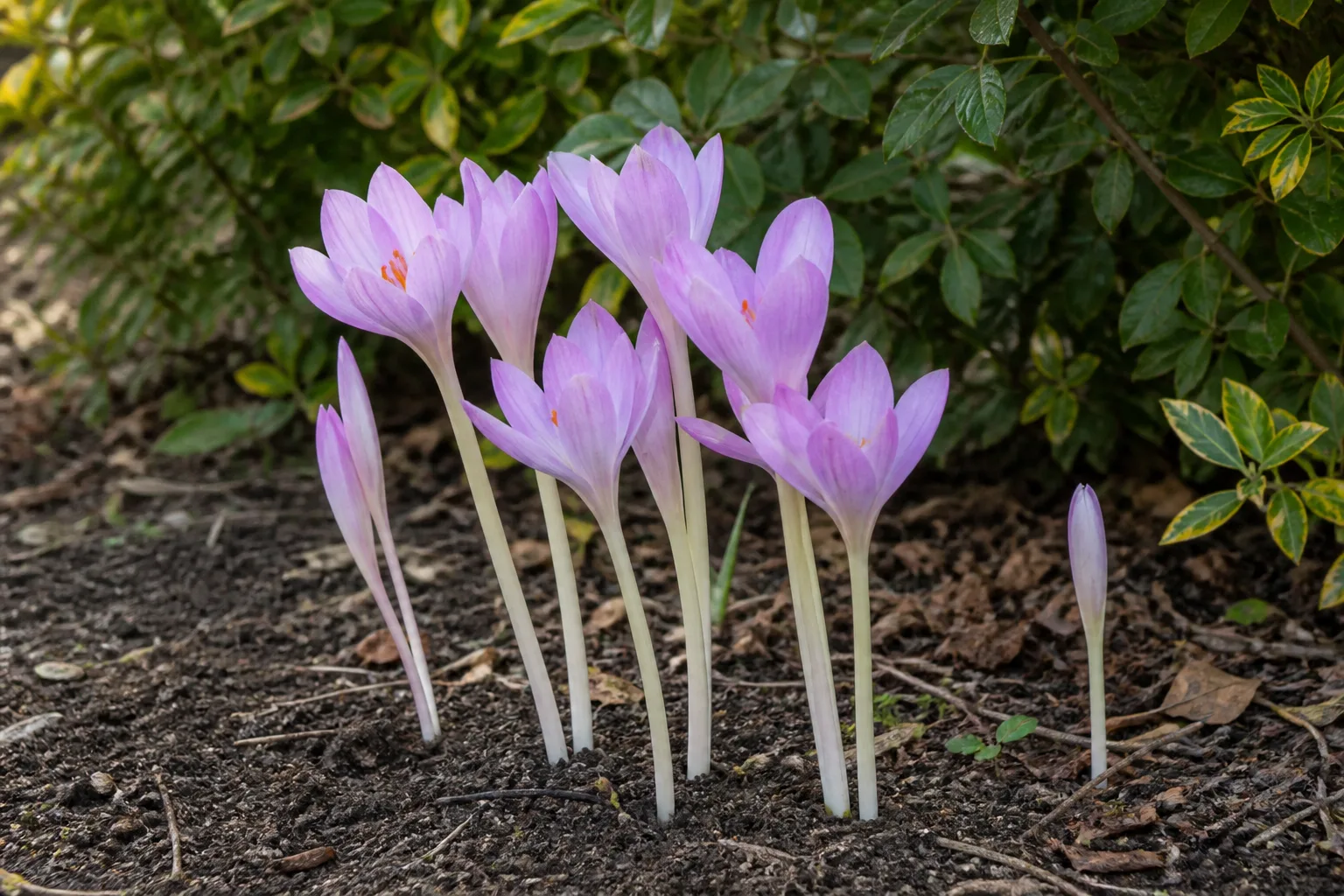
Autumn crocus, also called meadow saffron, is not a true crocus and is not the same plant as spring-blooming Crocus species. Colchicum autumnale contains colchicine and other alkaloids; North Carolina State Extension rates its poison characteristics as high, while the ASPCA listing flags it as toxic to dogs, cats, and horses and reports serious signs such as bloody vomiting, diarrhea, shock, and multi-organ damage. The corm is easy to mistake for a bulb, but the above-ground flowers, leaves, and seeds are also not for eating.
This is one of the plants on the list where “keep it away from pets” is not enough if a dog digs bulbs or a cat roams through the bed. Do not plant it in an area animals can dig, and store or discard corms securely during planting and division. Never eat it or use it as saffron; meadow saffron is a common name, not a culinary instruction. Check the full name on the package: spring crocus and autumn crocus are botanically different, and the severe colchicine risk belongs to Colchicum.
Choose plants by access, not by a generic “safe” label
You do not have to make every garden plant edible. Start with the people and animals who actually use the space: a toddler who explores by mouth, a cat that chews leaves, a dog that digs, a horse that grazes, or an adult who regularly prunes without gloves. Then map the likely contact points: low edges, play areas, paths, gates, patios, cut-flower beds, and places where fallen pods or leaves collect. A beautiful shrub at the back of an inaccessible bed presents a different opportunity for exposure than the same shrub beside a sandbox.
When a plant is already growing, identify the exact species before removing it. A label that says “hydrangea” is not enough to apply the bigleaf hydrangea finding to every member of the genus; “lily” is not enough to tell whether a cat faces the specific kidney emergency associated with Lilium and Hemerocallis. Check the botanical name against a veterinary database for the animal in your household and a university extension source for plant details. Horticulture guides can help with landscape context, but poison-control and veterinary sources should govern what to do after a suspected ingestion.
If you decide to replace a plant, match its garden job first: shade groundcover, spring vine, evergreen screen, late-summer color, or a flower for cutting. Then check the replacement’s full scientific name against the appropriate pet or child-safety reference. The ASPCA cautions that its lists are not complete and that any plant material may upset a dog’s or cat’s stomach, so “non-toxic” should mean “not listed as systemically toxic for this species,” not “safe to eat freely.” A physical barrier helps only if it is secure, maintained, and appropriate for the animal; training and supervision are useful layers, not a guarantee.
What to do after a possible exposure
If a person may have swallowed any part of a toxic or unidentified plant, call Poison Control in the United States at 1-800-222-1222 or use its online tool. The service says it is free, confidential, and available around the clock (U.S. Poison Control contact guidance). If the person has trouble breathing, collapses, has a seizure, or becomes unresponsive, call emergency services. For a pet, call your veterinarian or an animal poison-control service promptly; do not use the human poison line for veterinary treatment.
Do not induce vomiting, give milk, or try a home remedy unless a poison specialist or veterinarian tells you to. Remove remaining plant pieces from the mouth only if you can do so safely, and save a clear photo of the whole plant, leaves, flowers, seeds, and any label. Note the time and the part that may have been eaten; do not delay the call while trying to estimate a “safe” amount. ASPCA advises contacting a veterinarian or its animal poison-control hotline when a pet may have ingested a toxic plant.
If the contact was skin-only, wash the area with soap and running water, especially after handling lantana or oleander sap. The National Capital Poison Center describes plant-related skin reactions and recommends prompt washing when plant juice is on skin (National Capital Poison Center’s plant skin-problem guidance). Seek medical guidance if there is a severe reaction, eye exposure, worsening rash, or uncertainty about whether material was swallowed. Do not wait for symptoms after a possible lily exposure in a cat, or after ingestion of oleander, foxglove, monkshood, or autumn crocus.
Conclusion
The safest way to read a list of toxic garden flowers is to ask what plant, which part, which route, and who is exposed. Wisteria seeds, cat-accessible lilies, oleander, monkshood, and autumn crocus do not present the same hazard, while common labels such as “hydrangea” can hide species differences. Identify plants by botanical name, keep chewing and grazing access in mind, use gloves for sap or pruning work when advised, and call poison-control or a veterinarian quickly after a suspected ingestion. That gives you a practical way to enjoy a garden without mistaking every warning for the same level of danger—or dismissing a serious one.