Pink Lemonade Blueberry Care and Growing Guide
Learn how to grow Pink Lemonade blueberries with the right chill hours, acidic soil, pollination, pruning, container care, and a simple test for ripe pink fruit.

‘Pink Lemonade’ is a compact blueberry shrub with white-pink spring flowers, glossy leaves, orange-to-burgundy fall color, and berries that ripen pink instead of blue. It can fit a sunny border or a large patio pot, but fruiting depends on getting three details right: acidic soil, enough winter chill, and a steady supply of moisture around shallow roots. The berries are sweetest when fully pink and slightly soft, not when they first blush.
The cultivar is often listed as a low-chill hybrid with rabbiteye and southern highbush ancestry. It is generally self-fertile, yet a second compatible blueberry that flowers at the same time can improve the crop. Below, I’ll explain how to select the site, prepare the soil, choose a pollination partner, and care for the shrub through harvest without relying on a rigid watering or fertilizer calendar. 1 2
What Makes ‘Pink Lemonade’ Different?
This is a named cultivar, not a seed-grown blueberry type. Horticultural records describe it as a cross involving an experimental blueberry and ‘Delite,’ a rabbiteye cultivar developed through USDA and University of Georgia work. Its parentage helps explain why it combines a relatively compact 4- to 5-foot form with low chill needs and pink ripe fruit. Buy a labeled plant if you want those characteristics; seedlings from its berries will not reliably come true to the cultivar. 1 2
Expect a multi-season ornamental shrub as well as an edible one. The flowers are small, bell-shaped, and pinkish white in spring; pale green berries then take on pink tones as they mature. A larger crop usually ripens in mid to late summer, followed in suitable climates by a smaller, more scattered crop into fall. The foliage can turn yellow, orange, or burgundy, and reddish-brown twigs add some winter interest after leaves drop. The timing shifts with local weather, cultivar source, and the amount of chill the plant receives. 1
Chill, hardiness, and the right region
Plant labels and garden references commonly give ‘Pink Lemonade’ a requirement of about 300 chill hours, generally counted as winter hours below 45°F (7°C). That is low compared with many traditional northern blueberries, so the cultivar is a candidate for milder-winter regions where a high-chill plant might not crop reliably. A “low chill” label does not mean it can fruit without winter dormancy: a warm indoor winter or a place that rarely accumulates cool hours can still disrupt flowering. 1 2
Hardiness-zone listings are inconsistent. Missouri Botanical Garden and Dave Wilson Nursery list Zones 4–9, while Raintree Nursery gives Zone 6 as its cold-hardiness rating. Treat the broader range as a starting point, not a guarantee. In a colder location, check what local nurseries have successfully overwintered, choose a sheltered in-ground site, and mulch the root zone; in a container, protect the pot from severe freezes because roots lose the insulation of surrounding earth. 1 2 3
Does it need a pollination partner?
‘Pink Lemonade’ is described as self-fertile, so one healthy shrub may set fruit without another blueberry. But self-fertile does not mean that a companion is useless: cross-pollination can improve fruit set, berry size, and total yield in blueberries. For a more dependable crop, add a second blueberry with overlapping bloom, preferably another rabbiteye or a cultivar confirmed by the nursery as compatible with ‘Pink Lemonade.’ A northern highbush variety may not be a reliable partner because bloom timing and genetic compatibility differ. 1 3
Plant the two shrubs close enough for pollinating bees to visit both, but leave room for each mature canopy. The plant’s roughly 4- to 5-foot width makes about 4 to 6 feet between shrubs a practical starting point; increase spacing if you want an airy border or need access for picking. A second plant also spreads harvest risk if late frost, a pest, or poor flowering affects one shrub. It will not compensate for unsuitable soil or inadequate chill, so solve those basic conditions first. 1 4
Choose a sunny site with acidic, draining soil
Give the shrub at least six hours of direct sun for stronger flowering and a fuller harvest. It can tolerate some partial shade, especially where afternoon heat is severe, but shade usually means fewer flower buds and slower fruit ripening. Choose a site with good air movement and avoid a low pocket where water sits after rain. Blueberries have fine, shallow roots that need both regular moisture and oxygen; permanently soggy soil is not a substitute for a well-watered root zone. 1 4
The most important soil feature is acidity. University of Georgia guidance puts the preferred range for blueberries around pH 4.5–5.2, while its irrigation publication describes a wider workable range of roughly 4.0–5.5. For a home planting, aim near 4.5–5.2 rather than chasing the lowest possible reading. In that range, roots can access iron and other nutrients; at higher pH, leaves may yellow even when the ground contains enough iron. 4 5
Test and prepare the soil before planting
Order a soil test before adding sulfur, lime, compost, or fertilizer. A lab test gives you the current pH and nutrient levels, and its amendment recommendation is more useful than guessing from leaf color or sprinkling an acidifier over the surface. If pH is too high, lowering it takes time; incorporate the recommended amendment well before planting when possible, then retest. In alkaline or heavily amended sites, a raised bed or large container filled with an acidic, well-drained mix may be more predictable than repeatedly trying to correct the entire garden. 4 5
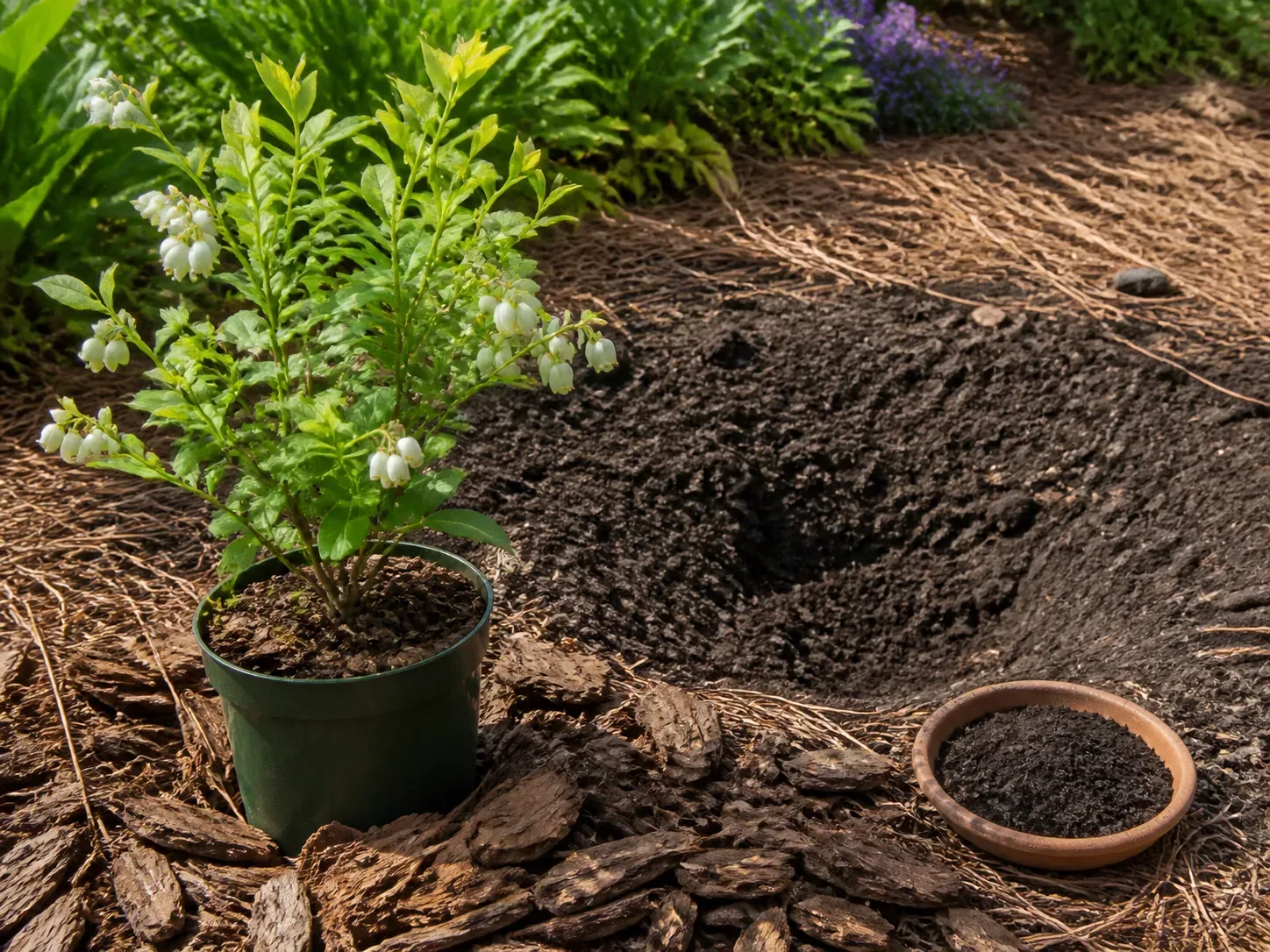
Blueberries prefer organically rich soil that holds moisture but drains. If native ground is heavy clay, compacted, or waterlogged, improve a broad planting area or build a raised bed rather than digging a small hole and filling it with a radically different mix. That isolated pocket can behave like a basin and keep roots too wet. Mix in well-aged organic matter according to soil-test guidance, and do not assume pine needles alone will lower pH enough to correct alkaline soil; use them mainly as a surface mulch. 4 6
Planting in a bed or raised bed
Plant a nursery-grown shrub during a mild period when the soil is workable—often late winter or early spring in cold regions, with fall also suitable in areas with gentle winters. Avoid planting into frozen, saturated, or very hot, dry ground. Set the plant at the same depth it grew in its nursery container, loosen roots that circle tightly around the root ball, and water thoroughly to settle the soil. Keep the crown at grade rather than burying the stems. 4
For a raised bed, make it broad enough to keep the root zone acidic and evenly moist as roots spread. Do not line the bottom with gravel; it does not fix a poorly drained profile and can leave water perched above the layer. Set the shrub where rainwater can move out, mulch the surface, and maintain an open path around the plant for pruning and picking. If you plant a pollination partner, coordinate their bloom period and leave enough distance for mature shrubs instead of squeezing both into one small hole. 4 6
Planting in a container
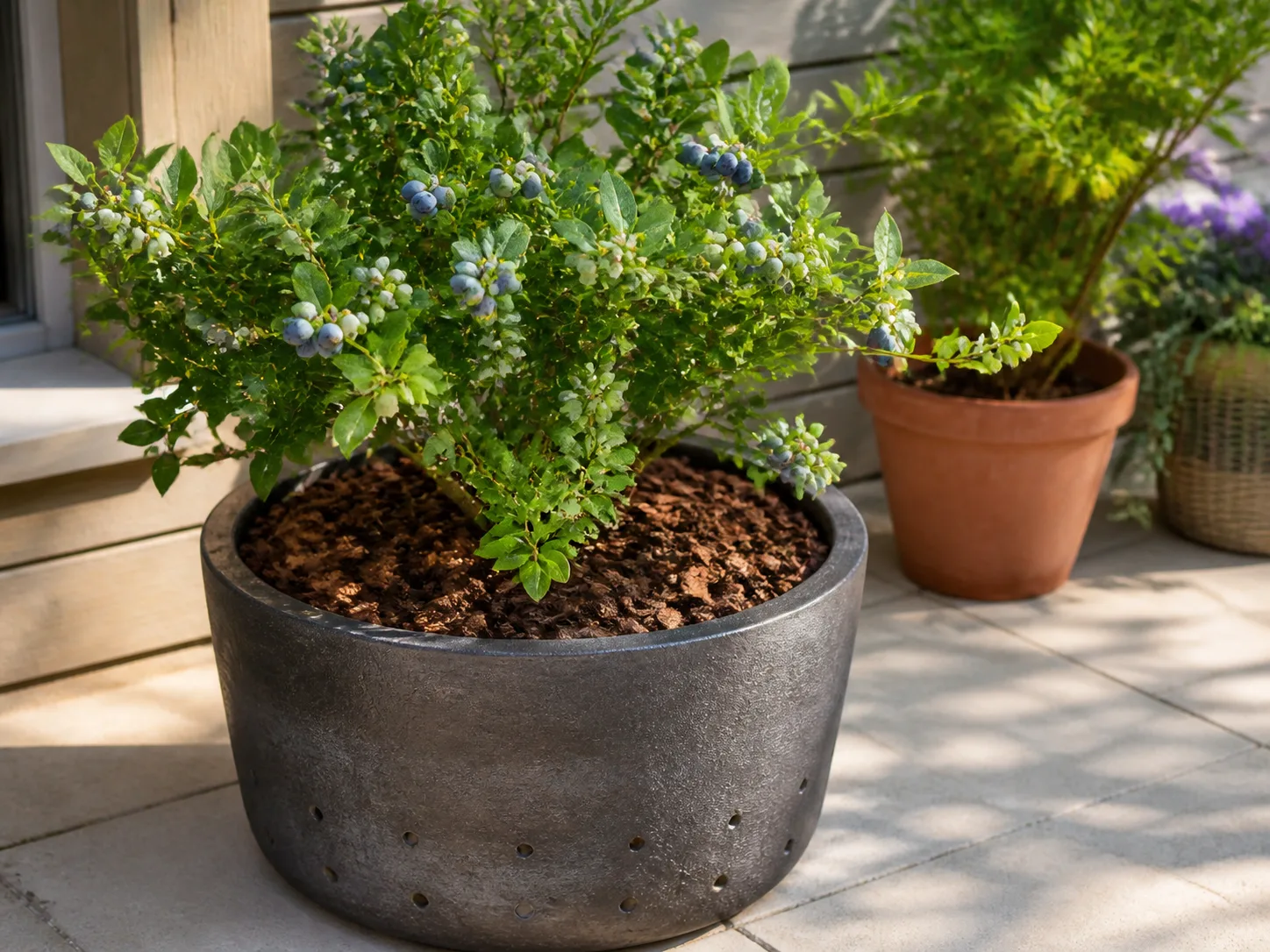
A container is useful when garden soil is alkaline, drainage is poor, or space is limited. Choose a pot with several unobstructed drainage holes, ideally at least about 24 inches wide and deep for a mature shrub. Fill it with an acidic potting mix made for blueberries or other acid-loving plants; ordinary garden soil is heavy in a pot and may have the wrong pH. Keep one plant per pot so it has enough root space, and set the container where it gets full sun and can be watered easily. 7
Pots dry faster than in-ground beds and also expose roots to stronger temperature swings. Check the mix frequently in hot weather, but water only when it needs it rather than leaving the pot in a saucer of standing water. Keep the plant outdoors through winter so it experiences dormancy and can accumulate chill, while insulating the pot or moving it to a sheltered, unheated location during severe cold. Bringing it into a warm room for the whole winter can interrupt the seasonal cycle the plant needs. 7
Water and mulch without waterlogging the roots
Keep the root zone evenly moist during establishment and fruit development. Instead of watering a fixed number of times each week, check the soil under the mulch: if the surface has dried and the soil a couple of inches down is only slightly damp, water slowly at the base until the root zone is moistened. In a heat wave or sandy bed, check more often; after rain or in a slow-draining clay bed, wait and check again before adding water. This approach avoids both drought stress and the root damage caused by saturation. 5 6
Spread roughly 2 to 3 inches of organic mulch, such as pine bark or wood chips, over the root area, leaving a small gap around the stems. Mulch reduces evaporation, moderates root temperature, suppresses weeds, and protects shallow roots from cultivation. Refresh it as it decomposes rather than piling a thick mound against the crown. Pine straw can be used where available, but it is not a substitute for measuring and correcting soil pH. 4 6
Fertilize lightly and watch for chlorosis
Blueberries are sensitive to overfertilizing, and “more feed” will not fix poor pH or waterlogged roots. Start with the soil test and use a fertilizer labeled for blueberries or acid-loving plants only when the test or visible growth supports it. Blueberry guidance often favors ammonium-form nitrogen rather than nitrate forms; follow the product label for timing and dose, spread it across the root zone rather than against the stem, and avoid stacking fertilizer with manure or concentrated compost. 4 8
If leaves turn yellow while their veins remain greener, check soil pH and drainage before applying iron. High pH can make iron unavailable even when the soil contains it, and wet or damaged roots can also interfere with nutrient uptake. Adding iron without correcting the root cause may briefly change color but will not resolve the growing condition. If pH is in range, use a soil test to check nutrients and inspect whether the bed is staying saturated or drying too hard between waterings. 1 4
Prune for strong canes and manageable crops
Do little pruning during the first year beyond removing broken or damaged wood. Removing flowers in the planting year—and often the following year—lets the shrub build roots and stems rather than spending its limited energy on fruit. A vigorous plant may carry a small second-year crop, but sacrificing that first flush is reasonable if the plant is small, newly transplanted, or struggling to establish. Missouri Botanical Garden recommends removing flowers in the planting year and the next to encourage vegetative growth. 1
Once established, prune in late winter while the shrub is dormant. Begin by removing dead, diseased, weak, crossing, or ground-level branches. As the plant matures, remove one or a few of the oldest, thickest canes at the base each year so younger shoots can replace them; open the center enough for light and airflow without shearing the whole shrub into a ball. UGA Extension describes gradual cane renewal and pruning to limit overcrowding, while the exact amount should be adjusted to the shrub’s size and vigor. 9
Avoid cutting every branch back by half just to control height. That can remove productive wood and reduce the upcoming crop. If the shrub has become crowded or neglected, renew it over more than one winter unless local extension advice calls for a more drastic renovation. Clean pruners between diseased cuts, and remove infected branches from the garden rather than leaving them beneath the plant. 9 10
Bloom, fruit set, and the pink harvest
The spring flowers are small but important: bees move pollen within and between shrubs, and the same-time bloom of a compatible partner helps improve fruiting. A late frost can damage open flowers even when the plant itself survives the winter. If your site routinely has spring freezes, avoid a low frost pocket and select a protected location; in a pot, move the shrub temporarily to shelter when a hard freeze is forecast during bloom. 1 3
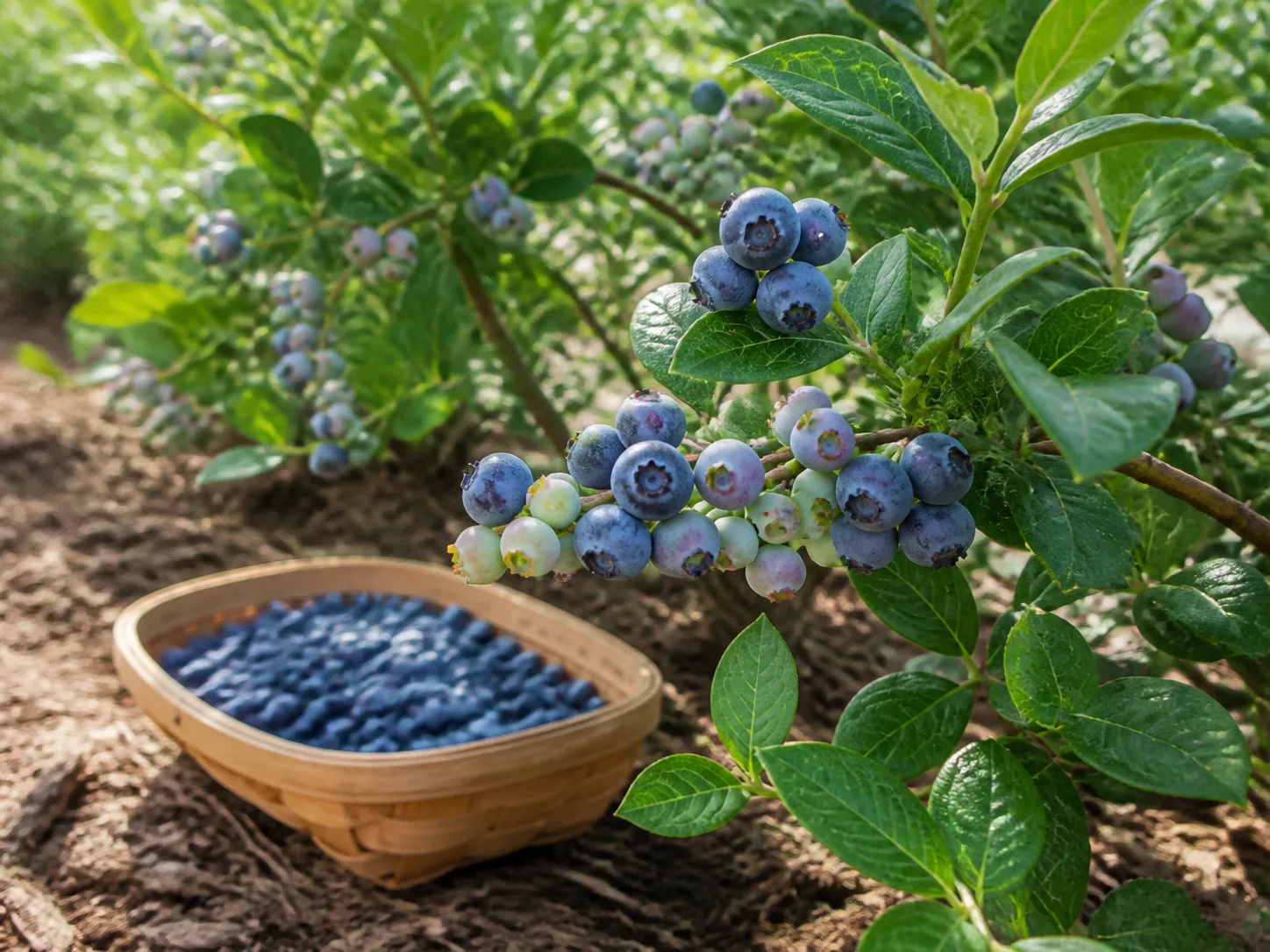
Expect the main crop in mid to late summer, with timing shifting by region and spring temperatures. Pink fruit makes it easy to miss the usual blueberry cue: the berries are not supposed to turn blue. They progress from green to pale pink and then a stronger, even pink as they mature. A plant may carry fruit at different stages at once, so harvest in several passes rather than stripping the clusters when the first berries color. 1 2
How to tell when the berries are ripe
Pick a sample berry when the fruit is fully pink and has begun to soften slightly. Taste it before harvesting a large cluster; fully mature berries should taste noticeably sweeter and come away more readily than pale, firm ones. If it tastes tart or feels hard, leave the remaining fruit on the shrub for a few more days and sample again. Color is a useful cue, but sweetness and texture are the final check. 1 2
Handle ripe berries gently and refrigerate them soon after picking. If you want to share some of the crop with wildlife, leave an uncovered section; if birds are taking most of the fruit, place netting over a support before berries begin to ripen and secure the edges so animals cannot get tangled. Harvest often during the ripening window. Fruit that is left exposed becomes easier for birds and small mammals to find, while overripe berries can soften or split after wet weather. 1 10
Fix common growing problems
A shrub that grows leaves but gives few berries is usually signaling a growing-condition or age issue, not a need for a random fertilizer boost. Work through the likely causes in order: plant age, winter chill, pollination, sunlight, soil pH, moisture, then pruning. That sequence is faster and safer than trying several amendments at once, which can push pH and nutrient levels in the wrong direction. 1 4
Yellow leaves, few berries, and other warning signs
Yellow leaves with green veins often point to iron chlorosis from soil that is not acidic enough. Confirm with a soil test, then follow the lab’s recommendation to correct pH; also check irrigation water if you rely on a consistently alkaline or mineral-rich source, because water can gradually affect the root zone. If yellowing is uniform or accompanied by wilt, inspect soil moisture and root health before deciding it is an iron problem. 1 5
Few flowers or berries can follow insufficient chill, a very shady site, frost-damaged blooms, or lack of an effective pollen partner. If you see flowers but fruit does not develop, check whether pollinators are active and whether a compatible cultivar blooms at the same time. A first-year plant may also be deliberately flowerless after establishment pruning. Take notes on the season rather than changing everything at once; one year of poor fruit set does not prove the cultivar is unsuited to your garden. 1 3
Birds, insects, and disease
Birds and small mammals are often the biggest harvest competitors because Pink Lemonade’s colored fruit is easy to spot. A well-supported net or cage installed before ripening is more reliable than draping loose mesh over branches. Remove fallen or shriveled fruit and keep the area around the base free of weeds so you can see damage early. 1 10
Root rot and leaf or fruit diseases are more likely when the plant is stressed by poor drainage, dense growth, or prolonged wet foliage. Water at soil level, keep the center reasonably open, and prune out dead or diseased wood in dry weather. Powdery mildew may appear as a white coating on leaves; note whether it progresses and consult local Extension guidance for identification before using a treatment. The cultivar is not immune to site problems simply because serious pest issues are not common in every garden. 1 10
Propagate a true-to-type plant
A named cultivar is best propagated from a rooted cutting or a nursery-grown clone, not from its seed. Seedlings can differ from the parent in fruit color, flavor, growth habit, chill need, and pollination behavior. Softwood or semi-ripe cuttings taken during active growth can root, but blueberry cuttings need steady humidity, clean material, and patience; rooting success varies, so buying a labeled plant is the more reliable route when cultivar identity matters. 1 10
If you try a cutting, take several from healthy, disease-free growth rather than betting on one stem, and use a sterile, airy medium that stays moist but not waterlogged. Keep the cuttings out of harsh sun while they root, then gradually acclimate new plants before moving them into full garden conditions. Do not expect a new cutting to crop immediately: it needs time to build roots and canes, and its first flowers may be worth removing to aid establishment. 10
Conclusion
‘Pink Lemonade’ earns its place as both an edible and ornamental shrub, but its unusual fruit color is only one part of successful care. Give it sun, soil near pH 4.5–5.2, reliable drainage, and even moisture; check whether your climate supplies around 300 chill hours, and treat hardiness labels as estimates rather than guarantees. A compatible, overlapping rabbiteye can make a self-fertile shrub more productive.
Start with a soil test, then choose between a prepared bed, raised bed, or large acidic container. Mulch the shallow roots, feed conservatively, and renew old canes a few at a time. At harvest, wait for the berries to become fully pink, slightly soft, and sweet. Those checks make the plant’s distinctive crop easier to enjoy and easier to diagnose when something goes wrong.