How to Grow and Care for Phlox
Grow creeping, woodland, and tall garden phlox with type-specific light, soil, watering, mildew prevention, division timing, and cultivar picks that actually bloom.

Phlox is not one plant with one set of rules. A mat of moss phlox on a sunny rock wall wants sharp drainage and almost no fertilizer. Tall garden phlox in a cottage border wants steady moisture, six hours of sun, and aggressive airflow management or powdery mildew will coat the leaves by August. Woodland phlox under a tree wants dappled shade and humus-rich soil. Treat them the same and you will wonder why “phlox” failed.
This guide starts with species ID — the fork every other care decision hangs on — then covers planting, watering, bloom extension, division, seed starting, mildew control, and the companion plants that make a phlox border look intentional instead of accidental.
What Phlox Needs at a Glance
The Phlox genus includes roughly 70 species, most native to North America. Gardeners usually grow a handful of perennials plus one common annual. Heights run from 4-inch ground mats to 5-foot panicles. Bloom windows stretch from early spring through late summer depending on species and cultivar.
| Type | Typical height | Sun | Soil | Bloom | USDA zones |
|---|---|---|---|---|---|
| Tall garden phlox (P. paniculata) | 2–5 ft | Full sun to light shade | Rich, moist, well drained | Late June–September | 4–8 |
| Moss phlox (P. sublata) | 4–6 in | Full sun | Lean, sharply drained | Mid–late spring | 3–9 |
| Creeping phlox (P. stolonifera) | 6–12 in | Partial shade | Moist, humus-rich | Spring | 5–9 |
| Woodland phlox (P. divaricata) | 12–14 in | Partial to full shade | Moist, organic | Late April–May | 3–8 |
| Annual phlox (P. drummondii) | 6–12 in | Full sun | Average, well drained | Summer until frost | Annual |
All phlox carry tubular flowers that hummingbirds, butterflies, and native bees visit readily. Many cultivars smell faintly of sweet clove — especially tall garden phlox in the evening. If your plant does not match the row that fits your site, fix the match before tweaking fertilizer or spray schedules.
Know Your Phlox: Five Types Gardeners Actually Grow
Buying a pot labeled simply “phlox” is where most problems start. Nursery tags often omit the species. Use growth habit and bloom time as your field guide, then confirm the botanical name when you can.
Tall Garden Phlox (Phlox paniculata)
Tall garden phlox — also called garden phlox or summer phlox — is the backbone of late-summer perennial borders. Plants form upright clumps with cone-shaped panicles of fragrant flowers in white, pink, lavender, purple, red, and bicolor forms with contrasting “eyes.” Mature height is usually 2–4 feet, though vigorous cultivars like ‘Jeana’ can reach 5 feet.
This is the species most vulnerable to powdery mildew, and it is the one that benefits most from stem thinning, resistant cultivars, and base watering. University of Minnesota Extension notes that shading decreases both bloom quantity and quality while increasing disease pressure — so do not tuck tall phlox under tree canopies hoping for the best.
Standout cultivars worth knowing:
- ‘David’ — white, strongly mildew-resistant, about 4 feet; a long-proven border workhorse
- ‘Jeana’ — lavender-pink, exceptional pollinator draw; 2024 Perennial Plant Association Plant of the Year
- ‘Laura’ — royal purple with a white eye; good mildew resistance at roughly 3 feet
- ‘Bright Eyes’ — pale pink with a crimson center
- ‘Glamour Girl’ and ‘Coral Crème Drop’ — coral tones for August color with improved mildew resistance
Moss Phlox (Phlox sublata)
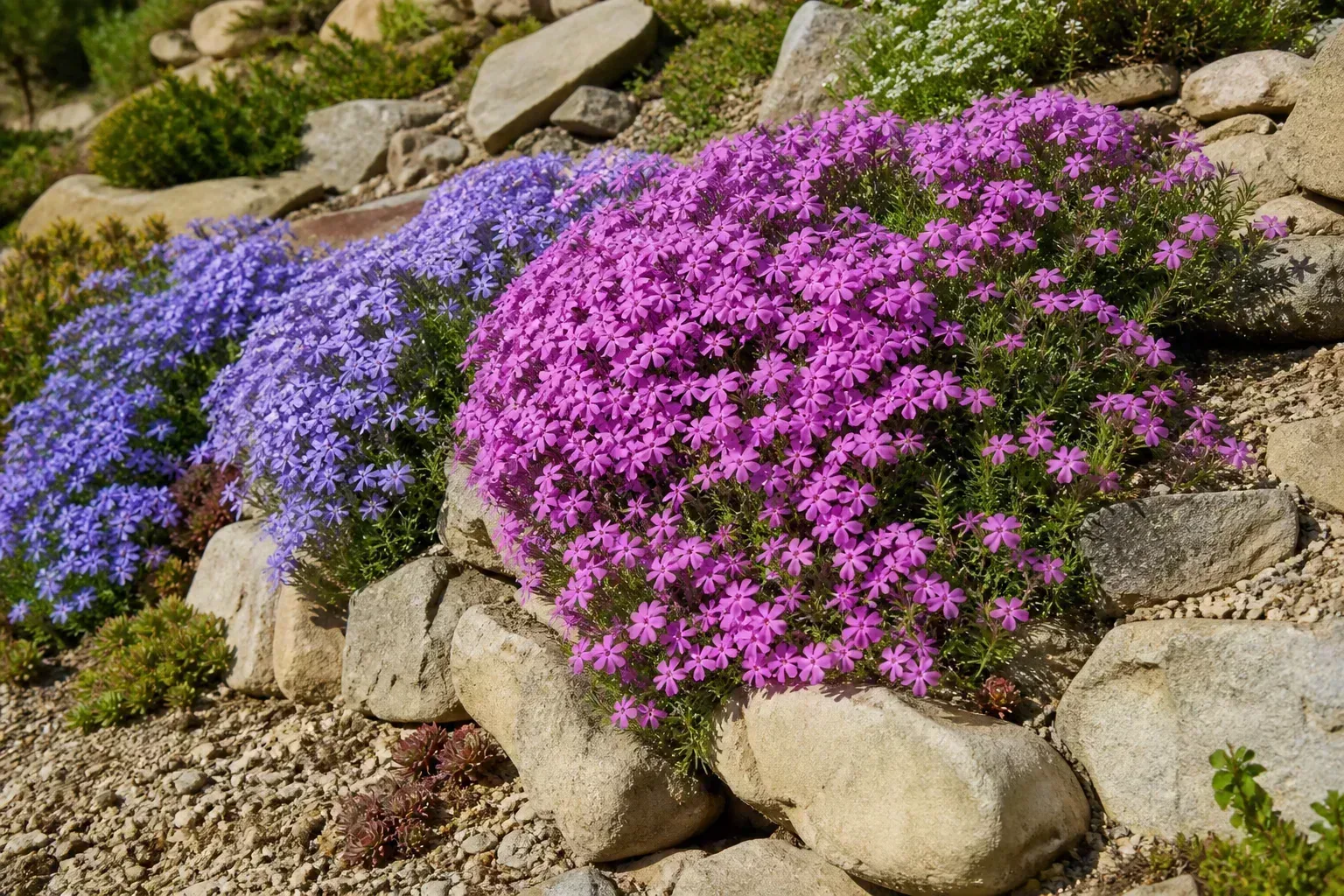
Moss phlox — moss pinks, thrift phlox — forms a dense evergreen mat of needle-like foliage topped with a carpet of small flowers in mid- to late spring. It wants full sun and excellent drainage. Rock gardens, stone walls, and sunny slopes are its natural homes. Height stays under 6 inches.
Do not confuse moss phlox with Phlox stolonifera. Both are called “creeping phlox” in casual conversation, but P. sublata tolerates drought and baking sun far better than its shade-loving cousin. Wet winter soil is the fastest way to lose a moss phlox planting.
Creeping Phlox (Phlox stolonifera)
True creeping phlox spreads by stolons through partial shade and moist, humus-rich soil. Flowers appear in spring in purple, pink, or white. Well-known selections include ‘Blue Ridge’ and ‘Sherwood Purple’. It handles shade that would weaken moss phlox, but it will not thrive on a hot, dry rock ledge.
If your “creeping phlox” bakes in afternoon sun on gravel, you probably have P. sublata. If it carpets a woodland edge in April, think P. stolonifera or woodland phlox instead.
Woodland Phlox (Phlox divaricata)

Woodland phlox — wild blue phlox — is among the first perennials to bloom in shade gardens, typically late April through May in temperate climates. Stems reach 12–14 inches with loose clusters of periwinkle-blue or white star-shaped flowers. It spreads into a polite groundcover when soil stays moist and organic.
‘Blue Moon’ is a widely sold pale-blue cultivar. ‘Chattahoochee’ offers pale blue petals with a magenta eye. Pair woodland phlox with spring ephemerals and ferns rather than sun-hungry tall phlox behind it.
Meadow phlox (Phlox maculata) and annual phlox (Phlox drummondii) round out the genus in many gardens. Meadow phlox grows about 2 feet tall in moist meadows with spotted stems; annual phlox delivers vivid summer color in containers and beds until frost with regular deadheading.
Where and When to Plant Phlox
Perennial phlox installs most successfully in spring or early fall when soil is workable and temperatures are moderate. Spring planting gives roots a full season to establish before the first hard freeze. Fall planting — at least six weeks before your average first frost — lets roots anchor while top growth slows.
Site selection is species-specific:
- Tall garden phlox: Open border with six or more hours of direct sun, no root competition from large trees, and room for 18–24 inches between plant centers at maturity
- Moss phlox: Slopes, rock walls, or raised beds where water drains fast
- Woodland and stoloniferous types: Under deciduous trees with morning light, or along north-facing edges where soil stays cool and moist
Dig a hole slightly wider than the root ball and set the crown at the same depth it grew in the pot. Backfill with native soil amended only as needed — compost for moisture-loving types, grit or fine gravel worked into heavy clay for moss phlox. Water deeply at planting, then mulch lightly (2 inches max) keeping material off crowns.
Light, Soil, and Spacing by Type
Light drives bloom quality more than almost any other factor for tall garden phlox. Six hours of direct sun produces the densest panicles. Light afternoon shade is tolerable in hot-summer regions but expect fewer flowers and higher mildew risk. Woodland species decline in full sun — leaves scorch and plants stress.
Soil should be well drained across the board, but moisture expectations diverge sharply:
- P. paniculata wants consistently moist, fertile loam with pH roughly 6.0–7.0
- P. sublata prefers lean, alkaline-leaning soil and suffers in rich, wet beds
- P. divaricata and P. stolonifera need humus and steady moisture without waterlogging
Spacing prevents the disease problems that ruin tall phlox. Plant garden phlox 18–24 inches apart and resist the urge to pack a new bed for instant fullness. Crowded stems create a humid microclimate that powdery mildew exploits. Moss phlox spreads into a solid mat — space plugs 12–18 inches apart on center. Woodland types can go 12 inches apart in drifts.
Watering Phlox Without Inviting Disease
The watering rule that saves tall garden phlox: soak the root zone, not the foliage. Overhead sprinklers that wet leaves every evening are an open invitation to powdery mildew and leaf spots. Drip irrigation or a slow hose at the base is better.
Established tall garden phlox is moderately drought tolerant, but flower size and count drop when soil stays dry for weeks. Check the top inch of soil; when it feels dry, water deeply. During peak bloom in July and August, consistent moisture matters most. Moss phlox needs regular water only until roots establish, then only during prolonged drought. Woodland phlox in dry shade under thirsty maples may need supplemental water weekly in summer.
Wilting on a hot afternoon is normal for tall phlox; if plants recover by morning, do not drown them. If wilt persists with dry soil, water. If soil is wet and plants wilt, investigate root rot or crown damage instead.
Fertilizer and Mulch
Phlox is not a heavy feeder. A spring top-dressing of compost around tall and woodland types supplies enough nutrition for most gardens. Over-fertilizing — especially with high-nitrogen products — pushes soft, lush growth that mildew colonizes faster.
Moss phlox rarely needs fertilizer. Lean soil keeps mats tight. Woodland phlox appreciates compost worked into planting holes and a light spring mulch of shredded leaves.
Fall compost or aged manure around tall garden phlox supports next year’s bloom without stimulating late-season growth vulnerable to frost. Keep mulch pulled back from crowns to prevent rot.
How to Get Phlox to Bloom Longer
Most phlox species bloom heavily for three to six weeks depending on type, weather, and cultivar. You cannot force a spring phlox to flower in August, but you can extend the genus-wide display by combining species and using a few cultural tricks on tall garden phlox.
Deadheading and Summer Pinching
Deadhead spent panicles on tall garden phlox by cutting just above the first set of healthy leaves below the faded cluster. Clean removal redirects energy from seed production into potential side shoots. Rebloom is not guaranteed — it depends on cultivar vigor and how early in summer you deadhead — but neglected seed heads definitely shorten the show.
On moss phlox, shear the mat lightly after the first spring flush to tidy leggy stems. Some plants push a lighter second bloom in late summer.
A controversial but effective technique for tall phlox: cut stems back by one-third in early summer (around late May to early June) when plants are 12–18 inches tall. This delayed pinching encourages branching and can produce more, slightly later panicles. Alternatively, pinch out the top two leaf pairs on each stem through the first week of July — the same logic used on chrysanthemums for bushier habit.
UConn’s Home & Garden Education Center recommends reducing tall phlox to 6–8 strong stems per clump in early spring when shoots are emerging. Remove weaker interior shoots at the base. Better air circulation means fewer mildewed leaves and often larger individual flower heads.
Staggering Bloom Times with Cultivars
Species alone sets the first bloom window — moss and woodland phlox in spring, tall garden phlox starting late June. Within P. paniculata, cultivars shift timing:
- Early starters like ‘Early Start’ series — bloom from early June
- Midseason classics — ‘David’, ‘Laura’, most purples and pinks — July peak
- Late heirlooms like ‘Franz Schubert’ — pale lilac from late summer into early fall
Planting two or three cultivars with different schedules keeps a border in color for eight weeks or more without relying on rebloom alone.
Dividing and Propagating Phlox
Tall garden phlox clumps thicken every year. Divide every three to four years in early spring or fall to maintain vigor, limit mildew crowding, and propagate favorites. Signs it is overdue: hollow centers, fewer flowers, stems so dense you cannot see through the clump, or mildew appearing earlier each season.
Division steps:
- Water the clump a day ahead. Dig the entire root mass with a spading fork, keeping as many roots intact as possible.
- Shake off excess soil and split the crown with a sharp knife or two forks back-to-back. Each division needs healthy roots and several growing points.
- Trim damaged roots and cut stems back by half to reduce transplant shock.
- Replant immediately at the same depth, 18–24 inches apart, and water deeply.
Moss phlox divides differently: lift rooted sections from the mat edge, trim dead foliage, and replant with some green growth attached. Woodland and stoloniferous types separate easily where stolons have rooted.
Soft stem cuttings of tall phlox taken in late spring can root in moist sand or perlite, though division is faster and more reliable for beginners.
Growing Phlox from Seed
Growing phlox from seed is economical for annual P. drummondii and some perennial species, but perennial phlox seed often needs cold stratification — 4–8 weeks of moist chilling at 35–40°F — before germination. Annual phlox does not require stratification.
Sow seeds indoors 6–8 weeks before last frost for annual types, or direct-sow perennial species in late fall so winter provides natural stratification. Cover seeds lightly; phlox germinates in darkness or very dim conditions. Keep medium moist at 64–68°F. Expect germination in 14–21 days when conditions are right.
Seed-grown tall phlox will not match named cultivars — offspring revert toward wild-type magenta and lose mildew resistance bred into clones. For predictable color and disease performance, buy vegetatively propagated plants or divisions.
Overwintering and Fall Cleanup
Phlox is cold-hardy across its rated zones and needs no special winter protection in most gardens. A light mulch after the ground freezes protects crowns in zone 3–4 margin areas.
Fall cleanup matters for disease carryover. Cut tall garden phlox stems to 2–3 inches after frost browns foliage — or leave standing for winter interest and cut in early spring if you prefer. Remove mildewed leaves and stems from the garden entirely; do not compost them. Trash or burn infected material so spores do not overwinter in your compost pile.
Top-dress with compost after cleanup. Moss phlox needs little beyond pulling fallen leaves off the mat so crowns do not stay wet all winter.
Powdery Mildew: Prevention and Treatment
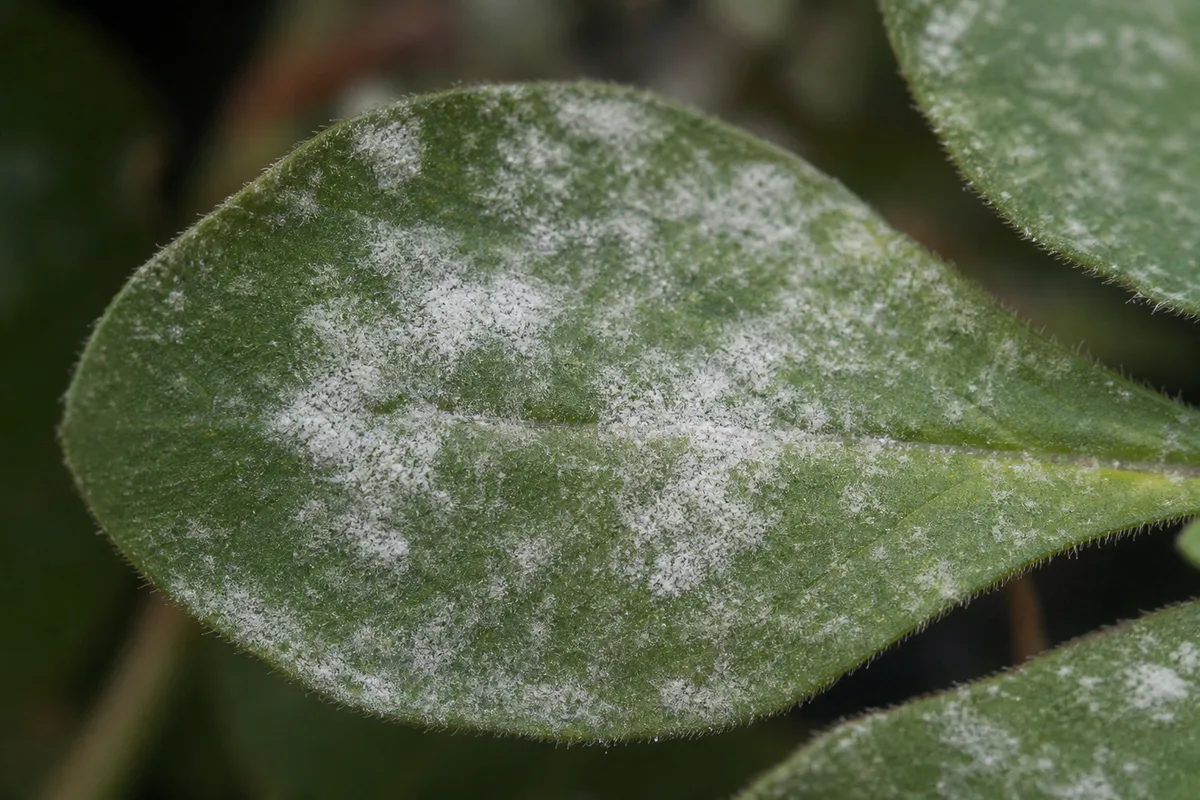
Powdery mildew is the reason many gardeners swear off phlox. White to gray powder coats leaves and stems, starting in patches and spreading until foliage yellows, dries, and drops. The plant rarely dies, but it looks miserable and blooms weakly. Iowa State Extension identifies it as the most common disease of garden phlox.
Prevention beats cure. Work through this ladder before reaching for sprays:
- Choose resistant cultivars — ‘David’, ‘Jeana’, ‘Laura’, and newer coral series offer real improvement, though no phlox is immune in a wet, humid summer
- Space and thin — 18–24 inches between plants; 6–8 stems per clump after spring emergence
- Water at the base — keep foliage dry overnight
- Maximize sun and airflow — prune neighboring plants that encroach; avoid planting against walls with stagnant air
If mildew appears, remove the most affected leaves and stems first. Bag and discard debris away from the garden. Wash pruners with a 10:1 water-to-bleach solution before cutting healthy plants.
Preventative sprays work best before infection spreads. Horticultural oils, potassium bicarbonate products, and homemade baking-soda solutions (1 tablespoon baking soda, ½ teaspoon mild soap, 1 gallon water) can slow early outbreaks — test a small area first because baking soda and soap mixtures can burn leaves in hot sun. For our full diagnostic and treatment workflow across garden plants, see powdery mildew treatment and control.
Michigan State University Integrated Pest Management emphasizes that fungicides protect new growth but do not restore already-infected tissue — so combine chemical options with the cultural fixes above, not instead of them.
Pests and Wildlife Problems
Insects are secondary on phlox. Spider mites attack during hot, dry stretches, stippling leaves and spinning fine webbing on undersides. A strong jet of water on leaf undersides every few days dislodges mites without chemicals. Repeat until humidity rises or predators catch up.
Deer and rabbits browse phlox, especially fresh spring growth and woodland flowers. Tall phlox buds can be nipped before they open. Physical fencing is the only reliable long-term fix in high-pressure areas. Repellent sprays help during peak browsing windows but need reapplication after rain.
Do not confuse wildlife damage with mildew or mite injury — chewed stems and missing flower heads point to mammals; dusty white coating points to fungus.
Best Companion Plants for Phlox

Phlox shines in layered borders where height, bloom time, and foliage texture complement neighbors rather than compete.
With tall garden phlox (summer): daylilies, Russian sage, coneflowers, bee balm, yarrow, balloon flower, and ornamental grasses provide contrast in form. Lilies share similar sun and moisture needs without overlapping the exact bloom peak.
With moss phlox (spring): daffodils, tulips, and creeping thyme fill the bed before the mat flowers, then the phlox covers fading bulb foliage.
With woodland phlox (spring): ferns, hostas, bleeding heart, and trillium share shade and moisture. Avoid planting aggressive spreaders that will smother low woodland mats.
For bed-structure ideas — tall back, medium middle, low front — see our perennial flower garden layout guide. To extend color after phlox fades, pair with late-summer blooming flowers like goldenrod and asters in the same sunny border.
Conclusion
Phlox rewards gardeners who match species to site before worrying about products. Put moss phlox on sharp-drained sun, woodland phlox in moist shade, and tall garden phlox in an open border with room to breathe. Thin stems in spring, water at the root zone, deadhead if you want every possible rebloom, and divide clumps before the center dies out. Choose mildew-resistant cultivars where humidity is relentless, and treat powdery mildew as a spacing and airflow problem first and a spray problem second.
Get the type right and phlox becomes one of the most reliable bridges between spring groundcovers and autumn asters — fragrant, pollinator-rich, and genuinely low-maintenance once the cultural basics are in place.