How to Grow and Care for Philodendron Plowmanii
Grow Philodendron plowmanii with a crawler-friendly pot, an airy mix, and a simple moisture check. Learn how to propagate and solve leaf problems.
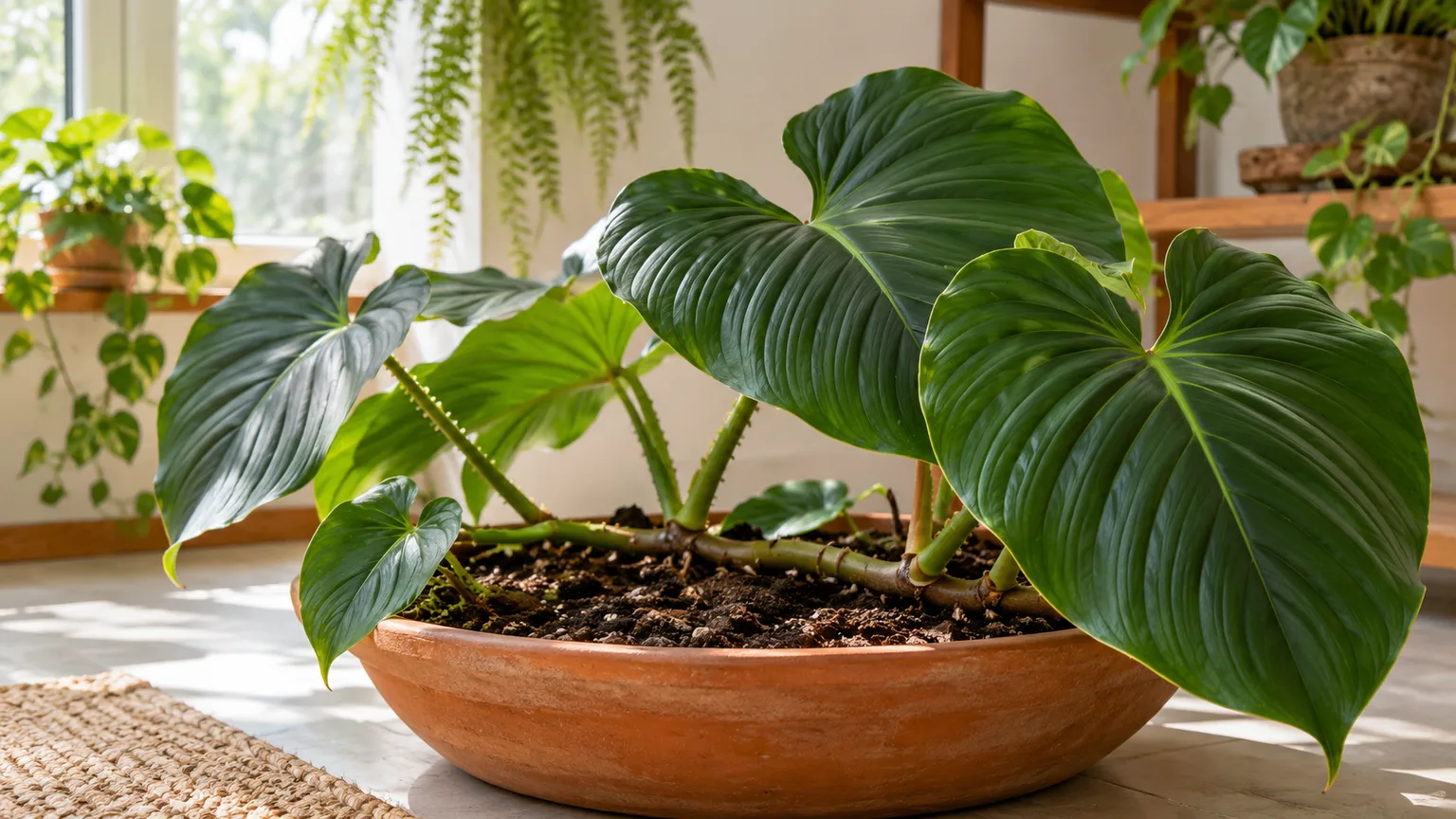
Philodendron plowmanii is a tropical philodendron grown for broad, pleated leaves and a habit that usually spreads sideways along the soil. The most useful care adjustment is to plan for that horizontal stem: give it a stable, wide planting surface, then manage light and water around the actual pot and room rather than following a rigid weekly routine. The species is native to Peru and Ecuador, and the Royal Horticultural Society describes it as a creeping, terrestrial plant suited to bright, diffused light and a wide, shallow container when grown naturally indoors. (RHS plant profile)
Philodendron Plowmanii Care at a Glance
| Care factor | A useful starting point | What to watch |
|---|---|---|
| Growth habit | Let the stem travel horizontally | Leaves and stem need room to extend across the pot |
| Light | Bright, filtered or diffused light | Harsh direct sun can bleach or scorch leaves; dim light slows growth |
| Water | Water thoroughly once the mix has begun to dry | A fixed calendar ignores pot size, season, and room conditions |
| Potting mix | Airy and moisture-retentive, with drainage | A dense, persistently wet mix can deprive roots of air |
| Temperature | Keep it comfortably warm and frost-free | Protect it from cold glass, drafts, and chilly wet soil |
| Feeding | Light feeding during active growth | Pause in winter or when growth has stopped |
| Repotting | Often every two to three years, guided by roots and mix | A larger pot is not automatically better |
These are starting points, not a prescription. A small nursery pot beside a bright window can dry much faster than a broad ceramic planter in a cool room. Check the mix and plant before adjusting the routine.
Recognize Its Crawling Growth Habit
Unlike a vining heartleaf philodendron that climbs from a hanging basket or a self-heading philodendron that forms an upright clump, plowmanii generally develops as a terrestrial crawler. Its stem advances across the surface, with each leaf rising from a point along that stem. That growth pattern is why a wide, shallow pot often works better than a tall, narrow one: it provides usable runway without holding a large column of excess mix below a small root system.
The foliage is substantial and textured, with a heart-like outline, deep green color, and conspicuous ridges following the main veins. A young plant may look less dramatic than a mature specimen, and newly unfurled leaves can differ in color or texture from hardened foliage. Do not judge a plant’s identity from one new leaf alone; compare several mature leaves and the petioles, and check the seller’s label if the distinction matters. Gardenia’s species guide and Katie’s practical comparison at Sprouted in Soil also emphasize the plant’s crawling habit and textured leaves. (Gardenia species guide; Sprouted in Soil care guide)
Plowmanii or Mamei?
Philodendron mamei is a common look-alike, especially when both plants are young. Silver markings across mature mamei leaves are a useful clue, while plowmanii is typically grown for its sculpted green leaves rather than stable silver variegation. Petiole texture can help too: plowmanii often has wavy or rippled petiole edges, whereas mamei petioles are usually smoother. Katie at Sprouted in Soil describes these field marks, but plants vary and a juvenile specimen may not show every feature clearly.
If you are buying a costly plant, ask for photos of the actual specimen, including the stem and the petiole attachment, rather than relying on a single polished leaf photo. Look for a creeping stem and broad, strongly textured leaves, then treat the label as a claim to verify rather than proof. Avoid paying a premium for silver coloration alone; that trait may point to another species or hybrid, and online listings sometimes use plant names loosely.
Give It Bright, Filtered Light
Place plowmanii where it receives abundant indirect light, such as near an east-facing window or set back from a brighter south- or west-facing window. A sheer curtain can soften strong sun. The RHS recommends bright but diffused light for the species, matching the filtered canopy light of its tropical habitat. A few gentle hours of morning sun may be tolerated after gradual acclimation, but hot midday or afternoon rays through glass can overheat the leaf surface.
Low light is not always immediately fatal, but it tends to make growth slower and less compact. If the plant has been in a dark corner for months, move it closer to a window in stages over a week or two; a sudden jump into direct sun can damage leaves that had adapted to shade. Clean dust from the broad foliage with a damp, soft cloth so the leaf surface stays clear, and rotate the container occasionally if one side consistently faces the window.
Read the New Leaves Before Moving the Plant
Use fresh growth as your feedback. If new leaves are smaller than earlier ones, the stem stretches between leaves, or growth leans strongly toward the window, first check whether the light is adequate and whether the roots are healthy. A pale or papery patch concentrated on the sun-facing side is more consistent with light scorch than a watering problem. Change one condition at a time, then give the plant several weeks to show a response; a mature leaf will not regain its original shape or color after damage.
Choose a Wide, Stable Container
A crawler needs a surface it can cross. Choose a pot that is wider than it is tall, with drainage holes, and orient the existing stem along one side so the growing end has room to extend across the mix. A rectangular planter or a broad round pot can work; the key is a balanced root zone and enough horizontal space. The RHS specifically recommends a wide, shallow container for a naturally creeping plant. (RHS plant profile)
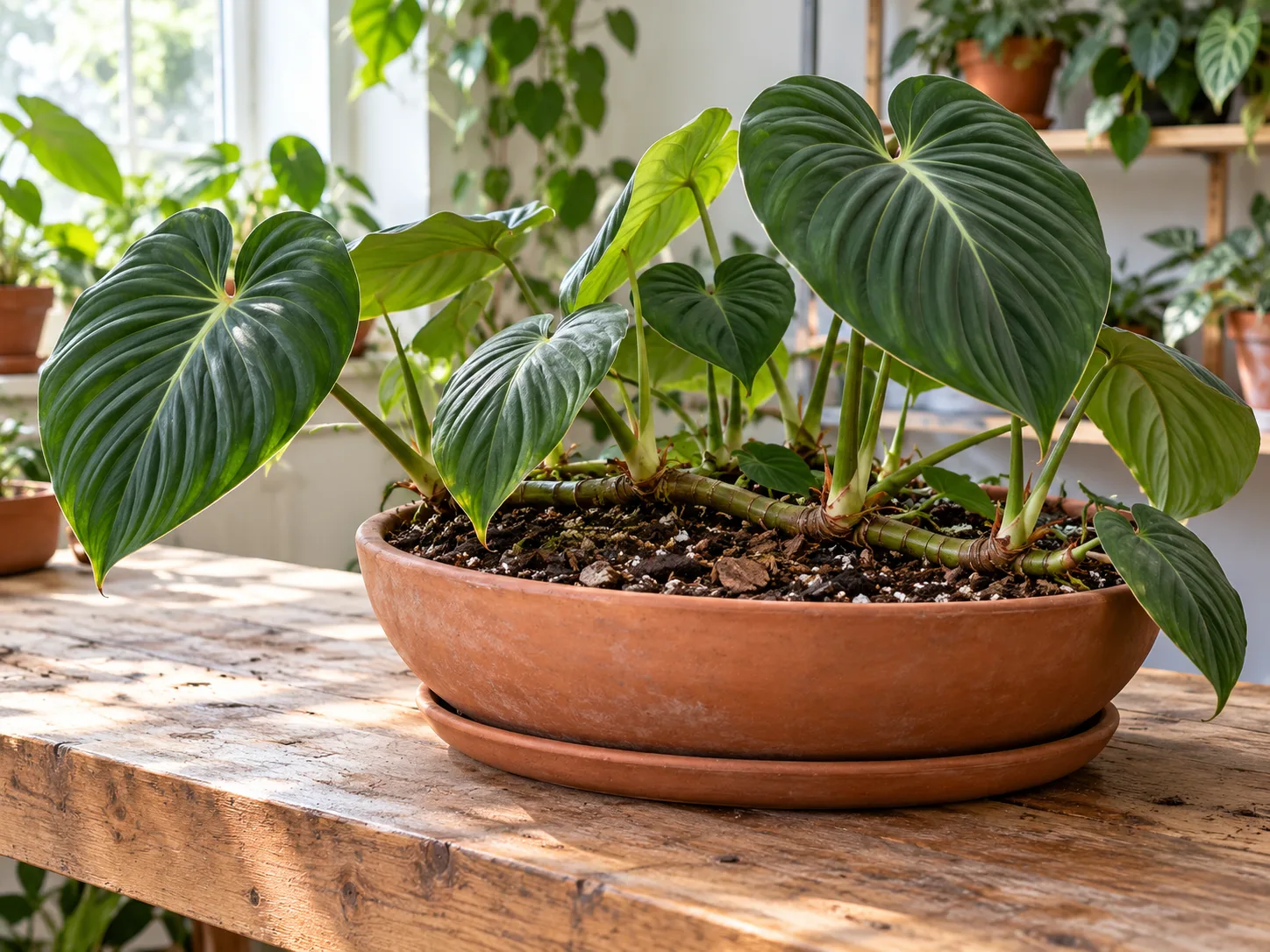
Do not jump to an oversized planter to make room for the eventual mature plant. A large volume of unused mix can stay wet long after the roots have taken up what they need. When repotting, choose a container only modestly larger than the root mass, and make sure it is heavy or broad enough not to tip as leaves extend outward. If you prefer a decorative pot without drainage, keep the plant in a draining nursery pot inside it and empty any water that collects after watering.
Build an Airy Mix That Retains Some Moisture
Plowmanii likes steady access to moisture, but the roots still need air between waterings. A practical starting blend is two parts quality indoor potting mix, one part orchid bark, and one part perlite or pumice. The potting mix retains some water; bark and perlite open the structure so it does not collapse into a dense, slow-drying mass. Adjust the proportions to your conditions: use a little more coarse material in a cool, humid home, and a little more moisture-retentive mix in a hot, dry room.
There is no single mandatory recipe. The RHS recommends a well-drained, loam-based, peat-free medium for plants grown under glass, while Virginia Cooperative Extension explains that fine and fibrous ingredients hold more water and less air than coarser bark or perlite. The right balance depends on the particle sizes, pot shape, light, and how quickly your room dries. (RHS plant profile; Virginia Cooperative Extension: container watering)
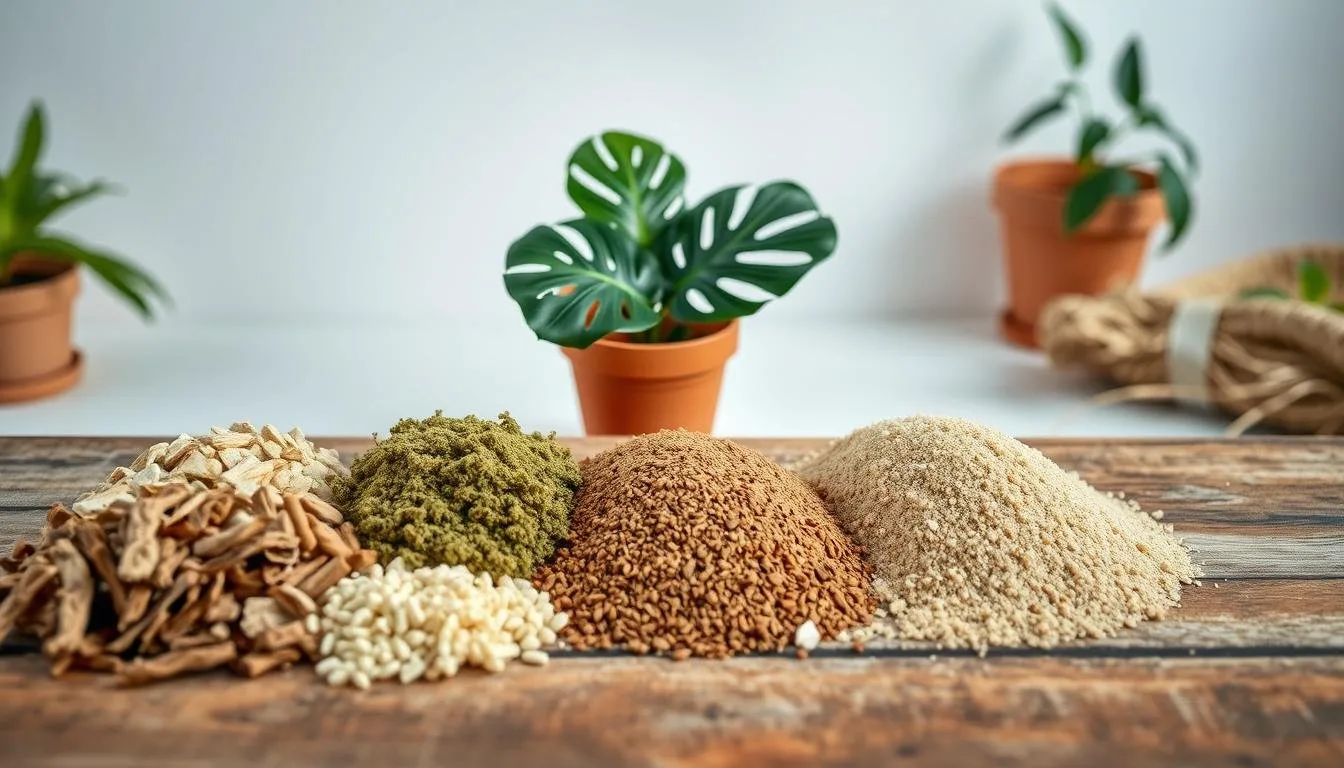
Avoid unamended garden soil indoors; it can compact in a container and may introduce pests or disease. Likewise, do not make the mix so coarse that it dries fully a day after watering. After you water, the medium should wet evenly, drain excess water, and stay lightly moist for a period without remaining saturated. If water races through a bone-dry mix while the center stays dry, re-wet it slowly in several passes rather than assuming the plant needs less water.
Water by Checking the Root Zone
Do not water on a fixed weekday. Check the upper couple of inches of mix with a finger or wooden stick, then lift the pot to learn what it feels like when the root ball is damp versus nearly dry. When the surface layer has begun to dry and the container feels lighter, water thoroughly until excess runs from the drainage holes. Empty the saucer or cachepot; roots should not sit in runoff. Virginia Cooperative Extension notes that “overwatering” is mainly a problem of watering too frequently, not simply applying a generous amount at one time. (Virginia Cooperative Extension: container watering)
A number of variables change the interval: light level, temperature, pot material, root mass, mix texture, and season. A plant in active growth under bright light may need water much sooner than the same plant in a cool winter room. Use the pot’s weight and a probe below the surface to avoid a common trap: the top can look dry while the lower root zone remains wet. If the lower mix is still cool and damp, wait and check again rather than pouring in a small amount every few days.
If you have let the mix dry until it repels water, apply water slowly, pause, then repeat so the center has time to absorb it. If the pot remains heavy for many days and the plant yellows or droops, do not try to solve the problem by watering more. Check drainage, root condition, and whether the pot is much larger than the root system. In winter, reduce watering as growth slows, but do not leave the root ball bone-dry for an extended period.
Keep It Warm and Use Humidity as a Fine-Tuning Tool
Give the plant a warm, steady location away from cold drafts, heating vents, and air conditioners. The RHS warns that philodendrons dislike temperatures below about 15°C (59°F), and plowmanii should be protected from cold exposure and frost. If you move a potted specimen outdoors in warm weather, acclimate it in shade first, keep it out of harsh midday sun, and bring it back inside before nights turn chilly. Do not use outdoor hardiness-zone labels as a promise that a container plant will withstand freezing weather.
Average household humidity is usually a reasonable place to start. Higher humidity may help a new leaf unfurl cleanly, but it cannot compensate for dim light, damaged roots, or a waterlogged mix. If edges repeatedly crisp while the pot dries quickly and the room is very dry, a clean humidifier can help. Leave space for air movement, and avoid constantly wetting the leaves; repeated misting raises humidity only briefly and leaves foliage damp without changing the root environment.
Fertilize Only While It Is Growing
Feed modestly during the active growing season, following the rate on a balanced houseplant fertilizer label. The RHS suggests monthly feeding from April through September under glass, then stopping in winter when growth slows. In a home, let the plant’s activity guide the schedule: if it is not producing new leaves because light and temperature have dropped, more fertilizer will not force healthy growth. A half-strength liquid feed is a cautious starting point if the label permits dilution, especially for a slow-growing plant in a small pot.
Do not fertilize a completely dry root ball or stack several products to chase bigger leaves. Excess salts can injure roots and show up as brown tips or a pale crust on the mix. If that happens, pause feeding and flush the medium with clean water when it can drain freely. Wait until growth resumes before restarting at a lower frequency; fresh potting mix may already contain nutrients, so check its label first.
Let It Crawl or Train It Deliberately
A moss pole is optional, not a basic requirement. The plant’s usual form is horizontal, so a wide container or low plant table suits it naturally. If vertical space is limited, the RHS says philodendrons can be trained to climb indoors; provide a stable support, secure the stem loosely, and avoid forcing a heavy mature plant upright. Do not mistake a pole for a substitute for light or for a root system that needs attention.
As leaves expand, leave enough room that they do not rub continuously against walls or a nearby window. Turn the pot only when the plant’s position is becoming one-sided, and guide the growing end without sharply bending the stem. Remove an old, fully yellow or damaged leaf with clean snips near its attachment, but keep healthy leaves: they are the plant’s energy source while the crawler establishes itself.
Repot When the Roots or Mix Call for It
The RHS gives two to three years as a typical repotting interval, but roots and mix condition are better signals than a date. Check when roots circle densely around the pot, emerge through drainage holes, or the mix has decomposed and stays wet much longer than before. If water runs through instantly and the root ball dries unusually fast, the plant may also be root-bound. A healthy plowmanii can remain in the same planter for some time if the medium still drains and the roots have room.
Repot during active growth if possible. Slide the root ball out, loosen only the outer roots that are tightly circling, and trim roots that are soft, hollow, or foul-smelling with clean shears. Firm roots are not necessarily white; color alone is a weaker test than texture and smell. Set the stem at its former depth in fresh mix, leaving the growing point above the medium, then water once to settle the mix and let it drain. Avoid feeding immediately if the new medium includes fertilizer.
Propagate From a Node-Bearing Stem Section
Propagation requires a viable growth point. A detached leaf or petiole without a node will not normally make a new plant, even if it stays green for a while. Look along the creeping stem for a joint where a leaf attaches and a bud or aerial root may be present. With a clean, sharp blade, take a short section that includes at least one healthy node; preserving a leaf is useful, but the node is essential. The RHS lists stem-tip or leaf-bud cuttings as propagation methods for the species. (RHS plant profile)
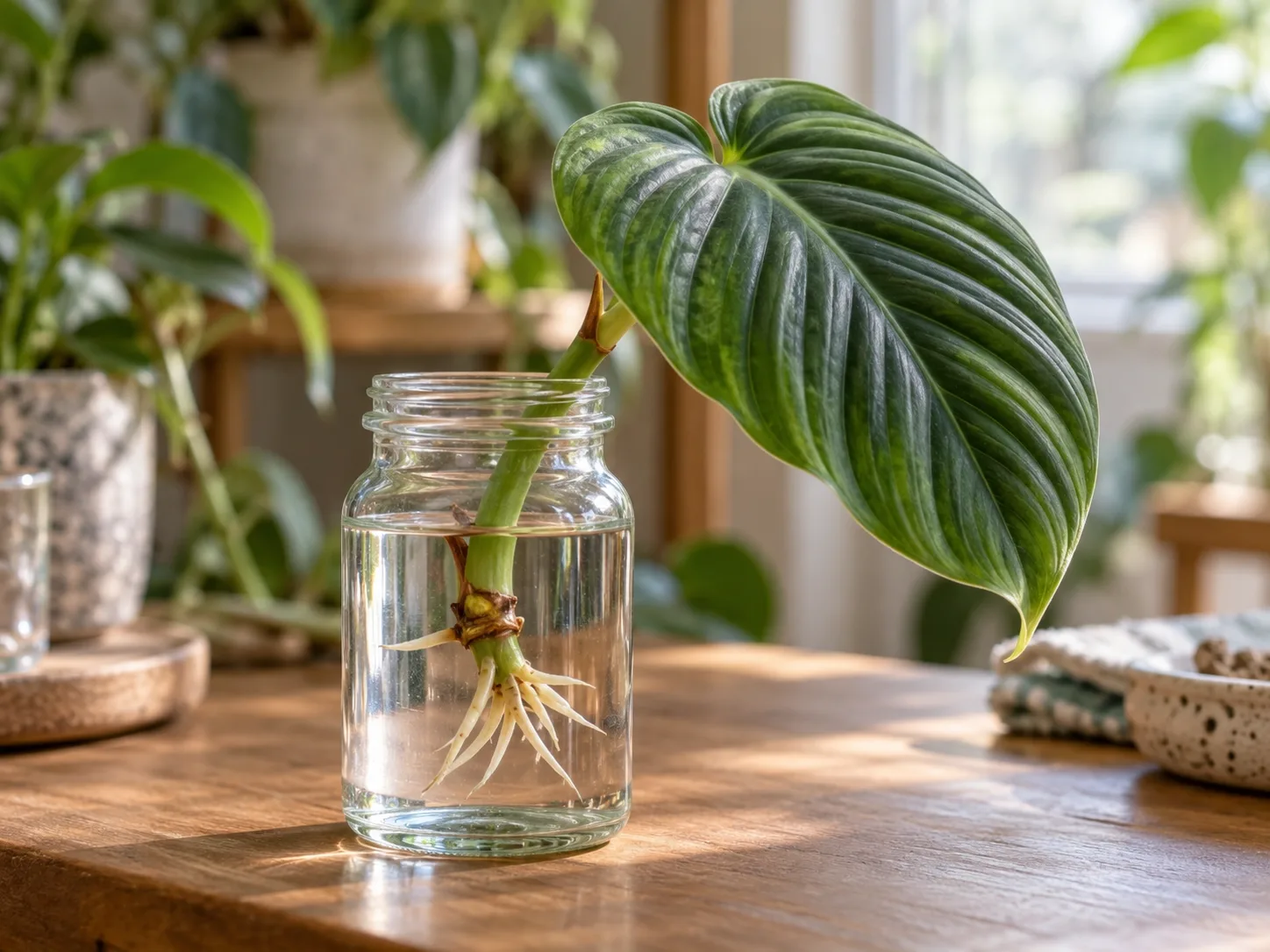
You can root a viable cutting in water, damp sphagnum, or a small pot of airy propagation mix. In water, keep the node submerged but the leaf above the surface, and refresh the water if it becomes cloudy. In moss or mix, keep the medium evenly damp rather than saturated and check that the node has not dried out. Place the cutting in a warm spot with bright indirect light. Keep it out of harsh sun, which can overheat a small cutting quickly.
Wait for several roots to develop and branch before potting up; a single short nub is easier to damage during transfer. Move it into a small draining pot rather than directly into a large display planter. Keep the new medium lightly and evenly moist while water-grown roots adapt, then return to the same dry-down checks used for the parent plant. If the cutting turns soft or black at the node, remove mushy tissue with a clean blade and restart in a cleaner, less wet medium. Timing varies with warmth, light, and cutting maturity, so do not treat a calendar estimate as proof of success or failure.
Choose Water, Moss, or Potting Mix
Water makes root development easy to see and is convenient when you have just one cutting. Sphagnum moss holds moisture around the node while allowing air, but it needs frequent checks so it neither dries out nor becomes sodden. A small pot of airy mix avoids a later transfer from water roots, though it is harder to see progress. Choose the method you can keep consistently moist and clean; the node and stable conditions matter more than the rooting medium.
If the plant has several healthy growing points, division of an established creeping stem may be safer than taking many tiny cuttings. Each separated piece still needs viable roots or a node capable of producing them. Do not divide a stressed plant just to multiply it; let it recover first, because each wound and reduced root mass raises the risk of setbacks.
Understand Slow Growth and Diagnose Leaf Changes
Plowmanii is not a fast-filling vine. A healthy plant may spend a long stretch establishing its roots or producing one leaf at a time, especially after shipping, repotting, or a move to a different window. If the leaves stay firm and the root zone smells fresh, patience is usually better than repeatedly changing the soil, fertilizer, and location. Compare the newest leaf with the previous one over a few months rather than expecting visible growth every week.
When growth stalls and the plant looks weaker, inspect in this order: light, moisture and drainage, temperature, pests, then feeding. Low light slows photosynthesis; soggy roots cannot function normally; cold conditions slow growth; pests sap vigor. Fertilizer comes last because an underfed-looking plant in low light or damaged roots will not benefit from stronger feeding. If the plant is stable but simply slow, maintain consistent conditions through a full growing season before making another major change.
Read Yellowing, Brown Edges, and Spots in Context
One older leaf yellowing near the base can be normal aging. Several leaves yellowing together calls for a root-zone check. A heavy pot with persistently wet mix points toward poor drainage or too-frequent watering; a very light pot and dry mix suggest underwatering. If moisture seems appropriate, inspect the light exposure and leaf undersides before assuming a nutrient deficiency. Do not remove every yellow leaf until you have identified whether the pattern is isolated or spreading.
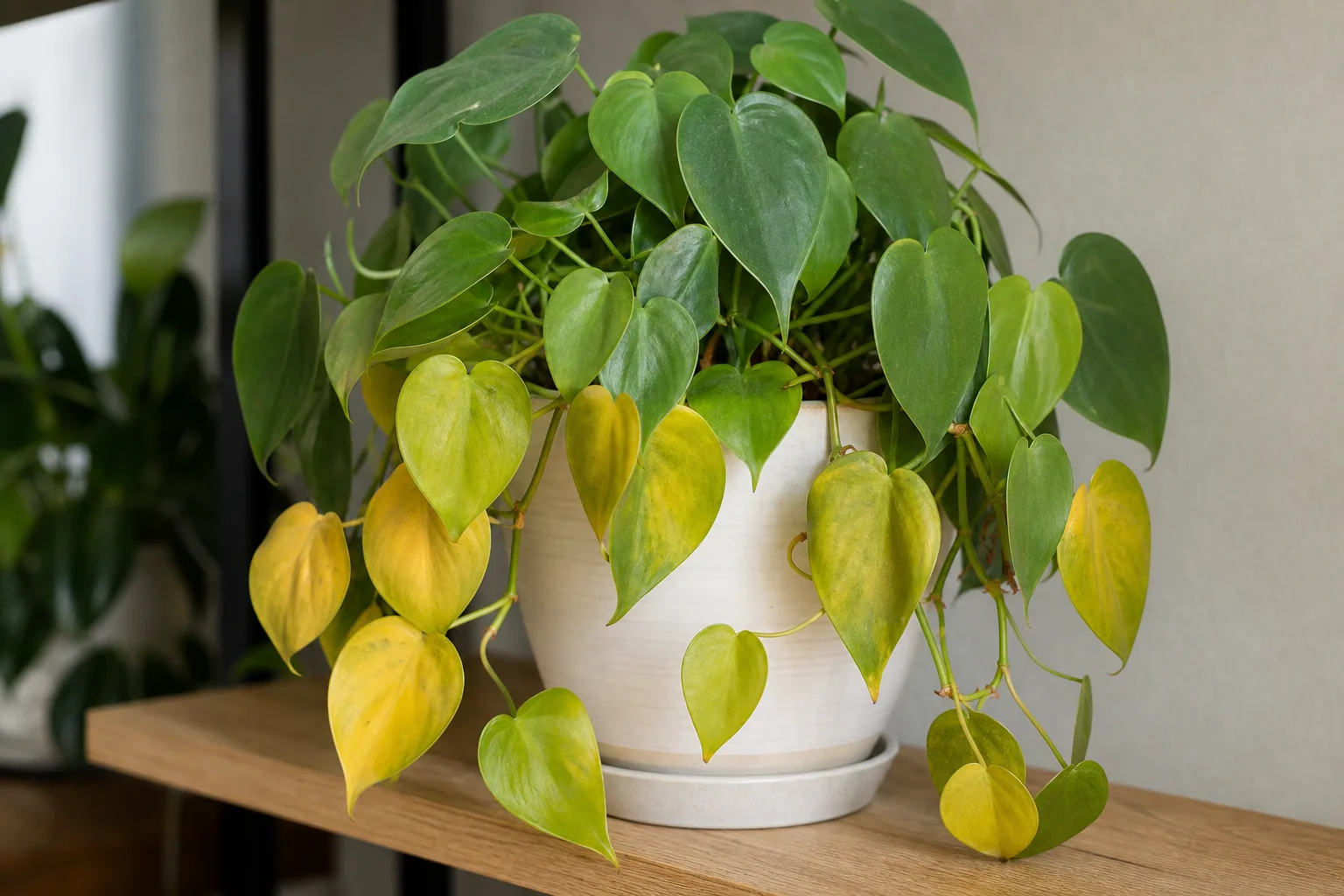
Dry brown tips or margins can follow repeated dry-outs, low humidity, excess fertilizer salts, or hot direct sun. A sharply bleached patch facing the window suggests scorch, while irregular wet-looking lesions that expand may indicate disease or leaf injury. Keep leaves dry overnight, isolate a plant if spotting spreads, and remove badly affected tissue with clean tools. Do not spray a pesticide or fungicide by default: first determine whether the problem is an insect, a cultural stress, or a spreading infection.
Prevent Pests and Root Problems
Inspect new plants before placing them beside a collection. Check the undersides of leaves, folds where petioles meet the stem, and the creeping stem itself for mealybugs, scale, mites, or aphids. Sticky residue, fine webbing, cottony clusters, and repeated speckling are clues, but use a magnifier if the pest is small. Isolate an infested plant, remove visible insects, and follow the label if you use a product approved for indoor plants. Test sprays on a small area first and keep them away from children and pets while wet.
Fungus gnats often indicate that the mix remains wet for too long; reducing excess moisture and improving drainage is more useful than repeatedly treating the adult flies alone. Root rot is a condition to suspect when the plant droops in wet soil, the pot stays heavy, and roots turn soft or smell sour. Remove rotted roots and replace collapsed media only when inspection supports that diagnosis. A dry upper layer by itself does not prove the lower root zone is dry, so check below the surface before watering or repotting.
Keep the Plant and Cuttings Away From Pets and Children
Philodendrons contain insoluble calcium oxalate crystals that can irritate the mouth and digestive tract when chewed. The ASPCA describes signs such as drooling, retching, vomiting, and oral irritation, with more serious swelling or breathing difficulty possible in severe exposures. Keep the foliage, pruning debris, and propagation cuttings out of reach of cats, dogs, and young children; a dangling leaf can be tempting even if the plant is otherwise out of the way. (ASPCA: houseplants and pets)
Wear gloves if you are sensitive to plant sap, and wash your hands after pruning or repotting. If a pet chews the plant, contact a veterinarian or animal poison service for case-specific advice; seek urgent veterinary care if breathing or swallowing is difficult. Do not rely on a general online symptom list to decide that an exposure is harmless.
Conclusion
Philodendron plowmanii grows best when you respect what makes it different: it usually crawls, needs horizontal room, and grows at a measured pace. Give it bright filtered light, a draining mix that retains some moisture, and water only after checking the root zone. A node-bearing cutting can produce a new plant, while regular observation—not a rigid schedule—helps you catch stress early. Keep the foliage and cuttings away from pets and children, and let steady conditions do the work.



