Lemon Meringue Pothos Care: Light, Water & More
Learn Lemon Meringue pothos care with clear light, watering, soil, feeding and troubleshooting advice—plus a key note on the cultivar’s propagation patent.
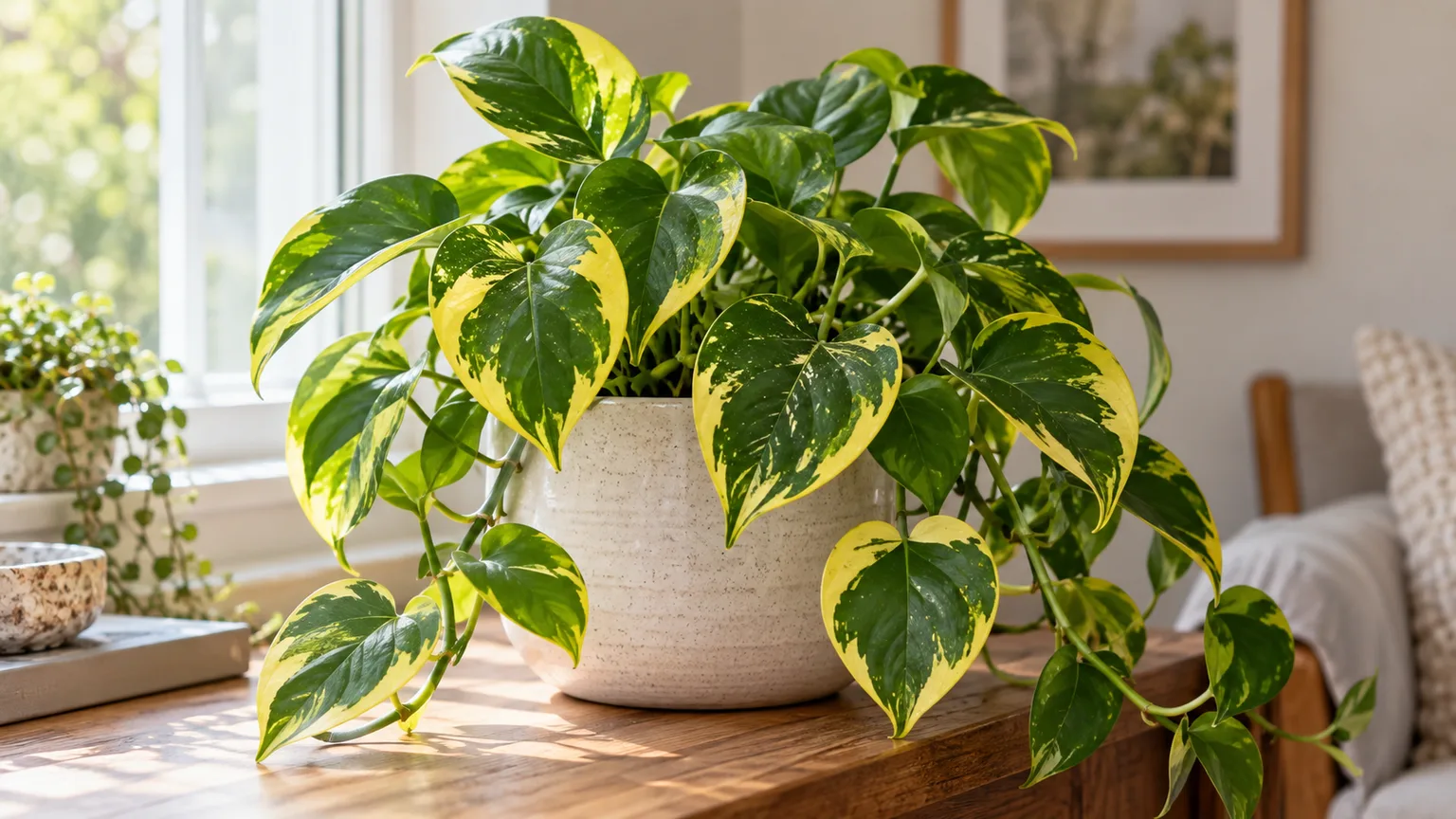
Lemon Meringue pothos is grown for a particular contrast: dark-to-medium green leaf centers edged with bright golden yellow. It is a named cultivar of Epipremnum aureum, not a separate species, so its everyday needs resemble other pothos. The part worth getting right is preserving healthy new growth without treating low light, dry soil, or a patent label as interchangeable care issues.
Place it where it gets bright, indirect light, then water when the upper couple of inches of mix have dried rather than on a weekly schedule. Give the roots a draining pot and a mix that does not stay soggy. One cultivar-specific detail changes the usual pothos conversation: Costa Farms identifies Lemon Meringue as a patented variety and states that propagation is prohibited, so generic cutting instructions should not automatically be applied to it.
Lemon Meringue pothos care at a glance
| Care decision | A practical starting point |
|---|---|
| Light | Bright, indirect light; a few feet from a bright east or west window is a useful starting placement. |
| Water | Check the top 1–2 inches of mix; water thoroughly when that layer is dry and let the pot drain. |
| Mix | Use a loose indoor potting mix amended with chunky bark and perlite or pumice. |
| Pot | Use a container with open drainage holes; choose only a little larger when repotting. |
| Temperature | Keep it in a comfortable, warm room away from cold glass and heating or air-conditioning blasts. |
| Humidity | Average home humidity is usually workable; extra humidity is optional, not a substitute for good watering. |
| Feeding | Feed modestly during active growth and never exceed the label rate. |
| Propagation | Check the current patent and licensing label for this named cultivar; Costa Farms states propagation is prohibited. |
Think of these as cues, not a recipe tied to the calendar. A small pot in a bright room dries faster than a large pot in a cool, dim corner, and even two plants on the same shelf can use water at different rates. Costa Farms’ cultivar-specific guide suggests watering after the top couple of inches dry and describes the plant as tolerant of low light while variegation can fade there; NC State Extension gives similar species-level advice to provide bright indirect light and let a well-drained medium dry between waterings (Costa Farms; NC State Extension).
Identify the cultivar before you troubleshoot it
Lemon Meringue is a sport, or naturally occurring mutation, of Global Green pothos. Costa Farms describes the cultivar as green foliage with irregular golden-yellow variegation, often concentrated along the margins, with green centers. Its plant patent describes the named cultivar, while the breeder’s current profile says it grows like other pothos and was selected for its distinctive gold pattern (Costa Farms’ plant finder; U.S. plant patent PP34,521).
Do not use one unusually pale or green leaf as a definitive identity test. Variegation can vary from leaf to leaf and shift in intensity as light changes; Costa Farms notes that the color may be less intense in lower light and especially on older foliage. If you are buying a plant, compare several leaves and look at the overall pattern across the vine. A label and a seller’s provenance can matter more than a single photograph, especially when young leaves have not fully hardened.
Lemon Meringue vs. Global Green and other lookalikes
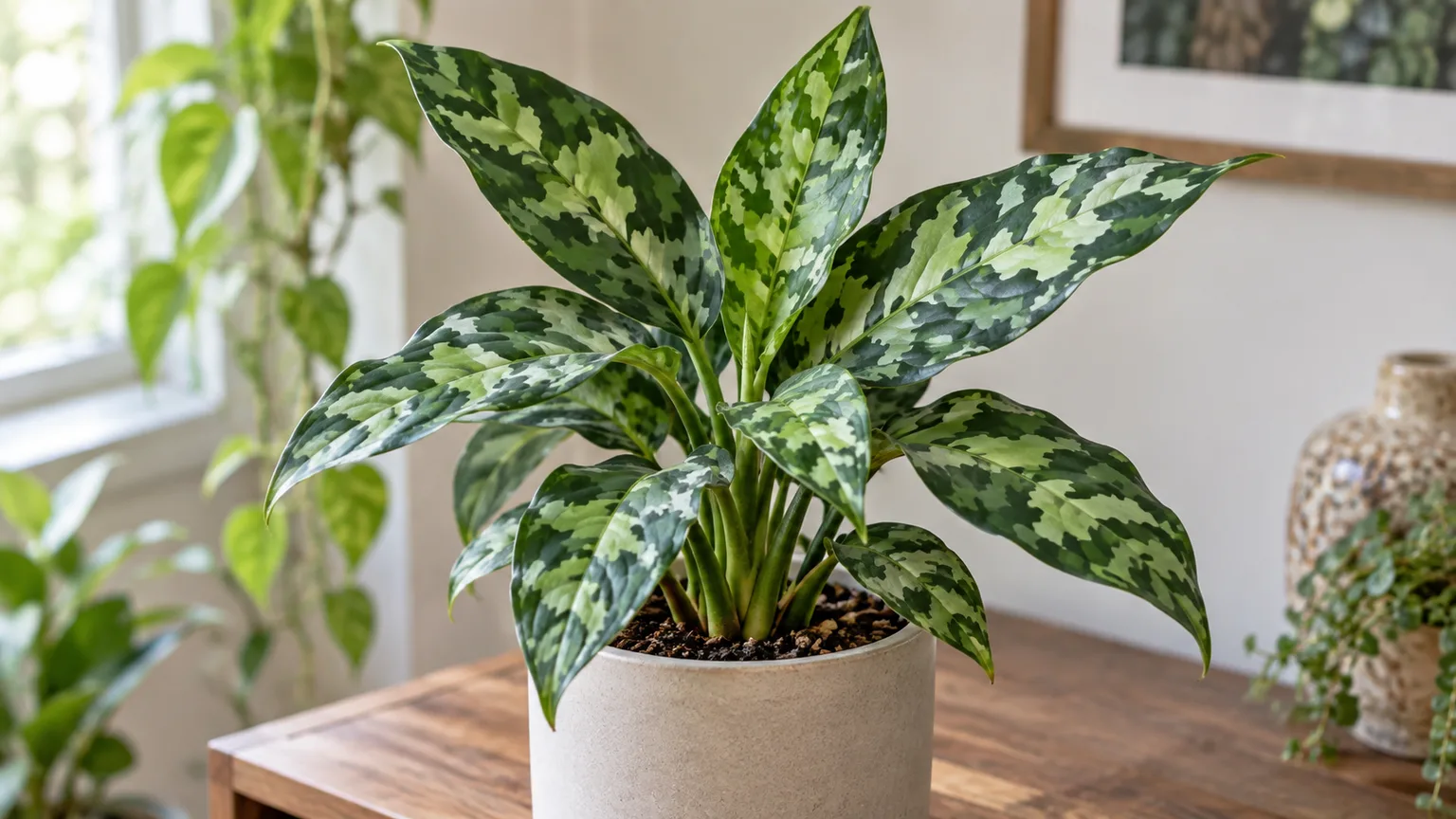
The most useful visual comparison is with Global Green, the cultivar from which Lemon Meringue arose. Costa Farms describes Global Green as green-on-green, with lighter and darker green fields, while Lemon Meringue carries brighter golden margins. Emerald pothos also has green-on-green contrast; Golden pothos usually has yellow splashes or marbling rather than the Lemon Meringue edge-and-center look. These distinctions are tendencies, not a promise that every leaf will be uniform.
| Pothos type | Typical foliage cue | What to remember |
|---|---|---|
| Lemon Meringue | Green centers with bright golden-yellow margins or irregular gold areas | Look for the overall gold-edged pattern across several leaves. |
| Global Green | Dark and light green areas, without the same gold contrast | It is the closest lookalike and the source cultivar. |
| Emerald | Green-on-green patterning | Color can look subtle under some indoor light. |
| Golden | Yellow, cream, or gold streaks and marbling over green | A familiar pothos pattern, but not the same named cultivar. |
| Neon | Mostly bright chartreuse or yellow-green foliage | The whole blade tends to read brighter, rather than having a gold edge around a green center. |
NC State Extension describes E. aureum broadly as a glossy, heart-leaved vine with yellow or other variegation and notes that its container-grown foliage generally retains the juvenile shape. That species profile is useful for general growth expectations, but it does not identify every new commercial cultivar. When a seller cannot document the name, treat the plant as a variegated pothos until its foliage and provenance support a more specific label.
Give a new plant a calm first two weeks
A plant that has just been shipped or moved from a greenhouse has already had a change in light, temperature, and airflow. Put it in a stable spot with bright filtered light, inspect the leaf undersides and stem joints, and let it adjust before pruning, fertilizing, or changing its potting mix. If the nursery pot drains and the mix is not sour or waterlogged, there is rarely a benefit to repotting on arrival just because the decorative cachepot is unattractive.
Check the moisture before you water it. Growers sometimes ship plants in a damp medium, and adding water because the calendar says “watering day” can keep the root ball wet for too long. After moving it, give it several days in one position rather than carrying it from a dim shelf to direct sun and back. A few older leaves may yellow as the plant adjusts; look for whether the issue spreads to new leaves or is accompanied by wet soil, a limp stem, or pests.
If you have other houseplants, keep a new arrival separate while you inspect for insects. This is a simple quarantine, not a diagnosis: check along the petioles, on the undersides of leaves, and where stems meet the crown. Once it has settled, use the new growth and the pot’s dry-down rate to tune its permanent location and routine.
Place it in bright, indirect light
Bright, indirect light is the best starting place when you want Lemon Meringue to grow well and show its gold pattern. An east-facing window often supplies gentler morning light; a west-facing window can work if the plant sits back from harsh late-afternoon rays or has a sheer curtain. Costa Farms suggests placing the cultivar roughly 3–4 feet from an unobstructed east- or west-facing window, while noting that a grow light can substitute where natural light is limited (Costa Farms).

If the room is dim, the plant may continue to live, but expect slower growth and less vivid contrast. Watch the newest leaves rather than waiting for old leaves to change: a few new leaves that emerge noticeably greener, smaller, or farther apart are more useful evidence of insufficient light than the color of one mature leaf. Move the pot closer to the window in small steps, or add a grow light on a consistent timer; sudden exposure to hot direct sun can scorch foliage that was grown in shade.
A bright room is not the same as a sunny leaf. Direct sun through glass can create pale, tan, or crisp patches, especially on leaves that face the window for hours. If the plant gets a few hours of mild morning sun and remains unmarked, it may tolerate that placement; if a dry, bleached patch forms only on the window-facing side, filter the light or move it back. Epic Gardening’s pothos-care overview similarly warns against the two extremes of very dark rooms and hot direct exposure, a useful reminder that “tolerates low light” does not mean “keeps its best color in low light” (Epic Gardening).
Water by dry-down, not by calendar
Check the mix at the surface and just below it. When the upper 1–2 inches feel dry, the pot is lighter than it was after watering, and the deeper mix is no longer wet, water slowly until excess drains from the bottom. Empty the saucer or cachepot after the pot has finished draining; roots need air as well as moisture. Costa Farms gives the same top-couple-of-inches cue for Lemon Meringue, and NC State Extension advises allowing the well-drained potting medium to dry between waterings (Costa Farms; NC State Extension).
Keep Your Plants Alive describes a shallower top-inch check for its own Lemon Meringue plant. That variation is a useful reminder to check the deeper mix and the weight of your actual pot instead of treating one measurement as a universal threshold (Keep Your Plants Alive).
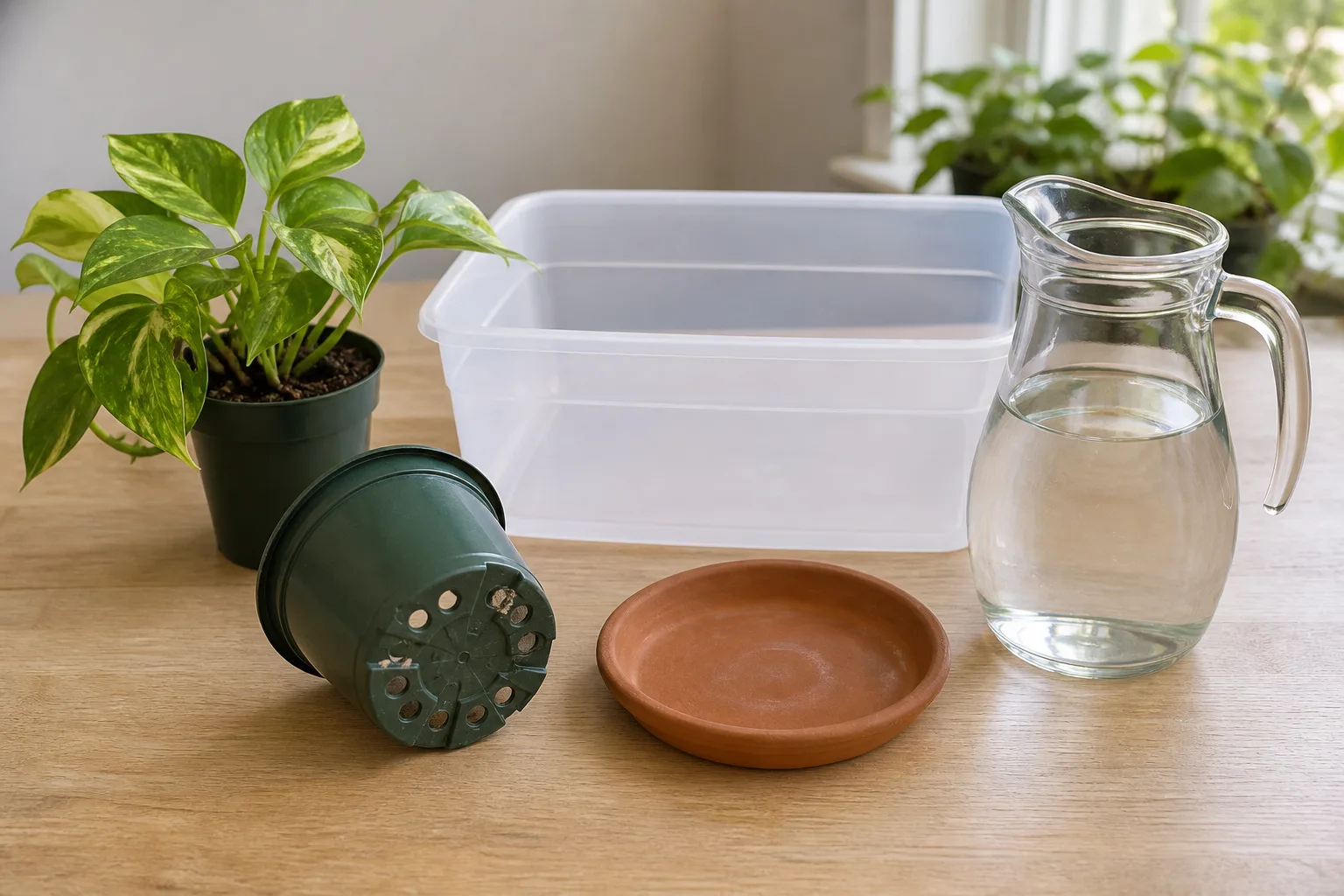
How long that takes depends on the plant’s location and container, not a universal schedule. Bright light, active growth, warm rooms, a small pot, or porous terracotta usually speeds dry-down. Lower light, cool temperatures, a larger plastic pot, a dense mix, and a cachepot that traps runoff slow it. Keep a simple note for a few waterings if you are learning the plant; the aim is to learn how your own pot behaves, not to force it into a seven-day routine.
Avoid waiting for sustained wilt. Drooping can follow dry soil, but it can also signal root damage or soggy mix, so it is not a reliable stand-alone watering reminder. If water runs down the sides without wetting the root ball, set the nursery pot briefly in shallow water, then let it drain fully. If the mix remains wet for many days and leaves yellow or drop, inspect the drainage and roots instead of adding more water.
Choose airy mix and a draining pot
A container-grown pothos needs moisture that is available to roots but does not exclude air for long stretches. Start with a quality indoor potting mix and loosen it with perlite or pumice and small orchid-bark pieces. A practical starting blend is two parts potting mix, one part perlite or pumice, and one part fine bark by volume; adjust the proportions if your home is unusually humid or the mix stays wet too long. The goal is an even, airy root zone, not a special “Lemon Meringue” soil formula.
Use a pot with at least one open drainage hole. Decorative pots without holes can still work as outer cachepots if the plant remains in a draining nursery pot and you pour out runoff after watering. Skip a layer of rocks at the bottom as a substitute for drainage: it does not remove excess water from the root zone. A pot that is much larger than the root ball can hold more wet mix than the plant can use, so size up only when the roots justify it.
When choosing a bagged mix, look for one that crumbles and drains rather than one that compacts into a muddy plug after watering. If it dries in a day or two, the mix may be too coarse or the pot too small for your conditions; if it stays heavy and cool for a week in a warm bright room, reduce the water-holding portion or improve drainage. Practical troubleshooting from Epic Gardening emphasizes that poorly drained, compacted soil can keep pothos roots oxygen-starved; the useful lesson is to change the mix and container together rather than repeatedly “fixing” wet soil by withholding water indefinitely (Epic Gardening).
Keep temperatures steady and humidity practical
Lemon Meringue is an indoor tropical vine, so aim for a comfortable room rather than a special greenhouse climate. A warm, stable room is more useful than chasing an exact humidity number. Costa Farms says the cultivar tolerates lower household humidity and does best in average to above-average humidity; it suggests clustering plants or using a humidifier in very dry homes (Costa Farms).
Keep foliage and roots away from cold drafts, winter window glass, heating vents, and air conditioners that blow directly on the plant. If you move it outside during warm weather, acclimate it gradually to outdoor brightness and bring it back indoors well before nights turn chilly. Outdoor sun and wind can dry the pot much faster than an indoor shelf, and a sudden transition to full sun can burn leaves.
Misting is not a dependable way to raise room humidity; its effect is brief and can leave foliage wet without changing the room’s underlying conditions. If dry air is causing persistent edge damage and the room humidity is low, measure it with a hygrometer and use a clean humidifier if appropriate. Do not keep the mix saturated to compensate for dry air. Water and air humidity are different inputs.
Feed lightly while it is growing
Lemon Meringue does not need a strict monthly fertilizer routine to remain healthy. Costa Farms says the plant can be fed once or twice a year or according to the product’s package directions, and it cautions growers not to exceed those instructions. For a plant growing in fresh potting mix, start conservatively during spring and summer and pause or reduce feeding when growth slows in a cool or dark season (Costa Farms).
A balanced houseplant fertilizer used at the labeled rate is easier to manage than stacking multiple products or adding a large dose in hopes of forcing bigger leaves. Water the plant normally before applying a concentrated liquid feed if the mix is very dry, and do not fertilize a plant whose roots may be rotting or which has just been severely stressed. Pale foliage is not automatically a nutrient deficiency; first check light, roots, moisture, and pests.
If a crust forms on the soil surface or pot rim, or leaf tips brown after repeated feeding, soluble salts may be building up. Stop feeding and flush the mix with plain water, allowing it to drain completely. Resume only after the plant is stable and only if there is a clear reason to feed. Fertilizer cannot compensate for inadequate light or a damaged root system.
Shape the vines: trail, climb, or prune
Choose a display that suits your room. A hanging basket or high shelf lets the stems trail; a trellis or moss-covered support lets the plant climb. Pothos form aerial roots along their stems, and NC State Extension notes that a supported Epipremnum aureum can produce larger mature leaves when conditions allow. Costa Farms likewise says Lemon Meringue can be trained on a pole or totem and may develop larger leaves when it grows vertically in warm, bright conditions (NC State Extension; Costa Farms).
A support is optional. It can add height and encourage more upright growth, but a moss pole that you want roots to enter must stay appropriately moist and takes more attention than a dry trellis. If the plant is mainly decorative, a loose tie on a simple trellis or letting the vines trail is perfectly reasonable. Keep the support stable and avoid forcing stems into a sharp bend.
Prune only when a vine is too long, damaged, or sparse near its base. Use clean, sharp shears and cut just above a leaf node to keep the remaining stem neat. Regular light tip-pruning can encourage branching over time, although no single trim instantly fills an empty pot. If a plant has long bare stretches, improve light and check root health before pruning heavily; repeated cuts cannot solve the condition that caused weak growth. Epic Gardening’s pothos pruning and care guidance also emphasizes using a clean cut and matching the pruning goal to whether you want a fuller basket or longer trailing stems (Epic Gardening).
What to know about propagating a patented cultivar
Many pothos are easy to root from stem sections that contain a node, which is why general pothos articles often include water- or soil-propagation steps. That general biology does not settle whether a particular named cultivar may be propagated. Costa Farms’ current Lemon Meringue growing page identifies the variety as protected by U.S. plant patent PP34,521 and says propagation is prohibited; Costa’s explainer describes why patented plant tags use that wording (Costa Farms cultivar guide; Costa Farms plant-patent explainer; USPP34,521 record).
For that reason, this guide does not provide a cutting recipe for Lemon Meringue. Do not root, sell, swap, or distribute cuttings from a plant carrying this cultivar name unless you have verified current patent status and permission for the relevant location. Patent rights are territorial and can change; a retailer’s stock or a social-media tutorial is not a substitute for checking the plant label and rights holder’s guidance. If you want another plant, purchase from a seller who can document the cultivar and its propagation rights.
The restriction is about propagating the named cultivar, not a blanket ban on every pothos. NC State Extension notes that the broader species roots readily in water, but that general species fact should not be read as permission to reproduce a protected selection. You can still prune Lemon Meringue for shape; dispose of the removed material responsibly rather than treating it as a starter plant.
Repot when the roots call for it
Do not repot only because a calendar says one or two years have passed. Slide the root ball out gently and look for roots circling densely around the outside, a mass that holds the pot’s shape, or water that runs through quickly because little mix remains. Roots emerging from a drainage hole can be a clue, but one visible root by itself is not an emergency. A plant that grows slowly in winter may simply be resting rather than asking for a larger home.
When repotting is needed, choose a pot only one size larger, with drainage holes. Loosen a few circling roots and replace depleted or compacted mix; do not strip healthy roots aggressively. Keep the crown and stem bases at the same soil level so they do not sit buried and wet. Water once to settle the mix, drain the pot, then resume checking moisture by touch. A substantially oversized pot can lengthen the wet period around the roots, which is the opposite of what a stressed plant needs.
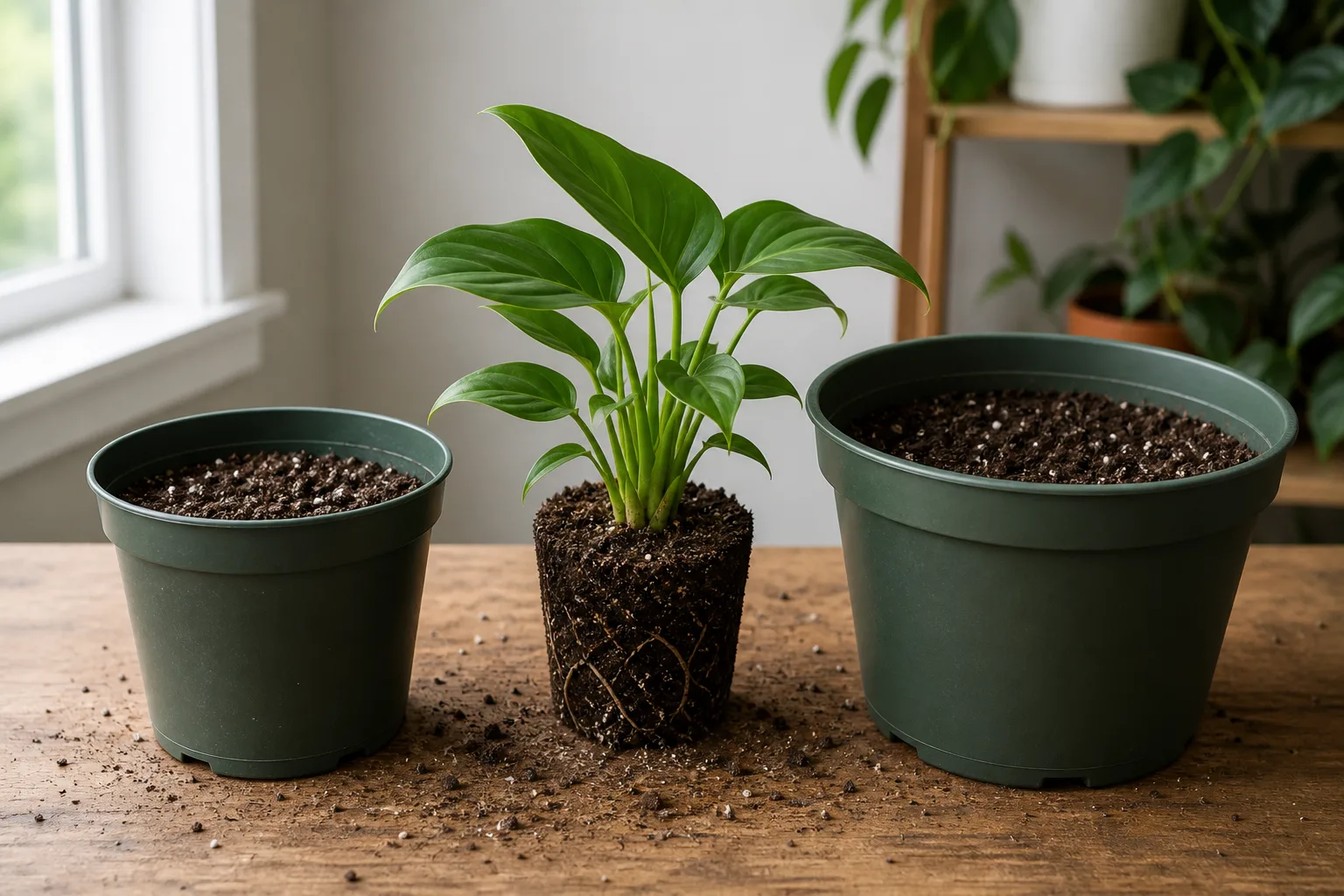
If the plant arrives in poor, soggy mix, address drainage sooner rather than waiting for a season; otherwise, a healthy plant usually handles a planned repot during active growth with less disruption. Keep it in bright indirect light while it settles and avoid adding fertilizer immediately after disturbing roots. A little pause in growth can happen after repotting; renewed yellowing, a soft stem, or a sour-smelling mix is a reason to inspect rather than simply wait.
Check for pests and root problems
Inspect the undersides of leaves, stem joints, and the center of the plant when watering. Mealybugs look like small white cottony clusters; scale can appear as fixed tan or brown bumps; spider mites may leave fine webbing and pale stippling. Fungus gnats usually hover around persistently damp mix, so a few adults are a clue to inspect the watering pattern rather than a reason to drench the plant with pesticide. NC State Extension lists root rot, leaf-margin blackening from overwatering, and common pests such as mealybugs and scale among pothos concerns (NC State Extension).
Isolate a plant with suspected pests before treating it. Wipe or rinse accessible insects away, check neighboring plants, and repeat inspections because eggs or hidden insects can survive a single cleaning. If using an insecticidal soap or another pesticide, choose a product labeled for indoor ornamental plants and the specific pest, test a small area if the label allows, and follow every application and ventilation direction. Never apply a garden pesticide indoors unless the label explicitly permits it.
Root problems are more likely when the mix stays wet, the pot has no drainage, or the stems soften near the soil. Healthy roots are generally firm; decayed roots are mushy and may smell unpleasant. If rot is confirmed, remove dead material with clean tools and repot surviving roots in fresh, airy mix and a draining pot. Do not keep a plant isolated from light as a “recovery” measure—roots still need the plant to photosynthesize while it recovers.
Troubleshoot leaves and growth
Start by asking three questions: Is the affected leaf old or new? Is the pot wet or dry below the surface? Is the damage on the window-facing side, at leaf edges, or spread across the plant? A symptom pattern gives a better clue than the color alone. The same yellow leaf can result from normal aging, overwatering, low light, or a damaged root system, and each calls for a different first move.
| What you see | Check first | Best first response |
|---|---|---|
| One older leaf yellows and drops | Is new growth firm and healthy? | Remove the spent leaf and monitor; isolated older-leaf loss can be normal. |
| Several leaves yellow while mix stays wet | Drainage, pot size, root firmness, and odor | Pause watering, empty standing water, and inspect roots if the mix remains soggy. |
| Crispy edge or tip on multiple leaves | Recent dry-down, dry airflow, salts, and humidity | Correct the cause gradually; do not solve it by keeping roots wet. |
| A pale, tan patch on window side | Hours of direct sun and recent moves | Filter or move the plant back from harsh rays. |
| New leaves become greener and stems stretch | Light at the canopy | Increase bright indirect light slowly and compare later leaves. |
| Sticky residue, cottony spots, stippling, or webbing | Leaf undersides and stem joints | Isolate and identify a pest before choosing a treatment. |
Yellow leaves: check age, moisture, and roots
One lower, older leaf turning yellow while the rest of the plant continues to grow is different from several leaves yellowing in a week. Remove the old leaf and observe the rest. If yellowing begins on multiple leaves and the mix is still damp, inspect the drainage hole, cachepot, and root ball before watering again. A low-light plant can also shed leaves slowly as growth weakens, so check the distance from the window and the length of the internodes.
If the mix is bone dry and the leaves have curled or gone limp, water thoroughly and drain. Do not assume every yellow leaf means underwatering; repeated watering into a wet pot can turn a small symptom into root damage. Costa Farms describes premature yellowing and leaf drop as possible consequences of a mix that stays too wet, while NC State Extension likewise warns about root rot and blackened margins when pothos is overwatered (Costa Farms; NC State Extension).
Brown edges or patches: locate the damage
Crispy tips and margins often point to a different problem than a distinct bleached patch. If the entire edge dries, review whether the root ball repeatedly becomes extremely dry, whether the plant sits beside a heater, and whether fertilizer salts may have accumulated. If one side has a pale or papery mark, consider direct sun or cold glass. Brown tissue will not turn green again; success means the next leaves emerge without the same damage.
Humidity can contribute to dry edges in a very arid room, but raising humidity is not the first step if the mix is dry or roots are failing. Check soil moisture and the room’s airflow before adding a humidifier. Avoid frequent misting as a cure; it creates temporary wetness on the leaf but does not reliably raise ambient humidity. A small number of damaged older leaves is less important than whether new growth is healthy.
Greener new leaves: adjust light gradually
When a plant has been in dim conditions, variegation can look weaker and new stems may have longer gaps between leaves. Move it to a brighter position over several days rather than placing shade-grown foliage in intense afternoon sun. If window placement is impossible, a grow light can provide more consistent illumination; keep it at the manufacturer’s recommended distance and leave a dark period overnight.
Do not expect established leaves to repaint themselves. Compare the next few leaves produced after the move, and give the plant time to respond. Costa Farms specifically notes that Lemon Meringue’s variegation may fade in lower light, especially on older leaves; an older leaf that remains greener is not proof that the plant has genetically changed. If a whole new stem stays solid green through several leaves, prune it back for appearance only if you can discard the cutting and are following the cultivar’s current propagation restrictions.
Keep the plant away from pets and children
Pothos is not a chew-safe houseplant. ASPCA lists golden pothos (Epipremnum aureum) as toxic to cats and dogs because it contains insoluble calcium oxalates; the listed signs include oral irritation, burning of the mouth and lips, drooling, vomiting, and difficulty swallowing (ASPCA Animal Poison Control). Lemon Meringue is a cultivar of the same species, so keep the plant and fallen leaves out of reach rather than relying on its unusual color as a deterrent.
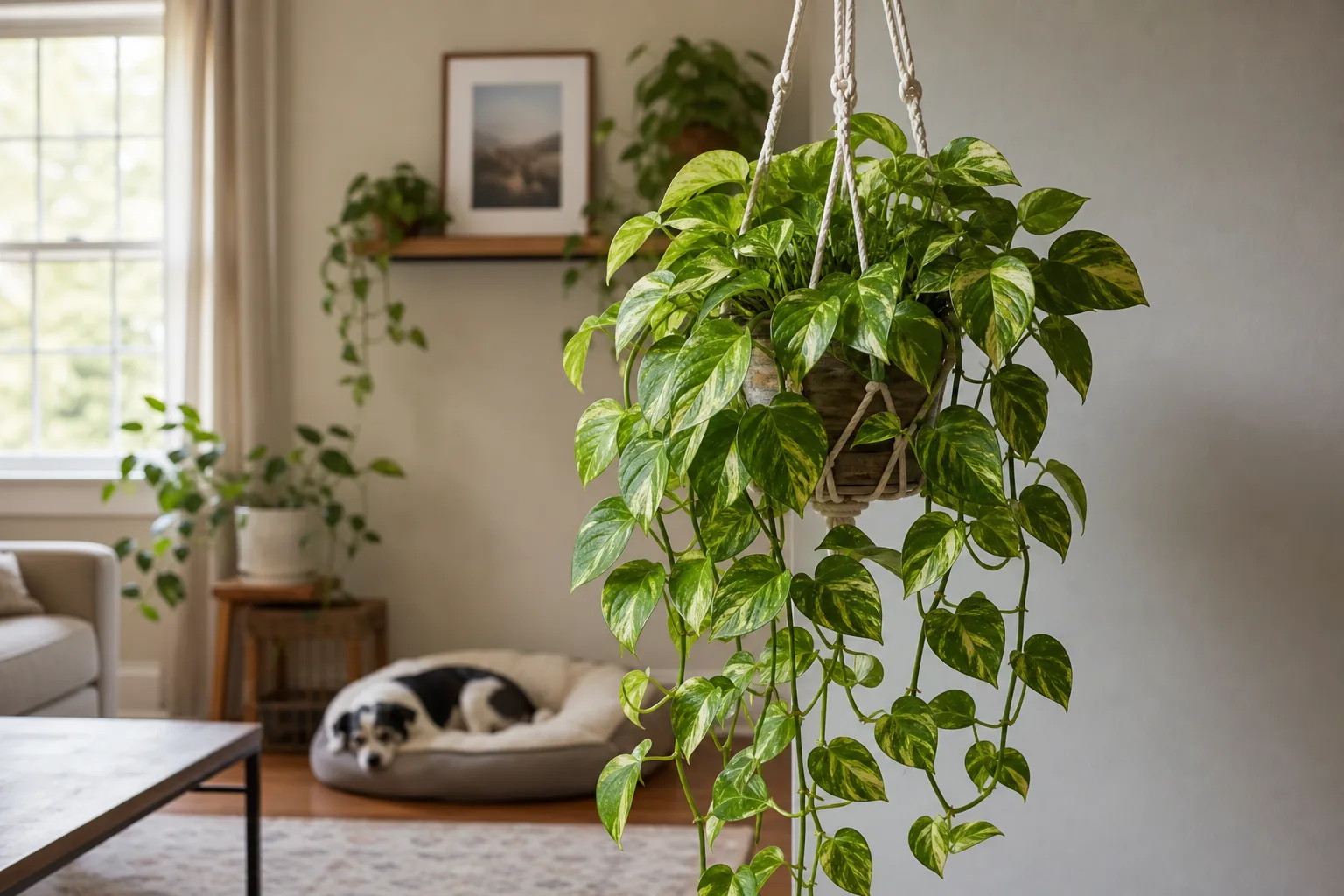
Place the pot where a climbing cat or curious child cannot reach dangling stems, and sweep up fallen leaves after pruning or repotting. A high shelf is not automatically safe if vines hang down within reach. If a pet bites the plant, contact a veterinarian or animal poison-control service promptly; do not wait for symptoms or try a home remedy. For a child who chews a leaf, contact a medical professional or local poison-control service for individualized guidance. Keep the plant label or a clear photo available when you call.
Conclusion
Lemon Meringue pothos is easiest to keep attractive when you treat its gold pattern as a light cue, its pot as a moisture system, and its cultivar name as more than a color label. Give it bright filtered light, water after the upper mix dries, and use an airy blend in a pot that drains. Check leaf age and root moisture before reacting to yellow or brown foliage; a fixed watering calendar and a fast fertilizer dose often make diagnosis harder.
The cultivar grows much like other pothos, but it carries an important distinction: Costa Farms currently identifies it as a patented selection and says propagation is prohibited. Buy documented stock rather than assuming that general pothos cutting advice applies. With a stable position, careful dry-down checks, and safe placement around pets, the plant can keep producing the contrasting new leaves that make it recognizable.